How Long It Takes to Qualify as a Washington Resident
It can feel incredibly frustrating to sort through all the different rules and regulations when you're just trying to enjoy a peaceful day on the water, especially when something as fundamental as "residency" isn't as straightforward as it seems. Many folks wonder how long they truly need to be in Washington before they can qualify for a resident fishing license, and what steps they need to take to make it official. This guide is here to clear up that confusion, explaining exactly what it takes to qualify as a Washington resident for fishing purposes and why it matters.
Unpacking Washington's Residency Requirements for Anglers
The Washington Department of Fish and Wildlife (WDFW) has specific criteria that define who gets to be called a "resident" for hunting and fishing licenses, and it's definitely more than just showing up and saying "I live here now!" These rules are in place to ensure fairness and to make sure that those who genuinely contribute to Washington's communities and conservation efforts through taxes and long-term presence are the ones benefiting from resident privileges. Understanding these requirements is the first critical step in making your angling adventures here more affordable and compliant.
The 90-Day Rule: Your Initial Hurdle
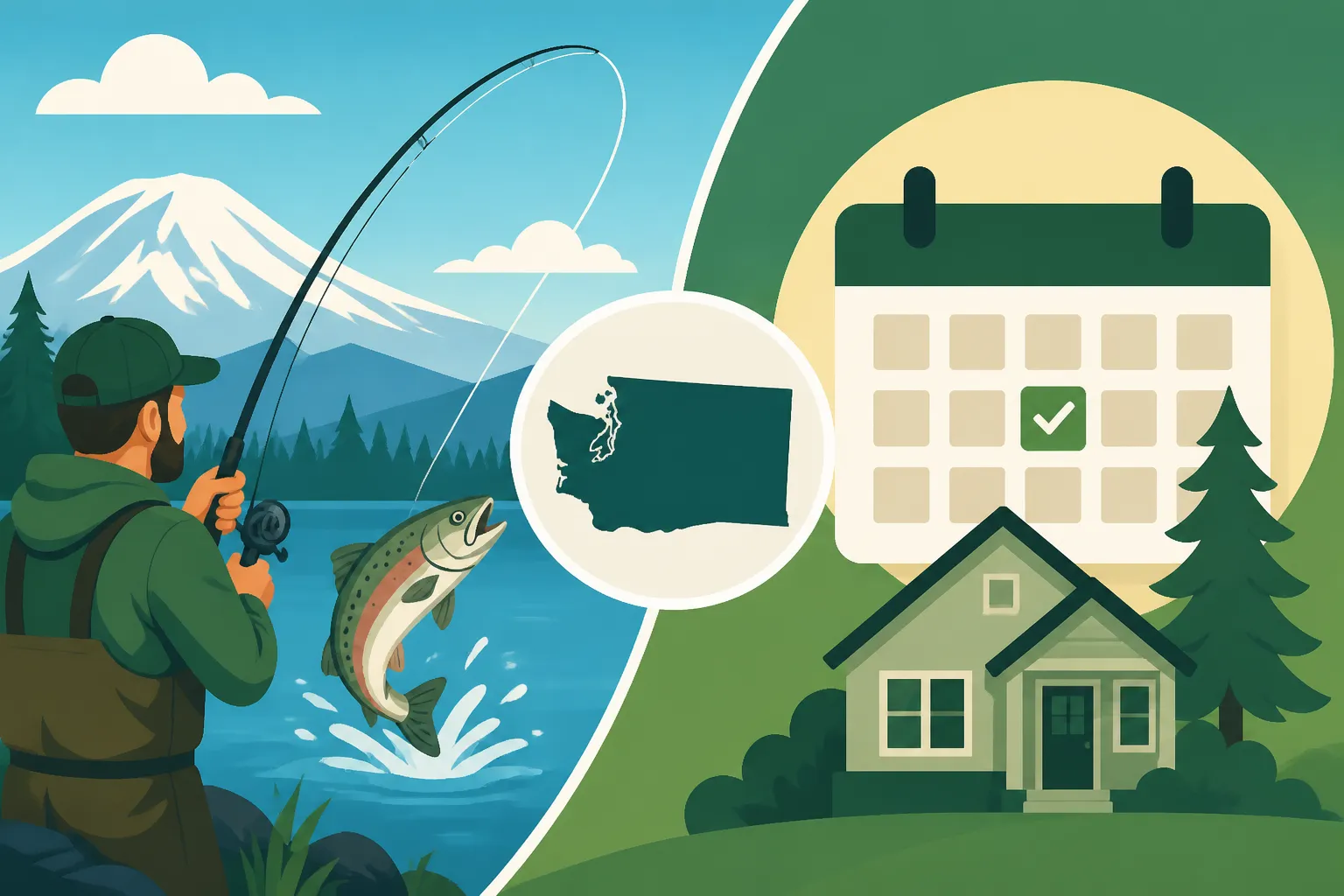
At the heart of Washington's residency definition for fishing licenses is the "90-day rule." Simply put, to qualify as a resident, you generally must have lived in the state for at least 90 consecutive days immediately prior to applying for your license. This isn't just about spending a summer vacation here; it's about establishing a physical presence with the clear intent to make Washington your primary home. If you've just moved from, say, Oregon, and you're getting set up in Vancouver, you need to count those days. You might have found a new job, started paying rent or a mortgage, and begun the process of integrating into your new community. These 90 days are a foundational period, establishing your initial claim to residency.
However, those 90 days alone aren't the sole piece of the puzzle. WDFW officials are looking for genuine evidence that your stay is not temporary. Imagine someone who moves here for a three-month work contract but plans to return to their home state afterward. Even if they're physically present for 90 days, their intent isn't to reside here permanently. The 90-day period is an important benchmark, but it must be coupled with other actions that demonstrate your long-term commitment to living in Washington. This combination of time and intent is what truly begins to build your case for resident status.
More Than Just Time: Establishing Your Domicile
Beyond just counting days on a calendar, establishing residency in Washington hinges on proving that the Evergreen State is your true and primary domicile. This means it's the place where you habitually sleep, keep your personal belongings, and generally consider your home. You can't just be visiting; you need to demonstrate that this is where you intend to live for the foreseeable future, even if you travel for work or leisure. This is where things like your driver's license, vehicle registration, and even utility bills come into play – they're all concrete pieces of evidence that point to Washington as your fixed, permanent abode.
Consider the practical steps: obtaining a Washington State driver's license or a Washington State identification card is a major indicator of domicile. Registering your vehicle here, registering to vote in a Washington county, and even providing documentation like a lease agreement, property tax statement, or recent utility bills addressed to you at a Washington address are all strong supporting pieces. These aren't just bureaucratic hoops; they're the official ways you tell the state, "This is where I'm planting my roots." When you're gathering these documents, it becomes clear that establishing residency is a holistic process, much more comprehensive than simply being present for a few months.
Who Qualifies: Diving Deeper into Specific Scenarios
While the 90-day rule and establishing domicile are key, Washington State recognizes that life isn't always a one-size-fits-all scenario. Certain groups have unique circumstances that WDFW considers when determining residency for fishing licenses. It’s important to understand these specific situations, as they can sometimes provide pathways to resident status even if the general rules seem to apply differently. This flexibility helps ensure that essential community members are able to access fishing opportunities without unnecessary hurdles.
Active Duty Military and Their Families
For active duty military personnel, the rules offer a welcome degree of flexibility. If you are an active member of the U.S. armed forces and are permanently stationed in Washington State, you (and your spouse and dependent children) can often qualify as a resident for fishing license purposes immediately, without needing to fulfill the standard 90-day residency requirement. This is a crucial consideration for military families who frequently relocate and might not have the luxury of waiting three months before enjoying the state's fantastic fishing opportunities. You'll typically need to provide official military orders or a leave and earning statement (LES) that clearly indicates your duty station is within Washington.
This provision acknowledges the unique nature of military service and ensures that those serving our country can enjoy the outdoor recreation that Washington offers from the moment they arrive. It’s a way of saying "thank you" by simplifying access to one of the state's cherished pastimes. For military families, understanding this exemption can save both time and money, making it easier to get out on the water. Just remember to have your current military ID and proof of stationing ready when you apply for your Washington Fishing License Guide for Nonresidents or resident license.
Full-Time Students Attending Washington Colleges
Full-time students enrolled in a college or university within Washington State can also find themselves in a unique position regarding residency. If you're attending a Washington institution and have established a physical presence in the state with the intent to reside here for the duration of your studies, you may qualify as a resident for fishing licenses. This doesn't necessarily mean you have to abandon your "home state" residency for all legal purposes, but for WDFW, your physical presence and intent to live here while studying are strong factors. You might need to provide proof of full-time enrollment, a lease agreement for local housing, and perhaps a Washington driver's license or state ID, demonstrating that you're genuinely living in the state.
The key here, much like the general rule, is proving that your stay isn't just a brief visit. While your primary residence for tax purposes might still be with your parents out of state, your domicile for the purpose of fishing regulations is in Washington. This is important for many students who spend years here, contribute to the local economy, and deserve access to the same fishing opportunities as other residents. They often rely on public transport or bikes to get around, so having an affordable resident license helps them enjoy the outdoors without needing a vehicle for far-off excursions.
Navigating Temporary Stays vs. Permanent Intent
This is where many people get tripped up. There’s a distinct difference between a temporary stay and establishing true residency, and WDFW is looking for evidence of the latter. For example, if you come to Washington for a six-month seasonal job but plan to return to your home state once the job concludes, you would likely not qualify as a resident, even if you spend more than 90 days here. Your intent to reside permanently is missing. Similarly, owning a vacation home or spending extended periods here as a tourist doesn’t automatically confer resident status.
The state needs to see signs that you are truly making Washington your home, not just a prolonged stopover. This often comes down to the cumulative evidence. Do you have a permanent job here? Are your children enrolled in local schools? Do you pay taxes as a Washington resident? These are the kinds of questions that distinguish someone on an extended visit from someone who is truly making a life in Washington. If your primary ties and future plans remain outside Washington, you’ll likely need to purchase a Washington Nonresident Fishing License Cost rather than a resident one.
The Tangible Benefits of Washington Residency
Beyond just the satisfaction of being a true Washingtonian, qualifying as a resident for your fishing license offers very real, tangible benefits that can significantly impact your angling budget and overall experience. It's not just a title; it's a gateway to more affordable and convenient access to the state's incredible fisheries.
Significant Savings on Fishing Licenses
The most obvious and perhaps most motivating benefit of achieving resident status is the substantial cost savings on your fishing licenses. Nonresident licenses are, understandably, significantly more expensive than resident ones. For instance, an annual Washington freshwater license for a resident is a fraction of the cost for a nonresident. This difference can add up quickly, especially if you plan on fishing frequently throughout the year or purchasing various endorsements. This is a core reason why understanding How Long It Takes to Qualify as a Washington Resident is so important.
Consider a full year of fishing: a resident might pay around $30-$50 for a basic annual freshwater or saltwater license, whereas a nonresident could easily pay $80-$100 or more for the same privilege. If you also want a two-pole endorsement or a Columbia River Salmon and Steelhead Endorsement, those costs multiply. For a nonresident, adding these can make a multi-species, multi-venue fishing season quite costly. For a resident, these endorsements are still additional, but they remain at a much more accessible price point. You can explore these differences further by checking out Washington Resident Fishing License Cost versus Washington Nonresident Fishing License Cost, and also understanding the various Washington's Annual, Short-Term and Combination License Options.
Access to Resident-Only Opportunities and Rules
While most general fishing seasons and regulations apply to both residents and nonresidents, there can be subtle differences or specific opportunities that primarily benefit residents. For example, while nonresidents can generally purchase a Washington's Columbia River Salmon and Steelhead Endorsement, Explained, the resident version is cheaper. More broadly, being a resident ensures you're fully aligned with all the nuances of Washington Fishing Regulations Every Angler Should Know without needing to constantly cross-reference special nonresident exceptions.
Furthermore, some very specific, often limited, special permit draws or lottery systems for highly sought-after hunts or fisheries might be exclusive to residents, or have preferential treatment for them. While less common for general fishing, resident status ensures you are always eligible for the broadest range of opportunities that the state offers its established community members. This aligns with the overall conservation goals, as residents are typically seen as having a more vested interest in the long-term health of Washington's natural resources.
Proving Your Residency: What WDFW Looks For
So, you've met the 90-day mark and you genuinely intend to make Washington your home. That's fantastic! But when you go to purchase your fishing license, WDFW isn't just going to take your word for it. You'll need to provide concrete proof. This is where preparing your documentation ahead of time can save you a lot of hassle and frustration at the license vendor or when buying online.
Key Documents to Have Ready
To prove your residency, you'll need to present official documentation that clearly links you to a Washington address and demonstrates your intent to reside here. While a Washington driver's license is often the gold standard, it's not always the only piece required, especially if you’ve recently moved. Other supporting documents can include:
- Washington State Driver's License or ID Card: This is usually the primary and most straightforward form of identification.
- Voter Registration Card: Showing you're registered to vote in a Washington county.
- Vehicle Registration: Proof that your car is registered in Washington.
- Utility Bills: Recent bills (electric, water, gas, internet) in your name for your Washington residence.
- Property Tax Statements or Lease/Rental Agreements: Demonstrating ownership or tenancy in Washington.
- School Enrollment Records: If you are a student, showing full-time enrollment at a Washington college or university.
- Official Military Orders: If you are active duty military, showing permanent stationing in Washington.
It's wise to bring more than one form of proof, especially if your driver's license is new. The more evidence you can provide that points to Washington as your established home, the smoother the process will be. For more details on what you might need, check out ID You Need to Buy a Washington Resident License.
Here's a quick look at common documents used to prove residency:
| Document Type | Purpose | Required by WDFW? |
|---|---|---|
| Washington State Driver's License | Primary proof of identity and address | Often required |
| Washington State ID Card | Alternative primary proof for non-drivers | Often required |
| Washington Vehicle Registration | Shows vehicle registered in WA | Supporting |
| Washington Voter Registration | Demonstrates voting domicile | Supporting |
| Utility Bill (WA Address) | Proof of continuous residence at WA address | Supporting |
| Property Deed/Lease Agreement (WA) | Shows property ownership or tenancy | Supporting |
| Active Military Orders (WA Station) | For military personnel & dependents | Primary for military |
| College Enrollment (Full-Time WA) | For students attending WA institutions | Primary for students |
The Importance of a Washington Driver's License or State ID
Without a doubt, possessing a valid Washington State driver's license or a Washington State identification card is the strongest and most universally accepted form of proof for residency when dealing with WDFW. This is because these documents are issued by the state's Department of Licensing (DOL) and require you to have already proven your residency to the state itself. It's essentially a pre-vetted form of identification. If you walk into a license dealer or apply online, having this key document makes the process almost instantaneous for confirming your resident status.
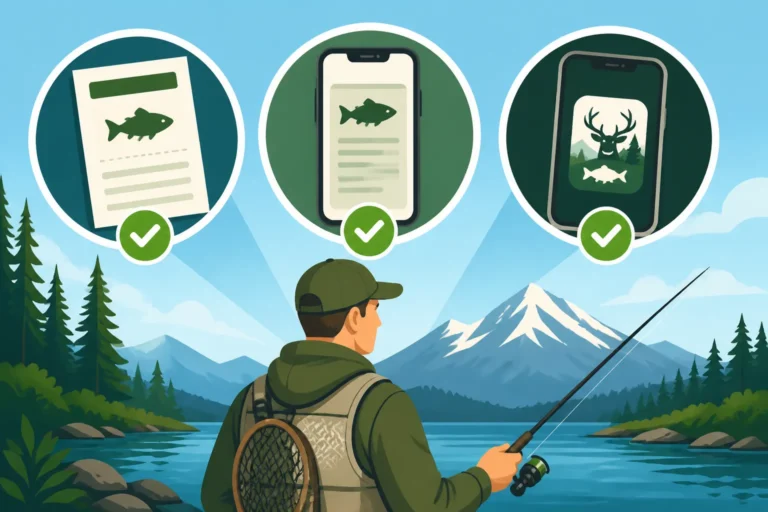
If you're new to the state and haven't yet obtained one of these, it should be your top priority. While you might be able to piece together other documents to argue your case, having a Washington driver's license or state ID card streamlines everything and eliminates potential questions or delays. It simplifies the entire process of getting your Washington Fishing License Guide for Nonresidents or resident license, and ensures you're ready to hit the water without any last-minute surprises. Remember, you can typically purchase your license at various retailers or online, as explained in Where and How to Buy a Washington Fishing License, and keep it handy, whether by Carrying Your Washington Fishing License: Paper, Phone or the MyWDFW App.
Disclaimer
The information provided in this guide is for general informational purposes only and is not legal advice. Washington State fishing regulations and residency requirements can change. Always consult the official Washington Department of Fish and Wildlife (WDFW) regulations pamphlet or their website for the most current and accurate information before purchasing a license or going fishing.