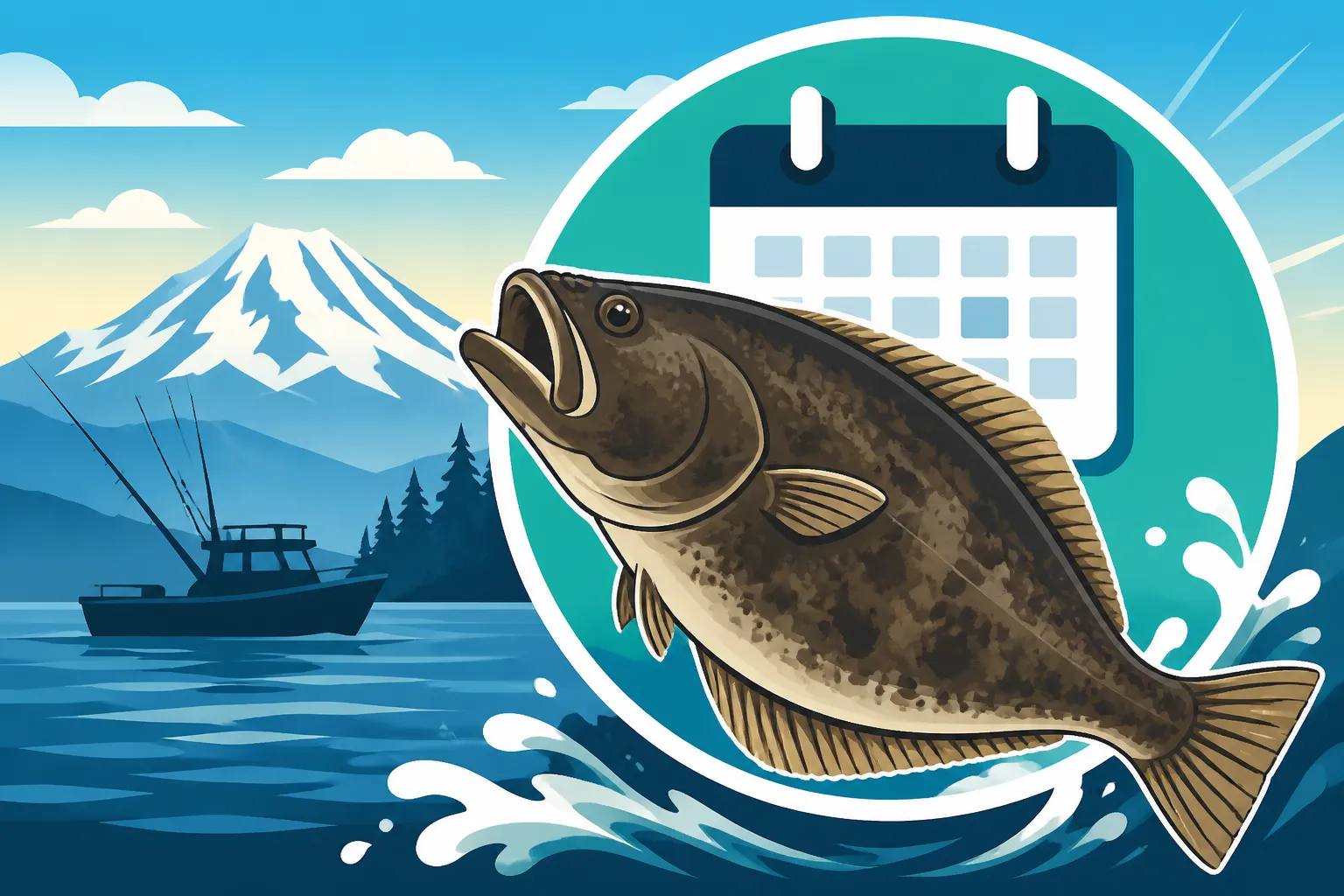
2026 Halibut Season Dates in Washington
The anticipation of a new fishing season always brings a mix of excitement and a touch of anxiety, especially when it comes to highly sought-after species like Pacific halibut in Washington state. Anglers often face the frustrating challenge of trying to pin down exact season dates well in advance, only to find that these crucial details are often TBD until much closer to the actual opening. This guide is designed to cut through that uncertainty, providing a comprehensive look at how Washington's 2026 halibut season dates are determined, what factors influence them, and what you can realistically expect so you can plan your ultimate halibut adventure.
Understanding Washington's Halibut Season Setting Process
It's easy to assume that fishing seasons are simply set by a single agency, but the reality, especially for a prized fish like Pacific halibut, is far more complex and involves a multi-layered process. The seasons aren't just plucked out of thin air; they are the result of rigorous scientific assessment, careful quota allocation, and extensive public and tribal consultation. Understanding this process can help temper expectations and provide insight into why things can seem to change at the last minute.
The Role of the Pacific Fishery Management Council (PFMC)
At the highest level, the overall management of Pacific halibut for the entire West Coast, from California to Alaska, falls under the purview of the International Pacific Halibut Commission (IPHC). This commission conducts comprehensive stock assessments and sets the total allowable catch (TAC) for various management areas. Once the IPHC establishes these broad catch limits, the Pacific Fishery Management Council (PFMC) then steps in for the U.S. West Coast states, including Washington. The PFMC is responsible for developing specific fishery management plans that allocate these quotas among different user groups – commercial, recreational, and tribal – and among the various states.
For Washington, this means the PFMC makes recommendations to the National Marine Fisheries Service (NMFS) on how the U.S. portion of the halibut quota should be divided and managed. This multi-state collaboration is essential because halibut stocks migrate, and conservation efforts need to be coordinated across boundaries. The PFMC meetings, often held throughout the fall and winter preceding the actual season, are where many of these initial discussions and proposals take shape. These meetings involve federal and state fishery managers, scientists, and stakeholders, all presenting data and advocating for their interests.
The Influence of Stock Assessments and Quotas
At the heart of all season-setting decisions are the stock assessments. Scientists from the IPHC conduct detailed studies every year to determine the health of the Pacific halibut population. They look at factors like spawning success, recruitment of young fish, catch rates from previous years, and overall population trends. These assessments are incredibly data-driven and aim to ensure the long-term sustainability of the halibut fishery. If the stock assessment indicates a decline, quotas will likely be reduced; conversely, a healthy stock might allow for more liberal seasons.
The total quota assigned to Washington's recreational fishery is then further divided among its various marine areas. This is why you'll often see different opening dates, fishing days, and even bag limits for areas like Puget Sound compared to the coastal waters. Each area has its own allocation, and once that specific area's quota is projected to be met, the season there is closed, sometimes with little notice. This quota-driven system means that even if initial dates are announced, the actual length of the season can be influenced by how quickly fish are caught, leading to unexpected closures. For detailed information on specific limits, always consult the official Understanding Washington's Daily Bag Limits by Species guidelines.
How Public Input and Tribal Treaty Rights Shape Decisions
Beyond the scientific data and federal allocations, public input and tribal treaty rights play a significant role in shaping Washington's halibut seasons. The Washington Department of Fish and Wildlife (WDFW) holds numerous public meetings throughout the fall and winter to gather input from recreational anglers, charter operators, and other stakeholders. These meetings are crucial for understanding local concerns, preferred fishing days, and potential impacts on fishing communities. Anglers' voices can influence proposals on season length, days of the week open, and even gear restrictions.
Furthermore, federally recognized tribal nations in Washington hold treaty-reserved fishing rights, which are managed separately but in coordination with state and federal agencies. These rights guarantee tribes a share of the catch and often involve joint management efforts and agreements on season structures. The WDFW works closely with tribal co-managers to ensure that all fishing activities are conducted in a manner that respects these rights and contributes to the overall conservation of the resource. This complex interplay of science, policy, public interest, and treaty obligations is why the exact 2026 halibut season dates won't be finalized until early spring, usually March or April, after all consultations and approvals are complete. You can often find the official WDFW rule change proposals and announcements online, sometimes accompanied by detailed reports that mirror the information you might find in an official Washington Fishing Regulations Every Angler Should Know pamphlet.
Navigating the Anticipated 2026 Washington Halibut Season Dates
While specific dates for the 2026 halibut season are still a ways off, we can absolutely discuss the patterns and probabilities that historically shape these seasons. Washington's waters are diverse, and halibut fishing opportunities vary significantly from the protected waters of Puget Sound to the exposed, prolific grounds of the outer coast. Knowing these general tendencies helps you prepare and provides a framework for understanding the official announcements when they eventually arrive.
Key Marine Areas and Their Potential Season Structures
Washington state's waters are divided into various marine areas, each with its own specific halibut management plan. The main recreational halibut fisheries occur in:
- Marine Area 1 (Ilwaco): Southernmost coastal area, often mirroring Oregon's seasons to some extent due to shared population.
- Marine Area 2 (Westport/La Push): The bustling central coast, typically offering the most fishing days and the largest quota.
- Marine Area 3 (La Push to Neah Bay): Northern coastal waters, known for large fish, but access can be more weather-dependent.
- Marine Area 4 (Neah Bay/Eastern Strait of Juan de Fuca): The entrance to the Strait, a productive area.
- Marine Area 5 (Sekiu/Western Strait of Juan de Fuca): Protected waters, often with unique schedules.
- Marine Area 6 (Eastern Strait/Port Angeles): Further into the Strait, another popular zone.
- Marine Area 7 (San Juan Islands): Unique, highly regulated area often with very limited days.
- Marine Area 8 & 9 (Admiralty Inlet/Whidbey Island): Central Puget Sound, typically short seasons.
- Marine Area 10 & 11 (Seattle/Tacoma): South Central Puget Sound, very limited opportunities.
- Marine Area 12 & 13 (Hood Canal/South Puget Sound): Rarely open for halibut due to low abundance.
Each of these areas might have different opening dates, number of fishing days per week (e.g., Thursday-Saturday), and even varying size limits or bag limits. The WDFW website is the go-to source for these breakdowns, usually released as part of the annual "Sport Fishing Rules Pamphlet" which you can often find digitally or order a physical copy online, even through retailers like Amazon.
What to Expect for Puget Sound and the Strait of Juan de Fuca
For anglers focusing on Puget Sound (Marine Areas 8-13) and the Strait of Juan de Fuca (Marine Areas 4-7), the halibut season is generally much shorter and more restrictive than the coastal seasons. These areas are typically open for a limited number of days, often concentrated on Thursdays, Fridays, and Saturdays, starting in late spring or early summer, usually May. The total number of days can range from just a handful to perhaps two or three weekends, depending on the quota and fishing pressure.
For example, in a typical year, Marine Areas 6 (Eastern Strait) and 5 (Western Strait) might see the earliest openings within the Puget Sound/Strait complex, offering a few more days than the inner Puget Sound areas. Marine Area 7 (San Juan Islands) is historically the most constrained due to its proximity to protected areas and relatively lower halibut abundance. Anglers in Marine Area 9 (Admiralty Inlet) and 10 (Seattle) often see the most limited windows, sometimes only one or two full weekends. The catch rates in these areas can be quite high on opening days, leading to swift quota attainment and subsequent closures. Therefore, if you're targeting these areas, being ready to go on opening day is paramount. Always check the current Washington Sport Fishing Seasons and Emergency Closures for the most up-to-date information once it's released.
Predicting Coastal Seasons in Areas like Westport and La Push
The coastal marine areas (Marine Areas 1-3), particularly Area 2 (Westport/La Push), generally offer the longest and most consistent halibut seasons in Washington. These areas have larger quotas and access to more expansive offshore grounds where halibut are more abundant. The season typically opens in early May and can run for several weeks, often with multiple days open per week (e.g., Thursday, Friday, Saturday, and Sunday) until the quota is met or the season closes, usually by mid-July.
For 2026, it's a safe bet that the coastal areas will again provide the primary opportunities for most recreational halibut anglers. Within the coastal areas, Area 2 is usually the workhorse, attracting a significant number of private boats and charter operations out of Westport and La Push. Areas 1 and 3 also offer excellent fishing, though Area 1's season can sometimes be influenced by coordinated management with Oregon, and Area 3, while offering trophy potential, can be more susceptible to weather closures due to its exposed nature. These longer seasons mean anglers have more flexibility, but it's still crucial to monitor catch rates throughout the season, as a hot bite can quickly exhaust the quota, leading to unexpected Emergency Rule Changes: Why Washington's Rules Shift Mid-Season. Keeping an eye on the WDFW updates, often shared via email alerts or their social media, will be critical.
Here’s a simplified table illustrating potential typical season patterns for planning purposes (remember, 2026 dates will be official in early spring 2026):
| Marine Area(s) | Typical Season Start | Typical Fishing Days/Week | Expected Duration | Key Considerations |
|---|---|---|---|---|
| Coastal (1-3) | Early May | 3-4 (Th-Sun) | 6-10 Weeks | Largest quotas, longer seasons, weather-dependent. |
| Strait (4-7) | Early to Mid-May | 2-3 (Th-Sat) | 2-6 Weeks | Moderate quotas, can close quickly, good alternative if coast is rough. |
| Puget Sound (8-11) | Mid-to-Late May | 1-2 (Fri-Sat) | 1-3 Weeks | Smallest quotas, shortest seasons, local opportunities. |
| Puget Sound (12-13) | Seldom Open | N/A | Very Rare | Historically very limited or closed. |
Essential Preparations for the Upcoming Halibut Season
Even though the official 2026 halibut season dates aren't set in stone yet, there's a lot you can do right now to ensure you're fully prepared when those announcements drop. Being proactive can save you a lot of last-minute stress and ensure you're ready to hit the water as soon as the season opens. From licensing to gear, getting these details sorted early is a mark of a seasoned angler.
Securing Your Washington Fishing License and Endorsements
First and foremost, you absolutely need the proper licensing. Every angler aged 15 and older must possess a valid Washington fishing license. For halibut, a combination license (freshwater and saltwater) or a saltwater-only license is required, as halibut are marine species. Don't forget, if you plan to fish any freshwater systems for other species, the combination license offers broader coverage. You can purchase your license online through the WDFW website, at authorized license vendors (like sporting goods stores), or via the MyWDFW app on your smartphone. Remember, your annual license is valid from April 1st through March 31st of the following year, so for the 2026 season, you'll need a license for the 2026-2027 license year. Check out Washington Annual Fishing License Validity Period for more details.
Crucially, while a standard saltwater license covers many species, you'll also need a Halibut Catch Record Card if you plan to keep any halibut. These cards are free but mandatory and must be returned to WDFW by the specified deadline, even if you didn't catch any halibut. It's how WDFW tracks angler effort and total harvest against the quota. You should also be familiar with Carrying Your Washington Fishing License: Paper, Phone or the MyWDFW App to ensure you're always in compliance. Don't risk a fine for forgetting your paperwork!
Gear and Tackle Considerations for Halibut Success
Halibut are big, powerful fish, so your gear needs to be up to the task. While you might be able to get away with lighter gear for smaller Puget Sound halibut, if you're heading to the coast, stout tackle is non-negotiable.
Rods and Reels: Look for heavy-action conventional rods in the 6 to 7.5-foot range, rated for 50-100 lb line. Paired with a robust conventional reel (like a Penn Fathom, Daiwa Saltiga, or Shimano Talica) spooled with 60-100 lb braided line, you'll have the backbone needed to lift a barn door from the depths. A long top shot of monofilament (e.g., 80-100 lb) or fluorocarbon leader (e.g., 100-200 lb) is commonly used to provide stretch and abrasion resistance near the bait.
Terminal Tackle:
- Weights: You'll be fishing deep, often in strong currents, so heavy lead or cannonball sinkers are essential. Think 16-32 ounces, or even more in particularly strong currents. Many anglers prefer torpedo sinkers for less drag.
- Hooks: Large, stout circle hooks (16/0 to 20/0) are standard. Circle hooks are mandatory in many fisheries as they promote cleaner hookups in the corner of the mouth, increasing survival rates for released fish. Ensure they meet regulations for your specific marine area.
- Rigs: A simple two-hook dropper loop rig or a sliding sinker rig with a large swivel and a heavy leader is typical. Pre-tied halibut rigs are readily available at most tackle shops and on Amazon, offering convenience.
- Bait: Fresh bait is king. Large herring, salmon heads, octopus, and squid are all excellent choices. Many anglers will "super-charge" their bait with scent attractants.
Essentials: Don't forget a large, sturdy gaff, a measuring tape, and a robust cooler with plenty of ice. Halibut are delicious, and proper care of your catch on the boat ensures the best eating quality. You can learn more about specific setups in resources like Halibut Fishing Techniques for the Washington Coast and Downrigger Techniques for Halibut in Washington.
Staying Informed About Emergency Rule Changes and In-Season Updates
The halibut season, particularly for the recreational fishery, is highly dynamic. Dates and regulations, even after initial announcements, can change rapidly due to a variety of factors. Weather closures, faster-than-anticipated quota attainment, or even unforeseen biological issues can trigger emergency rule changes from WDFW. This is not uncommon, and it's why staying constantly updated is crucial.
The best ways to stay informed are:
- WDFW Website: This is your primary and most reliable source. Regularly check the WDFW "Fishing Rule Changes" page.
- Email Alerts: Sign up for WDFW's email updates specifically for marine fisheries or halibut. This is often the fastest way to get direct notification of changes.
- Local Tackle Shops and Marinas: These businesses are often the first to hear about local changes and can be a great resource.
- Social Media: Follow WDFW's official social media channels, as they often post immediate updates.
Waiting until the last minute or relying on old information is a recipe for disappointment. Imagine driving hours to Westport only to find the season closed unexpectedly due to quota overage. Being proactive about checking for updates, even daily during the season, will prevent such frustrations. The official word is always paramount, so make it a habit to regularly consult Where to Find Current Washington Fishing Rules.
Beyond the Dates: Maximizing Your Halibut Fishing Experience
Knowing the dates is just the first step. To truly make the most of your halibut fishing experience in Washington, you need to understand the nuances of the fishery, from environmental factors to effective techniques. Halibut fishing can be challenging, but immensely rewarding, and a well-rounded approach will significantly increase your chances of success.
The Importance of Tides and Weather
Halibut, like most marine species, are heavily influenced by tidal currents and weather conditions.
Tides: The movement of water caused by tides can concentrate baitfish and, consequently, halibut. Many experienced halibut anglers prefer to fish around the slack tides—the period of minimal current at the peak of high or low tide. This is because slack tide reduces current drag on your line, allowing your heavy weights to sit more vertically on the bottom, keeping your bait where it needs to be. Fishing during strong currents often means your bait is swept away from the halibut's feeding zone, and it's much harder to feel bites. However, some anglers argue that a bit of current can also distribute scent and get halibut actively feeding. It's often a balance, but generally, lighter currents are preferred.
Weather: Weather is a massive factor, especially in Washington's coastal waters. Halibut grounds are often far offshore, sometimes 10-20 miles out, making them highly susceptible to wind and swell. A good forecast is non-negotiable for safety and comfort. High winds can make it impossible to hold bottom, even with heavy weights, and large swells can make for a miserable, or even dangerous, trip. Always check multiple marine weather forecasts (NOAA Marine Forecast is a favorite) before heading out. If the forecast looks marginal, it's always better to reschedule. This is where options like Anchoring and Drifting for Halibut come into play, as drifting often provides a more active presentation when conditions are right, while anchoring helps maintain position in specific productive spots.
Recommended Halibut Fishing Techniques
While the basic premise is to get bait to the bottom, a few techniques can really improve your halibut game:
1. Bottom Fishing (Anchoring or Drifting):
- Anchoring: If you've found a productive patch of structure, a deep hole, or a known halibut "sticky spot," anchoring allows you to stay directly over the fish. This is particularly effective if you're marking fish on your sonar. Once anchored, multiple anglers can deploy baits, allowing the scent to attract fish to your boat. Make sure your anchor system is robust enough for deep water and strong currents.
- Drifting: Drifting can be an excellent search pattern, especially if you're covering new ground or don't know exactly where the halibut are holding. It allows your bait to cover a wider area. The key is to control your drift speed. If drifting too fast, you might need a sea anchor or drift sock to slow down. If drifting too slowly, you might use your kicker motor to move faster. Pay close attention to your depth sounder and keep your bait near the bottom.
2. Jigging:
While bait is king, jigging can be incredibly effective, especially for more aggressive fish. Large metal jigs, often tipped with a piece of bait (like a strip of herring or squid), can trigger a reactionary strike. The technique involves dropping the jig to the bottom, then sharply lifting and dropping it, mimicking a wounded baitfish. Sometimes, a more subtle lift-and-drop is all it takes. Jigging offers a more active style of fishing and can be particularly useful if you're trying to avoid dogfish or other bait-stealers. Popular jigs include the Berkley Gulp! Jigging Grub or various flat-fall jigs, which can be found at local shops or on Amazon.
3. "Bounce Ball" Fishing:
This technique is a popular variation of drift fishing, especially when trying to maintain contact with the bottom in varying depths or currents. It involves a lead cannonball or a specially designed "bounce ball" weight on a slider, allowing your main line to run freely through it. A snubber or bumper bead is placed above the swivel connecting to your leader. The idea is to gently "bounce" the weight off the bottom as you drift, keeping your bait precisely in the strike zone. This method offers excellent feel for subtle bites and reduces snagging.
Regardless of the technique, constant vigilance is key. Halibut bites can range from a subtle tap to a rod-doubling thump. When you feel a bite, resist the urge to immediately set the hook. Instead, let the fish take the bait for a few seconds, allowing the circle hook to properly turn and set itself in the corner of the mouth as the fish swims away. A slow, steady lift of the rod is usually all that's needed to seal the deal.
Disclaimer
Please note that fishing regulations, including season dates, bag limits, and gear restrictions, are subject to change. While this guide provides comprehensive information based on historical patterns and the regulatory process, official 2026 halibut season dates for Washington will not be finalized until early spring 2026. Always consult the official Washington Department of Fish and Wildlife (WDFW) website and their most current Sport Fishing Regulations pamphlet for the most accurate and up-to-date information before planning and embarking on any fishing trip. It is the angler's responsibility to know and follow all applicable rules and regulations.