Booking a Guide From Seattle Without a Car
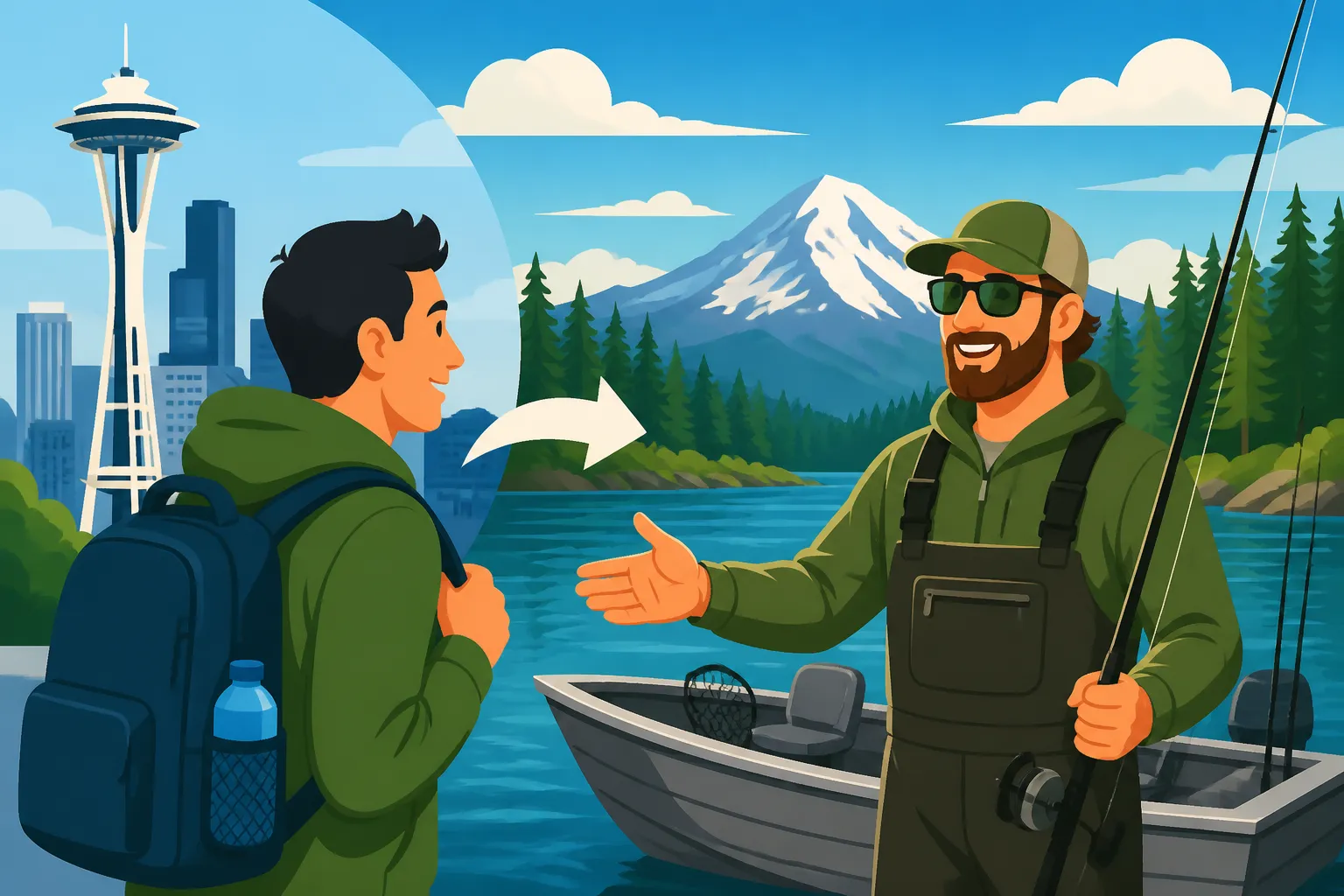
It's a common dilemma for anglers visiting or living in Seattle: you're itching to get out on the water, chase some salmon or steelhead, or even bottomfish, but you don't have a car. The dream of casting a line into a pristine Washington river or the vast Puget Sound often bumps right up against the gritty reality of urban transportation. You're left wondering how on earth you'll get yourself and your gear to a decent fishing spot without your own wheels. This guide is here to walk you through how to successfully book a fishing trip and navigate the logistics of getting to your adventure, even when you're reliant on public transit or other car-free solutions from the Emerald City.
The Real Challenge: Getting Out of Seattle Without Your Own Wheels
Let's face it, Seattle is a beautiful city, but getting beyond its immediate urban core to some of the prime fishing locations can be a monumental task without a personal vehicle. Most of the truly productive fishing spots, especially for species like salmon and steelhead, are located on rivers or marine areas that are far removed from light rail stations or major bus routes. The convenience of a car often feels like a prerequisite for a successful Washington fishing trip, leaving many would-be anglers feeling stuck.
The "Last Mile" Problem for Anglers
Even if you can get somewhere close to a fishing destination via public transportation, you're almost always hit with what we in the industry call the "last mile" problem. This isn't just a quaint little walk; it can be several miles from the nearest bus stop to a river access point, a boat launch, or a charter dock. Imagine lugging a rod tube, a cooler, a tackle box, and your waders for three miles at 4 AM in the dark, trying to find your guide or that perfect bank spot. It's not just inconvenient; it can be downright dangerous, especially on unlit roads or rugged trails. This logistical hurdle often discourages even the most eager anglers, making them feel like a car is absolutely essential.
Limited Reach of Standard Public Transit
While Seattle has a decent public transit system for urban and suburban commuting, it wasn't designed with early morning river access or remote coastal docks in mind. You might find a bus that gets you to a major ferry terminal, like Edmonds or Mukilteo, which can then take you across Puget Sound. But once you're on the other side, the same "last mile" problem resurfaces with a vengeance. Rivers like the Skykomish, Green, or Nisqually, and even many productive Puget Sound shoreline spots, require travel beyond what typical bus routes offer. Trying to piece together multiple bus transfers, timed perfectly with a pre-dawn departure, is a recipe for stress, missed opportunities, and a very grumpy fishing guide.
Charter Services That Cater to Car-Less Anglers
This is where fishing charters and guides really shine for the car-less angler in Seattle. While not all guides offer direct pickup from downtown Seattle hotels or residences, many operate out of ports or meeting points that are more accessible than remote river banks. The key is to do your research and communicate clearly with potential guides upfront about your transportation situation.
Identifying Accessible Departure Points
The first step is to look for charters operating from ports that are reasonably accessible from Seattle. For saltwater salmon and bottomfishing, consider charters departing from:
- Edmonds: Easily reachable by Amtrak train (a short ride) or several bus routes from Seattle, followed by a short walk to the ferry terminal/marina.
- Everett: Also accessible by Amtrak or Sounder commuter train, with local buses potentially connecting to the marina.
- Mukilteo: Similar to Edmonds, a key ferry terminal, though perhaps a bit further.
- Des Moines/Ruston Way (Tacoma): While further south, these are sometimes connected by express buses.
For river fishing, it gets trickier, but some guides might operate closer to larger towns that have limited bus service, though direct pickups are less common. The best strategy is often to focus on marine charters that can pick you up from a public dock rather than a private residence.
Charters Offering Direct or Indirect Transportation Solutions
While it's rare to find a charter that includes a limousine service from your hotel, many guides are sympathetic to the car-less angler and might offer creative solutions:
- Designated Meeting Points: Instead of a remote boat launch, a guide might suggest meeting at a well-known public spot in their operating area that's reachable by a rideshare service, or even a local taxi if you've ferried over. For example, a guide operating out of Westport might suggest you take an express bus from Seattle to a central Westport stop, where they could then pick you up for a short drive to the docks.
- Partnering with Other Anglers: Some guides, if they have space, might be able to coordinate with other clients who do have a car and are willing to carpool from a central location. This isn't something to expect, but it's worth asking if they ever facilitate such arrangements.
- "Dock-to-Dock" Service: For Puget Sound fishing, some charters specialize in picking up clients directly from major public docks, assuming you can get to that dock via ferry or other means. This is particularly common for charters operating between islands or across the Sound.
When browsing for options, sites like FishingBooker can be helpful for filtering by location and reading reviews where other anglers might mention transportation experiences. It's a great platform to start your search and then initiate direct communication with potential guides about your specific needs. What's included in a Washington Puget Sound Salmon Charter varies widely, so always clarify transportation upfront.
What to Expect and What to Ask
When contacting a charter or guide, be upfront about your situation. Don't assume anything. Here’s a checklist of questions to ask:
- What is the closest public transit stop to your departure point?
- How far is it from that stop to where we meet? Is it walkable, or do I need a rideshare/taxi?
- Do you know of any local taxi or rideshare services in your area that operate early in the morning? (Many smaller towns have limited late-night/early-morning service).
- Are there any other clients on the trip who might be willing to carpool from a more central location? (Again, don't expect this, but it doesn't hurt to ask).
- Do you have any suggestions for accommodation near your departure point if I decide to stay overnight to avoid early morning transit?
Remember, their primary job is to guide fishing, not to be a shuttle service, but many guides are keen to help clients make their trip a reality.
Essential Planning Steps for Your Car-Free Fishing Trip
Going fishing without a car requires significantly more planning than just throwing your gear in the trunk and heading out. From licenses to logistics, every detail needs to be thought through to ensure a smooth, enjoyable experience.
Secure Your Washington Fishing License and Endorsements
First things first, you'll need the right paperwork. This is non-negotiable, whether you have a car or not. Make sure you purchase the appropriate license for the type of fishing you'll be doing (freshwater, saltwater, or combination) and any necessary endorsements, like the Columbia River Salmon and Steelhead Endorsement, if applicable. Washington Fishing License Guide for Nonresidents is a great resource if you're visiting, and you can often buy your license online through the WDFW website or the MyWDFW app. If you're on a charter, they'll likely ask to see your license before you even step on the boat. Having Carrying Your Washington Fishing License: Paper, Phone or the MyWDFW App ready on your phone is usually acceptable, but it's wise to have a printed copy as a backup, especially if you're venturing to areas with spotty cell service.
Research and Book Your Charter or Guide Early
This step is critical, especially for popular seasons or desirable species like salmon or halibut. Once you've identified a few potential guides, reach out to them directly. Don't just book online without a conversation. Clearly explain your transportation constraints from Seattle and ask about their specific recommendations for getting to their boat. Be flexible with your dates if possible, as it might increase your chances of finding a guide who can accommodate your logistical needs or who has space on a trip with other carpooling clients. When booking a guide, consider that How Far in Advance to Book a Washington Charter is often several months for peak times.
Pack Smart and Light
When you're relying on public transit or rideshares, every piece of gear counts. You won't have the luxury of a large vehicle to haul excessive equipment.
- Rods: Consider multi-piece travel rods that break down easily. If the charter provides rods (many do, always confirm!), you might only need to bring a small tackle bag.
- Tackle: Bring only the essential lures, weights, and hooks for the species you're targeting. Minimize bulky items.
- Clothing: Layering is key for Washington's unpredictable weather. Pack waterproof outerwear, but choose compact options. What to Bring on a Washington Fishing Charter can offer more specific advice.
- Cooler: A soft-sided, collapsible cooler is much easier to manage than a hard-sided one. Some charters might even have space in their cooler for your fish, or offer to bag it for you. Confirm this beforehand.
- Food & Drink: Pack snacks and drinks in reusable containers to minimize waste and bulk.
Remember, you'll be carrying everything you bring, potentially over distances, so keep it to an absolute minimum.
Confirm All Logistics the Day Before
Don't leave anything to chance. The day before your trip, confirm your meeting time and location with your guide. Double-check your transit schedules, especially for early morning departures. If you're using a rideshare, consider pre-booking if the app allows, or checking for availability in the area at your departure time. The last thing you want is to be stranded at 4 AM because no cars are available. This is also a good time to re-check How to Check for Emergency Rule Changes in Washington, as fishing regulations can change quickly.
Alternative Solutions and When to Splurge on a Rental
While charters offer the most direct solution for car-less anglers, there are other avenues to explore, each with its own set of pros and cons. Sometimes, the added cost of a rental or a longer journey is worth the experience.
Day-Use Car Rentals for the Adventurous
If you're determined to explore a specific river or lake that isn't serviced by charters or public transit, a day-use car rental might be your best bet. Many rental agencies have locations in downtown Seattle or at Sea-Tac Airport. This gives you the flexibility to drive to more remote locations like specific access points on the Skagit River, the Yakima River for fly fishing, or even venture to Eastern Washington lakes like Lake Roosevelt.
Pros:
- Flexibility: Go exactly where you want, when you want.
- Gear Capacity: Haul all your rods, tackle boxes, and coolers without hassle.
- Exploration: Discover new spots and areas beyond typical charter routes.
Cons:
- Cost: Rentals, especially for just a day, can add up quickly. Factor in fuel costs and potential parking fees.
- Logistics: You still need to get to the rental agency, which could involve another layer of transit.
- Navigation: You're responsible for driving, which can be challenging in unfamiliar areas, especially pre-dawn.
This option is often best for those who want a truly independent fishing adventure and are comfortable with the driving and navigation aspects.
| Transportation Option | Best For | Key Considerations | Cost (Relative) | Convenience (Relative) |
|---|---|---|---|---|
| Fishing Charter | Saltwater (Puget Sound, Coast), some Rivers | Direct access to fishing, often includes gear/expertise | Medium-High | High (once at meet spot) |
| Ride-Share/Taxi | Short distances to accessible docks/piers | Availability, early morning fees, luggage space | Medium | Medium |
| Public Transit | Very local urban piers, ferry terminals | "Last mile" problem, early morning limitations, time | Low | Low |
| Day-Use Car Rental | Remote rivers, lakes, multiple stops | Cost, parking, driving in unfamiliar areas | Medium-High | High (most flexible) |
| Connecting Flights | Olympic Peninsula, remote coastal spots | Requires significant planning, flight costs, secondary transport from airport | High | Low (multi-step) |
Leveraging Ferry Services for Puget Sound Access
Washington's ferry system is a fantastic resource for reaching many parts of Puget Sound, including islands and peninsulas that offer excellent fishing opportunities. You can walk on as a passenger with your gear and connect to areas like Bainbridge Island, Bremerton, or Whidbey Island.
Once on the other side, however, you're back to the "last mile" challenge. Consider:
- Local Rideshares/Taxis: Are there reliable options on the other side, especially in smaller towns?
- Local Bus Routes: Do they service any fishing spots or connection points?
- Bike Share/Rental: If you're physically able and don't have too much gear, a bike could bridge that last mile.
For example, you might take a ferry to Kingston, then a short bus ride or even a long walk to a shoreline access point in the area. Fishing Deception Pass, Washington for Salmon and Lingcod is a prime example of a great destination that requires a bit of planning after reaching Whidbey Island.
Finding a Fishing Buddy with a Car
Sometimes the simplest solution is the best: find a fishing friend! There are numerous online forums and local fishing clubs in Seattle where you can connect with other anglers. Putting out a request for a carpool, perhaps offering to split gas money or expenses, can open up a world of fishing opportunities. This not only solves your transportation issue but also provides camaraderie and shared expertise on the water. Just be sure to vet anyone you plan to fish with.
The Trade-Off: Cost vs. Convenience
Ultimately, going fishing from Seattle without a car means making trade-offs. You might save money on a rental car, but you'll invest more time and effort into planning logistics, and potentially spend money on rideshares or more expensive charters. Conversely, splurging on a car rental or a charter that offers a pickup service might cost more upfront but saves you immense hassle and ensures you get to your destination relaxed and ready to fish. Evaluate your priorities and budget. For many, the peace of mind and streamlined experience of a well-organized charter makes the extra cost worth every penny, especially when facing the early morning unknowns of public transit.
Disclaimer
This article is for general informational purposes only and does not constitute professional advice. Laws, prices and regulations vary by location and change over time. Consult a qualified professional for guidance on your specific situation.