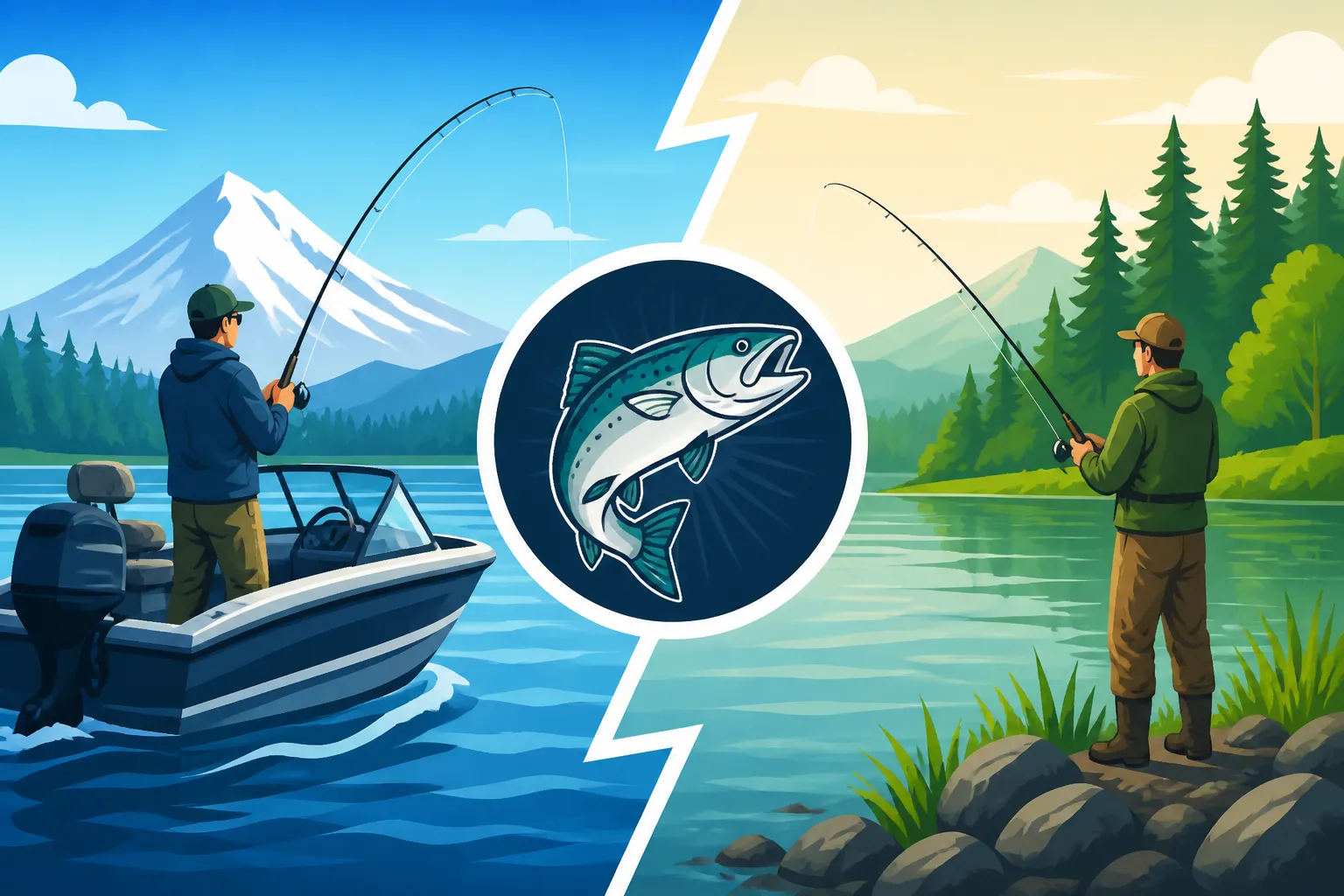
Fishing From Boats vs Banks: Different Rules
It’s incredibly frustrating to head out for a peaceful day of fishing, only to realize you’re not entirely sure if the rules that apply to your buddy in his drift boat also apply to you standing on the riverbank. Washington's fishing regulations can feel like a labyrinth, especially when the same body of water seems to have different rules depending on whether your feet are on solid ground or floating in a vessel. This guide will meticulously break down the distinct — and sometimes overlapping — regulations for fishing from boats versus fishing from the bank in Washington State, helping you navigate the complexities with confidence.
The Fundamental Divide: Access, Mobility, and Opportunity
When you think about fishing, whether from a boat or the bank, it feels like the goal is the same: catch fish. But the reality in Washington is that these two methods, while both valid, come with their own set of advantages, limitations, and, critically, regulatory nuances. Understanding these basic differences is the first step to truly grasping why the rules sometimes diverge.
The Expansive World of Boat Fishing
Imagine the freedom of a boat angler. They can navigate to the middle of a vast lake, chase salmon in the Puget Sound, or follow a steelhead run down a sprawling river like the Columbia. This mobility is a huge advantage, opening up access to deeper holes, offshore structures, and otherwise inaccessible stretches of water that bank anglers can only dream of. Boats allow you to cover significant distances, whether you're trolling for kokanee in Lake Chelan or searching for halibut off Westport. This expansive access often means boat anglers can target a wider variety of species and exploit different fishing patterns that are simply out of reach from shore. It’s about being able to adapt to where the fish are, rather than being limited to where you can physically stand.
Of course, this freedom isn't without its own set of responsibilities and equipment. Boat anglers need to consider boat maintenance, launching and retrieval logistics, fuel costs, and essential safety gear like life vests and radios. The investment in time and money can be substantial, but for many, the ability to explore Washington's diverse aquatic environments makes it entirely worthwhile. From small drift boats on the Skagit River to large offshore charters out of Ilwaco, the vessel itself dictates much of the fishing experience and what regulations apply to that specific type of craft.
The Grounded Reality of Bank Fishing
On the flip side, bank fishing is often the most accessible and affordable way to enjoy fishing in Washington. All you need is a rod, some tackle, and a stretch of public shoreline. Rivers like the Cowlitz and Skykomish are famous for their bank access, attracting countless anglers during salmon and steelhead runs. This method thrives on simplicity and convenience; you can often fish for a few hours without the hassle of launching a boat or navigating complex waterways. Bank fishing often fosters a different kind of connection to the water, allowing anglers to observe the nuances of the river current or tidal flow up close, honing skills in reading water.
However, bank fishing comes with inherent limitations. Your reach is restricted to how far you can cast, and your mobility is dictated by the shoreline's accessibility. This means prime fishing spots can become crowded, especially during peak seasons when popular stretches of the river are lined with anglers. Bank access might be limited by private property, challenging terrain, or dense vegetation. While it offers a fantastic entry point into the sport, bank anglers must often be more strategic about timing, lure choice, and patience, knowing they can't simply motor to a new spot if the bite slows down. It's a method that truly celebrates the local knowledge of a specific bend in a river or a particular beach on the Sound.
Navigating Washington's Regulations: Key Differences
The Washington Department of Fish and Wildlife (WDFW) sets regulations to manage fish populations and ensure fair chase. These rules are extensive and cover everything from species-specific seasons to gear restrictions. A critical element often overlooked by newcomers is how these regulations can, and often do, differentiate between fishing from a boat and fishing from the bank. It's not always a simple one-size-fits-all approach.
Rod Limits and the Two-Pole Endorsement
One of the most common and often confusing distinctions revolves around how many fishing rods you're allowed to use. Generally, in Washington, a standard fishing license allows you to fish with one rod. However, this rule changes significantly depending on your method.
If you’re fishing from a boat, you might be interested in the Washington's Two-Pole Endorsement and Who Needs One. This additional endorsement, which comes with an extra fee, allows an angler to use two fishing poles simultaneously. This is a game-changer for many boat anglers, enabling them to present different baits or lures at varying depths, or simply increase their chances of a bite. The logic behind allowing this primarily for boaters stems from the greater control and space a boat offers, reducing the likelihood of tangled lines with other anglers, which is a major concern in crowded bank-fishing scenarios. Imagine 20 anglers on a riverbank, all trying to manage two lines each – it would be a tangled mess in minutes!
For bank anglers, the situation is different. On most rivers and streams in Washington, even if you have a two-pole endorsement, you are typically restricted to using only one rod while fishing from the bank. The reasoning is primarily safety and courtesy; crowded bank areas make managing multiple lines difficult and can lead to frustration among anglers. While there are exceptions, particularly in some designated lakes and ponds, it’s a safe bet that if you're on a riverbank, you’ll be limited to one rod. Always consult the current Washington Sport Fishing Seasons and Emergency Closures pamphlet for the specific body of water you intend to fish, as these rules can change based on location and species.
Geographic Boundaries and Restricted Areas
Another crucial area where regulations diverge between boat and bank fishing involves specific geographic boundaries and restricted areas. While some areas are entirely closed to fishing regardless of method, others might have distinct rules for boaters versus those on shore.
Consider areas around fish hatcheries or river mouths. Often, there will be "sanctuary" zones or "no-fishing" boundaries clearly marked, sometimes extending only a certain distance from shore or hatchery outfalls. A bank angler might be allowed to fish right up to a sign that prohibits fishing within 100 feet of a fish ladder, while a boat angler might be restricted from entering an entire bay or channel to protect congregating fish. Conversely, some areas might be entirely inaccessible from the bank due to private property or dangerous terrain, leaving them exclusively for boat anglers. For example, some marine areas in Puget Sound have boundaries that apply differently to beach access versus boat access, particularly when it comes to salmon seasons or species like rockfish. It's essential to consult Where to Find Current Washington Fishing Rules to ensure you're not inadvertently trespassing or fishing in a restricted zone.
Furthermore, specific rules apply to fishing from piers or docks. While these might seem like bank fishing because your feet are on a stationary structure, they often fall under their own category, sometimes allowing two poles without the endorsement, even though they are fixed to the land. This is why understanding the fine print about "Fishing From Boats vs Banks: Different Rules" is so vital.
Gear Restrictions and Bait Rules
Washington's regulations often impose specific gear and bait restrictions that can vary depending on whether you are on a boat or the bank. These rules are usually put in place to protect sensitive fish stocks, particularly wild steelhead and salmon, or to minimize bycatch.
A prime example is the use of Barbless Hook Requirements on Washington Rivers. While many rivers now require barbless hooks for all salmon and steelhead fishing, regardless of method, there are still specific river sections or seasons where this rule might apply differently. For instance, a particular river stretch might be barbless-only for boat anglers trying to protect wild steelhead, while bank anglers might have slightly different allowances if they are targeting hatchery fish in a designated area. Similarly, Washington Bait Bans and When They Apply are common on many rivers, especially for sensitive species. While often universal, there might be situations where bait is allowed in a boat but not from the bank in specific sections, or vice versa, depending on the desired impact on fish behavior and mortality rates.
For instance, certain selective gear rules, which restrict the type of terminal tackle (like single-point barbless hooks or artificial lures only), are often applied to both boat and bank anglers in conservation-focused fisheries. However, the specific interpretation or enforcement can feel different depending on the access point. For boat anglers, being able to quickly change locations might mean they can move out of a restricted gear zone more easily than a bank angler who might be committed to a specific stretch of river. Always consult the official WDFW regulations pamphlet for the precise rules pertaining to your chosen fishing location and method.
Practical Considerations for Each Approach
Beyond the official rulebook, there are many practical differences in gear, preparation, and safety that distinguish boat fishing from bank fishing. These aren't necessarily legal requirements but are crucial for a successful and enjoyable trip.
Essential Gear for Boat Anglers
Fishing from a boat requires a whole different level of preparedness. You're not just bringing your rod and tackle box; you're essentially taking a small, floating base camp with you. Beyond the obvious necessities like the boat itself, motor, and trailer, here's what boat anglers often need:
- Safety Gear: This is paramount. Life jackets for everyone on board (easily found on Amazon), an anchor, paddles, a bailing device, a horn or whistle, and navigational lights (if operating after dark) are typically required by law. For offshore trips, a VHF radio, flares, and a first-aid kit are also crucial.
- Electronics: A fish finder or sonar unit is invaluable for locating structure, marking fish, and understanding depth contours, whether you're chasing Walleye on Lake Roosevelt or salmon in Puget Sound. GPS is also essential for navigation, especially in larger bodies of water or offshore.
- Specialized Rod Holders: Trolling for salmon or kokanee requires rod holders to keep your lines in the water at specific angles and depths.
- Coolers and Fish Boxes: More space means you can bring larger coolers for your catch, keeping them fresh throughout the day.
- Netting and Gaffs: Landing larger fish, especially powerful Chinook salmon or heavy halibut, often requires a substantial net or a gaff, which are much easier to wield from a boat.
For example, when preparing for a day of Puget Sound salmon fishing, a boat angler might spend hours rigging up downriggers, checking their electronics, and ensuring they have enough fuel and bait for a full day of trolling. The sheer volume of gear and preparation is a significant aspect of boat fishing.
Must-Haves for Bank Anglers
Bank fishing, while simpler, still benefits from smart gear choices that enhance comfort and effectiveness within its limitations.
- Waders and Boots: If you're planning to fish rivers or shallow shorelines, good quality waders (you can find a wide range on Amazon) are essential to extend your reach, stay warm, and avoid getting wet. Sturdy wading boots with good grip are equally important for navigating slippery riverbeds or muddy banks.
- Portable Tackle Solutions: Since you're often walking, a small backpack or vest with essential tackle, bait, and a few snacks is more practical than a large tackle box. You want to be light and mobile.
- Folding Chair or Bucket: Patience is key for bank anglers, and having a comfortable spot to sit can make a long wait much more pleasant. A sturdy bucket can also double as a place to keep your catch.
- Long-handled Net: While not as common as in boat fishing, a long-handled net can be a lifesaver for landing fish from an elevated bank or over brush.
- Appropriate Clothing: Weather in Washington can change in an instant. Layered, waterproof clothing is crucial for staying comfortable during long hours on the bank, especially during the colder steelhead season on rivers like the Hoh.
A bank angler planning a trip to the Cowlitz River for spring Chinook will focus on a selection of effective lures or bait, a good pair of waterproof boots, and perhaps a small stove for coffee, knowing they'll be spending hours in a relatively fixed position, hoping the fish come to them.
Safety First: Unique Concerns for Each Method
Safety is paramount in both boat and bank fishing, but the specific risks and necessary precautions differ considerably.
For boat anglers, the biggest concerns are water hazards, rapidly changing weather, and mechanical failures. Rough seas in areas like the Strait of Juan de Fuca or sudden squalls on large lakes can quickly turn a pleasant day into a dangerous situation. Collisions with other boats or debris, running aground, and carbon monoxide poisoning from poorly ventilated boat engines are also serious risks. Always check marine forecasts before heading out, ensure your boat is well-maintained, and have a float plan so someone knows where you're going and when you expect to return. The Coast Guard offers safety courses that are highly recommended for all boaters.
Bank anglers, while not facing the immediate dangers of capsizing, have their own set of risks. Slippery banks, swift currents in rivers, and cold water temperatures pose significant hypothermia risks if you fall in. Private property issues, sometimes leading to confrontations, are also a concern. Always be aware of your surroundings, especially if fishing alone. Wear appropriate footwear, consider a wading staff for stability, and be mindful of your footing, especially near steep or unstable banks. When fishing busy riverbanks, casting etiquette is also a form of safety, preventing hooks from flying into nearby anglers.
When the Lines Blur: Piers, Docks, and Wading
Sometimes, the distinction between boat and bank fishing isn't so clear-cut. Washington has numerous public piers, docks, and miles of wadeable rivers that present their own unique regulatory and practical considerations. These "hybrid" scenarios often blend elements of both methods.
Pier and Dock Fishing Specifics
Public piers and docks in Washington offer fantastic access to saltwater and sometimes freshwater fishing without needing a boat. Think of places like the Edmonds Pier, the Mukilteo Lighthouse Pier, or various public docks in lakes. For many, these are ideal spots to introduce kids to fishing or for a quick outing without heavy gear.
The interesting thing about piers and docks is that they often exist in a regulatory gray area. While physically connected to the land, the rules governing them can sometimes mimic those for boats or have their own special provisions. For example, some piers allow you to use two fishing rods without needing the Washington's Two-Pole Endorsement, a privilege usually reserved for boat anglers. This is often because piers provide ample space, making multi-rod fishing less disruptive than on a narrow riverbank. However, specific daily limits or species restrictions that apply to the surrounding marine area or body of water will still apply. Always check the signage at the pier or the "Special Rules" section in the regulations pamphlet for that specific location, as rules can vary greatly even between adjacent piers. Understanding Washington Fishing Regulations Every Angler Should Know is crucial here, as a pier might be considered a distinct fishing "area" with its own micro-regulations.
Wading: A Foot in Both Worlds
Wading into a river or shallow bay is perhaps the truest "foot in both worlds" scenario. You're physically standing in the water, often moving to cover different stretches, much like a boat angler, but your gear and access points are inherently those of a bank angler. Wading allows you to reach pockets and runs that are just out of casting distance from the dry bank, opening up new opportunities, especially for trout and steelhead.
When wading, you generally follow the regulations for bank fishing. This means you’re typically limited to one rod on rivers, even if you possess a two-pole endorsement. However, your increased mobility does change your approach. You can strategically position yourself to drift baits or flies through productive channels that would be impossible to reach from shore. Safety is paramount when wading; understanding current speed, water depth, and riverbed conditions is vital. A good wading staff is an indispensable tool, and appropriate rain gear you can find on Amazon will keep you comfortable when conditions are less than ideal. You're still bound by private property laws, meaning you cannot trespass across private land to access public streambeds, but once in the navigable water, you typically have the right to wade.
Public vs. Private Access: Knowing Your Rights
This is a recurring frustration for both boat and bank anglers. Washington has extensive public lands and waters, but private property lines can often create significant barriers, especially for those on foot.
For bank anglers, knowing where you can legally access the water is paramount. Many prime fishing spots along rivers are bordered by private land, and accessing the river through these properties without permission is trespassing. While stream beds below the ordinary high water mark are generally considered public for navigation and fishing, getting to them without crossing private land can be challenging. Always look for designated public access points, parks, or easements. The WDFW website and local county resources often provide maps of public access sites. It's a fine line to walk, and ignorance of property lines is no excuse.
For boat anglers, while you typically don't have to worry about private property on the water itself (unless navigating extremely shallow areas near shore), launching and retrieving your boat often requires using public boat launches or marinas. These facilities are generally well-marked and maintained. However, crowding at popular launches during peak seasons, like the Buoy 10 fishery on the Columbia River, can be a major headache. Understanding when a Catch Record Card Is Required in Washington or what your possession limits vs daily limits in Washington are becomes even more critical when operating from a boat that might have been launched from public land. Respecting launch etiquette and other boaters ensures smoother access for everyone.
Disclaimer
Please remember that fishing regulations in Washington State are subject to change without notice due to emergency closures, in-season adjustments, and annual rule revisions. While every effort has been made to provide accurate and up-to-date information in this guide, it is solely for informational purposes. Always consult the official Washington Department of Fish and Wildlife (WDFW) website or the most current Sport Fishing Regulations pamphlet before heading out on your fishing trip. Your personal responsibility for knowing and adhering to all current regulations is paramount.