Snagging and Foul-Hooking: What’s Illegal in Washington
There's nothing quite as frustrating as feeling a strong tug on your line, fighting a fish, only to bring it to the boat or shore and realize it's hooked somewhere other than its mouth. That moment of doubt, wondering if you've done something wrong or if you're even allowed to keep it, can instantly sour an otherwise perfect fishing day. This comprehensive guide will untangle the complexities of snagging and foul-hooking in Washington, explaining what these terms truly mean, why they're illegal to retain fish caught this way, and what you absolutely need to do if it happens to you.
Understanding Snagging and Foul-Hooking in Washington
When you're out on the water, the goal is always to hook a fish in its mouth, indicating it has actively bitten your lure or bait. However, sometimes things don't go as planned. It's crucial for every angler to understand the difference between snagging and foul-hooking, as well as their legality, to ensure responsible and lawful fishing practices in Washington State.
What is Snagging?
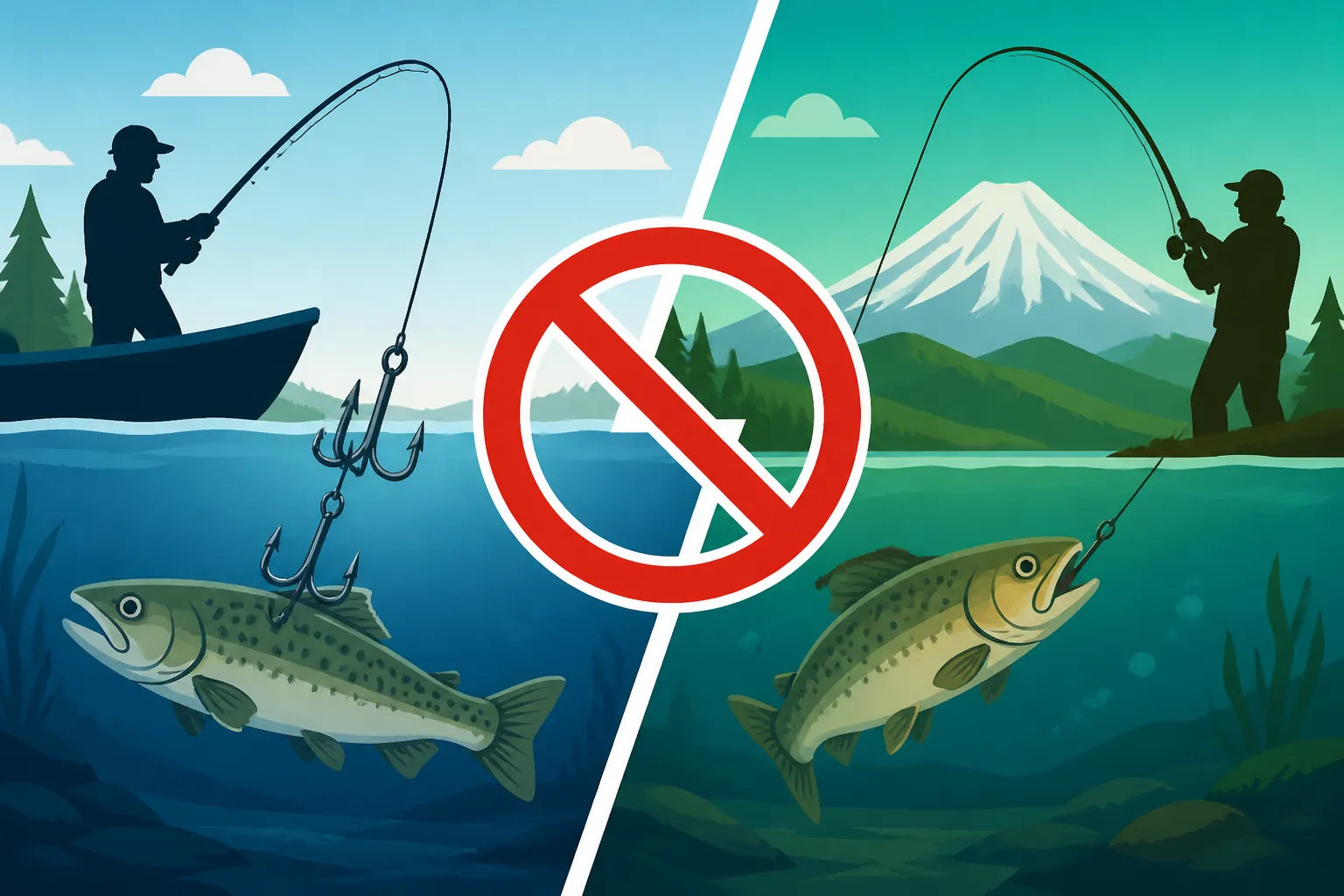
Snagging, at its core, is the intentional act of hooking a fish anywhere on its body other than the mouth. It’s a deliberate effort to use your gear to "rake" or "snatch" a fish out of the water, rather than enticing it to bite. This can involve using heavily weighted treble hooks, often swept through schools of salmon or steelhead, specifically with the intent of impaling the fish. Imagine an angler casting a bare treble hook into a dense school of salmon in a river like the Cowlitz and then making sharp, jerky retrieves, hoping to "snag" a fish by its flank or tail. This behavior is precisely what Washington Department of Fish and Wildlife (WDFW) regulations aim to prevent.
Such tactics are universally condemned in ethical angling circles because they bypass the fair chase principle. It’s not about skill, presentation, or tricking a fish into feeding; it’s about brute force and opportunity. WDFW regulations are very clear on this, often defining legal gear as having the hook freely entering the mouth of the fish. If your intent is to hook a fish anywhere else, you're engaging in snagging. Even if you accidentally hook a fish outside the mouth while intentionally trying to snag, the act itself is illegal.
What is Foul-Hooking?
Foul-hooking, on the other hand, describes an instance where a fish is hooked anywhere other than the mouth or jaw, but the act was accidental. This is where the frustration often sets in for honest anglers. You might be drift fishing for steelhead on the Skykomish River with a natural presentation, and a fish, instead of biting, might swipe at your lure with its tail, causing the hook to embed in its flank. Or perhaps a salmon is aggressively chasing your trolled spoon in Puget Sound, misses the strike, and ends up getting hooked in the pectoral fin during the commotion.
The key distinction from snagging is the lack of intent to hook the fish illegally. You were fishing with legal gear and techniques, aiming for a mouth-hooked fish, but circumstances led to an incidental hook-up elsewhere on the body. This is a common occurrence, especially when fish are schooled densely, aggressively striking, or in low-visibility conditions. While foul-hooking itself isn't illegal in terms of the act of hooking, the WDFW regulations are very specific about what must happen after a foul-hooked fish is caught. As we'll delve into, retaining a foul-hooked fish is strictly prohibited.
The Core Difference: Intent vs. Accident
The distinction between snagging and foul-hooking hinges entirely on the angler's intent. Did you intend to hook the fish in a non-mouth area, or did it happen by accident while you were genuinely trying to entice a bite?
- Snagging = Intentional and Illegal: If your fishing method involves sweeping, jerking, or raking actions designed to impale fish, or if you're using gear explicitly intended for such purposes (like oversized treble hooks without bait or lure presentation), you are snagging. This is outright illegal, and you can face penalties for the attempt to snag, even if you don't land a fish.
- Foul-Hooking = Accidental but Still Illegal to Retain: If you're fishing with legitimate methods and gear, and a fish happens to get hooked outside the mouth, that's foul-hooking. While the act of hooking itself isn't penalized, WDFW mandates that any fish hooked outside the mouth or jaw must be immediately and carefully released. You cannot keep it, even if it's a legal size, species, or within your bag limit. This distinction is crucial for anglers trying to do the right thing.
It's vital to remember that law enforcement, specifically WDFW game wardens, will assess the circumstances. If your gear, technique, or the number of foul-hooked fish you're catching raises suspicion about your intent, what you claim was an accidental foul-hook could be deemed intentional snagging. Always err on the side of caution and adhere strictly to ethical angling practices.
Why Snagging and Foul-Hooking Are Illegal
The regulations against snagging and retaining foul-hooked fish aren't arbitrary; they are deeply rooted in principles of ethical sportsmanship, conservation, and the biological well-being of Washington's fish populations. These rules protect the resource and ensure a fair experience for all anglers.
Ethical Considerations and Fair Chase Principles
Fishing, for many, is more than just catching dinner; it's a sport, a challenge, and a communion with nature. At the heart of this experience lies the principle of "fair chase." This ethical standard dictates that the animal being hunted or fished should have a reasonable chance to escape. When a fish is enticed to bite a lure or bait, it's making a conscious decision (from a fish's perspective) to feed. It's an engagement, a test of skill for the angler to present the offering correctly and for the fish to respond.
Snagging completely subverts this principle. It turns fishing into a harvesting operation, where fish are simply impaled without ever having the opportunity to choose to bite. This method shows a profound disrespect for the fish and the sport itself. Imagine trying to "catch" a deer by just driving your car into it; it's not hunting, it's just killing. Similarly, snagging is not fishing. The ethical angler aims for a clean, fair fight where the fish takes the bait willingly. WDFW regulations uphold these values, promoting a higher standard of sportsmanship on Washington's lakes and rivers.
Conservation and Biological Impact
Beyond ethics, there are significant conservation concerns tied to snagging and foul-hooking. When a fish is hooked anywhere other than its mouth, especially in vital organs or muscle tissue, it often sustains far more severe injuries than a mouth-hooked fish. These injuries can include punctured organs, spinal damage, or extensive tearing of muscle, which can lead to infection, severe stress, and ultimately, death.
Consider an aggressive salmon run in a popular river like the Nisqually. If anglers were allowed to snag or retain foul-hooked fish, the mortality rate for released fish would skyrocket. Many fish, even if they swim away, might succumb to their injuries later, completely negating conservation efforts like selective fisheries and catch-and-release rules during wild steelhead closures. This is particularly critical for vulnerable or protected species like wild steelhead, where every fish released with minimal harm is vital for population recovery. Allowing snagging would rapidly deplete fish stocks, undoing years of hard work by WDFW and conservation groups. It impacts the future of fishing for everyone.
Avoiding Wastage and Promoting Sustainable Harvest
While the main goal of retaining a fish is often for consumption, foul-hooking can lead to concerns about fish quality and wastage. A fish that has been foul-hooked, especially in an area like the belly or tail, might struggle more violently, causing excessive bruising or tearing of its flesh, which compromises its quality as food. The WDFW has specific rules about how bag and possession limits work in Washington, and those rules are predicated on the idea of a healthy, legally caught fish being harvested.
Furthermore, if foul-hooked fish were allowed to be kept, it could incentivize less careful angling, or even subtle forms of intentional snagging, as anglers might feel less pressure to ensure a clean mouth hook. This creates a slippery slope where the lines between ethical fishing and unethical harvesting become blurred, leading to overharvesting and poor resource management. By mandating immediate release of foul-hooked fish, WDFW promotes a sustainable harvest model where only healthy, mouth-hooked fish, caught fairly, contribute to an angler's limit. This helps protect the resource from being exploited and ensures that future generations can enjoy the vibrant fisheries Washington offers.
Recognizing a Foul-Hooked Fish
It's one thing to understand the rules; it's another to apply them in the heat of the moment, especially when a powerful fish is on the end of your line. Knowing how to recognize a foul-hooked fish is crucial for compliance and ethical angling. Sometimes it's obvious, sometimes it's not, and learning to read the signs can save you from a potential violation.
Identifying the Hook Location
The most definitive way to tell if a fish is foul-hooked is by visually inspecting where the hook is embedded. WDFW regulations generally state that a fish is legally hooked when the hook is "freely entering the mouth or embedded in the jaw." Any other location classifies it as foul-hooked.
Common foul-hook locations include:
- Dorsal Fin or Back: The hook might be in the top fin or anywhere along the back.
- Pectoral or Pelvic Fins: The side fins or belly fins can be inadvertently snagged.
- Anal Fin or Tail: The fin near the vent, or even the caudal (tail) fin itself, is a frequent foul-hook spot, particularly when fish are schooling tightly.
- Belly/Flank: Anywhere along the body from gill plate to tail can be a foul-hook spot.
- Eye or Gill Plate: These are less common but highly damaging foul-hook areas.
When you bring a fish to hand or net, take a moment to carefully examine the hook placement. Is it clearly inside the mouth, or at least piercing the jaw structure? If it's anywhere else—the side of the head, the shoulder, the belly, the tail—it's a foul-hooked fish, and it must be released immediately. Don't let the excitement of a catch cloud your judgment.
Fight Characteristics of a Foul-Hooked Fish
While not a definitive scientific measure, many experienced anglers can often tell they've foul-hooked a fish by the way it fights. This isn't a hard and fast rule, but it's a good indicator that should prompt a careful inspection upon landing.
- Sideways or Disoriented Fight: A mouth-hooked fish typically uses its powerful head and tail to pull directly away from you, often making strong, surging runs. A foul-hooked fish, especially if hooked in the side or tail, might fight in a more awkward, sideways fashion. It might thrash violently on the surface or struggle in an uncoordinated way because it's not propelling itself forward against the line as effectively.
- Sudden, Heavy Dead Weight: Sometimes, instead of a vibrant run, a foul-hooked fish can feel like dragging a heavy, inert object. This can happen if the hook is deep in a fleshy part of the body, offering a lot of resistance but less dynamic movement.
- Lack of Head Shakes: Mouth-hooked fish, particularly salmon and steelhead, often perform powerful head shakes to dislodge the hook. A foul-hooked fish might not exhibit these characteristic movements, or they might be less effective.
These fight characteristics are subtle cues. They shouldn't be used to determine legality, but they can certainly prepare you to inspect the fish more closely when it gets to your boat or shore. If the fight felt "off," be extra vigilant about checking the hook location.
When in Doubt, Release
This is perhaps the most important principle when it comes to foul-hooked fish in Washington: if you have any doubt about whether a fish is legally hooked, release it immediately. The consequences of retaining a foul-hooked fish far outweigh the fleeting satisfaction of keeping a questionable catch. This is especially true for species like salmon and steelhead, which often have complex regulations depending on the specific Washington Sport Fishing Seasons and Emergency Closures in effect.
WDFW wardens are highly trained to identify foul-hooked fish, and they operate on the assumption that if you kept it, you believed it was legal. A simple mistake could lead to a fine or worse. When a fish is hooked just barely inside the lip, but also slightly grazing the outside, for example, it can be a tough call. In such marginal cases, it's always best to err on the side of conservation and legality. Gently unhook the fish, keep it in the water as much as possible, and let it swim away unharmed. This responsible action ensures you're upholding the spirit of the regulations and protecting the resource for everyone.
What to Do If You Foul-Hook a Fish
So, you've identified a fish that's clearly hooked outside the mouth. What now? The WDFW regulations are very specific about the required actions, and adhering to them is paramount for avoiding penalties and ensuring the fish's survival.
Immediate Release Mandate
The most critical rule regarding foul-hooked fish in Washington is the mandate for immediate release. This isn't optional; it's a legal requirement. As soon as you determine the fish is foul-hooked, you must release it back into the water with the least possible injury. This means:
- Do not bring it ashore or into the boat unless absolutely necessary for safe unhooking. If you can unhook it while it's still in the water, do so.
- Do not take photos of a foul-hooked fish you intend to release. While it might be an impressive fish, keeping it out of the water longer for a photo op increases its stress and reduces its chances of survival.
- Do not put it on a stringer or in a livewell. This is a clear violation and proof of intent to retain an illegally caught fish.
- Do not count it towards your daily or possession limit. Even if it's the exact species and size you're allowed to keep, a foul-hooked fish cannot be legally retained. This ties directly into understanding How Bag and Possession Limits Work in Washington.
The "immediate" part is key. There's no gray area here. If a game warden observes you handling a foul-hooked fish for an extended period, or attempting to measure it against a slot limit, they might reasonably conclude you intended to keep it, leading to a citation.
Handling the Fish Minimally and Safely
When releasing a foul-hooked fish, minimizing stress and injury is crucial for its survival. Remember, these fish are already stressed from being hooked in an unusual spot, and rough handling can compound the damage.
Here's how to handle a foul-hooked fish properly:
- Keep it Wet: Whenever possible, keep the fish submerged or at least partially in the water during unhooking. If you must bring it into the boat or onto the bank, do so only for a few seconds. Using a rubberized landing net (you can find excellent options on Amazon) is highly recommended, as it protects the fish's slime coat, scales, and fins much better than knotted nylon nets.
- Wet Your Hands: If you need to touch the fish, wet your hands thoroughly first. Dry hands can remove the fish's protective slime layer, leaving it vulnerable to infection.
- Use Pliers or a De-Hooker: Carry a good pair of long-nosed pliers or a specialized de-hooking tool. These allow you to quickly and efficiently remove the hook with minimal direct contact with the fish. Many anglers find durable, saltwater-resistant pliers on Amazon that are perfect for this task.
- Support the Fish: If you need to lift the fish, support its body horizontally. Never hold a fish vertically by the jaw or tail, as this can cause severe damage to its internal organs and spinal column. Cradle it gently under its belly.
- Revive If Necessary: For larger, exhausted fish, especially if they've fought hard, gently hold them upright in the water, facing into the current (if any), and allow water to flow over their gills. Don't pump them back and forth; this can actually impede respiration. When the fish starts to kick strongly and attempts to swim away on its own, then you can release it.
By following these practices, you demonstrate responsible angling and give the foul-hooked fish the best possible chance of recovery. For more specific advice on careful release, especially for vulnerable species, consult guidelines on Catch-and-Release Rules During Wild Steelhead Closures.
No Reporting Required for Accidental Foul-Hooking
For accidental foul-hooking, there's generally no requirement to report the incident to WDFW, as long as you immediately release the fish with minimal harm. The law focuses on the retention of foul-hooked fish, not the accidental act of hooking itself.
However, there are always exceptions or unusual circumstances:
- Deeply Injured Fish: If a fish is so severely injured by the foul-hook that it's clearly not going to survive even after careful release, and you are deeply concerned about wasting it (which is illegal to do for legally caught fish), you might consider contacting WDFW enforcement for guidance. However, this is a very rare scenario, and typically, the instruction is simply to release it. Trying to get special permission to keep a foul-hooked fish, even if it's mortally wounded, is almost never granted and can be misconstrued.
- Observed Snagging: If you witness someone else intentionally snagging fish, that's a different story. In such cases, you should absolutely report the activity to WDFW enforcement. Providing details like location, time, description of the angler, and vehicle information can help wardens intervene.
- Emergency Rule Changes: Fishing conditions and regulations can change rapidly. Always ensure you are familiar with current rules by checking the WDFW website or consulting the pamphlet. An emergency rule might, for example, prohibit fishing for certain species, making any interaction with them (even accidental foul-hooking) something to be avoided. Regularly checking What to Check Before Every Washington Fishing Trip is a good habit.
In most cases, if you accidentally foul-hook a fish while fishing legally, the correct and only action is a quick, careful, and immediate release. Don't overthink it, and definitely don't try to bend the rules.
Penalties and Enforcement for Violations
Ignoring the rules around snagging and foul-hooking can lead to serious consequences in Washington State. WDFW officers are actively patrolling, and they take these violations very seriously due to their impact on fish populations and the integrity of the sport.
Understanding the Fines
The financial penalties for fishing violations in Washington can be substantial, and snagging or retaining a foul-hooked fish falls under this category. While specific fines can vary based on the species, location, and severity of the infraction, they typically range from several hundred dollars up to a thousand dollars or more.
- Snagging (Intentional Foul-Hooking): This is considered a more egregious offense, often resulting in higher fines. It's not just about keeping an illegally caught fish; it's about the method itself. You could be fined for the attempt to snag, even if you don't land a fish. For instance, being observed making repetitive "sweeping" motions with snagging gear in a salmon staging area could warrant a citation.
- Retaining a Foul-Hooked Fish: Even if the foul-hooking was accidental, if you choose to keep the fish, you're breaking the law. The fine for this type of violation can be significant, essentially treating it the same as if you had intentionally harvested a fish out of season or over your limit. The WDFW website or the annual Washington Fishing Regulations Every Angler Should Know pamphlet provides a detailed list of infractions and their associated penalty schedule.
Beyond the initial fine, there can be additional costs such as court fees, and in some cases, you might be required to pay restitution for the value of the illegally harvested fish, especially if it's a valuable species like a hatchery spring Chinook or a prized steelhead. These financial burdens are a stark reminder of the importance of knowing and following the rules. For a broader overview of legal repercussions, explore resources on Fines and Penalties for Common Fishing Violations.
Potential License Suspension and Revocation
For more serious or repeat offenses related to snagging or retaining foul-hooked fish, the penalties can extend beyond monetary fines to impact your fishing privileges. WDFW has the authority to suspend or even revoke your fishing license.
- License Suspension: Depending on the severity and context of the violation, your fishing license could be suspended for a period, ranging from a few months to several years. This means you would be legally prohibited from fishing anywhere in Washington State during that time. If you are caught fishing during a suspension, the penalties would be even more severe.
- License Revocation: In extreme cases, particularly for habitual offenders or those involved in commercial poaching masquerading as recreational snagging, your license could be permanently revoked. This is a rare outcome but demonstrates the WDFW's commitment to protecting the resource from those who repeatedly disregard the law.
The loss of fishing privileges is a devastating consequence for any passionate angler. It’s a harsh reminder that fishing is a privilege, not a right, and it comes with responsibilities. A violation can follow you, potentially affecting your ability to purchase licenses in other states through interstate compacts. Information on Penalties for Keeping an Illegal Wild Steelhead in Washington provides a glimpse into how seriously certain violations are treated.
WDFW Enforcement Efforts
Washington Department of Fish and Wildlife enforcement officers, often called game wardens or wildlife police, are highly trained professionals dedicated to upholding fishing regulations. They employ a variety of methods to ensure compliance and deter illegal activities like snagging.
- Patrols: Wardens patrol popular fishing areas by boat, vehicle, and even on foot. They blend in, observing anglers from a distance before making contact. They can easily spot tell-tale signs of snagging, such as repetitive casting and jerking motions in areas where fish are densely schooled but not actively biting.
- Checkpoints: Especially during peak runs for salmon and steelhead, wardens may set up checkpoints at boat launches or access points to inspect coolers, catch record cards, and verify licenses. They will examine how fish are hooked, making sure they are not foul-hooked. This is why knowing Where a Salmon Must Be Hooked to Legally Keep It is so important.
- Undercover Operations: In areas known for chronic violations, plainclothes officers may be present, acting as regular anglers to observe illegal activities firsthand. These operations are particularly effective at catching those who intentionally snag.
- Public Reporting: WDFW relies heavily on the public to report violations. If you witness snagging or other illegal activity, you can anonymously report it to the WDFW Enforcement hotline. "See Something, Say Something" is a powerful tool for protecting our fisheries.
It's clear that WDFW is serious about curbing illegal practices. Anglers should assume they are always being observed and always fish ethically and within the bounds of the law. Ignorance of the law is rarely an acceptable defense. Regularly reviewing the current fishing pamphlet, especially sections on legal gear and methods, is essential for every responsible angler. You can typically find the most up-to-date version online or by visiting a WDFW office or license vendor.
Legal Alternatives and Best Practices
Avoiding snagging and foul-hooking isn't just about escaping penalties; it's about being a responsible, ethical angler who contributes positively to the health of Washington's fisheries. Thankfully, there are plenty of effective and legal techniques that provide a thrilling and rewarding experience.
Ethical Angling Techniques for Washington Waters
True angling skill comes from understanding fish behavior, mastering presentation, and making the fish bite, not from forcibly hooking them. Here are some techniques that align with ethical fishing principles:
- Lure and Bait Presentation: Focus on presenting your lure or bait in a way that mimics natural prey and entices a genuine strike. This means matching the hatch (for trout), understanding salmon feeding patterns, or knowing where bottomfish hide. Whether you're drift fishing beads for steelhead, trolling herring for Puget Sound Chinook, or jigging for kokanee, the goal is always for the fish to eat your offering.
- Active Fishing: Rather than simply casting and retrieving erratically to snag, engage in active fishing. If you're using bait, pay attention to subtle bites. If you're using lures, vary your retrieve, add pauses, and try different depths until you find what triggers a strike. This proactive approach increases your chances of a legitimate bite.
- Proper Gear for the Species: Use gear appropriate for the species you're targeting. Light lines and small hooks might be ideal for trout in a mountain lake, while heavier gear is needed for powerful salmon in a big river like the Columbia. Using oversized, heavy-gauge hooks intended to snag, or excessively weighted gear that makes it impossible for fish to truly bite, can be interpreted as intent to snag.
- Respect Spawning Fish: While sometimes legally open, fishing for actively spawning fish can be controversial. These fish are often concentrated, making them easier to snag. Many ethical anglers choose to avoid targeting fish that are clearly on their redds (spawning beds) to protect future generations, even if regulations allow it. This is a personal choice but reflects a deep commitment to conservation.
Embracing these techniques not only keeps you within the law but also enhances the satisfaction of a truly earned catch.
Gear Considerations and Modifications
Your choice of gear can significantly influence your ability to fish ethically and reduce the likelihood of foul-hooking. Some simple modifications and mindful selections can make a big difference.
- Barbless Hooks: In many Washington fisheries, particularly for steelhead and salmon in rivers, barbless hooks are legally required. Even where not mandated, using barbless hooks is an excellent ethical practice. They cause less damage to fish and are much easier to remove, which is paramount when you need to immediately release a foul-hooked fish. You can find a wide range of high-quality barbless hooks for various applications on Amazon, making it easy to comply and be responsible. Remember to check Barbless Hook Requirements on Washington Rivers before you head out.
- Appropriate Hook Size: Avoid excessively large hooks that are more likely to snag than to fit neatly into a fish's mouth. Conversely, hooks that are too small might not hold a biting fish effectively, leading to lost fish or awkward hook-ups.
- Single Hooks over Trebles: Where regulations allow, consider replacing treble hooks on lures with single, barbless hooks. Single hooks generally cause less damage and are easier to remove, especially if a fish is accidentally foul-hooked.
- De-Hooking Tools: Always carry a good pair of fishing pliers or a specialized de-hooker. These tools allow for quick and safe hook removal, minimizing handling time and stress on the fish. Many anglers swear by the convenience and effectiveness of long-reach de-hookers for those awkward, deep hook sets.
- Careful Rigging: Ensure your bait and lures are rigged correctly. For instance, when fishing roe bags for steelhead, make sure your hook isn't buried so deep that it can't protrude to catch the fish's mouth. When trolling or jigging, ensure your presentation is natural and less prone to snagging.
By being mindful of your gear, you empower yourself to fish more ethically and minimize harm to the fish you encounter.
Focusing on Education and Stewardship
Ultimately, the long-term health of Washington's fisheries depends on educated, responsible anglers. Becoming a steward of the resource means more than just following the rules; it means understanding why those rules exist and actively promoting best practices.
- Read the Regulations: Don't just skim the regulations pamphlet. Really sit down and read it, especially the sections pertaining to the waters you intend to fish. Pay close attention to definitions of legal gear, bag limits, and specific species restrictions. The WDFW often updates its rules, so checking online sources regularly is key. Reading the Washington Sport Fishing Regulations Pamphlet is an annual ritual for dedicated anglers.
- Stay Informed: Beyond the annual pamphlet, always check for emergency rule changes before heading out. Rivers can close, bag limits can shift, and gear restrictions can be implemented with little notice, often due to unforeseen circumstances with fish returns or environmental factors.
- Share Knowledge: If you see a fellow angler struggling with identification or technique, or even making an honest mistake, offer helpful advice rather than judgment. Educating new anglers on the importance of releasing foul-hooked fish, for example, can be much more effective than silent disapproval.
- Lead by Example: Be a role model on the water. Practice catch and release responsibly, handle fish gently, pick up any litter you find, and always adhere to all regulations. Your actions speak volumes and can inspire others to adopt ethical practices.
- Support Conservation: Consider joining local fishing clubs or conservation organizations that work to protect and restore Washington's fish habitats. These groups often play a vital role in advocating for sustainable fisheries and educating the public.
By embracing these principles, you become a guardian of Washington's incredible fishing heritage, ensuring that the thrill of the catch and the beauty of our waterways can be enjoyed for generations to come.
Disclaimer
The information provided in this guide is for general informational purposes only and does not constitute legal advice. Fishing regulations in Washington State are subject to frequent change and can be highly complex, varying by species, location, and season. Always consult the official Washington Department of Fish and Wildlife (WDFW) regulations pamphlet, their website, or contact WDFW directly for the most current and specific rules and laws before engaging in any fishing activity. Non-compliance with fishing regulations can result in significant fines and penalties.