How Big Do Washington Chinook Get?
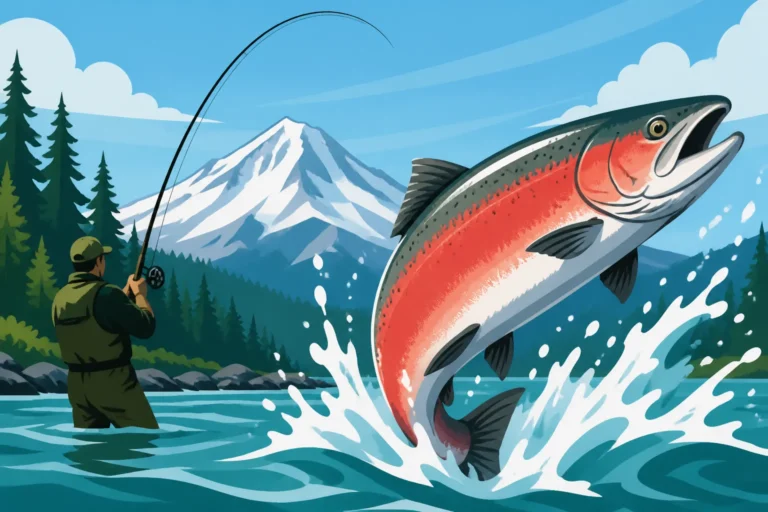
One of the most thrilling questions any angler asks when planning a trip to the Evergreen State is, "Just how big do Washington Chinook salmon get?" It's a question loaded with excitement and anticipation, hinting at the potential for a truly monumental catch. Washington’s waters, from the vast expanse of Puget Sound to the mighty Columbia River, are legendary for producing some impressive Chinook, often called "Kings" for a very good reason. This guide will dive deep into what makes these magnificent fish grow to such epic proportions, what you can realistically expect to encounter, and how to appreciate these incredible creatures.
The Lure of Washington's King Salmon
There’s an undeniable allure to Chinook salmon. They are powerful, beautiful, and when they strike, they test an angler’s skill, tackle, and endurance like few other fish can. In Washington, the pursuit of a giant Chinook is a rite of passage for many, leading to stories that last a lifetime.
Why Chinook are Called "King"
The moniker "King Salmon" isn't just a marketing ploy; it's a testament to the species' dominance and impressive characteristics. These are the largest of the Pacific salmon species, and their sheer size, powerful fighting ability, and rich, red meat have earned them this regal title. When you're talking about a species that can easily push into the 30, 40, or even 50-pound range, "King" feels entirely appropriate. They command respect in the water, and their presence is keenly felt by anyone lucky enough to pursue them. Understanding how to identify a Washington Chinook Salmon is the first step in appreciating these majestic fish.
Many anglers consider a 20-pound Chinook a good fish, a 30-pounder a fantastic trophy, and anything over 40 pounds a true monster. The excitement that builds when you're fighting a fish that you know could be in that upper echelon is what keeps people coming back, season after season. It’s not just about the weight, though that's certainly a big part of it. It’s the entire experience – the screaming drag, the deep thudding headshakes, and the sheer effort required to bring such a magnificent creature to the net.
The Thrill of a Giant Salmon Hookup
Imagine being out on the choppy waters of Puget Sound, trolling a cut-plug herring or a flasher and spoon, when suddenly your rod tip doubles over. The line starts peeling off your reel at an alarming rate, the sound of the drag a high-pitched scream cutting through the ocean breeze. This isn't just any fish; this feels different. It's a sustained, powerful run that speaks of immense strength. This is the moment every salmon angler dreams of: the hookup with a giant King salmon.
The fight can be long and arduous, a true test of wills between angler and fish. These fish dive deep, make blistering runs, and sometimes even jump, showcasing their raw power. Your arms will ache, your back might protest, but the adrenaline flowing through you will keep you focused. The moments spent battling a large Chinook are often replayed in memory for years, becoming the stuff of legend among fishing buddies. It's a primal encounter that connects you to the wildness of Washington's waters, creating a memory far greater than just the fish itself.
Understanding Chinook Size Factors
Chinook salmon don't all grow to the same colossal sizes. Their ultimate weight and length are influenced by a complex interplay of factors, from the amount of time they spend in the ocean to the richness of their feeding grounds and their genetic makeup.
Age and Ocean Residence
Perhaps the most significant factor determining a Chinook's size is its age and, more specifically, how long it spends feeding in the rich ocean environment. Unlike some salmon species that return to freshwater after just one or two years at sea, Chinook are known for their extended ocean migrations and feeding periods.
Typically, Chinook salmon will spend anywhere from two to five years in the ocean before returning to their natal rivers to spawn. The longer they remain at sea, gorging on abundant forage fish like herring, anchovies, and squid, the larger they will grow. A "jack" Chinook might be a two-year-old fish, often under 10 pounds, that matured early and returned to spawn. These are much smaller than their older siblings. A four or five-year-old Chinook, however, has had several more seasons of intense feeding in the ocean, accumulating vast amounts of biomass, leading to those truly impressive weights. These older fish are the ones that command the "King" title. This difference in life history is also a key factor when trying to tell Chinook vs Coho in Washington: Telling Them Apart, as Coho generally have a shorter ocean residence.
Food Availability and Habitat Quality
Just like any living creature, a Chinook's growth potential is directly tied to the availability and quality of its food source. The Pacific Ocean, and specific areas within it like the coastal waters off Washington, are incredibly productive ecosystems. Areas with abundant schools of baitfish provide a veritable buffet for growing salmon. If a Chinook has consistent access to high-fat, protein-rich prey, it will grow faster and larger.
Conversely, periods of scarcity or environmental shifts that impact forage fish populations can limit a salmon's growth. Ocean temperatures, currents, and nutrient upwellings all play a role in the health of the marine food web. A Chinook that spends its formative years in a highly productive feeding ground will simply have more opportunities to put on weight than one that experiences leaner times. The overall health and richness of their marine habitat are paramount to growing truly massive fish.
Genetic Influence and Hatchery Programs
Genetics also play a role, though perhaps less overtly than age and food. Just like people, some fish are simply predisposed to grow larger. Different Chinook runs can have slightly different genetic predispositions for growth rate and maximum size. Hatchery programs also come into play. Many of Washington's salmon fisheries rely on hatchery-bred Chinook, which are released into rivers to supplement wild populations.
Hatchery fish are often managed for specific traits, including growth rates. While wild Chinook are known for their incredible resilience and often impressive size, hatchery fish can also reach substantial dimensions given the right conditions. However, there's always an ongoing discussion about the genetic diversity and long-term implications of hatchery programs versus purely wild stocks. Both contribute to the overall potential for large Chinook in Washington, and it's a topic deeply woven into Washington Fishing Regulations Every Angler Should Know.
Average Size Expectations Across Washington Waters
So, what can you realistically expect when you head out to chase Chinook in Washington? While state records capture the extreme outliers, most anglers are interested in the typical size range for a keeper. The size can vary quite a bit depending on which specific waters you're fishing.
Puget Sound and Coastal Chinook
Puget Sound is a vast inland sea, offering diverse opportunities for Chinook anglers. Here, you'll encounter two main types of Chinook: "blackmouth" and returning adult salmon. Blackmouth are resident Chinook that spend their entire ocean phase within Puget Sound. They are highly prized for their chrome bright appearance and firm meat, but generally don't reach the colossal sizes of their ocean-going counterparts. A respectable blackmouth might range from 8 to 15 pounds, with some reaching into the low 20s.
When the migratory adult Chinook return from the open ocean to spawn in Puget Sound rivers, that's when you start seeing much larger fish. These "Kings" can regularly hit 20-30 pounds, and every season sees multiple fish pushing 40 pounds or more caught by anglers Trolling for Salmon in Washington's Puget Sound. The coastal fisheries, particularly around areas like Westport or Neah Bay, target these ocean-run fish directly. Here, the average size tends to be a bit larger, with 25-35 pound fish being common, and trophy-sized fish over 40 pounds a real possibility.
Table: Average Chinook Salmon Size by Washington Region (Typical Keeper Range)
| Region | Average Weight (lbs) | Occasional Trophy Weight (lbs) | Notable Characteristics |
|---|---|---|---|
| Puget Sound (Resident Blackmouth) | 8-15 | 20-25 | Chrome bright, spend entire life in Sound |
| Puget Sound (Returning Adults) | 20-30 | 35-50+ | Strong fighters, migrate from open ocean |
| Washington Coast (Ocean) | 25-35 | 40-60+ | Fattest, most powerful, direct ocean feeders |
| Columbia River | 20-40 | 50-70+ | Iconic "Upriver Brights," often largest |
| Tributary Rivers (e.g., Cowlitz) | 15-25 | 30-40 | Size varies by run and distance from ocean |
Note: These are general ranges and actual sizes can vary significantly based on run strength, year, and specific location within the region.
Columbia River Giants
The Columbia River is arguably Washington's most iconic salmon fishery, especially when it comes to gargantuan Chinook. Fishing the Columbia River in Washington: A Complete Overview showcases the sheer scale of the opportunity. The "Upriver Brights" of the Columbia are legendary for their size and fighting ability. These fish have often traveled thousands of miles in the ocean and then hundreds of miles up the Columbia and its tributaries before reaching anglers.
It's not uncommon for anglers to regularly catch Chinook in the 25-40 pound range in the Columbia, particularly during the peak of the fall run. Fish in the 50s are caught annually, and occasionally, a true monster pushing 60, 70, or even more pounds makes an appearance. These fish are absolute beasts, often with incredible girth, making them a top target for trophy hunters. When fishing the Columbia, especially for these larger fish, anglers often need to be mindful of regulations, including the Washington's Columbia River Salmon and Steelhead Endorsement, Explained.
Tributary and River System Considerations
While the mainstem Columbia and Puget Sound offer the largest fish, Washington's numerous tributary rivers also see significant Chinook runs. Rivers like the Cowlitz, Kalama, Lewis, and Nisqually all host returning Kings. The size of these fish in the rivers can vary. Generally, the further upstream you go, or the longer the fish has been in freshwater, the less it will weigh, as it's no longer actively feeding and is burning fat stores for its spawning journey.
However, even in rivers, healthy Chinook in the 15-25 pound range are common, with 30-pounders being a very respectable catch. These river fish, while perhaps not quite as heavy as their ocean-caught counterparts, offer a different kind of fight in the confined spaces of a river. They use the current to their advantage, making for thrilling battles on lighter tackle. The Daily Limit for Chinook in Puget Sound or other rivers is important to know, as river regulations can differ.
Washington State Records and Notable Catches
Every angler dreams of catching "the big one," and in Washington, the standard for "big" is truly impressive. The state record for Chinook salmon stands as a testament to the immense size these fish can achieve in the rich Pacific waters.
The Legend of the State Record
The Washington state record Chinook salmon is a fish of legendary proportions. While specific figures can fluctuate and be subject to various criteria, the biggest ever caught on record consistently hovers in the high 70-pound to low 80-pound range. Imagine a fish that weighs as much as a small child, a gleaming, powerful torpedo of muscle and instinct! This incredible record-breaker was a Puget Sound Chinook, a testament to the productivity of these waters.
Catching a fish of that magnitude is often a once-in-a-lifetime event, requiring a combination of skill, luck, the right conditions, and being in the right place at the right time. These record fish are anomalies, the absolute peak of genetic potential and perfect feeding conditions. They represent the ultimate achievement for any Washington salmon angler and serve as a constant source of inspiration and ambition. While most anglers will never approach this kind of size, knowing it's possible fuels the passion for the sport.
Personal Bests and Trophy Expectations
For the average angler, setting a new personal best (PB) is often the more realistic and equally rewarding goal. Perhaps your first Chinook was 12 pounds, and your next goal is to break 20, then 30, and so on. Many anglers in Washington are thrilled to land a "hog" in the 30-pound class, a fish that truly fills the cooler and provides an abundance of delicious fillets. A fish of this size is a serious trophy, one that often ends up on the wall or in cherished photographs.
What defines a "trophy" can be highly personal. For a beginner, a 15-pound Chinook might feel like a trophy. For a seasoned veteran, it might take a 40-pounder to get their heart truly racing. The beauty of fishing in Washington is that the potential for a personal best, a true trophy fish, is always present. The Salmon Possession Limit in Washington also plays a role in how many of these prized fish you can bring home. You can always chat with local tackle shops or fellow anglers to hear their stories of incredible catches and learn what current seasons are producing.
Measuring and Reporting Your Catch
Once you’ve successfully battled and landed a Chinook, the work isn't quite over. Proper measurement and reporting are crucial, both for personal record-keeping and for complying with Washington’s regulations, which help manage these incredible fisheries.
Accurate Measurement Techniques
When you land a big Chinook, the excitement is palpable, but taking accurate measurements is important, especially if you think you have a potential trophy or record-breaker. For weight, a reliable digital scale is your best friend. Make sure it's calibrated and can handle the potential weight of a large salmon. Many anglers bring a quality scale with them, often easily found on Amazon.
For length, always measure from the tip of the nose (snout) to the tip of the tail, with the tail pinched to achieve maximum length. A flexible tape measure or a dedicated fish measuring board can be used. Be gentle with the fish if you plan on releasing it after measurement. Taking a clear photo with a reference object (like a scale or a tape measure laid flat) is always a good idea for documentation, even if just for bragging rights among friends! Knowing the general range of how big Washington Chinook Salmon get helps you quickly assess if your catch is truly exceptional.
The Importance of the Catch Record Card
Washington State requires anglers to fill out a Catch Record Card (CRC) for certain species, including all salmon and steelhead. This isn't just bureaucratic red tape; it's a vital tool for fisheries managers. The data collected from CRCs provides critical information on angler effort and harvest, which helps the Washington Department of Fish and Wildlife (WDFW) make informed decisions about future seasons, bag limits, and conservation efforts.
Whenever you retain a legal Chinook salmon, you must immediately record it on your Catch Record Card. This includes the date, location (marine area or river section), species, and whether it's a hatchery or wild fish (often indicated by an adipose fin clip). For most Chinook in Washington, a valid Catch Record Card is required to legally keep them. Neglecting to fill out your card promptly can lead to fines, even if you had a valid license and caught a legal fish. Always remember to return your CRC by the deadline, even if you didn't catch anything. This participation is how we, as anglers, contribute to the sustainability of Washington's amazing fisheries. You can learn more about The Washington Catch Record Card and What It Requires to ensure you're always in compliance.
Disclaimer
This article is for general informational purposes only and does not constitute professional advice. Laws, prices and regulations vary by location and change over time. Consult a qualified professional for guidance on your specific situation.