Chinook vs Coho in Washington: Telling Them Apart
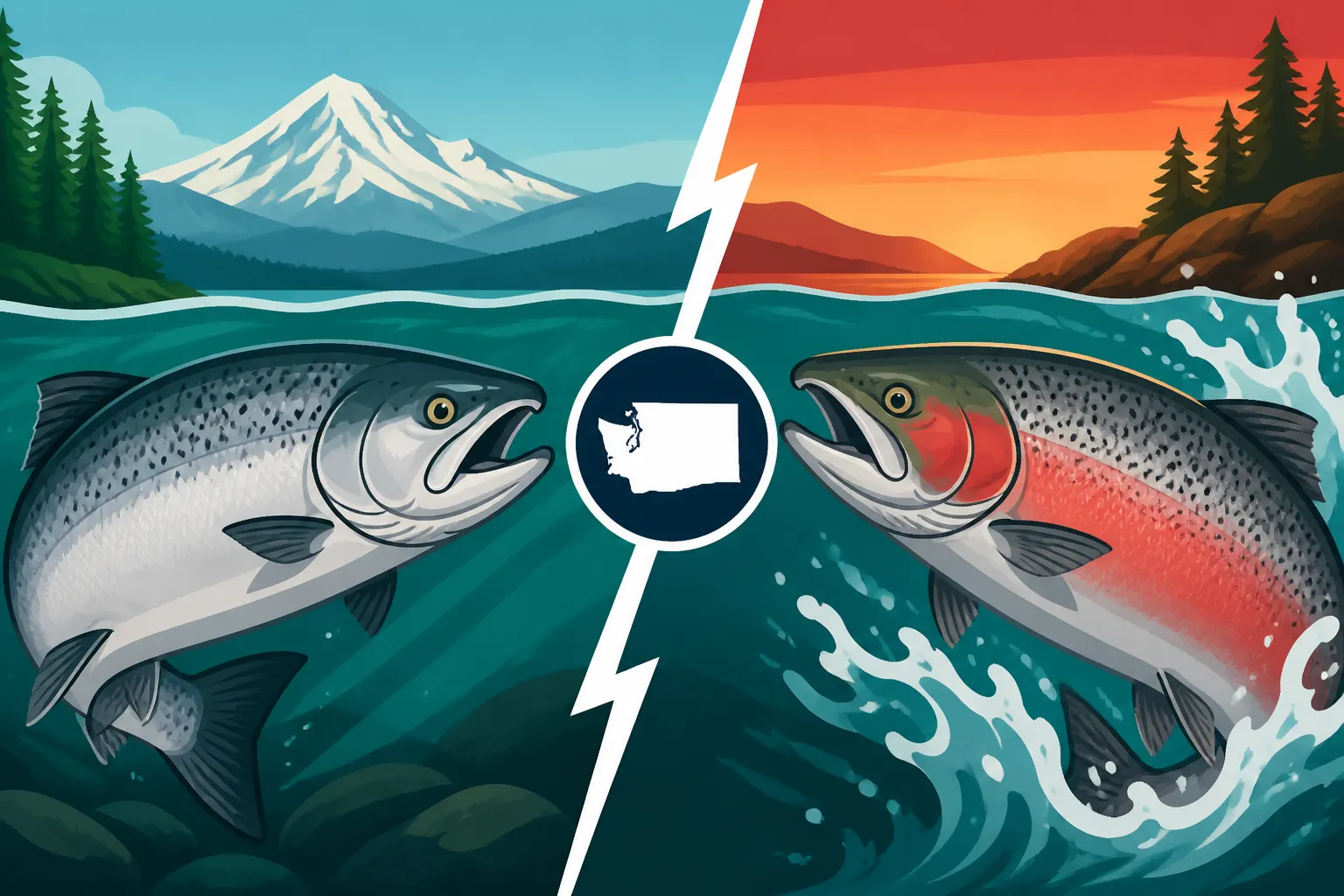
For many anglers exploring Washington's incredible waters, a common frustration hits hard when a salmon strikes: "Is this a Chinook or a Coho?" It's not just about bragging rights; knowing the difference between these two magnificent Pacific salmon species is absolutely critical for staying within regulations, choosing the right fishing approach, and even understanding what's for dinner. This comprehensive guide will help you confidently tell Chinook from Coho, ensuring you're prepared for your next salmon adventure in the Evergreen State.
The Tale of Two Salmon: Why Identification Matters in Washington
It can be surprisingly tricky to distinguish between a Chinook and a Coho salmon, especially when you’re standing riverbank or battling a fish at sea, adrenaline pumping. Many new (and even experienced!) anglers find themselves second-guessing, and that hesitation can lead to big problems. Washington's fishing regulations often have different size, bag, and possession limits for Chinook versus Coho, not to mention varying open and closed seasons by marine area or river section. Misidentification could mean an unintentional violation, which is the last thing any responsible angler wants. This section will delve into the critical aspects that make accurate identification so important.
Legal Implications and Daily Limits
One of the most immediate and impactful reasons to know your Chinook from your Coho is simply to stay on the right side of the law. The Washington Department of Fish and Wildlife (WDFW) sets very specific rules for each species, and these rules are constantly changing based on conservation needs, run forecasts, and in-season updates. For instance, you might be in a marine area where you can retain two Coho but only one hatchery Chinook, or perhaps wild Chinook are entirely off-limits while hatchery Coho are fair game.
Imagine the scenario: You're out on Puget Sound, the rod bends, and after a good fight, you land a beautiful salmon. It's chunky, silver, and you’re thrilled! But then you pause. Is it a Chinook? Or a Coho? If you guess wrong and keep a fish that's over the limit or out of season for its species, you could face fines or even lose your fishing privileges. It's a high-stakes game of identification, and nobody wants their memorable catch to turn into a regrettable citation. Understanding the nuances of these regulations is paramount, and it's why every angler should be familiar with the latest information in the Washington Sport Fishing Regulations Pamphlet.
Fishing Strategy and Gear Selection
Beyond legalities, knowing whether you're targeting Chinook or Coho, or if you've hooked one versus the other, can significantly impact your fishing strategy. These two species, while both salmon, have different feeding habits, preferred depths, and fighting styles. A technique or lure that's deadly for Chinook might barely get a sniff from a Coho, and vice-versa.
For example, Chinook often prefer deeper, colder water and are known for their powerful, stubborn runs, sometimes staying deep after the hook-set. Coho, on the other hand, frequently feed higher in the water column and are famous for their acrobatic jumps and spirited, erratic fights. If you're trolling for salmon in Washington's Puget Sound, using a heavy dodger and a large spoon might be perfect for Chinook, while a lighter setup with a hoochie or a smaller spoon could be more effective for Coho. Knowing which fish you're seeing on your fish finder or which one is consistently hitting your gear helps you adjust your presentation, depth, and even your boat speed to maximize your success. This strategic insight is a huge advantage, letting you adapt quickly to what the fish are doing.
Physical Characteristics: Decoding the Visual Cues
Alright, let's get down to brass tacks: how do you actually tell these fish apart when they're fresh out of the water? While they share a general "salmon" silhouette, Chinook and Coho have several distinct physical markers that, once you know them, make identification much easier. It's all about looking at a few key details that act like their unique fingerprints.
Mouth, Gums, and Tooth Patches
One of the most reliable ways to differentiate a Chinook from a Coho is to take a good, close look inside its mouth. This is often the first thing experienced anglers check.
Chinook Salmon (Oncorhynchus tshawytscha):
Chinook, often called "Kings" for a reason, typically have a mouth that is mostly black on the inside, extending to the gums. More crucially, they possess a distinct black gum line along both their upper and lower jaws. When you gently lift their lip, you'll see a dark band where the teeth meet the gums. Their teeth are robust and conical, and sometimes you'll even spot a few small, widely spaced teeth on the tongue. This consistent black gum line is a major giveaway.
Coho Salmon (Oncorhynchus kisutch):
Coho, or "Silvers," have a different story inside their mouths. While their mouths can also appear dark or gray, they typically have white gums along both the upper and lower jaws. This contrast between the darker roof of the mouth and the clean white gums is a strong indicator. Their teeth are usually smaller and sharper than a Chinook's, and they generally lack the prominent black gum line. If you're unsure, remember: black gums, Chinook; white gums, Coho. It’s a trick that rarely fails once you get your eye in.
Tail Spots and Caudal Fin Structure
Next up, let's examine the tail, or caudal fin. This is another excellent visual identifier, though it sometimes requires a clean fish and good lighting.
Chinook Salmon:
Chinook salmon usually have small, irregular dark spots on both lobes of their tail fin. These spots are often scattered and might not be perfectly round or evenly distributed. The tail itself is typically broader and more deeply forked than a Coho's, giving it a powerful, almost shovel-like appearance. The anal fin (the fin on the underside near the tail) on a Chinook typically has 13-19 fin rays, which can be difficult to count accurately on a squirming fish, but it contributes to their overall robust look. When you're trying to figure out How to Identify a Washington Chinook Salmon, the tail spots are a major clue.
Coho Salmon:
Coho salmon also have spots on their tail, but here's the key difference: their spots are usually confined to the upper lobe of the caudal fin. You might see a few faint spots on the lower lobe, but they will be much less numerous and distinct than on a Chinook. Coho tails are generally less forked and appear more squared off or slightly concave compared to the deeper fork of a Chinook. They also tend to have a thinner caudal peduncle (the narrow part of the body leading to the tail). Their anal fin typically has 12-15 fin rays, fewer than a Chinook, contributing to their more slender profile. This distinction is often clearer on fresh, unblemished fish.
Body Shape and Coloration
While mouth and tail characteristics are often definitive, the overall body shape and coloration can offer additional clues, especially when viewing fish in the water or at a distance.
Chinook Salmon:
Chinook are generally stockier, heavier-bodied fish for their length, giving them a more robust, "kingly" appearance. Their overall color is typically a darker metallic blue-green on the back, fading to silvery sides and a white belly. As they approach spawning, their coloration can darken significantly, sometimes taking on a reddish or brownish hue, especially in males. A unique feature often observed on Chinook, particularly larger ones, is a silvery or almost coppery sheen that can appear along their lateral line or lower flanks, setting them apart.
Coho Salmon:
Coho tend to be more slender and torpedo-shaped than Chinook, built for speed and acrobatics. Their backs are usually a brighter metallic blue, sometimes with a purplish tint, fading to distinctly silver sides and a white belly. Coho are known for maintaining a more vibrant silver color longer as they approach spawning, though males will eventually develop a hooked jaw (kype) and a distinct red or maroon coloration on their sides. When trying to identify Coho Salmon Fishing in Washington, anglers often note their streamlined bodies and flashing silver sides, which really stand out against the water.
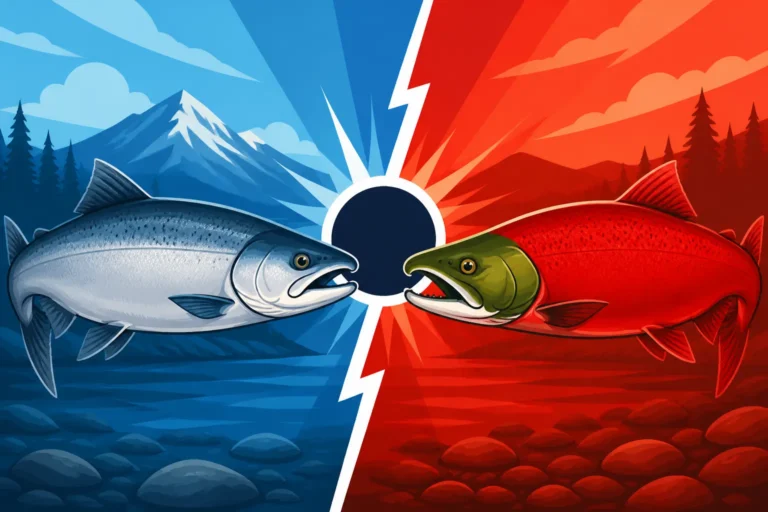
Here's a quick comparison table to help you keep these key differences straight:
| Feature | Chinook Salmon (King) | Coho Salmon (Silver) |
|---|---|---|
| Inside Mouth | Gums are black along both upper and lower jaws. | Gums are white along both upper and lower jaws. |
| Tail Spots | Irregular dark spots on both upper and lower lobes. | Spots primarily on the upper lobe only. |
| Overall Shape | Stockier, heavier-bodied; deeply forked tail. | More slender, torpedo-shaped; less forked, squarer tail. |
| Coloration | Darker metallic blue-green back, silver sides; can have coppery sheen. | Brighter metallic blue back, distinct silver sides. |
| Anal Fin Rays | Typically 13-19 rays. | Typically 12-15 rays. |
Behavioral Differences and Habitat Preferences
Beyond their looks, Chinook and Coho salmon exhibit distinct behaviors and prefer different types of environments, which can also help you determine which species you're encountering or targeting. Understanding these tendencies is like getting inside their heads – it helps you predict where they might be and what they might be doing.
Preferred Depths and Water Conditions
Chinook and Coho have somewhat different preferences when it comes to the water they inhabit, both in the ocean and in freshwater systems.
Chinook Salmon:
Chinook, especially the larger adults, generally prefer deeper, colder water. In saltwater, you'll often find them suspended lower in the water column, sometimes near structure or drop-offs, especially during the warmer months. They're powerful swimmers capable of diving to considerable depths to pursue prey or find comfortable temperatures. In rivers, they often hold in deep pools, under cut banks, or behind large boulders where they can conserve energy and find cooler flows. They're also known to be quite temperature-sensitive, seeking out optimal thermal conditions. When you're seeing signs of fish holding deep on your sonar, especially in offshore Puget Sound or along the Washington coast, there's a good chance you're looking at Chinook.
Coho Salmon:
Coho, on the other hand, tend to be more active and often feed higher in the water column. In the ocean, they're frequently found near the surface or in the upper layers, chasing baitfish like herring or anchovies. Their acrobatic nature and aggressive feeding frenzies often occur closer to the surface. In rivers, Coho will utilize a wider variety of habitats, including shallower riffles, medium-depth runs, and log jams, though they will also hold in pools. They are also known for being a bit more tolerant of varying water temperatures and conditions compared to their Chinook cousins, sometimes pushing into shallower, warmer waters more readily. If you're witnessing explosive surface feeds or seeing active fish in shallower bays, it's often a good bet you're seeing Coho.
Migratory Patterns and Timing of Runs
The timing of when these fish return to freshwater to spawn is another significant difference that impacts fishing seasons and where you'll find them throughout the year.
Chinook Salmon:
Chinook salmon have a wide range of run timings, often categorized as Spring, Summer, and Fall Chinook, depending on when they enter freshwater. Washington's Columbia River, for example, is famous for its powerful Spring Chinook run, while the Fall Chinook fishery at places like Buoy 10 at the river mouth is legendary. These fish spend a significant amount of time in the ocean, sometimes up to five years, growing to impressive sizes before returning. Their migratory journeys can be extensive, often traveling hundreds of miles up major river systems. Understanding When Chinook Salmon Run in Washington's Puget Sound is crucial for planning your trips, as different marine areas and river sections will have peak opportunities at various times.
Coho Salmon:
Coho salmon typically have a more consolidated run timing, usually returning in late summer and fall, generally after the main Chinook runs have peaked in many systems. They spend less time in the ocean than Chinook, usually two to three years, which contributes to their generally smaller size. Coho often move into rivers quickly once they arrive at the river mouth, pushing through systems with determination. This makes them a popular target for river anglers in the late season. Just like Chinook, their runs are carefully managed, so knowing When Coho Salmon Run in Washington is essential for successful angling. Their tendency to stack up at river mouths and estuaries before making their final push upstream makes them a very accessible target for many anglers.
Feeding Habits and Preferred Prey
What these fish eat can also influence where and how you target them. While there's overlap, each species has its dietary leanings.
Chinook Salmon:
Chinook are voracious predators with a diverse diet. In the ocean, they primarily feed on other fish, such as herring, anchovies, sandlance, candlefish, and squid. Their large mouths and powerful jaws are built for tackling substantial prey. They are also known to eat krill and other crustaceans. This diet often means they are attracted to larger baits and lures that mimic these food sources. Anglers targeting Chinook often use bigger spoons, plugs, and whole or cut baitfish. When fishing for them, mimicking these larger, fattier baitfish is often key.
Coho Salmon:
Coho are also fierce predators but tend to have a slightly broader and sometimes more opportunistic diet, especially when younger. They feed heavily on smaller baitfish like herring and anchovies, but they are also known to consume a lot of crustaceans, insects, and even plankton. Their smaller mouths and more agile nature make them adept at chasing down smaller prey. This is why Coho are often more susceptible to smaller lures, hoochies, flies, and brightly colored spoons or spinners. If you're rigging up for salmon and wondering what to use, considering the typical prey of Chinook versus Coho can give you a significant edge. Many anglers stock a variety of lures on Amazon to cover both possibilities.
Angling Techniques: Adapting Your Approach
The distinct behaviors and habitat preferences of Chinook and Coho salmon naturally lead to different, or at least optimized, angling techniques. What works like a charm for a powerful, deep-dwelling Chinook might be entirely missed by an acrobatic, surface-feeding Coho. Knowing these nuances allows you to fine-tune your approach and increase your chances of success, no matter which species you're pursuing.
Trolling Strategies for Each Species
Trolling is a popular and effective method for both Chinook and Coho in Washington's saltwater, but the specifics can vary significantly.
Targeting Chinook:
When you're Trolling for Salmon in Washington's Puget Sound with Chinook in mind, think deep and slow. Chinook often hug the bottom or suspend in deeper thermal layers, so downriggers are almost a necessity. Anglers will typically run their gear anywhere from 50 to 150 feet deep, sometimes even deeper, depending on the water depth and where the fish are showing on the sonar. Larger baits and lures are preferred, mimicking their substantial prey. Popular choices include large plug-cut herring, sizable spoons (like Silver Horde or Coyote spoons in sizes 4.0 or 5.0), and sometimes large flasher-hoochie combinations. The trolling speed is usually slower, often in the 1.5 to 2.5 mph range, allowing the gear to work effectively at depth and giving the fish time to track and strike. Look for areas with deeper water, pronounced drop-offs, or near offshore structure.
Targeting Coho:
For Coho, the game shifts to shallower, faster, and more active presentations. Since Coho often feed higher in the water column, you might only need minimal weight, diver planes, or simply shorten your downrigger leads. Many anglers target Coho between 15 and 60 feet deep, though they can be found deeper or right on the surface during aggressive feeding events. Smaller, flashier lures are often the ticket. Mini-hoochies, smaller spoons (size 3.0 or 3.5), and artificial bait like small anchovies or herring imitations are very effective. Coho also respond well to brighter colors, so don't be afraid to experiment with chartreuse, pink, or orange. Trolling speeds for Coho are typically faster, ranging from 2.5 to 4.0 mph, to entice their aggressive, chasing behavior. They love a moving target!
River Fishing Approaches
When these magnificent fish enter freshwater, their focus shifts from feeding to spawning, but they can still be caught with strategic river fishing techniques.
Chinook in Rivers:
Chinook in rivers, especially the larger Fall Chinook, are powerful and often hold in deeper, slower pools or strong current seams where they can rest and conserve energy. Techniques like back-bouncing or plunking with roe or large cured baits are very effective. They respond to strong scent trails and substantial offerings that present right in their face. Heavy gear is a must, as these fish are incredibly strong and will test your tackle to its limits. Drift fishing with heavier weights and larger presentations like cured roe bags or large Cheaters can also entice a strike. Many anglers fishing for Chinook on rivers like the Columbia or Cowlitz will anchor their boats in prime lanes and run multiple rods with heavy plunking setups.
Coho in Rivers:
Coho in rivers are often more active and aggressive, even when their primary focus is spawning. They tend to be found in a wider variety of water types, including riffles, moderate runs, and around structure like log jams. Drift fishing with lighter gear, small cured eggs, or bright yarn combinations can be very effective. Casting spinners and spoons is another hugely popular and productive method for Coho, as their aggressive nature makes them readily chase and strike moving lures. They also respond well to twitching jigs, especially in slow, deep pockets. Fly fishing for Coho with brightly colored flies (often called "Coho killers") is also popular in some systems. Their willingness to strike at a moving, flashy presentation makes them an exciting target for active casting and retrieval. You can find a wide range of suitable lures and terminal tackle for both species on Amazon, allowing you to prepare for any river scenario.
Gear and Tackle Considerations
Your rod, reel, line, and terminal tackle should be chosen with the target species in mind, even if you’re fishing an area that holds both.
For Chinook:
You'll want stout gear. A medium-heavy to heavy action rod, typically 9-10.5 feet long for river fishing or a shorter, powerful boat rod for trolling, is appropriate. Reels should have a strong drag system and high line capacity, capable of holding 25-40 lb monofilament or 50-80 lb braided line. Terminal tackle includes heavy leaders (20-40 lb test fluorocarbon), strong swivels, and large, sharp hooks (sizes 3/0 to 5/0).
For Coho:
While still powerful fish, Coho can often be handled on slightly lighter gear. A medium-action rod, 8.5-9.5 feet for rivers or 9-10.5 feet for boat fishing, offers a good balance of power and sensitivity. Reels with a smooth drag and capacity for 15-25 lb monofilament or 30-50 lb braid are common. Leaders can be a bit lighter (15-25 lb test fluorocarbon), and hooks in sizes 1/0 to 3/0 are typically sufficient. Remember that Coho are known for their aerial acrobatics, so a slightly softer rod tip can help absorb those head shakes and jumps without pulling the hook.
Culinary Differences and Preparation
Beyond the thrill of the catch and the importance of regulations, there's another significant difference between Chinook and Coho salmon: how they taste and what they’re best suited for in the kitchen. Both are delicious, but their flesh characteristics are quite distinct, influencing how you might prepare them after a successful day on the water.
Flesh Color and Texture
The most noticeable difference once you've filleted your catch will be the color and texture of the meat.
Chinook Salmon:
Chinook salmon are renowned for their rich, buttery, and often deep red-orange flesh. This vibrant color comes from their diet, which is high in krill and other crustaceans. The texture is firm, flaky, and exceptionally moist due to their higher fat content, especially in ocean-run fish. This richness is why Chinook are often considered the "king" of the table as well as the water. The flavor is robust, distinct, and highly prized. It's truly a gourmet experience.
Coho Salmon:
Coho salmon typically have brighter orange or sometimes pinkish-orange flesh, often lighter than Chinook. While still very flavorful and moist, their flesh is generally leaner and firmer in texture compared to the rich, buttery Chinook. It still flakes beautifully but has a slightly milder, delicate flavor. Think of it as a leaner, perhaps slightly more versatile salmon for a wider range of preparations without overpowering other ingredients. Many prefer Coho for its firm texture that holds up well to grilling and pan-frying.
Best Cooking Methods for Each Species
The differing fat content and texture mean that certain cooking methods will highlight the best qualities of each species.
Cooking Chinook Salmon:
Given its high fat content and rich flavor, Chinook salmon stands up well to high-heat cooking and benefits from methods that allow its natural oils to render beautifully. Grilling is a fantastic option, whether on a cedar plank or directly over coals, as the fat keeps the fish incredibly moist and prevents sticking. Roasting whole or in thick fillets in the oven is another excellent choice, often with simple seasonings like salt, pepper, and lemon to let the fish's flavor shine. Smoking Chinook is also incredibly popular, yielding a deeply flavorful and tender product. Due to its richness, a little goes a long way, and it pairs wonderfully with acidic or light vegetable sides. You can find excellent quality smoking chips and grilling accessories on Amazon to enhance your Chinook preparation.
Cooking Coho Salmon:
Coho salmon's leaner, firmer flesh makes it incredibly versatile in the kitchen. It performs beautifully in preparations where you might want a slightly less intense salmon flavor or a texture that holds its shape. Pan-searing with a crispy skin is a favorite, as is baking or broiling. Coho is also excellent for poaching, allowing its delicate flavor to come through, or for incorporating into salads, pasta dishes, or even fish tacos. Because it's leaner, be mindful not to overcook Coho, as it can dry out more easily than Chinook. A quick cook and a watchful eye will ensure it remains moist and tender. It also takes marinades very well, allowing you to infuse a variety of flavors.
Conservation and Management Considerations
Understanding the differences between Chinook and Coho isn't just for anglers, it's also crucial for conservation efforts. The Washington Department of Fish and Wildlife (WDFW) manages these populations meticulously, and their strategies often differ based on the unique life histories and current health of each stock.
Stock Status and Conservation Efforts
Both Chinook and Coho salmon face various challenges, including habitat loss, climate change, and predation, but their specific statuses can vary significantly.
Chinook Conservation:
Many Chinook salmon runs in Washington are considered depressed or endangered, particularly certain populations within the Puget Sound and Columbia River basins. This is why you often see highly restrictive fishing seasons, size limits, and even catch-and-release only rules for wild Chinook. Conservation efforts focus heavily on habitat restoration, dam removal (where feasible), hatchery programs to augment struggling wild stocks (while minimizing impacts on wild fish), and careful management of fisheries to ensure escapement goals are met. The iconic The Elwha Salmon Run's Recovery in Washington is a testament to the extensive efforts being made for these crucial fish.
Coho Conservation:
While generally in better health than many Chinook stocks, Coho salmon also face conservation concerns. Their populations can fluctuate, and certain runs may be more vulnerable than others. Management for Coho often includes balancing sport and commercial harvest with ensuring sufficient escapement. Habitat protection and restoration, particularly in tributary streams and estuaries, are vital for Coho, as they often utilize these areas extensively during their freshwater life stage. Hatchery programs also play a significant role in providing fishing opportunities while wild stocks rebuild. For specific regulations and concerns, anglers should always check the WDFW's current guidelines and any Emergency Rule Changes: Why Washington's Rules Shift Mid-Season.
Hatchery vs. Wild Fish
A major aspect of salmon management in Washington is the distinction between hatchery-reared fish and wild, naturally spawning fish. This distinction is particularly relevant for Chinook and Coho.
Hatchery Chinook and Coho:
Many salmon fishing opportunities in Washington rely on hatchery-produced fish. These fish are typically marked with a clipped adipose fin (a small fleshy fin on their back near the tail). The goal of hatchery programs is to provide harvest opportunities for anglers, thereby reducing pressure on wild stocks, which are often protected. Hatchery fish also contribute to local economies. When fishing, it's critical to know What a Clipped Adipose Fin Means and whether an area's rules allow retention of hatchery fish, wild fish, or both. For many Chinook and Coho fisheries, only hatchery-marked fish can be retained.
Wild Chinook and Coho:
Wild salmon are the cornerstone of healthy ecosystems and genetic diversity. They are typically identified by having an intact adipose fin. Due to their conservation status, many wild Chinook and Coho populations are either strictly catch-and-release, or anglers are prohibited from targeting them in specific areas or seasons. The emphasis on protecting wild stocks ensures their ability to reproduce naturally and maintain resilient populations for future generations. Respecting these regulations and doing your part to ensure proper release of wild fish is a fundamental responsibility of every angler in Washington.
Understanding the differences between Chinook and Coho salmon is a skill that empowers every angler. It enhances your fishing experience, keeps you compliant with regulations, and deepens your appreciation for these magnificent species and the conservation efforts dedicated to their future in Washington State.
Disclaimer
This article is for general informational purposes only and does not constitute professional advice. Laws, prices and regulations vary by location and change over time. Consult a qualified professional for guidance on your specific situation.