Is the Green River Near Auburn Good for Winter Steelhead?
The Green River, particularly the stretches near Auburn, often sparks a mix of excitement and frustration among Washington anglers when the topic of winter steelhead comes up. It’s a river with a rich history, but also one that sees its fair share of regulatory changes and environmental challenges, leaving many wondering if it's truly a viable option for chasing those elusive chrome beauties. This guide will dive deep into what you can realistically expect from a winter steelhead trip on the Green River near Auburn, covering everything from fishing conditions and access to the techniques that might just put a fish on your line.
Understanding the Green River's Winter Steelhead Fishery
The Green River, flowing through the heart of King County, is a complex system, and its winter steelhead fishery is no exception. It's not the wild, untamed river of the Olympic Peninsula, but rather a more urban-adjacent fishery, heavily influenced by hatchery programs and subject to intense angling pressure. Understanding its nuances is key to managing expectations and having a rewarding experience.
Historical Context and Current Realities
Historically, the Green River supported robust runs of wild steelhead, attracting anglers from all over. However, like many Puget Sound rivers, habitat degradation, urbanization, and a myriad of other factors have led to a decline in wild populations. To mitigate this, the Washington Department of Fish and Wildlife (WDFW) implemented significant hatchery programs, stocking the river with "smolts"—young steelhead—to provide a recreational fishery. These hatchery-origin fish, identifiable by their clipped adipose fin, are the primary target for winter steelhead anglers on the Green today.
The reality is that while the Green River does get a winter steelhead run, it's heavily reliant on these hatchery releases. The run typically begins to show up in late December, peaking in January and February, and tapering off by March. Success often hinges on good water conditions (not too high, not too low, and decent clarity), combined with the timing of fish moving upstream. You're not necessarily looking for a wilderness experience here; rather, it’s a convenient option for many local anglers seeking a shot at a fresh, chrome steelhead without traveling too far from metropolitan areas like Seattle or Tacoma.
The Impact of Location: Auburn and Beyond
The Green River flows for over 60 miles, but when most anglers talk about winter steelhead "near Auburn," they're generally referring to the lower to middle sections of the river. This area is characterized by a mix of slower, deeper pools, gravel bars, and faster riffles. Above the Flaming Geyser State Park, the river tends to get shallower and more technical. Below Auburn, closer to Puget Sound, the river widens, and tides can play a more significant role, especially in the lower reaches.
The urban proximity means relatively easy access, but also higher angler density, especially on weekends and after a fresh rain when conditions are prime. Popular spots might include areas around Kent, Auburn, and Black Diamond, each offering slightly different characteristics. For instance, sections near Kent might have more bank access due to parks and public easements, while upstream closer to Auburn and further east, you might find more drift boat opportunities or areas requiring a bit more bushwhacking to reach secluded spots. Understanding these local variations and consulting real-time river conditions is crucial.
Navigating Regulations and Access for Winter Steelhead
Fishing regulations in Washington State can be intricate, and the Green River is no exception. It's imperative to be fully aware of the rules before you even think about casting a line, as they can change frequently and vary by river section.
Key Regulations to Know
First and foremost, you'll need a valid Washington fishing license with the appropriate endorsements. For winter steelhead, this typically means an annual freshwater fishing license. Make sure you understand the difference between resident vs nonresident fishing licenses in Washington. Don't forget your Catch Record Card, which is required for all salmon and steelhead species. Neglecting to carry and properly fill out your Washington Catch Record Card and What It Requires can lead to significant penalties.
Specific to the Green River, pay close attention to several critical regulations:
- Hatchery vs. Wild Steelhead: Most of the Green River is managed for hatchery steelhead, meaning wild steelhead (those with an intact adipose fin) must be released unharmed. This is a common rule on many Washington rivers to protect fragile wild runs. You need to know how to tell wild steelhead from hatchery steelhead instantly.
- Daily and Possession Limits: These limits can vary annually and even in-season based on run forecasts and actual returns. Always consult the most current Washington Sport Fishing Regulations Pamphlet or the WDFW emergency rules page before heading out.
- Gear Restrictions: The Green River often has specific gear restrictions, particularly concerning hooks. Barbless hook requirements on Washington rivers are common, especially for steelhead. This means you must pinch down the barbs on all your hooks. Bait bans are also occasionally implemented. Always check "What a Bait Ban Actually Restricts in Washington" if in doubt.
- Selective Gear Rules: Some sections might have selective gear rules, which restrict the type of gear you can use (e.g., artificial flies and lures with single barbless hooks). These rules are designed to minimize harm to released fish.
These rules are not static. Emergency rule changes: Why Washington's rules shift mid-season are a frequent occurrence, so make it a habit to check the WDFW website for the latest updates. You can also learn how to check for emergency rule changes in Washington.
Public Access Points and Bank Fishing Opportunities
The Green River offers a good number of public access points, particularly around the Auburn area, making it fairly accessible for bank anglers. Many of these spots are located within city parks or county easements.
Here’s a general overview of common access areas, though specific parking and walk-in paths can vary:
- Green River Natural Resources Area (near Kent): This area offers several access points with trails leading to the river, providing both faster water and deeper runs.
- Flaming Geyser State Park: While a bit further upstream from Auburn, this park offers excellent river access for both bank anglers and drift boat launches. The river here is narrower and more intimate, with good holding water.
- Metropolitan Park District of Tacoma (e.g., Van Lierop Park in Auburn): Various smaller parks and green spaces maintained by local municipalities often have river access. These might be less formal and require a bit of exploration.
- Auburn Area Parks: Check local city parks within Auburn that border the Green River. These often provide easy parking and a path to the water.
Table: Typical Green River Access Considerations
| Access Type | Pros | Cons | Best For |
|---|---|---|---|
| City/County Parks | Easy parking, often well-maintained paths, close to amenities | Can be crowded, limited bank space in popular areas | Casual bank fishing, family outings, quick trips |
| State Parks (e.g., Flaming Geyser) | Wider access, natural setting, potential drift boat launch | Might require a Discover Pass, can still be busy on peak days | Longer fishing sessions, drift boaters, exploring different water |
| Informal Easements | Potentially less crowded, hidden gems | Limited parking, can be difficult access, trespass risk if not sure | Adventurous anglers seeking solitude, those with local knowledge |
Always be respectful of private property and public access signage. What seems like an obvious path might lead onto private land. If you’re unsure, stick to clearly marked public areas. For boat anglers, drift boat launches are available, but scouting the put-in and take-out points and understanding the river’s gradient and obstacles is crucial for safety.
Essential Techniques and Gear for Green River Winter Steelhead
Winter steelhead are notoriously challenging to catch, and the Green River demands a thoughtful approach. Success often comes down to presenting your offering effectively in often cold, off-color water.
Proven Fishing Methods
When chasing winter steelhead on the Green River, anglers typically lean on a few tried-and-true methods that allow for precise presentations in varying water conditions.
- Drift Fishing: This is arguably the most popular and effective method for river steelhead. It involves using a lead or weight system (like slinky weights, pencil lead, or hollow-core lead) to bounce your bait or lure along the bottom, mimicking a natural drift. Popular baits include cured salmon roe (often in mesh bags), Coon Shrimp, or artificial options like scent-impregnated beads or soft plastic worms. The key is to achieve a dead-drift, where your presentation moves at the same speed as the current, allowing the steelhead time to react. Learn more about drift fishing for steelhead in Washington rivers.
- Bobber Dogging/Float Fishing: This method utilizes a buoyant float (often a large Drennan or Thill float) to suspend your bait or lure at a controlled depth, typically just off the bottom. The float drifts downstream, carrying your offering through suspected holding lies without snagging. This technique is particularly effective in slower, deeper pools or when fish are holding in subtle current seams. It's a great way to cover water efficiently and detect subtle bites.
- Casting Spinners and Spoons: For more aggressive fish or when the water has good visibility and is moving at a moderate pace, casting spinners (like a Blue Fox Vibrax or Mepps Aglia) or spoons (such as a Little Cleo or a well-known Dick Nite spoon) can be highly effective. These lures create flash and vibration that can trigger a reactionary strike from a steelhead. Focus on casting upstream and across, allowing the lure to swing through the target zone.
Regardless of the method, attention to detail is paramount. Use fresh bait, keep your hooks sharp, and pay close attention to line management to detect those often subtle steelhead bites.
Recommended Gear and Tackle
Having the right gear makes all the difference when battling a powerful winter steelhead in cold conditions.
- Rod and Reel: A medium-heavy spinning or casting rod, typically 8.5 to 10.5 feet long, is ideal. This length helps with line control, casting distance, and cushioning the powerful runs of a steelhead. Pair it with a reliable reel spooled with 15-20 lb monofilament or braided line with a fluorocarbon leader (10-15 lb test). Braided line offers superior sensitivity, which is crucial for detecting subtle bites in murky water.
- Terminal Tackle: A selection of weights (pencil lead, slinky weights, coin weights) is essential for drift fishing. Swivels are needed to prevent line twist. For hooks, use strong, sharp single hooks in sizes #1 to 2/0, remembering that barbless hook requirements on Washington rivers are usually in effect.
- Baits and Lures:
- Natural Bait: Cured salmon roe (pink, coho, or spring Chinook roe works well), often presented in small mesh bags or "roe socks." Cured Coon Shrimp, especially larger ones, are also highly effective.
- Artificials: Soft plastic eggs or beads in various colors (pink, orange, chartreuse), often pegged above a bare hook. Soft plastic worms (e.g., Berkley Gulp! worms or Mad River Worms) in similar colors can also entice strikes. Spinners and spoons in silver, brass, or bright fluorescent colors should be in your tackle box.
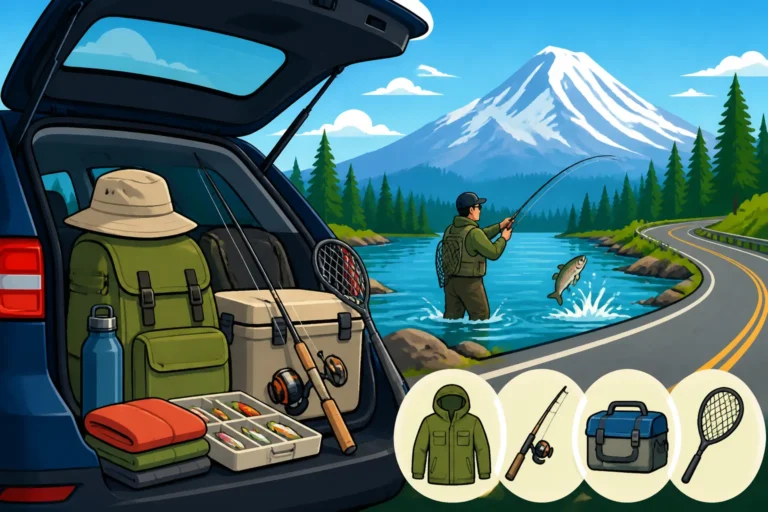
- Waders and Raingear: Winter steelhead fishing means cold, wet conditions. Good quality breathable waders and a reliable waterproof rain jacket and pants are non-negotiable. Layering beneath your waders is key to staying warm. Check out our guide on gear you need for winter steelheading for a comprehensive list.
- Accessories: A long-handled net designed for steelhead will make landing fish safer and easier, especially for catch-and-release. Pliers or forceps are essential for hook removal. Don't forget a small backpack to carry extra tackle, snacks, and water.
Best Practices for a Successful and Responsible Trip
Beyond knowing the techniques and having the right gear, a successful and responsible winter steelhead trip on the Green River hinges on understanding river conditions and practicing ethical angling.
Timing Your Visit and Reading River Conditions
The timing of your visit and your ability to "read" the river are critical for winter steelhead success.
- Run Timing: As mentioned, the Green River's winter steelhead run typically starts in late December, builds through January and February, and begins to wane in March. The peak windows are usually mid-January through late February.
- Water Levels and Clarity: Steelhead are sensitive to water conditions. Ideally, you want the river to be at a moderate flow—not blown out from heavy rain, and not too low and clear, which can make fish spooky. The WDFW website, USGS river gauges, and local fishing forums can provide real-time updates on flow rates.
- High Water: After heavy rains, the river can become high and muddy ("blown out"). Fishing is generally poor during these times as fish disperse, and visibility is severely limited. Wait for the river to drop and begin to clear.
- Dropping and Clearing Water: This is often the prime time. As the river recedes and visibility improves (often 1-3 feet of visibility is ideal), steelhead become more active and willing to bite.
- Low and Clear Water: While fish might be present, they can be incredibly wary. Downsizing your gear, using lighter leaders, and making stealthy presentations become even more important.
- Water Temperature: Cold water slows down fish metabolism. Steelhead can be lethargic in very cold water, requiring slower presentations. Water temperatures in the 40s to low 50s Fahrenheit are generally favorable.
- Weather: Overcast days can be great for steelhead, as bright sun can push them into deeper, shadier lies. Rain, as long as it doesn't blow out the river, can also encourage fish to move.
Before heading out, always check the river conditions online. There are several resources, including the WDFW site and various fishing apps, that provide updated river flows and clarity reports for the Green River.
Conservation and Ethical Angling on the Green
The Green River fishery faces ongoing pressures, making conservation and ethical angling practices incredibly important to ensure its future.
- Respect Wild Steelhead: Remember that wild steelhead are a protected species on the Green River. If you catch one (identifiable by its intact adipose fin), release it immediately and with the utmost care. Minimize its time out of water, use a soft net, and avoid excessive handling. Learn about catch-and-release rules during wild steelhead closures.
- Practice Catch and Release: Even for hatchery fish, if you've caught your limit or plan to release some, practice proper catch and release techniques. Wet your hands before handling fish, support their body horizontally, and revive them gently in the current before letting them go.
- Pack It In, Pack It Out: Leave no trace. This means carrying out all your trash, including discarded fishing line, bait containers, and food wrappers. Litter degrades the environment and impacts wildlife.
- Respect Other Anglers: The Green River can get crowded. Give other anglers ample space, avoid cutting lines, and be mindful of noise. A polite "hello" and a shared stretch of river can make for a much better experience for everyone.
- Support Conservation Efforts: Consider joining local conservation groups or supporting organizations like the Wild Fish Conservancy or Trout Unlimited, which advocate for habitat restoration and responsible fishery management on rivers like the Green. You can also educate yourself on why some Washington rivers have no hatchery fish to understand the broader conservation picture.
- Book Wisely: If you decide to go with a guide to explore the Green River, consider using platforms like FishingBooker to find reputable local guides who are knowledgeable about local regulations and promote ethical fishing practices. A good guide can significantly enhance your experience and teach you a lot about the river. Another excellent guide-finding resource is local tackle shops in areas like Auburn, Kent, or Renton, which often have bulletin boards or recommendations for guides who fish the Green River regularly. FishingBooker makes it easy to compare different guides and their specialties, from drift boat trips to bank-fishing specific outings.
By adhering to regulations, practicing good stewardship, and respecting the resource, anglers can continue to enjoy the challenging yet rewarding pursuit of winter steelhead on the Green River near Auburn for years to come.
Disclaimer
Fishing conditions and regulations in Washington State can change rapidly due to emergency rule changes or seasonal adjustments. Always consult the official Washington Department of Fish and Wildlife (WDFW) website or the latest regulation pamphlet before heading out on any fishing trip. This guide is for informational purposes only and does not supersede official WDFW regulations.