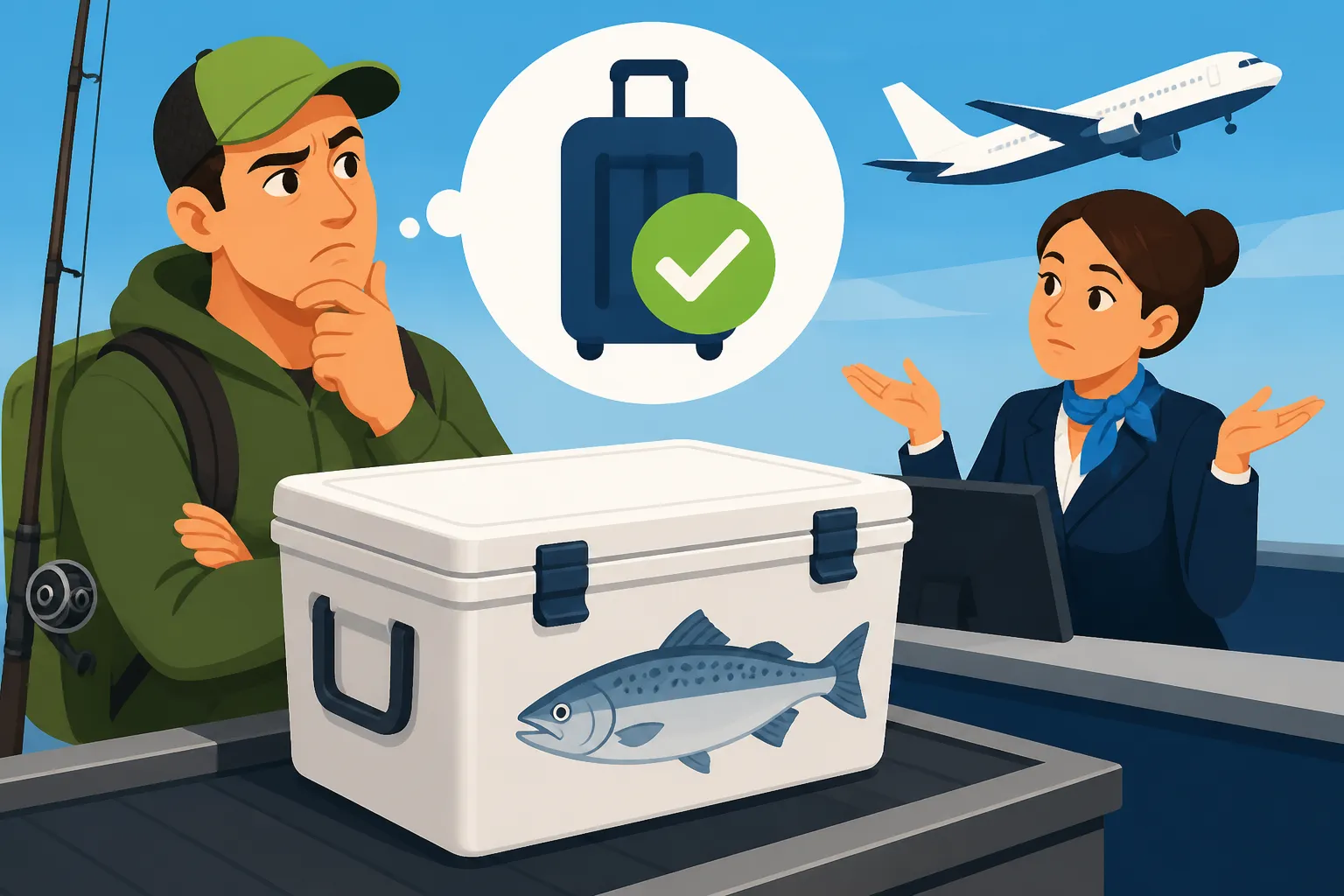
Do Airlines Count Fish Boxes as Checked Bags?
That feeling of triumph after a phenomenal Washington fishing trip, whether it’s wrestling a Chinook from Puget Sound or landing a hefty steelhead from the Cowlitz, is absolutely exhilarating. But then, reality hits: how on earth do you get your hard-earned fillets home, especially if you’re flying? Many anglers face the confusing and often frustrating dilemma of whether fish boxes count as standard checked baggage or if they’re a special, fee-laden category. This comprehensive guide will walk you through the ins and outs of flying with your catch, helping you navigate airline policies and ensure your delicious fish arrives safely at your destination.
The General Rule: Fish Boxes as Checked Baggage
Let's get straight to the most common question: for the vast majority of airlines, your carefully packed fish box will be considered a piece of checked baggage. This means it falls under the same weight, size, and quantity restrictions as your regular suitcases. This can be a huge relief for many, as it simplifies the process considerably compared to navigating special cargo departments.
Standard Checked Baggage Allowances
Airlines typically allow one or two checked bags per passenger as part of their standard fare, or for a fee, depending on your ticket class, loyalty status, or credit card benefits. A fish box, as long as it meets the airline's specific dimensions and weight limits, will occupy one of these slots. For instance, if your fare includes one free checked bag, your fish box would be that bag, and if you also wanted to check a suitcase, that would be your second bag, likely incurring a fee. It’s crucial to remember that while the fish box itself is treated like a regular bag, its contents (perishable food) come with very specific packing requirements that override typical suitcase packing. Neglecting these details can lead to your box being rejected at the counter or, worse, arriving spoiled. Before you even think about packing, it’s a smart move to look up your specific airline's baggage allowance and fees online. This proactive step can save you significant stress and unexpected charges at the airport.
The typical maximum dimensions for a standard checked bag are often around 62 linear inches (length + width + height) and a weight limit of 50 pounds (23 kg). Going over these limits, especially the weight, will almost certainly trigger overweight baggage fees, which can be substantial. Imagine landing a beautiful lingcod or a couple of chunky halibut, only to find out your cooler pushes you past the 50-pound mark. Those extra pounds can quickly add up, turning your trophy catch into a costly souvenir. So, keeping an eye on the total weight of your cooler, including the ice or gel packs, is paramount. Many seasoned anglers travel with a small, portable luggage scale, easily found on platforms like Amazon, to weigh their bags before heading to the airport. This simple tool can prevent a lot of last-minute scrambling and unexpected expenses.
Understanding Weight and Size Limits
While the 50-pound weight limit and 62-linear-inch dimension are common, these are not universal. Each airline sets its own specific guidelines, and they can vary. Some airlines, particularly for international flights or certain routes, might have slightly different allowances. It's not just about fitting it on the conveyor belt; it's about the airline's operational capacity and safety regulations. A large, unwieldy box, even if it's technically within some loose interpretation of "baggage," might be rejected if it poses a challenge for baggage handlers or doesn't fit through their automated systems.
Moreover, if you've had an exceptionally successful trip and are bringing home a significant amount of fish, you might find yourself needing to check multiple fish boxes. Each additional box will count as an extra piece of checked luggage and will incur its own set of fees. For example, if you're flying Alaska Airlines and have two 50-pound fish boxes, your first box might be $35, and your second could be $45 (these numbers are illustrative and subject to change). This is where the cost of transporting your catch can really start to accumulate, especially if you're flying with a buddy and you both have a cooler full of fillets. This is also why understanding Washington's daily bag limits by species and overall possession limits is so important; you want to ensure you're only taking home what's legally allowed and what you can realistically transport.
Essential Packing for Air Travel with Fish
The real secret to flying successfully with fish isn't just knowing the rules; it's mastering the art of packing. This is where most issues arise, and doing it correctly ensures your fish stays fresh and doesn't cause problems for you or the airline.
The Right Cooler or Fish Box
Choosing the right container is perhaps the most critical step. Forget flimsy styrofoam coolers; they simply won't cut it for air travel. You need something durable, leak-proof, and well-insulated. Hard-sided coolers, like those from brands such as Yeti, RTIC, or even robust Coleman Xtreme models, are your best bet. These coolers are designed to withstand the rigors of baggage handling and maintain internal temperatures for extended periods. The goal is to keep your fish frozen solid for the entire journey, from the moment you leave your hotel near Puget Sound to when you pick up your bags at your home airport.
When selecting a cooler, consider its weight empty. A massive, heavy-duty cooler might eat into your 50-pound allowance before you even put any fish in it. Opt for a size that's appropriate for the amount of fish you expect to catch and can comfortably hold. Before packing, make sure your fish is properly processed. Many fishing charters in Washington, especially those out of Westport, will offer to clean and package your fish for you, often vacuum-sealing the fillets. If you're going the DIY route, ensure your fillets are vacuum-sealed to prevent any leaks and to preserve freshness. You can find excellent, affordable vacuum sealers and bags on Amazon that are perfect for home use. For a deeper dive into preparation, consider reading "How to Package Fish for the Flight Home" to ensure your catch is ready for its journey.
Dry Ice vs. Gel Packs: What's Best for Your Catch
This is a frequently asked question, and the answer isn't always straightforward. Most airlines do allow dry ice, but usually with strict limits – often around 5.5 lbs (2.5 kg) per package, and it must be properly vented. Dry ice is excellent for keeping things frozen solid for a long time, as it sublimates directly into gas, leaving no watery mess. However, it requires special handling due to its extremely low temperature and the gases it releases. You'll need a cooler with a vent (or one that isn't airtight) and clear labeling stating "Dry Ice" and the net weight. If your cooler is completely airtight, the expanding gas can cause it to explode – a definite no-go for air travel!
Gel packs, on the other hand, are generally less restricted and easier to manage. They don't have the same venting requirements and are safer to handle. However, they don't provide the same extreme freezing power as dry ice and tend to thaw faster. For shorter flights (under 6-8 hours), well-frozen gel packs in a quality cooler can be sufficient. For longer journeys or if you have layovers, a combination of dry ice and gel packs, or purely dry ice with the proper precautions, might be necessary. Some travelers even opt to freeze their fillets solid, then pack them in a cooler surrounded by crumpled newspaper or cardboard for insulation, with a few gel packs for extra chill. Always check your specific airline's dry ice policy, as rules can vary significantly. You'll often find that smaller regional airlines have stricter policies than major carriers like Delta, United, or Alaska Airlines.
Sealing and Labeling Your Package
Once your fish is vacuum-sealed and nestled with your chosen freezing agent in a sturdy cooler, the final step is to secure and label it. Double-tape the lid of your cooler to ensure it doesn't accidentally pop open during transit. Use heavy-duty packing tape, crisscrossing it for maximum security. Then, clearly label your cooler with your name, contact information, and destination address. If using dry ice, ensure the "Dry Ice" label and net weight are prominently displayed. Many airlines will have specific tags for dry ice, so be sure to ask at check-in.
Beyond the physical labels, it's also a good idea to keep any relevant documentation handy. This includes your fishing license, any endorsements like the Washington's Columbia River Salmon and Steelhead Endorsement, and your Catch Record Card, especially if you're transporting salmon or steelhead. While airport personnel might not ask for these, having them readily available can prevent any potential questions or delays, especially if you're transporting your catch across state lines legally. Remember, the goal is to make your fish box as unambiguous and compliant as possible, giving no reason for a baggage handler or TSA agent to pause or question its contents.
Navigating Airline-Specific Policies and Costs
This is where the nuances of flying with fish truly come into play. While the general principle is "checked baggage," the specifics can differ wildly between carriers.
Major Airline Policies
Most major airlines, including Alaska Airlines, Delta, United, and Southwest, have detailed guidelines for transporting perishable items, including fish. These policies are usually available on their websites under "Baggage Information" or "Special Items."
- Alaska Airlines: Being a major carrier in the Pacific Northwest, Alaska Airlines is quite experienced with travelers flying with fish. They generally allow fresh or frozen seafood as checked baggage, provided it's properly packed in a leak-proof container (hard-sided cooler recommended) with a maximum of 5.5 lbs of dry ice, clearly labeled. They explicitly state no wet ice is allowed, as it will melt and leak.
- Delta Air Lines: Delta also permits fresh or frozen seafood, again emphasizing leak-proof containers and the 5.5 lb dry ice limit with proper venting. They're typically quite clear that if any leakage occurs, the bag will be refused.
- United Airlines: Similar to others, United allows seafood as checked baggage. Their policy often highlights that contents must be completely frozen and packaged to remain so for the duration of transit. Again, no wet ice, and dry ice limits apply.
- Southwest Airlines: Southwest is known for its "bags fly free" policy (often two free checked bags), which can be a huge advantage when flying with fish. They too require leak-proof containers and have dry ice restrictions.
It is absolutely imperative to check the specific, up-to-date policy of your chosen airline just before your trip. Policies can change, and what was allowed last year might have new restrictions this year. Don't rely on anecdotal evidence; go straight to the source. The last thing you want is to be at Seattle-Tacoma International Airport with a cooler full of fresh salmon and be denied because you missed a small but critical detail in the airline's rules.
Avoiding Unexpected Fees
The primary fees you'll encounter are standard checked baggage fees, overweight fees, and potentially oversized fees. As mentioned, stay within the 50-pound weight limit and the 62-linear-inch dimension. If your fish box is heavier, try to redistribute your catch into two smaller, compliant coolers, if possible, although this means paying for two checked bags. This might sound obvious, but many anglers, excited by their catch, forget to account for the weight of the cooler itself and the freezing agents. A 10-pound cooler filled with 45 pounds of fish and 5 pounds of dry ice will cost you. A smaller, lighter cooler can make a big difference.
Another often overlooked cost is specialized packaging. While a good cooler is an investment, the cost of dry ice (if you choose that route) can add up, especially if you're buying it at an airport or a specialty store last minute. Planning ahead and sourcing your dry ice from a local supplier or grocery store near your Washington fishing destination can be more economical. For those who opt to ship their fish home from Washington through a third-party service, remember that these services often have their own comprehensive cost structure, which includes packaging, insulation, and expedited shipping.
Documentation and Regulations
While most of the focus is on the physical packaging, don't forget about the "paperwork" side of things. Although domestic flights rarely require specific fish-related documents beyond your standard ID and boarding pass, it's always wise to have your fishing license and Catch Record Card with you, especially if you're flying directly after a trip. These documents verify the legality of your catch and demonstrate that you adhered to all Washington fishing regulations every angler should know.
If you happen to be transporting particularly rare or regulated species, or if you're flying internationally (though this guide focuses on domestic travel), additional permits or health certificates could be required. Always err on the side of caution and research any unique requirements for your specific species or destination. For most recreational anglers flying home from a Washington state fishing trip, the key is solid packing, clear labeling, and adherence to airline weight/size limits.
Tips for a Smooth Journey Home
Flying with fish doesn't have to be a stressful ordeal. With a little foresight and planning, you can make the process surprisingly smooth.
Planning Ahead and Communicating with Your Airline
Seriously, this is your superpower. Don't wait until you're at the check-in counter to figure things out. As soon as you book your flight, or at least a few days before your departure from Washington, visit your airline's website or give them a call. Confirm their specific policies regarding fresh/frozen perishables, dry ice limits, acceptable container types, and any associated fees. Ask direct questions: "Can I bring a hard-sided cooler packed with frozen fish as a checked bag?" and "What are your exact dry ice requirements and labeling rules?"
Sometimes, especially with smaller or regional airlines, it might even be helpful to make a note on your reservation that you'll be checking a fish box. While not always strictly necessary, it can sometimes alert ground staff ahead of time, potentially leading to a smoother check-in process. Remember, the airline staff are there to help, but they also have to enforce rules. Being informed and prepared makes their job easier, and your journey less stressful. Knowing if your charter will clean and package your fish for you can also influence your packing decisions, so clarify that well in advance too.
Airport Logistics and Timing
The day of travel requires a bit of strategy. First, aim to arrive at the airport earlier than you normally would. Checking a specialty item like a fish box can sometimes take a bit longer at the counter, as agents might need to double-check policies or apply special labels. If you’re flying out of a busy hub like Seattle-Tacoma International Airport (Sea-Tac), those extra 15-30 minutes can make all the difference between a relaxed start and a frantic dash to security.
When you pack your cooler, make sure your fish is absolutely frozen solid. If it's merely chilled, it won't survive a long flight, especially with potential delays. Consider freezing your fillets for at least 24-48 hours before packing. If you’re staying at a hotel near your fishing spot, inquire if they have freezer space you can use the night before your flight. Many hotels, especially those catering to anglers, are accustomed to this request. For those who can't fly with their catch, consider exploring services like the ones that can vacuum-pack and ship your fish directly to your home. This might be a more expensive option, but it definitely removes the airport stress.
Dealing with Delays and Layover Challenges
Unfortunately, air travel isn't always perfectly smooth. Delays, missed connections, and extended layovers are a reality. This is where the quality of your cooler and the effectiveness of your freezing agent truly shine. A premium, well-insulated cooler packed with plenty of dry ice (within airline limits, of course) will give you the best chance of your fish remaining frozen even through unexpected interruptions. If you have a layover that’s long enough (many hours), and you're worried, you might be able to find a dry ice supplier near the airport to replenish your cooler, though this is a complicated and often impractical option for most.
More realistically, if you have a short connection, trust in your packing. For longer, unavoidable delays, you might have to mentally prepare for the possibility that your fish could start to thaw. That's why having those fillets vacuum-sealed is so important—even if they thaw a bit, they'll remain fresh and leak-free, ready to be refrozen or cooked immediately upon arrival. Keeping records you should keep with your fish fillets, such as catch dates and species, can also be helpful for personal tracking, even if not required by the airline. Ultimately, thorough preparation is your best defense against the unpredictable nature of air travel when transporting your prized Washington catch.
Disclaimer
The information provided in this guide is for general informational purposes only and is subject to change. Airline policies, baggage fees, and regulations can be updated without prior notice. Always consult directly with your specific airline and review the latest transportation security guidelines before planning to fly with your fish.