Casting Spoons and Spinners for Washington Steelhead
There's nothing quite like the thrill of a Washington steelhead biting your lure, a moment many anglers dream of but often find elusive. These powerful, ocean-going rainbow trout can be notoriously finicky, leaving many of us scratching our heads about how to consistently tempt them. This comprehensive guide is dedicated to breaking down the art and science of casting spoons and spinners, offering practical, in-the-trenches advice to help you connect with more of these magnificent fish in Washington's diverse rivers.
Why Spoons and Spinners Dominate for Washington Steelhead
When you talk about reliable lures for steelhead fishing in Washington, spoons and spinners are almost always at the top of the list. They’ve been staples in tackle boxes for generations, and for good reason. They effectively mimic baitfish, stir up aggression, and can be fished in an incredible variety of water conditions, making them indispensable for anyone serious about catching steelhead.
The Irresistible Flash and Vibration
Spoons and spinners excel because they tap into a steelhead's primal instincts. The metallic flash of a spoon or the rotating blade of a spinner sends out vibrations and visual cues that scream "food" or "intruder" to a steelhead. Think about a bright, sunny day with clear water on a river like the Olympic Peninsula's Sol Duc River; that flash can be seen from a surprising distance, drawing fish out of their holding lies. In murkier water, perhaps after a rain event on the Cowlitz River, the vibration becomes even more critical, allowing fish to locate your lure through their lateral line senses.
It's not just the flash, though. The erratic wobble of a spoon or the thumping rotation of a spinner blade creates a unique hydrodynamic signature in the water. This subtle disturbance, often felt through your rod tip, mimics a wounded baitfish struggling against the current, triggering an aggressive predatory strike from a steelhead. Many anglers swear by the rhythmic thump of their favorite spinner as the secret handshake to unlocking a steelhead’s bite, especially when the fish are less inclined to chase.
Versatility Across Different Water Conditions
One of the greatest strengths of spoons and spinners is their adaptability. Whether you're facing high, fast-flowing rivers or low, clear conditions, there's usually a spoon or spinner that will perform well. Lighter, brighter spoons might excel in clear, shallow runs, while heavier, deeper-diving spinners can effectively prospect deeper pools or battle strong currents without blowing out. This versatility means you don't need a tackle box overflowing with different lure types; instead, you can carry a selection of spoons and spinners and confidently approach almost any steelhead scenario.
Consider a scenario where you're fishing a broad, powerful river like the Kalama River during a freshet. A heavy spinner or a robust spoon like a Steelhead Slammer can cut through the current, getting down to the strike zone where steelhead are hugging the bottom. Conversely, when the rivers are running low and clear in late summer, a smaller, more subtle spinner or a slender, fluttery spoon might be the key to avoiding spooking wary fish in skinny water. Knowing how to adapt your lure choice to these ever-changing conditions is a critical skill for any successful steelhead angler, and spoons and spinners offer a wide spectrum of options.
Essential Gear for Spoon and Spinner Steelheading
Having the right tackle setup can make all the difference when you're trying to fool a steelhead into biting and then bring that powerful fish to hand. While the lures themselves are crucial, they're only as effective as the rod, reel, and line that present them. Don't skimp on quality; a good setup will last for years and increase your success rate.
Rod, Reel, and Line Setups
For casting spoons and spinners, a medium-heavy spinning rod, typically 8'6" to 10'6" in length, is ideal. The longer length helps with casting distance and mending line in the current, which is vital for maintaining a good drift and feel for your lure. A rod with a fast action tip allows for accurate casting and sensitive strike detection, while the backbone provides the power to control a strong steelhead. Popular choices like those from Lamiglas or G. Loomis are often found in the hands of seasoned Washington steelhead anglers. When you're fishing on rivers, a longer rod helps with line control, especially when you need to keep your line off the water to prevent drag or steer a hooked fish away from snags.
Pair your rod with a reliable spinning reel in the 3000 to 4000 size range, spooled with 12-20 pound monofilament or fluorocarbon main line. Many anglers prefer a braided mainline for its sensitivity and casting distance, often choosing 20-30 pound braid, then connecting a leader of 10-15 pound fluorocarbon. Fluorocarbon is less visible in the water and offers excellent abrasion resistance, which is important when fishing around rocks and logs. Remember, even if you’re fishing with heavy line, a leader that matches the water conditions and the size of the lure is key. For more detailed information on line choices, consider exploring resources on Best Line Weight for Washington Steelhead.
The Right Spoons for Washington Waters
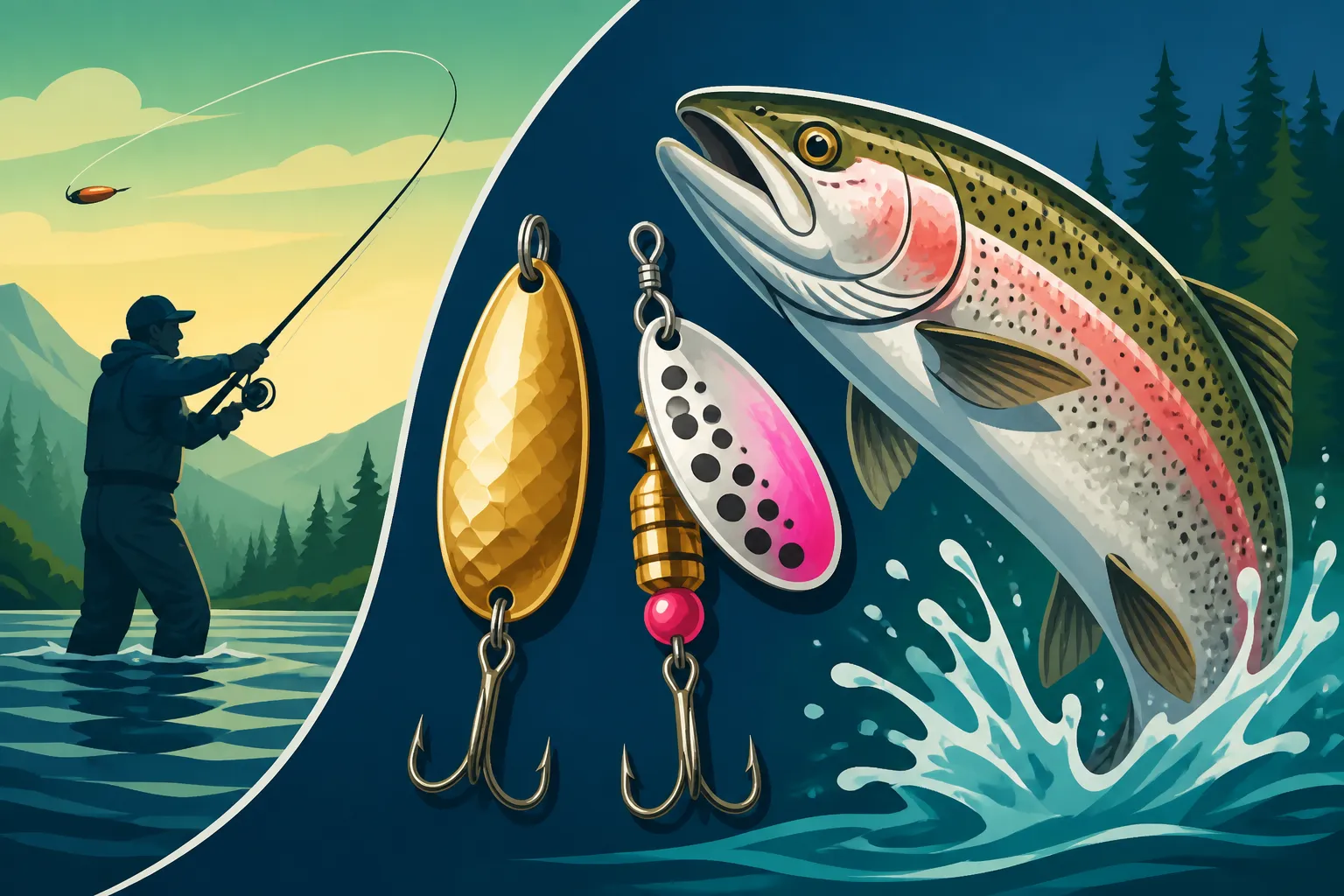
When it comes to spoons for Washington steelhead, you'll find a bewildering array of shapes, sizes, and colors. However, a few classics consistently produce. The "Wobbler" style spoons, like the Luhr Jensen Kwikfish or the Little Cleo, are fantastic because their erratic action mimics a wounded baitfish perfectly. Sizes ranging from 2/5 oz to 3/4 oz are generally most effective, allowing you to cover different water depths and current speeds. On the Skykomish River, for example, a larger, heavier spoon might be needed to get down to those deep holding lies.
Color is another critical factor. In clear water, natural baitfish patterns like silver, brass, or a combination of silver and blue tend to work well. When the water is murky or stained, brighter, more contrasting colors like chartreuse, orange, or even "fire tiger" patterns often stand out better and grab a steelhead's attention. Keep an eye out for spoons on sites like Amazon, but always prioritize local tackle shops for advice on what's hot in your specific fishing area. It's not uncommon for specific colors to perform exceptionally well on certain rivers during particular times of the year, a nuance often learned through experience or local knowledge. For rules around hooks, you might want to review Are Barbless Hooks Required on the Skykomish?.
Choosing Effective Spinners
Spinners offer a different appeal, primarily through their continuous blade rotation and vibration. Iconic brands like Mepps, Blue Fox, and Rooster Tail are perennial favorites. For steelhead, sizes #3 to #5 are typically the most productive. The blade style also matters; Colorado blades offer maximum vibration and lift, making them great for slower currents or when you want to keep the lure higher in the water column. Willowleaf blades, on the other hand, have less drag and spin faster, making them excellent for fast water or deeper presentations.
Just like with spoons, color choice for spinners depends heavily on water conditions. Bright, flashy blades (silver, gold, copper) are great for clear water or sunny days. When the water is off-color, go for brighter, high-contrast colors on the blades or bodies, such as chartreuse, orange, or even black with bright dots. Some anglers find success adding a small piece of bait, like a coon shrimp or a cured prawn, to the hook of a spinner for added scent and appeal. This can be especially effective on rivers known for their strong scent trails, often triggering a bite from a hesitant steelhead.
| Lure Type | Blade/Body Color (Clear Water) | Blade/Body Color (Murky Water) | Ideal Weight/Size | Key Action/Appeal | Best Conditions |
|---|---|---|---|---|---|
| Spoon | Silver, Brass, Blue/Silver | Chartreuse, Orange, Fire Tiger | 2/5 oz – 3/4 oz | Erratic wobble, flash | Variable current, medium depth |
| Spinner | Silver, Gold, Copper, Natural | Chartreuse, Orange, Black/Spots | #3 – #5 (Mepps/Blue Fox) | Continuous blade rotation, vibration | Faster current, deeper pockets |
Mastering the Cast and Retrieve
Even with the perfect spoon or spinner, your presentation is what ultimately coaxes a steelhead into striking. It's not just about throwing it out there; it's about putting it in the right spot, at the right depth, and with the right action. This takes practice, an understanding of river dynamics, and a willingness to experiment.
Reading the Water for Steelhead Lies
The first step to effective spoon and spinner fishing is knowing where steelhead are likely to be holding. Steelhead, especially when resting or waiting to spawn, prefer areas where they can expend minimal energy while still having access to current and cover. Look for seams where fast water meets slower water, the tail-outs of deep pools, behind large boulders, or submerged logs. Riffles that transition into deeper runs are also prime spots, as are pockets of calmer water along cut banks.
Understanding how current dictates fish location is paramount. During high water, steelhead often move to the softer water near the banks or tuck into eddies and back-channels to avoid the main force of the river. In low, clear conditions, they might hold in the deepest, darkest parts of pools or under heavy cover, becoming more wary. Your ability to read these subtle cues and identify potential holding water is a skill developed over time, but always start by asking yourself: "If I were a steelhead, where would I feel safe and have access to food?" You can find more insights on this by learning about How to Fish for Steelhead in High Water and How to Fish for Steelhead in Low, Clear Water.
Casting Techniques for Accuracy and Distance
Once you've identified a promising "lie," the next challenge is getting your lure there accurately. Often, steelhead are in tight spots or require a precise presentation to avoid spooking them. For spoons and spinners, a controlled sidearm or overhead cast that allows you to drop your lure a few feet upstream of the target zone is usually best. This gives the lure time to sink to the desired depth before it reaches the fish. Practice casting to specific targets on the water; aim for that seam, that pocket behind the rock, or the edge of that log.
Distance isn't always the goal; sometimes, it's about stealth and a quiet entry. A powerful overhead cast might be necessary to reach a distant seam on a wider river, but a softer, more controlled cast is better when fishing smaller, more intimate streams like some of the tributaries of the Satsop River. The moment your lure hits the water, immediately "mend" your line (a quick upstream flick of your rod tip) to create a belly in the line that allows the lure to sink and drift naturally without being pulled prematurely by the current. This initial presentation is crucial for mimicking natural food sources.
Varying Your Retrieve to Entice Bites
The retrieve is where you truly bring your spoon or spinner to life. A common mistake is simply reeling it in at a constant speed. Steelhead are often triggered by erratic movements or changes in speed. Start with a moderate retrieve that keeps the lure just above the bottom, allowing the spoon to wobble enticingly or the spinner blade to thump steadily. Then, experiment. Try pausing your retrieve momentarily, letting the lure flutter or drop a bit, mimicking a dying baitfish. Then, give it a quick crank to make it dart forward.
Sometimes, a slow, steady retrieve is exactly what's needed, especially in cold water when fish are sluggish. Other times, a faster, more aggressive retrieve can trigger a reaction strike from an active steelhead. Pay attention to what the fish are telling you. If you get a follow but no bite, try changing your retrieve speed or adding more pauses and jerks on your next cast. On rivers like the Green River near Auburn, which sees good steelhead runs, you'll often find success by varying your retrieve until you discover what the fish want on that particular day. Don't be afraid to experiment; there's no single "magic" retrieve.
Spoon and Spinner Tactics for Different River Types
Washington State offers an incredible diversity of steelhead rivers, from raging glacial torrents to gentle, meandering coastal streams. The tactics you employ with spoons and spinners will need to adapt to these varying environments. What works perfectly on the mighty Columbia River won't necessarily be effective on a smaller, brushier tributary.
Fishing Fast, Turbulent Rivers
On big, fast-flowing rivers like the mainstem Skykomish or parts of the Cowlitz, getting your spoon or spinner down to the fish in the heavy current is the primary challenge. Here, heavier spoons (like a 3/4 oz or even 1 oz if the current is exceptionally strong) and robust spinners with dense bodies are your best friends. Casting slightly upstream and across the current, then allowing your lure to sink as it drifts downstream, is key. You want it to reach the strike zone – usually near the bottom – as it passes through the suspected steelhead lie.
Once the lure is in the current, maintaining contact is vital. Keep your rod tip high, pointed towards your line, and use a steady retrieve just fast enough to keep the lure working without being swept away too quickly. Often, bites in fast water are aggressive, but sometimes they can feel like a subtle "tick" or simply added weight. These rivers often demand durable gear; ensure your swivel snaps and leader knots are robust. Brands like P-Line offer strong leader materials often found on Amazon that can stand up to the rigors of these powerful rivers. Remember, Does Rain Improve Steelhead Fishing on Washington's Coastal Rivers? often means more turbulent conditions, requiring heavier gear.
Slow, Deeper Pools and Runs
Conversely, when fishing slower, deeper pools and runs, found on rivers like the Nisqually or sections of the Wenatchee, your approach shifts. Here, stealth and a more deliberate presentation are often more effective. Lighter spoons with a wider wobble and spinners that maintain action at very slow retrieve speeds come into their own. You might want to consider a lighter main line or a longer, lighter fluorocarbon leader to maximize stealth.
In these conditions, an accurate cast that allows your lure to sink to the desired depth with minimal disturbance is essential. Let the lure settle, then initiate a slow retrieve, adding plenty of pauses and gentle twitches. Steelhead in slower water have more time to inspect your offering, so a natural, unhurried presentation is often more successful. You might also try a technique called "swinging" a spoon, where you cast across and slightly downstream, then allow the current to sweep the spoon in an arc through the pool, keeping just enough tension to feel the wobble. This methodical presentation can effectively cover large sections of water and entice a reluctant steelhead.
Navigating Smaller Tributaries
Smaller, brushy tributaries, often found winding through the Olympic Peninsula, present their own unique challenges and rewards. Here, precision casting and an understanding of intimate water are paramount. Overgrown banks and tight casting lanes mean shorter, more accurate casts are often required. Smaller, lighter spoons and spinners (even down to a #2 spinner) are usually best, as they are less likely to spook fish in shallow water and can be worked through tight pockets.
On these streams, steelhead often hold in smaller, less obvious spots – a slight current break behind a small log, a deeper slot under an overhanging bank, or the plunge pool below a small riffle. Focus on single-shot casts to these high-percentage areas. Your retrieve should be varied but often quite subtle, as the fish are frequently close to cover and can be easily startled. Moving quietly, staying low, and minimizing your presence on the bank will greatly increase your chances of success on these sensitive waters. It's a different game than the big rivers, often more about finesse than power.
Common Mistakes and How to Avoid Them
Even experienced anglers can fall into common traps when fishing for steelhead with spoons and spinners. Understanding these pitfalls and actively working to avoid them can significantly improve your catch rate and overall enjoyment on the water. Steelhead fishing is a constant learning process, and acknowledging these mistakes is the first step to becoming a more effective angler.
Ignoring Water Clarity and Current
One of the biggest mistakes anglers make is failing to adjust their lure choice to the prevailing water conditions. As discussed earlier, water clarity and current speed are paramount. Using a tiny, natural-colored spoon in a blown-out, chocolate-milk river is likely to be fruitless. Conversely, tossing a massive, fluorescent spinner into gin-clear, low water will probably just send every steelhead within sight scurrying for cover. It's not just about what you like to fish, but what the fish can see and react to.
Before making your first cast, take a moment to assess the river. Is it rising or falling? How clear or murky is the water? Is the current raging or barely moving? Based on these observations, select a lure that will stand out appropriately without being overly aggressive. If the water is dirty, go big and bold with your colors and vibrations. If it's crystal clear, downsize your lure and choose more natural, subtle hues. For more on this, you might find How Water Clarity Affects Steelhead Fishing particularly helpful, as it delves into the nuances of visibility in river systems.
The Importance of Sharp Hooks and Proper Leaders
This might seem basic, but it's astonishing how many anglers neglect their hooks. A dull hook will lead to missed strikes, especially with the tough, bony mouths of steelhead. Always check your hook points regularly, especially after bouncing your lure off rocks or logs, and sharpen them with a small hook file or replace them if they're too far gone. This simple act can dramatically increase your hook-up ratio. You can find excellent hook sharpening tools, and even replacement treble or single hooks, on Amazon or at any good tackle shop.
Equally important is your leader material and connection. Using an appropriately strong fluorocarbon leader (10-15 lb test) is crucial for abrasion resistance and stealth. Check your leader frequently for nicks, abrasions, or twists, especially after fighting a fish or getting snagged. A small nick can quickly become a break under the strain of a powerful steelhead. Learn a few reliable knots, like the Palomar knot for tying lures and the surgeon's knot for connecting leader to main line, and practice them until they are second nature. Don't let a compromised leader be the reason you lose that fish of a lifetime. If you're wondering about specific guidelines, check out Leader Length for Clear Water Steelhead in Washington.
Adjusting to Steelhead Moods
Steelhead aren't always in a biting mood, and their temperament can change by the hour or by the day. What worked yesterday might not work today, and what works in the morning might not work in the afternoon. A common mistake is being too stubborn and sticking with a single lure or retrieve when it's clearly not producing. Steelhead can be incredibly moody, influenced by changes in water temperature, barometric pressure, light conditions, and even the sheer number of other fish in the river.
The key to success is adaptability. If your go-to spoon isn't getting any attention, try a spinner. If a fast retrieve isn't working, slow it down. Experiment with different colors, sizes, and weights. Sometimes, even a slight change in presentation, like a different angle of cast or retrieving closer to the bank, can trigger a bite. Think of it as a conversation with the fish; you're throwing out different questions until you find one they're willing to answer. Don't be afraid to change things up – sometimes the most subtle adjustment makes all the difference. Remember that Wild Steelhead vs Hatchery Steelhead in Washington may respond differently to various presentations.
Disclaimer
Fishing conditions and regulations in Washington State can change rapidly. Always consult the most current Washington Department of Fish and Wildlife (WDFW) regulations pamphlet and emergency rule changes before heading out on the water. This guide provides general information and recommendations but should not be considered a substitute for official WDFW publications.