Downrigger Techniques for Halibut in Washington
Oh, the elusive halibut! If you've spent any time chasing these broad, flat denizens of the deep off the Washington coast, you know it's a game of patience, precision, and often, sheer guessing games about what's happening hundreds of feet below your boat. The frustration of marking fish on your sonar but never getting a bite is real, or worse, finding out they were just a little deeper or shallower than your gear. This comprehensive guide is going to pull back the curtain on using downriggers effectively for halibut in Washington, helping you get your bait right in the strike zone and turn those "what ifs" into "fish on!" moments.
Understanding Halibut Behavior in Washington Waters
Before we even think about dropping a downrigger, it's crucial to understand the magnificent creature we're after. Pacific halibut aren't just any bottomfish; they're apex predators that command respect, and learning their habits is the first step to consistently finding them.
Where Washington Halibut Live
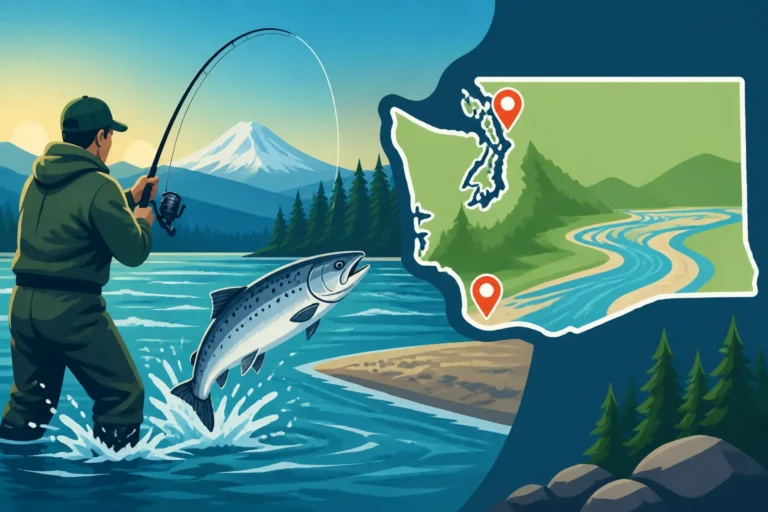
Halibut in Washington state waters primarily inhabit the deeper, cooler parts of the continental shelf, ranging from Puget Sound to the outer coast, particularly off Westport, Neah Bay, and Ilwaco. While you might stumble upon smaller "chicken" halibut in shallower Puget Sound areas, the true trophy-sized barn doors are typically found in the marine waters of the Pacific Ocean. They prefer areas with structural diversity on the seabed—think rocky reefs, sudden drop-offs, underwater pinnacles, and even large patches of sand or gravel near these features. These structures provide ambush points and foraging grounds for their prey, making them prime real estate for a hungry halibut. Knowing the contours of the ocean floor, often with the help of sophisticated charting and sonar equipment, is paramount.
Imagine a vast, featureless plain, and then picture a mountain range or a deep canyon cutting through it. Halibut are drawn to those "features" where current eddies create feeding opportunities and cover. They are masters of camouflage, blending seamlessly with the seafloor, so even when your sonar marks them, they might just be lying flat, waiting for an opportune moment to strike. This is why getting your bait right on their nose is so important, and where downriggers truly shine.
Seasonal Movements and Feeding Patterns
Halibut are not static creatures; they undertake significant seasonal migrations. Generally, as the water warms in spring and summer, they tend to move into shallower, more accessible depths along the continental shelf to feed and spawn. This is why When Washington's Halibut Season Opens is usually timed with these movements. They’ll follow baitfish like herring, sardine, and even smaller rockfish, moving up and down the water column as their prey dictates. During the colder months, many halibut retreat to deeper offshore waters, often congregating in large groups to spawn.
Their feeding patterns are largely opportunistic. While they are bottom-dwellers, they are not strictly limited to the seabed. They will rise in the water column to pursue prey, which means that sometimes the biggest halibut might be found suspended above structure rather than right on it. This is a critical piece of information for downrigger anglers, as it suggests you shouldn't always be bumping the bottom. Their diet is incredibly varied, including crabs, octopus, cod, sole, and even smaller salmon. This varied diet gives us a lot of options when it comes to choosing baits and lures, which we'll dive into shortly. Understanding these seasonal shifts and preferred forage helps you predict where they might be, allowing you to focus your downrigger efforts more efficiently.
Depth and Structure Preferences
Halibut are typically found anywhere from 50 to 1,000 feet deep, though most recreational fishing off Washington happens in the 100-600 foot range. Their depth preference can shift dramatically based on prey availability, water temperature, and time of day. They are often found on or near sandy or gravelly bottoms adjacent to rocky reefs or sharp drop-offs. These areas offer both the soft substrate for ambushing prey and the hard structure for cover.
When you're out on the water, pay close attention to your depth sounder. You're not just looking for "fish arches;" you're looking for changes in bottom contour, baitfish schools, and even thermoclines where different water temperatures meet, as these can concentrate bait. A common frustration is fishing a flat, featureless bottom for hours only to find out the fish were just a quarter-mile away on a subtle rise. Learning to interpret your sonar effectively for features that scream "halibut hideout" is a skill that comes with time, but combining it with the precise depth control of a downrigger greatly increases your odds. The goal is to present your bait at or just above these structures where a halibut might be lying in wait. Remember, these fish can be massive—How Big Pacific Halibut Get Off Washington can truly surprise you, often exceeding 100 pounds, so they need substantial habitat.
Essential Downrigger Gear for Halibut Fishing
Okay, now that we understand a bit more about our target, let's talk brass tacks: the gear. You can't just slap any old trolling setup onto a downrigger and expect to tame a halibut. These fish fight hard, and the depths you'll be fishing require specialized equipment designed for the task.
The Right Downrigger System
Choosing a downrigger system is your foundational decision. You've got two main categories: manual and electric.
-
Manual Downriggers: These are hand-cranked and more budget-friendly, making them a popular choice for anglers who fish for halibut less frequently or on smaller boats. Brands like Scotty and Cannon offer robust manual models that can handle heavy weights. The main trade-off is the effort involved, especially when fishing deep or with heavier weights (say, 15-20 pounds), which is common for halibut. Reeling up that much weight by hand repeatedly can be a real workout, particularly if you're constantly checking bait or adjusting depths. For a casual trip or as a backup, they're perfectly fine, but for dedicated halibut anglers, the sheer physical exertion can detract from the experience. If you’re just getting into it, you might find some good entry-level models on Amazon that provide solid performance without breaking the bank.
-
Electric Downriggers: These are the workhorses for serious halibut anglers. Powered by your boat's 12V system, they retrieve weights with the push of a button, saving your arms for fighting fish. Many electric models, like the Scotty Depthpower series or Cannon Optimum, come with advanced features such as auto-up, auto-stop, and even integrated depth counters and positive ion control. These features are incredibly useful when you're fishing 300+ feet down, allowing for precise depth adjustments and effortless weight retrieval. While a larger initial investment, the convenience and efficiency of electric downriggers are invaluable, especially when you're checking baits frequently or adjusting to changing depths or current conditions. For a multi-day trip or when fishing with less experienced crew, the ease of electric downriggers truly makes a difference.
Regardless of manual or electric, ensure your downrigger is mounted securely to your boat, as it will be under significant stress. A swivel base is a fantastic addition, allowing you to turn the downrigger out of the way when fighting a fish or netting.
Downrigger Weights and Line
The weight is what gets your bait down to depth, and for halibut, you'll need substantial ones.
- Weights: While lighter weights work for salmon, halibut often require 12 to 20 pounds, sometimes even more if currents are strong or you're fishing exceptionally deep. Cannonball weights are common, but there are also pancake or "fish" shaped weights that are designed to cut through the water more efficiently, reducing blowback (the angle at which the weight trails behind the boat). Having a variety of weights onboard is a smart move, allowing you to adapt to different conditions.
- Downrigger Line: Most downriggers come spooled with stainless steel cable. While durable, cable can hum and resonate in the water, which some anglers believe can spook fish. It also requires careful handling to avoid kinks and burrs. A popular alternative is heavy-duty braided Spectra or Dyneema line (e.g., 200-300 lb test). This offers less hum, is lighter, and typically has a smaller diameter, further reducing blowback. However, it requires a different kind of care; you need to be mindful of chafing on your boat or downrigger components. Ensure whatever line you use is strong enough to handle the heavy weights and the drag of deep currents.
Rods, Reels, and Line for the Fishing Rod Itself
This is where the magic happens and you connect with the fish! You need a setup that can handle deep-water fishing and the sheer power of a halibut.
- Rods: Look for a stout, fast-action rod in the 7 to 9-foot range, rated for 30-80 lb test or even heavier. A rod with a sensitive tip but plenty of backbone is ideal. The sensitive tip will help you detect subtle bites even at extreme depths, while the strong backbone is essential for lifting those heavy fish from the deep. Fiberglass or composite rods are often preferred for their durability and parabolic bend under heavy load. Lamiglas and Fenwick make excellent rods suitable for this kind of fishing.
- Reels: A high-quality, lever-drag conventional reel is almost universally favored for halibut. Look for models with a strong drag system (capable of 30+ lbs of drag), a large line capacity (e.g., 500-600 yards of 80 lb braid), and robust gearing. Brands like Penn, Shimano, and Daiwa offer excellent options. A line counter feature on your reel is extremely helpful for precise depth control, allowing you to know exactly how much line is out beyond the downrigger clip. This is especially important when you’re trying to target a specific depth in relation to the downrigger weight.
- Fishing Line: Braided line (Spectra or Dyneema) is the undisputed champion for deep-water halibut fishing. Its almost zero stretch means you feel every bump and bite, even hundreds of feet down. It also has a much smaller diameter than monofilament of equivalent strength, reducing water resistance and allowing you to get to depth faster with less weight. Use 60 to 100 lb test braid as your main line. While some anglers use a monofilament top shot for shock absorption, many prefer a direct braid connection to a heavy fluorocarbon leader (80-150 lb test) for maximum sensitivity and abrasion resistance.
Terminal Tackle and Baits
This is what ultimately tempts the halibut!
- Leaders: Use heavy fluorocarbon leader, typically 80-150 lb test, about 4-6 feet long. Fluorocarbon is nearly invisible underwater and highly abrasion-resistant, crucial when fishing around structure or against a halibut's sandpaper-like mouth.
- Hooks: Large, strong circle hooks (e.g., 14/0 to 20/0) are excellent for halibut. They tend to hook the fish in the corner of the mouth, making for easier release if necessary and reducing gut-hooking. Treble hooks are generally discouraged due to their tendency to foul-hook and cause more damage. A single, stout J-hook (e.g., 10/0 to 16/0) can also be effective.
- Weights for Your Leader: Often, a small lead cannonball or a banana weight (4-16 oz) is added to the leader just above the bait. This helps to keep your bait tracking straight and ensures it stays near the bottom, even when the boat pitches or rolls. This also provides some separation between your downrigger weight and your bait presentation.
- Baits: Fresh bait is king. Large herring, squid, mackerel, and even salmon heads or fillets are fantastic halibut baits. Some anglers swear by combining bait with artificial lures.
- Lures: Large, heavy jigs (such as those by P-Line, Gibbs Delta, or Berkley) in sizes from 8 oz to 24 oz are incredibly effective, especially when tipped with bait. Paddle tail swimbaits, large grubs, or even salmon plugs can also work. The key is finding something that mimics the local forage. For jigs, glow-in-the-dark options are popular for deep-water applications where light penetration is minimal. You can find a huge variety of these specialized jigs and baits available through retailers like Amazon.
Setting Up Your Downrigger for Halibut Success
Having the right gear is one thing; knowing how to deploy it effectively for halibut is another. Precision is key when you're trying to hit a relatively small target hundreds of feet down.
Attaching Your Fishing Line to the Downrigger Clip
This is a crucial step that needs to be done correctly to ensure your bait gets to the desired depth and, more importantly, releases cleanly when a fish strikes. Downrigger clips come in various styles, but their purpose is the same: to hold your fishing line under tension until a fish pulls hard enough to release it.
Start by reeling your bait or lure out a specific distance behind the boat, typically 10 to 50 feet. This "setback" provides separation from your main downrigger weight and allows your bait to swim more naturally. For halibut, a shorter setback, perhaps 10-20 feet, is often preferred, keeping the bait closer to the main downrigger ball. Open the downrigger clip and place your fishing line into the jaws. Many clips have an adjustable tension screw; you want enough tension to hold the line securely against the drag of the bait and current, but loose enough that a solid strike from a halibut will pull the line free. This often requires some trial and error, as conditions and the size of your bait can change the necessary tension. Too tight, and you risk a missed strike or the fish tearing off without releasing the line; too loose, and your line might pop out prematurely, sending your expensive bait and tackle to the bottom unmonitored.
Once your line is clipped, you'll feel the rod load up with tension as the downrigger weight starts pulling your fishing line down. Ensure your reel's drag is set appropriately – not too tight to prevent the line from releasing, but not so loose that you get a birds nest if a fish hits and runs after the clip releases.
Deploying and Retrieving Downrigger Gear
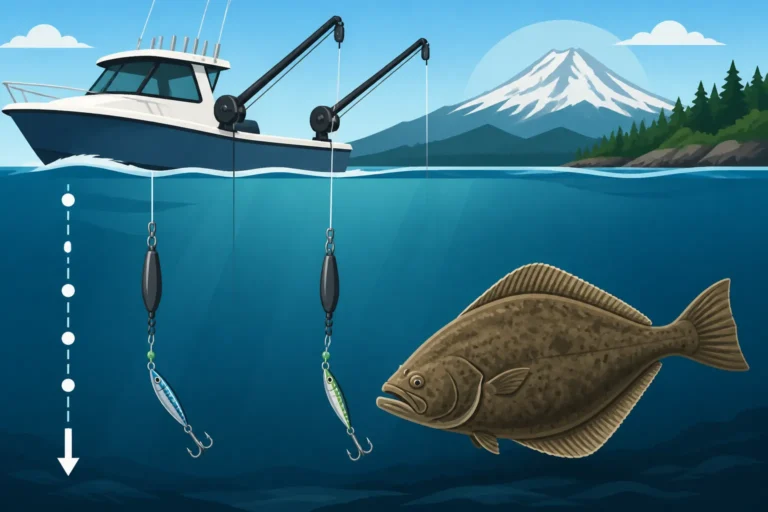
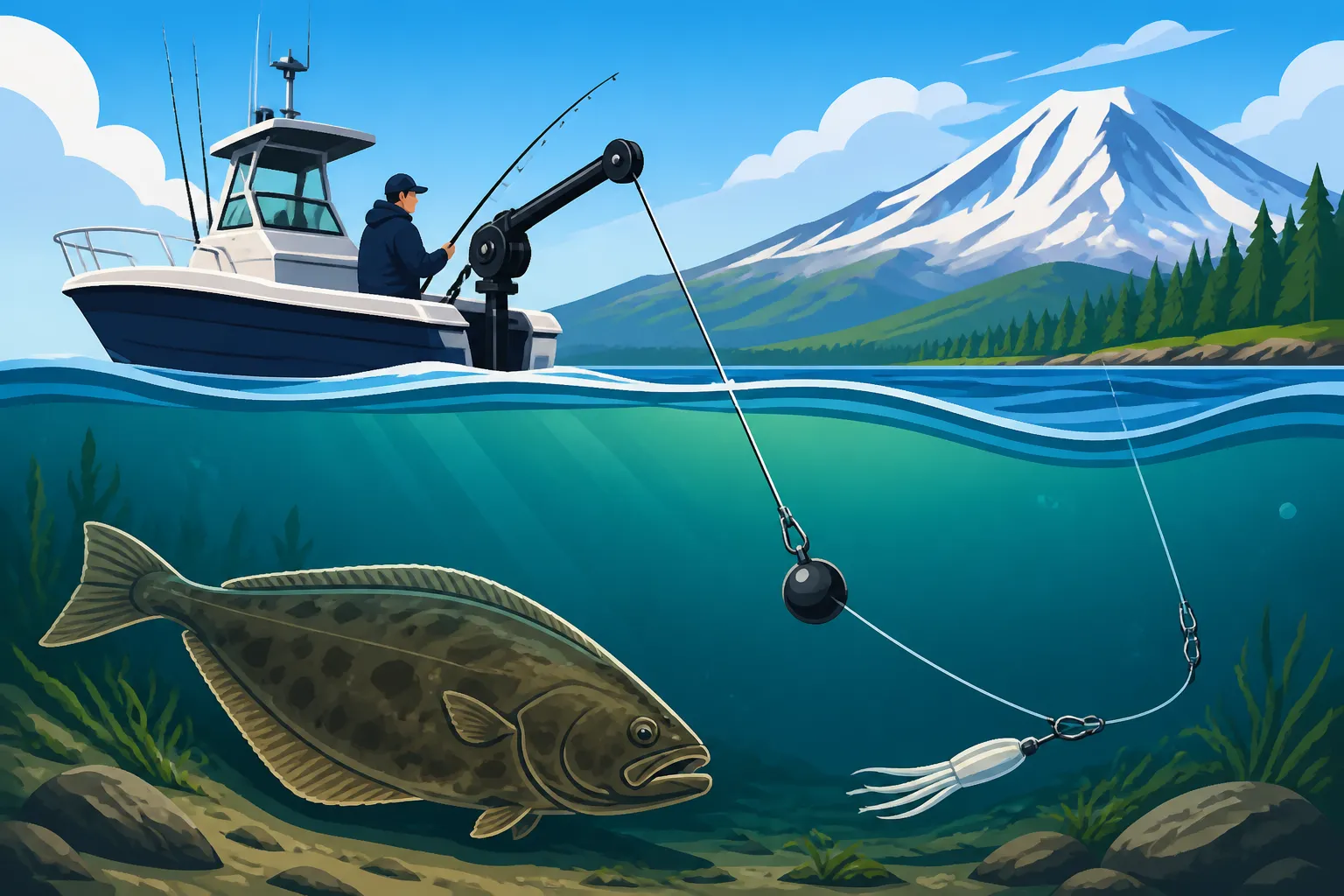
Deploying your downrigger for halibut requires patience and attention. With your line in the clip, slowly lower the downrigger weight. If you're using an electric downrigger, this is as simple as pushing a button. If manual, crank slowly and steadily. Monitor your sonar as you drop the weight. You're looking to place your bait at a specific depth relative to the bottom or suspended fish marks.
Once you hit your desired depth, you can either stop the downrigger there or, for the "bounce" technique (which we'll cover later), you might briefly hit the bottom and then reel up a few feet. When retrieving, especially from deep water, do so at a moderate pace to avoid tangles and kinks in the downrigger line. Electric downriggers really earn their keep here, especially if you're checking your bait every 15-30 minutes, which is often a good practice for halibut. Some downriggers have a "short stop" feature that prevents the weight from crashing into the boat during retrieval, saving your gel coat and equipment. When it's time to bring everything in, disengage the downrigger clutch (or use the auto-up feature on electric models) and let the weight come up. Be ready to retrieve your fishing line as the downrigger weight approaches the surface to prevent tangles.
Optimal Depth Finding and Monitoring
Knowing "how deep to run downriggers for Washington halibut" is often the million-dollar question. Halibut are masters of using current breaks and subtle changes in depth. Your fish finder is your best friend here. Don't just look for fish; look for structure, bait balls, and "hard bottom" readings. If you see baitfish at 200 feet over a rocky pinnacle that rises from 300 feet, that’s your target zone. You might want to run your downrigger at 190 feet, so your bait is presented just above the bait school.
Continuous monitoring is crucial. As your boat drifts or trolls, the depth of the bottom can change rapidly. Keep an eye on your sonar and adjust your downrigger depth accordingly. Many electric downriggers can be programmed to oscillate within a specific depth range, mimicking a swimming baitfish and covering more of the water column. You can also manually "pump" the downrigger up and down a few feet periodically to impart action to your bait. Remember, halibut often lie perfectly flat on the bottom. Your sonar might not always show a distinct "fish arch." Instead, look for subtle bumps or changes on the bottom reading that could indicate a large fish.
Adjusting for Currents and Drift
Washington's marine waters, especially near the coast, can have significant currents, which can make precise downrigging a challenge. Currents cause "blowback," where your downrigger weight and bait trail far behind your boat rather than dropping straight down.
-
Counteracting Blowback: To minimize blowback, use heavier downrigger weights. If you're using a 15-pound ball and experiencing significant blowback, switch to a 20-pounder. Trolling or drifting with the current can also reduce the angle of your line. Another tip is to slow your boat speed as much as possible while maintaining steerage. If you're experiencing a lot of blowback, the actual depth of your bait will be shallower than what your downrigger counter indicates. Some anglers use specialized software or online calculators to estimate true depth based on line out, weight, and current, but usually, watching your fish finder and adjusting is enough.
-
Drift Fishing Considerations: Many anglers prefer to drift for halibut, allowing the boat to move naturally with the current and wind. This can be highly effective, as it covers a lot of ground and presents your bait in a natural manner. When drifting, it's even more critical to monitor your depth constantly and adjust your downrigger. As your boat moves over varying depths, you'll need to continually raise or lower your downrigger weight to maintain the optimal strike zone. Consider using a sea anchor or "drift sock" to slow your drift, making it easier to control your depth and keep your lines from tangling. This can be especially helpful when you're fishing Halibut Fishing Techniques for the Washington Coast in popular areas like Westport, where many boats are active.
Advanced Downrigger Techniques and Strategies
Beyond the basics, there are several advanced techniques that can significantly improve your halibut catch rates, helping you stand out from the crowd.
The "Bounce" Technique for Bottom Contact
The "bounce" technique is a staple for many successful halibut anglers, especially when fish are tightly hugging the bottom. It involves deliberately making contact with the seabed with your downrigger weight, then raising it just slightly.
Here's how it works:
- Drop to the Bottom: Deploy your downrigger until the weight hits the bottom. You'll feel a distinct slackening of the downrigger line and see your rod tip bounce.
- Raise Slightly: Once you confirm bottom contact, immediately reel the downrigger weight up 5-10 feet. This puts your bait just above the bottom, where a halibut is likely to be looking for an easy meal. The slight disturbance created by the weight hitting the bottom can also attract attention.
- Repeat as You Drift/Troll: As your boat moves, the depth of the bottom will change. You'll need to continually monitor your sonar and repeat this process – drop to the bottom, then raise slightly. This creates a rhythmic "bouncing" motion that keeps your bait consistently in the prime strike zone and simulates a baitfish trying to escape.
This technique is particularly effective over relatively flat, sandy, or gravelly bottoms adjacent to structure. It ensures your bait is always within a halibut's strike range, as they rarely feed far off the bottom. However, be cautious when using this over very rocky or snaggy bottoms, as you risk losing your expensive downrigger weight. If you're constantly getting snagged, adjust by running your weight 10-20 feet off the bottom and only dropping to "bounce" when you confirm a clean bottom reading on your sonar.
Stacking Lines for Multiple Depths
When you're trying to cover more of the water column or if you're uncertain of the exact depth the halibut are holding, stacking lines on a single downrigger can be a game-changer. This technique involves running two fishing lines off one downrigger cable, each at a different depth.
To stack lines:
- Attach First Line: Clip your first fishing line to a regular downrigger clip and send it down to your deepest desired depth (e.g., 200 feet).
- Attach Second Line: Secure a second downrigger clip (often a specialized "stacker" clip) to the main downrigger cable, typically 20-50 feet above your first clip. Then, clip your second fishing line into this upper clip. This second line will now fish at a shallower depth (e.g., 150-180 feet).
This allows you to effectively present two baits at different depths with one downrigger, increasing your chances of finding the fish. It's particularly useful when you're exploring a new area or when the fish are suspended rather than tightly to the bottom. It also doubles your presentation for species like Pacific Halibut Identification and Size in Washington which are often found in groups. The downside is that fighting a fish on the lower line requires carefully playing it around the upper line, which can sometimes lead to tangles if not handled correctly. However, the benefits of covering more water often outweigh this risk.
Trolling Patterns and Speeds
While many halibut anglers drift, slow trolling with downriggers can also be incredibly effective, especially for covering large areas or when you want to specifically target a piece of structure on a chart.
- Speed: Halibut generally prefer a slow presentation. Troll speeds typically range from 0.5 to 2.0 knots. The ideal speed depends on your bait or lure; you want it to have a natural, enticing action without spinning unnaturally. Experiment with your boat speed to find what makes your offering look most appealing. Using a good quality GPS and speed over ground (SOG) readout is essential for maintaining consistent speed.
- Patterns: Don't just troll in a straight line. S-curves, large circles, or figure-eights can be highly effective. These turns cause your downrigger weights and baits to rise and fall in the water column, creating an irresistible "jigging" action that can trigger strikes. When you make a turn, the inside line will drop deeper, and the outside line will rise. This change in depth can often be the trigger a halibut needs. If you mark fish or get a bite, make sure to mark the spot on your GPS and work that area thoroughly. Often, the fish are concentrated in specific zones, and repeat passes can pay off. Remember to consider Washington's 2026 Halibut Fishing Days when planning your trips and maximizing your time on the water.
Reading Your Electronics for Halibut
Your boat's electronics suite is just as important as your downriggers themselves. A high-quality fish finder/sonar, GPS/chartplotter, and even radar can give you a significant advantage.
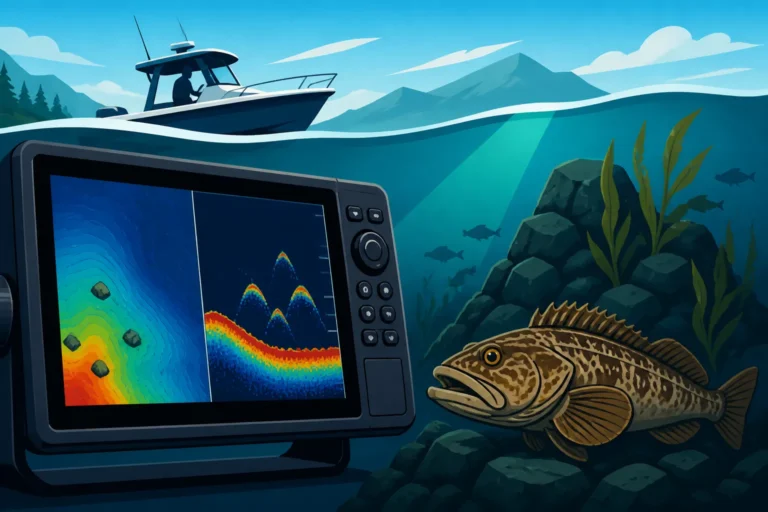
- Sonar: Don't just look for traditional "fish arches." Halibut, being flat, often show up as low-lying bumps, darker spots, or even just subtle changes in the bottom return. Look for "hard bottom" readings, which indicate rocky or gravelly areas where halibut prefer to lie. Pay attention to bait balls, as halibut will often be lurking nearby. Use split-screen modes to view both a wide-angle and narrow-angle cone to get a better picture of the water column and bottom structure.
- GPS/Chartplotter: Mark every bite, every fish hooked, and every significant piece of structure you find. Over time, you'll build up a personal "hot spot" map. Use your chartplotter to navigate to known halibut grounds, identify depth contours, and execute precise trolling patterns. For areas like the Columbia River mouth, near Ilwaco, or off Westport, having detailed bathymetric charts is crucial for pinpointing subtle humps and canyons.
- Thermoclines: Sometimes, halibut can be found along thermoclines—layers of water with different temperatures. Your sonar can sometimes pick up these distinct layers, which often concentrate baitfish. If you see bait congregating at a certain depth, it's a good bet halibut won't be far off.
Learning to interpret all this information and integrate it with your downrigger strategy is what separates consistently successful halibut anglers from those who only get lucky. For instance, if your sonar shows fish concentrated on a specific drop-off at 250 feet, you can precisely deploy your downrigger to that depth, maximizing your chances.
Safety and Best Practices When Downrigging for Halibut
Halibut fishing, especially far offshore in Washington's marine waters, comes with its own set of challenges and safety considerations. Large fish, heavy gear, and potentially rough seas demand respect and preparation.
Navigating Busy Halibut Grounds
Washington's halibut season is often short and intense, leading to crowded fishing grounds, especially around popular areas like Westport or Neah Bay. Navigating these areas safely and courteously is paramount.
- Maintain Situational Awareness: Always be aware of other boats. Use your radar and AIS (Automatic Identification System) if you have them, especially in fog or low visibility. Keep a sharp lookout for boats that are drifting, trolling, or retrieving gear.
- Communicate: If you're going to cross another boat's path, try to establish communication via VHF radio. A quick "Boat X, this is Boat Y, crossing your stern, over" can prevent misunderstandings and tangles.
- Respect Drifts and Trolls: When approaching boats, try to determine their direction of drift or troll and plan your approach to avoid cutting them off or tangling lines. If a boat is drifting, try to drift in the same direction or give them a wide berth. If you’re anchoring, be mindful of boats drifting nearby, as their lines can easily cross yours. Keep in mind that when you're fishing with downriggers, your lines are trailing far behind your boat, making it even more critical to give ample space.
- Know the Rules: Familiarize yourself with marine navigation rules (COLREGs) to understand right-of-way, especially when dealing with vessels engaged in fishing. Being courteous on the water makes the experience better for everyone. Also, be aware of the specific regulations for Halibut Possession Limit in Washington and What to Check Before a Washington Halibut Trip Offshore before heading out.
Handling Large Halibut at the Boat
Catching a large halibut is an exhilarating experience, but bringing a massive, powerful fish into the boat safely requires preparation and teamwork.
- Gaff and Harpoon: For large halibut, a stout gaff or a harpoon is almost essential. Have them rigged and ready before the fish is alongside. Ensure your harpoon has a strong, sharp dart and plenty of line. Never try to gaff or harpoon a fish until it's subdued and close to the boat. A lively halibut on the deck can cause significant damage or injury.
- Fish Bat/Club: Have a heavy fish bat or club ready to dispatch the fish quickly and humanely once it's on board. A conscious, thrashing halibut can be dangerous. Target the head just behind the eyes.
- Clear the Deck: Before the fish comes to the boat, clear the deck of any unnecessary gear, tackle, or coolers. You need ample space to work safely.
- Proper Lifting: Halibut are heavy and awkward. Don't try to lift a large halibut by yourself. Use a stout tail rope or a hoist if available. Lifting from the head and tail simultaneously with two people is often the best approach for smaller to medium-sized fish.
- Bleeding and Icing: Once safely in the boat and dispatched, bleed the halibut immediately by cutting the gills. This improves the meat quality significantly. Get the fish on ice as quickly as possible to preserve freshness. A large cooler or fish bag filled with ice is indispensable. For truly massive fish, a large canvas fish bag designed for halibut is a lifesaver, allowing you to quickly get the fish cool.
Responsible Catch and Release Considerations
While many anglers target halibut for the table, there are times you might need to release a fish, whether it's an undersized "shaker," an oversized fish outside the slot limit, or simply because you've reached your Halibut Possession Limit in Washington. Practicing responsible catch and release is vital for the sustainability of the fishery.
- Minimize Fight Time: Use appropriate tackle that allows you to land the fish quickly, reducing stress and exhaustion.
- Use Circle Hooks: As mentioned, circle hooks greatly reduce gut-hooking, increasing a fish's survival chances upon release.
- Keep Fish in Water if Possible: If releasing, try to keep the fish in the water as much as possible. If it must come aboard, handle it gently and quickly. Avoid dragging it on rough surfaces or handling it by the gills or eyes.
- Descending Devices: For rockfish or other species caught in deep water, descending devices are required in Washington to help them recover from barotrauma. While less common for halibut, if you ever catch an unexpected rockfish while downrigging for halibut, be prepared to use one.
- Be Aware of Regulations: Always know the current regulations for halibut, including size limits, bag limits, and specific seasons for different marine areas. These rules can change annually, so check the latest WDFW regulations pamphlet (or online) before every trip. Ignorance of the rules is not an excuse for violations, and penalties can be severe.
| Downrigger Component | Function & Considerations for Halibut | Typical Specs for Halibut | Where to Find Quality Gear |
|---|---|---|---|
| Downrigger Unit | Lowers/raises weight; manual or electric | Electric (12V) recommended; Heavy-duty construction | Marine supply stores, specialty fishing shops, Amazon |
| Downrigger Weight | Gets main line to depth; heavy to counteract current | 15-20 lbs (cannonball or pancake style) | Fishing tackle stores, online retailers |
| Downrigger Line | Connects downrigger to weight | 200-300 lb test braided line or stainless steel cable | Fishing tackle stores |
| Release Clip | Holds fishing line to downrigger line; releases on strike | Adjustable tension, heavy-duty construction | Fishing tackle stores, Amazon |
| Fishing Rod | Sensitive tip, strong backbone for deep-water fighting | 7-9 ft, 30-80 lb class, fast action | Specialty fishing shops, reputable online retailers |
| Fishing Reel | High capacity, strong drag, robust gearing | Lever-drag conventional, 500-600 yds 80 lb braid capacity | Specialty fishing shops, brands like Penn, Shimano, Daiwa |
| Main Fishing Line | Connects reel to leader; no stretch for sensitivity | 60-100 lb braided line (e.g., PowerPro, Tuf-Line) | Fishing tackle stores |
| Leader Material | Abrasion resistance, stealth | 80-150 lb fluorocarbon | Fishing tackle stores |
| Hooks | Secure hook-up, promote healthy release | 14/0 to 20/0 circle hooks or 10/0 to 16/0 J-hooks | Fishing tackle stores |
| Leader Weight | Keeps bait tracking straight, separates from downrigger | 4-16 oz banana or cannonball sinker | Fishing tackle stores |
| Bait/Lure | Attracts halibut | Large herring, squid, mackerel, salmon heads; 8-24 oz jigs | Local bait shops, specialty fishing stores |
Disclaimer
Fishing regulations, seasons, and limits in Washington are subject to change by the Washington Department of Fish and Wildlife (WDFW). While every effort has been made to provide accurate information, it is the angler's sole responsibility to consult the latest official WDFW regulations pamphlet or website before engaging in any fishing activity. This guide is for informational purposes only and does not supersede state or federal fishing laws.