Bar Fishing for Salmon and Where to Do It in Washington
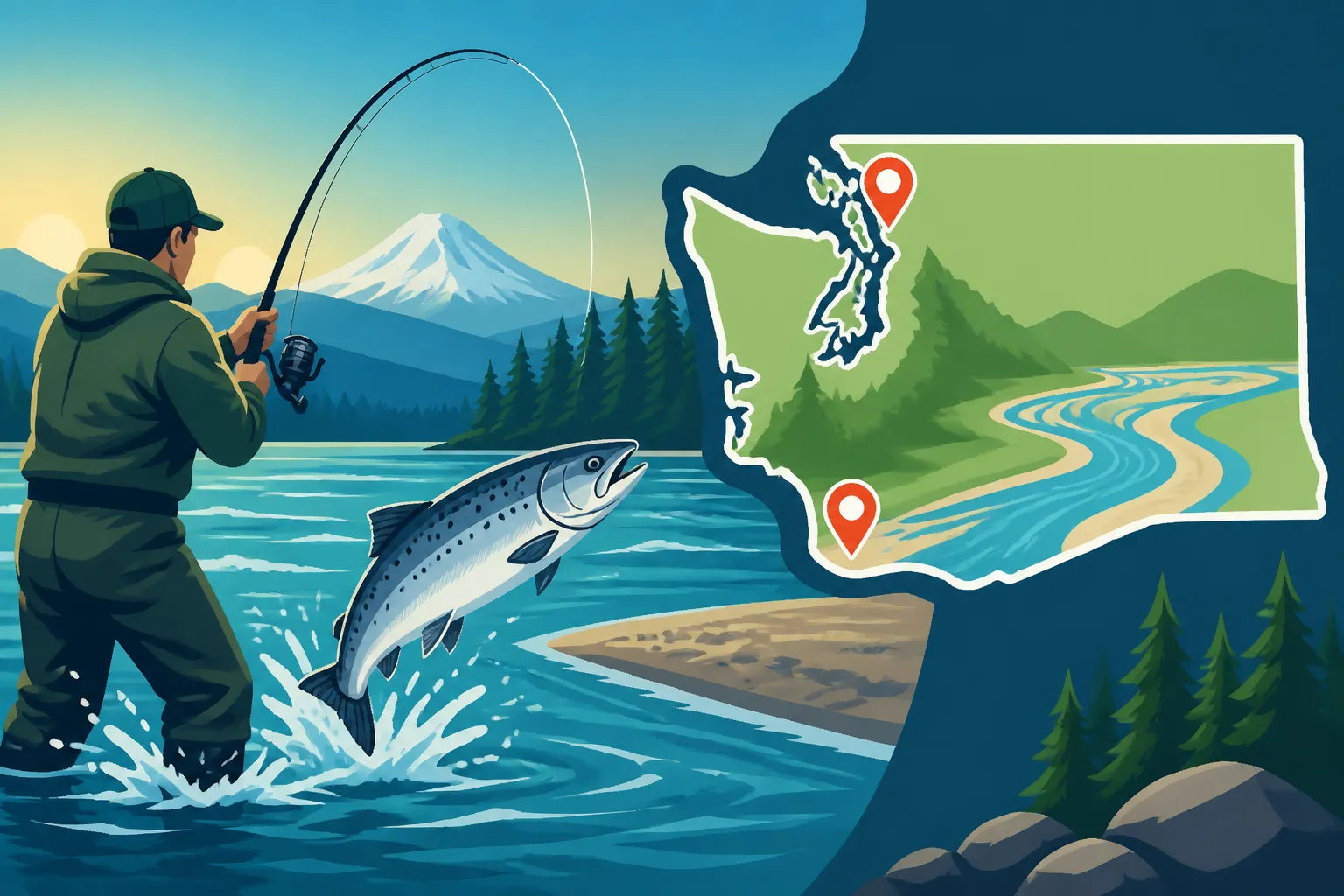
There’s nothing quite as frustrating as showing up to your favorite salmon river in Washington, only to find the prime drift-fishing spots are packed, or the current is ripping so hard that traditional casting just isn't cutting it. Many anglers feel defeated when they can't effectively present their gear to those migrating salmon from the bank. This guide is all about mastering "bar fishing," a technique that lets you effectively target salmon from riverbanks and gravel bars, even in heavy currents, making those seemingly impossible spots suddenly fishable.
Understanding the Essence of Bar Fishing for Salmon
Bar fishing, often referred to interchangeably with "plunking" in many circles, is a uniquely effective method for targeting anadromous fish like salmon and steelhead in rivers, particularly from the bank. The core idea is to anchor your bait or lure firmly in the current, letting the fish come to it rather than actively casting and retrieving. It’s a passive yet incredibly powerful technique that leverages the natural migration path of salmon moving upstream. Instead of fighting the current with repeated casts, you're using it to your advantage, creating a stationary presentation that fish will encounter as they journey.
The Stationary Advantage in River Currents
Imagine a river: the current is a conveyor belt for salmon moving upstream. When you're constantly casting and retrieving, your presentation is only in the strike zone for short bursts. With bar fishing, your gear remains in a consistent, appealing spot for extended periods, right in the highway where salmon are traveling. This is especially crucial in larger, powerful rivers like the Columbia River in Washington, where strong currents can make active casting exhausting and less efficient. Your bait or lure sits there, pulsating and wiggling in the flow, looking like an easy meal to a fish that’s already conserving energy for its long upstream migration.
This method shines when the water is high or slightly off-color, conditions that often make active fishing more challenging. The fish aren't necessarily holding in slack water; they're often pushing through the main current, especially in the seams and troughs near the riverbed. A stationary presentation, positioned correctly, intercepts these fish directly in their travel lanes. It's a game of patience, certainly, but it’s also a high-percentage game once you understand where to set up and what signals to look for. It allows you to relax a bit, perhaps set up multiple rods if regulations allow, and wait for that tell-tale pull that signifies a salmon has committed.
Essential Gear and Setup for Bar Fishing Success
To successfully engage in bar fishing, you need gear that can withstand significant current and hold its position. This isn't your delicate trout setup; we're talking about robust, heavy-duty tackle. Think strong rods, high-capacity reels, and tackle designed to stay put. Many anglers find specialized bar fishing gear, like heavy pyramid sinkers or robust rod holders, readily available on Amazon, ensuring they have the right tools for the job. Having the right tools makes all the difference when you're dealing with the power of a large river.
Your rod should typically be a longer, heavier action spinning or casting rod, often between 9 and 12 feet, capable of handling weights from 4 to 12 ounces or more. This length helps with casting heavy weights and absorbing the shock of a powerful salmon strike in current. The reel should be a durable, high-capacity model, often a conventional baitcasting reel or a large spinning reel, spooled with strong monofilament or braided line. Many seasoned bar anglers opt for 30-50 lb test monofilament or 50-80 lb braided line, giving them the backbone needed to hold bottom and fight strong fish. Having a reliable line is paramount when you're targeting big, hard-fighting salmon that are pushing against a river's flow.
The terminal tackle is where bar fishing truly differentiates itself. The "anchor" of your setup is a heavy sinker, often a pyramid or flat-sided cannonball weight, ranging from 4 ounces to a pound or more, depending on the current. This weight needs to be heavy enough to hold the bottom and not be swept downstream. Above the sinker, a sliding spreader or a three-way swivel is used to attach a leader line, typically 18 to 36 inches long, on which your bait or lure is presented. This allows your presentation to flutter and dance naturally just above the riverbed, unimpeded by the heavy sinker. This careful arrangement ensures your bait or lure is presented enticingly, while the weight keeps everything in place.
Why Washington Rivers are Ideal for Bar Fishing
Washington's diverse river systems offer unparalleled opportunities for bar fishing, especially for salmon. From the mighty Columbia River to smaller, yet powerful, tributaries, these waters are teeming with migrating salmon during various seasons. The unique geography, with numerous gravel bars, braided channels, and strong currents, naturally lends itself to this stationary fishing method. It’s a technique that has been perfected by generations of Washington anglers who understand the nuances of these dynamic waterways and the behavior of anadromous fish.
Navigating Strong Currents and Deep Channels
Many of Washington's salmon-bearing rivers, particularly the larger ones like the Columbia, are characterized by powerful currents and deep channels. These conditions can be incredibly challenging for conventional casting and retrieving techniques. Bar fishing, however, thrives in such environments. By utilizing heavy sinkers and a robust setup, anglers can effectively present their offerings in the heart of these travel lanes, where salmon are often pushing hard against the current. The objective is to find those "sweet spots" – the seams where faster current meets slower water, or depressions in the riverbed – and anchor your gear there. This allows your bait or lure to be held precisely where a weary salmon might be resting or traveling.
Consider the lower Columbia River during the fall Chinook run. The sheer volume of water and the strength of the flow can be daunting. Yet, numerous accessible gravel bars along the river provide perfect platforms for bar fishing. Anglers can cast their heavy rigs out, let them settle, and then wait. The current does the work, disseminating scent from your bait or imparting action to your lure, drawing in fish that are on their migratory path. It's about letting the river's power become an ally, rather than an adversary, in your pursuit of salmon. This method is particularly effective for those who prefer to fish from shore, offering a viable and productive alternative to boat fishing in these expansive waters.
Targeting Specific Salmon Runs and Species
Washington's rivers host a spectacular array of salmon runs throughout the year, including Chinook (Kings), Coho (Silvers), and even some Chum and Sockeye, depending on the system and season. Bar fishing is incredibly versatile and can be adapted to target different species and their particular behaviors. For instance, while Chinook tend to hug the bottom and follow deeper channels, Coho might be found in shallower, faster water. Your bar fishing setup can be adjusted with different leader lengths, bait choices, and specific bar locations to match the preferences of the salmon you’re after.
For large Chinook, often called "Kings" for a reason, a robust setup with substantial bait is key. A glob of cured salmon roe, a large Brad's Wiggler, or even a sardine wrap can be irresistible. For Coho, which are often more aggressive, a smaller spinner or a brightly colored Corky with a prawn tail might be more effective. Knowing your target species and their habits will help you refine your bar fishing technique. You can find detailed information on species-specific limits and seasons in "Understanding Washington's Daily Bag Limits by Species" and "Washington Sport Fishing Seasons and Emergency Closures" to make sure you're always fishing legally and effectively. This adaptability makes bar fishing a consistently productive method across various salmon runs in the state.
Prime Bar Fishing Locations in Washington State
When it comes to bar fishing for salmon, location is absolutely paramount. You need access to a riverbank with a relatively stable gravel or sand bar that allows for casting out into the main current where salmon are likely to travel. Washington is blessed with several such rivers, each offering its own unique opportunities and challenges for the dedicated bar angler. These aren't just any spots; they are chosen for their consistent salmon traffic and accessible features.
The Mighty Columbia River and Its Tributaries
The Columbia River is arguably the quintessential bar fishing destination in Washington. Its vast size and powerful runs of Chinook and Coho salmon make it a prime target. From below Bonneville Dam all the way down to its mouth, numerous gravel bars provide excellent opportunities. Anglers often flock to spots like the fishing holes below tributary confluences or prominent gravel flats that extend into the main channel. Areas around Kalama and Woodland offer fantastic public access points with expansive bars, perfect for setting up multiple rods. The sheer volume of fish moving through the Columbia means that if you position yourself correctly, your chances are significantly higher. Just remember that the Columbia River often has unique regulations, and you might need a Washington's Columbia River Salmon and Steelhead Endorsement, Explained to fish certain species.
Beyond the mainstem, several major tributaries of the Columbia offer excellent bar fishing prospects during their respective salmon runs. The Cowlitz River is a fantastic example, known for its strong hatchery returns of both Chinook and Coho. Downstream sections near the hatchery and various public access points present ample bar fishing opportunities. Similarly, the Kalama River, another Columbia tributary, can be excellent for spring Chinook and fall Coho. These tributary rivers, while smaller than the main Columbia, still have significant current and gravel bar features that make stationary fishing highly effective. Always check the specific regulations for each river, as they can change frequently. You can find more details on fishing this prolific river system in "Fishing the Columbia River in Washington: A Complete Overview".
Other Notable Washington Rivers for Bank Anglers
While the Columbia reigns supreme, other Washington rivers also offer fantastic bar fishing. The Snake River, particularly in its lower sections, provides good bank access and salmon opportunities, especially for fall Chinook. Farther north, the Olympic Peninsula rivers like the Quillayute or Hoh, while often targeted by drift boaters, can have accessible lower river gravel bars during certain flows, especially during the fall Coho and winter steelhead seasons. However, these rivers can be highly dependent on water levels and specific emergency closures, so always be sure to check "Where to Check for Emergency Rule Changes in Washington" before heading out.
Even rivers closer to population centers, like sections of the Green River near Auburn or the Nisqually River, can offer limited bar fishing during strong fall salmon returns. The key is to scout these locations beforehand, looking for stable gravel points, current seams, and clear casting lanes. Remember that some smaller rivers might have bait restrictions or single-point barbless hook requirements, which are crucial to follow. A great place to start your research on these spots and many others is "The Best Places to Fish in Washington State". Bar fishing is all about finding those stable perches where you can cast out, settle in, and let the river bring the fish to you.
Strategies and Tips for Maximizing Your Bar Fishing Catch
Bar fishing might seem simple at first glance—cast out, wait for a bite. But like any effective fishing technique, there’s an art and science to maximizing your success. It involves understanding the river, refining your presentation, and paying attention to subtle cues that can mean the difference between a slow day and a banner one. This isn't just about being patient; it's about being strategically patient.
Reading the Water and Positioning Your Rig
Successfully bar fishing begins long before your bait hits the water; it starts with reading the river. Look for current seams where fast water meets slower water, or where a main channel brushes up against a shallower bar. These are natural holding and travel lanes for migrating salmon. Also, pay attention to depressions, gravel humps, or any underwater structure that might create an ambush point or a resting spot for fish. Often, the sweet spot is just on the downstream side of a current break. Understanding How to Read Water for Bank-Fishing Salmon is a critical skill for any bank angler.
When you cast, aim to place your rig slightly upstream of your intended target zone. This allows the heavy sinker to swing down and settle firmly on the bottom in the desired location. Once your weight is set, ensure there's enough slack in your line so the rod tip is not constantly bouncing with the current, but not so much that you can't detect a bite. A slight bend in the rod, or "loading" the rod against the current, is ideal. Many anglers attach a small bell to their rod tip or use electronic bite alarms, especially if they are fishing multiple rods, as a visual or audible indicator of a strike. The beauty of bar fishing is that once you're set, you can relax, but always be ready for that sudden, unmistakable salmon tug.
Optimal Bait and Lure Choices for Washington Salmon
The choice of bait or lure is crucial in bar fishing, as your offering needs to be both appealing and durable enough to withstand the current for extended periods. For Chinook salmon, a perennial favorite is cured salmon roe (often called "roe bags" or "spawn sacks"). The scent trail released by fresh, cured roe is incredibly attractive to salmon. Many anglers add a small, brightly colored Corky or a Cheater plug above the roe to provide flotation and visual appeal. Another highly effective option is a cluster of sand shrimp, which also emits a strong natural scent.
For Coho, which can be more aggressive, brighter, more active presentations often work well. Brad's Wigglers in various colors (chartreuse, fire tiger, red/white) are extremely popular, as are Spin-N-Glos with a piece of prawn or sand shrimp. Some anglers also use artificial eggs or soft plastics infused with scent. When rigging, make sure your bait or lure is presented naturally on the leader, allowing it to flutter and entice fish. You can find many of these specialized baits and lures at local tackle shops or easily order them through Amazon. Experiment with different colors and scent combinations; what works one day might not work the next, depending on water clarity and fish mood.
| River/Area | Target Species | Best Season(s) | Common Baits/Lures | Key Gear Element |
|---|---|---|---|---|
| Columbia River Mainstem | Chinook, Coho | Summer, Fall | Roe, Brad's Wiggler, Spin-N-Glo | Heavy Sinkers |
| Cowlitz River | Chinook, Coho, Steelhead | Spring, Fall, Winter | Roe, Prawn, Jig & Bobber | Long Rods |
| Kalama River | Chinook, Coho | Spring, Fall | Roe, Prawn, Spinners | Rod Holders |
| Snake River (Lower) | Chinook | Fall | Roe, Sand Shrimp | Heavy Line |
| Olympic Peninsula Rivers | Coho, Steelhead | Fall, Winter | Roe, Corkies & Yarn | Bells/Alarms |
Adhering to Regulations and Ethical Practices
Washington fishing regulations are complex and frequently change, especially for salmon and steelhead, due to conservation efforts. It is absolutely essential to check the current regulations published by the Washington Department of Fish and Wildlife (WDFW) before every fishing trip. This means knowing the daily bag limits, possession limits, size restrictions, and gear restrictions for the specific river and species you are targeting. Many rivers, especially those with sensitive wild fish populations, have Barbless Hook Requirements on Washington Rivers or bait bans. Failure to adhere to these rules can result in significant fines and the loss of your fishing privileges. You'll find all the essential information in "Washington Fishing Regulations Every Angler Should Know".
Beyond regulations, practicing ethical angling is paramount. Always be prepared to properly release any non-target species or fish that are out of legal size or limit. Have a clear understanding of Catch-and-Release Rules During Wild Steelhead Closures. Use appropriate gear to minimize harm to fish. Pack out everything you pack in, leaving no trace behind. If you're using multiple rods, ensure you can effectively monitor all of them to avoid snagging or leaving a fish on the line for too long. Bar fishing offers a wonderful way to connect with Washington's rich salmon fisheries, and by respecting the resource and fellow anglers, we can ensure these opportunities continue for generations to come.
Disclaimer
Fishing conditions, regulations, and access can change rapidly in Washington State. Always consult the official Washington Department of Fish and Wildlife (WDFW) regulations and emergency rule changes before heading out on any fishing trip. This guide is for informational purposes only and does not supersede official regulations.