Jigging Through the Ice for Trout
The winter wonderland of Washington offers a unique and incredibly rewarding fishing experience for those brave enough to embrace the chill: ice fishing for trout. It's not just about enduring the cold; it's about understanding the subtle nuances of fishing through a frozen window, a challenge that can sometimes feel daunting for even seasoned anglers. This guide aims to demystify the art of jigging through the ice for trout, covering everything from essential gear to effective techniques, ensuring your cold-weather adventures are both successful and safe.
The Allure of Ice Fishing for Trout in Washington
There's something uniquely serene about a frozen lake, blanketed in snow, with only the whisper of the wind and the occasional crack of the ice disturbing the silence. For many Washington anglers, this stillness is precisely why ice fishing, particularly for trout, holds such a special appeal. It's a departure from the hustle and bustle of open-water fishing, offering a different kind of challenge and reward.
Why Jigging Is So Effective for Ice Trout
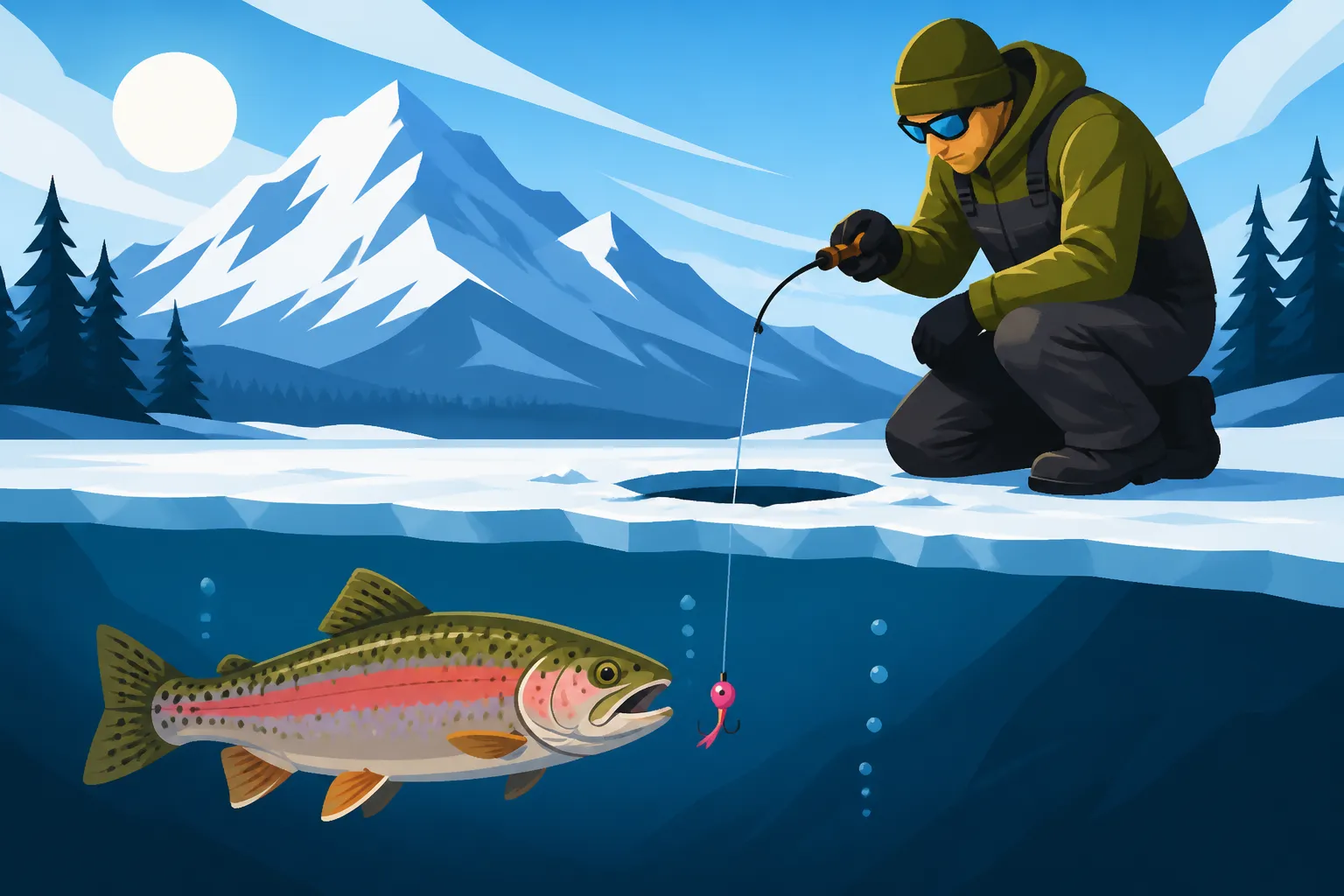
Jigging is, hands down, one of the most productive methods for targeting trout through the ice. Unlike passive methods like set lines, jigging allows you to actively present your lure, mimicking baitfish or insects, and provoke a strike from even lethargic winter trout. The vertical presentation of a jig dropped straight down a hole is inherently enticing. When you add a subtle quiver or a sharp lift and drop, you create action that can trigger a predatory response. Trout, even when cold, are opportunistic feeders, and a well-presented jig dancing just above them is often too tempting to resist. This active approach also gives you immediate feedback on what's working and what isn't, allowing you to adapt quickly to the fish's mood and preferences on any given day.
Common Challenges and How This Guide Helps
Let's be honest, ice fishing isn't always glamorous. The cold can be biting, the ice conditions unpredictable, and finding fish under a solid sheet of frozen water can feel like searching for a needle in a haystack. Many new ice anglers get frustrated, drilling hole after hole without a bite, or struggling to stay warm enough to enjoy the experience. You might worry about safety, wonder what gear is truly essential, or simply feel overwhelmed by the sheer number of techniques and lures available. This guide aims to tackle those very frustrations head-on. We'll walk you through the specifics of proper gear selection, so you don't overspend or underprepare. We'll break down proven jigging techniques that maximize your chances, and we'll delve into the strategies for locating those elusive trout, turning a potentially frustrating day into a rewarding one. Understanding these elements is key to confidently venturing onto the ice.
Essential Gear for Successful Ice Jigging
Before you even think about dropping a line, having the right equipment is non-negotiable. Trying to ice fish with your standard open-water gear is a recipe for frustration and discomfort. The specific demands of ice fishing require specialized tools designed for cold temperatures and vertical presentations.
Rods, Reels, and Line: The Foundation
When it comes to ice fishing for trout, your rod and reel setup needs to be tailored for the task. Ice fishing rods are much shorter than conventional rods, typically ranging from 24 to 36 inches. This shorter length is practical for fishing inside a shelter or close to the ice hole, allowing for precise jigging movements and easier handling in cramped spaces. Look for a rod with a sensitive tip to detect subtle bites, but enough backbone to handle a feisty trout. Graphite rods are excellent for sensitivity, while fiberglass offers durability.
Pair your rod with a small spinning reel, often a 500 or 1000 size. These reels are compact and handle light lines well. Ensure the reel is designed for cold weather, meaning it has quality grease that won't stiffen up in freezing temperatures, hindering its performance. For line, fluorocarbon in 2-4 pound test is a popular choice for trout. It's nearly invisible underwater, has low stretch for better sensitivity, and resists ice abrasion better than monofilament. Some anglers also use braid with a fluorocarbon leader for ultimate sensitivity and strength, especially when using an electronic fish finder. You can find a wide array of specialized ice fishing rods, reels, and lines on platforms like Amazon, making it easy to gather your foundational setup.
The Right Jigs and Baits: Enticing the Bite
The heart of successful ice jigging for trout lies in your lure selection. Jigs come in countless shapes, sizes, and colors, each designed to imitate different forage or provoke a strike. For trout, smaller jigs are generally more effective. Think tungsten jigs, tear drops, or small spoons ranging from 1/32 to 1/8 ounce. Tungsten jigs are particularly favored because their density allows them to sink faster and cut through slush, getting to the fish quicker, even in smaller sizes. Colors like chartreuse, glow-in-the-dark, silver, gold, and various natural patterns (like those mimicking minnows or insect larvae) are all excellent choices.
While jigs are effective on their own, often a little added enticement makes all the difference. Tipping your jig with a small piece of bait can significantly increase your strike rate. Popular options include a single kernel of corn, a maggot (spikes), a wax worm, or a small piece of nightcrawler. These natural scents and textures provide an extra layer of appeal. Experiment with different jig and bait combinations until you find what the trout are keying in on that particular day. Sometimes, a bare glow jig works wonders; other times, a tiny tungsten jig tipped with a wax worm is the only thing they'll touch.
Shelter, Augers, and Electronics: Comfort and Efficiency
Beyond your rod and reel, certain accessories drastically improve your comfort and success on the ice. An ice fishing shelter, whether a pop-up hub style or a more robust flip-over, protects you from the wind and elements, making a long day much more enjoyable. Being warm means you can stay out longer and focus more on fishing. Many reputable brands offer excellent shelters that can be found on Amazon.
An ice auger is absolutely essential for drilling holes. Hand augers are suitable for thinner ice or if you're only drilling a few holes, but a good quality gas, propane, or electric auger is a game-changer for thicker ice or when you need to drill multiple holes quickly to find fish. Modern electric augers, in particular, are quiet, efficient, and increasingly popular. Finally, electronics can transform your ice fishing experience. A flasher or an ice fishing sonar unit, often referred to as a Vexilar or Marcum (two leading brands), allows you to see your jig, the fish, and the depth in real-time. This not only helps you locate fish but also shows how they react to your presentation, letting you fine-tune your jigging technique for maximum effectiveness. You can literally watch a trout approach your lure, get excited, and then strike – it's an incredibly valuable tool.
Mastering Jigging Techniques for Trout Through the Ice
Once you're geared up and on the ice, the real fun begins: enticing those trout to bite. Jigging is an art form, a subtle dance between you, your lure, and the fish below. There's no single magic formula, but understanding the principles will significantly improve your catch rate.
Understanding the Trout's Strike Zone
Trout in winter often suspend at specific depths or hold tight to structure, and their "strike zone" can be surprisingly narrow. Unlike open water where they might chase a lure a long distance, under the ice, they're often less willing to expend energy. Your goal is to present your jig directly in front of them or just above them. Using a flasher or fish finder is invaluable here, as it shows you exactly where the fish are holding.
Typically, trout in smaller Washington lakes might be found anywhere from just a few feet under the ice (especially in low light or cloudy conditions) down to 20-30 feet in deeper basins. In larger, clearer lakes, they might suspend closer to thermoclines or near structure at various depths. Pay close attention to your electronics and drop your jig to just above the fish you mark. A common mistake is to fish below them; trout generally prefer to look up for food, so presenting your lure slightly above their eye level is often more effective. Don't be afraid to experiment with depth, moving your jig up and down slowly, especially if you're not marking fish, to find their preferred feeding level.
Active vs. Subtler Jigging Presentations
There are two main schools of thought for jigging: active and subtle. Both have their place, and successful anglers often alternate between the two based on fish activity and environmental conditions. Active jigging involves more aggressive movements. This could mean sharp lifts of six inches to a foot, followed by a momentary pause, allowing the jig to flutter back down. It creates flash and movement, often used to call in fish from a distance or trigger aggressive strikes from active trout. You might also try a rapid series of short, quick twitches, making your jig dart and dance erratically, mimicking a panicked baitfish. This can be particularly effective in low-light conditions or when the fish are aggressive.
On the other hand, subtle jigging is often the ticket when trout are lethargic, pressured, or simply not interested in an aggressive chase. This involves tiny, almost imperceptible movements: a gentle quiver of the rod tip, a slow lift of an inch or two followed by an equally slow drop, or simply holding the jig still with occasional slight jiggles. Sometimes, the most effective technique is to simply let the jig hang motionless for an extended period, relying on its natural appearance and any added bait to draw a bite. A good strategy is to start with a more active presentation to gauge the fish's mood. If no bites, gradually switch to a subtler approach until you find what they prefer. Remember, trout often follow a jig up towards the surface before committing, so be ready for that upward movement on your flasher.
Reading the Bite and Setting the Hook
One of the biggest challenges for new ice anglers is learning to "read" the bite. Unlike open-water fishing where a fish might aggressively yank your rod tip, ice trout bites can be incredibly subtle. Sometimes it's a barely perceptible tap, a slight stop in your jig's fall, or even just a feeling of added weight. Often, the line will simply go slack or move horizontally. The incredibly sensitive tips of ice fishing rods are designed to help detect these subtle takes. Watch your line closely, especially where it enters the water or just above the hole. Any unnatural movement, however slight, could indicate a bite.
When you detect a bite, it's crucial to set the hook quickly but with a controlled motion. A sweeping upward motion or a quick wrist snap is usually all it takes. Avoid a massive, violent hookset that could break your light line or rip the hook from the trout's mouth. Because you're often fishing in deep water with a vertical line, there's less stretch, and the hookset is more direct. Once hooked, keep steady pressure on the fish, using your rod's flexibility to absorb runs. Remember that you're pulling the fish through a small hole, so guide it carefully. Learning to read these subtle cues and react appropriately is a skill that develops with practice, but it's essential for converting those light winter bites into landed trout.
Finding the Sweet Spots: Locating Trout Under the Ice
Knowing how to jig is one thing, but finding the fish in the first place is often the biggest hurdle in ice fishing. Just like in open water, trout don't randomly patrol the entire lake; they congregate in specific areas based on food, oxygen, and comfort.
Targeting Structure and Depth
Trout are creatures of structure, even under the ice. Think about what attracts them during the open water season: submerged weed lines, rock piles, humps, points, drop-offs, and channel edges. These areas provide cover, ambush points, and often hold baitfish or insect larvae, which are primary food sources for trout. When approaching a new lake, consult a contour map (often available online or through fishing apps) to identify these key structural features.
Start by targeting areas where these structures meet the main basin or where significant depth changes occur. For instance, a point that drops off into deeper water is a classic ambush spot. Weed lines, even if dormant under the ice, can still hold invertebrates and small fish, attracting trout. Don't be afraid to drill a series of holes in a grid pattern across a promising structure. For example, if you're fishing a long point, drill holes every 10-20 yards along its spine and down its sides, testing different depths until you find active fish. Remember that different species of trout might prefer slightly different habitats; for instance, rainbow trout often cruise open water near structure, while cutthroat trout might be tighter to cover.
Leveraging Electronics for Maximum Success
We touched on electronics earlier, but it's worth reiterating how game-changing a good flasher or fish finder can be for locating trout. Without one, you're essentially fishing blind, guessing at depth and hoping a fish swims by. With a flasher, you gain a real-time window into the underwater world. As you drop your jig, you'll see it on the screen, and as fish swim underneath, they'll appear as colored bands.
This allows you to not only identify the depth where fish are present but also observe their behavior. Are they suspended high in the water column or hugging the bottom? Are they moving quickly or holding still? Most importantly, you can watch them react to your jig. If a fish approaches your lure but doesn't strike, you can change your jigging cadence, color, or even the bait to try and trigger a bite. If they ignore it completely, you know it's time to move. A portable unit from companies like Humminbird or Lowrance that can be purchased from stores or even online at Amazon, are perfect for bouncing from hole to hole, allowing you to quickly scan new areas for fish activity without committing to a long stay. For deeper dives into how these technologies work, check out articles on Electronics That Help You Find Lingcod Structure – the principles often translate to trout.
Moving to Find the Fish
The most common mistake ice anglers make is setting up in one spot and staying there all day, even if they aren't catching anything. Ice fishing success often hinges on mobility. Trout are constantly on the move, especially if they are feeding, and if they're not under your hole, they're somewhere else. If you've fished a spot for 15-30 minutes without a bite or marking fish on your electronics, it's probably time to move.
Don't be afraid to drill more holes. Start by moving 20-50 yards in different directions from your initial spot, exploring different depths and structural features. This is where an efficient auger truly pays off. Many successful ice anglers treat the early part of their day like a search-and-rescue mission: drilling, checking electronics, dropping a line for a few minutes, and if no action, moving on. This active approach significantly increases your chances of intersecting with a hungry school of trout. Remember, finding the fish is half the battle, and being willing to move is often the key to cracking the code on a tough day. For more information on fishing various locations, check out our guide on Eastern Washington's Best Fishing Lakes.
Safety First: Crucial Ice Fishing Considerations
While ice fishing is an incredibly rewarding pursuit, it's also inherently tied to the frozen environment, which demands respect and a strong emphasis on safety. Ignoring ice safety can turn a fun day into a dangerous situation very quickly.
Assessing Ice Thickness and Conditions
This is perhaps the most critical aspect of ice fishing safety. Never assume the ice is safe. Always check current conditions and ice thickness before venturing out, and continue to check as you move across the lake. The Washington Department of Fish and Wildlife (WDFW) often provides updates on popular ice fishing lakes, but local bait shops are usually your best source for real-time information.
As a general rule, many experts recommend a minimum of 4 inches of clear, solid ice for safe walking, and 5-7 inches for snowmobiles or ATVs. However, these are general guidelines, and factors like currents, springs, underwater structure, pressure ridges, and slush can drastically affect ice stability, even if parts of the lake seem thick. Always carry an ice spud bar or an auger to check thickness as you go. Strike the ice vigorously in front of you. If it cracks or punches through easily, turn back. Avoid areas around inlets, outlets, docks, or bridge pilings where currents can thin the ice. Never fish alone, and always inform someone of your plans and expected return time. For a broader overview of preparations, refer to What to Check Before Every Washington Fishing Trip.
Layering Up for Washington's Winter
Staying warm and dry is paramount for comfort and safety on the ice. Hypothermia can set in quickly if you're not properly dressed. The key is layering, which allows you to adjust your clothing to match your activity level and the changing conditions throughout the day. Start with a moisture-wicking base layer (like merino wool or synthetic materials) to draw sweat away from your body. Avoid cotton, as it loses its insulating properties when wet.
Next, add an insulating mid-layer, such as fleece or down, to trap warmth. Finally, a waterproof and windproof outer shell is essential to protect against snow, sleet, and biting winds. Don't forget extremities: a warm hat that covers your ears, insulated and waterproof gloves or mittens (often with thin liners you can work with), and warm, waterproof boots are critical. A pair of ice fishing specific boots with good traction can make a huge difference. Carrying extra layers in a dry bag is also a smart move, especially if you plan to be out for an extended period. For more specific advice on keeping warm, check out How to Keep Your Hands Warm Ice Fishing.
Emergency Preparedness on the Ice
Even with the utmost caution, accidents can happen. Being prepared for emergencies is a non-negotiable part of ice fishing. Essential safety gear includes ice picks (which hang around your neck and are used to pull yourself out of the water if you fall through), a throw rope, and a whistle to signal for help. A fully charged cell phone in a waterproof case is also critical.
Consider investing in a flotation suit (often called an ice fishing suit). These specialized suits provide insulation and built-in flotation, significantly increasing your chances of survival if you fall through the ice. Always carry a dry bag with spare clothes, a first-aid kit, and high-energy snacks. If you do fall in, remember the "1-10-1" rule: 1 minute to control your breathing, 10 minutes of meaningful movement to get out, and 1 hour of consciousness to get help. Training yourself on these basics and never taking risks when ice conditions are questionable are your best defenses against potential hazards.
Beyond the Basics: Tips for Consistent Success
Once you've got the fundamentals down, there are always ways to refine your approach and become a more consistently successful ice angler for trout. It's about paying attention to details and continuously learning.
Seasonal Adjustments and Trout Behavior
The behavior of trout under the ice isn't static; it changes throughout the winter season. Early ice (first few weeks after safe ice forms) often provides some of the best fishing. Trout are typically still quite active, feeding aggressively before the long winter sets in. They can be found in similar locations to open-water fishing, often shallower.
Mid-winter can be tougher. As ice thickens and light penetration decreases, trout can become more lethargic and less aggressive. This is when subtle jigging, smaller baits, and longer pauses become crucial. They often move deeper or closer to oxygen-rich springs if available. Late ice (as spring approaches and the ice begins to deteriorate) can see a resurgence in activity. Trout often move shallower again, preparing for spawning or taking advantage of increased light penetration and feeding opportunities. Understanding these general patterns for Washington Fishing Seasons: A Month-by-Month Guide can help you adjust your tactics and increase your success rate throughout the season. Remember that barometric pressure changes and moon phases can also subtly influence trout activity, so keep an eye on weather forecasts.
Maintaining Your Gear and Off-Season Prep
Good gear is an investment, and proper maintenance ensures it lasts for many seasons to come. After each trip, especially if your gear got wet, wipe down your rods, reels, and auger. Allow everything to air dry thoroughly before packing it away to prevent rust and mildew. Pay special attention to your reel; a quick wipe-down and perhaps a drop of reel oil on moving parts will keep it running smoothly.
Before storing your gear for the off-season, give it a more thorough inspection. Check rod guides for damage, replace worn line, and ensure all your jigs are rust-free and hooks are sharp. Clean your ice auger blades and apply a protective oil to prevent rust. If you use a gas or propane auger, follow manufacturer instructions for winterizing the engine. For electric augers, ensure batteries are stored at a proper charge level to maintain their lifespan. Properly maintained gear performs better, lasts longer, and means you're ready to hit the ice as soon as conditions allow.
Ethical Angling and Catch Care
As responsible anglers, we have a duty to practice ethical fishing and ensure the health of our fisheries. This includes respecting catch limits, understanding slot limits, and knowing when a Washington Fishing License Guide for Nonresidents (or residents) is required. Always consult the most current Washington Sport Fishing Regulations Pamphlet before heading out, as rules can change annually or even mid-season.
When it comes to handling your catch, if you plan to release fish, do so quickly and carefully. Minimize their time out of the water, handle them with wet hands, and support their body weight. If the air temperature is extremely cold, exposing a fish to the air for too long can freeze its eyes or gills, so be extra gentle and quick. For fish you intend to keep, dispatch them humanely and store them properly to maintain meat quality. A cooler or insulated bucket keeps them fresh, and if you're processing fish on the ice, make sure to clean up any scraps. Being a good steward of the resource ensures that Washington's fantastic ice fishing opportunities will be available for generations to come.
Disclaimer
Fishing conditions and regulations in Washington can change frequently. Always consult the latest Washington Department of Fish and Wildlife (WDFW) regulations pamphlet or their official website before any fishing trip. This guide is for informational purposes only and does not substitute for official regulations. Ensure you have the proper licenses and endorsements, and always prioritize safety on the ice.