Electronics That Help You Find Lingcod Structure
Oh, the elusive lingcod! There’s nothing quite like the thrill of feeling that powerful tug on your line, but let's be honest, finding these toothy bottom dwellers in Washington's vast, often murky, waters can feel like a game of hide-and-seek without any clues. It’s incredibly frustrating to spend hours dropping your gear in what looks like a promising spot, only to reel in nothing but an empty hook. The good news is, you don’t have to rely solely on guesswork or old tales anymore. This guide is all about arming you with the knowledge of game-changing marine electronics that will help you pinpoint the precise underwater structures where lingcod love to lurk, turning your frustrations into successful fishing expeditions.
Why Finding Structure Is Key for Lingcod Success
Lingcod are not random swimmers; they are ambush predators that rely heavily on their environment for hunting and shelter. Understanding this fundamental aspect of their behavior is the first step toward consistently catching them. They don't just hang out in open water; they are inextricably linked to specific underwater features.
Understanding Lingcod Habitat
Imagine a bustling city for fish. That's essentially what underwater structure is for lingcod. They gravitate towards areas that offer three main things: protection, ambush points, and a ready supply of prey. This means you'll typically find them around rocky reefs, kelp beds, submerged wrecks, rock piles, ledges, and steep drop-offs. These aren't just random preferences; they're vital for survival. Lingcod are masters of camouflage, blending into their rocky surroundings to surprise unsuspecting baitfish, crab, and even smaller rockfish. Without these structural elements, they simply don't have the competitive edge they need to thrive.
Think about it from their perspective: a craggy rock pinnacle emerging from a flat seafloor offers a perfect vantage point for spotting prey, while the crevices provide a safe haven from larger predators or strong currents. It's a strategic location. If you're dropping your jig in a featureless sandy expanse, you might as well be fishing in a bathtub – the chances of encountering a lingcod are incredibly slim. That's why seasoned anglers often focus their efforts on understanding and identifying these specific bottom features rather than just drifting aimlessly. For a deeper dive into their preferences, check out our guide on Lingcod: Washington's Toothy Bottomfish and where they choose to hide.
The Challenge of Subsurface Exploration
Now, knowing that lingcod love structure is one thing, but actually finding that structure is where the real challenge begins, especially in the deep, often dark, and expansive waters of Puget Sound or off the Washington coast. You can't just look overboard and see what's down there. The water might be clear for a few feet, but beyond that, it's a mystery. This is where the old-school methods of using lead weights to "feel" the bottom or relying on patchy paper charts fall short. Those methods are slow, often inaccurate, and leave a lot to chance.
The sheer scale of Washington's fishing grounds, from the hidden reefs of the San Juan Islands to the deep canyons offshore near Westport, makes manual exploration nearly impossible. Currents, tides, and weather can make staying on a promising spot difficult, and without a clear picture of what lies beneath, you're essentially blind. This "blind fishing" can lead to immense frustration, wasted fuel, and many unproductive hours on the water. It’s this very frustration that advanced marine electronics are designed to conquer, turning the subsurface mystery into a readable map right on your console.
Essential Electronics for Lingcod Hunters
Gone are the days when a basic depth sounder was considered high-tech. Modern marine electronics offer an incredible suite of tools that, when used together, paint a detailed picture of the underwater world, dramatically increasing your chances of finding lingcod. These tools are no longer just for professional guides; they are becoming increasingly accessible and user-friendly for every angler.
Fish Finders Sonar/CHIRP
At the heart of any serious lingcod angler's setup is a capable fish finder. But not all fish finders are created equal. Traditional 2D sonar sends a single frequency ping into the water, returning an image that can show you depth and often differentiate between hard and soft bottom. However, it can be vague when it comes to specific structure or individual fish. This is where CHIRP (Compressed High-Intensity Radiated Pulse) sonar steps in as a game-changer. Instead of a single frequency, CHIRP sends a wide range of frequencies, processing them to create a much clearer, more detailed, and less noisy image.
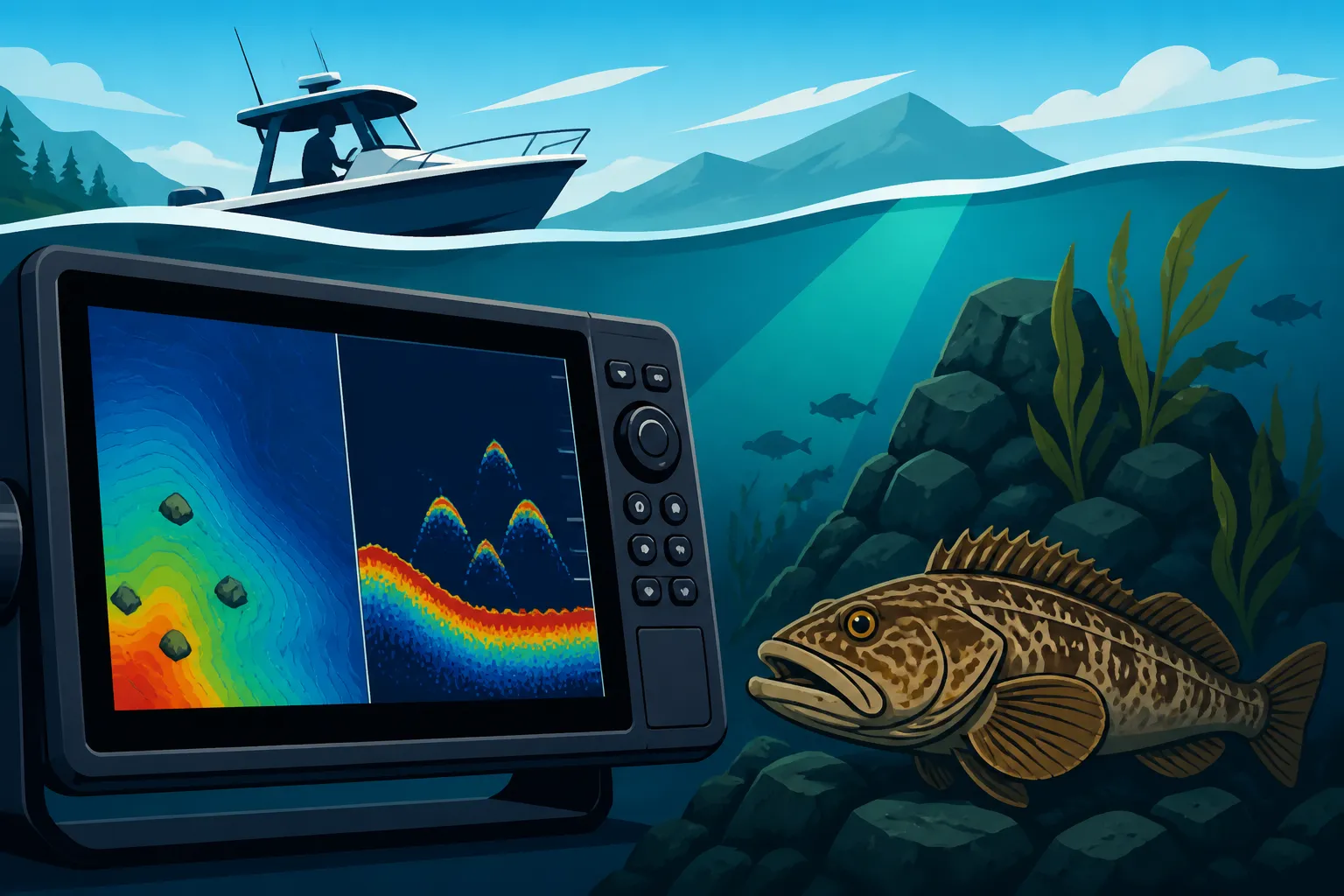
With CHIRP, you can discern individual fish arches, separate fish from structure more easily, and get a much better idea of the bottom composition. For example, a sharp, distinct return might indicate a large rock or a wreck, while a softer, broader return suggests sand or mud. Lingcod often show up as distinct arches or marks right on or very close to the bottom structure. Brands like Garmin, Lowrance, and Humminbird offer excellent CHIRP units that can truly make a difference. Many anglers find great deals on these powerful units by searching online retailers like Amazon, especially when looking for specific transducer combinations that enhance CHIRP capabilities. This technology helps you read the subtle nuances of the underwater world, giving you a distinct advantage in locating prime lingcod real estate.
GPS and Chartplotters
Once you’ve invested in a good fish finder, pairing it with a robust GPS and chartplotter is absolutely non-negotiable for lingcod fishing. The GPS tells you exactly where you are on the water, while the chartplotter displays that position on a detailed electronic map. This combination allows you to do so much more than just navigate from point A to point B. For starters, you can preload high-definition bathymetric charts that show underwater contours, depths, and known hazards. These charts are crucial for identifying potential lingcod hotspots even before you leave the dock. You can see prominent pinnacles, underwater humps, and steep ledges that are prime habitat for these fish.
The true power of a chartplotter comes alive when you’re actively fishing. As you drift over a promising piece of structure revealed by your fish finder, you can instantly mark that spot with a waypoint. This means if you catch a lingcod, or even just see a strong mark on your sonar, you can save that exact location and easily return to it later, or even on a subsequent trip. This eliminates guesswork and allows you to build a personal library of productive fishing spots, saving you immense time and effort. It's also incredibly useful for tracking your drift paths, allowing you to replicate successful drifts over structure or avoid unproductive areas. Navionics and C-MAP offer excellent charting options that integrate seamlessly with most modern chartplotters, providing the detailed underwater topography crucial for finding Where Lingcod Hide Along the Washington Coast.
Down-Imaging and Side-Imaging Technology
Taking your subsurface exploration to the next level are down-imaging (also known as DownScan or DownVü) and side-imaging (SideScan or SideVü) technologies. These aren't just fancy add-ons; they offer fundamentally different ways of visualizing the underwater world, giving you an almost photographic representation of what's beneath and around your boat.
Down-imaging shoots a very thin, high-frequency beam straight down, providing picture-like images of what's directly below. Instead of arches, you see objects and structure rendered with incredible detail. You can often identify individual rock piles, submerged logs, and even distinct fish that are tightly associated with the bottom. This is fantastic for confirming what your 2D CHIRP sonar might be vaguely showing and helps you truly understand the exact shape and features of the structure you're targeting. When you see a clear image of a jagged reef with a distinct "blob" nestled within it, you know you're in a prime lingcod zone.
Side-imaging, on the other hand, is like having eyes on either side of your boat, scanning out to hundreds of feet laterally. It paints a broad, clear picture of the seafloor on both sides, allowing you to scout vast areas much more efficiently. Imagine slowly cruising over a relatively flat bottom and suddenly seeing a sunken boat or a large boulder field appear on your side-imaging screen, a hundred feet to your port. This capability is invaluable for discovering new, unpressured lingcod structure that you might never have found with traditional sonar alone. It's like having an underwater drone mapping out the terrain, revealing hidden gems where Lingcod Identification and Where They Hide becomes much easier. For any serious bottomfish angler, mastering these imaging technologies will significantly improve their catch rates and open up new fishing opportunities, whether you're off the coast of Grays Harbor or exploring Puget Sound.
Integrating Your Electronics for Maximum Effectiveness
Having all these sophisticated electronics is one thing, but truly leveraging their power means understanding how to integrate them, interpret their data, and use them in a cohesive strategy throughout your fishing trip. It’s about more than just turning them on; it’s about making them work together to tell a complete story of the underwater world.
Planning Your Trip with Digital Charts
Your lingcod fishing adventure truly begins before you even leave the dock, right there in your living room. Modern chartplotters often come with highly detailed digital charts, or you can purchase enhanced mapping like Navionics Platinum or C-MAP Reveal. These charts allow you to virtually "scout" your chosen fishing grounds. Zoom in on areas known for bottom fishing, such as those rocky areas near Deception Pass, Washington for Salmon and Lingcod or the numerous reefs within the San Juan Islands. Look for distinct depth changes, submerged pinnacles, steep ledges, and rocky outcroppings marked on the map. Lingcod thrive in these dynamic environments.
Before your trip, you should spend time marking potential hotspots as waypoints on your chartplotter. These could be known productive areas, but also new, unexplored pieces of structure that look promising on the map. This pre-planning helps you formulate a precise game plan, allowing you to head directly to potential areas rather than wasting time searching. You'll arrive at your first spot with purpose, ready to deploy your gear, rather than driving around hoping to stumble upon something. It's about maximizing your time on the water efficiently, giving you more opportunities to target fish.
On-the-Water Real-Time Interpretation
Once you're out on the water, the real magic happens as your electronics bring the underwater world to life in real-time. This is where your ability to interpret the data displayed on your screens becomes crucial. Your 2D CHIRP sonar will be constantly showing you the depth, bottom composition, and any fish arches. Look for "hard" returns that indicate rock, and keep an eye out for larger, often distorted, fish arches right on the bottom or tucked into structure – these are often lingcod.
Simultaneously, your down-imaging will provide that almost photographic detail of the structure directly beneath you, confirming the presence and type of bottom features. If you see distinct rock piles, ledges, or even a sunken debris field, you're on the right track. Side-imaging is your wide-area scout; use it as you cruise at a slow trolling speed to sweep for new structure. When you spot something interesting off to the side, mark it as a waypoint, then turn your boat to pass directly over it with your 2D and down-imaging to get a closer look. This iterative process of scouting, identifying, and then confirming structure is how you systematically find productive lingcod territory. Remember, lingcod often hide within the structure, so it's not always about finding a "fish" signal, but finding the right habitat.
Marking and Returning to Productive Spots
Perhaps one of the most powerful capabilities of your marine electronics is the ability to precisely mark and return to specific spots. When you get a bite, land a lingcod, or identify a particularly promising piece of structure with your sonar, hit that "waypoint" button immediately. This saves the exact GPS coordinates of that spot. Over time, you'll build a personal database of productive waypoints, which becomes an invaluable asset.
These waypoints allow you to execute precise drifts, ensuring your presentation passes directly over the structure that held fish. If a specific rock pile yields a few lingcod, you can return to that exact spot again and again, even days or weeks later, and fish it with confidence. This is especially vital when Jigging Herring for Lingcod in Washington or using similar precise techniques. Moreover, if conditions change – say, the current shifts – you can use your previously marked waypoints to adjust your starting position and ensure your bait still hits the sweet spot. This systematic approach transforms your fishing from a hopeful search into a targeted and repeatable strategy, drastically improving your chances of success every time you hit the water.
Advanced Tips and Considerations
Venturing into the world of marine electronics for lingcod doesn't stop at just buying the gear. To truly maximize your investment and catch more fish, there are a few advanced tips and considerations that can significantly enhance your experience and the effectiveness of your setup.
Understanding Transducers and Frequencies
The transducer is the unsung hero of your fish finder system; it's the part that actually sends and receives the sonar signals. The quality and type of your transducer profoundly impact the clarity and detail of the images you see on your screen. For lingcod and other bottomfish, you want a transducer that can handle deeper water and provide excellent bottom discrimination. High-frequency transducers (e.g., 200 kHz, 455/800 kHz, or even 1.2 MHz for some imaging) offer better detail and target separation, which is crucial for distinguishing fish from structure. Lower frequencies (e.g., 50 kHz, 83 kHz) penetrate deeper but offer less detail.
CHIRP transducers are especially beneficial because they sweep a range of frequencies, offering the best of both worlds – depth penetration with excellent clarity. For down-imaging and side-imaging, dedicated high-frequency transducers with narrow, fan-shaped beams are essential. Before purchasing a unit, research the included or compatible transducers. Sometimes, it's worth investing in an upgraded transducer if the stock one isn't optimized for deep-water bottom fishing. Reading reviews on platforms like Amazon can give you insights into real-world performance differences between various transducer models for specific brands, helping you make an informed decision for your Washington fishing setup.
Powering Your Electronics
Modern marine electronics, especially large multi-function displays with multiple sonar capabilities, draw a significant amount of power. Having a reliable and properly sized power source is paramount to ensure your units perform optimally and don't prematurely drain your batteries. Intermittent power or low voltage can lead to flickering screens, unreliable sonar readings, and even damage to your sensitive equipment.
Most boaters will rely on deep-cycle marine batteries, but the key is to have enough amp-hours to comfortably run your electronics for the duration of your trip, plus a buffer. Consider isolating your starting battery from your house battery (which powers your electronics and other accessories) using a battery switch or an automatic charging relay. This ensures you always have enough juice to start your engine, even if you’ve been running your electronics all day. For longer trips or multiple, power-hungry units, a dedicated lithium iron phosphate (LiFePO4) battery for your electronics can be a fantastic upgrade, offering lighter weight, more stable voltage, and a longer lifespan. Always ensure your wiring is correctly gauged and fused for the load to prevent any issues while you're focused on finding those big lingcod.
| Electronic Type | Primary Function | Best For Lingcod | Key Benefit |
|---|---|---|---|
| 2D CHIRP Sonar | General depth, fish arches, basic bottom contour | Distinguishing fish from structure, bottom hardness | Excellent target separation, clear fish arches |
| GPS Chartplotter | Navigation, mapping, waypoint management | Identifying underwater topography, marking hotspots | Precise positioning, reusable productive spots |
| Down-Imaging | Photo-like views directly beneath the boat | Detailed view of structure, fish tight to bottom | High-resolution images of submerged objects |
| Side-Imaging | Wide-area scanning to the sides of the boat | Discovering new, hidden structure over broad areas | Efficiently locate structure outside boat's path |
Disclaimer
Please be aware that fishing regulations, seasons, and rules in Washington can change frequently and sometimes without much notice due to emergency rule changes. It is always the angler's responsibility to check the most current regulations published by the Washington Department of Fish and Wildlife (WDFW) before heading out on any fishing trip. Information provided in this guide is for general informational purposes only and should not be considered a substitute for the official WDFW regulations.