Back-Bouncing Roe for Steelhead, Explained
There are few things more frustrating than spending a crisp Washington morning on a river, casting endlessly for steelhead, only to feel nothing but the current tugging at your line. It can feel like these elusive fish are ghosts, especially when the water is high and murky. But don't give up hope! This guide is going to break down one of the most consistently effective techniques for targeting these incredible fish in those tougher conditions: back-bouncing fresh roe, explaining exactly how to master this skill for your next outing.
Understanding Back-Bouncing Roe: Why It Works for Washington Steelhead
Back-bouncing roe isn't just another way to fish; it's a strategic approach that mimics a natural food source in a highly effective way. When done correctly, it puts your bait right in the strike zone of steelhead, enticing them even when they might not be actively feeding. It’s a technique born out of necessity on big, powerful rivers, and it has proven its worth time and time again.
The Steelhead's Instinct and Roe's Appeal
Steelhead, being anadromous (meaning they live in saltwater but return to freshwater to spawn), are incredibly tuned into their environment, especially during their journey upriver. While they might not be actively "feeding" in the traditional sense once they enter freshwater, their instincts are still strong. They’re looking for high-protein, nutrient-rich food sources that can sustain them or their offspring. This is where roe comes in.
Think about it: salmon and steelhead are often spawning in the same rivers, or at least in the same system, at similar times. As other salmon species complete their spawn, their eggs are released into the current, becoming an irresistible, easy meal for any opportunistic fish, including steelhead. These eggs are packed with energy, and a juicy cluster drifting naturally past a steelhead's nose is often too good to pass up. The natural scent trail, combined with the visual appeal of a bright, vibrant egg cluster, triggers that primal feeding or aggressive response. It’s less about hunger and more about instinct and opportunity, especially for fish holding in deeper, slower water or in areas of reduced visibility.
When and Where to Use This Technique
Back-bouncing truly shines when river conditions are less than ideal for other methods. We're talking about those days when the river is up, a bit off-color from recent rains or snowmelt, and perhaps carrying a bit more current than usual. In these situations, your traditional drift-fishing setup might struggle to get down to the fish, or your bait might be washed past too quickly. Back-bouncing is designed to keep your bait directly in the fish's face, despite the challenging conditions.
You'll typically find success back-bouncing in deeper runs, tail-outs of larger pools, and along current seams where faster water meets slower water. These are the places where steelhead like to hold, conserving energy while waiting for an opportune moment to move upstream. Look for areas with a consistent, moderate current that allows your weight to "walk" along the bottom without getting swept away or snagged immediately. Gravel bottoms are ideal, as they allow your lead to bounce without getting hung up as easily as rocky, snag-filled areas. For example, on a river like the Cowlitz, after a good rain, those longer, deeper stretches below the popular boat launches become prime back-bouncing territory, where steelhead often stack up before making their final push upstream. This method gives you an advantage in putting your presentation right in front of them where they are most likely to be holding.
Essential Gear for Back-Bouncing Success
Having the right tackle is absolutely critical for back-bouncing. This isn't a technique where you can just grab any old trout rod and expect to do well. The gear needs to be robust enough to handle heavy weights, powerful fish, and the constant abuse of bumping along the river bottom. Skimping here will only lead to frustration, lost gear, and missed fish.
Rods, Reels, and Line Choices
Let's start with the rod. You're going to want something with a good backbone but a sensitive tip. A medium-heavy to heavy action rod, typically 8 to 9 feet long, is a fantastic starting point. The length helps with line control and mending, especially when you're trying to keep your line out of the strongest currents. The stiffer butt section provides the power needed to drive a heavy hook into a steelhead's jaw and then battle it effectively, while the sensitive tip allows you to feel those subtle "taps" as your weight walks the bottom or, more importantly, when a steelhead inhales your bait. Popular choices often include specific steelhead or salmon rods designed for "drift" or "boat" applications.
For reels, many seasoned back-bouncers swear by level wind or baitcasting reels. These reels offer superior control for letting line out incrementally and picking up slack quickly. A good quality baitcaster with a strong drag system, capable of holding 200 yards or more of line, is ideal. You need that line capacity because when a big steelhead hits, especially in current, it can strip a surprising amount of line in a hurry. Spinning reels can work, but they don't offer the same level of precise control over line deployment and retrieval that a baitcaster does for this specific technique.
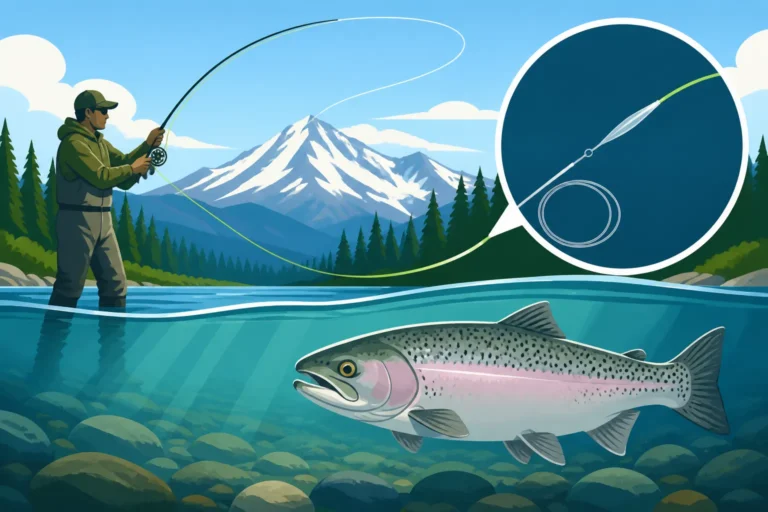
Now for the line – this is a critical component. You'll want to spool your reel with a strong braided mainline, typically 30 to 50 lb test. Braid has almost no stretch, which is invaluable for feeling the bottom, detecting subtle bites, and achieving a powerful hook set from a distance. Because braid is visible in the water and has no abrasion resistance, you'll need to tie a leader to it. This is usually a 15 to 25 lb fluorocarbon leader, which is nearly invisible underwater and has excellent abrasion resistance against rocks and debris. The length of your leader will vary, but usually, 3 to 6 feet is a good starting point, adjusting based on water clarity and depth. For those looking to upgrade their setup, searching for "steelhead baitcasting combo" or "braided fishing line" on platforms like Amazon can yield a wide array of options tailored for this kind of fishing.
Rigging Your Roe: Weights, Swivels, and Hooks
The rigging for back-bouncing is specific and designed to get your bait down and keep it there effectively. It typically involves a main line, a sliding weight system, a bead chain swivel, a leader, and your hook.
Weights: The most common weights are "slinky" weights or pencil lead. Slinky weights, essentially parachute cord filled with lead shot, are fantastic because they're flexible and tend to slide over snags rather than wedge into them. Pencil lead is also effective and can be cut to precise lengths to adjust weight. The weight you use will depend entirely on the river's current and depth – you need just enough weight to lightly tap the bottom without dragging. This might mean anything from 1/2 oz to 2 oz or even more in very heavy current. The weight is typically attached to a slider, which allows the weight to slide freely on your mainline above a bead chain swivel. This ensures that when a fish bites, it feels minimal resistance from the weight.
Swivels and Leaders: A heavy-duty bead chain swivel (rated 50 lb or higher) is essential. The bead chain helps prevent line twist, which can be a major headache when drifting and bouncing. This swivel acts as the stop for your sliding weight and the connection point for your fluorocarbon leader. Your leader, usually 2 to 4 feet long, connects the swivel to your hook. The length can be adjusted; a longer leader provides a more natural drift, while a shorter one keeps your bait closer to the weight for better bottom contact and bite detection.
Hooks: For roe, you'll generally want to use a single, strong, sharp hook. Octopus-style hooks in sizes 1/0 to 3/0 are very popular. The wide gap helps ensure a solid hook set, even with a bulky cluster of roe. Make sure your hooks are razor-sharp straight out of the package, or sharpen them yourself. Many Washington rivers also have strict regulations about hooks, often requiring barbless hooks for steelhead. So, ensure you have Barbless Hook Requirements on Washington Rivers in mind and crimp down any barbs if necessary. The goal is to present your roe as naturally as possible, so the hook should be buried within the cluster, leaving just the point exposed.
| Component | Description | Why It's Essential for Back-Bouncing | Common Specs/Tips |
|---|---|---|---|
| Rod | Medium-Heavy to Heavy Action, Fast Tip | Power for hook set, sensitivity for bites, length for line control | 8-9 ft, 10-25 lb line rating |
| Reel | Baitcaster (Level Wind) | Precise line control, fast slack pickup, strong drag | Quality model with 200+ yd line capacity |
| Mainline | Braided Line | No stretch for feel and hook sets, high strength | 30-50 lb test, high visibility color |
| Leader | Fluorocarbon | Low visibility, abrasion resistance, acts as a shock absorber | 15-25 lb test, 2-6 ft length |
| Weight | Slinky or Pencil Lead | Gets bait to bottom, "walks" over snags, adjustable | 1/2 oz to 2+ oz, depending on current |
| Swivel | Bead Chain Swivel | Prevents line twist, acts as weight stop | 50 lb+ rating, high quality |
| Hook | Octopus Style | Securely holds roe, excellent hook-up ratio | Single, 1/0-3/0, barbless required in many areas |
Selecting and Preparing Your Roe
The quality and presentation of your roe can make or break your back-bouncing success. Steelhead have an incredible sense of smell, and they'll quickly discern fresh, appealing bait from old, degraded stuff.
Fresh vs. Cured Roe: While some anglers might use uncured, fresh roe right from a recently caught salmon, the vast majority of successful back-bouncers use cured roe. Curing roe not only preserves it, extending its shelf life, but also enhances its color, firmness, and most importantly, its scent. There are countless curing recipes out there, often involving borax, rock salt, and various powdered or liquid egg dyes and scents. Common types of salmon eggs used include Chinook, Coho, and even Chum, with many anglers having their personal favorites for color and texture. For example, some prefer the larger, tougher eggs of a spring Chinook, while others like the bright orange pop of a Coho egg.
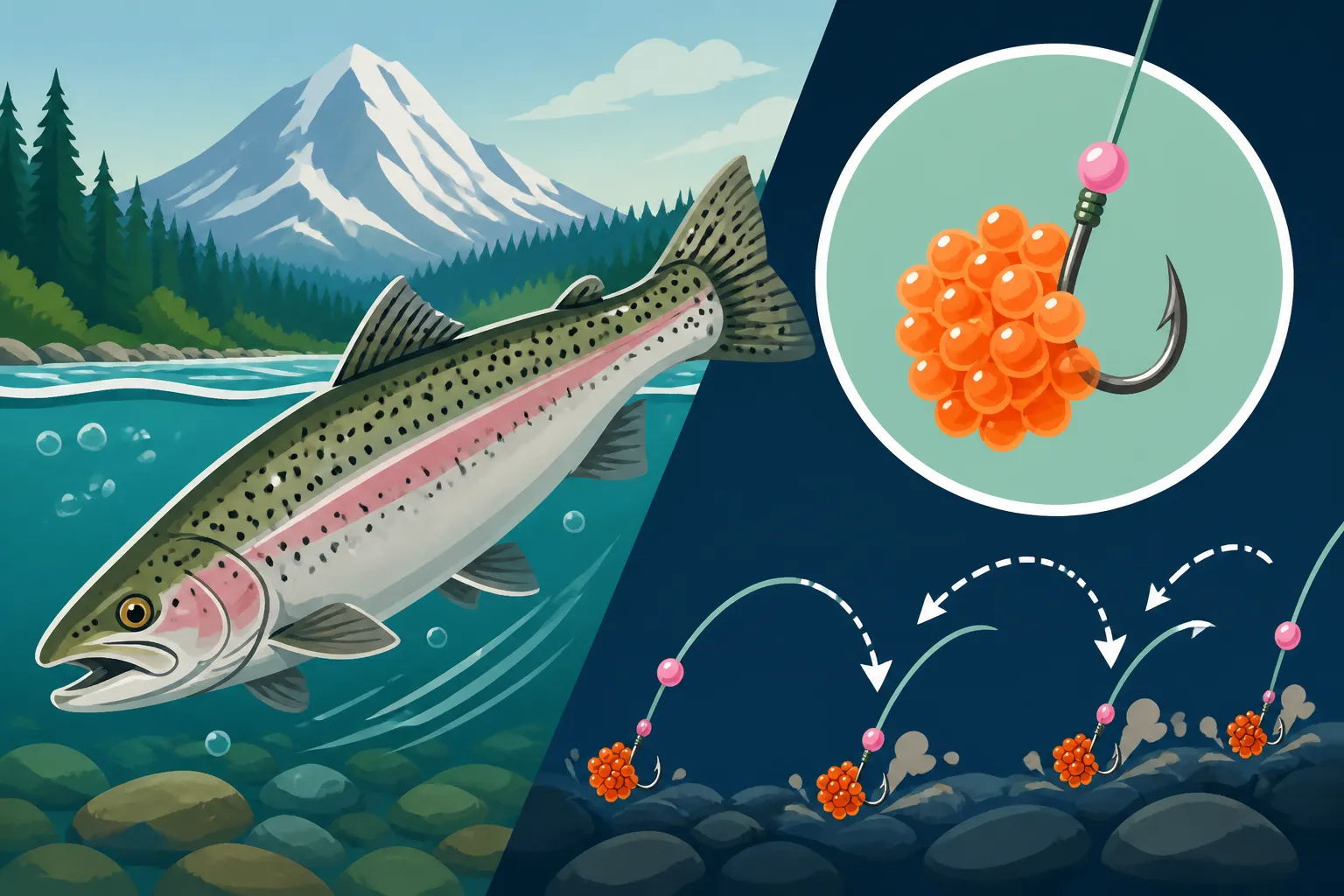
Curing Methods: A basic cure often involves gently breaking up the skein (the membrane holding the eggs together), sprinkling it with a mixture of borax, sugar, and an egg cure powder, letting it "bleed out" and firm up in the fridge for a day or two, then air-drying it slightly before freezing or refrigerating. The goal is to have a vibrant, firm cluster of eggs that won't easily wash off the hook but will still milk out a powerful scent trail in the water. For those new to curing, you can find pre-made curing kits or even high-quality pre-packaged cured roe online. A quick search on Amazon for "salmon egg cure" will bring up brands like Pautzke or Atlas Mike's, which are widely used and trusted by anglers across the Pacific Northwest.
When you're ready to fish, you'll want to take a small section of your cured roe (often called a "cluster" or "chunk") and tie it onto your hook. There are specialized "roe bags" or "spawn netting" that you can use to encase a loose cluster of eggs, which helps keep them on the hook longer and allows for a more controlled "milk" of scent. If using a chunk, gently thread the hook through it, making sure the point is exposed but the main body of the hook is hidden.
Mastering the Back-Bouncing Technique on Washington Rivers
Back-bouncing isn't just about dropping your line in the water; it's a refined technique that requires feel, observation, and constant adjustment. It's about becoming one with your line and the river bottom.
The Art of the Controlled Drift
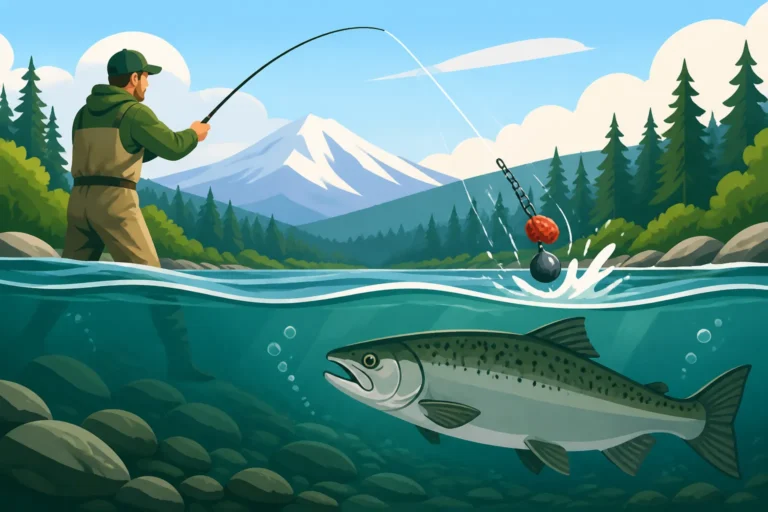
The core of back-bouncing lies in achieving a controlled, natural drift along the river bottom. You're not casting and letting your bait sit; you're actively "walking" it. Start by casting slightly upstream and quartering across the current. As your weight hits the water, allow it to sink quickly. The moment you feel it tap the bottom, engage your reel. The key is to keep just enough tension on your line to feel your weight lightly tap, tap, tap along the bottom. You want to feel it "bouncing" or "walking," not dragging.
As your bait drifts downstream, you'll need to "feed" line out of your reel in controlled bursts, just enough to keep that bottom contact. At the same time, you'll be actively "mending" your line – this means flipping or throwing a loop of line upstream to keep your mainline from bowing excessively in the current. A big bow in your line creates drag, pulls your weight off the bottom, and makes it impossible to feel a bite. This takes practice, but once you get the feel for it, it becomes second nature.
The ideal drift should be slightly slower than the main current, allowing your roe to appear like a natural, rolling food item, but not so slow that it gets snagged constantly. You'll work your bait through the likely holding water, letting it drift naturally, always prepared for that subtle take. This active process sets back-bouncing apart from more passive fishing methods, demanding your full attention from cast to retrieve.
Reading the River and Identifying Prime Lies
Knowing where to back-bounce is just as important as how. Steelhead are creatures of habit and efficiency. They'll hold in spots that offer a break from the main current, provide cover, and position them well to intercept food.
Look for current seams, which are the visible lines where fast water meets slower water. These are highways for drifting food, and steelhead will often lie just on the edge of the faster current, darting out to grab a meal. Deeper slots and troughs within a run are also prime spots, as they offer refuge and a consistent flow of food. Think about the "soft water" directly behind larger rocks or logs, the slack water on the inside bend of a river, or the deeper, slower areas at the tail-out of a riffle. Even subtle changes in depth or structure can hold fish.
Pay attention to how your weight is bouncing. If it's hitting bottom too hard or snagging frequently, you might be in too shallow or too rocky an area, or using too much weight. If you're not feeling bottom at all, you likely need more weight or are in water that's too deep or fast for your current setup. The river will tell you where the fish are likely holding, and where your presentation is most effective. Understanding the nuances of "Reading Water for Bank-Fishing Salmon" can greatly enhance your ability to find these prime steelhead lies, even when targeting them with roe.
Setting the Hook and Fighting Steelhead
The bite from a steelhead while back-bouncing can be incredibly subtle, or it can be a jarring smash. Often, it's a slight "tick," a momentary stop in your weight's steady tap-tap, or simply a feeling of added weight or spongy resistance. It's rarely a violent tug on the line like a salmon might deliver. This is why line feel and constant attention are paramount.
The moment you suspect a bite, don't hesitate. Take up any slack line and sweep your rod upstream and sideways in a powerful, deliberate motion. This isn't a trout-setting flick; it's a firm, sweeping motion to drive that hook home, especially when you're using longer leaders and there's some distance between you and the fish. Remember that braided mainline's lack of stretch will transmit that power directly to the hook.
Once hooked, steelhead are notorious for their powerful runs, aerial displays, and head shakes. Keep your rod tip up, maintain constant pressure, and let your reel's drag do its job. Don't try to "crank" a strong-running fish; let the drag sing. Be prepared for them to run upstream, downstream, or even right at you – in which case, reel like crazy to take up slack. Work the fish to softer water if possible, where you can bring it to hand more easily. This is where your medium-heavy rod's backbone will really shine, allowing you to steer and control the fish without tiring yourself out or breaking it off.
Tips for Maximizing Your Back-Bouncing Success
Back-bouncing, like any specialized fishing technique, has nuances that can significantly impact your success. Beyond the core mechanics, paying attention to smaller details and adapting to conditions will put more fish in your net.
Adjusting to River Conditions
Washington rivers are dynamic; they change with every rainfall, every snowmelt, and even throughout the day with tides in some lower river sections. A successful back-bouncer is constantly adjusting.
- Water Level and Clarity: As mentioned, back-bouncing excels in higher, off-color water. If the water drops and clears up, you might need to lighten your leader, use smaller roe clusters, or switch to more subtle egg colors. Clear water also means fish are more wary, so longer leaders (up to 4-5 feet) can be beneficial. If the water gets really high and blown out, even back-bouncing might be too difficult, and you'll need to seek out extreme soft water or wait for conditions to improve. Understanding How Water Clarity Affects Steelhead Fishing can make a significant difference in your decision-making.
- Current Speed: This dictates your weight. If your weight is dragging, you’re using too much; if you can't feel bottom, you need more. Don't be afraid to change your weight frequently until you find that sweet spot of a gentle tap-tap-tap. A pocket full of various sized slinky weights or a length of pencil lead and cutters are invaluable.
- Location: As conditions change, so do the fish's holding patterns. In very high water, steelhead will push into shallower, slower areas near the banks. In lower water, they might drop into deeper holes. Always be observing and adjusting your target areas.
The Importance of Fresh Bait and Scent
Steelhead rely heavily on scent, especially in turbid water. Your roe is your primary attractant, and its freshness and potency are paramount.
- Keep It Fresh: Always keep your cured roe cold, in a cooler, and out of direct sunlight. High-quality roe, properly cured, should have a firm texture and a vibrant color. If it starts to get mushy, discolored, or loses its pungent scent, it's time to change it out.
- Change It Out Frequently: Don't be lazy! Even if your roe looks fine, after 10-15 minutes of drifting, much of its potent scent trail will have "milked out" into the water. Change your bait often to ensure you're always putting out the maximum scent.
- Add Scents: Many anglers boost their roe with external scent additives. Anise, shrimp, krill, or various "steelhead specific" scents can be applied directly to your roe cluster before casting. These can add an extra layer of attraction, especially in cold water when scent disperses slowly. You can find a vast selection of these on Amazon, often labeled as "fishing attractant" or "steelhead scent." This extra kick can often make the difference between an ignored bait and a solid hook-up.
Navigating Regulations and Ethical Considerations
Fishing for steelhead in Washington comes with a significant responsibility to understand and abide by regulations, and to practice ethical angling. These fish are a precious resource, and their populations require careful management.
- Know Your Rules: Before you even leave the house, thoroughly check the current Washington Sport Fishing Regulations Pamphlet for the specific river and species you're targeting. Regulations for steelhead can change seasonally, even mid-season with Emergency Rule Changes: Why Washington's Rules Shift Mid-Season. Pay close attention to gear restrictions (like barbless hooks), bait restrictions (What a Bait Ban Actually Restricts in Washington), and daily limits. Many rivers, especially those on the Olympic Peninsula, have strict Wild Steelhead Release Rules on Washington's Olympic Peninsula Rivers, requiring the release of all wild (unclipped) steelhead.
- Catch-and-Release Best Practices: If you're required to release a fish, do so quickly and carefully. Keep the fish in the water as much as possible, use wet hands, and revive it gently, facing it into the current until it can swim away strongly on its own.
- Catch Record Card: Always have your Washington Catch Record Card and What It Requires with you and fill it out immediately upon retaining any legal steelhead. This is crucial for management efforts.
- Respect the Resource and Other Anglers: Be mindful of spawning fish, avoid disturbing redds (spawning beds), and always pack out what you pack in. Be courteous to other anglers on the river; there's enough water for everyone to enjoy. Ethical angling ensures these amazing fisheries remain healthy for generations to come.
Disclaimer
Fishing regulations and seasons in Washington State are subject to frequent change. Always consult the official Washington Department of Fish and Wildlife (WDFW) website or the latest printed regulations pamphlet before planning any fishing trip to ensure you are compliant with current rules.