Gear You Need for Ice Fishing in Washington
When most folks think about fishing in Washington, their minds often drift to salmon leaping in Puget Sound, steelhead battles on the Olympic Peninsula rivers, or trout rising in mountain lakes during summer. But for a dedicated few, and for anyone looking for a unique winter adventure, ice fishing offers an incredibly rewarding, albeit often overlooked, opportunity. It's a whole different ballgame out there on the frozen water, requiring specialized gear that's not just about catching fish, but also about staying safe, warm, and comfortable in truly chilly conditions. If you've ever wondered what it takes to get started or just needed a solid rundown of the essentials, you’re in the right place. This guide will walk you through all the crucial equipment you'll need to hit the hardwater successfully here in Washington.
The Allure of Washington's Frozen Waters
Ice fishing might seem a bit extreme to some, but it’s a tranquil, focused, and often highly productive way to fish. Especially in Eastern Washington, where the winters are colder and lakes freeze solid, it opens up a whole new world of angling possibilities.
Discovering Ice Fishing Hotspots in Eastern Washington
While Western Washington's mild, rainy climate rarely allows for safe ice fishing, the eastern side of our state is a different story entirely. Places like Fish Lake, Curlew Lake, Newman Lake, and many of the smaller lakes in the Okanogan, Spokane, and Colville areas routinely freeze over enough to support anglers. These aren't just barren sheets of ice; beneath them lies a vibrant ecosystem teeming with perch, trout, kokanee, and even some panfish. The key is knowing where to go and, more importantly, when the ice is truly safe. Winter conditions can be harsh, so having the right gear is non-negotiable for both comfort and survival. For a more specific breakdown of these frosty destinations, you might want to check out Ice Fishing on Washington's Eastern Lakes.
Why Standard Fishing Gear Won't Cut It
You might be thinking, "Can't I just use my regular rod and reel?" The short answer is no, not effectively or safely. Ice fishing demands specific adaptations. Imagine trying to use a 7-foot steelhead rod inside a cramped ice shelter or trying to drill through 10 inches of ice with a hand auger that's meant for soil. It simply doesn't work. The specialized gear for ice fishing addresses the unique challenges of sub-zero temperatures, limited space, and the need to penetrate thick ice. From your clothing to your line, everything needs to be chosen with the frozen environment in mind.
Staying Safe and Warm: Essential Personal Gear
Before you even think about dropping a line, your top priority must be safety and keeping warm. The ice and cold can be unforgiving, so investing in proper personal gear is paramount.
Dressing for Success: Layers, Insulation, and Waterproofing
This isn't your summer t-shirt and shorts fishing trip. Successful and comfortable ice fishing starts with what you wear. Think layers, and think warmth.
First, a good base layer that wicks moisture away from your skin is critical. Merino wool or synthetic fabrics are excellent choices here, as they'll keep you dry even if you start to sweat while drilling holes or hauling gear. Cotton is a definite no-go as it holds moisture and will make you feel colder, faster. Over that, you'll want a mid-layer, perhaps a fleece jacket or a down vest, to provide additional insulation.
Your outer layer is arguably the most important. You need a heavy-duty, insulated, and waterproof or highly water-resistant jacket and bibs. Specialized ice fishing suits often combine flotation properties with extreme insulation, which is a fantastic safety feature. Brands like IceArmor or Frabill are popular for a reason – they design their gear specifically for these conditions. Don't skimp here; a cheap rain jacket won't cut it when the wind whips across a frozen lake. And for your feet, a quality pair of insulated, waterproof boots rated for well below freezing temperatures is essential. Think felt liners and thick rubber soles. Finally, a warm hat that covers your ears and a pair of insulated, waterproof gloves or mittens are non-negotiable. For more insights on keeping your extremities from freezing, read our guide on How to Keep Your Hands Warm Ice Fishing.
Navigating the Ice: Augers and Essential Safety Tools
Getting to the fish means getting through the ice, and that’s where an auger comes in. You’ll need to cut holes to fish through, and there are a few options.
Manual Augers: These are budget-friendly and great for thinner ice (6-8 inches or less) or if you plan to drill only a few holes. They require good old-fashioned elbow grease. They're lightweight and don't need fuel or batteries, making them reliable in any conditions.
Power Augers: For thicker ice, more holes, or simply to save your energy, a power auger is a game-changer.
- Gas-powered augers are traditional workhorses, drilling through thick ice quickly. They’re loud, require fuel, and can be heavy, but they get the job done.
- Propane augers are a cleaner, quieter alternative to gas, often a favorite for their consistent performance and easier starting in cold weather.
- Electric (battery-powered) augers are becoming incredibly popular. They're quiet, lightweight, and efficient, especially when paired with modern lithium-ion batteries that perform well in the cold. You can find excellent electric augers on platforms like Amazon, making them easily accessible for beginners and seasoned anglers alike.
Beyond the auger, safety tools are critical. A spud bar (a heavy steel chisel with a sharp tip) is used to test ice thickness as you walk. If you're exploring unfamiliar ice, this is your first line of defense. Ice picks worn around your neck are crucial in case you fall through; they allow you to pull yourself back onto the ice. Finally, carry a rope, a whistle, and always fish with a buddy. You never want to be alone on the ice, especially when exploring new spots.
Staying Cozy: Portable Shelters and Heaters
Hours on the ice can be brutal without some form of shelter and warmth. This is where portable ice shelters and heaters become invaluable.
Portable Ice Shelters: These range from simple windbreaks to elaborate hub-style or flip-over shanties.
- Windbreaks are basic, offering minimal protection from the elements but are extremely light and easy to set up.
- Hub-style shelters are like pop-up tents, providing ample space for multiple anglers and gear. They're insulated and comfortable, allowing you to shed layers and fish in relative warmth.
- Flip-over shelters attach to a sled, making them incredibly quick to deploy and pack up. They’re excellent for mobile anglers who like to move from hole to hole.
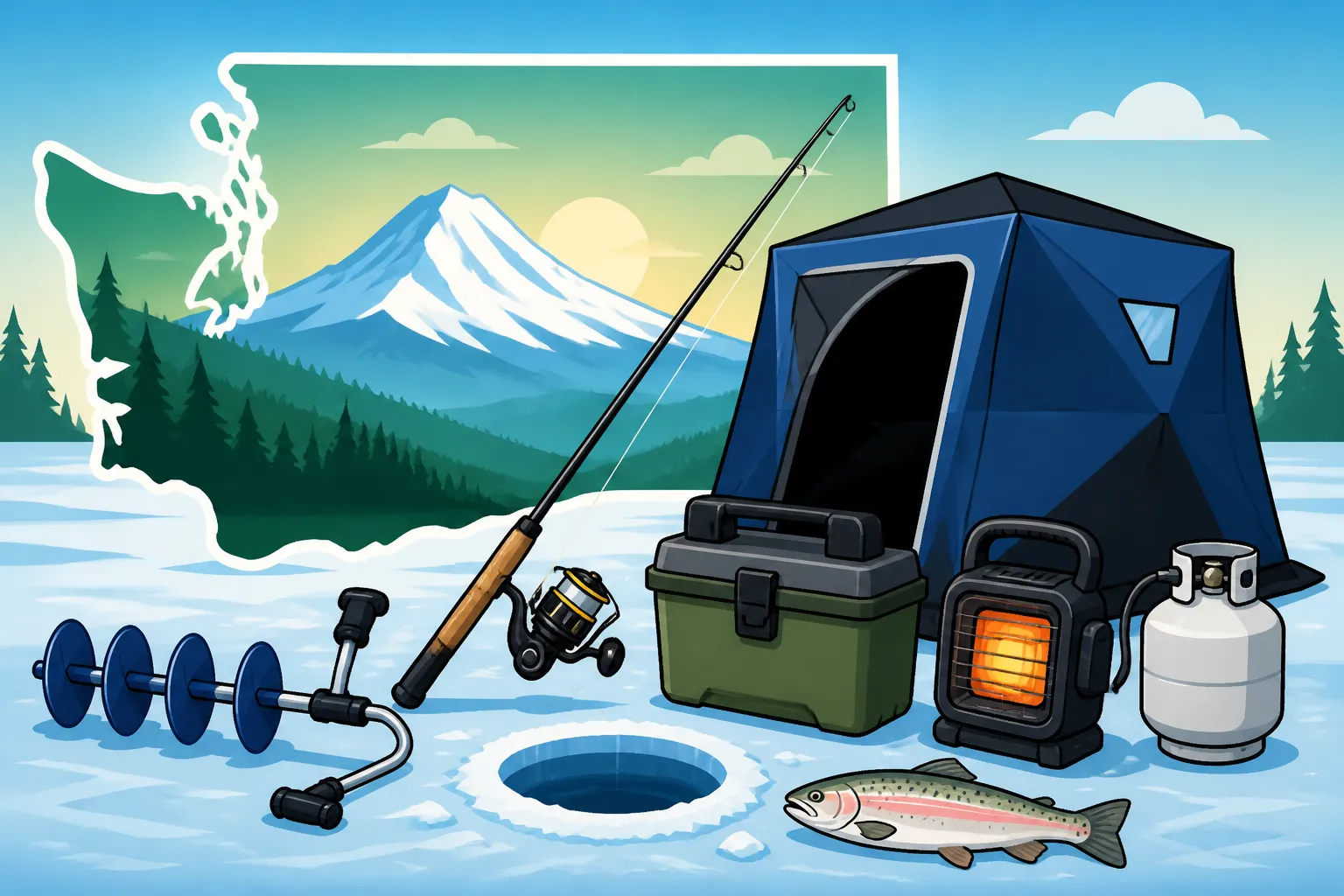
Having a shelter means you can bring a portable heater. Small propane heaters are common, like those from Mr. Heater. They provide significant warmth in an enclosed space and are widely available on Amazon or at any sporting goods store. Just remember to ensure good ventilation when using any propane heater to prevent carbon monoxide buildup. A comfortable shelter allows you to extend your time on the ice, focus on fishing, and truly enjoy the experience without constantly battling the cold.
Gear for the Catch: Rods, Lures, and Electronics
Once you've ensured your safety and comfort, it's time to focus on the tools that will actually help you put fish on the ice. Ice fishing tackle is uniquely designed for the vertical presentation required when fishing through a hole.
Downsized for the Depths: Ice Fishing Rods, Reels, and Line
You won't be casting far on the ice, so ice fishing rods are typically very short, ranging from 24 to 36 inches. This short length allows for easy maneuvering inside a shelter and excellent sensitivity for detecting subtle bites.
- Rods: Look for rods with a fast action and a sensitive tip. Graphite composites are popular for their responsiveness. Different power ratings (ultra-light to medium-heavy) will match the species you're targeting – ultra-light for panfish, medium for trout and kokanee, and medium-heavy for larger fish like lake trout or burbot.
- Reels: Small spinning reels are the most common choice, loaded with light line. They should have a smooth drag system and be capable of handling cold temperatures without freezing up. Some anglers also opt for specialized inline reels for specific presentations, especially for jigging.
- Line: Monofilament, fluorocarbon, or braided line can all be used. Many anglers prefer fluorocarbon for its invisibility and low stretch, which aids in bite detection. Braided line is also popular for its strength and sensitivity, often paired with a fluorocarbon leader. Generally, you'll be using lighter lines than you might think, often 2-6 pound test, to maximize sensitivity for delicate bites through the ice.
Tempting Through the Ice: Baits and Lures
Ice fishing techniques often involve jigging, which requires specific types of lures and baits.
- Jigs: Small lead or tungsten jigs are a staple. Tungsten jigs are denser, allowing them to sink faster and be used in smaller sizes, which is crucial for light-biting fish. These come in various shapes and colors, often tipped with live bait or plastics.
- Spoons: Small spoons, designed to flutter on the fall, are also very effective, especially for perch, trout, and kokanee. They mimic baitfish and attract attention with their flash.
- Live Bait: Wax worms, maggots, and mealworms are incredibly popular and effective for nearly all ice fishing species, especially panfish and trout. Minnows can also be deadly for larger predators. When using live bait, always check local regulations, as some areas in Washington have specific bait restrictions. It's always a good idea to consult What a Bait Ban Actually Restricts in Washington before heading out.
- Soft Plastics: Tiny soft plastic baits, often mimicking insects or small minnows, can be used on their own or tipped on jigs. Brands like Berkley PowerBait also make popular soft plastics and scented baits specifically for ice fishing that can be very effective for trout.
For techniques on how to use these baits for common Washington species, you might be interested in our guide on Jigging Through the Ice for Trout.
Seeing Beneath the Ice: Sonar and Cameras
Modern technology has revolutionized ice fishing, making it easier to locate fish and understand their behavior.
- Flashers (Sonar): These specialized sonar units provide a real-time display of what’s directly beneath your hole. You can see your lure, any fish approaching it, and how they react. This instant feedback allows you to adjust your presentation on the fly, making a huge difference in your success rate. Popular brands include Vexilar, Marcum, and Humminbird. You can often find deals on entry-level flashers on Amazon.
- Underwater Cameras: For a truly immersive experience, an underwater camera allows you to visually see what’s happening below. You can watch fish investigate your lure, identify species, and observe the underwater structure. It’s not just practical; it’s incredibly entertaining, especially when fishing with kids.
The Versatile Five-Gallon Bucket
Never underestimate the power of a simple five-gallon bucket. It serves multiple purposes on the ice:
- Seating: It's a convenient, portable seat.
- Storage: It hauls your fishing gear, bait, and snacks.
- Transport: It carries your catch off the ice at the end of the day.
- Safety: Some even come with insulated lids or can be used as a makeshift flotation device in an emergency (though dedicated flotation suits are far superior).
Planning Your Ice Fishing Adventure
Gathering your gear is just one piece of the puzzle. A successful and safe ice fishing trip requires careful planning and an understanding of the conditions and regulations.
Your Pre-Trip Gear Checklist
Before you head out, run through a comprehensive checklist. Being prepared means you can focus on enjoying your time on the ice rather than scrambling for forgotten items.
| Category | Essential Gear Items | Notes |
|---|---|---|
| Personal Safety | Insulated, waterproof outerwear (jacket & bibs) | Layers are key: base, mid, outer |
| Insulated, waterproof boots (rated for sub-zero) | Wool socks are a must | |
| Warm hat, insulated gloves/mittens | Bring an extra pair of gloves | |
| Ice picks (worn around neck) | Non-negotiable safety item | |
| Spud bar (for testing ice thickness) | Test every few steps on unfamiliar ice | |
| Whistle & rope | For signaling and rescue | |
| First-aid kit | Basic emergency supplies | |
| Sunscreen & sunglasses | Ice glare can be intense | |
| Ice Access | Ice auger (manual, gas, propane, or electric) | Matched to expected ice thickness |
| Ice scoop/skimmer | To clear slush from holes | |
| Comfort | Portable ice shelter (hub, flip-over, or windbreak) | Choose based on mobility & desired comfort |
| Portable propane heater & extra fuel | Ensure ventilation; a great comfort item | |
| Chair/bucket with insulated lid | For sitting and storage | |
| Fishing Tackle | Ice fishing rods & reels (appropriate power/action) | Typically 24-36 inches long |
| Line (monofilament, fluorocarbon, or braid) | 2-6lb test is common | |
| Assortment of jigs & spoons | Tungsten preferred for fast sinking | |
| Live bait (wax worms, maggots, minnows) or scented plastics | Check bait regulations | |
| Bait container/keeper | Keep bait from freezing | |
| Hook removers, pliers, small tackle box | Essentials for handling fish and gear | |
| Fish finder/flasher/underwater camera | Helps locate fish and understand their behavior | |
| Miscellaneous | Washington fishing license & Catch Record Card | Mandatory for all anglers over 15 (check Do Kids Need a Fishing License in Washington? for details) |
| GPS/map of the lake (if unfamiliar) | For navigation and marking hotspots | |
| Cooler/fish bag for catch | Keep your fish fresh | |
| Snacks & plenty of water/thermos with hot beverage | Stay hydrated and fueled | |
| Headlamp/flashlight (if fishing early/late) | Good for safety and rigging |
Understanding Washington's Ice Fishing Rules and Seasons
Just like any other form of angling, ice fishing in Washington is governed by specific regulations. These rules are put in place by the Washington Department of Fish and Wildlife (WDFW) to protect fish populations and ensure angler safety.
Always consult the current WDFW fishing regulations pamphlet, which you can usually find online or at license vendors. Pay close attention to:
- Season Dates: While many lakes are open year-round for some species, ice fishing is seasonally dependent on safe ice conditions. Always check for specific lake openings and closures. For general season information, refer to Washington Sport Fishing Seasons and Emergency Closures.
- Species-Specific Rules: Bag limits, size restrictions, and specific gear rules can vary by species and by lake. For example, some lakes might have special rules for Washington's Lake Trout Limit or other protected species.
- Bait Restrictions: As mentioned, some waters have bait bans, or restrict the use of certain types of bait.
- Catch Record Card: If you're targeting salmon or steelhead, you'll need a The Washington Catch Record Card and What It Requires to properly log your catch. For ice fishing, you're more likely targeting trout or perch, which don't require the card, but it's good practice to understand when it's needed.
- Ice Safety: While WDFW doesn't set official ice thickness requirements, the general rule of thumb is 4 inches of clear, new ice for walking, and 5-7 inches for a snowmobile or ATV. Never assume ice is safe; always test it yourself.
Remember, having a valid Washington fishing license is essential. You can learn more about different license options, including short-term and annual, by reading Washington's Annual, Short-Term and Combination License Options. Always ensure you have the appropriate endorsement for the species you intend to keep. Ignorance of the rules is never an excuse, and game wardens do patrol popular ice fishing spots.
Where to Acquire Your Gear
You have several options for gathering your ice fishing essentials. Local tackle shops, especially those in Eastern Washington near popular ice fishing lakes, are invaluable resources. They’ll have regionally specific knowledge, carry the right baits, and often have the latest ice conditions. Retailers like Sportco or Fisherman's Marine and Outdoor typically stock a good range of ice fishing gear.
For convenience and often competitive pricing, online retailers like Amazon offer a vast selection of augers, shelters, heaters, and electronics. Just be sure to read reviews and check specifications carefully, especially for clothing and safety gear. You might also find specialized ice fishing equipment through dedicated outdoor gear websites. Sometimes, booking a guided trip, which you can learn more about at Can You Book a Guide for Ice Fishing in Washington?, can be a great way to try out gear and learn the ropes before investing in your own.
Embarking on an ice fishing adventure in Washington can be an incredibly rewarding experience, offering peaceful solitude and exciting catches during the colder months. With the right gear and a solid understanding of safety, you’ll be well-equipped to enjoy the unique charm of hardwater angling.
Disclaimer
Fishing conditions and regulations in Washington can change rapidly, often with emergency rule changes. Always consult the official Washington Department of Fish and Wildlife (WDFW) website or the latest fishing regulations pamphlet before heading out to ensure you are aware of the most current rules and safety advisories.