Plunking for Salmon on Washington Rivers
There's nothing quite like the feeling of standing on the bank of a beautiful Washington river, casting your line, and waiting for that tell-tale tug from a powerful salmon. But let's be honest, sometimes traditional casting and retrieving can feel like a workout, especially if you're targeting those upstream-bound kings or silvers in heavy current. For many bank anglers, and even some boaters, the constant re-casting and effort can be a real pain. That's where plunking comes into its own, offering a unique, often more relaxed, yet incredibly effective way to intercept salmon as they migrate. This guide is all about diving deep into the art and science of plunking for salmon on Washington rivers, giving you all the insider tips and techniques to increase your chances of success.
Understanding Plunking: A Static Approach to Salmon Fishing
When you hear "plunking," you might picture someone just lazily leaving a rod in a holder. While it certainly can be a more relaxed style of fishing, there's a lot more nuance and strategy to effective plunking than meets the eye. It's a method born from necessity and observation, capitalizing on the natural behavior of migrating salmon in dynamic river environments.
What Plunking Really Is
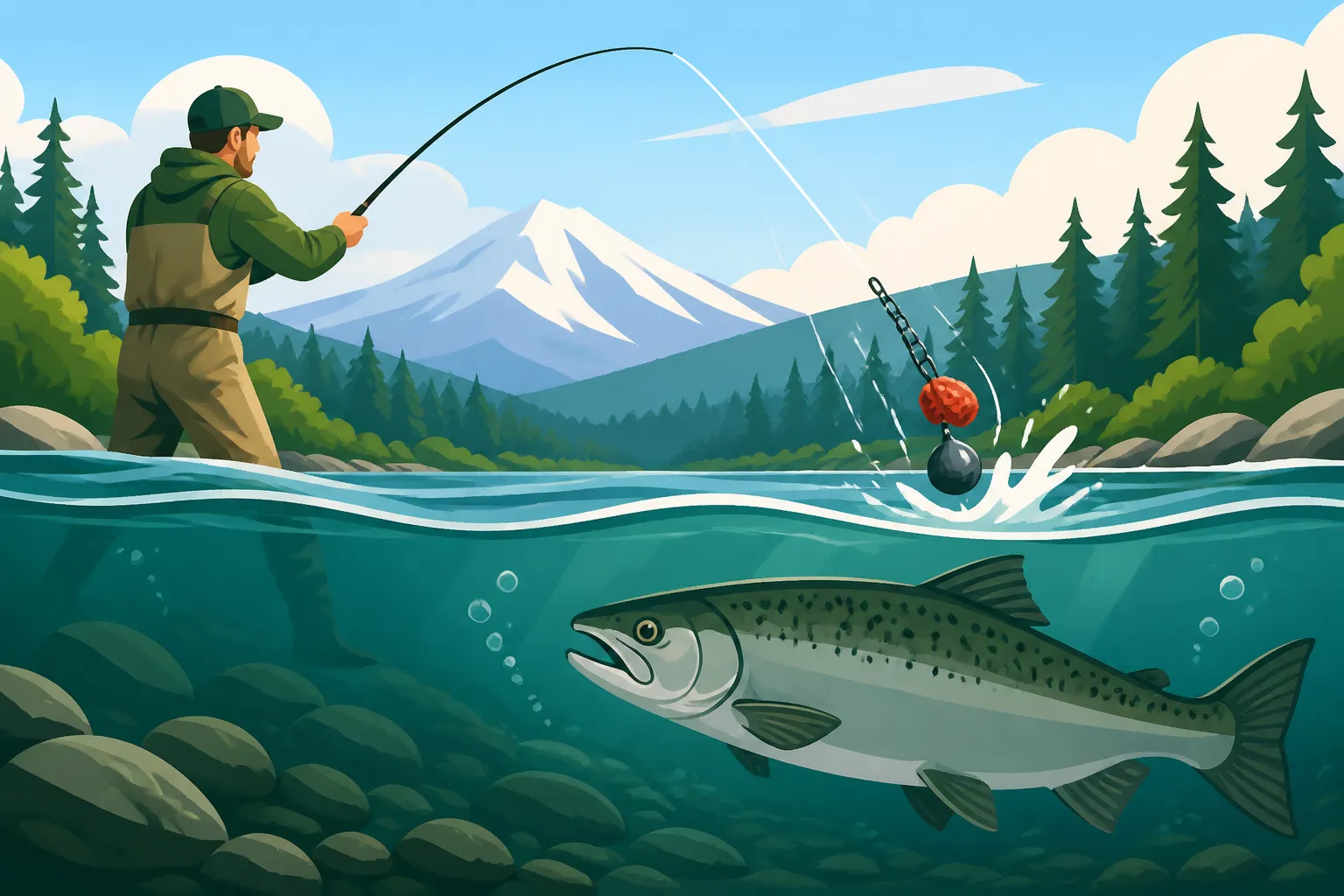
At its core, plunking involves casting a heavy weight and bait or lure out into a river, letting it settle on the bottom, and then waiting for a salmon to come to it. Unlike drift fishing where your presentation moves with the current, or trolling where a boat pulls your gear, plunking relies on keeping your offering stationary in a prime travel lane for fish. The term "plunking" likely comes from the sound of that heavy lead weight "plunking" into the riverbed. Your bait or lure is then typically held just off the bottom, or allowed to flutter enticingly in the current, creating a persistent attractor in a known salmon pathway. It's about setting a trap and patiently waiting for the fish to swim into it.
This method works because salmon, especially those on their spawning migration, often hug the bottom of the river, following specific current seams and travel lanes. They're not actively feeding as they would in the ocean, but they will strike at perceived intruders or simply out of aggression. A well-placed plunking rig, with its enticing scent or flash, can be irresistible to a salmon moving through its territory.
Why Anglers Choose to Plunk
There are several compelling reasons why plunking has become a go-to technique for many Washington salmon anglers. First and foremost, it's incredibly effective in situations where other methods fall short. When rivers are high, off-color, or running with strong currents, traditional casting and retrieving can be futile. Plunking allows you to keep your bait in the strike zone, undisturbed by the relentless flow. Imagine trying to precisely drift a delicate presentation in a churning, swollen river – it's nearly impossible. A heavy plunking rig cuts through that chaos.
Secondly, it's often far less physically demanding than other methods. If you're bank fishing, it means less constant casting and reeling, making it a great option for longer sessions, multi-rod setups (where legal, always check current regulations like those outlined in the Washington Fishing Regulations Every Angler Should Know guide), or for anglers with physical limitations. It also frees you up to enjoy the scenery, socialize with fellow anglers, or prepare a snack while you wait. For family outings, it means less frustration for younger anglers who might struggle with repetitive casting.
Finally, plunking rigs are often quite robust. You're typically using heavier line, stronger rods, and substantial weights, which means less gear failure from snags or powerful fish. This can save you money on lost tackle and reduce the environmental impact of leaving gear in the river. It's a pragmatic choice for many who want a reliable and efficient way to target powerful salmon.
Ideal Conditions for Plunking
While plunking can be a year-round option for some species, it truly excels under specific river conditions. The most crucial factor is strong current. Rivers like the Columbia, Cowlitz, or Skagit, especially during their peak salmon runs, often have sections with swift, powerful flows. These are perfect scenarios for plunking, as the current helps spread the scent of your bait and activates the action of your lure, drawing salmon from downstream. Without strong current, your presentation might just sit there lifelessly.
Another ideal condition is turbid or off-color water. When rivers are murky from rain or snowmelt, salmon rely more on their sense of smell and lateral line to detect prey or irritants. A stationary, scent-laden bait becomes a beacon in these low-visibility conditions. Plunking also shines when targeting fish that are actively migrating upstream but not necessarily holding in specific pockets. They're on the move, and a well-placed plunking rig intercepts them in their travel lane. Think about choke points in the river, like narrows, channel edges, or the confluence of tributaries – these are prime plunking real estate. For specific guidance on river conditions, consulting resources like "Does Rain Improve Steelhead Fishing on Washington's Coastal Rivers?" can offer insights, even if targeting salmon.
Essential Gear for a Successful Plunking Setup
To succeed at plunking, you can't just throw any old rod and reel out there. The technique demands a specific setup designed to handle heavy weights, powerful currents, and the brute strength of a fighting salmon. Investing in the right gear makes all the difference between frustration and a triumphant catch.
Rods, Reels, and Line for Plunking
When it comes to plunking rods, think power and length. You're going to be casting heavy weights (often 4-12 ounces, sometimes more) and fighting strong fish in powerful currents. A heavy-action rod, typically 9 to 12 feet long, is ideal. The extra length helps with casting distance, especially when you need to reach those distant current seams from the bank. It also aids in keeping your line high above the water, minimizing the amount of line in the main current, which reduces drag and helps you detect subtle bites. Look for rods rated for lines in the 20-50 lb range. Many anglers find specific "salmon and steelhead" or "surf" rods work well for plunking. Brands like Lamiglas, Shimano, or Fenwick offer excellent options that can be found at local tackle shops or even on Amazon.
For reels, a levelwind baitcasting reel or a robust conventional reel is the preferred choice. These reels are designed for heavy lines and provide the cranking power needed to haul in a big salmon against a strong current. They also offer excellent line capacity, which is crucial when a powerful fish decides to make a long run. Ensure your reel has a smooth, strong drag system. Nothing is worse than hooking a chrome Chinook only to have your drag seize up.
Line selection is equally important. Monofilament line in the 20-40 lb test range is a common choice for its shock-absorbing qualities and abrasion resistance. However, many experienced plunkers are now opting for braided line (often 50-80 lb test) for its incredible strength, zero stretch, and sensitivity. The lack of stretch in braid means you feel every bump and nibble, even with a lot of line out. If you go with braid, consider adding a monofilament or fluorocarbon leader for better abrasion resistance and to act as a shock absorber. Remember, different fishing situations might call for varying line weights, so always check the Rod and Reel You Need for Washington Puget Sound Salmon guide for general advice, adapting for heavier river conditions.
Terminal Tackle: Weights, Leaders, and Hooks
This is where plunking gets its "weighty" reputation. Heavy weights are absolutely essential to hold your rig in the current. Pyramid sinkers, cannonball sinkers, or specially designed "breakaway" weights are common choices. The weight you use will depend entirely on the strength of the current – you need enough weight to hold bottom without constantly dragging. It's not uncommon to use 8 to 12 ounces in powerful flows on rivers like the Columbia. Always carry a variety of weights.
Leaders for plunking rigs are typically constructed from 25-40 lb test monofilament or fluorocarbon. Fluorocarbon is less visible underwater and has excellent abrasion resistance. The length of your leader can vary, but generally, a 2-4 foot leader is common, attaching your bait or lure to the main line (often via a swivel to prevent line twist). Some anglers use a sliding spreader bar or a three-way swivel setup to attach both the weight and the leader, allowing the leader to flutter freely.
Hook selection depends on your bait and target species, but sharp, strong hooks are paramount. Octopus hooks, baitholder hooks, or treble hooks (where legal and appropriate for lures) are common. Sizes can range from 1/0 to 5/0 for salmon. Always check local regulations, particularly for areas with Barbless Hook Requirements on Washington Rivers. Using an offset hook can also improve hook-up ratios with certain baits. A good supply of swivels (barrel or snap swivels) will help prevent line twist and make changing rigs easier.
Key Baits and Lures for Plunking
The beauty of plunking is its versatility in what you can offer a salmon. The most common and effective offerings fall into two main categories: natural baits and artificial lures.
For natural baits, cured salmon roe is king. Clusters of roe, often presented in an "egg loop" knot or a small netting bag, release a powerful scent trail that salmon simply can't resist. Roe can be enhanced with various scents or dyes to make it even more enticing. Sand shrimp and prawns are also fantastic options, offering a natural protein profile and scent. Cut herring or anchovies, presented whole or in chunks, are excellent for imitating baitfish. You can find pre-cured baits or cure your own, which is a rewarding process in itself. For more on using roe, consider looking into "How to Fish Roe Bags for Salmon".
Artificial lures are also incredibly effective. Spin-N-Glos, usually paired with a small piece of bait like an prawn or cured roe, are perhaps the most iconic plunking lure. Their buoyant, spinning action in the current creates both flash and vibration, mimicking a struggling baitfish. They come in a dazzling array of colors and sizes, so it's wise to experiment. Flatfish or Kwikfish plugs are also popular, diving and wobbling aggressively in the current, triggering aggressive strikes. Other options include large spoons or even scent-infused soft plastics. The key is to choose something that has good action in the current and offers a visible or scent-based appeal. You can find a huge variety of these baits and lures on Amazon, often at competitive prices.
Mastering the Plunking Technique
Plunking might seem simple – cast it out, wait for a bite. But there's a definite art to it, from selecting your spot to the actual moment of the strike. Mastering these elements will significantly improve your catch rate.
Finding the Right Plunking Spot
Location, location, location! This is perhaps the most critical aspect of successful plunking. Salmon are creatures of habit, following specific pathways as they migrate upstream. Your job is to intercept them. Look for areas where the river channel narrows, forcing fish into a more concentrated travel lane. These "choke points" are often goldmines.
Current seams are another prime target. These are the lines where faster water meets slower water, creating a distinct current break. Salmon will often travel along these seams, using the slower water to conserve energy while still making progress upstream. The edges of deep channels, just before a drop-off, or the inside bends of a river where the current is slightly less ferocious, are also excellent spots. Gravel bars that extend into the main current can create natural eddies and current breaks that hold fish. Look for visual cues like swirling water, submerged structure, or even other anglers who seem to be catching fish consistently. Rivers like the Columbia River in Washington: A Complete Overview or specific spots on the Cowlitz River for Steelhead and Salmon in Washington are renowned plunking destinations due to their current and migratory fish runs. Always observe the water and try to think like a salmon – where would you travel if you were heading upstream?
Setting Up Your Rig: Step-by-Step
Setting up your plunking rig correctly is crucial for maximizing its effectiveness and minimizing frustration. Here's a common, step-by-step approach for a sliding-weight setup, which allows the fish to take the bait without feeling the resistance of the heavy sinker immediately.
- Main Line to Swivel: Start by threading your main line through the eye of a heavy-duty barrel swivel. This swivel will serve as the stop for your weight.
- Attach the Weight: Tie a short (6-12 inch) piece of lighter leader material (e.g., 15-20 lb mono) to your heavy sinker. Then, tie the other end of this lighter leader to the eye of the barrel swivel, or use a snap swivel to easily interchange weights. The idea of a lighter leader for the weight is that if your weight gets snagged, you'll only lose the weight, not your entire terminal rig and fish.
- Attach the Main Line to the Leader: Now, tie the end of your main line directly to a sturdy, three-way swivel.
- Attach the Leader to the Swivel: To one of the remaining eyes of the three-way swivel, tie a 2-4 foot length of your chosen leader material (25-40 lb mono/fluoro).
- Attach Hook/Lure: To the end of this leader, tie your baited hook or artificial lure (e.g., Spin-N-Glo with roe).
- Positioning the Weight (alternative for sliding weight): If you prefer a true sliding weight system, you would thread your main line through a large-eyed sinker slider clip, then tie your main line directly to the three-way swivel. The weight then clips to the sinker slider. This allows the weight to slide freely up your main line, separating it from the resistance a fish feels.
No matter the exact setup, the goal is to present your bait or lure in a way that allows it to flutter naturally in the current, drawing attention, while your weight keeps it firmly anchored.
Here's a quick comparison of common plunking rig components:
| Component | Typical Range | Purpose |
|---|---|---|
| Rod Length | 9 – 12 feet | Casting distance, line management, fight power |
| Rod Action | Heavy | Handle heavy weights & fighting salmon |
| Main Line | 20-40 lb Mono / 50-80 lb Braid | Strength, abrasion resistance, sensitivity |
| Leader | 25-40 lb Mono/Fluorocarbon | Stealth, abrasion resistance, fish hookup |
| Sinker Weight | 4 – 16 ounces (variable) | Anchor rig in current |
| Hook Size | 1/0 – 5/0 (variable) | Match bait size and target species |
| Bait/Lure | Cured roe, prawns, Spin-N-Glo, Flatfish | Attraction, scent, vibration |
Casting and Waiting: The Art of Patience
Once your rig is ready and you've found your prime plunking spot, it's time to cast. Because you're using heavy weights, it's important to use a smooth, deliberate casting motion. A gentle lob or a broad sweep is usually safer than a jerky, overhead power cast, which can lead to snapped lines or dangerous projectile weights. Aim to cast slightly upstream and across the current, allowing your weight to settle and hold bottom in the desired travel lane. Once the weight hits the water, let out a bit of slack as it sinks, then gently tighten your line until you feel the weight holding firmly.
Now, the waiting game begins. This is where the "plunking" persona truly comes alive. Place your rod securely in a sturdy rod holder – a good bank spike or a robust tripod holder is essential. Engage your reel's clicker (if it has one) or set your drag appropriately so a running fish can pull line without breaking off, but still provide enough tension for a hookset. Pay close attention to your rod tip. The constant pull of the current will create a steady bend, but any sudden dips, jolts, or vibrations beyond that could be a bite.
Patience is not just a virtue in plunking; it's a necessity. Salmon runs can be sporadic, with bursts of activity followed by quiet periods. Be prepared to wait, but also be alert. Keep an eye on your rod tip, and consider using visual indicators like a piece of colored tape near the tip to make subtle movements more noticeable. This serene, patient approach is what makes plunking so appealing to many.
Detecting Bites and Hooking Up
Detecting a bite when plunking can be tricky because of the constant current pulling on your line. Sometimes, it's a dramatic pull that nearly rips the rod from its holder. More often, especially with wary salmon, it's a subtle change. You might see the rod tip twitch or dip harder than the current would cause, or you might notice a sudden slackening of the line as a fish picks up the bait and swims towards you.
When you suspect a bite, don't immediately yank. Salmon often "mouth" the bait or swim with it for a moment. Give them a second to commit. When you're ready to set the hook, grab the rod firmly, reel in any slack, and sweep the rod upwards and to the side with authority. Because of the heavy weight and long line, a solid, powerful hookset is required to drive the hook home. Once the hook is set, immediately begin reeling, keeping constant pressure on the fish.
Fighting a salmon in a strong river current is a true test of skill and tackle. These fish are incredibly powerful and will use the current to their advantage, often making long, blistering runs. Keep your rod tip up, let your drag do its job, and try to steer the fish out of the heaviest current if possible. Don't pump and reel too aggressively against a strong current, or you risk breaking your line or pulling the hook. Instead, maintain steady pressure and capitalize on any lulls in the fight to gain line. Remember your Understanding Washington's Daily Bag Limits by Species and ensure you're aware of the rules around keeping your catch. Also, be ready with a net or a careful beaching technique when the fish finally comes to hand. When you do land a salmon, don't forget the requirements of your The Washington Catch Record Card and What It Requires.
Species and Rivers Best Suited for Plunking
While you could technically plunk for nearly any fish, certain salmon species and specific Washington rivers truly lend themselves to this stationary technique. Understanding which fish and where will significantly boost your chances.
Targeting Chinook and Coho with Plunking
Chinook Salmon (Kings): These are the powerhouses of the salmon world, and they are prime targets for plunking. Chinook are often found hugging the bottom in deeper, swifter currents as they make their way upstream to spawn. Their aggressive nature and tendency to strike at a well-presented bait or lure make them ideal candidates. Plunking allows you to put a substantial offering, like a large roe cluster or a diving plug, right in their travel lane. The heavier gear associated with plunking is also perfectly suited to handle the brute strength of a fighting king salmon. When Chinook Salmon Run in Washington rivers, especially when the water is high and turbid, plunking can be the most effective method available to bank anglers.
Coho Salmon (Silvers): Coho, while generally smaller than Chinook, are incredibly acrobatic and also respond very well to plunking. They tend to be a bit more aggressive and often travel in slightly shallower, faster water than kings. Plunking for Coho can be particularly effective during their peak runs, especially on rivers known for strong Coho returns. They're often attracted to flashier Spin-N-Glos or smaller plug baits. The key is to present your offering in areas where they are actively migrating. When Coho Salmon Run in Washington, often later in the season than some Chinook, plunking can provide consistent action.
Other salmon species like Chum (Dog Salmon) and Sockeye can occasionally be caught while plunking, particularly if they are aggressively moving through a system. However, Chinook and Coho remain the bread and butter of the plunking scene due to their size, aggressive tendencies, and preferred travel habits.
Rivers Where Plunking Shines
Washington is blessed with numerous rivers that offer fantastic plunking opportunities for salmon. Here are some of the most prominent, known for their strong currents and abundant salmon runs:
- The Columbia River: Without a doubt, the Columbia River is the quintessential plunking destination. Its vast size, powerful currents, and incredible salmon and steelhead runs make it perfect. From the lower river near Ilwaco during the Buoy 10 season to upstream stretches, plunking is a dominant technique here. Spots like the mouth of the Cowlitz or Kalama rivers, or popular bank access points around Woodland or Longview, are famous for plunking.
- The Cowlitz River: Often called "The Workhorse of the Washington Fisheries," the Cowlitz River sees massive returns of Chinook and Coho. Its powerful currents, especially below the barrier dam, create ideal plunking conditions. The stretch below the Blue Creek hatchery is particularly popular.
- The Skagit River: While fishing on the Skagit River has various restrictions, especially concerning wild steelhead, certain sections and seasons for salmon (where open) can be plunked effectively, particularly for larger Chinook when conditions allow. Always check current emergency regulations as things can change rapidly.
- The Lewis River: Similar to the Cowlitz, the Lewis River offers excellent plunking, particularly for fall Chinook and Coho. Its flows are often well-suited for holding bottom with heavy weights.
- Other Rivers: Many other rivers with good current and salmon runs, such as the Kalama, Washougal, or sections of the Green River, can also offer good plunking. The key is finding areas with defined current seams and easy bank access that allows for safe casting and fighting of fish. Always scout a new spot before you fish.
Seasonal Considerations for Plunking Success
Timing is everything in salmon fishing, and plunking is no exception. While some form of plunking might occur year-round, its peak effectiveness aligns with the main salmon runs when fish are actively migrating in large numbers.
- Spring Chinook: The earliest major salmon run, typically from April through June, can be a fantastic time for plunking on rivers like the Columbia and Cowlitz. These fish are often chrome-bright and incredibly powerful, making for exciting battles.
- Summer Chinook/Sockeye: Later summer, particularly July and August, sees different salmon runs depending on the river. The Columbia's summer Chinook run is a major event, and plunking is a primary method.
- Fall Chinook and Coho: The late summer and fall (August through November) is arguably the peak plunking season across many Washington rivers. Huge numbers of fall Chinook and Coho flood into the rivers, and high water conditions often make plunking the most productive technique. This is when the banks of rivers like the Cowlitz and Lewis can get crowded with plunkers.
- Winter Coho/Chum: While less common than for Chinook, plunking can also be effective for late-run Coho and Chum salmon in rivers with strong winter flows.
Always consult the Washington Sport Fishing Seasons and Emergency Closures and local regulations for specific river openings, closures, and species-specific rules, as these can vary year to year and even week to week. River conditions (water level, clarity, temperature) will also dictate success, so staying informed is crucial.
Tips, Tricks, and Common Mistakes to Avoid
Plunking, like any fishing technique, has its nuances. Even though it's often viewed as a more passive method, smart choices and attention to detail can drastically improve your results. Conversely, neglecting the basics can lead to a frustrating day.
Optimizing Your Bait Presentation
The goal of plunking is to present your bait or lure in the most natural and enticing way possible, despite being anchored to the bottom. Here are some tips:
- Scent is King: Especially in off-color water, scent is paramount. Use fresh, properly cured baits like roe or prawns, and don't be shy about adding scent attractants. Popular choices include scents infused with krill, anises, or garlic. Re-apply scent frequently, especially after long soaks.
- Maintain Action: If using a Spin-N-Glo or a plug, ensure it's positioned correctly on your leader so it can spin or wobble effectively in the current. Sometimes a slight adjustment to leader length or position can make a big difference. The current should be doing the work of imparting action.
- Keep it Clean: Regularly check your bait for debris. Even a small leaf or twig caught on your hook can make your presentation unnatural and deter a fish. Re-bait or clean your lure often, even if you haven't had a bite.
- Leader Length: Experiment with leader length. In slower currents, a longer leader might allow for more natural movement. In faster currents, a slightly shorter leader might keep your bait more in the strike zone and prevent it from washing out of position too much.
Troubleshooting Snags and Break-offs
Snags are an inevitable part of river fishing, especially when fishing the bottom with heavy weights. However, there are ways to minimize them and deal with them effectively.
- "Sacrificial" Weight Leader: As mentioned, tie your heavy sinker to a lighter leader (e.g., 15-20 lb monofilament) that is then tied to your main line or swivel. If the weight gets snagged, the lighter line will break, allowing you to retrieve your main line, leader, and hopefully your fish (if one is on). This saves your more expensive main line and terminal tackle.
- Current Awareness: Understand the contours of the river bottom you're fishing. If you're consistently snagging in one spot, it might be due to a submerged log or rock pile. Adjust your casting angle or move slightly.
- Rod Tip Position: Keep your rod tip relatively high. This reduces the amount of line in the water, decreasing the chance of it catching on submerged obstacles.
- Dealing with a Snag: If you do snag, try pointing your rod directly at the snagged weight and pulling steadily. Often, the weight will release. If not, try a few gentle bounces. As a last resort, break the line at the sacrificial weight leader.
Break-offs, particularly when fighting a fish, can be heartbreaking. Regularly check your line for nicks and abrasions, especially after reeling in through rocky areas or fighting a fish. Re-tie knots if they look frayed. Use good quality swivels and strong, sharp hooks. A powerful fish in strong current can exert immense pressure, so proper knots and fresh line are crucial.
Legal Considerations and River Etiquette
Always, always be aware of and abide by current fishing regulations. Washington's rules can be complex and change frequently, especially for salmon. This includes species-specific seasons, daily bag limits, gear restrictions (like Barbless Hook Requirements on Washington Rivers), and whether bait is allowed. The Washington Department of Fish and Wildlife (WDFW) website is your best friend for up-to-the-minute updates. Not knowing the rules is not an excuse, and fines for violations can be steep.
River etiquette is also vital, especially on popular plunking stretches that can get crowded.
- Respect Spacing: Don't cast over another angler's line. Maintain a reasonable distance from others, especially if they're already set up.
- Minimize Disturbance: When moving along the bank, try to do so quietly and avoid spooking fish or disturbing other anglers.
- Clean Up: Pack out everything you pack in, and perhaps a little extra. Leave no trace of your presence.
- Landing Fish: If an angler hooks a fish, be courteous. Offer assistance if needed, and make sure your lines are clear to avoid tangles.
- Multiple Rods: If using multiple rods (where legal), ensure you can manage them effectively and aren't causing undue tangles or taking up excessive space.
Knowing When to Move or Change Tactics
Plunking requires patience, but it's not about being stubbornly static if nothing is happening. If you've been in a spot for an extended period without any action, it might be time to reassess.
- No Bites: If you haven't had a single tap in an hour or two, consider moving. Salmon runs are often in pulses, but if you're not seeing fish caught around you or getting any indicators, it's likely they aren't passing through your exact spot.
- Changing Conditions: Water levels, clarity, or current speed can change throughout the day. If the river changes significantly, your current spot might no longer be ideal. Adapt your weight, leader, or even your location.
- Different Bait/Lure: Sometimes, a simple change of bait color, scent, or lure type is all it takes. If one Spin-N-Glo isn't working, try a different color or switch to roe.
- Scout Ahead: When fishing a new area, spend some time observing before setting up. Watch where others are casting, where fish are being caught, and where the current seems to be funneling fish. Your success will often come from finding those subtle, yet critical, differences in the river.
Comparing Plunking to Other Salmon Fishing Methods
Plunking is a powerful tool in an angler's arsenal, but it's not the only way to catch salmon in Washington rivers. Understanding its strengths and weaknesses compared to other popular techniques will help you choose the best method for the conditions and your personal preference.
Plunking vs. Drift Fishing
Drift fishing involves presenting a bait or lure that tumbles naturally along the bottom, mimicking dislodged food or an easy meal. It's an active technique where you're constantly mending your line, feeling the bottom, and moving your presentation with the current.
- Plunking Advantages: Ideal for heavy currents where keeping a drift rig on the bottom is difficult. Less physically demanding, allowing for multiple rods (where legal) and more relaxation. Excellent for targeting specific travel lanes where fish are moving consistently. The scent trail of a stationary bait can be very effective.
- Drift Fishing Advantages: More versatile in varying current speeds and depths. Allows for more precise presentation and "working" the water to find fish. Often more effective in lower, clearer water conditions where fish are more easily spooked by a static, heavy rig. Greater control over your bait's movement and depth.
- When to Choose Which: Choose plunking when currents are strong, water is high or murky, or when you want a more relaxed approach. Opt for drift fishing when you need a more finesse presentation, water conditions are moderate to low, or when actively searching for fish in varied depths.
Plunking vs. Trolling
Trolling for salmon typically involves a boat pulling lures or baits through the water column, covering a lot of ground and actively seeking out fish. This is more common in larger rivers and saltwater.
- Plunking Advantages: Accessible to bank anglers – no boat required! Often more effective in the very specific, strong current lanes of a river that a boat might struggle to hold in. Can be more cost-effective as it doesn't require fuel or boat maintenance. Excellent for targeting fish in distinct "choke points" from the bank.
- Trolling Advantages: Covers vastly more water, increasing the chances of encountering active fish. Allows for precise depth control using downriggers or divers. Can target fish suspended in the water column, not just bottom-oriented ones. More effective in large, open bodies of water.
- When to Choose Which: If you're bank fishing on a river with strong currents, plunking is your go-to. If you have boat access and want to cover large areas, especially in wider river sections or saltwater, trolling is often the more efficient choice. Both methods share the goal of intercepting migrating salmon, but their execution and ideal environments differ significantly.
Plunking vs. Casting Spinners/Spoons
Casting and retrieving spinners or spoons is an active fishing method that involves repeatedly casting an artificial lure and reeling it back in, imparting action that mimics a baitfish or distressed prey.
- Plunking Advantages: Best in heavy current where a casted lure would be difficult to work effectively or would wash out too quickly. Less fatiguing for long fishing sessions. Allows for scent-based attraction with natural baits. Can be very effective for aggressive salmon moving through a specific lane.
- Casting Spinners/Spoons Advantages: Highly active and engaging. Allows for covering various depths and areas with each cast. Excellent for targeting aggressive fish in moderate to slower currents, or when actively searching for fish holding in specific pockets or eddies. Often requires less specialized heavy gear than plunking.
- When to Choose Which: If you're on a swift-flowing river with limited space for active casting, or if you prefer a more patient, hands-off approach, plunking is ideal. If you're on a section of river with varied currents, or if you enjoy the constant action of casting and retrieving, then spinners and spoons are a fantastic choice. Many anglers will even carry gear for both methods, switching based on conditions or how the fish are biting.
Ultimately, plunking is a time-honored, highly effective technique that has earned its place among Washington's salmon fishing traditions. It requires patience and attention to detail but rewards anglers with incredible catches, especially when the river conditions favor its unique, static approach.
Disclaimer
Fishing regulations, seasons, and emergency rules in Washington State can change rapidly. Always consult the official Washington Department of Fish and Wildlife (WDFW) website or current fishing pamphlet before heading out on the water. This guide is for informational purposes only and does not supersede official regulations.