How to Identify a Black Rockfish
Black rockfish identification details cover body shape, coloration, fin spines, and distinct jaw structures for anglers.
Know what’s on the line.
Gamefish and panfish profiles — identification, behavior, feeding habits, and species-specific strategies for every catch.
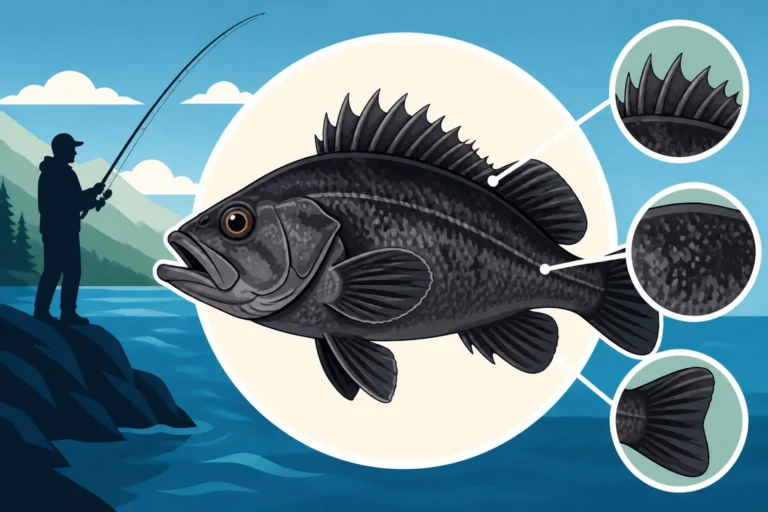
Black rockfish identification details cover body shape, coloration, fin spines, and distinct jaw structures for anglers.
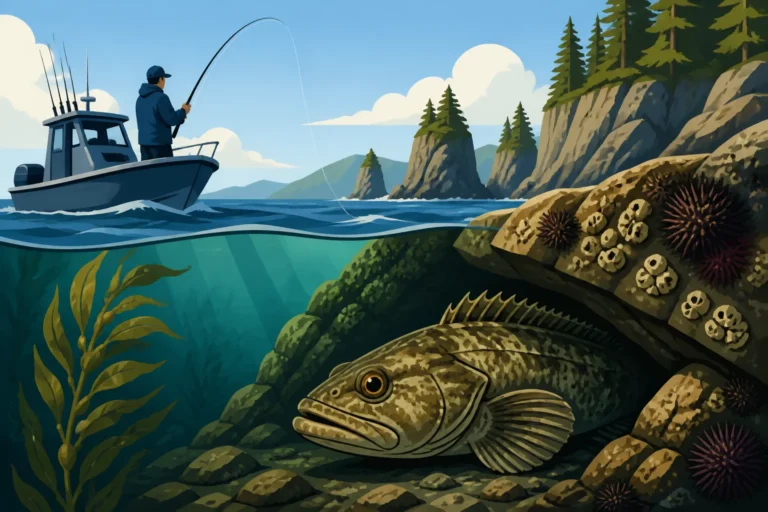
Lingcod hide in rocky reefs and kelp forests along Washington coasts, lurking in depths from thirty to three hundred feet to ambush prey.

Lingcod meat color varies from pearly white to bright blue or green because of biliverdin, a completely harmless natural bile pigment.
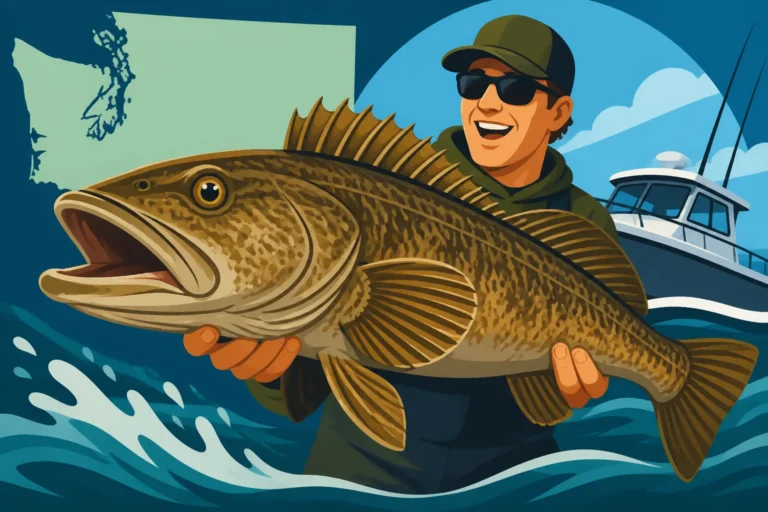
Washington lingcod typically measure 25 to 35 inches and 5 to 20 pounds, while giant females reach over 50 inches and 60 pounds.
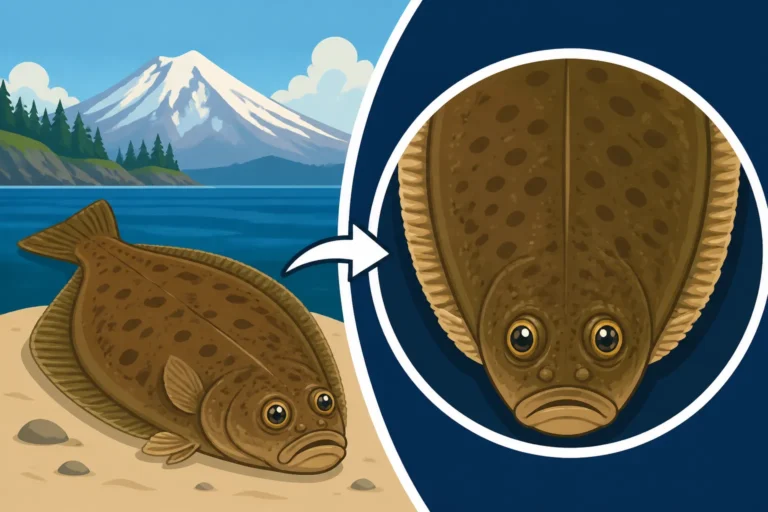
Pacific halibut have both eyes on the right side of their head, allowing these flatfish to lie completely flat on the ocean floor.
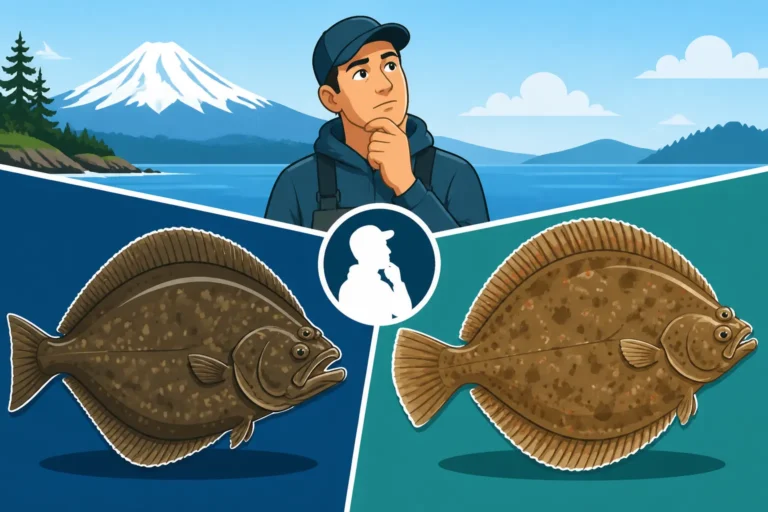
Pacific Halibut and Washington flounders feature distinct eye placement, mouth shapes, and body builds for correct identification.

Washington state record halibut fishing requires specialized knowledge, heavy tackle, and offshore boats to target large Pacific giants.
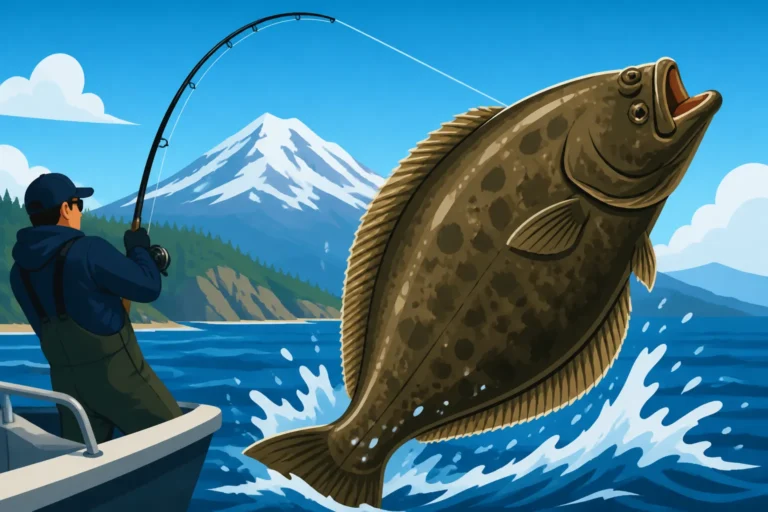
Pacific halibut size potential in Washington waters depends on age, growth rates, and whether catches are average or trophy fish.
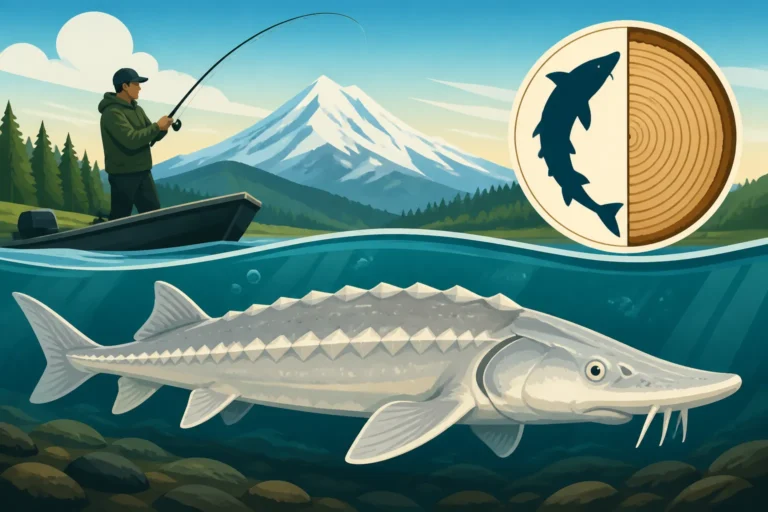
Washington white sturgeon routinely live fifty to eighty years, with confirmed cases reaching up to one hundred fifty years.
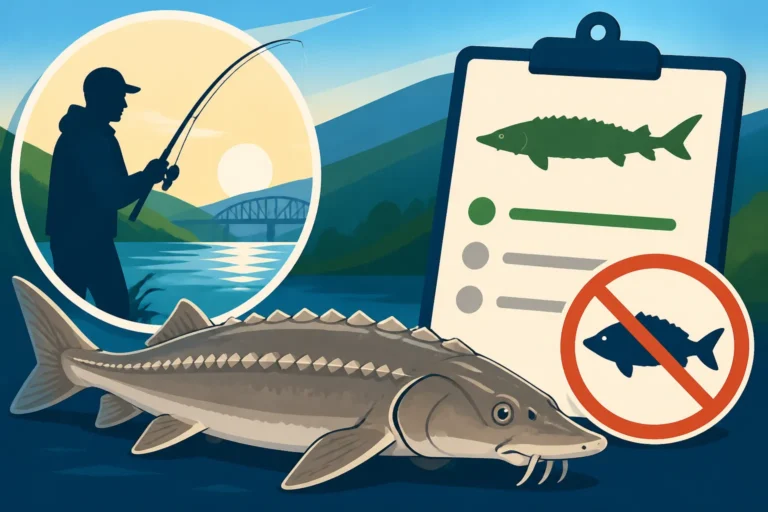
Columbia River sturgeon slot limits protect white sturgeon populations by establishing legal size windows for harvesting fish.