Washington Fishing License Guide for Nonresidents
Traveling to a new state for a fishing adventure is incredibly exciting, but the sheer thought of deciphering a new set of fishing regulations can often feel overwhelming, especially when you're trying to figure out if your home state's rules even remotely apply. For nonresidents eyeing Washington's abundant waters, navigating the licensing requirements is crucial to ensure a smooth, legal, and enjoyable trip, and this guide is here to untangle all the complexities you might face.
Navigating the Basics: What Nonresidents Need to Know About Washington Fishing Licenses
When you're dreaming of casting a line into the mighty Columbia River for salmon or perhaps chasing a trophy steelhead on one of the Olympic Peninsula's pristine rivers, the last thing you want is a legal headache. The first step for any out-of-state angler is understanding that Washington State has a distinct set of rules specifically for those who don't call it home. It's not just a matter of paying a different price; there are fundamental differences in how your residency impacts your angling privileges.
Defining "Nonresident" for Washington Fishing Licenses
So, what exactly makes someone a "nonresident" in the eyes of the Washington Department of Fish and Wildlife (WDFW)? It might seem obvious, but there are nuances. Generally, if you haven't established permanent residency in Washington State for at least 90 consecutive days immediately prior to applying for a license, you're considered a nonresident. This means if you're visiting from Oregon, Idaho, California, or anywhere else beyond Washington's borders for a vacation or even an extended work trip, you'll fall into the nonresident category.
This definition is super important because it directly impacts the types of licenses you're eligible for and, of course, the price you'll pay. Sometimes, people mistakenly assume that owning property in Washington, or having family here, automatically qualifies them for resident rates. Unfortunately, that's not the case; true physical residency is the key. You'll need to provide proof of residency, often in the form of a driver's license or state ID, when purchasing your license. Don't worry, the process isn't overly complicated, but being prepared with the right identification can save you a lot of hassle at the point of purchase. For a more detailed look at the criteria, you can explore the differences in our guide on Resident vs Nonresident Fishing Licenses in Washington.
The Fundamental Difference: Why Nonresident Rules Vary
It often feels unfair, doesn't it? Why should nonresidents pay more or have slightly different restrictions? The core reason behind varying rules and costs for nonresidents boils down to resource management and state funding. Washington's fish and wildlife populations are a precious resource, funded and managed primarily by license fees paid by its residents. When you're a resident, your taxes and ongoing license purchases contribute to the long-term health of these fisheries, including habitat restoration, hatchery programs, and enforcement.
Nonresidents, while certainly welcome and contributing to the local economy, don't have the same sustained financial input into the state's conservation efforts. Therefore, the higher nonresident fees are designed to help offset that difference and ensure that everyone using the resource is contributing a fair share to its sustainability. It's not about exclusion; it's about equitable contribution to a shared natural heritage. These differential rules also sometimes reflect interstate agreements, especially on shared waters like the Columbia River, where Washington and Oregon often have reciprocal or harmonized regulations. This ensures that anglers from both states contribute appropriately to the management of shared fish stocks.
Types of Nonresident Fishing Licenses Available in Washington
The WDFW offers a variety of license options, which can feel a bit like navigating a maze if you're not used to it. But don't fret! The choices are actually quite logical once you break them down by how long you plan to fish and where you intend to cast your line. Knowing your trip length and target species will guide you to the perfect license.
Annual vs. Short-Term Options: Picking Your Duration
As a nonresident, your fishing plans might range from a quick weekend getaway to a full-blown multi-week adventure. Thankfully, Washington's licensing system accommodates both.
Annual Nonresident Licenses: If you foresee multiple trips to Washington within a 12-month period, or simply want the freedom to extend a single trip without worrying about daily renewals, an annual nonresident license is your best bet. These licenses are valid for one full year from the date of purchase, providing maximum flexibility. An annual license covers most general freshwater and saltwater fishing, but remember, specific endorsements for certain species or areas might still be needed. While the upfront cost is higher, it can quickly pay for itself if you plan on visiting Washington's waters more than a couple of times. It's like a season pass to some of the best fishing in the Pacific Northwest!
Short-Term Nonresident Licenses: For those quick trips, where you only plan to fish for a day or a few, the short-term options are incredibly convenient and cost-effective. Washington offers single-day and three-day nonresident fishing licenses. These are perfect if you're just passing through, testing the waters, or joining a friend for a specific weekend outing. They save you money compared to an annual license if your fishing time is limited, allowing you to enjoy the experience without a significant financial commitment. Just be mindful of the exact dates they cover, as they are typically valid for consecutive days. You can find more detail on all the options in our guide, Washington's Annual, Short-Term and Combination License Options.
Freshwater, Saltwater, or Combination: Where Do You Plan to Fish?
Once you've decided on the duration, your next consideration is where you'll be fishing. Washington offers incredible diversity, from high-mountain lakes to the vast expanse of Puget Sound and the Pacific Ocean.
Freshwater Nonresident Licenses: If your dream trip involves chasing trout in a pristine mountain stream, battling bass in a lowland lake, or targeting salmon in a non-tidal river like the Yakima, a freshwater license is what you'll need. This license covers all game fish in lakes, rivers, and streams that are not influenced by tides. This is a common choice for those heading to Eastern Washington's numerous lakes or venturing into the Cascade foothills for some river angling.
Saltwater Nonresident Licenses: For the angler whose heart beats for the ocean, a saltwater license is essential. This covers fishing in Puget Sound, the Strait of Juan de Fuca, and the open Pacific Ocean, where you might be targeting salmon, halibut, lingcod, or various rockfish. If you're planning a charter out of Westport or Neah Bay, this is the license for you. Remember that shellfish harvesting often requires additional endorsements or permits, so if crabbing or clamming is on your agenda, check those rules carefully.
Combination Nonresident Licenses: Ah, the best of both worlds! If your trip involves a mix of freshwater and saltwater fishing, or if you're simply unsure which you might prefer on a given day, a combination license is the most practical choice. It covers both freshwater and saltwater fishing activities under one umbrella, saving you the hassle and potentially the cost of buying two separate licenses. This is particularly popular for visitors who want to experience the full spectrum of Washington's angling opportunities, perhaps starting with a river trip and then heading to the coast.
Special Endorsements Nonresidents Might Need
Just having a basic fishing license isn't always enough, especially in Washington, where certain species or fishing methods require additional "endorsements." These are like add-ons to your primary license.
Two-Pole Endorsement: This is a big one for many anglers. If you want to fish with two separate fishing rods simultaneously in freshwater (where legal), you'll need the Two-Pole Endorsement. It's a fantastic way to increase your chances, especially when targeting trout or kokanee in a lake. However, it's crucial to remember that this endorsement is only valid in freshwater and does not apply to saltwater fishing. So, if you're out in Puget Sound, one rod per angler is the rule.
Columbia River Salmon and Steelhead Endorsement: This is probably the most critical endorsement for many nonresident salmon and steelhead anglers. If you plan to fish for salmon or steelhead in the mainstem Columbia River, or in certain tributaries like the Cowlitz River or the Snake River, this endorsement is mandatory, regardless of your primary freshwater or combination license. The funds generated from this endorsement directly support the management and enhancement of these iconic anadromous fish runs. Failing to have this endorsement when fishing these specific waters can lead to a significant fine, so always double-check your plans. For more specifics, our guide on Washington's Columbia River Salmon and Steelhead Endorsement, Explained is an invaluable resource.
Shellfish/Seaweed Endorsement: If you're looking to enjoy Washington's incredible bounty of crabs, clams, oysters, or other shellfish, you will need this separate endorsement in addition to your saltwater or combination license. Even if you're not planning to actively "fish" for finfish, but just want to try your hand at crabbing from a dock or digging for razor clams on the coast, this endorsement is required. Make sure to check specific regulations for each type of shellfish, as seasons and limits vary wildly.
Understanding Nonresident Fishing License Costs
Let's talk brass tacks: what's this going to cost you? It’s a common frustration that nonresident licenses are pricier, but as we discussed, it's about contributing to the conservation efforts of the state you're visiting. The good news is that WDFW makes the pricing transparent, and knowing what to expect ahead of time can help you budget for your Washington fishing adventure.
Breakdown of Annual Nonresident License Fees
For those planning to make Washington a regular fishing destination, the annual nonresident licenses are often the most economical choice in the long run. These typically come in three main varieties, mirroring the general license types we just covered:
- Annual Nonresident Freshwater Fishing License: This is your ticket to year-round river and lake fishing for species like trout, bass, and anadromous salmon or steelhead in non-tidal waters (provided you have the necessary endorsements). Expect this to be a significant investment, often several times the cost of a resident license, reflecting the contribution to the state's resources.
- Annual Nonresident Saltwater Fishing License: If Puget Sound, the coast, and their abundant marine species are your primary targets, this is the one. It grants you access to salmon, halibut, bottomfish, and more in marine areas for a full year. Again, the price point will be notably higher than its resident counterpart.
- Annual Nonresident Combination Fishing License: This is usually the most expensive single license, as it combines the privileges of both freshwater and saltwater licenses. However, if you plan to fish both environments, it often works out cheaper than buying separate annual freshwater and saltwater licenses. It offers the ultimate flexibility for a full year of diverse angling.
It's important to remember that these base prices do not include any additional endorsements you might need. Think of the annual license as the foundation, and endorsements as the necessary upgrades for specific fishing activities. For specific current numbers, our guide on Washington Nonresident Fishing License Cost breaks down the figures.
Costs for Short-Term Nonresident Licenses
If your Washington fishing trip is a one-off or a short vacation, the short-term licenses are designed to be more budget-friendly.
- Nonresident One-Day Fishing License: This is perfect for a spontaneous day trip or if you're only targeting a specific single-day opener. The cost is considerably less than an annual license. It provides coverage for either freshwater or saltwater, depending on your choice.
- Nonresident Three-Day Fishing License: This option offers a bit more flexibility, covering three consecutive days of fishing. It's ideal for a long weekend trip. Like the one-day license, you'll choose between freshwater or saltwater coverage.
These short-term licenses offer great value for money for casual visitors. They allow you to participate in specific events or enjoy a brief taste of Washington's fisheries without committing to an annual fee. However, if your plans change and you decide to extend your trip or make another visit, you'll need to purchase additional short-term licenses or upgrade to an annual one.
Additional Endorsement Costs for Nonresidents
Beyond the base fishing license, those crucial endorsements also come with their own price tag. These are generally uniform for both residents and nonresidents, but they add to your total cost.
- Two-Pole Endorsement: This is a fixed fee, usually quite reasonable, that allows you to use two poles in freshwater. It's a small investment for double the fishing action.
- Columbia River Salmon and Steelhead Endorsement: This is another fixed fee, which contributes directly to the management of these vital fisheries. It's non-negotiable if you're fishing those specific waters for salmon or steelhead.
- Shellfish/Seaweed Endorsement: This endorsement also has a standard fee, giving you access to Washington's rich shellfish resources.
When planning your trip, always factor in these endorsement costs. It's always better to be fully covered than to risk a citation. A good rule of thumb is to outline exactly what you plan to fish for, and where, then calculate the total cost including your base license and all necessary endorsements.
| License Type | Duration | Coverage | Nonresident Cost (Approx.) | Key Add-ons Needed |
|---|---|---|---|---|
| Annual Freshwater | 12 months | Rivers, Lakes, Streams | $$ | Two-Pole, Columbia River End |
| Annual Saltwater | 12 months | Puget Sound, Ocean | $$ | Shellfish |
| Annual Combination | 12 months | All WA Waters | $$$ | Two-Pole, Columbia River End, Shellfish |
| One-Day Freshwater | 1 Day | Rivers, Lakes, Streams | $ | Two-Pole, Columbia River End |
| One-Day Saltwater | 1 Day | Puget Sound, Ocean | $ | Shellfish |
| Three-Day Freshwater | 3 Consecutive | Rivers, Lakes, Streams | $ | Two-Pole, Columbia River End |
| Three-Day Saltwater | 3 Consecutive | Puget Sound, Ocean | $ | Shellfish |
| Two-Pole Endorsement | 12 months | Freshwater Only | $ | N/A |
| Columbia River S/S End. | 12 months | Specific Waters | $ | N/A |
| Shellfish/Seaweed End. | 12 months | All WA Waters | $ | N/A |
Note: The cost approximations ($, $$, $$$) are relative to each other, with '$' being the least expensive. Exact prices can change, so always check the WDFW website or a license vendor for the most current figures.
Where and How Nonresidents Can Purchase a License
One of the biggest anxieties for out-of-state anglers is often the logistics of actually getting the license. In today's digital age, thankfully, it's easier than ever, with multiple convenient options available to nonresidents. No more scrambling to find a specific store! For a general overview, our post on Where and How to Buy a a Washington Fishing License has more tips.
Online Purchase Options for Out-of-State Anglers
This is by far the most straightforward and recommended method for nonresidents. The Washington Department of Fish and Wildlife (WDFW) provides a robust online licensing system that you can access from anywhere with an internet connection.
- WDFW GoOutdoors Website: Their official website, specifically the GoOutdoors portal, is designed for purchasing licenses, endorsements, and even reporting your catch. You can easily select your nonresident status, choose the license type and duration you need, add any necessary endorsements, and pay securely online. You'll receive a confirmation email, and often a temporary printable license. This means you can purchase your license before you even leave home, allowing you to hit the water immediately upon arrival. This convenience means less stress and more fishing time. You can learn all about this in our guide: Can You Buy a Washington Fishing License Online?.
Before you begin, have your personal information ready, including your full name, date of birth, address, and a form of identification (like your driver's license number). The system is user-friendly and walks you through each step. Once purchased, you're good to go!
Authorized License Vendors and Sporting Goods Stores
While online is easy, sometimes you prefer a face-to-face transaction, or you might find yourself spontaneously deciding to fish after you've arrived. Washington has a wide network of authorized license vendors scattered throughout the state.
- Local Sporting Goods Stores: Big chain stores like Bass Pro Shops and Cabela's, or even smaller, independent tackle shops across Washington, are often official WDFW license vendors. These places are fantastic because the staff are usually avid anglers themselves and can offer localized advice, tell you what's biting, and help you select the right license and endorsements for your specific plans. It's a great opportunity to pick up any last-minute gear or bait you might need too. You can also find some fantastic regional gear on Amazon beforehand if you like to plan ahead.
- Department Stores and Grocery Stores: In more rural areas, or even some urban centers, you might find that certain larger grocery stores or hardware stores also serve as WDFW license vendors. Look for signage indicating "Hunting & Fishing Licenses" or inquire at the customer service desk.
When purchasing in person, you'll still need to provide the same personal identification. The vendor will process your information and print out your official license and any associated catch record cards. It's a straightforward process, but during peak seasons, there might be a short wait.
The MyWDFW App: Your Digital License Solution
In a world where everyone carries a smartphone, WDFW has embraced technology to make your life even easier. The MyWDFW app is a game-changer for anglers.
- Digital License on Your Phone: Once you've purchased your license online, you can often access and display it directly through the MyWDFW app on your smartphone. This means no more worrying about losing a paper copy or forgetting it at home. As long as your phone is charged and you can access the app, you're compliant.
- Catch Reporting and Rule Access: Beyond just your license, the app is a powerful tool for catch reporting (especially important for salmon and steelhead) and provides easy access to the latest fishing regulations and emergency rule changes. This is incredibly helpful, as rules can change quickly, particularly during anadromous fish seasons.
While carrying your license on your phone is generally accepted, it's always a good idea to have a charged phone and perhaps a screenshot of your license just in case you're in an area with no cell service. For more details on this, check out Carrying Your Washington Fishing License: Paper, Phone or the MyWDFW App.
Essential Requirements Beyond the License for Nonresidents
Having the correct fishing license is paramount, but it's just the starting point for a legal and responsible fishing trip in Washington. There are several other critical elements that nonresidents, in particular, need to be aware of to avoid accidental violations. These often revolve around tracking your catch and adhering to conservation-focused rules.
The Washington Catch Record Card: What It Is and Why You Need It
For many of Washington's most prized fisheries, especially salmon, steelhead, and halibut, a separate document called a Catch Record Card (CRC) is absolutely mandatory. This isn't just a formality; it's a vital tool for WDFW to monitor fish populations and manage seasons.
- Mandatory for Specific Species: If you're targeting salmon, steelhead, halibut, or sturgeon, you must have a CRC. It's usually issued automatically when you purchase a relevant fishing license (e.g., a freshwater license for steelhead, a saltwater license for salmon). Nonresidents need these just as much as residents do.
- Reporting Your Catch: Every time you retain one of the specified species, you are legally required to immediately record it on your CRC. This means marking the species, date, and location of the catch before you put your fish away or move to a different fishing area. The emphasis here is on immediate recording. Don't wait until you get home; do it on the boat or on the bank right after the fish hits the cooler.
- Return Requirements: Even if you don't catch anything, or if you only catch and release, your CRC must be returned to WDFW by the specified deadline (usually January 31st of the following year). This data is invaluable for fishery managers, helping them understand fishing effort and make informed decisions about future seasons. Missing this deadline can result in penalties, even if you never wet a line. Our detailed guide on The Washington Catch Record Card and What It Requires covers this topic extensively.
Understanding Bag and Possession Limits as a Nonresident
This is where many out-of-state anglers can inadvertently run into trouble. Bag and possession limits are crucial for sustainable fishing, and they are strictly enforced.
- Daily Bag Limit: This refers to the maximum number of a specific species you can keep in a single day (from midnight to midnight). For example, if the daily bag limit for Chinook salmon is one, you can only keep one Chinook in that 24-hour period, regardless of how many you catch and release.
- Possession Limit: This is often misunderstood. The possession limit refers to the maximum number of a specific species you can have in your physical possession, including those at your home, hotel, vehicle, or in transit. In Washington, the possession limit for most species is typically two daily bag limits. So, if the daily limit is one Chinook, you can possess up to two Chinook, but you must prove that they were caught on separate calendar days. This becomes particularly important on multi-day trips.
- Filleting Fish: Be very careful about filleting your fish before returning to shore, especially for species where size or identifying marks are critical for enforcement (e.g., salmon with adipose clips, specific rockfish species). In many cases, you must retain the carcass or a portion of it with identifying features until you reach your permanent residence or a processing facility. Always check the specific regulations for the species you're targeting. Our guide, How Bag and Possession Limits Work in Washington, delves deeper into these rules.
Gear Restrictions and Special Rules Affecting Nonresidents
Washington has a variety of gear restrictions, bait bans, and other special rules that are designed to protect fragile fish stocks or enhance specific fisheries. Nonresidents need to be acutely aware of these, as ignorance of the law is never an excuse.
- Barbless Hooks: On many rivers and in certain marine areas, especially during salmon and steelhead seasons, only single-point barbless hooks are permitted. This rule is designed to reduce harm to fish that are caught and released. If you're using barbed hooks where barbless are required, you could face a citation. You can easily find suitable barbless hooks on Amazon or at any Washington tackle shop.
- Bait Bans: Certain rivers or sections of rivers may have bait bans in place, particularly during sensitive spawning periods or to protect wild fish. This means no using worms, roe, or other organic baits; only artificial lures might be permitted.
- Motorized vs. Non-Motorized Craft: Some waters might have restrictions on the use of internal combustion engines, limiting access to rafts, drift boats, or kayaks.
- Area-Specific Rules: Always remember that regulations can vary significantly by river, lake, or marine area, and even within different sections of the same body of water. A rule that applies to the lower Columbia River might be completely different upstream. This hyper-local detail is why checking the current regulations for your exact fishing location is non-negotiable.
Common Questions and Scenarios for Out-of-State Anglers
Even with a full understanding of the license types and regulations, nonresidents often encounter specific situations that raise questions. Let's tackle some of the most frequent ones to help you feel more prepared.
Do Kids Need a Fishing License if They're Nonresidents?
This is a really common question, especially for families planning a fishing trip to Washington. The short answer is: it depends on their age.
- Ages 14 and Under: Generally, children who are 14 years old and younger do not need a fishing license to fish in Washington State, regardless of whether they are residents or nonresidents. This is a fantastic policy that encourages young people to get into fishing without the added cost burden. They can fish for all species with the general regulations.
- Ages 15 and Older: Once a child turns 15, they are required to have the appropriate fishing license and any necessary endorsements, just like an adult angler. This applies equally to nonresidents. So, if your 15-year-old is coming with you to fish for salmon or steelhead, make sure they have their own nonresident license and CRC.
Even if kids don't need a license, it's a good idea to ensure they understand the basic rules, especially about bag limits for adults, and how to identify fish. While they might not need a license, they might still need a Catch Record Card for specific species if they are retaining fish. It's always best to check the current WDFW regulations for the most up-to-date information regarding youth fishing. For a deeper dive, read our article Do Kids Need a Fishing License in Washington?.
Fishing from a Charter Boat: Do You Still Need Your Own License?
Another excellent question, and one that often trips people up. When you book a fishing charter, especially for salmon or halibut in Puget Sound or off the coast, it feels like everything should be handled, right? The guide provides the boat, the gear, the expertise… but what about the license?
- Yes, You Still Need Your Own License: In Washington, every individual angler, regardless of whether they are on a private boat, a guided trip, or a large charter, is required to possess their own valid fishing license and any necessary endorsements for the species they are targeting. The charter captain or guide provides the service, but the legal responsibility for holding a license rests solely with the individual angler.
- What Charters Provide: While charters don't provide your license, they generally supply all the rods, reels, tackle, and bait. They are also experts on the local regulations and will guide you on how to fill out your Catch Record Card correctly.
- Purchase Ahead of Time: To avoid any last-minute stress, it's highly recommended that nonresidents purchase their fishing license (and CRC, if required) before arriving at the dock for their charter trip. This way, you can step onto the boat ready to fish and maximize your time on the water.
So, when booking that dream salmon charter out of Sekiu or a halibut trip from Ilwaco, always factor in the cost and time to secure your nonresident fishing license beforehand.
Transporting Your Catch Across State Lines Legally
You've had an incredible trip, and your cooler is full of delicious Washington salmon or halibut. Now, how do you get it home without running into trouble? Transporting fish across state lines requires careful attention to detail.
- Proof of Legal Catch: The most important thing is to be able to prove that your fish were legally caught. This means having your valid fishing license and a properly filled-out Catch Record Card (if applicable) with you. For filleted fish, it's often wise to keep a piece of skin on the fillet with identifying marks, especially for salmon species, to prove its origin and type.
- Possession Limits: Remember those possession limits? They apply to the total number of fish you have, including those in your cooler on the way home. Make sure you haven't exceeded the possession limit for any species.
- Interstate Rules: While Washington might allow you to transport your catch, it's also your responsibility to understand the regulations of any other states you will be traveling through, or your home state, regarding the import of fish. Some states might have specific rules about fish being whole, filleted, or how they are packaged.
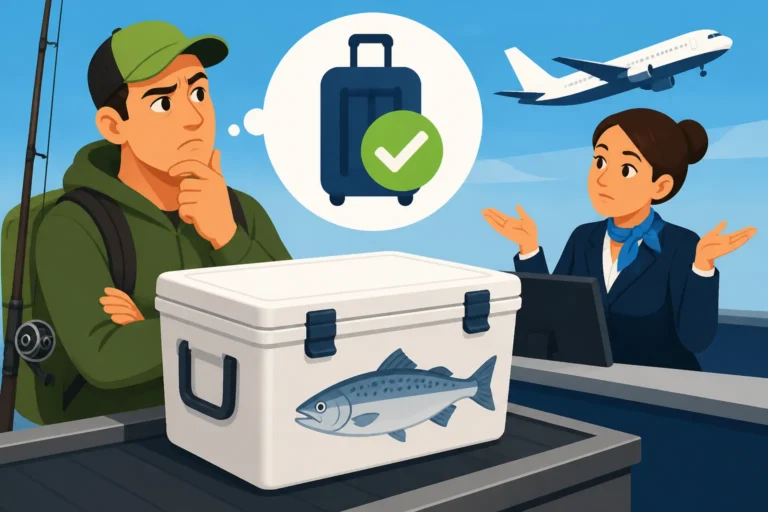
- Packaging for Travel: For flying, fish should be properly processed, frozen solid, and packed in a leak-proof cooler. Airlines often have specific rules for checked seafood, so check with your airline well in advance. For driving, keeping fish on ice in a well-insulated cooler is usually sufficient, but ensure it's not leaking.
The general advice is to keep your fish in as identifiable a state as possible (e.g., whole or with skin on fillets) until you reach your permanent residence, especially if you're traveling a long distance. Always carry your license and CRC with you. For a complete guide to this process, see Transporting Your Catch Across State Lines Legally.
Avoiding Common Pitfalls and Violations for Nonresidents
The thrill of fishing in a new place can sometimes make us overlook details, but in Washington, even unintentional errors can lead to fines or worse. Being proactive and informed is your best defense against running afoul of the regulations.
Penalties for Fishing Without a Valid Nonresident License
This is perhaps the most straightforward and easily avoidable violation, yet it still happens. Fishing without a valid license, or with the wrong type of license/missing endorsement, is a serious offense in Washington.
- Fines and Citations: The most immediate consequence is typically a significant monetary fine. These fines can quickly add up, easily exceeding the cost of the license itself. You'll not only pay the penalty but still be required to purchase the correct license to fish legally in the future.
- Forfeiture of Gear and Catch: In more serious cases, or for repeat offenses, you could have your fishing gear confiscated (rods, reels, even your boat in extreme circumstances) and any illegally caught fish seized. This is a tough lesson to learn, but it underscores the seriousness of resource violations.
- Loss of Future Privileges: Depending on the severity of the violation, you could face a suspension of your fishing privileges in Washington, and potentially in other states with reciprocal agreements. This means your dream fishing trips could be put on hold for years.
The bottom line: just buy the license. It's not worth the risk, stress, or potential financial and legal repercussions. Make it the first thing you secure for your trip. For more details on this, our post Fines and Penalties for Common Fishing Violations lays out the potential consequences.
Misinterpreting Regulations: A Costly Mistake
Many violations by nonresidents aren't due to malicious intent but simply a misunderstanding of the complex regulations. This is particularly true in Washington, where rules can be highly specific to species, time of year, and geographic location.
- Season Dates and Closures: Fishing out of season for a particular species, or in an area that is closed, is a major violation. This is especially prevalent with salmon and steelhead, where seasons can be very short and specific.
- Bag and Size Limits: Accidentally keeping too many fish, or fish that are under the minimum size (or over the maximum size in a slot limit), is a common error. This often happens when anglers mistake one species for another or mismeasure their catch.
- Gear Restrictions and Bait Bans: Using the wrong type of hook (e.g., barbed instead of barbless), or using bait where it's prohibited, can also lead to citations.
- Hatchery vs. Wild Fish: Many Washington fisheries have rules that distinguish between hatchery-origin fish (often identifiable by a clipped adipose fin) and wild fish, with wild fish often required to be released. Misidentifying these can be a costly mistake.
The best way to avoid misinterpretations is to read the current WDFW Sport Fishing Regulations pamphlet thoroughly for your specific fishing area and target species. Don't rely on old pamphlets, hearsay, or generalized online advice. The WDFW website is your most accurate and up-to-date source. Many experienced anglers even keep a printed copy or a downloaded PDF on their phones.
Staying Informed: Checking for Emergency Rule Changes
Washington's fisheries are dynamic, and regulations, particularly for salmon and steelhead, can change quickly, sometimes even mid-season. These "emergency rule changes" are put in place by WDFW to protect fish runs that are weaker than anticipated or to respond to stronger-than-expected returns, adjusting seasons and limits as needed.
- Why Rules Change: These changes are often driven by in-season data from test fisheries, escapement goals, or updated run forecasts. They are a necessary part of adaptive fisheries management.
- How to Stay Informed: As a nonresident, it's critical to regularly check for these changes. The WDFW website is the primary source, with dedicated sections for emergency rules. You can also sign up for email alerts or follow WDFW on social media. Many local tackle shops and guides also stay on top of these changes.
- Before Every Trip: The golden rule is to check for emergency rule changes immediately before every fishing trip, especially if you haven't fished in a week or two. What was open last weekend might be closed this weekend, or the bag limit might have changed.
Don't assume the rules you read a month ago are still valid today. A quick check of the WDFW website can save you a lot of grief and ensure your trip is not only successful but also legal. Our article Emergency Rule Changes: Why Washington's Rules Shift Mid-Season explains this in more detail.
Disclaimer
Please note that fishing regulations in Washington State are subject to change. While this guide provides comprehensive information, it is your responsibility to consult the official Washington Department of Fish and Wildlife (WDFW) regulations pamphlet and website (wdfw.wa.gov) for the most current and specific rules, seasons, and emergency updates before engaging in any fishing activity. This article is for informational purposes only and does not constitute legal advice.