The Washington Catch Record Card and What It Requires
Navigating Washington's fishing regulations can often feel like trying to untangle a particularly stubborn fishing knot. Among the many rules, the Catch Record Card stands out as a unique and sometimes confusing requirement that anglers frequently overlook or misunderstand. It's not just another piece of paper; it's a vital tool for wildlife management and a mandatory part of your fishing experience. This comprehensive guide aims to demystify the Washington Catch Record Card, detailing its requirements, proper usage, and why it's so important for the future of our fisheries.
Understanding the Purpose of the Catch Record Card
It's easy to view fishing regulations as a hassle, another hurdle between you and a peaceful day on the water. But when it comes to the Catch Record Card, it’s truly designed with the long-term health of Washington’s fisheries in mind. Think of it less as a chore and more as your direct contribution to ensuring future generations can enjoy the same incredible fishing opportunities we have today. Every time you fill out that card, you're providing critical data that directly impacts season settings and conservation efforts.
Why Washington Requires Catch Data
The Washington Department of Fish and Wildlife (WDFW) doesn't just pull fishing seasons and bag limits out of thin air. They rely heavily on scientific data, and a significant portion of that data comes directly from anglers like us. Your Catch Record Card provides a real-time snapshot of harvest rates, effort, and angler success for key species across the state. Without this information, WDFW would be operating in the dark, making it nearly impossible to manage fish populations sustainably. It’s a collective responsibility, and your small act of recording your catch has a huge ripple effect.
Imagine a scenario where thousands of anglers are successfully catching Chinook salmon in Puget Sound, but without accurate reporting, WDFW might assume the population is robust enough for even more fishing pressure. This could lead to overharvesting and severely impact future runs. Conversely, if anglers aren't reporting their catches, WDFW might underestimate a healthy run, leading to overly restrictive seasons that unnecessarily limit opportunity. The card helps strike that delicate balance, ensuring we're not taking too much, but also not underutilizing a strong return.
How Your Data Helps Manage Fisheries
The information you meticulously record on your card – the species, date, location, and whether the fish was kept or released – is collected, compiled, and analyzed by WDFW biologists. This data is then cross-referenced with other biological indicators, such as spawning escapement counts (how many fish made it back to their spawning grounds), test fishery results, and environmental factors like water temperature and flow. This holistic approach provides a comprehensive picture of fish health and population trends.
For example, if anglers report a high harvest of wild steelhead from a particular river, but WDFW's independent counts show low escapement, it's a clear signal that fishing pressure needs to be adjusted. This might mean shortening seasons, reducing bag limits, or implementing Emergency Rule Changes: Why Washington's Rules Shift Mid-Season to protect vulnerable populations. Your data, combined with all these other pieces, helps to inform these crucial decisions, ensuring that both conservation goals and recreational opportunities are considered. It’s a direct feedback loop, and you are an active participant in fishery management.
The Connection to Conservation and Future Seasons
Ultimately, the Catch Record Card is a cornerstone of Washington’s conservation strategy for anadromous fish (like salmon and steelhead) and other popular species. By accurately tracking harvest, WDFW can set appropriate total allowable catch (TAC) limits, ensuring that enough fish return to spawn and maintain healthy populations. This is especially vital for species listed under the Endangered Species Act, where every single fish counts, whether kept or released. The data provides transparency and accountability, both for anglers and for the state.
Without reliable data from Catch Record Cards, future fishing seasons would be far more uncertain and likely much more restrictive. If WDFW can’t quantify harvest, they often err on the side of caution, leading to shorter seasons or lower limits for everyone. So, while it might feel like a minor detail when you’re out on the water, completing your Catch Record Card diligently is one of the most direct and impactful ways you contribute to the sustainability of Washington fishing and help secure abundant future seasons for species like Chinook, Coho, and steelhead. It’s truly about protecting the resource we all love.
Who Needs a Catch Record Card and For Which Species
The question of "who" and "for what" often causes the most confusion when it comes to Catch Record Cards. It’s not just for every fish you catch, and it’s not just for adults. Understanding these specifics is key to staying compliant and avoiding penalties. The WDFW makes it clear: if you’re targeting certain species, you need a card, regardless of your age or whether you intend to keep the fish.
Specific Species Requiring a Catch Record Card
In Washington, the Catch Record Card is specifically required for several high-value, migratory, or sensitive species. These primarily include all species of salmon (Chinook, Coho, Chum, Sockeye, Pink), steelhead (both summer and winter runs), halibut, and sturgeon. If you’re heading out to fish for any of these, consider your Catch Record Card as essential as your fishing license itself. These species are often managed under complex harvest quotas and conservation objectives, making accurate reporting paramount.
It's important to note that you generally do not need a Catch Record Card for trout in lakes, bass, walleye, lingcod, rockfish, or other common freshwater or saltwater species. The card's focus is on those species where precise harvest data is absolutely critical for stock assessment and management. Always double-check the current Washington Sport Fishing Seasons and Emergency Closures for the specific body of water you'll be fishing, as regulations can change, and sometimes certain areas might require a card for other species if they are managed under a special permit or program.
Do Kids Need a Catch Record Card?
This is a common question, and the answer, surprisingly for some, is yes, kids absolutely need a Catch Record Card if they are fishing for species that require one. While Do Kids Need a Fishing License in Washington? is a different but related question (generally, kids under 15 don't need a license in freshwater, and under 15 don't need a license for marine areas or personal use shellfish), the Catch Record Card requirement applies to anyone keeping or harvesting a regulated species, regardless of age.
So, if your child, even a very young one, catches and keeps a salmon, steelhead, halibut, or sturgeon, that fish must be recorded on a Catch Record Card. It’s crucial to obtain a card for them before you go fishing if there's any chance they might keep one of these species. The rules are designed to track every harvested fish, not just those caught by licensed adults. Neglecting to get a card for a child's catch is a violation, just as it would be for an adult.
When a Catch Record Card Is Required in Washington
The moment you decide to target salmon, steelhead, halibut, or sturgeon, you should have a Catch Record Card in your possession. You don't wait until you've caught a fish; the requirement is to have it with you if you're engaging in the activity for which it's needed. This is an important distinction, as a WDFW enforcement officer can ask to see your card at any time while you're fishing for these species, even if you haven't caught anything yet.
The phrase "When a Catch Record Card Is Required in Washington" extends beyond just having it. It dictates when you must mark your catch. For salmon and steelhead, you must record your catch immediately after retaining the fish and before continuing to fish. For halibut and sturgeon, the rules can be slightly different, sometimes allowing recording immediately before leaving the fishing area, but the best practice is always to record it as soon as it's kept. This instantaneous recording prevents confusion and ensures accurate data, leaving no room for "I'll do it later" excuses that often lead to mistakes or forgotten entries.
Acquiring and Carrying Your Catch Record Card
Getting your hands on a Catch Record Card and ensuring you have it properly at hand is the next logistical step. It’s not an afterthought; it’s part of your essential gear. Whether you prefer the traditional paper method or embrace digital solutions, understanding your options and responsibilities for carrying it is crucial.
How to Get Your Physical Catch Record Card
If you prefer the tactile feel of paper or find it easier to manage a physical card, obtaining one is straightforward. When you purchase your annual Washington fishing license, a Catch Record Card for salmon, steelhead, and sturgeon is typically issued automatically with it. For halibut, a separate Catch Record Card specific to that species is also issued with your license package if you've opted for a saltwater or combination license. You don't usually need to ask for it; it's part of the standard license purchase for anglers planning to fish these species.
You can purchase your license and receive your card at any authorized WDFW license dealer across the state. These include many sporting goods stores, bait and tackle shops, and even some convenience stores. For example, if you're in Seattle, places like Outdoor Emporium often have a license counter where you can get everything sorted. If you buy your license online through the WDFW licensing system, your Catch Record Card will be mailed to you, so plan accordingly and allow enough time for delivery before your trip. Always double-check that all the necessary cards are included in your purchase, especially if you plan to fish for multiple regulated species like both salmon and halibut.
Carrying Your Washington Fishing License: Paper, Phone or the MyWDFW App
Once you have your Catch Record Card, the next critical step is making sure you have it on you, ready for use, whenever you're targeting regulated species. Just like your fishing license, you have a few options for how to carry it, and it's essential to understand the legalities of each. This flexibility makes it easier to comply, but also means there’s no excuse for not having it.
WDFW clearly outlines options for Carrying Your Washington Fishing License: Paper, Phone or the MyWDFW App. For your physical Catch Record Card, you must have the actual paper card in your possession while fishing. It needs to be readily accessible for marking catches and for inspection by an enforcement officer. Keeping it folded in a waterproof wallet, a plastic baggie, or a dedicated pocket in your fishing vest is a good practice to protect it from the elements. A soggy, illegible card is just as problematic as no card at all.
Exploring Electronic Catch Record Cards and the Fish Washington App
For the tech-savvy angler, Washington has embraced digital solutions to make catch reporting more convenient. The Fish Washington App, available on smartphones, allows you to manage your license and, crucially, functions as an Electronic Catch Record Cards and the Fish Washington App. This means you can digitally record your catches directly on your phone, eliminating the need for a physical card and a pencil. It’s a fantastic innovation that streamlines the process and ensures your data is submitted efficiently.
Using the Fish Washington App means you don’t need the physical paper card, as long as your phone is charged and the app is functional. However, it’s vital to remember that if your phone dies, gets wet, or is lost, you could be in violation. Always ensure your phone is adequately protected and charged. The app also has some limitations; for instance, at the time of writing, not all species might be reportable electronically, or there might be specific circumstances where a paper card is still preferred or required. Always verify the most current capabilities of the app before relying solely on it. This integration of technology makes it easier for anglers to comply and contributes to more accurate, timely data collection for WDFW.
The Nitty-Gritty of Filling Out Your Card Properly
The act of filling out the Catch Record Card might seem simple, but there's a specific methodology and required information that, if overlooked, can render your efforts useless or even lead to violations. It’s not just about scribbling a mark; it's about providing clear, accurate data that WDFW can use. Understanding the details is where many anglers stumble, so let's break down the essential elements.
Information Required on a Washington Catch Record Card
Each Catch Record Card has designated fields for specific information, and it's imperative that you fill them out completely and accurately. Typically, the Information Required on a Washington Catch Record Card includes:
- Date: The exact date the fish was caught.
- Species: Which type of salmon (Chinook, Coho, Chum, Sockeye, Pink), steelhead, halibut, or sturgeon. Be specific!
- Area Code: This is a crucial one. Washington waters are divided into specific Marine Areas (for saltwater) or Catch Areas (for freshwater rivers/lakes). You must know the correct area code where you caught the fish. This is usually a number (e.g., Marine Area 10 for central Puget Sound) or a specific river section.
- Kept/Released: A simple checkmark indicating whether the fish was kept or released. Even if released, for certain species (like wild steelhead), it's important to record it.
- Fin Clip (for Salmon/Steelhead): If the fish is a hatchery-origin salmon or steelhead, it will have its adipose fin clipped (a small, fleshy fin on its back near the tail). You must indicate if the fish was clipped or unclipped (wild).
- Length (for Sturgeon): Sturgeon have special length restrictions, so you need to record the fork length (from the tip of the nose to the fork of the tail).
- Gear Type (sometimes): While not on all cards, some specialized fisheries might require noting the gear used.
Failing to fill out any of these fields correctly or completely can invalidate your entry. Imagine WDFW trying to make sense of thousands of cards with missing dates or incorrect area codes – it would be a nightmare for data analysis! A common mistake is just writing "salmon" without specifying the species, or forgetting to mark the fin clip. These details matter immensely.
When You Must Record a Salmon You Keep
This is perhaps the most critical rule related to marking your card. For salmon (and steelhead), you must record the catch immediately after retaining the fish and before continuing to fish. The "immediately" part is non-negotiable and where many anglers get into trouble. You cannot wait until you're back at the dock, back at your car, or even until you've cast out again. As soon as that fish is in your possession and you've decided to keep it, stop fishing, get out your card and pencil, and make that mark.
Consider this scenario: you land a beautiful Chinook, decide to keep it, and place it in the cooler. You then immediately cast out again and hook another fish. If a WDFW officer approaches you at that moment, and your first Chinook isn't yet recorded, you are in violation, even if it was only a minute or two. The rule exists to prevent "high grading" (keeping the biggest fish and releasing smaller legal ones after the limit is reached) and ensures that all retained fish are accounted for in real-time. This is why the internal link "When You Must Record a Salmon You Keep" is so crucial for every salmon angler to understand deeply.
Specific Rules for Steelhead, Sturgeon, and Halibut
While the "immediately" rule for salmon generally applies to steelhead as well, there are some species-specific nuances. For steelhead, particularly wild steelhead, accurate recording of both kept and released fish in certain areas is sometimes required, especially during catch-and-release only seasons. Always check the regulations pamphlet for the specific river you are fishing. For kept steelhead, the adipose fin clip is paramount to distinguish hatchery from wild fish. Keeping a wild steelhead when only hatchery fish are allowed is a serious violation.
Halibut have their own specific Catch Record Card. When you retain a halibut, it must be recorded immediately after the fish is on board and before you return to port or resume fishing. The card often requires you to punch out the month and day, and sometimes the area fished, indicating you’ve used one of your annual harvest opportunities. Halibut fisheries are highly managed with strict quotas, so precise reporting is critical.
Sturgeon also have a dedicated Catch Record Card. For kept sturgeon, you must record the catch immediately after retaining the fish and before continuing to fish. You’ll typically need to record the species, date, location (catch area), and the fork length of the fish. Sturgeon are a long-lived species that are vulnerable to overharvest, hence the detailed reporting and often conservative slot limits. Make sure you understand the How Bag and Possession Limits Work in Washington for each of these species to ensure you’re not only marking your card correctly but also staying within your legal limits.
Common Mistakes and How to Avoid Them
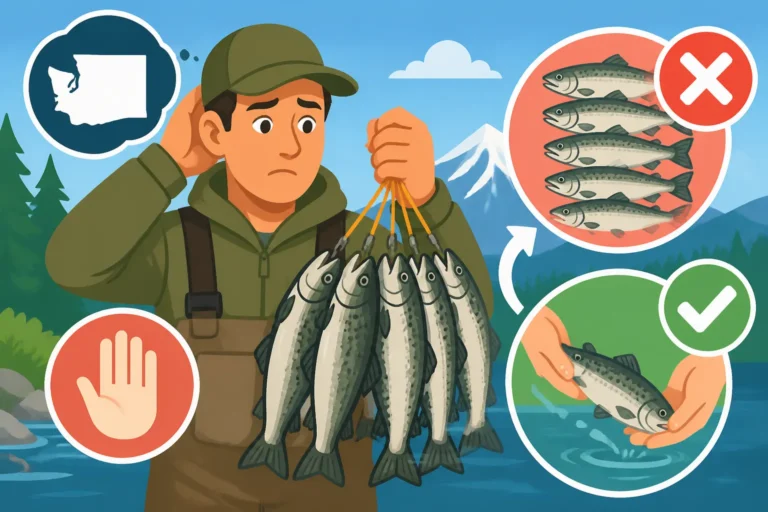
It’s astonishing how many well-intentioned anglers still make mistakes with their Catch Record Cards, often leading to fines or confiscated fish. Here are some of the most common pitfalls and how to steer clear of them:
- Forgetting a Pencil/Pen: This seems obvious, but it happens all the time. Keep a small, waterproof pencil or a permanent marker (like a fine-tip Sharpie) attached to your fishing vest or stored with your card. An indelible mark is important, especially if your card gets wet. Many anglers prefer a golf pencil because it's small and works even if damp. You can often find these in bulk, or even small waterproof pens on Amazon.
- Incorrect Area Code: Waters are divided into Marine Areas (1-13) and specific Freshwater Catch Areas. Fishing in Marine Area 9 but marking Area 10 is a violation. Always consult a map or your regulations pamphlet to confirm the correct area. Your fishing guide, if you have one, should also confirm this with you.
- Not Marking Immediately: As discussed, this is a huge one. "Immediately" means immediately. Don't delay.
- Forgetting to Mark Wild/Hatchery: For salmon and steelhead, distinguishing between a fin-clipped hatchery fish and a wild fish (unclipped adipose fin) is crucial. Make sure you know how to tell them apart and mark accordingly. Releasing a wild steelhead when only hatchery are allowed often means you can continue to fish, but keeping it when not allowed is a serious penalty.
- Damaged/Illegible Card: If your card gets soaked, torn, or is otherwise unreadable, it's considered invalid. Protect your card in a waterproof holder. If it becomes damaged beyond recognition, you might need to obtain a duplicate, though rules on duplicates can be restrictive, so prevention is key.
- Not Knowing Limits: Recording a fish on your card is one thing, but if you've already hit your daily or seasonal limit, marking another fish doesn't make it legal. Always know your Understanding Washington's Daily Bag Limits by Species before you even cast a line.
By being meticulous and understanding these nuances, you can avoid common errors and ensure your Catch Record Card accurately reflects your angling activity, contributing to the health of Washington’s fisheries.
Returning Your Catch Record Card: Deadlines and Methods
Catching and recording your fish is only half the battle. The final, crucial step is returning your completed Catch Record Card to WDFW. This is where the data truly becomes valuable for fishery managers. Missing this deadline or failing to return your card can have consequences, so it’s essential to be aware of the process and its importance.
Annual Return Deadlines and Why They Matter
Every Catch Record Card, regardless of whether you caught any fish or not, has a specific return deadline. For annual cards covering salmon, steelhead, and sturgeon, the deadline is typically January 31st of the year following the fishing season. So, a card issued for the 2024 season would need to be returned by January 31st, 2025. Halibut Catch Record Cards often have their own, earlier deadlines, usually in the late fall or early winter of the fishing year (e.g., end of October or November for the current year's season), due to the precise management of halibut quotas.
These deadlines are not arbitrary; they are critical for WDFW's data collection and analysis cycle. The information from all returned cards needs to be compiled, entered into databases, and analyzed in time to inform the planning for the next fishing season. If cards are returned late, that valuable data is delayed or missed from the crucial planning process, potentially leading to less accurate stock assessments and less informed management decisions for species like salmon or steelhead. It directly impacts whether a season can be opened, how long it can run, and what the bag limits will be.
How to Fill Out a Washington Catch Record Card for Return
Once your fishing season is over (or at least the part covered by a specific card, like halibut), you'll need to prepare your card for return. Even if you caught nothing, you still need to return it. On most cards, there's a section at the bottom where you're asked to sign and sometimes fill in your name and address if it's not pre-printed. Double-check that all your individual catch entries are legible and complete. If you used an electronic card via the Fish Washington app, the app typically handles the submission process automatically once the reporting period ends or you manually submit it.
For physical cards, the simplest and most common method for How to Fill Out a Washington Catch Record Card for return is by mail. The card itself usually has the WDFW mailing address pre-printed on it, so you can just fold it and drop it in the mailbox (no stamp required for the official return envelope, but if you're mailing the card itself, it will need a stamp unless it's a specific pre-paid form). Some WDFW offices or license dealers might have drop-off points, but mailing is the most universal method. Make a photocopy or take a picture of your completed card for your records before sending it, just in case it gets lost in transit.
Consequences of Not Returning Your Card
Neglecting to return your Catch Record Card is a serious matter and can lead to penalties. It's not just a minor oversight; it's a violation of state fishing regulations. If you fail to return a card by the specified deadline, WDFW can take several actions:
- Fines: You can be issued a fine for non-compliance. These fines are often significant enough to be a deterrent and reflect the importance WDFW places on this data. These fall under the umbrella of Fines and Penalties for Common Fishing Violations.
- Future License Restrictions: Repeated failure to return Catch Record Cards can result in you being unable to purchase a new fishing license in subsequent years. WDFW has the authority to block your ability to acquire licenses until outstanding issues are resolved, which could include the payment of fines and the submission of all past-due cards.
- Inaccurate Fishery Data: Beyond personal penalties, the biggest consequence is the negative impact on fishery management. Each unreturned card represents missing data, creating gaps in WDFW's understanding of fish populations. This ultimately leads to more conservative and restrictive fishing seasons for everyone, as managers must assume the worst if they don't have accurate harvest numbers.
So, while it might feel like a minor piece of paper at the end of the season, returning your Catch Record Card is a vital responsibility for every angler in Washington. It’s a simple act that has far-reaching implications for the health of our fish stocks and the future of our cherished fishing traditions.
Navigating Unique Scenarios and Special Regulations
The Catch Record Card isn’t always a cut-and-dry process, especially when you factor in specific fishing situations or locations. Understanding how the card applies to catch-and-release fishing, guided trips, or even transporting your catch across state lines is essential for avoiding unintended violations and ensuring your records are always accurate.
Catch-and-Release Only and the Card
One of the most frequently asked questions is whether you need to mark your Catch Record Card if you’re fishing a catch-and-release only season, or if you simply choose to release all your fish. The answer can vary, so paying close attention to the specific regulations for the area and species you're targeting is crucial.
Generally, for salmon, if you are strictly fishing catch-and-release and do not retain any fish, you typically do not need to mark your card for those released fish. However, for wild steelhead, there are often special catch-and-release seasons where all wild steelhead caught, even if immediately released, must be recorded on your Catch Record Card. This is usually specified in the regulations for sensitive populations, as WDFW still wants to track angling effort and encounter rates. Always check the rules for the specific river or marine area you're fishing. If in doubt, marking the card and indicating "released" is the safest option. It's far better to over-report than to under-report, especially when conservation is the primary concern.
Fishing on a Charter and Your Card Responsibilities
When you're out on a Washington fishing charter, especially for salmon, halibut, or sturgeon, it might feel like the guide handles everything. While they certainly do a lot to make your trip successful, your Catch Record Card responsibilities remain squarely with you. The guide is there to help you catch fish, but they are not legally responsible for filling out your personal Catch Record Card.
Each individual angler, including children, is responsible for having their own valid fishing license and Catch Record Card. When you retain a legal fish, you are personally responsible for marking it on your card immediately. The guide may remind you, provide a pen, or even help identify the species and area, but the act of marking the card is yours alone. Imagine if one angler on a charter caught their limit of halibut, and another angler continued fishing, claiming they hadn't marked their card yet. This could lead to an enforcement issue for both the angler and potentially the charter. Always clarify your personal responsibilities with your guide before the trip begins; reputable guides will always emphasize this.
Transporting Your Catch Across State Lines Legally
If you're an out-of-state angler visiting Washington, or a resident planning to take your catch to Oregon or Idaho, understanding the rules for Transporting Your Catch Across State Lines Legally is vital. Your Washington Catch Record Card plays a direct role here as proof of legal harvest.
When transporting fish that require a Catch Record Card (salmon, steelhead, halibut, sturgeon), you must ensure that each fish is clearly identified as to species and that it was legally harvested. This means the corresponding entry on your Catch Record Card must be properly filled out. In some cases, fish must be transported with a piece of the skin still attached to allow for species identification. For filleted fish, depending on the species and state you're traveling to, specific rules apply regarding how fillets must be packaged and what identification must remain on them. Your Catch Record Card, properly filled out, serves as critical documentation if you are stopped by wildlife enforcement in Washington or another state. Without it, or with an improperly filled-out card, your legal catch could be confiscated, and you could face fines. Always research the regulations of all states you'll be passing through with your fish.
The Future of Catch Reporting in Washington
Just like fishing techniques and gear evolve, so too does the way WDFW collects and utilizes angler data. The landscape of catch reporting in Washington is constantly adapting, driven by technological advancements and a continuous effort to improve the accuracy and efficiency of fishery management. Understanding these ongoing developments can help anglers stay ahead of the curve and embrace new, often more convenient, reporting methods.
Evolution of the Fish Washington App
The Fish Washington App is at the forefront of this evolution, transforming how anglers interact with WDFW and fulfill their reporting obligations. Initially, it primarily served as a digital license display and a convenient way to check emergency rules. However, its functionality is steadily expanding, making it a powerful tool for catch reporting. The app now allows for electronic catch record cards for several species, and future updates promise even greater integration and ease of use.
The goal is to eventually enable comprehensive, real-time reporting for all regulated species, directly from your smartphone. This would significantly reduce paperwork, minimize errors associated with manual entries, and provide WDFW with faster access to critical harvest data. Imagine being able to instantly report your catch with a few taps, directly uploading the information to WDFW's systems. This kind of instantaneous data flow can lead to more dynamic and responsive fishery management, potentially allowing for quicker adjustments to seasons or bag limits based on real-time harvest trends. Anglers can download the app from their respective app stores (e.g., Apple App Store, Google Play Store) or find links directly on the WDFW website. Its usage makes the process of reporting your catch far more convenient than traditional methods.
Potential Future Changes in Reporting Requirements
As technology advances and fishery management strategies become more sophisticated, it's reasonable to expect further changes to Washington's catch reporting requirements. There could be a stronger push towards mandatory electronic reporting for certain fisheries, or even the expansion of species that require reporting (e.g., specific trout species in highly managed lakes, or certain bottomfish). WDFW continually evaluates its data collection methods to ensure they are the most effective and efficient.
One area of potential change could be more granular data collection. For instance, rather than just marine area codes, future reporting might ask for more precise GPS coordinates or sub-area designations to better pinpoint fishing pressure. There might also be increased emphasis on reporting released fish for more species, especially as catch-and-release practices become more prevalent and the impact of non-lethal mortality on fish stocks is better understood. Staying informed and being adaptable to these potential changes will be key for responsible anglers in Washington.
Staying Informed with WDFW Updates
The best way to navigate the evolving world of Washington fishing regulations and catch reporting is to actively stay informed. WDFW is diligent about communicating changes and updates through various channels. Regularly checking the official WDFW website is paramount. They publish all permanent regulations, emergency rule changes, and updates regarding the Fish Washington App. The website also contains detailed guides and FAQs about Catch Record Cards.
Subscribing to WDFW's email newsletters or following their official social media channels can also provide timely alerts, especially for those critical emergency rule changes that often pop up mid-season. Additionally, local tackle shops, fishing guides, and online fishing forums are often excellent community resources for discussing and understanding current regulations. Never rely solely on hearsay; always confirm information with official WDFW sources. Your diligence in staying informed ensures you’re always compliant and contributing positively to the health of Washington’s incredible fishing resources.
| Species Category | Catch Record Card Required | When to Mark | Key Information to Record | Special Considerations |
|---|---|---|---|---|
| Salmon | Yes, for all species | Immediately after retention | Date, Species, Area Code, Kept/Released, Fin Clip | Mandatory for both resident and non-resident anglers |
| Steelhead | Yes, for all runs | Immediately after retention (or release for wild fish in specific areas) | Date, Species, Area Code, Kept/Released, Fin Clip | Wild steelhead often require release and specific recording rules |
| Halibut | Yes, separate card | Immediately after retention, before returning to port | Date, Area Code, Kept/Released (often punch card style) | Subject to highly restrictive quotas and specific season dates |
| Sturgeon | Yes | Immediately after retention | Date, Species, Area Code, Kept/Released, Fork Length | Often catch-and-release for larger fish, strict slot limits apply |
| Other Species | Generally No | N/A | N/A | Always check regulations for local exceptions or special permits |
Disclaimer
The information provided in this guide is for general informational purposes only and is not a substitute for the official Washington Department of Fish and Wildlife (WDFW) regulations. Fishing rules and seasons can change frequently, often with short notice due to emergency closures or in-season adjustments. Always consult the most current WDFW Sport Fishing Regulations pamphlet, WDFW emergency rule change notices, and the Fish Washington App before heading out on any fishing trip in Washington State. Compliance with all applicable laws and regulations is the sole responsibility of the angler.