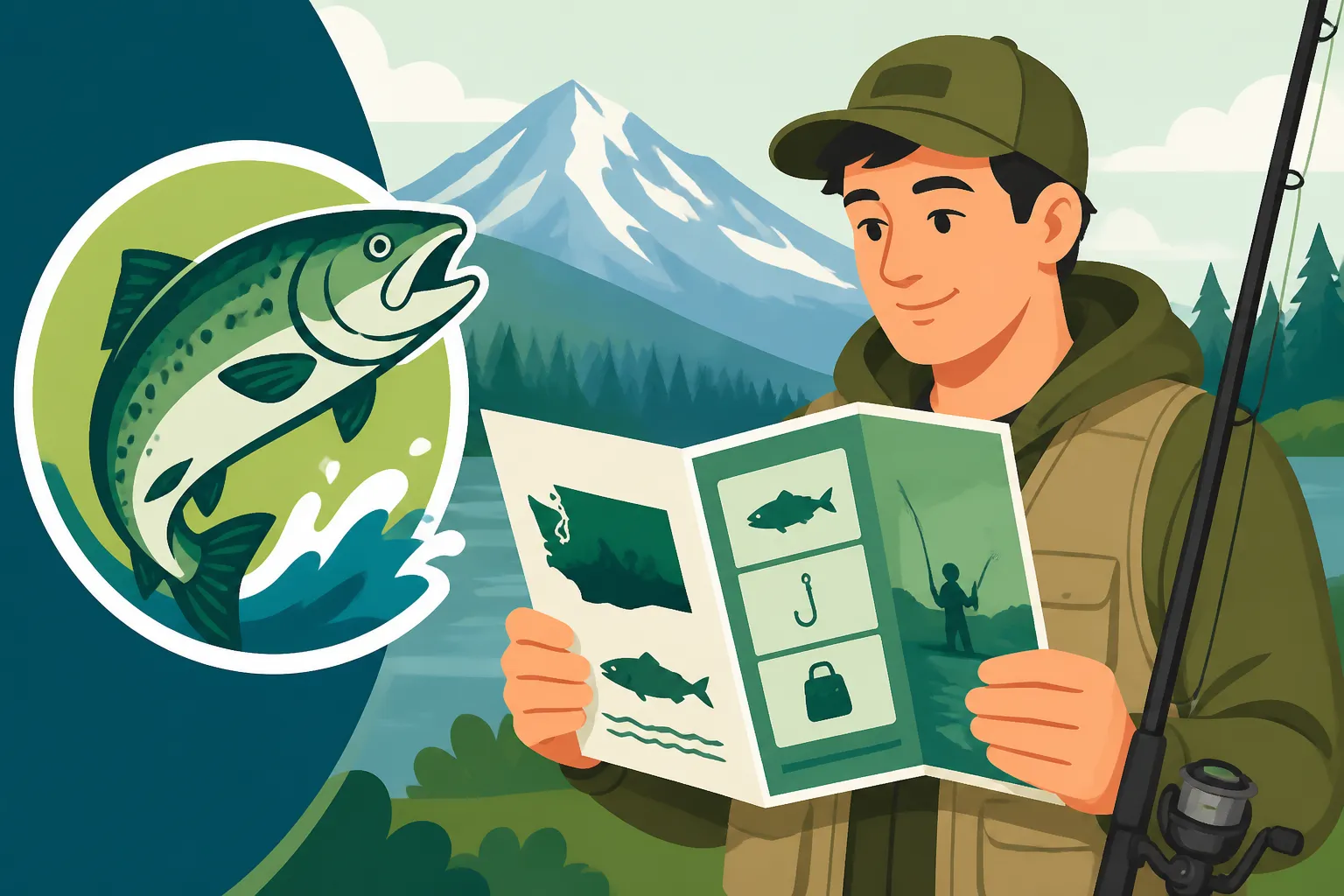
Reading the Washington Sport Fishing Regulations Pamphlet
Oh, the Washington Sport Fishing Regulations Pamphlet. If you're anything like me, the first time you picked up that slender booklet, it felt less like a helpful guide and more like a cryptic puzzle designed by a team of legal scholars and marine biologists. You just want to know if you can keep that salmon you hooked or if that river is even open, but instead, you're faced with a dizzying array of dates, codes, and exceptions that can make your head spin. This guide is here to untangle that knot, helping you confidently read and understand the WDFW regulations so you can spend less time scratching your head and more time with a line in the water.
The Overwhelming Challenge of Washington's Fishing Regulations
It's a common lament among Washington anglers, both seasoned veterans and eager newcomers: why are these regulations so incredibly complex? You'd think getting straightforward answers about where, when, and what you can fish for would be simple, but the reality is far from it. Many of us have been there, standing by a river, thumbing through pages, and still feeling completely unsure if we're doing things by the book.
Why the Pamphlet Feels Like a Maze
Let's be honest, the Washington Department of Fish and Wildlife (WDFW) pamphlet isn't exactly a light beach read. It's packed with information, which is a good thing, but the way it's organized and presented can be incredibly dense. You've got pages dedicated to general rules, followed by specific marine areas, then individual rivers, and within those, different species, gear restrictions, and dates that change throughout the year. It's a hierarchical system that requires a specific way of thinking to navigate effectively. The legal jargon, while necessary for clarity in a regulatory document, doesn't always translate easily to common angling terms, leading to confusion. Plus, the sheer volume of species, locations, and exceptions means there's a lot of ground to cover, making the initial dive feel like staring at a foreign language textbook.
The Cost of Not Understanding
Misunderstanding the regulations isn't just a minor inconvenience; it can lead to serious consequences that can ruin your fishing trip and put a dent in your wallet. Imagine finally hooking that beautiful Puget Sound Chinook, only to realize later you were fishing in a closed area, or that you didn't have the correct endorsement. At best, you might be forced to release a legally caught fish. At worst, you could face hefty fines for common fishing violations, have your gear confiscated, or even lose your fishing privileges. Beyond the legal ramifications, there's the personal cost: the frustration of a wasted trip, the embarrassment of being corrected by a fellow angler or, worse, a WDFW enforcement officer, and the loss of confidence in your ability to enjoy a simple day on the water. Properly understanding the pamphlet ensures you're a responsible, ethical angler and helps protect the very fisheries we all love.
Getting Your Hands on the Latest Regulations
Before you can even begin to decipher the rules, you need to ensure you have the most current version. Washington's fisheries are dynamic, and so are its regulations. Relying on an outdated pamphlet is like trying to navigate with an old map – you'll likely end up in the wrong place.
Where to Find the Official Pamphlet
The primary and most reliable source for Washington's sport fishing regulations is the WDFW itself. Every year, typically in July, a new annual pamphlet is released, covering the upcoming fishing season. You can usually find physical copies at a variety of locations:
- WDFW Offices: Your local WDFW regional office is a surefire place to pick up a free copy.
- Sporting Goods Stores: Retailers like Bass Pro Shops, Cabela's, and even many smaller, independent tackle shops across the state stock the pamphlets.
- License Vendors: Anywhere you can buy a Washington fishing license, you'll likely find the latest pamphlet. This includes many grocery stores, marinas, and convenience stores.
Beyond physical copies, the digital realm is your best friend. The WDFW website offers a comprehensive PDF version of the current pamphlet, which is fantastic for searching keywords and accessing on your mobile device. Many anglers also rely on the Does Washington Have a Mobile Fishing License App?, known as the Fish Washington app or MyWDFW app, which often integrates regulation information and allows you to carry your fishing license right on your phone. While you won't find the official WDFW pamphlet for sale on sites like Amazon, you can certainly find supplementary fishing guides or waterproof cases for your printed regulations there, which can be incredibly useful in keeping your critical document protected out on the water.
Understanding the Publication Cycle
It's crucial to understand that while the main pamphlet is annual, the regulations within it are not set in stone for the entire year. The WDFW manages fisheries based on real-time data, fish returns, and conservation goals, meaning rules can, and often do, change mid-season. These are known as emergency rule changes.
The annual pamphlet provides the foundational rules, but fisheries like salmon and steelhead are often managed with in-season adjustments based on things like harvest quotas, test fishery counts, and actual fish returns to rivers. This means a river section that was open in July might suddenly close in August, or a specific gear restriction might be added. It's why anglers need to regularly check for updates beyond just glancing at the annual booklet. Keeping up with these changes is paramount to staying legal and informed. This constant flux is part of the challenge, but also a reflection of Washington's proactive approach to fishery management. For a deeper dive into why these changes occur, check out our guide on Emergency Rule Changes: Why Washington's Rules Shift Mid-Season.
Decoding the General Rules and Definitions
Before you dive into specific rivers or marine areas, you absolutely must grasp the general rules and definitions that apply statewide. These are the foundational principles upon which all other regulations are built. Skipping this section is like trying to build a house without a blueprint – it's going to lead to problems.
Key Terms You Absolutely Must Know
The WDFW pamphlet uses precise language, and understanding these terms is non-negotiable for any angler:
- Daily Limit: This is the maximum number of a particular species of fish you can legally keep in a single day, from 12:01 AM to midnight. It's usually listed as "X fish," like "2 salmon."
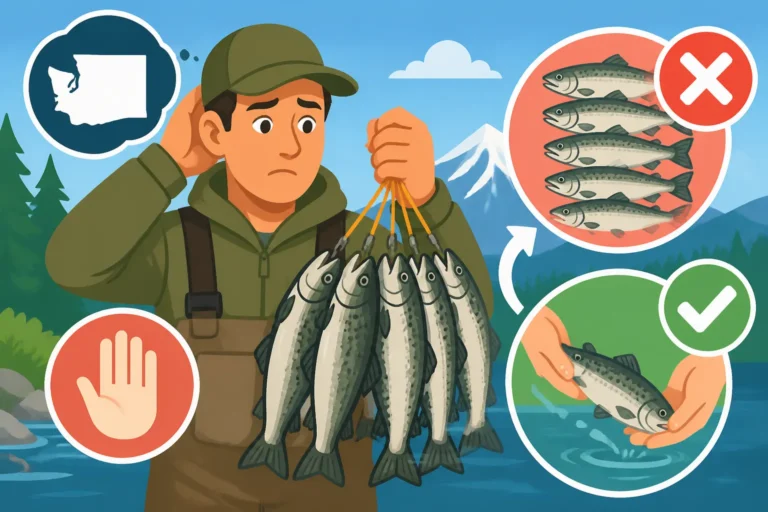
- Possession Limit: This refers to the maximum number of a particular species of fish you are allowed to have in your possession at any given time, whether on your person, in your cooler, in your vehicle, or at your home. Often, the possession limit is twice the daily limit, but not always. It's critical to know the difference, especially on multi-day trips. Our article on How Bag and Possession Limits Work in Washington explains this in detail.
- Selective Gear Rules: These are a set of restrictions designed to minimize harm to fish, particularly wild or sensitive stocks. They often include requirements for barbless hooks, specific fly or lure types, and prohibiting bait. When a regulation states "selective gear rules apply," you need to know exactly what that entails.
- Wild vs. Hatchery: This is a crucial distinction, especially for species like steelhead and salmon. Hatchery fish often have a clipped adipose fin (a small, fleshy fin on their back near the tail), indicating they were raised in a hatchery. Wild fish retain their adipose fin. Regulations frequently require the release of wild fish to protect natural spawning populations. This often dictates what you can keep, and failing to identify correctly can lead to significant penalties.
- Release: When a fish must be released, it means it must be immediately returned to the water unharmed. This is not optional. Ensuring you have the right gear and technique to minimize stress on the fish is part of responsible angling.
These terms are the bedrock of the entire pamphlet. Take the time to truly internalize them. They'll pop up repeatedly in various sections, so a solid understanding here will save you immense confusion later.
General Statewide Rules and Exceptions
The pamphlet kicks off with a section outlining rules that apply across the board, unless a specific area or species regulation states otherwise. These general rules cover a range of topics that are fundamental to legal and ethical fishing in Washington.
For instance, there are statewide rules regarding the maximum number of fishing poles or lines you can use (typically one, unless you have a Washington's Two-Pole Endorsement and Who Needs One). There are general prohibitions against snagging or foul-hooking fish, and rules about how fish must be landed and immediately brought to shore to be counted towards your limit. You'll also find information about the legal methods of fishing, such as what constitutes a "legal hook" or permissible bait. It's essential to skim this section even if you think you know it all, as there are often subtle nuances or recent changes that could impact your trip.
Think of these general rules as the default settings for your fishing adventure. Every time you look at a specific river or marine area, you assume these general rules are in play unless that specific section overrides them with something more restrictive or permissive. For example, if the general rule says "one pole," and a specific river section says "two poles allowed with endorsement," the latter takes precedence for that particular area.
Navigating the Marine Area and Freshwater Location System
Washington is a huge state with an incredibly diverse fishery, from the Pacific Ocean to high mountain lakes. To manage this vast array of opportunities, the WDFW divides the state into distinct geographic fishing areas. Understanding this system is paramount because regulations are almost always tied to these specific locations.
Understanding Marine Areas 1-13
If you're planning to fish for salmon, halibut, lingcod, or crab in saltwater, you'll become intimately familiar with Washington's Marine Areas. These are numbered zones that delineate different parts of Puget Sound, the Strait of Juan de Fuca, and the open Pacific Coast. They range from Marine Area 1 (the open ocean off Ilwaco) all the way up to Marine Area 13 (South Puget Sound).
Each marine area has its own unique set of regulations, often varying by species, time of year, and even specific sub-zones within that area. For instance, the salmon seasons in Marine Area 9 for Salmon Fishing, Explained, often differ significantly from those in Marine Area 6 for Salmon Fishing, Explained, due to varying fish run timings and conservation needs. The boundaries are usually clearly marked on marine charts and described in the pamphlet, sometimes even referencing prominent geographic features like points, islands, or lines drawn between navigation markers. It's not enough to know you're "fishing in Puget Sound"; you need to know which marine area you're in, down to the exact lines on the map.
Identifying Freshwater Catch Areas
Freshwater regulations are similarly tied to specific geographic locations, primarily individual rivers, lakes, and their tributaries. However, instead of numbered "areas," you'll usually see the body of water named directly, often with very precise boundary descriptions.
For example, a regulation might state "Skagit River: from the mouth to Gilligan Creek." This means the rules apply only within those defined boundaries. Another section might cover "Lake Washington" or "Cowlitz River." It's common to find regulations that apply to a river and its tributaries, or specific rules for certain sections of a river, such as "from the Highway 12 Bridge to the confluence with the Riffe Lake outlet." These boundaries are crucial. Fishing even a few yards outside a designated section can put you in violation, as different rules might apply immediately upstream or downstream. Always pay close attention to the descriptions and, if in doubt, consult a detailed map or use a GPS device to pinpoint your exact location relative to the stated boundaries. Don't forget that Fishing From Boats vs Banks: Different Rules can also apply in some freshwater areas, adding another layer of complexity.
| Regulation Type | Definition | Example Scenario |
|---|---|---|
| Daily Limit | Maximum number of fish of a specific species that can be retained within a 24-hour period (12:01 AM to midnight). | You catch three legal hatchery steelhead on the Cowlitz River on Monday. If the daily limit is two, you must immediately release the third one. You cannot keep it, even if you plan to fish again on Tuesday. |
| Possession Limit | Maximum number of fish of a specific species that an individual may have in their physical control at any given time. | On a two-day trip, you keep two hatchery steelhead on Monday (daily limit of two). On Tuesday, you catch and keep two more. If the possession limit is two, you are now in violation, as you have four fish in your possession, even though you only kept two per day. |
| Selective Gear Rules | Restrictions on gear and methods to minimize harm to fish, often requiring barbless hooks, artificial lures, and no bait. | You are fishing a river with "selective gear rules" in effect. You must use single-point barbless hooks and artificial lures. Using bait or barbed hooks would be a violation, even if you release all fish. |
| Release Rules | Requirement to immediately return a fish to the water unharmed. Often applies to wild fish, undersized/oversized fish. | You hook a wild (unclipped) steelhead in a river where only hatchery steelhead can be retained. You must carefully unhook the wild fish and return it to the water as quickly and gently as possible, even if it's within the legal size for hatchery fish. |
Species-Specific Regulations: Your Target Fish
Once you understand the general rules and the geographic areas, the next layer of complexity—and arguably the most important—is the species-specific regulations. These are the rules that dictate what you can actually keep, release, or even target, for each type of fish.
Salmon Regulations: The Most Complex of All
Salmon fishing in Washington is incredibly popular, but it also comes with the most intricate rule sets. This is due to the multiple species (Chinook, Coho, Chum, Sockeye, Pink), their varying run timings, different conservation statuses, and the way they migrate through numerous freshwater and saltwater areas.
You'll find regulations broken down by:
- Species: Rules for Chinook Salmon: Washington's King of Fish are often different from Coho Salmon Fishing in Washington, or Chum.
- Area: As discussed, Marine Areas have specific salmon rules, as do major rivers like the Columbia River, Skagit, and Cowlitz.
- Time of Year: Seasons can open and close on very specific dates, sometimes even changing week to week. For instance, the Daily Limit for Chinook in Puget Sound can vary dramatically depending on the marine area and the month.
- Size Limits: Minimum or maximum sizes might be imposed for certain species in certain areas to protect younger or older spawning fish.
- Bag and Possession Limits: These are highly variable for salmon and often change based on whether you're targeting hatchery or wild fish.
- Quota Management: Many salmon fisheries are managed with quotas. Once a certain number of fish have been harvested, the fishery can close, even if it's before the originally scheduled end date. This is why staying up-to-date on emergency rule changes is crucial.
Successfully navigating salmon regulations often involves cross-referencing multiple sections of the pamphlet. You might need to look at the Marine Area section, then the general salmon rules, then specific run closures, and finally, current emergency orders. It can feel like a scavenger hunt, but with practice, it becomes second nature.
Steelhead Rules: Wild vs. Hatchery Considerations
Steelhead are a prized game fish in Washington, known for their powerful runs and elusive nature. Like salmon, steelhead regulations are heavily influenced by the distinction between wild and hatchery-origin fish.
- Identification is Key: Hatchery steelhead are almost always identifiable by a clipped adipose fin. If the adipose fin is intact, it's a wild fish. Many regulations require the immediate release of wild steelhead to protect genetic diversity and natural spawning populations. This is particularly true in sensitive areas or during specific times of the year, such as the Wild Steelhead Release Rules on Washington's Olympic Peninsula Rivers.
- Gear Restrictions: Rivers known for strong wild steelhead runs often implement selective gear rules, like mandating barbless hooks and artificial lures, to reduce incidental harm to released fish. Our guide on Barbless Hook Requirements on Washington Rivers covers this in detail.
- Seasons and Limits: Steelhead seasons can be highly localized, varying significantly from river to river and between summer and winter runs. Daily limits are often conservative, focusing on hatchery returns.
The emphasis on wild steelhead conservation means that anglers must be vigilant in identifying their catch and adhering strictly to release rules. There's little room for error when it comes to keeping a wild steelhead when regulations prohibit it.
Trout and Other Freshwater Species
While salmon and steelhead grab a lot of headlines, Washington offers fantastic fishing for various trout species (rainbow, cutthroat, brook, brown) and other freshwater fish like bass, kokanee, and walleye. Generally, the regulations for these species are a bit simpler, though still important to understand.
- Trout: Many lakes and some rivers have liberal trout seasons and catch limits, especially for stocked rainbow trout. However, native cutthroat trout, particularly sea-run cutthroat, might have more restrictive rules. Minimum or maximum size limits can apply, and some waters might be fly-fishing or artificial-lure-only.
- Bass (Smallmouth and Largemouth): Bass regulations are often designed to encourage harvest in some areas, as they are not native to Washington, while still protecting trophy fisheries in others.
- Kokanee: These landlocked sockeye salmon have specific seasons and limits, often found in deeper, colder lakes.
- Walleye: Primarily found in the Columbia River system and its reservoirs, walleye also have specific bag and size limits.
Always consult the specific "Lakes, Ponds, and Reservoirs" or "Rivers and Streams" sections of the pamphlet to find the rules for your target species and location. These sections will usually list the body of water by name, followed by its specific regulations.
Bottomfish and Shellfish
Beyond finfish, Washington's marine waters are teeming with opportunities for bottomfish and various shellfish. These also come with their own dedicated sets of regulations.
- Lingcod and Rockfish: These are popular bottom-dwelling fish, primarily found in Puget Sound and along the coast. Regulations typically specify seasons, daily limits, and sometimes size limits. Importantly, some rockfish species are protected and must be released immediately. Anglers are often required to use a descending device for rockfish caught from deep water to improve their survival rate upon release.
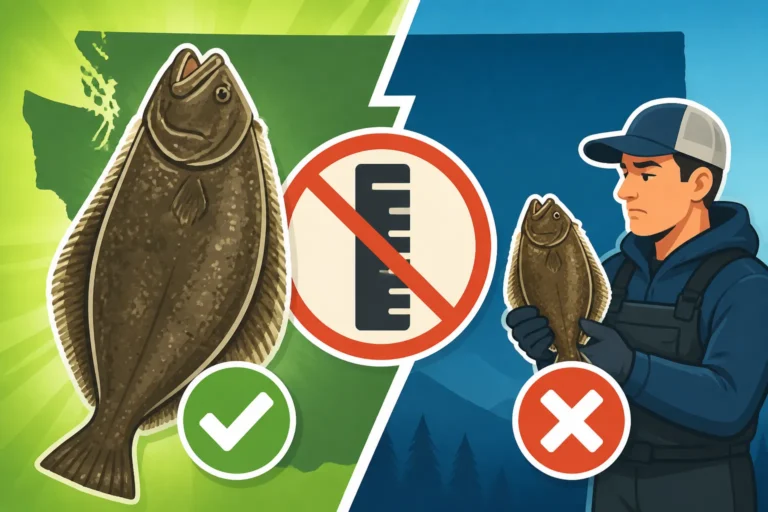
- Halibut: This highly sought-after flatfish is managed with very limited seasons, often only a few days a year, specific depth restrictions, and strict bag limits. Halibut seasons are typically announced well in advance due to their popularity and conservation needs.
- Crabbing: Dungeness crab is a favorite target in Puget Sound. Regulations specify open seasons, daily limits, minimum sizes, and require the release of all female crabs. You'll also need a separate shellfish endorsement.
- Clams and Oysters: Various clam species (razor clams, Manila clams, butter clams) and oysters are available, each with specific seasons, harvest limits, and designated beaches.
- Shrimp: Spot shrimp are particularly prized in Hood Canal and other deepwater areas, with very short, intense seasons and strict limits.
For all shellfish, you will need a Catch Record Card, which requires you to log your harvest accurately. This is a vital tool for WDFW to monitor populations and set future seasons.
Dates, Seasons, and Emergency Rule Changes
The dates in the WDFW pamphlet aren't just suggestions; they are hard deadlines and opening windows. Misunderstanding or overlooking a date can completely derail a fishing trip, or worse, lead to a violation. Furthermore, Washington fisheries are highly dynamic, meaning the rules can change after the pamphlet is printed.
Annual Seasons vs. In-Season Adjustments
The main annual pamphlet, usually published in late June or early July, provides the framework for the upcoming fishing year. It lists the anticipated opening and closing dates for various species in different areas. However, for many popular fisheries, especially those targeting migratory species like salmon and steelhead, these dates are often preliminary and subject to in-season adjustments.
- Anticipated Seasons: The pamphlet will show a calendar for many fisheries, outlining what is expected to be open. For example, it might state "Marine Area 9: Salmon open July 15 – September 30."
- Real-time Management: Due to factors like actual fish returns (which can be higher or lower than forecast), harvest quotas being met, or unforeseen environmental conditions (like low water flows or high water temperatures), the WDFW often needs to modify these seasons. This is where "in-season adjustments" come into play. A scheduled September 30 closure might be moved to September 15 if the quota is reached early, or a fishery might be unexpectedly extended if returns are strong. This makes checking for current conditions critical. Our comprehensive guide on Washington Sport Fishing Seasons and Emergency Closures offers a broader look at this topic.
How to Check for Emergency Rule Changes in Washington
This is perhaps the most vital piece of advice for any Washington angler: always check for emergency rule changes before you head out. This cannot be stressed enough. Relying solely on the printed pamphlet without checking for updates is a recipe for disappointment or a citation.
The WDFW provides several reliable ways to access the most current information:
- WDFW Website: The official WDFW website has a dedicated "Emergency Rules" page. This is updated frequently and is the authoritative source. You can usually filter by region, river, or marine area to find relevant updates.
- Email Subscriptions: Sign up for WDFW's email alerts. They send out notifications whenever a significant rule change occurs for fisheries you're interested in.
- Media Releases: WDFW issues news releases for major changes, which are often picked up by local news outlets and fishing forums.
- MyWDFW App: The official mobile app often integrates real-time rule changes directly, making it an excellent tool to have on the water.
Make it a habit to check these sources the day before or the morning of your fishing trip. A few minutes of checking could save you hours of driving and a potential fine. Understanding What an Emergency Rule Change Actually Modifies can further help you process these updates quickly.
The Role of Test Fisheries in Setting Seasons
It might seem arbitrary when seasons are cut short or unexpectedly opened, but often, these decisions are based on highly scientific methods, including test fisheries. These are carefully conducted fishing operations where WDFW staff or contractors fish a specific area (like the mouth of the Columbia River or various locations in Puget Sound) to sample fish populations.
The data collected from these test fisheries — such as the number of fish caught, their species composition, and whether they are wild or hatchery-origin — provides critical, real-time insights into the size and health of a run. This information is then used to forecast how many fish are expected to enter various rivers or marine areas, and how much harvest can be allowed while still meeting conservation goals and tribal allocations. If test fishery counts come in lower than expected, seasons might be reduced or closed to protect the run. Conversely, strong returns might lead to extensions or increased limits. This continuous monitoring is a cornerstone of responsible fishery management in Washington.
Licenses, Endorsements, and Catch Record Cards
Beyond understanding where and what to fish, you need to ensure you have the proper authorization. Washington's licensing system, while logical, has several components that anglers often overlook, leading to last-minute scrambles or, again, potential violations.
Matching Your License to Your Fishing Plans
The first step is securing the correct fishing license. Washington offers a variety of options, and your choice depends entirely on your fishing intentions:
- Freshwater vs. Saltwater vs. Combination: If you plan to fish only lakes and rivers, a freshwater license is sufficient. If you're exclusively targeting Puget Sound or the Pacific Ocean, a saltwater license is what you need. Most anglers, however, opt for a combination license, which covers both freshwater and saltwater fishing, offering maximum flexibility. Our guide on Freshwater vs Saltwater vs Combination Licenses in Washington delves into these choices.
- Annual vs. Short-Term: For residents, an annual license is often the most cost-effective if you plan to fish more than a few days a year. Non-residents, or those just visiting for a short trip, might opt for a One-Day Washington Fishing License Cost or a Three-Day Washington Fishing License Cost. Remember, residents and nonresidents have different rules and costs for licenses, as explored in Washington Fishing License Guide for Nonresidents.
- Special Considerations: Don't forget categories like youths (check Do Kids Need a Fishing License in Washington?), seniors (Do Seniors Need a License to Fish in Washington?), or disabled veterans, who may have specific license requirements or exemptions.
Always purchase your license from an authorized WDFW vendor, either online, through the MyWDFW app, or at a physical store. This ensures your license is legitimate and properly registered.
The Columbia River Salmon and Steelhead Endorsement, Explained
If you plan to fish for salmon or steelhead in the mainstem Columbia River, or in tributaries upstream of the river's mouth, you'll need more than just a regular fishing license. This is where the Columbia River Salmon and Steelhead Endorsement comes in.
This additional endorsement is a specific requirement for anglers targeting these species in the Columbia River management zone. It's a critical component for funding conservation efforts and managing these shared resources with Oregon and tribal nations. Even if you have a combination license, you still need this specific endorsement to legally retain salmon or steelhead from the Columbia system. For a full breakdown of this requirement, our article titled Washington's Columbia River Salmon and Steelhead Endorsement, Explained is an invaluable resource. Failing to have this endorsement, even if you have all other licenses, can result in a violation if you're found with a salmon or steelhead from these waters.
The Washington Catch Record Card and What It Requires
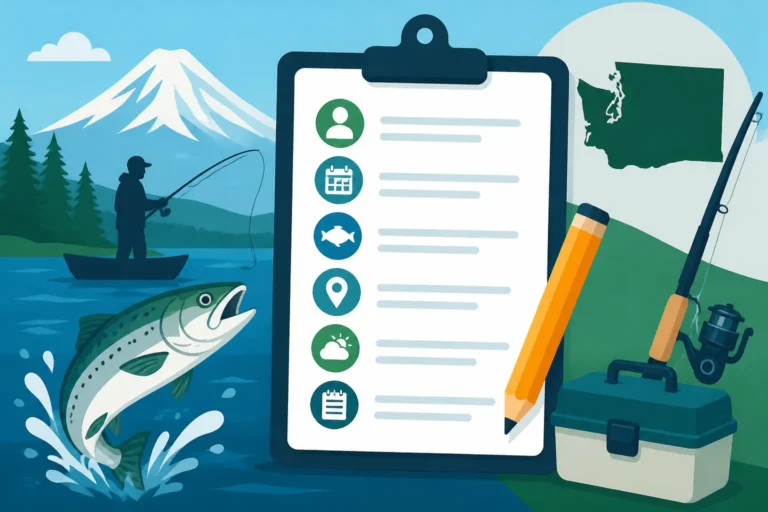
For certain species, particularly salmon, steelhead, and sturgeon, as well as shellfish like Dungeness crab and shrimp, a Catch Record Card (CRC) is absolutely mandatory. This is a separate physical card (or increasingly, an electronic one via the Fish Washington app) that you must possess while fishing for these species.
- Purpose: The CRC is a vital tool for WDFW to monitor harvest rates, track fish populations, and manage quotas. It allows biologists to gather critical data on how many fish are being caught and from what areas.
- Immediate Recording: The most crucial rule for a CRC is to immediately record any salmon or steelhead you keep. This means before you even move your boat or leave the bank. For shellfish, you generally record your catch at the end of your trip, before leaving the harvest area. Failing to immediately record a kept fish is a serious violation. Our guide on The Washington Catch Record Card and What It Requires details all the specifics.
- Reporting: At the end of the year (or when your card is full), you must return your CRC to WDFW, even if you didn't catch anything. This data helps them plan for future seasons. Increasingly, electronic reporting via the MyWDFW app is becoming an option, simplifying the process. Learn how to navigate this process with our guide on How to Fill Out a Washington Catch Record Card.
Think of your CRC as your personal fish logbook. It’s not just a formality; it’s a critical part of fisheries management that every angler must take seriously. Carrying your Washington fishing license: paper, phone or the MyWDFW App is highly recommended for ease of access and to ensure compliance.
Common Pitfalls and How to Avoid Them
Even with the best intentions, anglers can still run afoul of regulations due to common misunderstandings or assumptions. Being aware of these typical pitfalls can help you avoid them and enjoy a smoother, stress-free fishing experience.
Misinterpreting "Open" Seasons
One of the most frequent mistakes anglers make is assuming that if a general season is "open" for a species, it means they can fish for it anywhere. This is a dangerous assumption in Washington.
For example, the pamphlet might state "Salmon open in Marine Area 10." While this sounds straightforward, it doesn't mean all salmon species are open, or that there aren't specific sub-areas or gear restrictions. There might be a daily limit of one hatchery Chinook, while wild Coho must be released, and Chum are completely closed. Furthermore, "open" could refer to a specific sub-area within Marine Area 10, with other parts remaining closed. Always read the fine print. An "open" season is just the first filter; you then need to apply the species-specific rules, gear rules, and any emergency closures for that precise location and time. It's about being diligent and understanding that "open" is rarely a blanket statement.
Ignoring Boundary Markers
Washington's regulations are highly localized, often defining fishing areas by very specific geographic boundaries. These can be bridges, power lines, highway markers, river confluences, imaginary lines drawn between points on a map, or even tide lines. Ignoring these boundary markers is a significant risk.
Imagine fishing a river that's open for hatchery steelhead upstream of a certain bridge, but closed for all fishing downstream of it. Or a lake where boat fishing is allowed, but a specific section near a spawning tributary is restricted to bank fishing only. If you're not paying attention to these physical or charted markers, you could easily drift or cast into a closed zone without realizing it. Always cross-reference the written description in the pamphlet with a physical map, a marine chart, or even a GPS app on your phone. Knowing your precise location relative to the stated boundaries is non-negotiable for staying legal.
Assuming Rules Are Static
This is perhaps the most significant pitfall in Washington fishing. As mentioned, the WDFW pamphlet is an annual guide, but many of its listed seasons are initial forecasts and highly susceptible to emergency rule changes. Assuming that what you read in the pamphlet in July will still be valid in October is a risky gamble.
Fishery managers are constantly monitoring fish runs, harvest rates, and environmental conditions. If a salmon run comes in weaker than expected, or if anglers hit a quota much faster than anticipated, a fishery can be closed with little notice. Conversely, if a run is exceptionally strong, an extension might be granted. This dynamic management is essential for conservation and ensuring sustainable fisheries, but it places the responsibility squarely on the angler to stay informed. Always check the WDFW's emergency rules page or app before every single fishing trip, regardless of how recently you last checked. It takes only a few minutes and can save you a lot of headache, heartache, and potential legal trouble. The rules are a living document, constantly adapting to the real world of fish and their environment.
Disclaimer
Please remember that this guide is for informational purposes only and should not be considered legal advice. Fishing regulations in Washington are complex and subject to frequent changes. Always consult the most current official Washington Department of Fish and Wildlife (WDFW) Sport Fishing Regulations Pamphlet and check for emergency rule changes directly on the WDFW website or via their official app before engaging in any fishing activity. It is the angler's sole responsibility to understand and comply with all applicable regulations.