White Sturgeon on Washington’s Columbia River
There's something truly primal about the thought of hooking into a white sturgeon on Washington's mighty Columbia River. These magnificent, prehistoric fish are legendary for their size and fighting power, but the mystique often comes with a bit of confusion, especially when it comes to the rules for pursuing them. Many anglers dream of encountering one of these river giants, only to be intimidated by the complex regulations that seem to change or be interpreted differently depending on who you talk to. This comprehensive guide is here to cut through the confusion, helping you understand the biology, regulations, and best practices for fishing white sturgeon on the Columbia, ensuring you have a memorable and responsible experience.
The Majestic White Sturgeon of the Columbia River
The white sturgeon (Acipenser transmontanus) isn't just another fish in the river; it's a living fossil, an ancient leviathan that has roamed these waters for millions of years. For anglers in Washington, the Columbia River is synonymous with these incredible creatures, offering a chance to connect with a true river monster. Their sheer size, incredible longevity, and unique appearance make them a bucket-list species for many, but also demand a deep respect for their conservation.
What Makes White Sturgeon So Unique?
Imagine a fish that can outlive you, grow longer than a car, and weigh more than a motorcycle. That's a white sturgeon. They are the largest freshwater fish in North America, with some individuals exceeding 15 feet in length and living for over a century. These aren't speedy, acrobatic fighters; they're powerful, stubborn tanks, often described as "pulling like a tractor" rather than running like a salmon. Their bodies are covered in bony plates called scutes instead of scales, giving them an armored, primitive look. They use their sensitive barbels (whiskers) around their mouth to forage for food on the river bottom, sucking up everything from clams and worms to smaller fish. This unique combination of size, longevity, and ancient physiology truly sets them apart from almost any other fish you might encounter.
They grow incredibly slowly, taking many years to reach maturity, which is a major factor in their vulnerability and why conservation efforts are so crucial. A sturgeon you catch today might have been alive during your grandparents' childhood, a silent witness to decades of river history. This slow growth means that every mature fish is a significant contributor to the population's future, making responsible angling practices absolutely vital.
The Columbia River's Sturgeon Legacy
For centuries, white sturgeon thrived in the Columbia River basin, forming a vital part of the ecosystem and a significant resource for indigenous peoples and early settlers alike. Historical accounts speak of rivers teeming with sturgeon, some so large they were difficult to land. However, like many long-lived, slow-reproducing species, they are highly susceptible to environmental changes and overfishing. The construction of dams along the Columbia River system, while providing hydropower, significantly altered their habitat, blocking migration routes to spawning grounds and changing water flows. This habitat fragmentation and historical harvest pressure led to declines in many sturgeon populations, particularly in the lower and middle Columbia.
Today, thanks to stringent regulations and ongoing conservation efforts by agencies like the Washington Department of Fish and Wildlife (WDFW), sturgeon populations in some areas of the Columbia are showing signs of recovery, while others remain a concern. This fluctuating health is precisely why understanding and adhering to current rules is not just a suggestion, but a shared responsibility among all anglers. The Columbia River remains one of the best places in Washington to target these magnificent fish, offering a glimpse into a truly wild and ancient world, but it's a privilege that comes with a duty to protect them for future generations.
Identifying White Sturgeon and Their Cousins
Before you even cast a line, knowing your fish is paramount, especially with sturgeon. There are two primary sturgeon species you might encounter in Washington's waters: the white sturgeon and the green sturgeon. While both are impressive, green sturgeon are federally protected and must be released immediately and unharmed. Misidentifying a green sturgeon could lead to serious legal consequences, so it's vital to know the difference.
Key ID Features: Plates, Scutes, and Mouths
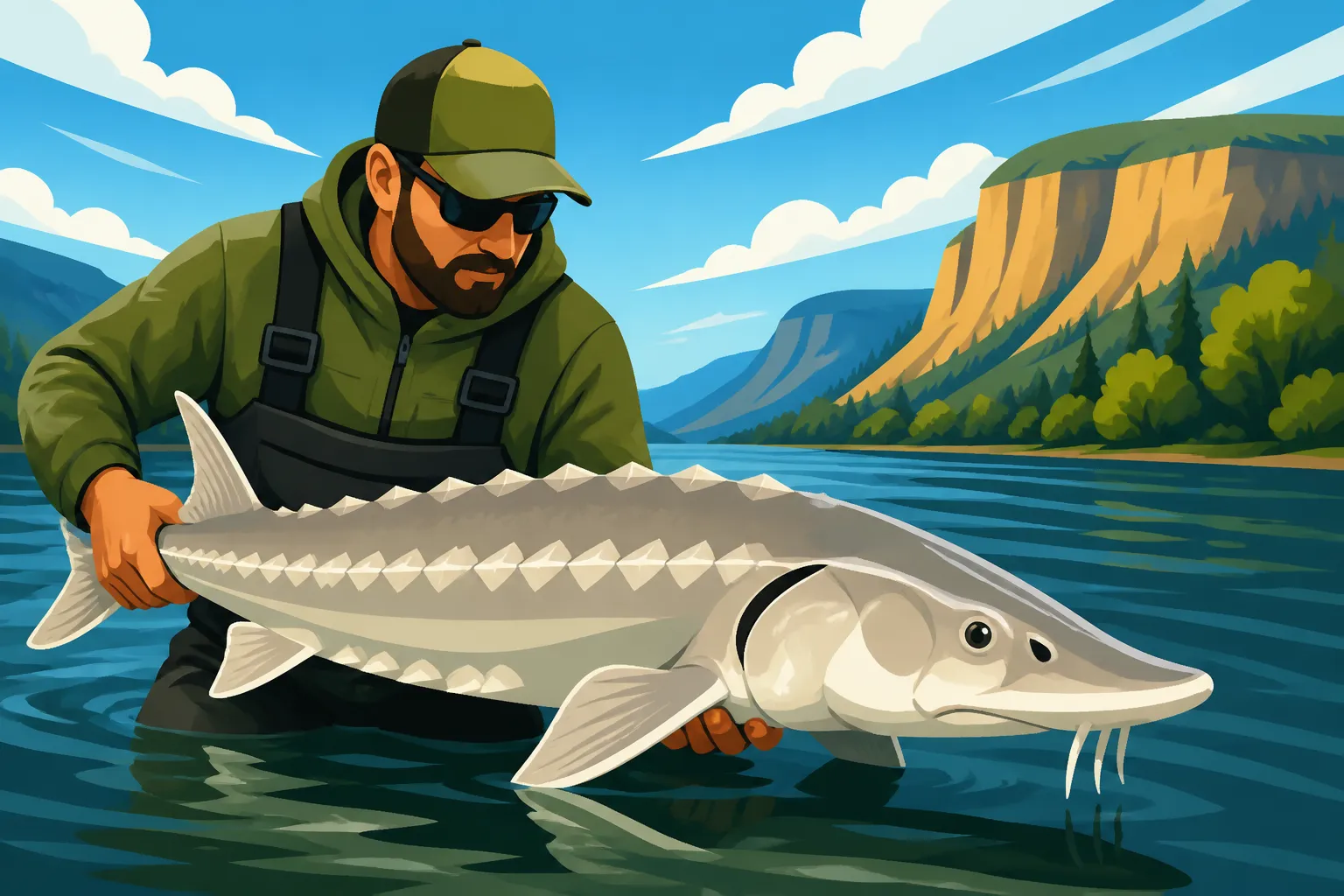
White sturgeon have a distinctive appearance that, once you learn it, is hard to mistake. They have five rows of bony plates, or scutes, along their body: one down the back, one on each side, and two along the belly. These scutes are generally smoother and less pointed on older, larger white sturgeon, but can be quite sharp on younger fish. Their coloration is typically gray to brownish-gray on top, fading to a lighter, often white, belly. This white underside is where they get their name!
Look closely at their mouth and barbels. White sturgeon have four barbels positioned closer to the tip of their snout, in front of their mouth. Their mouth itself is protrusible, meaning it can extend outwards like a vacuum cleaner, allowing them to suck up food from the riverbed. Crucially, they typically do not have a scute in front of their anus, which is a key differentiator from green sturgeon. While these fish may look intimidating, understanding these simple physical traits is your first step to responsible angling.
White Sturgeon vs. Green Sturgeon
Distinguishing between white and green sturgeon is absolutely critical for any angler on the Columbia River. A quick glance might not reveal the differences, but there are clear identifying marks that can prevent a costly mistake.
The most reliable differentiator is the presence or absence of a scute in front of the anus. Green sturgeon always have a scute there, while white sturgeon do not. This is a detail you'll need to confirm if there's any doubt, and it often requires a quick, careful roll of the fish to visually inspect.
Beyond that key difference, green sturgeon generally have:
- More prominent and sharper scutes, even on larger fish, giving them a more rugged, armored appearance.
- Distinctive olive-green coloration on their back and sides, often with prominent lateral stripes. White sturgeon are more uniformly gray or brownish.
- Barbels closer to their mouth and further back from the tip of their snout compared to white sturgeon.
- Shorter, more conical snouts than white sturgeon.
Here’s a quick comparison to help you remember:
| Feature | White Sturgeon | Green Sturgeon |
|---|---|---|
| Coloration | Gray to brownish-gray back, white belly | Olive-green back, often with prominent stripes |
| Scutes | Generally smoother, less pointed on large fish | More prominent and sharper scutes |
| Scute in front of anus | ABSENT | PRESENT |
| Barbels | Closer to snout tip, in front of mouth | Closer to mouth, further from snout tip |
| Snout Shape | Longer, somewhat flattened | Shorter, more conical |
If you ever catch a sturgeon and are unsure of its identity, err on the side of caution and release it immediately. Remember, green sturgeon are protected, and knowing the difference could save you from a hefty fine and contribute to critical conservation. How to Tell a Halibut From a Flounder covers another critical identification skill for saltwater anglers.
Understanding Washington's Sturgeon Regulations
Fishing for white sturgeon in Washington, particularly on the Columbia River, isn't a free-for-all. It's a highly regulated fishery, and for good reason. These long-lived, slow-growing fish need our protection to thrive. Regulations are designed to manage populations sustainably, often prioritizing catch-and-release to ensure the species' future. It's crucial for every angler to know and respect these rules before heading out, as they are strictly enforced.
Why Catch-and-Release is the Rule for Sturgeon
For the vast majority of fishing opportunities on the Columbia River, white sturgeon fishing is strictly catch-and-release. This isn't just a suggestion; it's a cornerstone of sturgeon conservation. The primary reason for this approach stems from the sturgeon's unique life history. They mature incredibly slowly, often not reproducing until they are 15-20 years old, and can live for well over 100 years. This means that a breeding-age sturgeon represents decades of survival and growth, and is invaluable to the population's ability to sustain itself. Removing even a few mature fish can have a disproportionately large impact on future generations.
In areas where populations are struggling or recovering, catch-and-release rules protect the existing breeding stock, allowing them to reproduce over many years. It's a proactive measure to ensure that these magnificent fish continue to grace the Columbia River for generations to come. While some specific areas or seasons might occasionally have a limited retention fishery, it's the exception, not the rule. Always check the current WDFW regulations for the specific section of the river you plan to fish, as rules can and do change. You can learn more about Is Sturgeon Fishing Catch-and-Release Only in Washington? and Why Is Sturgeon Fishing Catch-and-Release in Washington? in our other guides.
The Elusive Slot Limit and Its Importance
While general white sturgeon fishing on the Columbia is often catch-and-release, certain limited retention fisheries might implement a "slot limit." A slot limit means you can only keep fish that fall within a very specific size range – for example, between 38 and 54 inches fork length (measured from the tip of the nose to the fork of the tail). Fish smaller than the minimum size and larger than the maximum size must be released unharmed.
Why a slot limit? It's a sophisticated conservation tool designed to protect the most vulnerable and most valuable segments of the sturgeon population.
- Protecting Juveniles: By requiring the release of smaller fish, the slot limit ensures that young sturgeon have a chance to grow, mature, and contribute to future spawning cycles. They need time to develop into reproductive adults.
- Protecting Breeding Stock (Larger Fish): The upper end of the slot limit protects the largest, oldest, and most reproductively successful sturgeon. These "brood stock" fish are vital for producing the greatest number of healthy offspring. They've proven their ability to survive and reproduce, making them crucial for genetic diversity and overall population health.
When a retention fishery is open, it's typically for a very short duration and in specific areas to allow for a limited harvest of the "middle" sized fish, which are generally abundant enough to sustain some pressure without impacting the population's long-term health. Knowing the precise measurement requirements and ensuring you have a legal measuring device is non-negotiable if you're fishing in a retention slot limit area. Slot Limit for Columbia River Sturgeon goes into greater detail about how these limits function.
Gear Restrictions and Best Practices for Release
To ensure the highest survival rate for released sturgeon, specific gear restrictions and handling practices are often in place. One of the most common and critical requirements is the use of single-point barbless hooks. Barbless hooks minimize tissue damage, making it much easier to remove the hook cleanly and quickly, which is crucial for the fish's survival after release. Using barbed hooks, even by accident, can lead to a citation. If you're looking to stock up on reliable barbless hooks, you can find a wide variety of options, along with reviews from other anglers, on Amazon.
Beyond hooks, practicing proper handling is paramount:
- Minimize Fight Time: Use appropriate heavy tackle to land the fish as quickly as possible, reducing stress and exhaustion.
- Keep Fish in Water: Whenever possible, keep the sturgeon in the water while unhooking it and taking measurements. Lifting large sturgeon completely out of the water, especially by the tail or head, can cause internal organ damage. If you absolutely must bring it partially out for a quick photo, support its entire body horizontally.
- Wet Hands: Always wet your hands before touching the fish to protect its slime coat, which is vital for disease prevention.
- Use Tools: Carry needle-nose pliers or a hook remover to quickly and safely extract hooks. A good pair of jaw spreaders can also be incredibly helpful for larger fish. These essential tools are readily available on Amazon and should be part of every sturgeon angler's kit.
- Revive If Necessary: If a sturgeon appears sluggish before release, hold it gently upright in the current, allowing water to flow over its gills, until it regains strength and swims away on its own.
Adhering to these practices not only complies with regulations but also embodies the ethical responsibility every angler shares in protecting this incredible species.
Prime Spots and Techniques for Columbia River Sturgeon
The Columbia River is a massive system, and while white sturgeon are found throughout, certain areas are more productive than others. Understanding where these fish tend to congregate and the most effective ways to target them will significantly increase your chances of success. It's not just about luck; it's about strategy, location, and presentation.
Top Columbia River Sturgeon Haunts
White sturgeon are bottom dwellers, so logic dictates you'll find them where food collects and where they can rest out of strong currents. On the Columbia, this often means deeper holes, eddy lines, and the calm side of current seams. These areas provide both refuge and a buffet of their favorite bottom-dwelling snacks.
Here are some general areas along the Columbia that are known for sturgeon fishing:
- Lower Columbia River (below Bonneville Dam): This stretch, including areas near Vancouver, Longview, and downstream towards Astoria, is incredibly popular. The lower river benefits from tidal influence and proximity to the ocean, offering robust populations and some truly gargantuan fish. Look for deep channels and the mouths of tributaries like the Cowlitz and Lewis Rivers, where food sources are abundant. Many of the larger charter operations focus on this section. Fishing the Columbia River in Washington: A Complete Overview details more about this region.
- Above Bonneville Dam (The Gorge and Mid-Columbia): While Bonneville Dam created a barrier, sturgeon populations persist in the reservoirs above it, such as the Bonneville Pool and The Dalles Pool. These areas are often managed differently, so checking specific zone regulations is critical. Here, you'll still find deep sections, especially near bedrock formations and underwater ledges. Fishing here might involve more precise boat positioning to stay on specific structure.
- Areas Around Major River Bends and Confluences: Wherever the river changes direction or where a significant tributary joins the Columbia, you'll often find deeper water and current breaks that hold sturgeon. The convergence of currents can create excellent feeding grounds.
Always consult up-to-date WDFW fishing regulations for specific area closures or restrictions before planning your trip. What's open and available for sturgeon one season might be closed the next, or have different rules depending on whether you're above or below certain dams. For those who prefer to stay on solid ground, there are some Best Bank Fishing Spots on the Columbia River where you might have a shot at sturgeon too.
Baits and Rigging for Success
Sturgeon are opportunistic scavengers with an incredible sense of smell, making bait choice paramount. Fresh, oily, and smelly baits are generally the most effective. The key is to present your bait on the bottom, directly in the sturgeon's feeding zone, and keep it from washing away in the strong current.
Preferred Baits:
- Smelt: Fresh or brined smelt are arguably one of the most effective sturgeon baits, especially in the lower Columbia. Their oiliness and strong scent are irresistible.
- Herring: Similar to smelt, fresh or brined herring chunks work wonders.
- Sand Shrimp: Live or dead sand shrimp are excellent, particularly for smaller to medium-sized sturgeon.
- Squid: Strips of squid are tough, stay on the hook well, and have a good scent profile.
- Salmon Roe/Carcass: If allowed (check regulations!), salmon carcasses or cured salmon roe can be extremely effective, especially during salmon runs.
Rigging for Success:
A heavy-duty bottom rig is essential to keep your bait anchored in the current. The most common setup is a sliding sinker rig:
- Main Line: You'll need heavy line, often 60-100 lb test braided line, for its strength and sensitivity.
- Sliding Sinker: Thread an egg sinker (often 8-16 oz or more, depending on current) onto your main line. The sliding nature allows the sturgeon to pick up the bait without feeling the weight of the sinker immediately.
- Bumper Bead: Place a plastic bead below the sinker to protect your knot.
- Swivel: Tie a strong swivel (like a barrel or McMahon swivel) to the end of your main line.
- Leader: To the other end of the swivel, tie a stout monofilament or fluorocarbon leader, typically 18-36 inches long, in the 50-80 lb test range. The leader provides abrasion resistance against the sturgeon's rough mouth and the river bottom.
- Hook: At the end of the leader, tie on a large, single-point barbless hook. Sizes typically range from 5/0 to 9/0, depending on your bait. Circle hooks are often preferred because they tend to hook fish in the corner of the mouth, reducing deep hooking and improving release survival. If you're wondering Is Bait Allowed on the Columbia River?, the answer for sturgeon is generally yes, but always confirm the specifics.
Presentation is key. Cast your rig upstream and allow it to settle to the bottom. Let it sit for a while, as sturgeon can take their time finding the bait. When you feel a bite, don't set the hook immediately like you might with a salmon. Instead, allow the fish to take the bait and swim off with it, then reel down until your rod loads up, and apply steady pressure. This method helps ensure the fish has the hook properly, especially with circle hooks. For more detailed instructions on targeting these giants, check out How to Target Sturgeon on the Columbia.
Ethical Angling and Conservation for Sturgeon
Beyond simply following the rules, responsible angling for white sturgeon on the Columbia River involves an ethical commitment to the well-being of these magnificent fish. Because almost all sturgeon fishing is catch-and-release, minimizing stress and ensuring the highest possible survival rate for every fish you encounter is part of the sport. It's about respecting the creature and playing an active role in its conservation.
Minimizing Stress and Maximizing Survival
Every interaction an angler has with a sturgeon carries the potential for stress or injury. Our goal as responsible anglers is to minimize that impact, ensuring the fish swims away strong and healthy.
Here are some key practices:
- Fight Smart, Not Long: Use appropriately heavy gear that matches the potential size of the sturgeon you're targeting. This isn't the time for ultralight finesse gear. A prolonged fight exhausts the fish, increasing lactic acid buildup and reducing its chances of survival after release. A good stout rod and reel combo, which you can research and purchase on Amazon, will help you land fish efficiently.
- Leave Them in the Water: This is perhaps the most crucial rule for large sturgeon. Their internal organs are not designed to support their immense weight out of water. Lifting a large sturgeon, especially vertically by the head or tail, can cause severe internal damage that might not be immediately apparent but can lead to delayed mortality. If a photo is desired, try to take it with the fish partially submerged, with its body fully supported. For truly large fish, a careful measurement in the water is best, even if it means no "grip and grin" photo.
- Quick Unhooking: Have your tools ready – long-nose pliers, hook removers, and jaw spreaders. Practice with them if you're new. The faster you can unhook the fish, the less time it's stressed.
- Avoid Beaching on Rough Surfaces: If you must bring a sturgeon to shore for measurement or unhooking, choose a soft, sandy, or muddy bank. Avoid dragging them over rocks or gravel, which can scrape off their protective slime coat and damage their scutes.
- Gentle Revival: If a sturgeon seems lethargic after release, hold it gently by the tail and head, pointing it into the current in calm water. Allow water to flow over its gills until it kicks its tail vigorously and swims away on its own. Never just toss a tired fish back into a strong current. This delicate approach is key to ensuring that the fish has the best chance of recovering fully.
The Future of Columbia River Sturgeon
The future of white sturgeon in the Columbia River truly depends on a collective effort between fisheries managers, researchers, and, most importantly, anglers. Every time you cast a line for sturgeon, you are participating in a fishery that is actively managed for sustainability. Your adherence to regulations, your commitment to ethical handling, and your understanding of the species' vulnerability all contribute to its long-term survival.
Fisheries agencies use angler reports, catch data, and scientific surveys to monitor sturgeon populations. Understanding concepts like Annual Limits and How Washington's Catch Reporting Works or Test Fishery Counts and How They Drive Salmon Openings for other species can give you insight into the complex science behind these regulations. By practicing responsible catch-and-release, we help ensure that white sturgeon can continue to grow to immense sizes, reproduce successfully, and remain a thrilling and vital part of Washington's natural heritage. These fish have weathered millennia; with our conscious effort, they can continue to thrive for many more.
Disclaimer
This article is for general informational purposes only and does not constitute professional advice. Laws, prices and regulations vary by location and change over time. Consult a qualified professional for guidance on your specific situation.