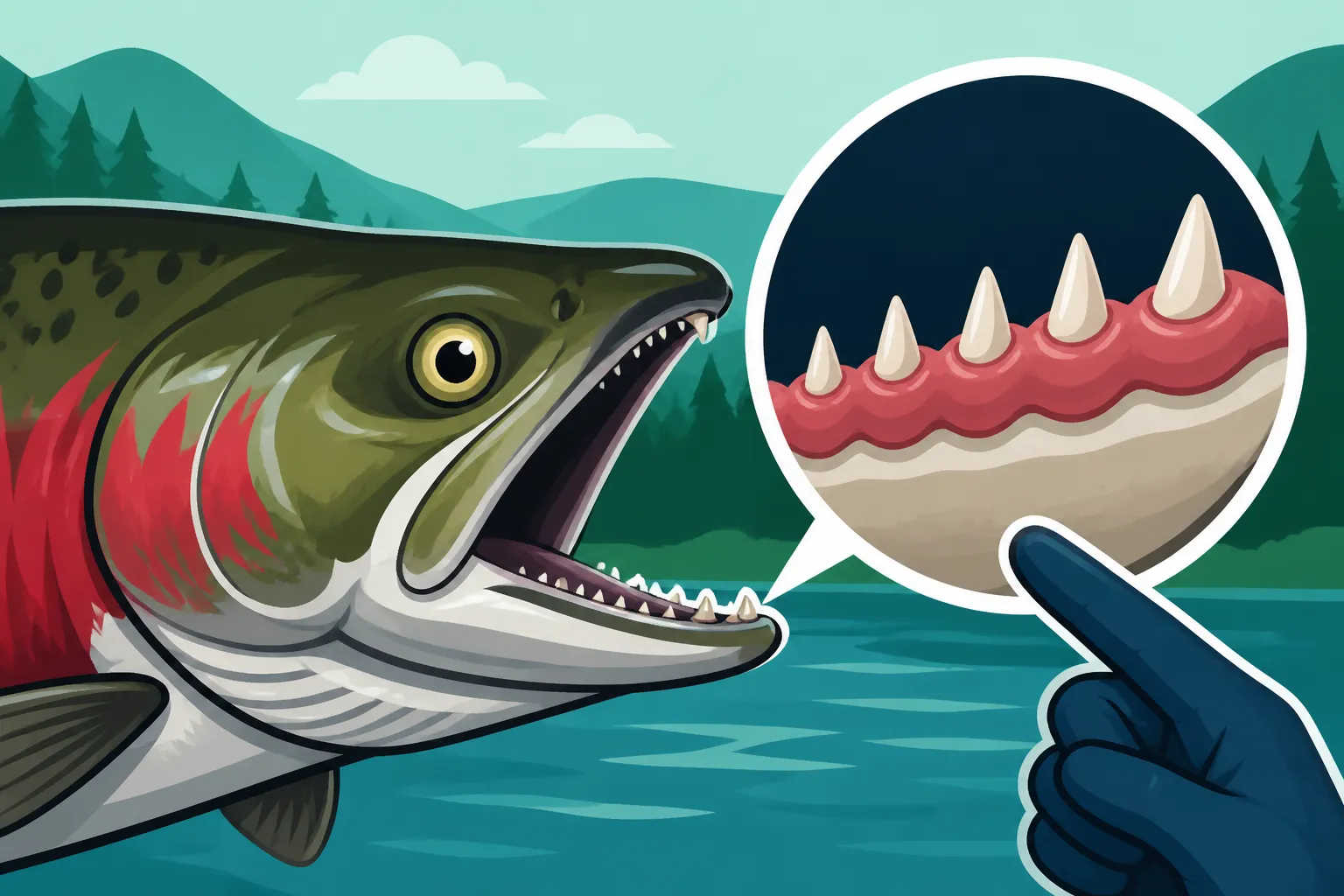
How to Identify a Chum Salmon’s Teeth
There's nothing quite like the thrill of feeling that unmistakable tug on your line, only to reel in a magnificent salmon from Washington's incredible waters. But then comes the moment of truth: what exactly have you caught? Many anglers, especially those new to our state's diverse salmon runs, often grapple with identifying species accurately, and chum salmon, with their fascinating dental transformations, can be particularly tricky. This guide is here to demystify the distinct teeth of chum salmon, offering clear, practical advice on how to recognize them, not just for curiosity's sake, but for adherence to local regulations and a deeper appreciation of these remarkable fish.
The Unique Dental Signature of Chum Salmon
Chum salmon, often affectionately called "dog salmon" due to their impressive canine-like teeth during spawning, possess a dental structure that is truly their own. Unlike some other salmon species whose teeth remain relatively consistent throughout their life cycle, a chum's mouth undergoes a dramatic metamorphosis, making tooth identification a critical, albeit sometimes intimidating, skill for Washington anglers.
Initial Impression: Sparse and V-Shaped
When you first encounter a chum salmon in its prime, fresh from the ocean or early in its freshwater migration, its teeth might not immediately scream "dog." In this initial phase, often referred to as their bright or ocean phase, chum salmon tend to have teeth that are relatively small, peg-like, and set quite far apart. They are present on both the upper and lower jaws, but they won't feel like a dense, sharp row. What's particularly telling, however, is their arrangement. If you gently open a fresh chum's mouth and look down, you'll often notice that the teeth on the roof of the mouth (vomerine teeth) are either absent or very few, and any present are small and weak, often appearing in a very subtle "V" shape or scattered.
This sparse arrangement is a key identifier. Many other salmon species, like coho or even younger Chinook, might have more uniform or more numerous teeth. For the chum, it's this relatively "empty" or sparsely toothed feel, especially in the roof of the mouth, that provides the first clue. Imagine running your finger (carefully!) along the roof of its mouth; it would feel smoother than a Chinook or coho. This is why paying attention to the initial impression, even before the really gnarly teeth show up, is so important for accurate identification. How to Identify a Chum Salmon will give you more context on their general appearance.
The Development of Kype and Canine-like Teeth in Spawners
Here's where the "dog salmon" nickname truly earns its stripes. As chum salmon move further into their spawning migration and begin to undergo their spectacular physical transformation, their teeth, particularly those of the males, change dramatically. Their jaws elongate and curve, forming a pronounced "kype" – that hooked, often grotesque, upper jaw that is so characteristic of spawning salmon. But it's not just the shape of the jaw that changes; the teeth themselves become incredibly formidable.
The small, scattered teeth of the ocean phase grow into long, sharp, often curved canines. These aren't just for show, though they certainly make for an impressive sight; they're believed to be used in territorial disputes and battles for mates on the spawning grounds. You'll see several pairs of these pronounced, fang-like teeth, especially towards the front of the mouth. They can be incredibly sharp and surprisingly large, giving the fish a truly fearsome appearance. Females also develop more prominent teeth, though usually not to the same exaggerated degree as the males. If you're fishing a river system in Washington during the fall chum run, like those in Puget Sound or coastal rivers, you'll undoubtedly encounter these toothy specimens. It's a striking example of nature's adaptations, making them much easier to identify than their ocean-bright counterparts.
Distinguishing Chum Teeth from Other Washington Salmon Species
Washington is a salmon angler's paradise, but that also means you need to be sharp when identifying your catch. Misidentifying a salmon can lead to inadvertently violating regulations, not to mention missing out on the unique characteristics of each species. Knowing the dental differences between chum and their cousins is a crucial part of that puzzle.
Comparing Chum Teeth to Chinook and Coho
Let's talk about the big players. Chinook, or "King" salmon, and coho, or "Silver" salmon, are often caught in the same waters as chum, making accurate differentiation vital.
-
Chinook Salmon (Kings): Chinook salmon, even in their spawning phase, rarely develop the extreme kype and long, recurved canine teeth of a spawning chum. Instead, Chinook teeth are generally robust, strong, and relatively uniform in size. They're usually present along both jaws and, crucially, often on the tongue. If you run your finger over the gums and then feel the tongue of a fresh Chinook, you'll likely feel a rough, sandpaper-like texture or even distinct teeth on the tongue itself. The roof of a Chinook's mouth also tends to have more prominent teeth than a chum, often feeling rougher throughout. Their gums are typically dark, a feature that distinguishes them from the lighter gums of coho and chum, though gum color isn't a dental feature. Chinook Salmon: Washington's King of Fish delves deeper into their characteristics.
-
Coho Salmon (Silvers): Coho salmon, especially bright, ocean-run fish, have a more numerous and often sharper set of teeth than an early-run chum. Their teeth are usually fairly small and uniform in size, creating a more continuous, though still sharp, edge along the jawline. The key differentiator for coho, however, is almost always the presence of teeth on the tongue. If you can clearly feel distinct teeth on the tongue, even small ones, it's a very strong indicator of a coho. Coho also have consistently white or light-colored gums, a helpful visual cue. Unlike chum, coho don't develop the same dramatic kype or massive, fang-like teeth as they approach spawning, though their jaws may become slightly more pronounced.
To summarize these differences, here's a quick comparison:
| Feature | Chum Salmon (Ocean/Early Run) | Chum Salmon (Spawning Phase) | Chinook Salmon (All Stages) | Coho Salmon (All Stages) |
|---|---|---|---|---|
| Jaw Shape | Relatively normal | Pronounced kype (hooked jaw), especially males | Robust, less kype (some males develop slight hook) | Moderate kype in males, less pronounced |
| Tooth Size | Small, peg-like | Large, prominent, often recurved canines | Robust, strong, uniform | Smaller, sharper, uniform |
| Tooth Spacing | Sparse, widely spaced | Fewer, but very distinct and spaced | Evenly spaced | More numerous, closer together |
| Vomerine Teeth (Roof) | Absent or few, weak, scattered "V" | Generally few to none, weak | Present, often strong and rough | Present, often distinct |
| Teeth on Tongue | Absent | Absent | Often present, rough to the touch | Almost always present, distinct |
| Gum Line Color | Often whitish/pale | Often whitish/pale (can darken) | Dark (black) | White or light |
The Subtle Differences from Pink and Sockeye Salmon
While Chinook and coho are often confused with chum, distinguishing chum from pink and sockeye salmon based on teeth is usually a bit easier, as these two species have significantly smaller, less imposing dental structures.
-
Pink Salmon (Humpies): Pink salmon, which return to Washington waters in odd-numbered years, are generally the smallest of the Pacific salmon. Their teeth are notoriously small, almost vestigial. Even a spawning male pink, with its dramatic dorsal hump, will have a mouth full of tiny, sharp, but not particularly large or intimidating teeth. They definitely don't develop the massive, fang-like canines seen in spawning chum. If you encounter a fish with very small, numerous teeth, it's highly unlikely to be a chum, even an early-run one. Pink Salmon: Washington's Odd-Year Run provides more information on these unique salmon.
-
Sockeye Salmon: Sockeye salmon are known for their brilliant red spawning coloration and lack of spots. Their teeth, similar to pinks, are also very small, fine, and numerous. Often described as feeling like sandpaper, sockeye teeth are present along the jawlines but never develop into anything remotely resembling the canines of a spawning chum. Even a male sockeye with a developing kype will still have these small, almost insignificant teeth. So, if you're holding a salmon with tiny, sandpaper-like teeth, it's a strong indicator it's not a chum. Sockeye Salmon Identification at Washington's Baker Lake goes into more detail about distinguishing sockeye.
By focusing on these dental characteristics, alongside other visual cues, you'll become much more proficient at identifying your catch, ensuring you're always within the bounds of Washington's specific regulations for each salmon species.
The Dramatic Transformation of Spawning Chum Teeth
The most remarkable aspect of chum salmon dentition is arguably the incredible change it undergoes as these fish transition from ocean dwellers to river spawners. It's a transformation driven by instinct and survival, and it directly impacts how their teeth look and function.
Hormonal Shifts and Physical Manifestations
The dramatic changes in a chum salmon's teeth, like its body coloration and kype development, are primarily triggered by powerful hormonal shifts as the fish approaches its spawning grounds. Once a chum enters freshwater, it ceases to feed and its body begins to reallocate resources. Energy is redirected towards developing reproductive organs, building fat reserves, and preparing for the arduous task of spawning. This includes a complete overhaul of its external appearance.
Testosterone and other hormones surge, particularly in males, leading to accelerated bone and cartilage growth in the jaws. The once small, relatively inconspicuous teeth begin to grow at an astonishing rate, becoming thicker, longer, and incredibly sharp. These aren't just cosmetic changes; they're functional. The elongated, hooked kype provides leverage and a powerful weapon for males to battle rivals for access to prime spawning females. The sharpened, fang-like teeth become crucial tools in these aggressive encounters. It's a raw, instinctual display of dominance, and the teeth are a key component of that display. This is a crucial distinction when identifying a chum, as their appearance can be vastly different depending on how far along they are in their spawning migration.
The Role of Teeth in Spawning Behavior
While salmon are famous for not feeding once they enter freshwater to spawn, their teeth still play a vital role in their ultimate goal: successful reproduction. For male chum salmon, those formidable canine-like teeth are primarily for combat. On the spawning redds (nests), male salmon engage in fierce, often brutal, battles for the right to fertilize a female's eggs. These fights can involve biting, slashing, and ramming. The enlarged, sharp teeth are perfectly adapted for gripping and tearing at opponents, deterring rivals, and establishing dominance.
You might observe spawning males with scars and nicks from these intense altercations, a testament to the effectiveness of their dental weaponry. For females, while their teeth don't develop to the same extreme degree, they still become sharper and more pronounced than their ocean-phase counterparts. This might assist in protecting their redds from other fish or even provide a slight advantage in digging and moving gravel, although the primary digging is done with their tails. Understanding this behavioral context helps you appreciate why these dental transformations occur and why they're such a clear indicator of a salmon's life stage and species.
Practical Tips for Anglers: Examining Chum Salmon Teeth
Knowing what to look for is one thing; actually getting a good look at the teeth of a freshly caught salmon is another. It requires a bit of care, the right technique, and an understanding of safety, especially when dealing with those impressive spawning chum.
Safe and Effective Examination Techniques
First and foremost, always prioritize your safety and the well-being of the fish, especially if you intend to release it.
- Secure the Fish: Before attempting to examine the mouth, ensure the fish is securely controlled. If it's a keeper, dispatch it quickly and humanely first. If it's a catch-and-release situation, minimize handling time. A net is invaluable for keeping the fish calm and contained in the water while you quickly check.
- Open the Mouth Gently: Use one hand to firmly but gently grip the fish's head just behind the gills (avoiding the gills themselves). With your other hand, you can often gently pry open the mouth. For larger, more stubborn fish, a fish gripper (like those readily available on Amazon) can be helpful for safely controlling the jaw without putting your hands too close to the teeth.
- Light Source is Your Friend: Especially on overcast days, in low light, or if the fish is deep in a net, it can be hard to see clearly. A small headlamp or even your phone's flashlight can make a huge difference in illuminating the oral cavity and revealing the subtle details of the teeth and tongue.
- Observe the Roof of the Mouth: Pay close attention to the vomerine area (the very top-front of the mouth). For chum, this area will often feel smooth or have only a few scattered, weak teeth, if any, often arranged in that slight "V" shape. Contrast this with the rougher, more toothed feel of a Chinook or coho.
- Check for Tongue Teeth: This is a critical step for distinguishing coho. Gently feel the fish's tongue. If you detect any distinct teeth on the tongue, it's almost certainly a coho. Chum, Chinook, and pink salmon typically do not have teeth on their tongues.
- Assess Overall Tooth Size and Shape: Note the size, sharpness, and spacing of the teeth on the jaws. Are they small and peg-like (early chum, pink, sockeye)? Or are they robust and evenly spaced (Chinook)? Or, for a spawning chum, are they exceptionally large, fang-like, and recurved?
- Gloves for Protection: When handling any salmon, especially spawning chum with their formidable teeth, wearing a pair of sturdy fishing gloves (many options available on Amazon) isn't just about grip; it's about protecting your hands from sharp teeth, gill rakers, and fin spines.
- Quick Release: If you're practicing catch and release, make your identification swiftly and release the fish back into the water as quickly and gently as possible to maximize its survival chances. You can learn more about proper catch and release techniques for wild fish in Catch-and-Release Rules During Wild Steelhead Closures.
When and Why Tooth ID Matters
You might wonder, why go through all this trouble just to look at a fish's teeth? Well, in Washington's highly regulated fisheries, accurate identification isn't just a matter of pride; it's a matter of compliance and conservation.
- Regulations and Bag Limits: Different salmon species often have different daily bag limits, size restrictions, and even specific seasons when they can be retained. For example, you might be allowed to keep two coho, but only one Chinook, or perhaps no chum in certain areas or during certain periods. Misidentifying a fish could lead to exceeding a bag limit or keeping a species that's currently off-limits. The penalties for such violations can be significant.
- Species-Specific Rules: Some areas might have specific rules for certain salmon. For instance, selective fisheries might target hatchery fish of a particular species, requiring anglers to release wild fish of that same species, identified by an intact adipose fin. While teeth won't tell you hatchery vs. wild, knowing the species is the first step in applying these other rules. Understanding Washington Fishing Regulations Every Angler Should Know is crucial for every trip.
- Conservation: Knowing what you've caught contributes to better data for fisheries management. When you accurately report your catch on your The Washington Catch Record Card and What It Requires, you provide valuable information that helps biologists assess stock health and make informed decisions about future seasons.
- Personal Satisfaction: Beyond the regulations, there's immense satisfaction in being able to confidently identify your catch. It deepens your understanding of the ecosystem you're fishing in and enhances your overall angling experience.
By taking the time to learn and apply these tooth identification techniques, you'll become a more responsible, knowledgeable, and successful angler in Washington's incredible fishing landscape.
Beyond the Bite: Holistic Chum Salmon Identification
While chum salmon teeth offer a distinct and fascinating way to identify them, a truly skilled angler relies on a combination of visual cues. Understanding the full picture of a chum salmon's appearance, from nose to tail, will make your identification foolproof, especially since the dental features can vary with the fish's life stage.
Body Shape and Coloration
Chum salmon undergo perhaps the most dramatic color and body shape changes of all Pacific salmon as they transition from the ocean to their spawning grounds.
- Ocean Phase (Bright Fish): When they are fresh from the ocean, chum salmon are typically sleek, torpedo-shaped, and sport a metallic, iridescent blue-green back that fades into silvery sides and a white belly. They are incredibly powerful, streamlined fish at this stage. At a glance, they might be mistaken for other bright salmon.
- Spawning Phase (Calico Salmon): This is where chum truly differentiate themselves visually. As they enter freshwater and move closer to spawning, their bodies flatten laterally, and their coloration transforms into a striking and unique pattern. They develop broad, dark vertical bars or "calico" stripes, often in shades of purplish-black, dark green, or even reddish-brown, across their silvery-green sides. Their bellies may remain pale, but the contrast with the barred flanks is unmistakable. The males often develop a pronounced dorsal hump, making them look even more imposing. Their mouths, particularly the lower jaw and tongue, often remain relatively pale or whitish-green, lacking the uniformly dark mouth of a Chinook. This vibrant, striped pattern is one of the most reliable visual cues for identifying a spawning chum, sometimes even more so than the kype, which can also appear on other spawning salmon to a lesser degree.
Tail and Fin Characteristics
Paying attention to the fins and tail can provide further confirmation for your chum salmon identification.
- Tail (Caudal Fin): Chum salmon typically have a slightly forked or nearly square tail, which often lacks the distinct spots or heavy spotting found on the tails of Chinook or coho salmon. While some faint mottling might be present, it's generally not the bold, round spots you'd see on a King or Silver. This absence of prominent tail spots is a strong indicator of a chum.
- Dorsal Fin: Similar to their tails, chum salmon's dorsal fins are usually unspotted or have only very faint, diffuse markings. This contrasts with the often heavily spotted dorsal fins of Chinook.
- Pectoral and Pelvic Fins: These fins are generally proportionate to the fish's body, and like other fins, tend to lack distinct spotting.
- Adipose Fin: Like all Pacific salmon, chum possess an adipose fin – a small, fleshy fin on the back between the dorsal fin and the tail. This fin is important for identifying hatchery fish, as it is often clipped at a young age to mark them. For specific regulations regarding clipped vs. unclipped fish, always consult the current Washington fishing pamphlet or Washington Fishing Regulations Every Angler Should Know.
By combining your examination of the teeth with these distinct body, color, and fin characteristics, you'll gain a comprehensive understanding of how to identify chum salmon at various stages of their life cycle in Washington's waters. It's like being a detective, piecing together all the clues to confidently name your catch.
Disclaimer
This article is for general informational purposes only and does not constitute professional advice. Laws, prices and regulations vary by location and change over time. Consult a qualified professional for guidance on your specific situation.