Test Fishery Counts and How They Drive Salmon Openings
It can be incredibly frustrating to plan a Washington salmon fishing trip, only to see seasons change or areas close without a clear understanding of why. One of the biggest drivers behind these real-time adjustments, and often a source of confusion for many anglers, are test fishery counts. This comprehensive guide will pull back the curtain on how these critical surveys work and explain their vital role in shaping salmon openings across Washington's diverse waters.
What Exactly Are Test Fishery Counts?
When you hear about salmon seasons opening or closing on short notice in Washington, it often has to do with the results of test fisheries. These aren't just regular fishing trips; they are highly scientific, organized efforts undertaken primarily by the Washington Department of Fish and Wildlife (WDFW) and various tribal co-managers to gather real-time data on salmon runs. Think of them as the eyes and ears of fishery managers, constantly monitoring the pulse of salmon migrations.
Defining Test Fisheries: More Than Just Catching Fish
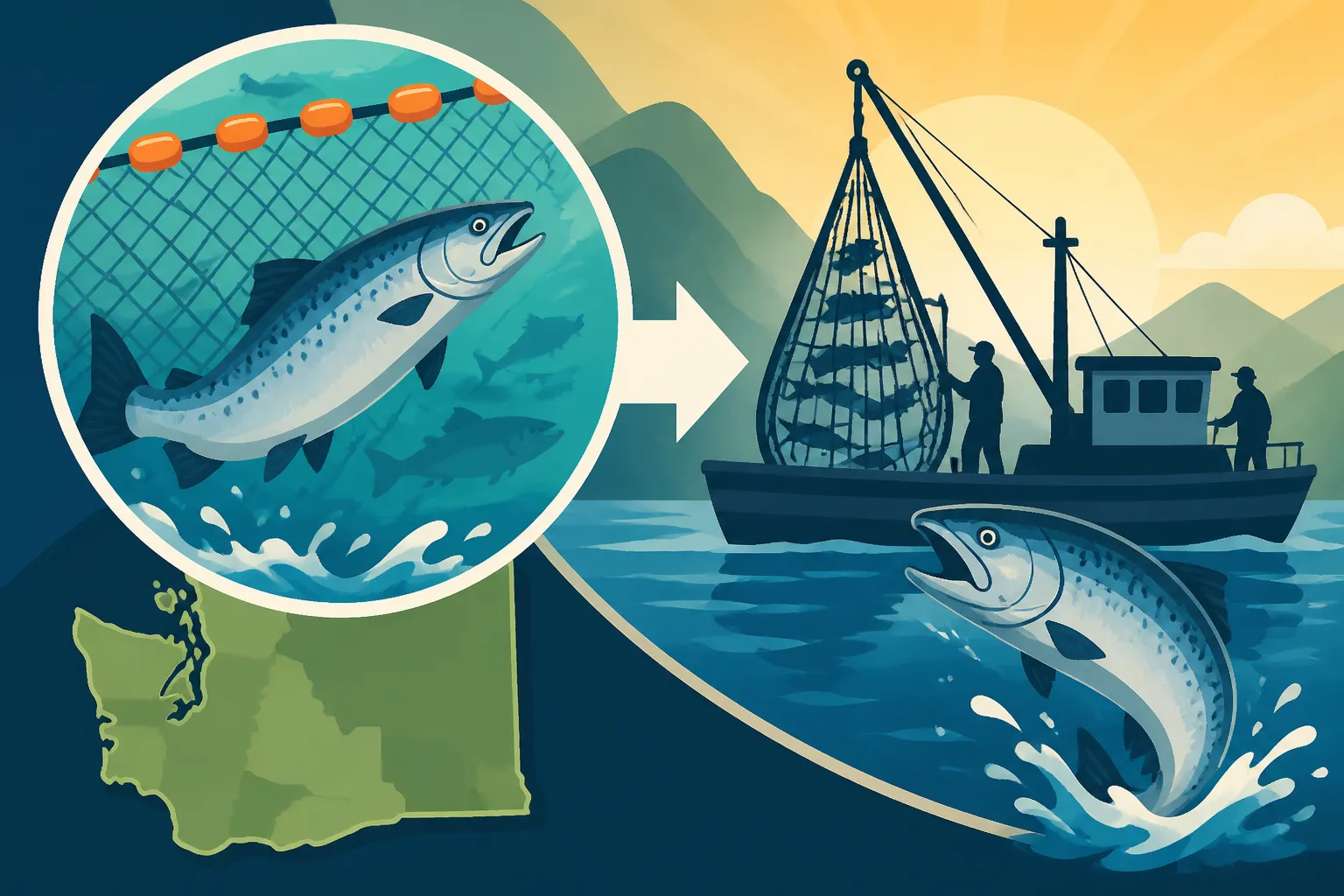
A test fishery is, at its core, a data collection operation. Biologists and trained technicians deploy specific fishing gear—often gillnets or seine nets, but sometimes even rod and reel—in strategic locations where salmon are known to congregate or migrate, such as river mouths, narrow channels in Puget Sound, or key points on the lower Columbia River. The primary goal is not to harvest fish for consumption or sport, but to intercept a small, representative sample of the migrating salmon population. This sample allows them to estimate the size, timing, and composition of the salmon run before it reaches critical spawning grounds or opens to broader recreational and commercial harvest. It's an essential, albeit sometimes misunderstood, part of sustainable fishery management.
These operations are carefully planned and executed, often involving specialized boats and experienced crews. While some fish may be retained as part of the data collection or for tribal treaty fisheries, the overarching purpose remains scientific. They provide a crucial feedback loop that traditional pre-season forecasts, based on historical averages and ocean conditions, simply cannot offer in a dynamic environment. Without this real-time intelligence, managing highly fluctuating salmon runs would be like flying blind, leading to either devastating overharvests or missed fishing opportunities, neither of which benefits the resource or the angling community.
Key Data Points Collected
Every fish encountered in a test fishery is a piece of the puzzle. Biologists meticulously record a wealth of information from each salmon caught. This includes identifying the species (Chinook, Coho, Chum, Sockeye, Pink), determining if it's a wild or hatchery-origin fish (often identifiable by a clipped adipose fin), measuring its length and weight, and sometimes taking scale samples for age determination. They might also record any tags or marks, or note its overall condition.
This detailed data paints a comprehensive picture of the salmon run. For instance, knowing the proportion of hatchery fish versus wild fish is critical for management, especially when wild stocks are endangered and require stringent protection. Accurate counts of specific species help WDFW track against pre-season forecasts and adjust harvest quotas accordingly. Understanding the run timing – when the bulk of the fish are arriving – is also paramount, allowing managers to open seasons precisely when fish are abundant and close them when sensitive stocks are approaching or after harvest goals are met. This granular information helps shape complex decisions, from setting daily bag limits for Chinook in Puget Sound to determining the validity period for annual fishing licenses, which can impact how long you're able to pursue your favorite species.
The Science Behind Test Fishing
It's easy to dismiss test fishing as just "people catching fish," but there's a serious scientific methodology behind every net cast and every fish examined. The process is far more complex than a casual angling outing and requires specialized tools and expertise to deliver reliable data.
Methods and Gear Used
The type of gear employed in a test fishery is chosen specifically for the waters being sampled and the species being targeted. On the Columbia River, for instance, gillnets are commonly used in specific areas to intercept migrating salmon. These nets are designed to entangle fish by their gill plates, allowing for relatively efficient capture. In other areas, such as the shallower bays of Puget Sound or near river mouths, biologists might use large seine nets, which are deployed in a wide arc to encircle fish and then drawn in, trapping them. For certain species or in very sensitive areas, even rod and reel sampling might be employed, though it's less efficient for large-scale population estimates.
The selection of gear and deployment strategy is crucial to obtaining a representative sample of the fish run. The WDFW and tribal co-managers collaborate to ensure that the methods are scientifically sound and provide the most accurate data possible. Sometimes, advanced sonar technology or underwater cameras are also utilized, especially in deeper waters or when visual confirmation is difficult. These tools, while often sophisticated, operate on principles that dedicated anglers might recognize from personal depth finders or fish finders, many of which can be found readily on platforms like Amazon if you're looking to upgrade your own fishing setup. Using the right tools in the right place is paramount to gathering unbiased information that can be trusted to inform management decisions, including those that lead to Washington Sport Fishing Seasons and Emergency Closures.
Statistical Analysis and Run Forecasts
Once the raw data is collected from the test fisheries, the real scientific heavy lifting begins. Biologists and statisticians take these counts and, using sophisticated mathematical models, extrapolate them to estimate the overall size of the salmon run. This isn't just simple multiplication; it involves complex statistical analyses that account for factors like gear efficiency, water conditions, tidal influences, and the specific timing of the run. Historical data from previous years' test fisheries and actual returns are often incorporated into these models to refine the accuracy of the predictions.
These in-season run forecasts are continuously updated as more data comes in. Early in a run, the estimates might have a wider margin of error, but as more fish are sampled, the confidence in the forecast grows. This dynamic adjustment is what allows managers to make responsive decisions. If a run is coming in stronger than expected, there might be opportunities to increase bag limits or extend a season. Conversely, if a run is weaker, proactive closures or restrictions might be necessary to ensure enough fish make it to the spawning grounds to sustain future generations. This vital data underpins decisions related to Understanding Washington's Daily Bag Limits by Species and ensures that fisheries remain sustainable in the long term.
From Data to Decision: How Counts Drive Openings
The journey from a salmon caught in a test net to a change in your fishing regulations is a complex one, involving multiple stakeholders and a delicate balancing act of ecological and social considerations.
The Role of WDFW and Tribal Co-Management
In Washington State, salmon management is a collaborative effort between the WDFW and various tribal nations, operating under federal court mandates and long-standing agreements. This co-management approach means that decisions regarding salmon seasons and allocations are not made unilaterally. Instead, WDFW and tribal fishery managers meet frequently, especially during the peak of salmon runs, to analyze test fishery data and discuss potential adjustments. These discussions are often intense, as they involve balancing treaty rights, conservation needs, and recreational and commercial fishing opportunities.
The test fishery data forms the bedrock of these discussions. It provides an objective, real-time assessment of the resource, allowing all parties to make informed decisions. While WDFW ultimately sets the regulations for non-tribal fisheries, these decisions are heavily influenced by the collective understanding of the resource, guided by the numbers coming out of the test fisheries. This collaborative framework ensures a more holistic and sustainable approach to managing Washington's precious salmon stocks, even when dealing with emergency rule changes that might seem sudden to the average angler.
Trigger Points and Season Adjustments
Fishery managers operate with pre-determined "trigger points" that dictate when seasons might be opened, closed, or modified. These triggers are based on a variety of factors, including escapement goals (the number of fish needed to reach spawning grounds), total allowable catch (TAC) estimates, and the proportion of wild versus hatchery fish in the run. For instance, if test fisheries indicate that a particular salmon run is robust and exceeding pre-season forecasts, managers might decide to open a marine area to retention fishing or increase a daily limit. This is especially common during strong Coho or Pink salmon years.
Conversely, if the counts reveal a weaker-than-expected run, especially for conservation-priority stocks like wild Chinook or wild steelhead, immediate action is often taken. This could mean a sudden closure of an area, implementation of catch-and-release rules, or even a ban on certain gear types. These adjustments are made swiftly because every day counts in protecting a vulnerable run. These in-season adjustments are why it's so critical for anglers to stay on top of the latest rules, particularly when fishing the Columbia in Washington During an In-Season Closure or experiencing Puget Sound Salmon Closures: What Washington Anglers Need to Know. It's a dynamic system designed to protect the resource above all else.
Balancing Conservation with Opportunity
The essence of fishery management, particularly when driven by test fishery data, is finding the precarious balance between conservation and providing fishing opportunities. No one wants to see a salmon run collapse due to overfishing, but equally, managers strive to allow anglers to enjoy the resource when it's abundant. Test fisheries are the primary tool that allows WDFW and tribal co-managers to navigate this tightrope walk.
Imagine a scenario where a particular Puget Sound Chinook run is forecasted to be strong, and the season is set with a generous quota. However, real-time test fishery data reveals that the wild component of that run is actually much weaker than anticipated, or that an unusually high number of endangered steelhead are also present. In this case, managers would likely reduce the Chinook quota, implement selective gear rules, or even close the fishery entirely to protect the weaker stocks. This is a difficult decision, as it impacts anglers and businesses, but it prioritizes the long-term health of the ecosystem. The ability to make these nuanced, data-driven decisions in real-time is a testament to the importance of test fisheries, ensuring that future generations can also experience the thrill of Chinook Salmon: Washington's King of Fish and other prized species.
Why Test Fisheries are So Crucial
In a world where environmental factors are constantly shifting, relying solely on historical data for fishery management would be irresponsible. Test fisheries provide the flexibility and real-time intelligence needed to adapt to nature's unpredictable rhythms.
Real-Time Management in a Dynamic System
Pre-season salmon forecasts are based on many variables, including ocean conditions, juvenile survival rates, and brood year returns. While these provide a valuable starting point, they are just that – forecasts. The actual conditions can change dramatically between the time a forecast is made and when the fish actually return. Ocean conditions, river flows, water temperatures, and even unexpected predator interactions can all influence the strength and timing of a salmon run. Climate change, in particular, is introducing new layers of uncertainty, making historical averages less reliable.
Test fisheries provide the critical real-time data that allows managers to pivot and adjust. Instead of waiting until fish are already in the rivers and potentially being overharvested or under-harvested, these surveys offer an early warning system. They confirm whether a run is indeed tracking as expected or if significant deviations are occurring. This adaptability is paramount for effective resource management, preventing severe impacts on fish populations and ensuring that fishing opportunities align with actual abundance, not just predictions. It’s why you might encounter Emergency Rule Changes: Why Washington's Rules Shift Mid-Season so frequently.
Protecting Vulnerable Stocks
Perhaps the most critical role of test fisheries is their contribution to the protection of vulnerable and endangered fish stocks. Many salmon and steelhead runs in Washington, particularly wild populations, are listed under the Endangered Species Act (ESA) or are considered stocks of concern. When these vulnerable fish are migrating alongside more abundant hatchery-produced fish, managing a fishery becomes incredibly complex. Test fisheries help to disaggregate the run, providing data on the relative abundance of wild versus hatchery fish.
For example, on rivers like those found on the Olympic Peninsula, where wild steelhead are a protected and highly valued resource, test fisheries might specifically monitor their presence. If test results show a higher-than-expected return of wild steelhead, it could potentially allow for more liberal fishing on coincident hatchery salmon runs. Conversely, if wild steelhead numbers are critically low, immediate closures for all species, or strict Wild Steelhead Release Rules on Washington's Olympic Peninsula Rivers, might be implemented to minimize incidental take, even if other species are abundant. This precision in management is a cornerstone of conservation and ensures that angling pressure doesn't inadvertently harm fragile populations, helping to preserve the future of iconic species like the steelhead.
Challenges and Criticisms of Test Fisheries
While test fisheries are indispensable for modern salmon management, they are not without their complexities, facing both logistical hurdles and occasional public scrutiny.
Public Perception and Misunderstandings
One of the ongoing challenges for WDFW and tribal co-managers is managing public perception regarding test fisheries. Anglers and the general public sometimes see test fishery boats actively catching and retaining salmon, particularly when a recreational fishery in the same area is closed or heavily restricted. This can lead to frustration and misunderstanding, with some questioning why biologists are allowed to "fish" when others cannot. It's a natural reaction when you're itching to get out on the water, only to see what appears to be a double standard.
It's crucial to remember that these are not recreational outings. The fish caught are essential data points. While some fish from test fisheries might be allocated to tribal treaty harvest or used for broodstock, their primary purpose is scientific. Explaining this delicate balance to a public eager to fish is a constant communication effort. The long-term health of the salmon resource, and thus future fishing opportunities, relies on the accurate, unbiased data that test fisheries provide, even if the immediate optics can be challenging.
Operational Difficulties and Costs
Running a comprehensive test fishery program across Washington's vast and varied waters is an enormous undertaking, fraught with operational difficulties and significant costs. WDFW and tribal agencies deploy multiple boats and crews, sometimes working around the clock, in various weather conditions, from the stormy Pacific coast to the turbulent waters of the Columbia River and the intricate channels of Puget Sound. This requires specialized vessels, expensive gear, and highly trained personnel, including biologists, boat operators, and data entry technicians.
The logistical challenges are immense. Equipment can break down, weather can interrupt operations, and maintaining a consistent sampling effort across different areas and conditions is a constant battle. Funding for these critical programs is also a perennial concern, as state budgets and federal grants fluctuate. Despite these difficulties, the commitment to obtaining reliable, in-season data remains unwavering, as the alternative – managing without adequate information – carries far greater risks for the salmon resource and the communities that depend on it.
Ethical Considerations and Mortality
Any time fishing gear is deployed, there's an inherent risk of injury or mortality to fish, and test fisheries are no exception. While biologists and technicians strive to handle fish with the utmost care, particularly those intended for live release after data collection, some mortality is unavoidable. This is an ethical consideration that fishery managers take very seriously, constantly working to minimize impact while still achieving their scientific objectives.
To reduce mortality, WDFW often employs selective gear, aims for quick processing and release, and uses techniques that minimize stress on the fish. For example, gillnet soaking times might be limited, or specific mesh sizes chosen to reduce unintended bycatch. While the numbers of fish impacted by test fisheries are generally a tiny fraction of the overall run, and far less than commercial or recreational fisheries, it's a valid point of discussion. The goal is always to balance the need for critical scientific data with the imperative to protect and conserve the very resource being studied.
How Anglers Can Stay Informed
Understanding how test fishery counts influence salmon openings is one thing, but knowing where to find this information and how to interpret it is key to successful and compliant fishing in Washington.
Accessing Test Fishery Reports
For the dedicated angler, staying informed about test fishery results is like having a secret weapon. While WDFW doesn't typically publish every single test net pull, they do consolidate and release key findings, particularly when those findings lead to a potential season change. The primary place to look is the WDFW website, specifically their "Emergency Rule Changes" or "Fishing Rule Updates" sections. Many tribal fisheries also publish similar information. You'll often find summaries of test fishery data, run updates, and the resulting management actions there.
It's important to read these reports with a critical eye. Don't just look for a single number; try to understand the trend. Is the run stronger or weaker than expected over time? Is the wild component showing healthy returns? Learning to interpret these reports, combined with routinely checking Where to Find Current Washington Fishing Rules, can give you a significant advantage in predicting potential openings or closures. Even if you're not a statistician, recognizing patterns in the data can help you plan your trips more effectively and avoid disappointment.
Understanding Emergency Rule Changes
One of the most immediate and impactful consequences of test fishery data are the dreaded (or celebrated!) emergency rule changes. Because salmon runs are dynamic, WDFW often has to issue new regulations with very little notice to adapt to real-time conditions. This could mean a fishery that was open yesterday is closed today, or vice versa. These changes are directly driven by test fishery results that indicate a run is either stronger or weaker than initially forecasted, or that a protected species is present in unexpected numbers.
As an angler, it's your responsibility to know the current rules before you hit the water. This means making a habit of checking the WDFW website, social media channels, or local tackle shops for updates right before you head out. Don't rely on what was published weeks ago in the annual pamphlet. The best strategy is to consult the official WDFW rule change documents, which precisely detail What an Emergency Rule Change Actually Modifies, providing clarity on gear restrictions, area closures, or bag limit adjustments. Staying current is not just about catching fish; it's about avoiding fines and ensuring you're fishing legally and ethically.
Advocating for Healthy Fisheries
Understanding test fisheries and their role isn't just about personal fishing success; it's also about being an informed advocate for healthy fisheries. Anglers have a voice, and participating in public comment periods, attending WDFW meetings (like the North of Falcon process), or joining conservation groups can influence how these resources are managed. When you understand the science behind the decisions, you can contribute more effectively to discussions about season structures, conservation efforts, and even funding for programs like test fisheries.
Furthermore, your personal actions play a huge role. Accurately filling out your The Washington Catch Record Card and What It Requires is a direct contribution to fishery management. Every salmon and steelhead you record (or fail to record) provides WDFW with crucial data to verify estimates and plan future seasons. If you want to contribute to the health of the resource and ensure these amazing fish continue to return, understanding the system and participating in it, from filling out your catch card to perhaps even looking up gear on Amazon that helps you handle fish gently during catch-and-release, is absolutely essential.
| Data Point Collected | Method of Collection | Impact on Season Decisions |
|---|---|---|
| Species ID (Chinook, Coho, etc.) | Visual, Physical Exam | Determines species-specific openings/closures, quotas |
| Wild vs. Hatchery Origin | Adipose Fin Clip (or lack thereof) | Triggers selective fisheries, wild stock protection |
| Size & Weight | Measuring Board, Scale | Impacts slot limits, minimum/maximum sizes |
| Run Timing & Abundance | Net Catches, Sonic Counts | Dictates opening/closing dates, extensions |
| Age (via scales/otoliths) | Scale Sample Analysis | Influences long-term stock assessments, escapement goals |
| Sex & Maturity | Visual, Physical Exam | Relevant for spawning escapement and broodstock needs |
Disclaimer
The information provided in this guide is for general informational purposes only and is not intended as legal advice or a substitute for official regulations. Fishing rules and regulations in Washington State can change rapidly due to emergency closures and other factors. Always consult the most current Washington Department of Fish and Wildlife (WDFW) regulations and emergency rule updates before engaging in any fishing activity. Your safety and adherence to all local, state, and federal laws are your sole responsibility.