Can You Keep Female Dungeness Crab in Washington?
One of the most common questions I hear from fellow crabbers, especially those new to the abundant waters of Washington, revolves around Dungeness crab regulations, particularly regarding female crabs. It's frustrating to pull up a pot full of beautiful crabs only to realize you're unsure which ones you can keep and which must be released, creating anxiety about accidental violations. This guide is designed to clear up all the confusion surrounding female Dungeness crab, ensuring you understand the rules, the reasons behind them, and how to confidently identify and handle your catch every time.
The Core Rule: Why Female Dungeness Crab Are Off-Limits in Washington
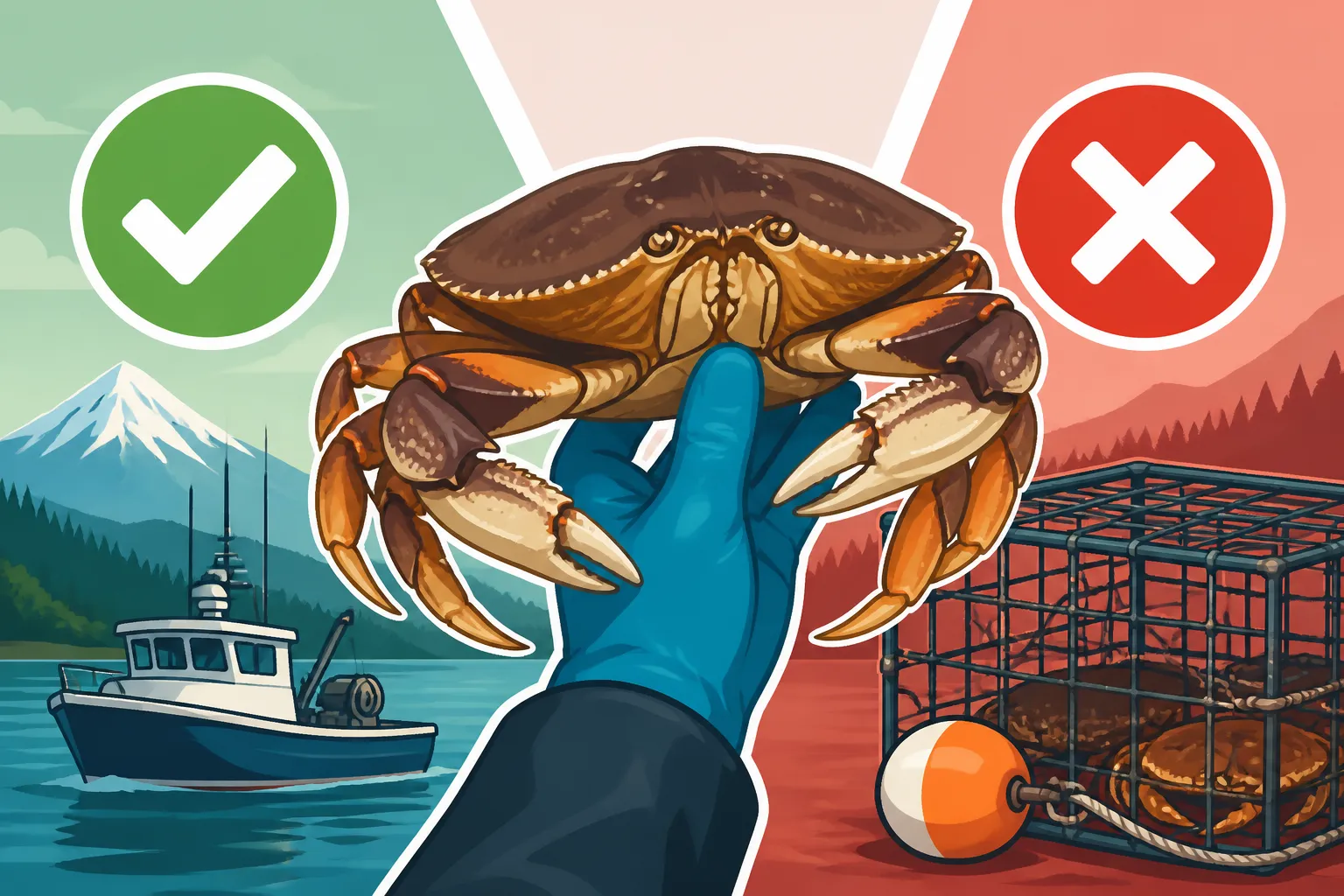
Let's cut right to the chase: in Washington State, you cannot legally keep female Dungeness crab. This isn't just a quirky local rule; it's a fundamental pillar of sustainable crabbing designed to protect the health and future of the Dungeness crab population that we all cherish. Imagine trying to run a farm where you harvested all your breeding stock – it wouldn't last long, right? The same principle applies to our precious crab fisheries.
The Department of Fish and Wildlife (WDFW) has implemented this regulation with long-term conservation in mind. Female crabs are the literal lifeblood of the fishery. They're responsible for producing the next generation of crabs, and without them, our crabbing seasons would quickly diminish and eventually disappear. This rule isn't meant to make your life harder; it's designed to ensure that your kids and grandkids can enjoy the thrill of pulling up a crab pot just as much as we do today. It's a testament to responsible resource management, recognizing that a thriving ecosystem benefits everyone in the long run.
The Biology Behind the Regulation: Protecting the Future of the Fishery
When you catch a female Dungeness crab, especially if she's "berried" (carrying eggs), you're looking at the future of the entire fishery. Female Dungeness crabs can carry hundreds of thousands, sometimes even millions, of tiny eggs under their abdominal flap. These eggs are the foundation of the next generation. Removing an egg-bearing female from the population has a much greater impact than removing a single male, who only plays one part in the overall reproductive process.
This biological imperative is why the rule is so strict. It ensures that enough females survive to reproduce each season, maintaining a robust and healthy crab population. Crabs mature at different rates and sizes, but once a female is capable of producing eggs, her role in the ecosystem becomes invaluable. Protecting her ensures that the cycle of life continues, providing a sustainable harvest for years to come. It’s a bit like guarding the queen bee in a hive – essential for the survival of the colony.
Identifying Female Dungeness Crab: A Visual Guide
Distinguishing male from female Dungeness crab is surprisingly straightforward once you know what to look for, and it's absolutely crucial for staying within the law. The easiest and most reliable way to tell the difference is by examining the shape of their abdominal flap, also sometimes called the "apron," located on the underside of the crab.
For male Dungeness crabs, this flap is narrow and pointed, often resembling the Washington Monument or a thin, inverted 'T' shape. It’s quite slender and angular. In contrast, the female Dungeness crab has a much broader, rounder, or more oval-shaped abdominal flap. This wider shape is designed to protect and hold her eggs when she is berried. Think of it like a wide, sturdy shield compared to the male's thin spear. If you're ever in doubt, remember: round is reproductive (and therefore protected), while pointed is permissible (for males). Familiarizing yourself with these shapes will quickly become second nature, giving you confidence when sorting your catch. For more detailed visual cues, check out How to Tell a Male From a Female Dungeness Crab.
Another subtle but important point: while not a primary identification method, female Dungeness crabs generally don't grow as large as males. The biggest, trophy-sized crabs you see are almost always males. If you pull up a monster crab, chances are it's a legal male, but you still need to check that abdominal flap and measure it to be certain.
Here’s a quick visual comparison to help you remember:
| Feature | Male Dungeness Crab | Female Dungeness Crab |
|---|---|---|
| Abdominal Flap | Narrow, pointed, 'T' shaped | Broad, round, oval-shaped |
| Size (Avg) | Larger, can reach legal size | Generally smaller, rarely reaches legal size |
| Keeping Status | Legal (if legal size) | Illegal (must be released) |
How to Properly Measure and Release Crab in Washington
Even once you've correctly identified your male Dungeness crab, there's another crucial step before it can make it into your cooler: measurement. Washington State has strict size limits to ensure crabs have had enough time to reproduce at least once before being harvested. This isn't just about giving the little guys a chance to grow; it's another layer of protection for the species, working hand-in-hand with the female release rule.
The Importance of Accurate Measurement
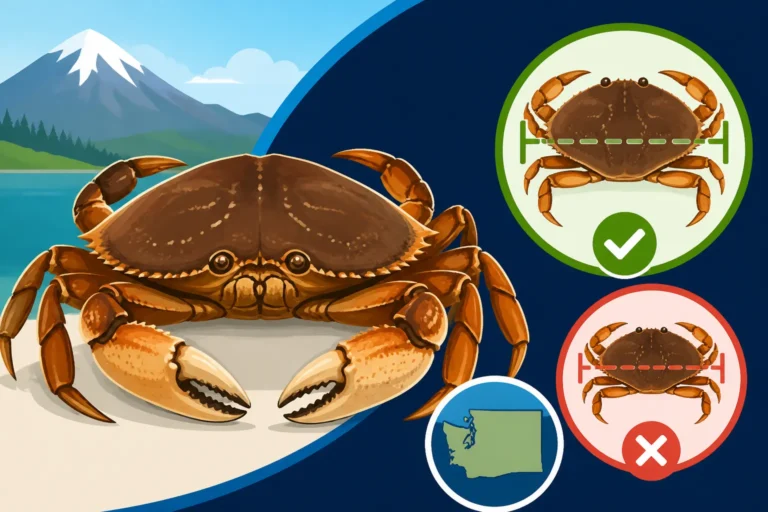
The legal size for Dungeness crab in Washington is measured in inches across the carapace, from immediately in front of the points (or spines) on the widest part of the back. You'll need a reliable crab gauge for this, which can be found at most sporting goods stores or easily purchased online through retailers like Amazon. It's not a measurement you can eyeball! Even being off by a fraction of an inch can result in a violation.
When measuring, make sure the crab is relaxed and flat. Place the fixed end of your gauge against one point of the carapace and read the measurement at the other point. If the crab's shell is slightly damaged or irregular, always err on the side of caution and release it if there's any doubt about its legal size. It's far better to release a legal crab than to keep an illegal one. Understanding How to Measure a Legal Dungeness Crab is critical to a successful and legal crabbing trip.
Handling and Releasing Female or Undersized Crabs Gently
So, you've identified a female or an undersized male. Now what? The most important thing is to handle these crabs with care and return them to the water as quickly and gently as possible. Their survival depends on it. Slamming them back into the water from a great height or leaving them baking in the sun for too long significantly reduces their chances of survival.
When you're sorting your catch, try to keep crabs in a shaded, cool area as much as possible. When you have a crab to release, hold it firmly by the sides of its shell, avoiding the claws if possible, and gently lower it back into the water. If you're on a boat, try to lower it close to the surface, especially if it's a deep drop. This minimizes stress and potential injury. If a female crab is berried, be extra cautious not to dislodge her eggs during handling. Remember, every healthy female or undersized male released contributes directly to the future of crabbing in Washington. Being a responsible crabber means not only adhering to the regulations but also practicing good stewardship.
Common Misconceptions and What to Do If You're Unsure
Despite the clear regulations, there are still a few common myths and uncertainties that pop up regularly when people are crabbing. It’s easy to get confused when you’re out on the water, especially if you’re new to the sport or haven’t been crabbing in a while. Let’s tackle some of these head-on, because confidence in your actions is key to an enjoyable and legal outing.
"But She's So Big!": Dispelling Size-Based Assumptions
One of the biggest misconceptions I hear is, "This female is huge, surely I can keep her!" This comes from a natural tendency to associate size with desirability, and often, with legality. However, for female Dungeness crabs in Washington, size simply does not matter. A female crab, no matter how large, is illegal to keep. Period. Her size doesn't change her biological role or the state's conservation policy.
This can be a tough pill to swallow when you pull up a pot with a magnificent, large female Dungeness crab. Your instincts might scream "dinner!" but your understanding of the regulations must override that. Her robust size is actually a testament to her success in contributing to the population, making her even more valuable for the fishery's future. Always remember the abdominal flap rule first, before even thinking about size, when it comes to females.
The Role of Enforcement and Penalties for Violations
The rules are in place for a reason, and WDFW enforcement officers take them seriously. They patrol crabbing areas, check boats and docks, and are trained to quickly identify male and female crabs, as well as confirm legal sizes. Their job is to protect the resource and ensure fair play for everyone. It's not uncommon to see them making checks at boat launches or even approaching you on the water.
The penalties for violating crabbing regulations, such as keeping female Dungeness crab or undersized males, can range from significant fines to the confiscation of your gear (pots, boat, etc.), and even the suspension of your fishing privileges. These aren't just minor slaps on the wrist; they can be quite severe and can put a real damper on your crabbing hobby. It's a risk that's simply not worth taking. Knowing and following the rules isn't just about avoiding a ticket; it's about respecting the fishery and your fellow crabbers. For a broader understanding of consequences, you can look into Fines and Penalties for Common Fishing Violations.
Ethical Crabbing Practices Beyond the Law
While adhering to legal requirements is non-negotiable, being a truly responsible and ethical crabber goes beyond just checking boxes. It involves understanding the broader impact of your actions and adopting practices that contribute to the long-term health and sustainability of the Dungeness crab population and the marine environment as a whole. This mindset ensures that we can all continue to enjoy Washington's amazing crabbing opportunities for generations to come.
Being a Responsible Angler: A Conservation Mindset
Developing a conservation mindset means thinking about the bigger picture. Every crab you release, every piece of tangled line you pick up, and every respectful interaction with wildlife contributes to a healthier ecosystem. When crabbing, this means carefully baiting your pots (perhaps with a good bait cage, many varieties of which you can find on Amazon) so that bait isn't lost and polluting the seabed. It means properly tending your crab pots and not leaving them unattended for extended periods, which can lead to ghost fishing of crabs and other marine life.
It also extends to reporting any suspicious activity you might see, like someone obviously ignoring regulations or harvesting during closed seasons. We're all guardians of this shared resource. Taking an active role in conservation, even in small ways, helps ensure that Washington's Dungeness crab fishery remains vibrant and healthy. Consider also how you're impacting other species; Crabbing and Shellfishing in Washington's Puget Sound highlights the interconnectedness of these efforts.
The Benefits of Practicing Catch and Release for Females
The legal requirement to release female Dungeness crab is a fantastic foundation, but practicing it with intent and care yields even greater benefits. By minimizing handling stress, ensuring a quick return to the water, and releasing even accidentally entangled females without harm, you're maximizing their chances of survival and successful reproduction. This goes hand-in-hand with making sure your gear is in good working order, from your Best Bait for Washington Dungeness Crab choices to your pot lines and floats.
Each female released represents potential millions of future crabs. Over time, these individual acts of conservation collectively safeguard the health of the entire Dungeness crab population in Washington. It ensures that future seasons will continue to be bountiful, preserving the tradition of crabbing for everyone. It's a direct investment in the future of the sport we love, proving that what we do today truly impacts tomorrow's catches. And while we're on the topic of gear, if you're looking for sturdy crab pots, lines, or other crabbing accessories, reputable online stores like Amazon offer a wide range of options to help you gear up responsibly. You can also find guides on How Long to Soak a Crab Pot in Puget Sound to optimize your efforts while minimizing risk to non-target species. Don't forget, careful tending of your pots, including knowing Crabbing With Pots vs Rings in Puget Sound to pick the right method for your spot, also contributes to ethical crabbing.
Disclaimer
This article is for general informational purposes only and does not constitute professional advice. Laws, prices and regulations vary by location and change over time. Consult a qualified professional for guidance on your specific situation.