How to Tell a Male From a Female Dungeness Crab
Crabbing in Washington is an incredible experience, but nothing's quite as deflating as pulling up a pot, seeing a beautiful Dungeness crab, and then realizing it's a female—which you absolutely cannot keep. It's a common mistake, especially for new crabbers, and it leads to both frustration and potential legal trouble. Knowing how to accurately distinguish between male and female Dungeness crabs quickly is absolutely critical for respecting conservation efforts and making sure your hard work pays off with a legal catch. This guide is here to demystify the process, giving you the practical knowledge you need to confidently identify and manage your Dungeness crab catch.
Why Knowing a Crab's Sex is Absolutely Critical
When you're out on the water, whether you're dropping a pot in Puget Sound or setting rings off the coast, the thrill of checking your gear is unmatched. That anticipation builds as you haul in the line, hoping for a pot full of big, legal Dungeness. However, that excitement can quickly turn into confusion or disappointment if you don't know the rules, especially when it comes to identifying the sex of your catch. Washington's fishing regulations are strict for a very good reason: conservation. Protecting female Dungeness crabs is paramount to ensuring healthy crab populations for years to come.
Conservation and the Law
The Washington Department of Fish and Wildlife (WDFW) has clear rules regarding Dungeness crabs, and a huge part of those rules revolves around protecting females. Simply put, you cannot keep female Dungeness crabs in Washington State. This isn't just a suggestion; it's a foundational pillar of sustainable crabbing. Female crabs are the reproducers, and allowing them to mature and spawn ensures future generations of crabs. If we were to indiscriminately keep females, Dungeness crab populations would rapidly decline, impacting everyone from recreational crabbers to commercial fisheries.
This regulation means that any female Dungeness crab, regardless of its size or condition, must be immediately released back into the water. This also applies to "berried" females, which are those carrying eggs under their abdominal flap. You'll often see these bright orange or reddish egg masses, sometimes referred to as a "sponge," clearly visible. Keeping an egg-bearing female is a serious violation and carries significant penalties. It's one of the first things a WDFW enforcement officer will look for if they check your catch. Understanding these rules is your first line of defense against accidental violations. You can find more details on these vital rules in guides like Washington Fishing Regulations Every Angler Should Know and Can You Keep Female Dungeness Crab in Washington?.
Avoiding Fines and Frustration
Imagine spending a beautiful day on the water, hauling in a few keepers, only to have a WDFW officer check your cooler and find an illegal female Dungeness among your bounty. That dream day quickly sours with a citation and a fine. The penalties for keeping illegal crabs, whether they're undersized males or any female crab, can be steep. These fines are not just a slap on the wrist; they are designed to deter violations and reinforce the importance of conservation. No one wants to end their crabbing trip with a hefty bill instead of a delicious meal.
Beyond the legal ramifications, there's the sheer frustration. You've put in the effort, checked the tides, set your pots, and waited. To pull up a magnificent, large Dungeness, only to realize it's a female and must be returned, can be truly disappointing. Learning to quickly and accurately identify a crab's sex before you even measure it will save you that emotional roller coaster. It allows you to sort your catch efficiently, keeping only the legal males and gently returning the females and undersized crabs to the depths where they can continue to thrive. It's about crabbing smarter, not just harder.
The Belly is the Key: Understanding the Abdominal Flap
When it comes to identifying the sex of a Dungeness crab, there's one surefire method that trumps all others: examining its abdominal flap. This flap, located on the underside (belly) of the crab, is essentially a "crab apron" and it tells you everything you need to know. It’s a distinct visual difference that is consistent across all Dungeness crabs, making it the most reliable indicator of sex. If you learn nothing else from this guide, master this technique, and you'll be well on your way to crabbing like a pro.
The Male's T-Shaped Flap
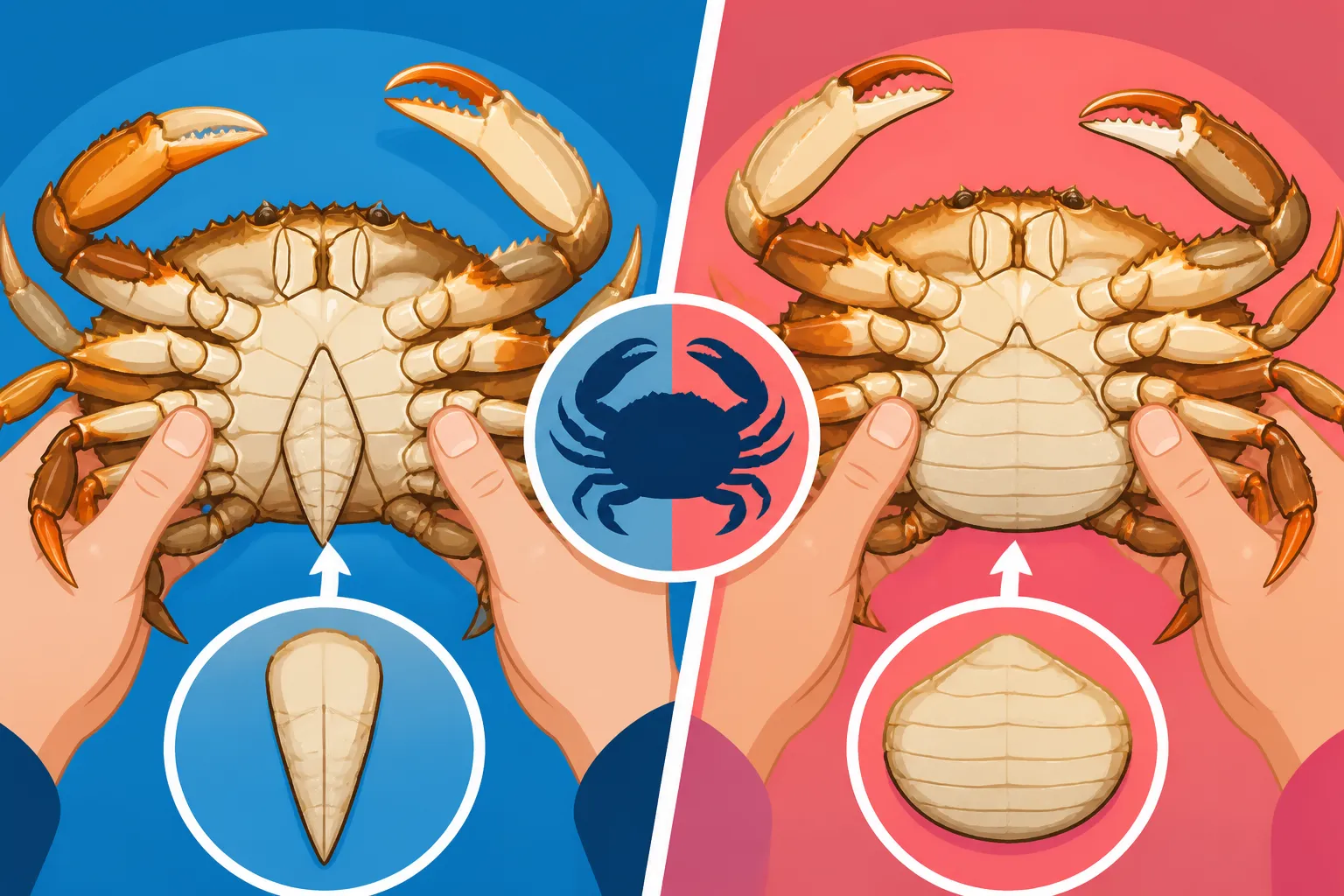
Male Dungeness crabs have an abdominal flap that is distinctly narrow and T-shaped, or sometimes described as an inverted "V" or a steeple shape. This flap is typically tucked very tightly against their body, forming a clean line down the center of their underside. It's relatively small in comparison to the width of the crab's carapace (shell). The male's flap houses the reproductive organs and is designed to be streamlined, offering less resistance as the crab moves.
When you flip a crab over, gently, of course, and look at its belly, if you see that slender, T-shaped flap, you're almost certainly looking at a male. It's a clear, unmistakable sign once you know what to look for. This distinct shape means you're holding a potential keeper, assuming it meets the minimum size requirements. Many experienced crabbers can identify a male almost instantly just by this single characteristic.
The Female's Wide, Oval Flap
In stark contrast, female Dungeness crabs possess a much broader, more rounded, and oval-shaped abdominal flap. This flap covers a much larger portion of their underside, almost resembling a large, wide dome or a bee-hive shape. The reason for this difference is biological: the female's ample flap serves as a protective pouch where she carries and broods her eggs. When she is "berried" (carrying eggs), this flap will be even more distended and noticeable, often with bright orange or reddish egg masses clearly visible beneath it.
Even when a female isn't carrying eggs, her wide, oval flap is easily distinguishable from the male's slender "T." This is the key difference that ensures you release her, allowing her to contribute to the next generation of Dungeness. Learning to spot this wide, oval flap is the most important skill for responsible crabbing. It's a good idea to familiarize yourself with this difference by looking at images or videos online, or even by observing crabs safely in a touch tank, so you can confidently make the distinction when you're out on the water. Many fishing supply stores and online retailers like Amazon sell waterproof crab identification guides that can be very helpful for quick reference on your boat or the dock.
Here's a quick comparison of the primary distinguishing features:
| Feature | Male Dungeness Crab | Female Dungeness Crab |
|---|---|---|
| Abdominal Flap | Narrow, T-shaped, or inverted "V"; tucked tightly | Wide, broad, rounded, or oval-shaped; covers more area |
| Egg Presence | Never carries eggs | Carries eggs (often orange/red "sponge") under flap |
| General Size | Typically grows larger and heavier | Generally smaller than mature males |
Beyond the Belly: Other Identifying Characteristics
While the abdominal flap is the definitive way to determine a Dungeness crab's sex, there are a few other characteristics that can offer clues. These aren't as foolproof as the flap, and you should always confirm with the belly check, but they can give you a hint, especially if you're quickly sorting through a pot full of crabs. These additional indicators often relate to the crab's role in reproduction and survival, offering a broader understanding of Dungeness biology.
Size Differences
Generally speaking, male Dungeness crabs tend to grow larger and heavier than females. This is a common biological trait in many species where males compete for mates. A large, robust male is often more successful in reproductive endeavors. When you're pulling in crabs, you'll often notice that the really big, legal-sized ones (which in Washington must be at least 6¼ inches measured across the widest part of the carapace, not including the points) are almost always males. Females, while they can still grow to a respectable size, rarely reach the colossal dimensions of a mature male.
This size difference is why size limits are often effective in protecting females. Because females generally don't reach the minimum legal size as readily as males, a size restriction naturally funnels the harvest towards males, leaving more females to reproduce. However, never rely solely on size to determine sex. A small crab could still be an undersized male, and a larger-than-average female, while rare, still needs to be released. Always measure any crab you intend to keep and verify its sex. Learning How to Measure a Legal Dungeness Crab is an essential skill to pair with sex identification.
Claw and Coloration Nuances
While not as definitive, some crabbers will tell you they can spot differences in claw size or even subtle variations in coloration. Males generally have larger, more robust claws relative to their body size, as these are used for defense and in mating rituals. Females' claws might be slightly smaller or less pronounced. However, this is a very subjective observation and can vary greatly between individual crabs, even those of the same sex. It's not a reliable indicator for beginners.
As for coloration, Dungeness crabs typically have a purplish-brown carapace with lighter undersides and white-tipped claws. Some might argue there are slight color variations between sexes, but these are often influenced by diet, habitat, and molting cycles, making them highly unreliable for identification. Stick to the tried-and-true abdominal flap for accuracy. If you're looking for gear, you might find specialized crab gauges or even books on crab identification available on Amazon that go into more intricate details about crab anatomy.
Egg Presence Berried Females
Perhaps the most obvious "other" indicator, after the abdominal flap itself, is the presence of eggs. A female Dungeness crab carrying eggs is referred to as "berried." These eggs are typically bright orange to reddish-brown and are clearly visible clumped together under her wide abdominal flap, resembling a spongy mass. A female crab will carry hundreds of thousands of eggs, sometimes for several months, until they hatch.
If you pull up a crab and immediately see this distinctive egg mass, you know without a shadow of a doubt that it's a female, and she must be released immediately and carefully. Handling berried females roughly can dislodge or damage the eggs, so always treat them with the utmost care. Even if you haven't fully examined the abdominal flap, the sight of eggs is an instant signal to return the crab to the water. This is a critical time for the species, and our responsibility as crabbers is to ensure these eggs have the best chance of survival.
Making the Right Call: What to Do Next
Once you've identified a crab's sex and checked its size, your next steps are crucial. Responsible crabbing is about more than just knowing the rules; it's about practicing proper handling and release techniques to ensure the health of the crab population. Every action you take after pulling your pot contributes to the sustainability of the fishery.
Measuring and Releasing Appropriately
For any Dungeness crab you've identified as a male, the next step is to measure it accurately. Washington state regulations require Dungeness crabs to have a minimum carapace width of 6¼ inches, measured from behind the points. You'll need a reliable crab gauge for this. These are widely available at sporting goods stores or online platforms like Amazon. If your male crab is undersized, or if you've caught a female, the most important thing is to release it gently and immediately.
Here's how to do it:
- Handle with Care: Hold the crab by the sides of its carapace, avoiding the claws. Dungeness crabs can give a painful pinch!
- Minimize Air Exposure: Don't keep the crab out of the water longer than necessary. Crabs breathe through gills and can stress quickly in the air.
- Gentle Release: Place the crab back into the water slowly, ideally close to where it was caught. Don't just toss it in; let it go gently so it can reorient itself.
- Check for Snags: Ensure no lines or gear are tangled around the crab before releasing it.
Remember, releasing an undersized male or any female crab is not just about avoiding a fine; it's about protecting the resource. These crabs are the future of the fishery, and their survival is key to continued crabbing enjoyment for everyone. These practices are also covered in more depth in resources like Crabbing and Shellfishing in Washington's Puget Sound.
Enjoying Your Legal Catch
When you've successfully identified a legal-sized male Dungeness crab, then it's time to celebrate! There's nothing quite like the taste of fresh, locally caught Dungeness. Make sure to keep your crabs alive and cool until you're ready to cook them, typically in a cooler with some ice or wet newspaper, or submerged in a live well. Proper storage is key to maintaining their quality and flavor.
Beyond identification, understanding broader crabbing practices, such as How Long to Soak a Crab Pot in Puget Sound or Best Bait for Washington Dungeness Crab, will further enhance your success. With these skills under your belt, you're not just a crabber; you're a responsible steward of Washington's incredible marine resources, ready to enjoy the bounty while ensuring it lasts for generations to come.
Disclaimer
This article is for general informational purposes only and does not constitute professional advice. Laws, prices and regulations vary by location and change over time. Consult a qualified professional for guidance on your specific situation.