How Long to Soak a Crab Pot in Puget Sound
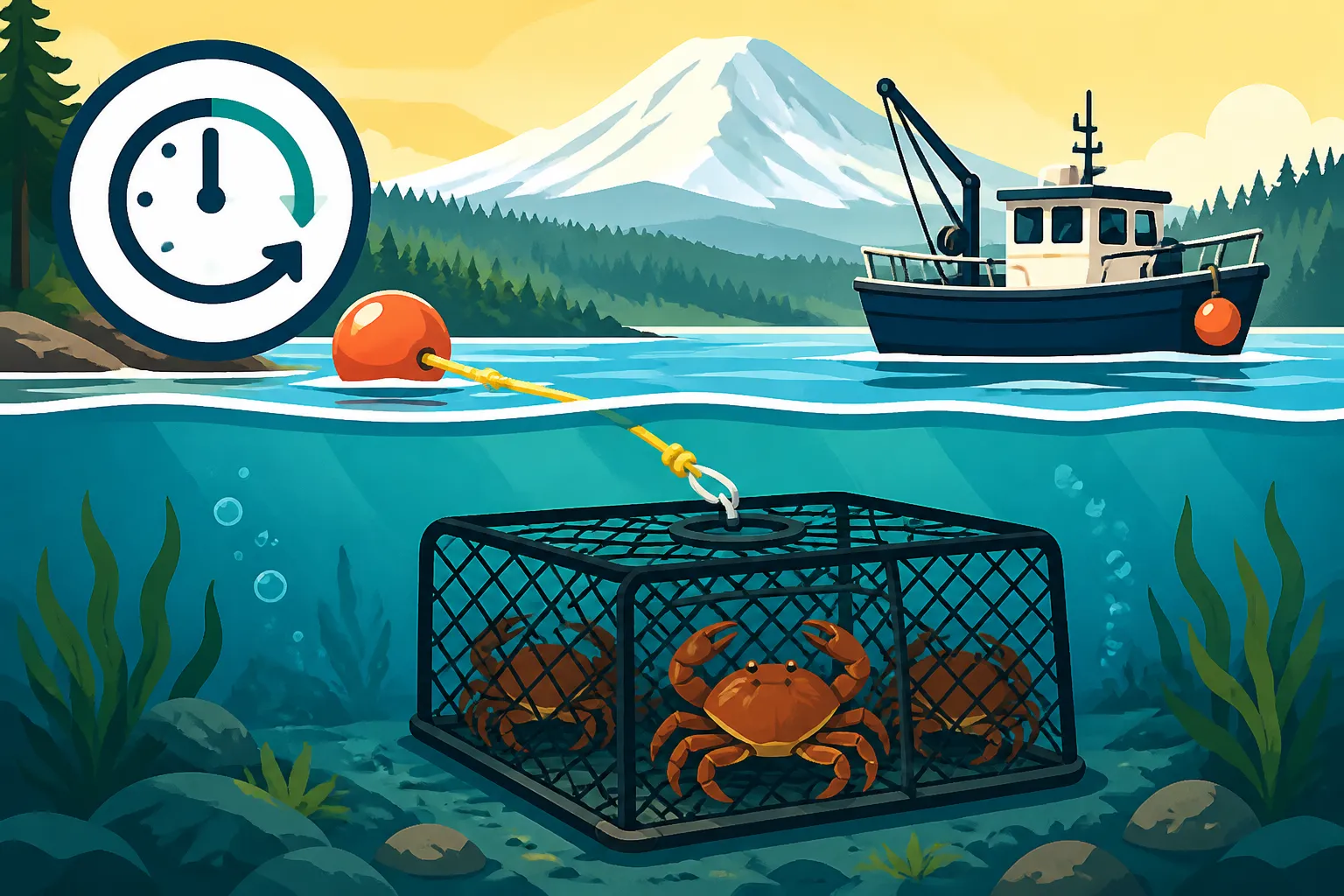
Ever stared at your crab pot, bobbing in the murky waters of Puget Sound, wondering if you've left it long enough to entice a Dungeness feast or too long, risking your bait to opportunistic scavengers? It's a classic conundrum for many Washington crabbers, a constant dance between patience and prudence. Getting the soak time just right is a critical, often underestimated, factor in whether you go home with a pot full of delicious Dungeness or just a few eager rock crabs. This guide aims to demystify the art of the crab pot soak, helping you maximize your harvest in Washington's beautiful but challenging marine environment.
The Balancing Act: Why Crab Pot Soak Time Matters
Leaving a crab pot in the water isn't as simple as dropping it and hoping for the best. There's a delicate balance to strike. Soak it for too short a time, and the crabs might not have found your pot, or they might still be investigating the bait. Leave it too long, and you risk a whole host of problems, from losing your bait to escaping crabs, or worse, ghost fishing. It's a Goldilocks situation: you want it just right.
The Risk of Short Soaks: Missed Opportunities
Imagine you've just loaded your pot with fresh bait, maybe some chicken, salmon carcasses, or even a good clam bag, and you drop it in a promising spot in Possession Sound or near the San Juan Islands. You wait an hour, maybe two, and pull it up. What do you find? Often, not much. Crabs, particularly the larger Dungeness, aren't always the fastest movers. They're attracted by scent plumes drifting with the current, and it takes time for that scent to spread and for the crabs to follow it to your pot. If you pull your pot too quickly, you're essentially interrupting the party before it's even started. You've expended the effort of baiting, dropping, and retrieving for minimal return. It's a common mistake, especially for eager beginners, to be impatient. Sometimes, just a few more hours can make all the difference, giving those crabs enough time to locate the pot and settle in for a meal.
The Pitfalls of Long Soaks: Diminishing Returns and Ethical Concerns
On the flip side, leaving your pot in the water for an extended period, say overnight or even for multiple days, can also lead to disappointing results and raise ethical issues. The primary problem with a long soak is bait degradation. Your delicious chicken or fish bait won't last forever. After a certain point, it becomes less appealing to crabs, or it might even be completely consumed by smaller, less desirable scavengers like snails, small fish, or even aggressive rock crabs. Once the bait is gone, there's no reason for Dungeness to enter or stay in your pot.
Furthermore, crabs that do enter your pot can escape. Over time, they may find weaknesses in the pot's design, or simply work their way out. The longer they're in there, the more opportunities they have to escape. You also run the risk of what's known as "ghost fishing" if your pot is lost. This is where a pot continues to trap crabs, fish, and other marine life indefinitely, slowly killing them, which is a significant environmental concern. This is precisely why regulations exist around the type of escape cord you must use on your crab pots. You can learn more about specific gear requirements by reading up on Crabbing With Pots vs Rings in Puget Sound. Ethical crabbing means minimizing harm, and excessive soak times, especially with poor quality or quickly deteriorating bait, goes against that principle.
Key Factors Influencing Your Crab Pot Soak Time
There isn't a single, magic number for how long to soak a crab pot because so many variables come into play. It's less about a strict hourly rule and more about understanding the dynamics of the water and the crabs themselves.
Tidal Currents and Their Impact
Tides are perhaps the most significant factor in Puget Sound crabbing. Strong currents, common during large tidal exchanges, will carry your bait's scent further and faster, attracting crabs from a wider area. However, they can also cause problems. Strong currents can wash your bait out of the pot more quickly, especially if it's not secured well. They can also move your pot, dragging it off your desired spot or tangling your lines. During periods of strong current, a shorter soak might be beneficial, perhaps 2-4 hours, to capitalize on the scent dispersion while your bait is still potent and before the pot potentially drifts.
Conversely, during slack tide, when the water movement is minimal, the scent plume doesn't travel as far. Crabs will still find the pot, but it might take them longer. In these conditions, a slightly longer soak, maybe 4-6 hours, could be more effective. Knowing the local tides, whether you're crabbing near Everett, Tacoma, or out towards Port Townsend, is absolutely paramount. Many seasoned crabbers pay close attention to the Best Tides for Puget Sound Salmon Fishing in Washington as a general indicator for when marine life is most active, which often correlates to good crabbing.
The Allure of Your Bait
The quality, quantity, and type of bait you use directly influence how long your pot remains attractive to crabs. Fresh, oily bait like salmon heads, herring, or mackerel creates a strong, appealing scent. These might attract crabs more quickly, but they can also break down faster, especially in warmer water. Chicken parts, especially thighs or legs, are a popular choice because they are relatively inexpensive and hold up well to longer soaks, releasing scent steadily over many hours.
Using specialized bait bags or containers, easily found on platforms like Amazon, can also extend your bait's life and scent dispersion. These mesh bags prevent scavengers from quickly devouring your bait and allow the scent to leach out gradually. If you're using bait that degrades quickly, such as soft fish parts, you'll want a shorter soak. If you're using durable bait like chicken or turkey, you can generally get away with longer durations. It's all about balancing attraction with longevity. For more on what crabs crave, check out our guide on Best Bait for Washington Dungeness Crab.
Location, Depth, and Water Temperature
Where you drop your pot in Puget Sound makes a huge difference. Crabs tend to congregate in certain areas: estuaries, rocky bottoms, eelgrass beds, and near structure that provides shelter and food. If you're dropping your pot in a known productive crabbing spot, you might find that you can get good results with shorter soak times because there are simply more crabs in the vicinity. Conversely, in less crab-dense areas, you'll need to leave your pot longer for a chance at a decent catch.
Depth also plays a role. Dungeness crabs typically prefer cooler, deeper water, especially during warmer months. In shallow areas, particularly during hot weather, crabs might be less active or more prone to escaping due to warmer water temperatures inside the pot. Water temperature affects crab metabolism and activity levels. In colder water, crabs are generally less active, and it might take them longer to find the bait, so longer soaks could be effective. In warmer water, they are more active, but your bait might spoil faster, suggesting shorter, more frequent checks.
Legal and Practical Considerations
Washington's crabbing regulations aren't just about seasons and limits; they also indirectly influence your soak times. For example, if you're crabbing during a busy weekend, popular areas will be crowded. This might tempt you to leave your pot out longer to avoid re-dropping in a crowded zone, but it also increases the risk of your pot being disturbed or pilfered (though this is rare, it's a concern). Always be aware of Washington Fishing Regulations Every Angler Should Know and the specific rules for your marine area.
Practically speaking, the type of line and buoy you use, and whether you have a pot puller, will also influence how often you can check your pots. If you're pulling pots by hand, you'll likely want longer soak times to reduce physical exertion. With an electric pot puller, or even a good manual crab davit, frequent checks become much more feasible, allowing you to fine-tune your soak times. You can find robust pot pullers and davits on Amazon, making the work a lot easier.
Practical Strategies for Optimal Crab Pot Soaking
Knowing the factors is one thing, but applying them practically on the water is where the real skill comes in. Here are some strategies that veteran crabbers employ to get the most out of their pots.
The Sweet Spot: 2-6 Hours for Active Crabbing
For most active crabbing scenarios in Puget Sound, especially during peak season and when tides are running, a soak time of 2 to 6 hours is often the sweet spot. This allows enough time for the scent to disperse and for crabs to find the pot, but it's usually not so long that your bait is completely depleted or that crabs have started to escape. This range is particularly effective if you're out on the water for a half-day trip, allowing you to drop and retrieve a few times.
Think about it: you drop your pots in the morning, go grab some coffee, perhaps do a little bit of Trolling for Salmon in Washington's Puget Sound, and then come back to check them before lunch. The crabs have had ample time to move in, but your bait is still fresh and potent. Many successful crabbers will drop their pots, leave them for 3-4 hours, pull them, re-bait if necessary, and then drop them again for another similar soak. This strategy helps you understand what's working on a given day, allowing you to adjust locations or bait if needed.
Overnight Soaks: When and How to Do It Safely
While shorter soaks are often preferred for maximizing bait effectiveness, sometimes an overnight soak is simply more convenient, or necessary for certain conditions. If you're planning an overnight soak, aim for about 8 to 12 hours, ideally dropping your pots late afternoon and retrieving them first thing in the morning. However, there are crucial considerations:
- Durable Bait: This is non-negotiable for overnight soaks. Use tougher baits like chicken, turkey carcasses, or even specially designed crab bait pellets that last longer. Secure your bait extremely well within a strong bait cage or bag to prevent smaller critters from stripping it clean.
- Stronger Gear: Ensure your pot, line, and buoy system are robust. Stronger lines are less likely to be cut or abraded by currents or boat traffic. Heavy pots are less likely to drift.
- Secure Location: Choose a spot where your pots are less likely to be disturbed by strong currents, passing boat traffic, or other crabbers. Avoid narrow channels or high-traffic areas.
- Escape Cords: Absolutely critical for overnight soaks. Washington requires biodegradable cotton escape cord on all pots. This ensures that if your pot is lost, it will eventually degrade, allowing crabs to escape and preventing ghost fishing.
- Check Regulations: Always double-check current regulations for your specific marine area, as rules can change. You can often find updated information by reading the Washington Sport Fishing Seasons and Emergency Closures or looking for Emergency Rule Changes: Why Washington's Rules Shift Mid-Season.
Short Soaks for Scout Pots or Changing Conditions
Sometimes, you might drop a "scout pot" for a very short soak, say 1-2 hours. This isn't usually for a full harvest but rather to quickly assess if a particular spot is holding crabs. If you pull it after a short time and find a good number of crabs, you know you've hit a productive area and can then deploy your other pots for longer, more effective soaks. This is also a good strategy if you're trying a new bait or a new location.
Additionally, if the weather or water conditions change drastically – for instance, a sudden storm or unusually warm water – you might want to switch to shorter soak times. Storms can shift your pots, tangle lines, and make retrieval dangerous. Warm water accelerates bait spoilage and can make crabs less active. Being flexible with your soak times based on immediate conditions is a sign of an experienced crabber.
Here’s a quick overview of suggested soak times based on common scenarios:
| Scenario | Recommended Soak Time | Notes |
|---|---|---|
| Active Crabbing (Peak Season) | 3-6 hours | Good for strong tides, fresh bait, high crab activity. |
| Overnight Soak (Extended) | 8-12 hours | Use durable bait, secure gear, biodegradable escape cord. |
| Slack Tide/Slow Current | 4-8 hours | Slower scent dispersion, crabs take longer to find pot. |
| Strong Current/Fast Bait Decay | 2-4 hours | Bait washes out quicker, but scent spreads widely. Check frequently. |
| Scouting New Spot/New Bait | 1-2 hours | Quick check to see if crabs are present before committing longer soaks. |
| Warm Water Conditions | 2-5 hours | Bait spoils faster, crabs may be less active in pot. |
| Cold Water Conditions | 4-8 hours | Crabs less active, slower to find bait, bait lasts longer. |
The Importance of Regular Checks
Regardless of your planned soak time, regularly checking your pots is critical for success. This isn't just about pulling them up to see what you've caught; it's also about inspecting your gear. Are your lines tangled? Is your bait still intact? Has the current shifted your pot too far?
When you pull your pot, quickly sort your catch. Measure any Dungeness crabs to ensure they meet the Dungeness Crab Identification and Legal Size requirements. Any undersized or female crabs must be immediately and carefully released. This is also your opportunity to refresh your bait, especially if it's looking sparse or unappealing. By checking often, you can ensure your pots are fishing effectively and ethically. Many folks use the Fish Washington App to help keep track of regulations and even report their catch.
Crabbing in Puget Sound is a deeply rewarding experience, but it takes more than just dropping a pot in the water. Understanding the nuances of soak time, influenced by tides, bait, location, and regulations, is what separates a truly successful crabber from someone just getting lucky. So, next time you're out on the water, whether you're off Whidbey Island or down by Gig Harbor, take these strategies to heart, be patient, and enjoy the bounty Washington's waters have to offer.
Disclaimer
This article is for general informational purposes only and does not constitute professional advice. Laws, prices and regulations vary by location and change over time. Consult a qualified professional for guidance on your specific situation.