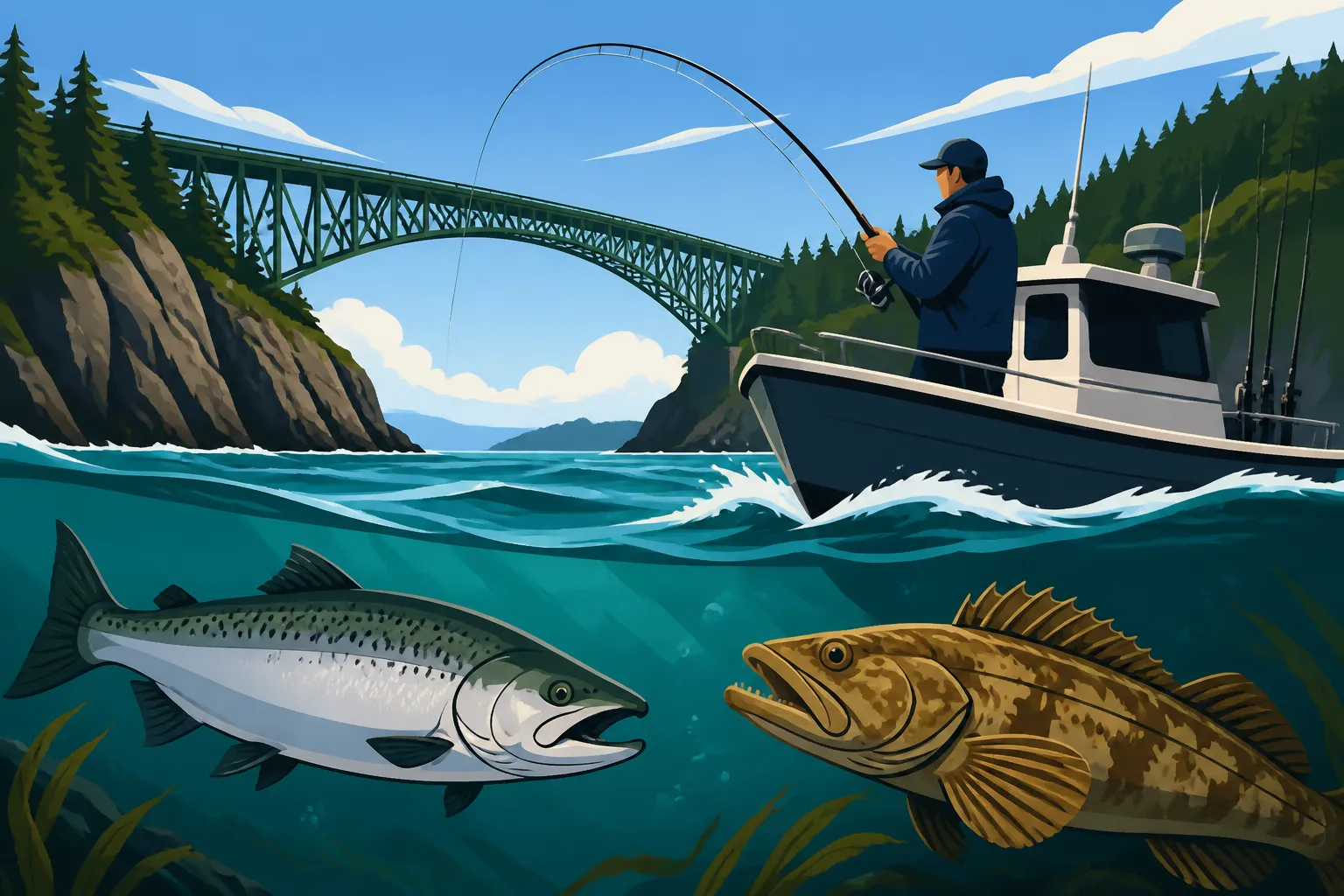
Fishing Deception Pass, Washington for Salmon and Lingcod
Deception Pass, with its mesmerizing whirlpools and powerful currents, can feel incredibly intimidating for many anglers. It's a place where the waters of Puget Sound and the Strait of Juan de Fuca collide, creating a truly unique and challenging fishing environment. You might have heard tales of incredible salmon and lingcod catches here, but also stories of lost tackle and frustration. This guide is here to unravel the mysteries of Deception Pass, helping you understand how to navigate its formidable waters and successfully target the prized salmon and formidable lingcod that call it home.
The Unique Challenges and Rewards of Deception Pass
Deception Pass isn't just a picturesque landmark; it's a dynamic, powerful marine environment that demands respect and understanding from every angler. The sheer force of the water moving through these narrow channels can be bewildering, but it's precisely this energy that makes it such a productive fishing ground. If you've ever felt overwhelmed just watching the currents, you're not alone – it takes a bit of knowledge to turn that apprehension into excitement.
Understanding the Geographic Layout and Water Dynamics
The Pass itself is a narrow strait that separates Whidbey Island from Fidalgo Island, connecting the relatively calmer waters of Skagit Bay (part of Puget Sound) with the open, more exposed waters of Rosario Strait and the Strait of Juan de Fuca. This bottleneck effect creates immense tidal currents, often exceeding 8 knots in places. Picture a massive bathtub draining and filling twice a day through a tiny opening – that's Deception Pass. These rapid currents scour the bottom, exposing rocky reefs, ledges, and deep holes that provide perfect ambush points for predatory fish. The ever-present eddies and whirlpools might look chaotic, but to a fish, they're often areas of reduced current where food can collect. Understanding these subtle movements, where the main current rips and where the water slows down, is the first step to finding fish. It's truly a marvel of natural hydrodynamics.
Why Deception Pass is a Prime Fishing Spot
Despite, or perhaps because of, its challenging nature, Deception Pass is a magnet for various fish species, particularly migratory salmon and resident lingcod. The rich, oxygenated waters brought in by the strong currents carry an abundance of baitfish, such as herring and sandlance, which are prime food sources for larger predators. For salmon, Deception Pass acts as a highway, a major transit route for Chinook and Coho heading to rivers in Skagit Bay and beyond. They stage here, waiting for favorable tides before pushing into freshwater, making them accessible to anglers. For lingcod, the rugged, rocky structure is an ideal habitat, providing countless crevices and ledges for them to lurk and ambush prey. It's one of those spots that, once you crack the code, offers incredible rewards. Many experienced anglers consider it one of The Best Places to Fish in Washington State for its consistent action and the quality of the fish.
Common Frustrations Anglers Face Here
Let's be honest, fishing Deception Pass can be frustrating. The number one culprit is usually the current. Anglers new to the area often struggle with getting their gear down to the fish, as light tackle is easily swept away. Lost tackle is a common lament, as jigs and weights snag on the rocky bottom when drifting too fast or getting caught in the turbulent eddies. Another frustration is simply timing – missing the crucial slack tide window can mean a fruitless trip, as fishing in the full roar of the current can be nearly impossible and even dangerous. Moreover, the sheer popularity of the Pass, especially during peak salmon runs, means that boat traffic can be dense, adding another layer of complexity for boat anglers trying to maintain a drift or troll. It's not a place for the faint of heart or the unprepared.
Targeting Salmon at Deception Pass
Salmon fishing in Deception Pass is an experience that combines thrilling strikes with the challenge of navigating powerful waters. While many salmon pass through, those that pause and feed can offer fantastic action. Knowing when they’re around and how to present your offering effectively is paramount.
Chinook and Coho Seasons and Behavior
Deception Pass sees strong runs of both Chinook (King) and Coho (Silver) salmon. Chinook, often called Washington's King of Fish, typically begin showing up in late spring and early summer, continuing through the fall. These are often larger, powerful fish, making them a highly sought-after prize. They tend to stick closer to the bottom, especially when currents are strong, feeding on herring and squid. Coho salmon generally arrive later in the summer and peak in the fall. These fish are known for their acrobatic fights and tend to cruise higher in the water column, often feeding aggressively on baitfish near the surface or in mid-water. Understanding the When Chinook Salmon Run in Washington's Puget Sound and When Coho Salmon Run in Washington is crucial for planning your trip, as their presence dictates your strategy. Both species use Deception Pass as a migratory corridor, meaning their numbers can fluctuate wildly day by day depending on tidal cycles and their push towards spawning grounds.
Best Salmon Fishing Methods
Due to the intense currents, traditional trolling methods can be tricky, but they are effective during specific tidal windows. Many anglers prefer to troll with downriggers, using heavy cannonballs to get their gear down to the desired depth. Popular lures include spoons, plugs, and plastic hoochies behind a flasher. When the current allows for slower drifts or at slack tide, jigging becomes incredibly productive. Heavy metal jigs, like Buzz Bombs or Point Wilson Darts, dropped to the bottom and jigged upward can entice salmon holding in the deeper holes and eddies. Mooching, which involves drifting cut bait (often herring) at a controlled depth, is another fantastic method during slower current periods or when fish are concentrated in specific areas. The key is to get your presentation directly into the feeding zone of the salmon, which often means heavy weights and a watchful eye on your fish finder.
Reading the Water for Salmon
Success at Deception Pass often hinges on reading the water and understanding where salmon might hold or travel. Look for eddies and current breaks behind rocks or points where fish can rest out of the main current flow. These "soft spots" in the water are often gold mines, especially when baitfish are being swept in. Also, pay close attention to depth contours and any structure that shows up on your sonar. Salmon will often use these features for cover or as staging areas. Observing other successful boats can also provide clues, but be mindful of giving them space. The strongest current lines are usually not where the fish are actively feeding, but rather where they travel. The real trick is finding the transition zones between the fast water and the slower eddies, or the deeper troughs where they might be staging.
Hunting Lingcod in the Pass's Depths
While salmon get a lot of attention, the monstrous lingcod of Deception Pass are a prize in their own right. These toothy bottom-dwellers provide a thrilling fight and make for excellent table fare. But you need to know where to find them and how to provoke a strike.
Lingcod Habitat and Seasonal Patterns
Lingcod absolutely thrive in the rugged, rocky habitat that Deception Pass provides. They are ambush predators, perfectly camouflaged to blend into the cracks, crevices, and kelp beds where they lie in wait for unsuspecting prey. Their preferred haunts are typically deep holes, rocky ledges, and areas with significant structure where current washes food over them. You'll often find them lurking between 30 and 150 feet of water, though they can be found shallower or deeper depending on the specific location and time of year. The best time to target lingcod in Washington is generally from late spring through early summer, when they are actively feeding after their spawning season. Always check the Washington Sport Fishing Seasons and Emergency Closures for specific dates, as lingcod seasons can vary and are often short to manage populations. Remember, they are territorial, so if you catch one, there's a good chance another might be in the vicinity.
Effective Lingcod Fishing Techniques
When it comes to lingcod, getting your offering right on the bottom and making it look alive is the name of the game. Jigging is incredibly effective here. Heavy lead-head jigs, often tipped with a large soft plastic grub or a whole herring, are dropped to the bottom and then jigged up and down with an aggressive retrieve. The idea is to mimic a fleeing or injured baitfish. Another popular method is using a live bait rig. Many anglers will catch greenling or other small baitfish right in the Pass and then immediately deploy them on a heavy-duty single hook, weighted to get to the bottom. Drifting with the current over rocky structure, bouncing your bait or jig along the bottom, is a fantastic way to cover ground and find these elusive fish. Since lingcod have incredibly powerful jaws and sharp teeth, using heavy leader material is non-negotiable to prevent bite-offs. Consider using a "scent" like Pro-Cure to give your presentation an extra edge. For a deeper dive into techniques, check out Bottom Fishing for Lingcod and Rockfish off Washington.
Lures and Bait for Deception Pass Lingcod
The preferences of lingcod can sometimes change, but there are some consistent performers at Deception Pass. Large soft plastic swimbaits, often 6 to 10 inches long, in natural colors like green, brown, or white, rigged on heavy lead-head jigs (2-6 oz, sometimes more depending on current) are highly successful. Brands like P-Line, Berkley, and B2 typically offer reliable options. As mentioned, live bait, especially greenling, sculpin, or herring, is often irresistible to a hungry lingcod. When using bait, ensure your hook is robust and sharp, as their mouths are bony and tough. Some anglers also have success with large, heavy metal jigs like Gibbs Minnows or Mac Deep Metal Jigs, particularly when fish are feeding aggressively.
Here's a quick comparison of common Deception Pass targets:
| Species | Prime Season | Preferred Habitat | Primary Diet | Common Techniques | Tackle Notes |
|---|---|---|---|---|---|
| Chinook | Late Spring – Fall | Migratory lanes, deeper eddies, current seams | Herring, Squid, Baitfish | Trolling, Jigging, Mooching | Heavy rods, downriggers, strong leader |
| Coho | Summer – Fall | Mid-water, surface, current breaks | Baitfish, Krill | Trolling, Jigging, Casting | Medium-heavy rods, fast retrieves |
| Lingcod | Late Spring – Early Summer | Rocky reefs, ledges, deep holes, kelp | Baitfish, Crabs, Octopus | Jigging, Live Bait, Drifting | Very heavy rods, wire/heavy mono leader, strong hooks |
Essential Gear and Techniques for Deception Pass
Successfully fishing Deception Pass requires not just the right understanding of the water, but also the right tools and knowing how to use them safely. The currents here are no joke, and under-gunned gear or an unthinking approach can lead to a frustrating, or even dangerous, outing.
Rods, Reels, and Line for the Currents
Given the robust fish and the challenging currents, heavy-duty gear is your friend. For salmon, a medium-heavy to heavy conventional or spinning rod, typically 8 to 10.5 feet long with a fast action, is ideal. This allows for both powerful hook sets and the ability to handle larger fish. Match this with a quality reel capable of holding at least 200-300 yards of 20-30 lb braided line, backed by a strong monofilament leader of 25-40 lb test. The braid's low stretch is crucial for detecting subtle bites in deep or moving water, and its thin diameter helps cut through the current. For lingcod, you'll want something even beefier: a heavy-duty boat rod, often 6 to 7.5 feet, paired with a stout conventional reel capable of handling 50-80 lb braided line. Your leader for lingcod should be 50-80 lb monofilament or fluorocarbon, or even wire leader in some cases, to withstand their sharp teeth and rocky environment. Remember, you're not just fighting the fish, you're fighting the current too.
Rigging for Success: Lead Heads, Jigs, and Bait
Your terminal tackle needs to be robust and designed to reach the strike zone effectively in strong currents. For jigging salmon, you'll need heavy jigs, ranging from 3 to 8 ounces or more, depending on the current speed and depth. Lead-head jigs with soft plastics are excellent for lingcod, usually in the 4 to 10 ounce range, often tipped with scent or a piece of bait. When trolling for salmon, integrate flashers and dodgers to attract attention, rigged in front of your spoons, plugs, or hoochies. For bait fishing, utilize heavy mooching sinkers or bottom-bouncing weights to keep your bait down. Circle hooks are highly recommended for bait fishing, especially for lingcod, as they are safer for the fish if released and often result in a solid hook-up in the corner of the mouth. Ensure all your snaps, swivels, and split rings are rated for heavy use, as a weak link will inevitably fail under the pressure of a big fish and strong current.
Safety First: Navigating Strong Currents
Safety at Deception Pass cannot be overstated. The currents are incredibly powerful and can create dangerous conditions, especially during peak tidal exchanges. Always check the tide charts well in advance and understand the ebb and flow. Most experienced anglers only fish the "slack" periods – the brief windows when the tide changes direction and the currents momentarily slow down. These periods are relatively short, sometimes only 15-30 minutes, but they offer the best and safest fishing opportunities. Boaters must be highly proficient in navigating strong currents, understanding how to manage boat speed, drift, and anchor if necessary (though anchoring in the Pass is generally not recommended due to the depths and currents). Always have PFDs readily available, know your vessel's capabilities, and consider fishing with experienced partners if it's your first time. This isn't a place for casual disregard for marine conditions; respect the Pass, and it might just reward you.
Navigating the Tides and Currents
The tide is not just an influence at Deception Pass; it is the fishing. Ignoring it is not an option, and understanding its rhythm is the single most critical factor for a safe and successful trip.
Decoding Deception Pass Tide Charts
Unlike many other locations, Deception Pass has its own specific tide and current charts, distinct from surrounding areas due to its unique constriction. You can't just look at the tide for Anacortes or Oak Harbor; you need the specific Deception Pass currents. These charts will show you the predicted times and speeds of maximum current ("max ebb" and "max flood") and, crucially, the "slack water" periods. Slack water is the short window when the current changes direction and momentarily slows, or even stops. This is your primary fishing window. Pay close attention to the predicted current speeds; anything over 3-4 knots can make fishing extremely difficult, if not impossible, for many techniques. A good practice is to consult multiple sources for current data, such as NOAA tide and current predictions, and cross-reference them. Learning to interpret these charts correctly will save you a lot of grief and significantly improve your chances of success.
Slack Tide: Your Window of Opportunity
Slack tide at Deception Pass is more than just a calm period; it's the golden hour(s) – or, more accurately, the golden minutes – for fishing. As the massive volume of water changes direction, there's a brief lull, sometimes as short as 15 minutes, sometimes up to an hour, where the currents become manageable. During this time, you can effectively get your gear to the bottom, drift over prime structure, and present your lures or bait to waiting fish without being swept away. This is when jigging, mooching, and even careful trolling become truly productive. Anglers often time their entire trip around hitting these slack periods perfectly, often arriving well in advance to set up and get ready for that critical window. Fishing during the full roar of the current, especially a strong flood or ebb, is largely unproductive and can be dangerous due to the turbulent water and immense pressure on your lines and tackle.
Strategies for Fishing Moving Water
While slack tide is ideal, fish don't stop feeding entirely when the water moves. There are strategies for fishing the "moving water" portions of the tide, especially when the current isn't at its absolute peak. One common tactic is to focus on the edges of the main current, finding those "soft spots" or eddies where the water swirls but doesn't rip as hard. Fish will often hold in these areas, conserving energy while waiting for bait to be swept by. Using heavier weights and jigs than you might typically use in calmer waters is also necessary to maintain bottom contact. Drifting with the current, rather than trying to anchor against it, is usually the safest and most effective approach. This allows you to cover more ground and present your offering naturally. Some anglers even employ specialized techniques like "power drifting," using their motor to subtly slow their drift against a moderate current, giving their jigs or bait more time in the strike zone. Just remember to always prioritize safety and avoid the most intense current flows if you're not an expert mariner.
Planning Your Deception Pass Fishing Adventure
A successful fishing trip to Deception Pass isn't just about having the right gear; it's about smart planning, knowing when to go, and utilizing available resources. This unique location demands a thoughtful approach.
Best Times of Year to Visit
While Deception Pass offers year-round fishing opportunities for various species, specific times of year stand out for salmon and lingcod. For Chinook salmon, late spring through fall generally sees the best action, with August and September often being prime for both Chinook and Coho. Coho salmon typically ramp up in late summer and peak into fall, offering incredible light tackle battles. Lingcod season typically opens in May or June and runs through early July, offering a short but intense window to target these bottom-dwelling brutes. Beyond these target species, you can find various bottomfish throughout the year. Always consult the official Washington Sport Fishing Seasons and Emergency Closures pamphlet for the most up-to-date and specific dates, as these regulations can change annually or even in-season. Additionally, keep an eye on emergency rule changes announced by the WDFW, as these can impact your plans significantly.
Local Resources and Boat Launches
For boat anglers, the closest and most convenient launch ramp is at Cornet Bay, located within Deception Pass State Park on Whidbey Island. This ramp offers good access, but it can get very busy, especially on peak fishing days during salmon or lingcod season. It's wise to arrive early, particularly on weekends. The park also offers camping and amenities, which can be great if you're planning an extended trip. Another option, though a bit further, is the public launch in Anacortes, which provides access to Rosario Strait and can be a good staging point for fishing the outer edges of the Pass. Before launching, ensure you have all necessary licenses and endorsements. You can find detailed information on obtaining them in the Washington Fishing License Guide for Nonresidents or for residents, depending on your status.
When a Guide Makes All the Difference
For many, especially those new to the area or without a suitable boat, a guided trip can be the best way to experience fishing Deception Pass. A professional guide brings invaluable local knowledge, years of experience navigating the currents, and the specialized gear needed to safely and effectively target salmon and lingcod. They know the subtle nuances of the tides, where the fish are holding on any given day, and how to maximize your fishing time during those crucial slack windows. While it might seem like an added expense, the learning experience and the increased chance of success often make it well worth the investment. Services like FishingBooker can connect you with experienced, local Washington fishing guides who specialize in Deception Pass. They often provide all the necessary rods, reels, and tackle, and will even clean your catch. If you’re considering a guide, exploring options through platforms like FishingBooker is a great starting point, allowing you to compare guides, read reviews, and find someone who fits your needs. Many reputable guides who list on FishingBooker offer trips specifically tailored to Deception Pass's unique challenges, ensuring you have the best possible chance at a memorable catch without the steep learning curve. They'll also ensure you're compliant with all Washington Fishing Regulations Every Angler Should Know, including bag limits and gear restrictions.
Disclaimer
Fishing in Washington State involves inherent risks. Always be aware of weather conditions, tidal changes, and exercise caution. Regulations can change rapidly, so always consult the latest Washington Department of Fish and Wildlife (WDFW) regulations before heading out. This guide provides general information and should not be considered a substitute for official regulations or professional safety advice.