Puget Sound Marine Area With the Earliest Salmon
For many Washington anglers, the wait for salmon season to kick off can feel like an eternity, leaving you wondering where you can wet a line first when that salmon fever hits. It's a common frustration to see different areas open at different times, and trying to figure out which Puget Sound marine area offers the earliest opportunities to tangle with a salmon can be a real head-scratcher. This guide aims to clear up that confusion, detailing where and why you might find the earliest salmon fishing action in our beautiful Puget Sound.
Unraveling the Earliest Salmon Opportunities in Puget Sound
When you're itching to get out on the water for salmon, knowing which parts of Puget Sound tend to open first is crucial. It's not always a single, clear-cut answer because regulations can shift annually based on fish forecasts and conservation needs. However, historically, and often currently, the areas along the Strait of Juan de Fuca—specifically Marine Area 5 (Sekiu and Pillar Point) and Marine Area 6 (Eastern Strait of Juan de Fuca)—are typically among the first to see some form of salmon fishing open. These aren't technically "Puget Sound proper" in the sense of the inner Sound, but they are the gateway to it and offer some of the earliest saltwater salmon opportunities that most anglers consider part of the broader Puget Sound fishing experience.
Pinpointing the Premier Early Season Marine Areas
Marine Area 5, centered around the picturesque town of Sekiu, frequently claims the title for one of the earliest Chinook (King salmon) openers. Sometimes, you might see it open as early as late June or early July, ahead of many other areas further south in the Sound. This early opener is often for hatchery-marked Chinook, meaning fish with a clipped adipose fin. The reason Sekiu often gets the nod first is its unique geographical position. It's right at the mouth of the Strait of Juan de Fuca, acting as a natural bottleneck for salmon migrating into Washington's inland waters. Anglers often flock here, making towns like Sekiu a buzzing hub when the early season kicks off.
Close behind, or sometimes even concurrently, Marine Area 6 can also provide early opportunities. This area stretches from the mouth of Puget Sound eastward towards Port Angeles and the San Juan Islands. While Sekiu might lead the charge, Marine Area 6 often follows quickly, and sometimes specific management units within it, like areas closer to Port Angeles, might see special openings. The key here is always to check the very latest regulations and emergency rules issued by the Washington Department of Fish and Wildlife (WDFW), as these can change rapidly, even mid-season. Knowing how Washington Sport Fishing Seasons and Emergency Closures work is critical for any angler hoping to hit the early bite.
The Migratory Highway Effect
Think of the Strait of Juan de Fuca as a grand highway for salmon. Every single salmon, whether it's destined for the Skagit River, the Puyallup, the Cowlitz, or even rivers further north in British Columbia, has to pass through this corridor on its journey. This makes Marine Areas 5 and 6 prime locations because you're intercepting these fish as they travel. Early in the season, you're primarily targeting "feeder" Chinook—fish that aren't yet mature enough to spawn but are actively feeding and growing as they migrate. These are often bright, chrome-silver fish, full of fight and absolutely delicious on the dinner table. The sheer volume of fish moving through this migratory bottleneck provides a consistent, albeit sometimes challenging, opportunity for anglers eager to get their first salmon of the year. It's a different game than targeting fish returning to their specific river mouths later in the season; here, you're intercepting active, ocean-run fish.
Understanding Why Certain Areas Open First
The decision-making process behind which marine areas open for salmon first is a complex dance between biology, conservation, and socio-economic factors. WDFW, along with tribal co-managers, meticulously plans these seasons, often months in advance, though flexibility remains paramount. It’s never just a whim; there’s a lot of science and forecasting involved.
Conservation, Forecasts, and Fishery Management
The primary driver for early season openings, especially for Chinook, is often the desire to target abundant hatchery-reared fish while minimizing impact on wild, threatened, or endangered salmon stocks. WDFW conducts extensive pre-season forecasts for various salmon runs, estimating the number of returning fish for each species and stock. These forecasts dictate how many fish can be harvested sustainably. Areas like Marine Area 5 and 6, being migratory corridors, often have a mix of fish from many different systems. Regulators can allow limited fisheries in these areas when they predict a strong return of hatchery-origin Chinook or Coho that are passing through, knowing that many of these fish are bound for rivers far away or are surplus to spawning needs.
Moreover, the "mark-selective" fishery rules play a massive role. In many early season openings, anglers are only allowed to keep adipose-fin clipped salmon, indicating they are hatchery-reared. This helps protect wild Chinook populations, which are often listed under the Endangered Species Act. By requiring anglers to release unmarked (wild) fish, managers can open seasons earlier in areas where both hatchery and wild fish are present, but the wild fish are primarily passing through to protected rivers. This careful balancing act is essential to ensure sustainable fisheries for future generations. Understanding Washington Fishing Regulations Every Angler Should Know is absolutely key here.
Key Species for Early Season Success
While the allure of Chinook salmon is undeniable, especially those big, bright "kings," early season fishing in the Strait of Juan de Fuca often offers opportunities for other species as well.
- Chinook Salmon (King Salmon): These are the main targets in early season fisheries. As mentioned, you'll primarily be looking for "feeder" Chinook, which are actively gorging themselves on baitfish. They can be found throughout the water column, but often relate to bait schools and structure. Knowing Chinook Salmon: Washington's King of Fish is a definite advantage.
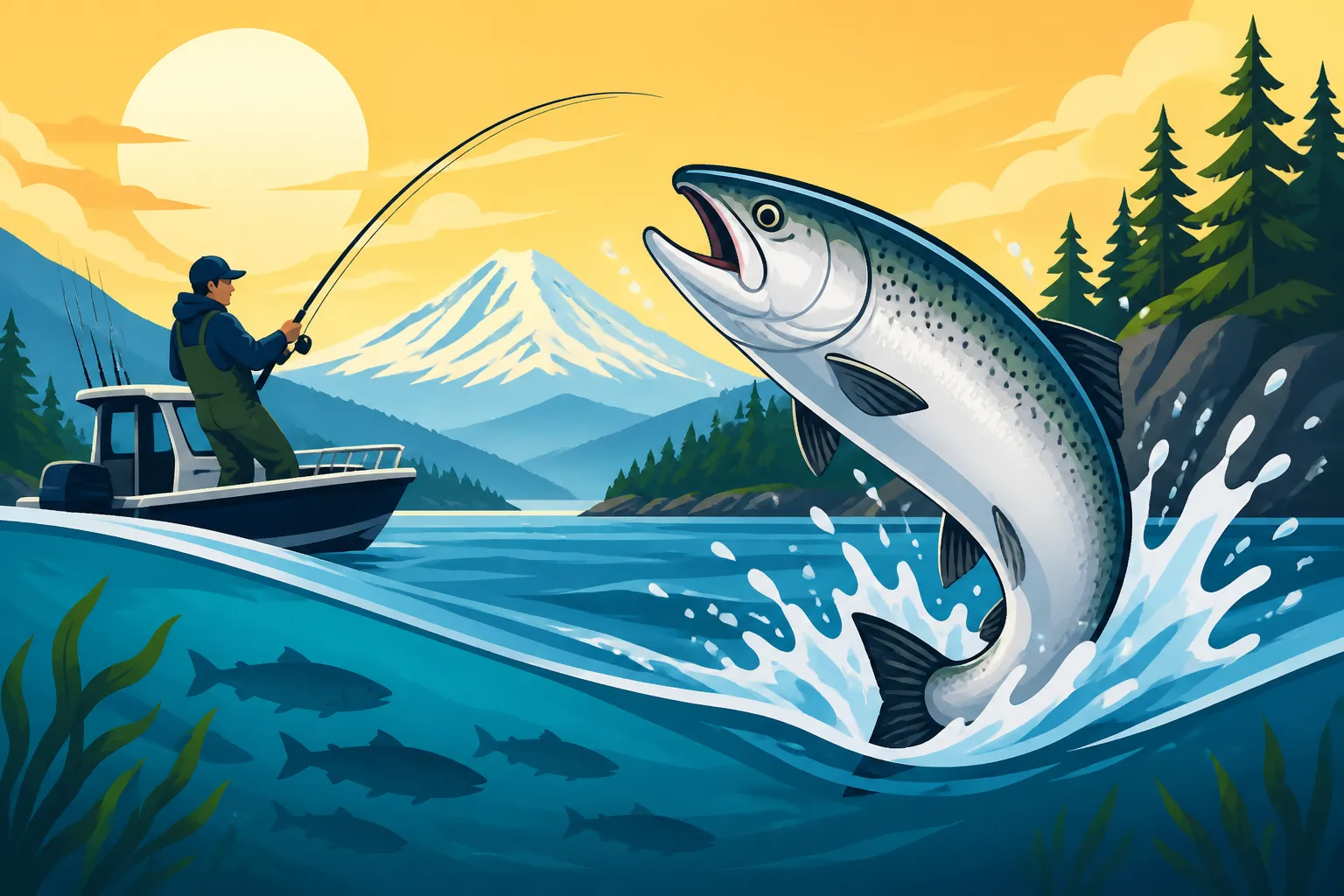
- Coho Salmon (Silver Salmon): While Chinook often dominate the earliest openers, Coho can start showing up in good numbers as early as July or August in these same areas. They are known for their acrobatic fights and aggressive takes. When Coho begin to arrive, they add another exciting dimension to the fishing, often found higher in the water column and willing to hit faster trolled gear.
- Bottomfish: Even if salmon are slow, these marine areas are also fantastic for bottom fishing. Species like Lingcod and various Rockfish can be found on rocky reefs and pinnacles. Sometimes, a "mixed bag" day, where you can switch between salmon and bottomfish, makes for a really fun and productive outing. Just be mindful of specific seasons and regulations for bottomfish, as they often differ from salmon rules.
| Marine Area | Typical Earliest Opener Target | Primary Species | Common Fishing Methods | Key Characteristics |
|---|---|---|---|---|
| Marine Area 5 | Late June – Early July | Chinook (hatchery-mark) | Trolling (downriggers) | Often first to open for Chinook, migratory corridor |
| Marine Area 6 | Early – Mid-July | Chinook (hatchery-mark) | Trolling (downriggers), Mooching | Major migratory route, strong currents |
| Inner Puget Sound | Mid-July – August | Chinook, Coho | Trolling, Mooching | Later openings, more resident fish |
Strategies for Targeting Early Season Salmon
Once you've identified the marine area and confirmed the season dates, the next step is to understand how to actually catch these early season salmon. Fishing in the Strait of Juan de Fuca, particularly around Sekiu and its surrounding waters, presents unique challenges and rewards due to strong currents and deep waters.
Effective Techniques for the Straits
Trolling is overwhelmingly the most popular and effective method for early season salmon in Marine Areas 5 and 6. Anglers typically employ downriggers to get their gear down to the precise depth where fish are holding, which can vary wildly from day to day, or even hour to hour.
- Downrigger Trolling: This is your bread and butter. You'll want to run your gear anywhere from 50 to 200 feet deep, often deeper, especially for Chinook. Pay close attention to your fish finder to mark bait schools and individual fish. The rule of thumb is often to fish just above or directly in the bait. Popular presentations include flashers or dodgers paired with bait (like herring, anchovies, or sardines) or artificial lures such as spoons (e.g., Silver Horde Coho Killers, Gibbs Delta spoons), hootchies, or even plastic squids. Understanding Trolling Herring for Puget Sound Chinook in Washington can significantly boost your success.
- Mooching: While less common for the earliest Chinook openings in the deep, fast-current waters of the Strait, mooching can be highly effective in specific situations, especially for Coho as they arrive. This technique involves slowly drifting with cut-plug herring or anchovy, allowing it to flutter naturally through the water column. It's often done over bait balls or when fish are concentrated in specific depths.
- Current Management: The Strait of Juan de Fuca is known for its strong currents. Learning to fish with the currents, rather than against them, is vital. Sometimes, the bite will be best on a specific tide, or during a slack tide. Keep an eye on tide charts and observe how other successful boats are positioning themselves.
Essential Gear and Bait Considerations
Having the right gear is non-negotiable for success and safety in these waters.
- Rods and Reels: For downrigger trolling, a medium-heavy rod (8'6" to 10'6") paired with a robust level-wind reel (like a Penn Fathom or a Daiwa Saltiga) spooled with 25-30 lb monofilament or braided line is ideal. You need the backbone to handle powerful Chinook and the sensitivity to detect subtle bites.
- Terminal Tackle: A good selection of flashers (e.g., Pro-Troll, Gibbs Delta) in various colors (chartreuse, green, white, clear) and sizes, alongside different dodgers, is crucial. For bait, fresh or brined herring and anchovies are top choices. Carry different sizes to match the baitfish salmon are keying on. For artificials, spoons in chrome, green, blue, or glow patterns are consistently productive.
- Electronics: A reliable fish finder with good down-imaging and side-imaging capabilities is your best friend. GPS is also essential for navigation and marking productive spots. Many boats also use marine radios for communication and safety.
- Safety Gear: Don't forget PFDs, flares, a first-aid kit, and a functional bilge pump. The waters of the Strait can get rough very quickly, so always check the marine weather forecast before heading out.
Planning Your Early Season Puget Sound Salmon Adventure
Embarking on an early season salmon trip in Puget Sound involves more than just picking a date and throwing a line in. It requires careful planning, adherence to regulations, and utilizing available resources to maximize your chances of success and ensure a safe and enjoyable outing.
Navigating Regulations and Emergency Rules
This cannot be stressed enough: always check the latest regulations. The WDFW website is your ultimate resource. They publish detailed recreational fishing rules and also issue "Emergency Rule Changes" frequently, especially during the peak season. These changes can modify opening dates, bag limits (like the Daily Limit for Chinook in Puget Sound), or even close an area entirely, sometimes with very short notice. Many anglers also use the Fish Washington app or call the WDFW hotline for the most up-to-date information. If you're planning a trip to Sekiu, for example, search specifically for Marine Area 5 salmon regulations for the current year. Being caught unaware of a rule change can lead to fines and a ruined day.
It's also important to understand specific nuances like bag and possession limits. Bag limits apply per day, while possession limits dictate how many fish you can have in your possession at any given time, including those at home. Also, remember that a The Washington Catch Record Card and What It Requires is mandatory for salmon, steelhead, halibut, and sturgeon. You need to record your catch immediately after retention.
Booking Guides and Checking Resources
If you're new to fishing the Strait of Juan de Fuca or simply want to maximize your chances, booking a professional fishing guide is an excellent investment. Guides specialize in specific marine areas and possess invaluable local knowledge about where the fish are, what they're biting on, and how to navigate the complex currents. Websites like FishingBooker are great resources for finding reputable guides in areas like Sekiu or Port Angeles. They allow you to compare different charters, read reviews, and understand what's included in a guided trip. Many seasoned anglers will tell you that a good guide can cut years off your learning curve. If you're still on the fence, consider reading up on Choosing Between a Guide and a DIY Trip to help make your decision.
Beyond guides, there are several other resources that can help you plan:
- Local Tackle Shops: These are goldmines of information. Shop owners and staff are often anglers themselves and can provide real-time updates on fishing conditions, hot lures, and local nuances that aren't in the official regulations.
- Online Forums and Social Media Groups: Many active fishing communities discuss daily reports and share tips. While anecdotal, they can provide a good pulse of what's happening on the water.
- Marine Area Forecasts: Beyond general weather, look for marine forecasts that detail wave height, wind speed, and visibility, especially for offshore sections of Marine Area 5 and 6. Safety should always be your top priority.
Early season salmon fishing in Puget Sound, especially in the gateway marine areas like Sekiu and the Eastern Strait of Juan de Fuca, offers some of the most exciting opportunities of the year. With careful planning, a solid understanding of the regulations, and the right techniques, you can be among the first to experience the thrill of a Washington salmon on the line.
Disclaimer
Fishing regulations are subject to change. Always consult the official Washington Department of Fish and Wildlife (WDFW) website or their current printed regulation pamphlet before heading out on the water. This article is for informational purposes only and does not supersede official regulations.