Corkies for Steelhead and How to Rig Them
Trying to catch Washington steelhead can feel like chasing ghosts sometimes, can't it? You spend hours on the river, casting your heart out, only to come up empty-handed while someone else reels in a chromer. One of the biggest frustrations is getting a natural, snag-free presentation in those unpredictable river currents. This guide is all about mastering the art of rigging Corkies, a buoyant, often overlooked piece of tackle that can significantly improve your chances and reduce those frustrating hang-ups.
What Exactly Are Corkies and Why Are They So Good for Steelhead?
If you've spent any time at a tackle shop, you've probably seen those small, often brightly colored, egg-shaped or cylindrical pieces of plastic. Those are Corkies, and they are far more than just decorative additions to your leader. For steelhead anglers, especially those drift fishing Washington's numerous rivers, Corkies are a game-changer, offering a subtle yet highly effective presentation that’s hard for a hungry (or even just curious) steelhead to ignore.
The Anatomy of a Corky and Its Appeal to Steelhead
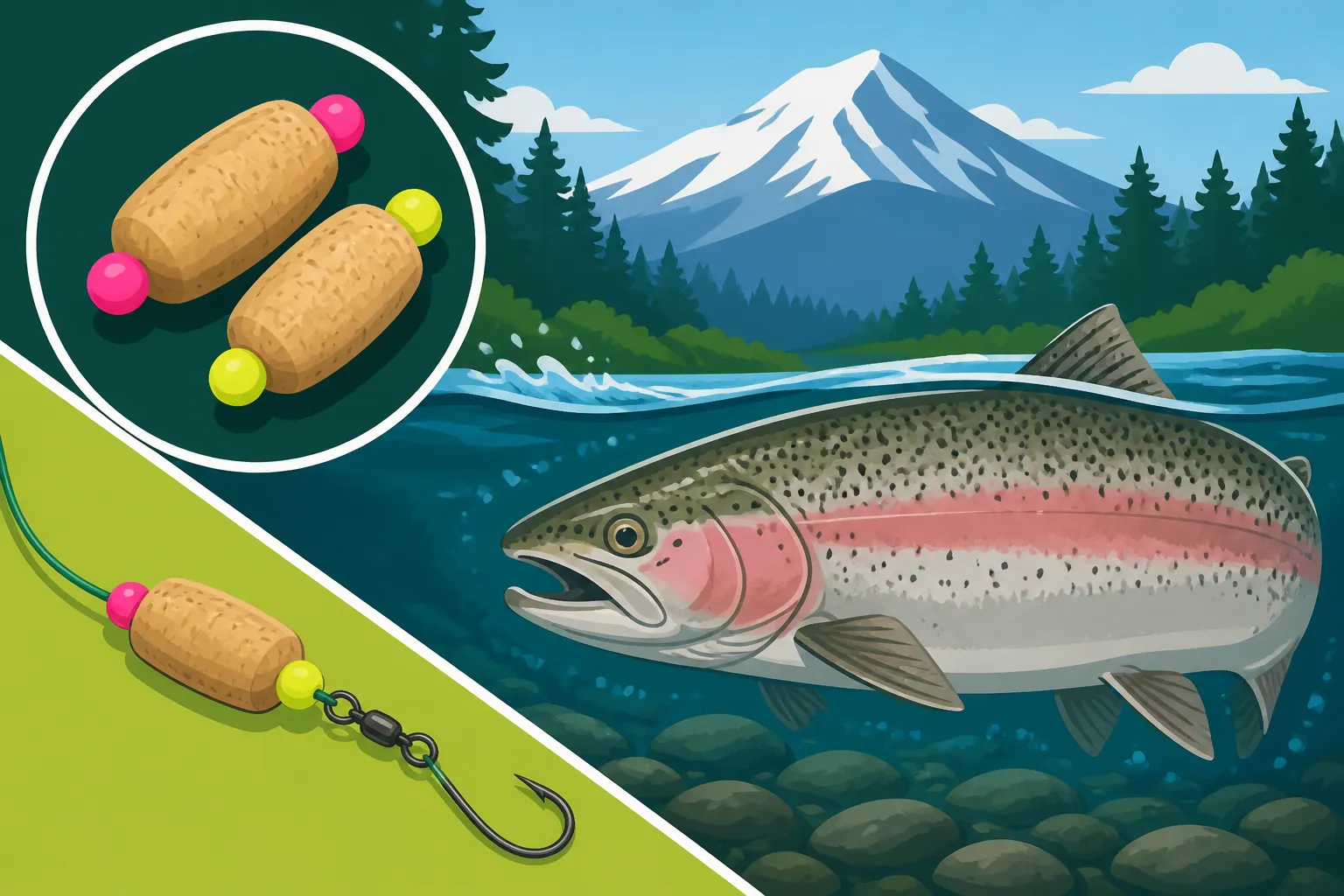
At its core, a Corky is a buoyant piece of plastic, typically made of hard foam or similar lightweight material. They come in a dazzling array of colors—from vibrant pinks, oranges, and chartreuses to more subdued natural tones like white or black—and various shapes and sizes. What makes them so special for steelhead is their inherent buoyancy. When rigged correctly, a Corky acts like a tiny float, lifting your bait or yarn off the river bottom. This is absolutely crucial in rocky, snag-filled rivers where traditional lead-weighted presentations are prone to getting hung up every other cast, quickly draining your tackle box and your patience. That feeling of your line stopping abruptly, only to realize you're stuck on a rock, is one of the most disheartening experiences in steelhead fishing, and Corkies help mitigate that significantly.
Beyond their flotation properties, the colors and shapes of Corkies play a vital role. Many anglers believe that the egg-shaped Corkies, especially in colors like "peach," "roe," or "cerise," mimic natural salmon or steelhead eggs drifting downstream. Steelhead, being opportunistic predators, will readily consume eggs during spawning seasons. Even outside of direct egg-drop periods, the bright, unnatural colors can pique a steelhead's curiosity, acting as an attractor in stained or turbid waters. The slight movement and flash of a Corky tumbling through the current can often be just enough to trigger a strike when other presentations fail. Moreover, the plastic material of Corkies is excellent at absorbing scents. You can douse them in your favorite anadromous fish attractant, and they’ll slowly disperse that scent trail as they drift, adding another layer of appeal to your offering.
The Psychological Advantage of a Well-Presented Corky
Steelhead are notoriously finicky fish. They're not always aggressively feeding, and often, a strike is more a reaction than a hunger-driven bite. This is where the natural, drag-free drift offered by a properly rigged Corky truly shines. Imagine a natural salmon egg or a small bug drifting effortlessly downstream with the current. It moves at the exact speed of the water, without any unnatural tugging or bouncing. That's the presentation you're aiming for with a Corky. The buoyancy allows your bait to dance and tumble just above the riverbed, mimicking something truly natural that a steelhead might encounter. This subtle, unencumbered movement can be incredibly enticing, especially to wild steelhead that are highly attuned to their environment.
When paired with a small piece of yarn or a cured roe cluster, the Corky keeps the bait suspended, preventing it from flattening against the bottom or getting buried in sediment. This means your offering is always visible and moving enticingly in the water column. The gentle bob and weave of a Corky and bait combination drifting through a deep pool or over a rocky riffle can make all the difference between a frustrating blank day and a chrome-bright memory. This technique is particularly effective in Washington's often clear and highly pressured rivers, where steelhead have seen just about every lure and bait under the sun. Presenting something that looks, moves, and potentially smells like a natural food source, but is subtly enhanced by the Corky's attributes, often proves irresistible.
Essential Gear Beyond the Corky for a Successful Steelhead Rig
While the Corky is a star player in steelhead fishing, it's part of a larger team. The effectiveness of your Corky rig depends heavily on the complementary gear you choose. Just like a good chef needs more than just a single ingredient, a steelhead angler needs the right rod, reel, line, sinker, and hook to bring it all together. Overlooking these components can lead to a less than ideal presentation, costing you valuable fishing time and opportunities.
Rods, Reels, and Lines: Building Your Foundation
For drift fishing with Corkies, your rod is your primary tool for detecting subtle bites and controlling your drift. You'll want a rod that's long, typically between 8'6" and 10'6", with a moderate or moderate-fast action. This length provides several advantages: it helps you keep more line off the water for a better, drag-free drift, offers superior line control, and acts as a shock absorber when fighting a powerful steelhead. A medium-light or medium power rating is usually sufficient, providing enough backbone to handle a strong fish but enough sensitivity to feel the lightest tap. Brands like Lamiglas, Shimano, or Fenwick offer excellent options that strike this balance. For reels, a good quality spinning reel in the 2500-4000 series is a popular choice for its ease of use and ability to cast light rigs. Alternatively, many experienced drift anglers prefer baitcasting reels for their enhanced line control and ability to detect bites on the drop.
Your line choice is equally important. For your main line, braided line in the 15-30 lb test range is a fantastic option due to its extreme sensitivity, low stretch, and thin diameter. The lack of stretch transmits even the slightest bump directly to your rod tip, which is crucial for distinguishing between a steelhead bite and a rock. However, braid is highly visible in the water, so you'll absolutely need a leader. A high-quality fluorocarbon leader in 8-15 lb test is ideal. Fluorocarbon is nearly invisible underwater, extremely abrasion-resistant (a must in rocky steelhead rivers), and has good knot strength. The length of your leader can vary, but typically 24-48 inches is a good starting point, often attached to your mainline via a small, strong barrel swivel to prevent line twist. You can find a wide range of these components, from specialized fishing line to high-quality swivels, on platforms like Amazon, making it easy to assemble your ideal setup.
Sinkers and Spacing: Getting Your Presentation Right
The right sinker is critical for getting your Corky and bait down to where the steelhead are without constantly snagging. The goal is to use just enough weight to tick the bottom occasionally, allowing your rig to tumble naturally with the current, but not so much that it's dragging or getting hung up. Various sinker styles are popular for steelhead drift fishing, including slinky weights (fabric-covered lead shot that is very snag-resistant), pencil lead (thin lead wire that flexes over obstacles), and traditional split shot. The weight you choose will depend entirely on the current speed and depth of the water you're fishing. Faster, deeper water demands more weight, while slower, shallower runs require less. Getting this right can sometimes feel like a delicate dance, often requiring adjustments after a few casts, which can be frustrating when you just want to fish.
Sinker spacing from your Corky and bait is also key. A common starting point is to have your sinker about 18-36 inches above your Corky. This allows the Corky and bait to float and tumble freely ahead of the weight, giving it that natural, unencumbered presentation. If the sinker is too close, it can impede the natural movement of the Corky; too far, and you might not feel light bites effectively. Experimentation is always encouraged. For example, if you find your bait isn't quite getting down or is drifting too fast, adding a small piece of split shot closer to the Corky, or increasing the main sinker weight, can make a significant difference. Conversely, if you're snagging too much, reduce your weight or lengthen the distance between your sinker and bait. Understanding "Sinker Weight for Drift Fishing" is a fundamental skill that will help you immensely on the river.
Hooks and Bait Combos: The Final Touch
The hook you choose needs to be sharp, strong, and sized appropriately for your bait and target species. For steelhead, popular choices include octopus hooks or bait holder hooks, typically in sizes ranging from #1 to #2/0. The specific size often depends on the size of your Corky and the type of bait you’re using. For example, a smaller Corky paired with a small piece of yarn might call for a #1 or 1/0 hook, while a larger Corky with a substantial roe cluster might warrant a 2/0. When threading your Corky, it’s best to slide it onto your leader first, above your hook, allowing it to rest just above the eye or knot of your hook. This ensures the buoyancy is directly applied to your bait.
The magic of Corkies is often unleashed when they're combined with a natural scent or visual attractant. Yarn is perhaps the most classic pairing. Small pieces of brightly colored yarn (e.g., hot pink, chartreuse, orange) are threaded onto the hook, often wrapped around the shank or tied in a small cluster. This mimics an egg and holds scent wonderfully. Cured salmon or steelhead roe bags are another highly effective option, offering both scent and a natural food source. You can tie a small mesh bag around a cluster of roe and then thread your hook through it, with the Corky positioned just above. Other anglers might use small chunks of prawn, sand shrimp, or even artificial baits that imitate eggs. Remember to always check current regulations regarding bait bans, as "Barbless Hook Requirements on Washington Rivers" are also common, meaning you'll want to use single, barbless hooks. The combination of the Corky's buoyancy and color, along with a tempting bait, creates a truly irresistible offering for steelhead.
Step-by-Step Guide to Rigging Your Corky for Washington Steelhead
Getting your Corky rig just right can seem intimidating at first, with all the talk of leader length, sinker weight, and knot types. But trust me, it’s much simpler than it sounds, and with a little practice, you’ll be tying these rigs efficiently on the riverbank. The goal is a natural, free-flowing presentation that doesn't scream "fishing tackle!" to wary steelhead.
The Basic Drift Rig: Proven and Effective
Let's walk through rigging a standard, highly effective Corky drift rig. This is the foundation, and once you master it, you can easily adapt it to different conditions.
- Prepare Your Main Line: Start by reeling out about 6-8 feet of your main line (braid is recommended for sensitivity).
- Attach Your Swivel: Tie a strong barrel swivel (size 10-12 is common) to the end of your main line. A Palomar knot is excellent for braid, or an improved clinch knot for monofilament. This swivel helps prevent line twist and acts as a stopper for your sliding weight.
- Add a Bead (Optional but Recommended): Slide a small plastic bead onto your main line above the swivel. This bead protects your knot from the constant bumping of your sliding sinker. You can find small packs of these beads on Amazon, which can save your knots from wear and tear over time.
- Attach Your Sinker: Now, attach your chosen sliding sinker (slinky, pencil lead, or a heavier piece of split shot) to the main line, so it rests above the bead and swivel. The sinker should be able to slide freely.
- Tie Your Leader: To the other end of your barrel swivel (the side without the sinker), tie a piece of fluorocarbon leader. A good starting length is 24-48 inches, in 8-15 lb test. Again, an improved clinch knot or a uni-knot works well here.
- Add Your Corky: Slide your Corky onto your fluorocarbon leader. It should be positioned so it rests above your hook, sometimes right above the hook eye or snell knot.
- Tie Your Hook: Finally, tie your chosen steelhead hook (e.g., #1 or #1/0 octopus hook, always barbless for many Washington rivers) to the very end of your leader. A snell knot is ideal for presentation and strength, but a strong improved clinch knot is also perfectly acceptable.
- Add Your Bait: Thread your preferred bait (yarn, roe bag, prawn piece) onto your hook, ensuring it's securely attached and the hook point is exposed for a clean hookset.
Once rigged, hold your setup out of the water. Your sinker should hang freely, followed by the swivel, then your leader with the Corky and bait tumbling naturally below. This table illustrates a common basic drift rig setup:
| Component | Typical Material/Size | Purpose |
|---|---|---|
| Main Line | 15-30 lb Braided Line | Sensitivity, strength, low stretch |
| Barrel Swivel | Size 10-12 (e.g., Sampo, Rosco) | Prevent line twist, connect main line to leader, stopper for weight |
| Bead | 4-6mm Plastic | Protect swivel knot from sliding sinker impact |
| Sliding Sinker | 1/4 – 1 oz Slinky, Pencil Lead, Egg Sinker | Get rig to desired depth, allow natural drift, minimize snags |
| Leader Line | 8-15 lb Fluorocarbon (24-48") | Invisibility, abrasion resistance, connect bait/Corky to swivel |
| Corky | Small-Medium (e.g., 8mm-15mm) | Buoyancy, visual attraction, scent absorption, prevent snags |
| Hook | #1 to #2/0 Octopus (Barbless) | Secure bait, hook fish, easy removal |
| Bait | Yarn, Roe, Prawn, Sand Shrimp | Scent, visual attraction, food source imitation |
Adjusting Your Rig for Different River Conditions
Rivers are dynamic environments, and what works in one run might not work in the next. Being able to quickly adapt your Corky rig is a hallmark of a successful steelhead angler. Understanding "How Water Clarity Affects Steelhead Fishing" is a great example of when adjustments are crucial.
- Fast, Deep Water: If you're fishing a strong, deep current, you'll need more weight to get your rig down to the fish. Increase your sinker size, perhaps going up to 3/4 or 1 ounce. You might also shorten your leader slightly (e.g., 24 inches) to maintain better contact with the bottom and detect bites in the strong current. Consider using a slightly larger, brighter Corky that can stand out more in potentially turbid water.
- Slow, Clear Water: In slower, clearer sections, stealth is paramount. Reduce your sinker weight significantly, perhaps to 1/4 or 3/8 ounce, to ensure a very subtle, natural drift. Lengthen your leader (up to 48 inches or even more) to separate your bait further from your main line and sinker, making it appear more natural. Opt for smaller, more natural-colored Corkies (e.g., white, peach, light orange) that blend in rather than stand out. A longer leader also helps with "Leader Length for Clear Water Steelhead in Washington," ensuring the fish sees your bait before your line.
- Murky or High Water: When the river is blown out or carrying a lot of sediment, visibility is low. This is when bright, often fluorescent Corkies (chartreuse, hot pink) really shine. Their vibrant colors help steelhead locate your bait. Don't be afraid to use a slightly larger Corky to create more visual presence. You'll likely need more weight to cut through the increased current. Conversely, "What Changes When a Washington River Is Blown Out" is a good primer for understanding river dynamics in these challenging conditions.
Sometimes, anglers will even use two smaller Corkies on their leader, spaced a few inches apart, to create more buoyancy or a more varied color presentation. This kind of flexibility, being willing to change your rig based on what the river is telling you, is what separates consistent anglers from those who get lucky.
Practical Tips for Drift Fishing Success with Corkies
Rigging is one thing, but knowing how to fish that rig effectively is another. "Drift Fishing for Steelhead in Washington Rivers" is an art form, and Corkies are a primary tool.
- Cast Upstream and Quartering: Aim your cast slightly upstream and across the current, allowing your rig to sink and then drift naturally back towards you. The goal is for your sinker to just tick the bottom, with your Corky and bait tumbling slightly ahead of it.
- Read the Water: Steelhead don't just hang out anywhere. Look for current seams, soft spots behind boulders, tail-outs of pools, and log jams. These are prime resting and feeding lies. Your job is to present your Corky rig through these zones. Learning "Reading Water for Bank-Fishing Salmon" can greatly improve your river sense.
- Mend Your Line: As your rig drifts, the current will push a bow in your line, creating drag. To counteract this and maintain a natural drift, "mend" your line by flipping the rod tip upstream to throw slack into your drift. This keeps your bait moving at the same speed as the current.
- Detecting Bites: This is perhaps the hardest part. Steelhead bites can range from a violent tug to a barely perceptible "tick" or simply a momentary stop in your line's drift. Watch your line closely where it enters the water. Any unnatural pause, twitch, or sudden movement could be a bite.
- Setting the Hook: When you suspect a bite, don't hesitate. Lift your rod tip sharply and firmly, reeling in slack as you do. Don't try to "reel into" the fish; a solid upward sweep of the rod is usually most effective for driving the hook home.
- Fighting the Fish: Steelhead are powerful fighters. Keep your rod tip up, let the reel's drag do its job, and be prepared for strong runs and acrobatic jumps. Guide the fish into softer water or slack areas when possible to gain control.
Mastering these techniques, combined with a well-rigged Corky, will significantly increase your success rates on Washington's steelhead rivers.
Common Corky Mistakes and How to Avoid Them
Even with the right gear and a solid understanding of rigging, it's easy to fall into common traps that can hinder your success with Corkies. Avoiding these pitfalls can make the difference between a productive day and a frustrating one. After all, nobody wants to spend their precious fishing time battling snags or wondering if their presentation is even visible to a fish.
Over-Weighting or Under-Weighting Your Rig
This is perhaps the most frequent mistake anglers make when drift fishing, Corkies or otherwise.
When you over-weight your rig, you're using too much lead for the current speed and depth. What happens? Your sinker drags heavily on the bottom, constantly snagging on rocks, logs, and debris. You'll spend more time re-tying than fishing, and when your rig isn't snagged, it's not drifting naturally; it's scraping and bouncing unnaturally, which can spook wary steelhead. The excessive weight also makes it incredibly difficult to detect light bites, as the rod tip is constantly absorbing the friction of the weight dragging the bottom. You feel every rock, but rarely a fish.
Conversely, under-weighting your rig is just as detrimental. If you don't have enough weight, your Corky and bait won't get down to the steelhead's strike zone, especially in faster or deeper water. Instead, your rig will wash over the fish's head, or worse, get carried by surface currents, creating an unnatural drift. You might not snag as much, but you also won't get bites because your offering isn't in front of the fish. The key is to find that sweet spot where your sinker just barely ticks the bottom every few feet, allowing your Corky to dance above it. This requires constant vigilance and willingness to adjust. If you notice your rig isn't getting down, or if it feels like it's dragging too much, don't hesitate to change your weight. Many anglers carry a selection of different sinker weights, even on Amazon, to be ready for varying river conditions.
Improper Hook and Bait Presentation
A perfectly rigged Corky can still fail if your hook and bait aren't presented correctly. One common error is using too large a hook for your bait. If the hook is overly exposed, it can look unnatural and deter a fish from striking. Steelhead often "mouth" or gently "suck in" a bait before fully committing, and if they feel a large, hard hook, they'll often spit it out instantly. The goal is to hide the hook as much as possible within the yarn, roe, or other bait, while still ensuring the hook point is free to penetrate.
Another mistake is poorly tying or wrapping your bait. If your yarn isn't securely attached, or your roe bag is sloppy, it can fall apart mid-drift, leaving you fishing with just a Corky and a bare hook. Similarly, if the Corky itself is tangled in the hook or leader, it won't provide the necessary buoyancy or natural movement. Take the time to neatly tie your bait, ensuring it’s compact and streamlined. For yarn, a small piece threaded directly onto the hook shank or tied with a snell knot works well. For roe bags, make sure they are tightly tied and the hook is passed through the thickest part. The overall presentation should look like a natural food item, not a clumsy piece of tackle.
Ignoring Current and Water Conditions
Washington's rivers are incredibly diverse, and conditions can change rapidly. What worked in the slow, clear water of a morning pool might be completely ineffective in the fast, turbid water you encounter downstream an hour later. A common mistake is being too rigid with your approach and failing to adapt. As mentioned when discussing "How to Fish for Steelhead in High Water" or "How to Fish for Steelhead in Low, Clear Water," being aware of these environmental shifts is paramount.
Anglers often ignore the nuances of current speed, depth, and water clarity, sticking with the same Corky size, color, and sinker weight, despite obvious changes in the river. If the water suddenly turns murky after a rain, a small, natural-colored Corky might disappear, while a brighter, larger one could grab attention. If the current slows to a crawl, a heavy sinker will just dredge the bottom, necessitating a much lighter setup. If the river drops and becomes crystal clear, scaling down your leader strength and using a smaller, subtle Corky becomes essential. Always observe the river: its color, its flow, and how other successful anglers might be adapting. Be willing to change your entire setup—Corky, leader, and weight—until you find the combination that the steelhead prefer that day. Flexibility is your friend when chasing these elusive fish.
Disclaimer
Fishing regulations can change frequently, often with short notice due to emergency closures or in-season adjustments by the Washington Department of Fish and Wildlife (WDFW). Always consult the most current WDFW regulations pamphlet and check for emergency rule changes before heading out on any fishing trip. This guide is for informational purposes only and does not supersede official regulations.