How to Fish Roe Bags for Salmon
There’s nothing quite like the thrill of a salmon hitting your line, but sometimes, getting them to bite feels like an impossible puzzle. Many anglers, especially here in Washington, struggle with inconsistent success, wondering if they’re using the right bait or presenting it correctly. This comprehensive guide is dedicated to unlocking one of the most consistently effective methods for catching salmon in our rivers and estuaries: fishing with roe bags. We’ll break down everything you need to know, from crafting your own perfect bags to advanced techniques that will have you feeling more confident on the water.
Why Roe Bags Are So Effective for Washington Salmon
Salmon are incredibly scent-driven creatures, and when they’re in our freshwater systems, whether migrating up the Columbia River or staging in a Puget Sound tributary, their primary focus often shifts to their natural environment. Roe bags capitalize on this instinct in a powerful way, making them a go-to choice for seasoned anglers across Washington.
Mimicking Natural Food Sources
Imagine you're a salmon, fresh from the ocean, heading upstream. What's one of the most natural and potent smells you'd encounter? Other salmon eggs. Roe bags are incredibly effective because they perfectly mimic this natural food source. They offer a potent combination of visual appeal, irresistible scent, and a soft texture that salmon can’t ignore.
When a salmon in a river like the Cowlitz or the Skagit is staging to spawn, or even just migrating, they're constantly picking up on the subtle cues in the water. Loose eggs from other spawning salmon or even their own kind become a natural part of their diet or an irresistible attractant. A well-tied roe bag, packed with fresh, cured salmon eggs, releases a plume of scent and often an oily residue that travels downstream, drawing in fish from a surprising distance. The eggs themselves, especially when presented in a natural-looking cluster, trigger an innate feeding response or an aggressive strike reflex. It's not just about hunger; it’s about their biological programming to interact with eggs in the water column.
Versatility Across Fishing Techniques
One of the greatest strengths of roe bags is their incredible versatility. Unlike some baits that are limited to a single presentation, roe bags can be adapted to almost any salmon fishing technique used in Washington rivers and even in some tidal estuaries.
- Drift Fishing: This is perhaps the most common and effective way to present a roe bag in moving water. Whether you’re fishing for Chinook on the Kalama River or targeting Coho on the Humptulips, drift fishing allows your roe bag to tumble naturally along the bottom, mimicking dislodged eggs. It’s about achieving a "drag-free" drift that makes your bait look indistinguishable from natural food.
- Plunking: In heavy current or when fishing from shore in specific holding areas, plunking with roe bags can be deadly. Here, a heavier weight holds your rig stationary on the bottom, allowing the current to wash the scent of your roe bag downstream. This technique is especially popular on larger rivers like the lower Columbia during peak salmon runs, where fish are holding in specific travel lanes.
- Float Fishing (Bobber Fishing): For slower, deeper pools or when you need precise depth control, suspending a roe bag under a float or bobber is an excellent option. This keeps your bait off the bottom, presenting it directly in the strike zone to salmon that might be suspended higher in the water column.
- Bobber Dogging: A more active form of float fishing, bobber dogging involves using a weighted float to slow down your drift, allowing your roe bag to cover water thoroughly in moderate currents without getting hung up. It’s a fantastic way to methodically pick apart a promising run or seam.
The ability to switch between these presentations means that no matter the river conditions, the speed of the current, or the depth of the water, you can almost always find a way to effectively present a roe bag to entice salmon. This adaptability is what makes them an indispensable tool in any Washington salmon angler's arsenal.
Essential Components for Building and Fishing Roe Bags
Successfully fishing with roe bags starts long before you ever cast a line. It begins with understanding the materials, knowing how to put them together, and then rigging them properly for the conditions you'll face. It's a craft that pays dividends in hookups.
Selecting the Right Roe and Netting
The foundation of a killer roe bag is, quite obviously, the roe itself. But not just any roe will do.
Roe Selection and Curing:
The best roe typically comes from fresh salmon you’ve caught yourself, but you can also purchase high-quality cured roe from tackle shops or even order specialized curing kits online via platforms like Amazon.
- Chinook Roe: Often considered the gold standard. Chinook eggs are large, firm, and have a rich oil content that disperses scent effectively. Their vibrant orange color is also highly attractive.
- Coho Roe: Smaller than Chinook eggs but still excellent. Coho roe is often a bit softer, making it great for releasing scent quickly. It’s also very popular, especially when Coho are running strong.
- Chum Roe: These eggs are typically larger and firmer than Coho, often used when you want a really big, juicy presentation.
- Curing: Raw salmon roe will quickly spoil and won't hold up to casting and current. Curing is crucial. Common curing methods involve using borax, salt, or commercial sulfite-based cures. Borax-based cures preserve the eggs, enhance their natural color, and help them milk scent effectively. Sulfite cures (like those from Pautzke Bait Co. or Pro-Cure) are more aggressive, often resulting in tougher, longer-lasting eggs with intense color and added attractants. Always follow the instructions for your specific cure, but the goal is to create firm, vibrant, scent-releasing eggs that stay on your hook.
Netting Choice:
The netting holds your precious roe together, preventing it from washing away too quickly while still allowing scent to disperse.
- Mesh Size: You'll find netting in various mesh sizes. Finer mesh is great for smaller eggs or when you want a slower, more controlled scent dispersion. Larger mesh allows scent to "milk" out faster, which can be excellent in colored or faster water. A common size is 1/2 to 3/4 inch mesh.
- Color: Netting comes in a rainbow of colors. Natural colors like white, cream, or light pink are always good. Fluorescent colors (chartreuse, hot pink, orange) can add an additional visual attractant, especially in turbid water or on overcast days. Experiment with what works best in your local rivers. You can easily find a variety of colors and mesh sizes of roe netting on Amazon or at any well-stocked local tackle shop.
Crafting Your Perfect Roe Bag
Making your own roe bags is a simple process, but mastering it takes a little practice. The goal is a durable, attractive, and scent-rich package.
- Cut the Netting: Start with a square piece of roe netting, usually about 2×2 inches or 3×3 inches, depending on how large you want your bag.
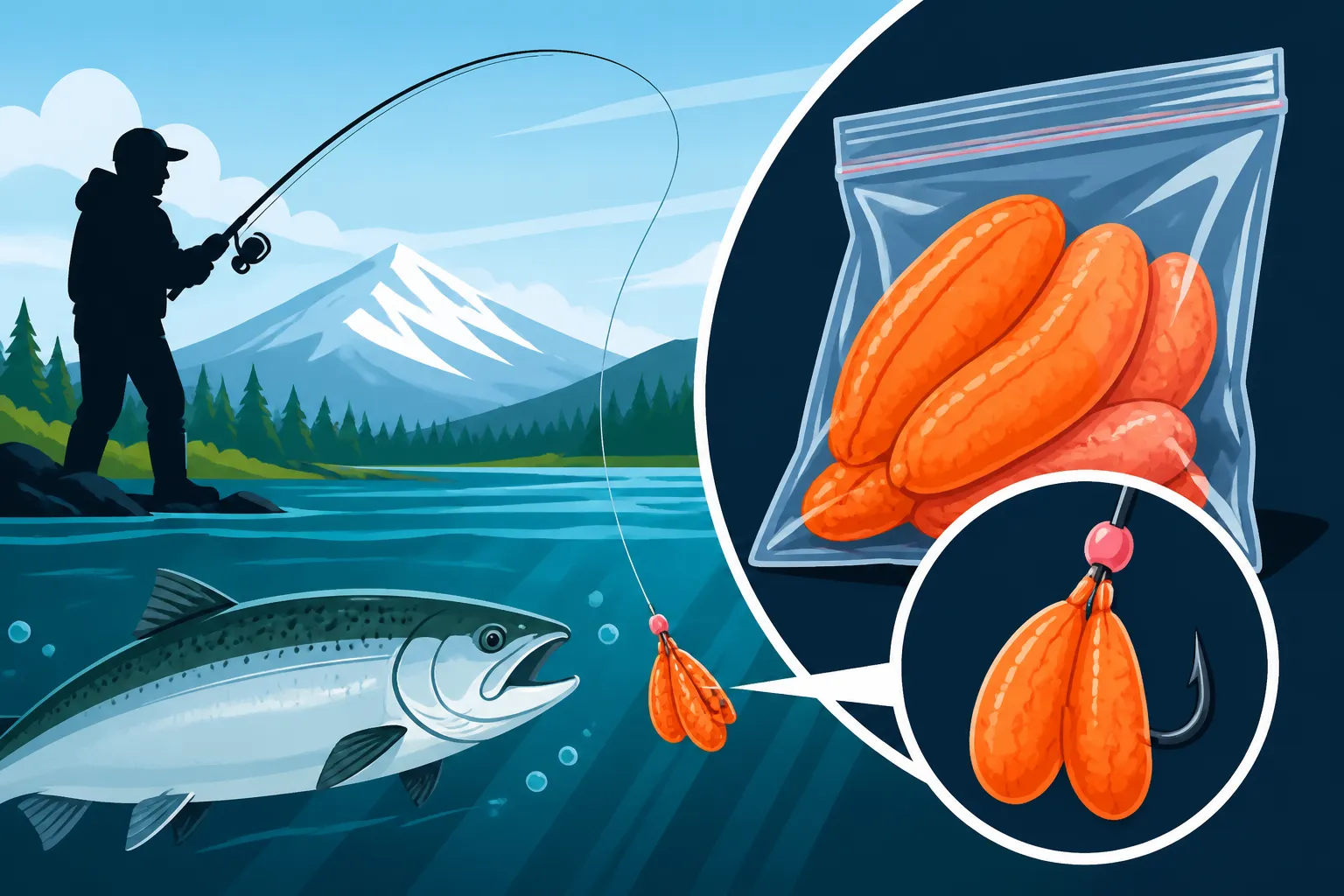
- Add Roe: Place a generous pinch of cured salmon roe in the center of the netting. Don't be shy – a good "golf ball" to "quarter-sized" clump is typical for salmon, though you might go smaller for particularly finicky fish or larger in heavy current.
- Incorporate Flotation (Optional but Recommended): For better presentation and to keep your bag slightly off the bottom, consider adding a small piece of foam, a "Cheater" egg, or a small corky like a Lil' Corky or Raven Float Bead inside the bag with the roe. This makes the bag neutrally buoyant or slightly buoyant, helping it drift more naturally and prevent it from snagging.
- Gather and Tie: Gently gather the corners of the netting around the roe and flotation, forming a tight sac. Secure it tightly with a piece of stretchy thread (like Atlas Mike's Miracle Thread or regular sewing thread if it's strong enough). Wrap the thread several times around the base of the bag, cinching it down firmly, then tie it off or break the thread by pulling it tight. Trim any excess netting, leaving just a small "tag" end that can be used to thread your hook through later.
- Scent Enhancement: Before deploying, many anglers add an extra squirt of liquid scent (like Pro-Cure or Pautzke Nectar) directly to the finished roe bag for an added punch.
The key here is to make the bag firm enough that the roe doesn't escape too quickly, but not so tight that the scent can't "milk" out into the water. A soft, slightly pliable bag that gently disperses scent is ideal.
Rigging Your Roe Bag for Success
Once you have your beautifully crafted roe bags, the next step is to rig them correctly for your chosen fishing method.
Leader Setup:
- Material: Fluorocarbon leaders are a popular choice due to their invisibility underwater and abrasion resistance. Monofilament is also effective and more forgiving with knots. For Washington salmon, a leader of 15-25 lb test is common, depending on the size of the salmon you’re targeting and the water clarity.
- Length: Leader length is critical. For drift fishing in clear water, a longer leader (3-6 feet) can be advantageous, separating your bait from your weight. In turbid water or heavy current, a shorter leader (18-36 inches) might be better for better bait control.
Hook Selection:
- Type: A strong, sharp hook is paramount. Single hooks are often preferred or required in many Washington rivers, especially when targeting steelhead or in specific salmon fisheries where barbless hooks are mandated. Treble hooks can be used where legal, but single hooks often lead to better hooksets in the corner of the mouth, reducing fish mortality. Remember to check Barbless Hook Requirements on Washington Rivers before heading out.
- Size: Hook size should match the size of your roe bag and the target species. For average salmon roe bags, sizes ranging from 1/0 to 4/0 are common. Make sure the hook point and barb (if allowed) are exposed after threading it through the roe bag.
Weighting:
The type and amount of weight you use depend entirely on the current, depth, and technique.
- Slinkies or Pencil Leads: These are fantastic for drift fishing in rivers. Their narrow profile minimizes snagging, allowing your roe bag to bounce naturally along the bottom.
- Cannonball or Bell Sinkers: For plunking or when fishing in very heavy current, these heavier, compact weights are excellent for anchoring your rig in place.
- Split Shot: Smaller split shots can be added to your leader for subtle weight adjustments during float fishing, helping your float stand up correctly.
When assembling your rig, always ensure that your knots are strong and that your roe bag is positioned so the hook can cleanly expose itself when a salmon bites. This meticulous approach to rigging is what converts tentative bites into solid hookups.
Advanced Strategies for Fishing Roe Bags in Washington
Once you've mastered the basics of building and rigging, it's time to dive into the nuanced strategies that truly elevate your roe bag game. Fishing with roe bags isn't just about bait; it's about presentation, reading the water, and understanding salmon behavior.
Drift Fishing with Roe Bags
Drift fishing is arguably the most effective way to present a roe bag to salmon in rivers, making it a cornerstone technique for anglers across Washington. The key is to make your bait look as natural as possible, mimicking a loose egg tumbling downstream.
- Reading the Water: Before you even cast, take a moment to observe the river. Look for current seams, where fast water meets slow; these are prime travel lanes and holding areas for salmon. Deeper pools, tailouts (the end of a pool where the water shallows out), and eddies (calm water behind an obstruction) are also excellent spots. Salmon will often hold behind structure like large rocks, submerged logs, or gravel bars, using these as ambush points or resting areas.
- Casting Upstream: The ideal drift begins by casting slightly upstream and across the current. This allows your weight to sink to the bottom and your roe bag to settle before it reaches the strike zone. You want your weight to periodically tick or bounce along the bottom, but not drag or snag constantly.
- Maintaining a Drag-Free Drift: This is paramount. You need to "mend" your line by periodically flipping your rod tip upstream, taking up slack, and ensuring your line isn't pulling your weight faster or slower than the current. The goal is for your roe bag to travel at the exact same speed as the water around it. If your line is taut, your bait isn't drifting naturally. Watch your line for any hesitation, twitch, or sudden movement – these are often bites! A successful drift will cover the entire "lane" you're fishing, from the upstream entry to the downstream exit of a promising holding area.
For a deeper dive into this technique, especially for steelhead, you might want to read our guide on Drift Fishing for Steelhead in Washington Rivers. The principles are very much the same for salmon.
Plunking and Stationary Setups
When currents are too strong for an effective drift, or you're targeting specific, well-defined holding water from a stationary position, plunking with roe bags becomes an incredibly powerful technique. This is particularly popular on wide, powerful rivers like the lower Columbia River.
- When to Use Plunking: Plunking shines in heavy, fast currents where salmon are often traveling along the bottom in distinct lanes. It’s ideal for fishing from shore, a dock, or from an anchored boat in areas where fish funnel through.
- Rigging for Plunking: The classic plunking rig involves a heavy weight (often a pyramid sinker, cannonball, or even a specialized "Spreader Bar" rig) designed to hold firm on the bottom. Your leader, with the roe bag, is attached above the weight, often on a dropper loop or a three-way swivel, allowing it to flutter just above the riverbed. The weight of the sinker is crucial – it must be heavy enough to resist the current and stay put.
- Scent Dispersion: The beauty of plunking with roe bags is how the constant current washes the scent of your eggs downstream, creating an irresistible aroma trail that draws in passing salmon. The longer your roe bag is in the water, the more scent it disperses, which is why checking and refreshing your bait periodically is still important, even in a stationary setup. While your bait is stationary, the scent is anything but! This makes it excellent for attracting fish from a distance, drawing them into your strike zone. If you're looking for more details on this technique, check out How to Plunk for Salmon on a Washington River.
Float Fishing and Bobber Dogging
Float fishing, also known as bobber fishing, provides precise depth control and a highly visual indication of a bite. Bobber dogging is a more advanced variant that allows for better coverage in moderate currents.
- Advantages of Float Fishing: In slower, deeper pools, or when salmon are holding higher in the water column, suspending your roe bag under a float ensures your bait is presented at the exact depth where fish are holding. The visual cue of a bobber disappearing or dipping is often exhilarating. It’s also great for precise presentations around submerged structure or current breaks.
- Bobber Dogging: This technique utilizes a weighted float (often a large Drennan or Raven style float) that is heavy enough to "dog" or drag along the bottom. By adding just enough weight below the float, you can slow down your bait's drift significantly, allowing it to cover a specific area much more thoroughly than a traditional free-drifting float. The weighted float allows the bait to bounce along, presenting the roe bag right in the fish’s face without snagging as easily as a direct bottom rig. This is fantastic for medium-speed currents and allows you to "walk" your bait down a long run.
- Adjusting Depth and Presentation: With both techniques, constantly adjusting your depth based on where you see fish holding or where you get bites is crucial. Small adjustments can make a huge difference. Sometimes, just an extra six inches deeper or shallower can be the game-changer. Ensure your float is correctly weighted so it stands up properly in the water, giving you clear bite detection.
These advanced strategies, combined with meticulous bait preparation, will significantly increase your success when targeting salmon in Washington's diverse waterways.
Maximizing Your Chances and Common Pitfalls to Avoid
Catching salmon consistently with roe bags isn't just about the mechanics; it's about understanding the subtle nuances, reading the environment, and avoiding common mistakes. Even the most seasoned anglers can learn something new about optimizing their presentation.
Scent, Color, and Presentation Nuances
The details truly matter when fishing roe bags. Salmon are incredibly sensitive to their environment, and tiny adjustments can lead to big results.
- The Role of Additional Scents: While cured roe bags are potent on their own, adding a dab or squirt of liquid scent can often provide that extra edge. Scents like anise, garlic, krill, or even "egg juice" (the liquid byproduct from curing roe) can be incredibly effective. These added attractants can mask human odors, amplify the natural egg smell, and trigger a more aggressive bite. When fishing in discolored water, a stronger scent can help salmon locate your bait more easily.
- Matching Netting Color to Conditions: Don't underestimate the visual appeal. In clear, low-water conditions, natural netting colors (white, cream, light pink) often perform best, as they look less intrusive. When the water is murky, colored, or on overcast days, switching to fluorescent netting (chartreuse, hot pink, orange) can provide a visual "pop" that helps salmon spot your offering. Experimentation is key; sometimes what works one day won't work the next, even in the same water.
- The Importance of Freshness and Frequent Checks: Roe bags aren't meant to last all day. After repeated casts, hits, and time in the water, they can become waterlogged, lose their scent, or even fall apart. Get into the habit of checking your roe bag regularly – every 15-20 minutes, or after a few missed bites. A fresh, juicy roe bag with vibrant scent is far more attractive than a washed-out, depleted one. Don’t be afraid to change out your bag frequently, especially if you’re not getting any action.
Reading the Water and Understanding Salmon Behavior
Successful salmon fishing is as much about understanding the fish and their habitat as it is about the gear.
- Identifying Holding Water: Salmon, especially when they enter freshwater, don't just swim randomly. They follow specific travel lanes and seek out resting and holding areas. Look for deeper pools, the slower water on the inside of a river bend, current breaks caused by large boulders or submerged logs, and seams where different current speeds meet. Estuaries and lower river sections near the ocean, like those in Puget Sound or the Columbia River, are also critical staging grounds. These are the places where salmon conserve energy and wait for optimal conditions to continue their journey upstream.
- Seasonal Considerations: Salmon behavior changes dramatically throughout their run. Early-season fish, fresh from the ocean, tend to be more aggressive and willing to bite. As the season progresses and they get closer to spawning, they might become more focused on their biological imperative, making them harder to entice. Sometimes, a smaller, more subtle roe bag presentation is required for these finicky fish. Understanding When Chinook Salmon Run in Washington's Puget Sound or other species' run timings can significantly impact your strategy.
- Tidal Influence: In tidal sections of rivers and bays, like those found around Grays Harbor or in the lower Columbia River during the famed Buoy 10 fishery, tides play a massive role. Salmon often push into rivers on an incoming tide, using the current to their advantage. Outgoing tides can be excellent for fish dropping back or those actively feeding. Knowing the best tide for Puget Sound salmon fishing can make or break your trip.
Regulatory Awareness and Ethical Practices
Being a responsible angler means understanding and adhering to Washington’s fishing regulations and practicing ethical angling.
- Checking Regulations: Washington’s fishing regulations are complex and change frequently, often with in-season emergency rules. Always check the current WDFW regulations pamphlet (available online or at license vendors) for the specific river or marine area you plan to fish before you go. Pay close attention to gear restrictions, bait bans, daily limits, and slot limits for specific species. Our guide on Washington Fishing Regulations Every Angler Should Know is a great starting point, but always double-check the official WDFW site for the most up-to-date information.
- Hook Rules: Many salmon and steelhead rivers in Washington have specific hook requirements, such as barbless hooks or single-point hooks. Ensure your hooks comply. If a wild steelhead is caught on a river that is catch-and-release only, quick, gentle release is crucial.
- Proper Handling of Fish: For fish you intend to keep, dispatch them quickly and humanely, then bleed them immediately for the best meat quality. For fish you must release (like wild steelhead in many areas), minimize handling, keep them in the water as much as possible, and use wet hands if you must touch them. A quick photo, if desired, then a gentle release, ensuring the fish swims away strong. Always be mindful of How Bag and Possession Limits Work in Washington to avoid unintentional violations.
By paying attention to these details – from scent and color to regulation checks and ethical practices – you'll not only increase your catch rates but also contribute to the sustainability of Washington’s incredible salmon fisheries.
| Component | Purpose | Key Considerations |
|---|---|---|
| Roe | Primary attractant (scent, visual, texture) | Freshness, type (Chinook, Coho), quality of cure |
| Netting | Holds roe together, controls scent dispersion | Mesh size (fine for slow, large for fast), color (natural, fluorescent) |
| Flotation | (Optional) Keeps bag off bottom, natural drift | Small foam, Cheater egg, Lil' Corky (inside bag) |
| Thread | Secures the roe bag tightly | Stretchy, durable (e.g., Atlas Mike's Miracle Thread) |
| Liquid Scent | (Optional) Enhances attraction, masks human odors | Anise, garlic, krill, Pautzke Nectar, matched to water clarity/species |
| Leader | Connects hook/bait to mainline | Fluorocarbon/monofilament, length (18" to 6'), test (15-25 lb) |
| Hook | Secures fish upon bite | Sharp, strong, single (often required), size (1/0 to 4/0), barbless if mandated |
| Weight | Takes bait to desired depth, controls drift | Slinky/pencil (drift), cannonball/pyramid (plunking), split shot (float) |
Disclaimer
Fishing regulations in Washington State can change frequently and vary by location, species, and season. This article provides general information and should not be considered a substitute for checking the most current regulations issued by the Washington Department of Fish and Wildlife (WDFW) before any fishing trip. Always consult the official WDFW website or printed pamphlet for up-to-date and specific rules. The author and publisher are not responsible for any violations or incidents that may occur. Tight lines!