How to Catch Smallmouth Bass in Eastern Washington
Trying to dial in on smallmouth bass in Eastern Washington can feel like a real wild goose chase sometimes, especially with all the vast lakes and sprawling river systems out here. It’s easy to get overwhelmed by where to start and what to throw. This guide is designed to cut through that confusion, giving you practical, proven strategies and specific location insights to help you land more smallmouth and really enjoy the incredible fishing Eastern Washington has to offer.
Understanding Eastern Washington's Smallmouth Bass Habitat
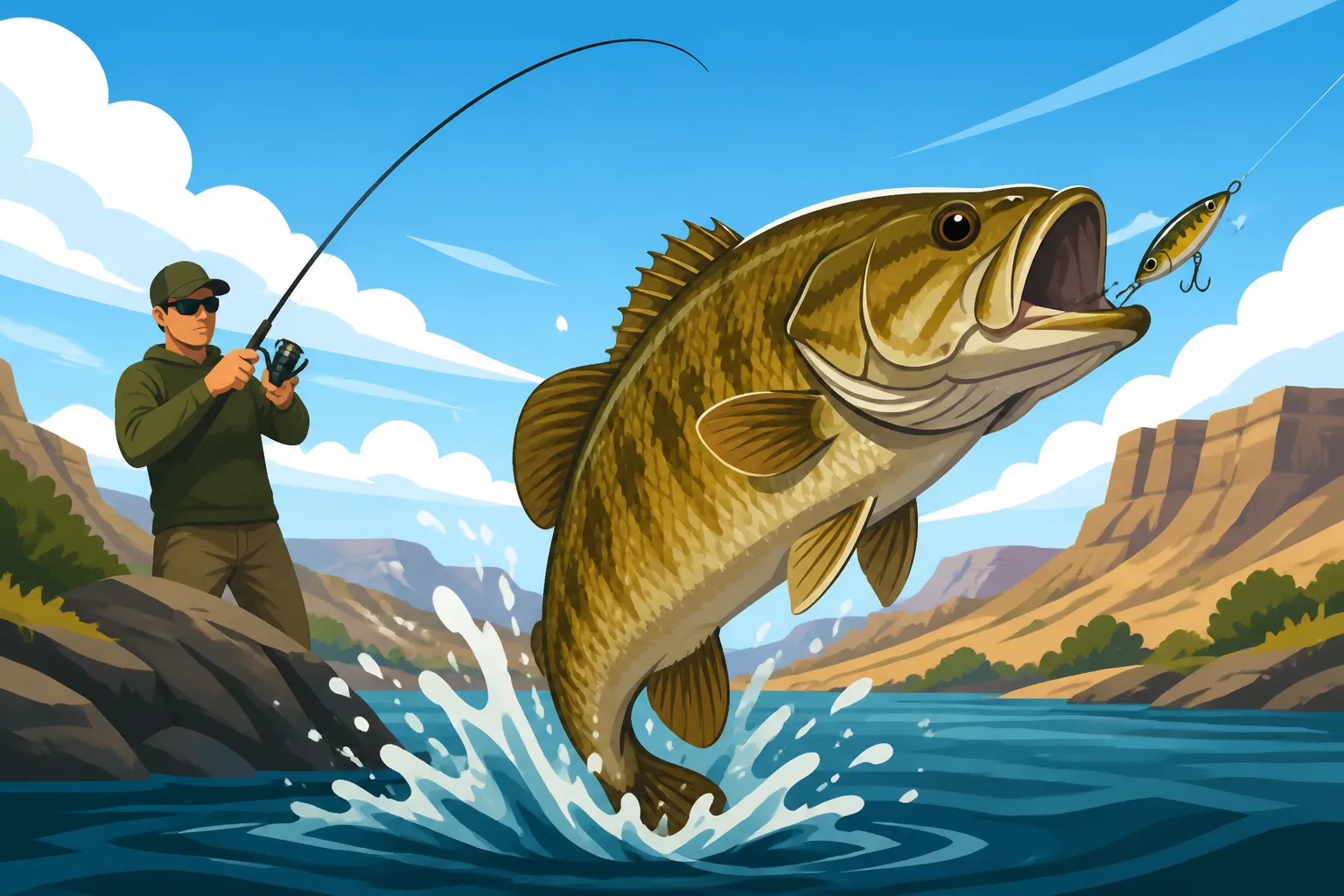
Smallmouth bass, often called "bronze backs" for their incredible fighting spirit and color, thrive in a specific kind of environment. Unlike their largemouth cousins who prefer weedy, slower-moving waters, smallmouth are built for current, rocky bottoms, and clear water. Understanding this fundamental difference is your first step to unlocking consistent success in Eastern Washington. These fish are masters of their domain, using every piece of structure to ambush prey and conserve energy.
Rivers and Reservoirs: The Prime Locations
Eastern Washington is blessed with an abundance of waters that are absolutely teeming with smallmouth bass. The trick is knowing which ones consistently produce and why.
The Columbia River in Washington is, without a doubt, a smallmouth mecca. From the Tri-Cities stretch all the way up to Lake Roosevelt, you'll find these feisty fish everywhere. They love the current seams, the rocky drop-offs, and the numerous points created by tributaries. Think about areas around Bonneville Dam, McNary Dam, and especially the stretches where basalt rock formations provide intricate underwater structure. It’s a huge river, so breaking it down into sections can help. Focus on where the current breaks around islands or submerged wing dams. You might find them in eddies, just out of the main flow, waiting for an easy meal to drift by. For instance, sections near Pasco and Richland offer fantastic opportunities, with plenty of public access points and boat launches. You'll often find anglers specifically targeting smallmouth here, especially during the warmer months.
Further east, the Snake River for Steelhead in Washington also holds a strong smallmouth population, particularly below the dams like Ice Harbor and Little Goose. While many target steelhead here, the smallmouth fishing can be phenomenal, especially on the main river and its tributaries. Look for riprap banks, current seams, and areas with submerged timber that create current breaks. They'll use these spots as ambush points, darting out to grab anything that looks edible.
And let's not forget about the Yakima River in Washington for Fly Fishing for Wild Trout in Washington. While famous for its trout, the lower sections, particularly below Prosser, can hold surprising numbers of smallmouth, especially in the slower, warmer pools and around rocky stretches. It's not typically the first place anglers think of for smallmouth, but it can be a pleasant surprise for those willing to explore.
Beyond the rivers, Eastern Washington’s large reservoirs are smallmouth factories. Lake Roosevelt in Washington for Kokanee and Walleye is an enormous body of water, formed by the Grand Coulee Dam, and it boasts an incredible smallmouth fishery. Here, the fish relate heavily to rocky points, steep drop-offs, and old submerged roadbeds or foundations. The lake is so vast that finding structure with your electronics is key. Similarly, Banks Lake in Washington for Walleye and Smallmouth Bass is another premier destination. Known for its distinct rocky shoreline and basalt cliffs, it’s practically tailor-made for smallmouth. Target the ledges, rock piles, and submerged humps that dot the lakebed. These spots concentrate baitfish, and thus, smallmouth.
Then there's Potholes Reservoir in Washington for Walleye and Crappie, a unique fishery known for its "dunes" – submerged islands formed by sand and rock. While famous for walleye, the rocky edges of these dunes and the deep channels between them are prime smallmouth territory. They’ll congregate on the sunny sides of these structures, especially during spring and fall. These reservoirs often have vast stretches, making it crucial to cover water efficiently until you find a concentration of fish.
Key Structure and Cover Smallmouth Love
Smallmouth bass are structure-oriented fish, meaning they’ll relate to any change in the bottom contour or any physical object in the water. Think of it as their underwater neighborhood.
Rocks and Ledges are perhaps their favorite hangout. On rivers, this could be riprap along a highway, natural rock outcroppings, or boulder fields. In reservoirs, it’s all about rocky points that extend into deeper water, sheer rock walls, and submerged rock piles. These areas provide cover from current, ambush points, and often hold crayfish, a favorite smallmouth meal. The subtle changes in depth, known as ledges or shelves, are also critical. A smallmouth will often sit on a ledge, just below the break, waiting for prey to swim by overhead.
Submerged Timber and Brush Piles also draw smallmouth, particularly in reservoirs where old trees or structures were flooded. While largemouth might burrow deep into a brush pile, smallmouth tend to hold on the edges or slightly above the top, using it for shade and cover but still keeping an eye on open water. A single log or a cluster of submerged branches can be a goldmine.
Current Breaks are absolutely essential in riverine environments. Smallmouth are powerful swimmers, but they're not wasteful. They'll position themselves just out of the main current flow – behind a large boulder, in an eddy, or along a seam where fast and slow water meet. This allows them to effortlessly dart into the current to intercept food without expending too much energy. Learning to "read the water" for these current breaks will drastically improve your river fishing.
Drop-offs and Humps in open water can also hold impressive numbers of smallmouth, especially during summer or winter when they seek deeper, more stable temperatures. These can be hard to find without good electronics, but once you locate one, it can be a consistent producer. A hump rising from 30 feet to 15 feet with rocky sides is a classic smallmouth magnet. The same goes for points that drop steeply into deep water – smallmouth often cruise these breaks.
Finally, Weed Lines, though less prominent in smallmouth habitats compared to largemouth, can be important in specific areas. If you find sparse, deeper weed growth in clear water, smallmouth might patrol the edges of these beds, especially if they are adjacent to rocky structure or a drop-off. They use the weeds for ambush cover, particularly if baitfish are holding within them.
Essential Techniques for Eastern Washington Smallmouth
Smallmouth bass are aggressive predators, but they can also be surprisingly finicky. Having a diverse toolkit of techniques means you’re ready for whatever mood they’re in, whether they’re chasing down a fast-moving bait or barely nudging a subtle presentation. The beauty of Smallmouth Bass on Washington's Columbia and Snake Rivers and other waters is their willingness to hit a variety of lures, so experimentation is often rewarded.
Crankbaits and Jerkbaits for Aggressive Fish
When smallmouth are actively feeding and feeling feisty, nothing beats the thrill of a hard-hitting bite on a crankbait or jerkbait. These lures are designed to imitate baitfish and trigger aggressive strikes.
Crankbaits come in various shapes and sizes, each designed to dive to a specific depth. For Eastern Washington smallmouth, a good selection would include lipless crankbaits, square bills, and medium-diving crankbaits. Lipless crankbaits, like a classic Rat-L-Trap or a Rapala Rippin' Rap, are excellent for covering water quickly, especially over shallow flats or along weed edges. Their strong vibration and rattle can draw fish from a distance. A fast, erratic retrieve often works best. Square bill crankbaits, such as those from Strike King or Koppers, are perfect for bouncing off rocks and timber in shallower water (0-8 feet). Their unique bill design helps them deflect off snags, often triggering a reaction strike. Medium-diving crankbaits, like a Bandit 200 series or a Berkley Dredger, are your go-to for targeting depths of 8-15 feet, especially when fishing rocky points or ledges on reservoirs like Banks Lake. Experiment with retrieve speed – sometimes a steady retrieve works, other times a stop-and-go or a "rip and pause" is more effective.
Jerkbaits, like those from Lucky Craft or the iconic Rapala Husky Jerk, are incredibly effective for mimicking wounded baitfish. These lures have very little inherent action; you impart it with rod twitches and pauses. The retrieve usually involves a series of jerks (2-4) followed by a pause. The pause is critical, often when the fish will strike. They work exceptionally well in clear water and can be fished from just below the surface to depths of 10-15 feet depending on the model. They shine in cooler water temperatures, such as during spring and fall, when smallmouth are still active but might be a bit more hesitant to chase a super-fast bait. For instance, fishing a suspended jerkbait over deeper rocky structures on the Columbia can be deadly, especially if you let it hang motionless for several seconds during the pause.
Soft Plastics and Jigs for Finesse Fishing
When the bite gets tough, the water is clear, or fish are pressured, finesse presentations with soft plastics and jigs can be the ticket. These slower, more subtle baits often tempt wary smallmouth that ignore flashier offerings.
Tubes are a smallmouth classic. Rigged with an internal jig head, they imitate crayfish and gobies, two primary food sources. Cast them to rocky bottoms, ledges, or current seams, and either drag them slowly or make short hops. The way they spiral on the fall is incredibly enticing. Popular colors often mimic natural crawfish, such as green pumpkin, brown, or natural variations with flecks of orange or red. Brands like Strike King and Gitzit make excellent tubes.
Ned Rigs have taken the bass world by storm for their simplicity and effectiveness, especially for smallmouth. A small mushroom-head jig paired with a short, buoyant soft plastic worm (often called a "TRD" from Z-Man) presents a natural, upright profile on the bottom. It’s incredibly subtle and ideal for lethargic fish or heavily fished areas. Cast it out, let it sink, and slowly drag or shake it along the bottom. The key is to impart minimal action; let the current and the bait’s buoyancy do most of the work. This technique is fantastic for spots where you know How Big Columbia River Smallmouth Bass Get but they are being shy.
Drop-shot Rigs are another finesse staple, particularly useful for vertical presentations over deep structure or when fish are suspended. A weight is tied to the end of your line, and a hook (often a specialized drop-shot hook) is tied directly to the main line several inches or feet above the weight. This allows your bait, usually a small worm or creature bait, to hover at a specific depth. It’s excellent for targeting individual fish you see on your fish finder or working a precise depth on a steep drop-off. You can buy pre-tied drop-shot rigs on Amazon if you're just starting out and want to get on the water quickly.
Swimbaits come in both hard and soft varieties. For soft plastics, small paddle-tail swimbaits rigged on an open jig head are excellent for imitating baitfish. They can be slow-rolled along the bottom, retrieved mid-water, or even ripped through current. Their subtle swimming action is often enough to trigger a strike when other baits fail. Popular choices include Keitech Swing Impact FAT or Berkley PowerBait swimbaits. The size depends on the prevalent baitfish, but 2.8 to 4 inches are good starting points.
Topwater Action: Explosive Bites
There's nothing quite like the heart-stopping explosion of a smallmouth blowing up on a topwater lure. This technique is for anglers who love visual strikes and it can be incredibly effective during low-light conditions or when fish are actively feeding on the surface.
Poppers create a "plop" or "spit" sound and splash water, mimicking a struggling baitfish or insect. They are best fished with a twitch-pause retrieve, letting the ripples dissipate before twitching again. They work well in calm conditions, especially around rocky banks or points at dawn and dusk. The Heddon Zara Spook Jr. or Rebel Pop-R are classic choices that consistently catch fish.
Walk-the-Dog Baits, like the Heddon Super Spook, require a specific retrieve (a rhythmic side-to-side motion) that makes the lure "walk" across the surface. This technique can be learned with practice and is incredibly enticing to smallmouth, drawing them from surprising distances. It's often effective when smallmouth are chasing schooling baitfish near the surface.
Prop Baits and Frogs can also be effective. Prop baits, with their spinning propellers, create a commotion that can draw aggressive strikes. Frog lures, while typically associated with largemouth in heavy cover, can be surprisingly good for smallmouth if they are holding around sparse lily pads or thick grass lines in clearer sections of a reservoir. The key is to cast them accurately into pockets or along edges where fish might be hiding.
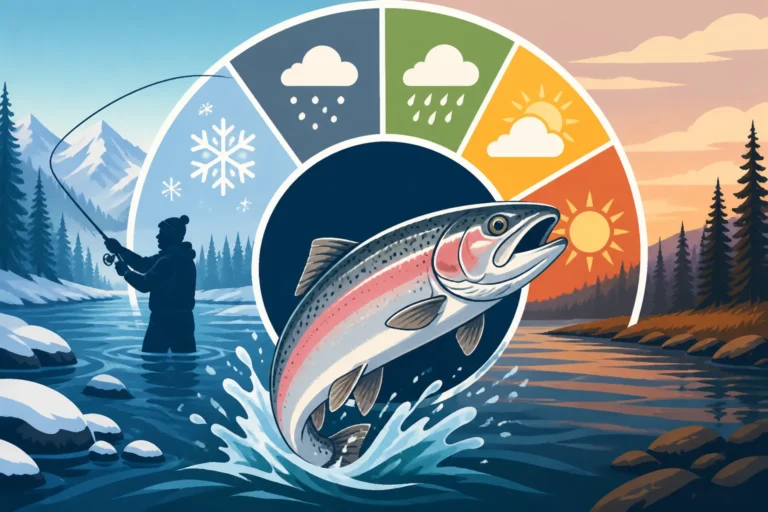
Seasonal Strategies for Consistent Success
Smallmouth bass, like most fish, change their behavior and location with the seasons. Understanding these patterns is critical for consistent success in Eastern Washington waters. Matching your approach to the time of year is just as important as choosing the right lure. It's not just about what to throw, but where and when. A good starting point for any fishing trip is checking a comprehensive guide to Washington Fishing Seasons: A Month-by-Month Guide.
Spring: Pre-Spawn and Spawning Patterns
Spring is arguably one of the best times to target smallmouth in Eastern Washington. As water temperatures begin to climb after the long winter, the fish transition from their deep wintering holes to shallower spawning areas.
The pre-spawn period (roughly late March through May, depending on water temps) sees smallmouth migrating from deep water towards shallower flats, rocky points, and coves. They are hungry and aggressive, bulking up for the energy-intensive spawn. Water temperatures between 48-55°F are prime. During this time, crankbaits, jerkbaits, and even spinnerbaits can be incredibly effective as fish chase down bait. Target the sunny side of rocky points, secondary points inside bays, and gravel flats adjacent to deeper water. These fish are usually actively cruising and willing to chase. For instance, on the Columbia, many anglers will start hitting rocky shorelines with lipless crankbaits or suspending jerkbaits as soon as the water hits that magic 50-degree mark.
As water temperatures reach the spawning range (typically 58-68°F), smallmouth move onto beds in shallower, protected areas. These beds are usually circular depressions in gravel or sand, often near rocks or logs for protection. Spawning fish can be very territorial and will often strike at anything perceived as a threat to their nest. While bed fishing can be highly effective, it's also a practice that many anglers approach with ethical considerations. Catching and releasing a fish off a bed quickly is important to prevent other predators from raiding the eggs or fry. Good lures for bed fish include tubes, Ned rigs, or small creature baits pitched directly onto the bed. Be patient, watch the fish, and often a subtle shake of the lure is all it takes to trigger a strike. Look for these beds in 2-10 feet of water, often near protected coves or flats with good sun exposure.
Summer: Deep Water and Current Breaks
Once the spawn is over and water temperatures really heat up (June through August), smallmouth generally move deeper, seeking cooler, more oxygenated water. This doesn't mean they're impossible to catch, just that your tactics need to change.
During the scorching Eastern Washington summers, smallmouth often relate to deep water structure. This includes main lake points that drop off steeply into 20-40 feet of water, submerged humps, rock piles in deep channels, and current breaks in the main river channels. Your fish finder becomes an indispensable tool here, helping you locate these deeper concentrations of fish. Techniques like drop-shotting, Carolina rigging (with a long leader and a plastic worm or lizard), and jigging spoons become very effective. For example, on Lake Roosevelt, fishing deep humps with a drop-shot rig or a heavy jig can yield some impressive catches, as smallmouth school up in these cooler refuges.
In rivers like the Columbia, smallmouth will still be found, but they'll be even more tightly associated with strong current breaks. Look for the downstream side of large boulders, deep eddies, or the seams where fast water meets slower water. They'll hug the bottom in these areas, waiting for food. Tubes, heavy jigs, and even large deep-diving crankbaits that can reach the bottom in current are effective. Early mornings and late evenings can also see them push shallower to feed, offering a brief window for shallower presentations or even topwater action, particularly around major current eddies or protected coves. Night fishing can also be surprisingly productive in some areas, as smallmouth move shallower under the cover of darkness.
Fall: The Feeding Frenzy Before Winter
Autumn (September through November) is another fantastic time to chase smallmouth in Eastern Washington. As water temperatures cool, these fish undergo a significant shift, feeding aggressively to build up fat reserves for the coming winter.
This is often referred to as the "fall feeding frenzy." Smallmouth become highly active and can be found in a wide range of depths, often moving shallower during the day and retreating to deeper breaks at night. They frequently school up, making it possible to catch multiple fish from the same spot once you find them. Look for them on rocky flats, main lake points, and channel swings. The key is to locate schooling baitfish, as the smallmouth won't be far behind.
Lures that cover water quickly and imitate baitfish are excellent choices. Jerkbaits are particularly deadly in the fall, especially when retrieved with long pauses as the water cools. Crankbaits, both shallow and medium-diving, also excel. Spinnerbaits and chatterbaits can be effective around cover. On reservoirs like Banks Lake, trolling a crankbait along contours can be a great way to locate schools. On the Columbia River, fishing the deeper rocky channels and current seams with tubes, jigs, and larger swimbaits can produce big fish as they gorge themselves. Focus on areas where river sections narrow, creating natural funnels for bait and predators. For more general advice on how fishing changes throughout the year, check out our article on Washington Fishing Seasons: A Month-by-Month Guide.
Winter: Slow and Deep Tactics
Winter fishing for smallmouth in Eastern Washington (December through February) is generally challenging but not impossible. The fish become much less active, their metabolism slowing significantly, and they often retreat to the deepest, most stable water they can find.
They'll typically be found in their deepest wintering holes, which could be deep main lake basins, major river channel bends with minimal current, or the deepest parts of large reservoirs. They will school tightly in these areas. The key to catching them is an extremely slow, finesse presentation. Vertical jigging spoons, blade baits, or a very slow drop-shot presentation are your best bets. You’ll need good electronics to locate these deep schools. The bites will be incredibly subtle – often just a slight tick or simply feeling "weight" on your line. Patience is paramount, and it's not a numbers game; you're often targeting a few quality bites. For instance, on the deepest sections of Lake Roosevelt, anglers might find tightly packed schools of smallmouth in 60+ feet of water, requiring precise vertical jigging.
Gear Recommendations and Local Tips
Having the right equipment can make all the difference in your smallmouth pursuit. While you don't need to break the bank, investing in a few quality pieces suited for bass fishing will increase your chances of success and enjoyment. Additionally, a few local tips can help you navigate the unique challenges of Eastern Washington waters.
Rods, Reels, Lines: Matching Your Setup
Smallmouth fishing is a versatile sport, and having a few different rod and reel setups will allow you to adapt to various techniques and conditions.
For most smallmouth applications, you'll want to choose between spinning and baitcasting setups.
- Spinning gear is generally preferred for lighter lures and finesse techniques, especially in clear water where a lighter line is beneficial. A 6'6" to 7' medium-light to medium power, fast action spinning rod is a versatile choice. This setup excels for Ned rigs, drop-shotting, small tubes, and light jerkbaits. Pair it with a 2500 or 3000 size spinning reel spooled with 6-10 lb fluorocarbon or braided line with a fluorocarbon leader. Fluorocarbon is nearly invisible underwater and has excellent sensitivity. For example, a St. Croix Bass X or a Fenwick HMG rod with a Shimano Sedona or Daiwa Fuego reel would be a great all-around spinning combo available on Amazon.
- Baitcasting gear is ideal for heavier lures, crankbaits, spinnerbaits, and topwater baits. It offers more power for fighting fish in current or around heavy cover and allows for more accurate casting of heavier lures. A 6'8" to 7'4" medium to medium-heavy power, fast action baitcasting rod is a good starting point. You'll want a quality baitcasting reel with a smooth drag and a fast retrieve ratio (7.1:1 or higher is popular for quickly taking up slack). Spool it with 10-15 lb fluorocarbon or 30-40 lb braided line, again, with a fluorocarbon leader for abrasion resistance and stealth. A rod like a Dobyns Fury or a Shimano SLX rod with a Daiwa Tatula or Lew's Speed Spool reel is a solid choice.
Line choice is crucial.
- Fluorocarbon is a fantastic all-around choice for smallmouth. It's nearly invisible underwater, extremely sensitive, and has good abrasion resistance. It sinks, which can be an advantage for some presentations.
- Braided line offers superior strength, casting distance, and sensitivity with no stretch. However, its visibility means it's almost always paired with a fluorocarbon leader (3-8 feet long) tied with an FG knot or a double uni-knot. Braid is great for topwater (it floats) and for fishing around abrasive cover.
- Monofilament has more stretch but is generally more affordable and floats, making it useful for some topwater applications if you don't want to use braid.
Essential Tackle Box Fillers
Beyond rods and reels, a well-stocked tackle box for Eastern Washington smallmouth will include a variety of lures to cover different depths and conditions.
Here’s a breakdown of must-haves:
- Crankbaits: A selection of medium-diving crankbaits (like the Rapala DT-6 or Strike King KVD 1.5) in crawfish patterns (red, brown, green pumpkin) and shad patterns (chrome/blue, ghost minnow). Also, a few lipless crankbaits (Rat-L-Trap, Bill Lewis Lures) and square bills (Strike King KVD Square Bill) for shallow power fishing.
- Jerkbaits: Pick up a couple of suspending jerkbaits (Lucky Craft Pointer, Rapala X-Rap) in natural baitfish colors.
- Soft Plastics:
- Tubes: 3.5-inch tubes in green pumpkin, watermelon, and brown/orange fleck patterns.
- Ned Rigs: Z-Man Finesse TRD worms and mushroom head jigs (1/10 to 1/4 oz).
- Drop-Shot Worms: Small straight-tail worms (Roboworm Straight Tail Worm, Berkley PowerBait MaxScent Flat Worm) in natural colors.
- Swimbaits: Small paddle-tail swimbaits (Keitech Swing Impact FAT, Zoom Fat Albert Grub) in 2.8 to 4-inch sizes, again in natural baitfish patterns.
- Jigs: Football head jigs (3/8-1/2 oz) with weed guards in brown or black, paired with craw trailers. Also, a few small hair jigs or marabou jigs for cooler water.
- Topwater Lures: A popper (Rebel Pop-R) and a walk-the-dog bait (Heddon Super Spook Jr.) in chrome, bone, or shad colors.
- Terminal Tackle: Assorted tungsten or lead weights (bullet weights for Texas rigs, drop-shot weights), wide gap hooks for Texas rigs (1/0-3/0), straight shank hooks for wacky rigs (1/0), and specialized drop-shot hooks (#1 or #2). You'll also need swivels, snap swivels, and perhaps some jig heads for your swimbaits and tubes. A good quality pair of pliers and line cutters are also essential.
Remember to bring a tackle box that can keep your lures organized. The Plano 3700 series boxes are a popular choice and widely available, including on Amazon.
Navigating Eastern Washington Waters Safely
Fishing these large rivers and reservoirs means you need to prioritize safety, especially if you're fishing from a boat. Always be aware of the conditions.
Boat Considerations: If you’re fishing from a boat, ensure it's in good working order and that you have all required safety gear: life jackets for everyone on board, a fire extinguisher, signaling devices, and a sound-producing device. On the Columbia River, currents can be swift and surprising, especially near dams or confluences. Be mindful of submerged hazards, which can include logs, rock piles, and old structures, particularly during periods of low water. A reliable depth finder and GPS are invaluable tools for navigation and finding fish-holding structure.
Current Awareness: On rivers like the Columbia, Snake, and Yakima, understanding the current is paramount. Know how to safely navigate upstream and downstream, and how to anchor (if you choose to) in moving water. Always be aware of your surroundings, especially when other boats are present. If you're new to fishing from a boat on moving water, consider going with an experienced friend or even booking a guide for a trip to learn the ropes.
Regulations and Preparedness: Before every trip, always check the current Washington Sport Fishing Regulations Pamphlet for bag limits, size restrictions, and any special rules for the specific body of water you're fishing. Emergency rule changes can happen, so it's wise to know How to Check for Emergency Rule Changes in Washington. For example, certain sections of the Columbia River might have specific restrictions on gear or bait at certain times of the year. Always carry your valid Washington Fishing License Guide for Nonresidents (or resident license) and a Catch Record Card if required. Dress in layers, as Eastern Washington weather can change quickly, and bring plenty of water and snacks. Sun protection (hat, sunglasses, sunscreen) is also crucial, especially on large, open bodies of water.
Smallmouth Bass Lure Comparison Table
| Lure Type | Best Conditions | Preferred Retrieve | Target Depth (Approx.) | Notes |
|---|---|---|---|---|
| Crankbaits | Active fish, covering water, shallow to mid-depth | Steady retrieve, stop-and-go, bumping structure | 2-15 feet | Match size/color to baitfish & crawfish |
| Jerkbaits | Clear water, cooler temps, mimicking wounded baitfish | Jerk-jerk-pause, long pauses | 5-15 feet | Suspending models are key for pauses |
| Tubes | Finesse, rocky bottom, mimicking crawfish | Dragging, short hops, shaking on bottom | 5-30 feet | Internal jig heads for best action |
| Ned Rigs | Tough bite, clear water, pressured fish, subtle | Slow drag, light shakes, minimal action | 5-25 feet | Very subtle, great for wary fish |
| Drop-Shot | Deep structure, suspended fish, vertical presentations | Subtle shakes, dead sticking, hovering | 10-50+ feet | Excellent for targeting fish on electronics |
| Topwater (Popper) | Calm water, low light, actively feeding surface fish | Pop-pause, "spit," let ripples dissipate | Surface | Explosive strikes, great for covering shallow water |
| Swimbaits | Imitating baitfish, various depths, active fish | Slow roll, steady retrieve, retrieve-pause | 5-25 feet | Versatile, can be fished with jig heads or weedless |
Disclaimer
Fishing regulations can change frequently. Always consult the latest Washington Department of Fish and Wildlife (WDFW) regulations before heading out on the water. This guide is for informational purposes only and does not replace official WDFW publications.