How to Fish for Steelhead in High Water
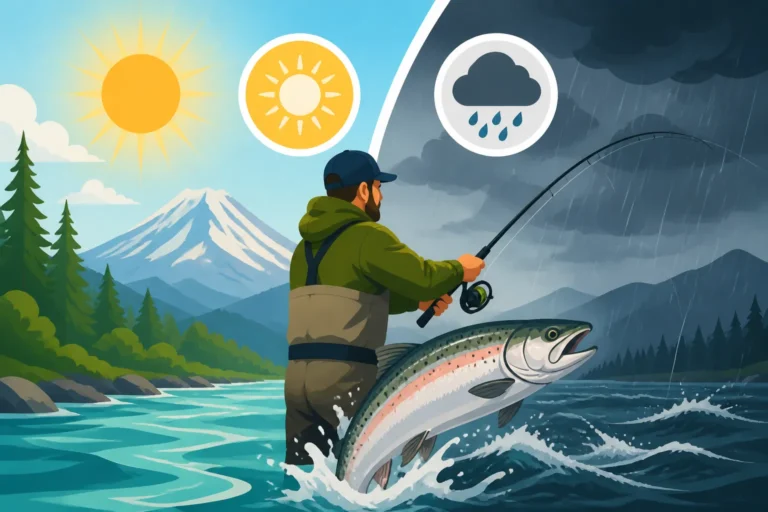
It’s a scenario we've all faced: you’ve meticulously planned a steelhead fishing trip to one of Washington’s iconic rivers, envisioning pristine, emerald green flows and aggressive chrome. Then, you wake up to find the river a raging torrent, high and muddy, looking more like chocolate milk than prime steelhead habitat. It's easy to feel defeated, but a blown-out river doesn't mean your day is over. In fact, understanding how to fish for steelhead in high water can unlock opportunities many anglers miss. This guide is here to help you turn those challenging conditions into successful fishing adventures, armed with the right knowledge and tactics.
Understanding High Water and Its Impact on Steelhead Behavior
Fishing high water successfully starts with truly understanding why the river is high and how that impacts the steelhead. It's not just about more water; it's a complete shift in their environment and their survival instincts.
Why Rivers Rise: Rain, Snowmelt, and Dam Releases
In Washington, high water events are a common occurrence, especially during our wet winters and springs. The primary culprits are usually heavy, sustained rainfall and rapid snowmelt.
Our magnificent Olympic and Cascade mountain ranges act like giant sponges, soaking up precipitation. When those sponges get saturated, or when a warm rain hits a heavy snowpack, rivers can swell incredibly quickly. Think of the coastal rivers like the Hoh or Sol Duc on the Olympic Peninsula – they can go from low and clear to raging in a matter of hours after a significant rain event. Further inland, rivers fed by larger snowpacks, such as the Cowlitz or the Skagit, might see rises due to persistent spring snowmelt or even carefully managed dam releases from facilities upstream. These dam releases, while controlled, can still significantly change river levels and clarity in downstream sections. Each of these scenarios creates a unique set of challenges for the angler, but also predictable patterns for the fish.
How High Water Changes the Steelhead's World
Imagine living in a house that suddenly experiences a flash flood. You wouldn't stay in the middle of the raging current, would you? You'd seek refuge in the calmest, safest pockets you could find. Steelhead are no different. When the river rises, several things happen:
- Increased Flow and Current Speed: This is the most obvious change. The sheer force of the water makes it difficult for fish to hold in their usual lies. They'll expend too much energy fighting the main current.
- Turbidity (Reduced Visibility): All that extra water picks up silt, dirt, and debris from the riverbanks and bottom, turning the water murky or "blown out." This drastically reduces visibility, making it nearly impossible for steelhead to see your presentation.
- Temperature Shifts: High water, particularly from snowmelt, can bring colder temperatures, which can make steelhead less active. Conversely, a warm rain on a cold river might warm it up slightly, potentially stimulating fish.
- Debris: Branches, leaves, and other detritus are swept downstream. This can foul lines, hide lures, and make fishing difficult, but also creates new current breaks for fish to hide behind.
Because of these changes, steelhead don't just disappear. They adapt. They move out of the main, fast current and seek out softer, slower water. This often means they’ll hug the riverbanks, tuck behind large boulders, or hide in eddies and seams where the current is significantly reduced. Their feeding behavior also shifts; with reduced visibility, they rely much more on scent and vibration to locate potential food. This is a critical point: if they can't see, they have to feel or smell.
Essential Gear and Tackle for High Water Steelheading
Successfully tackling high water conditions requires a shift in your gear strategy. What works in low, clear water will likely fail when the river is roaring. You need tackle that can handle the increased force, penetrate the strong currents, and make your presentation known in murky water. Many anglers swear by the reliability of items sourced from retailers like Amazon for their high-water tackle needs, especially when specialized items are hard to find locally.
Rods, Reels, and Line for Controlling Heavy Water
When the river is up, control is paramount. You're fighting not just the fish, but the river itself.
- Rods: Forget your ultra-light gear. High water demands heavier action rods, typically in the 9'6" to 11' range, rated for 8-15 lb or even 10-20 lb test. The extra length helps you mend your line and keep your presentation in the strike zone longer, while the heavier action provides the backbone needed to cast heavier weights and control powerful steelhead in strong currents. For drift fishing, a moderate-fast action can be ideal, offering enough sensitivity to detect subtle bites through the turbulence but enough power to fight fish.
- Reels: You need a robust spinning or baitcasting reel with a smooth, reliable drag system. High water steelhead are notoriously strong, and a sticky drag can lead to break-offs. A reel capable of holding a good amount of heavier line is essential.
- Mainline: Many anglers opt for braided mainline in high water due to its low stretch and incredible strength. 30-50 lb braid is common. If using monofilament, bump up to 15-20 lb test. The heavier line handles abrasive debris better and provides more leverage. Your choice of mainline directly impacts your ability to cut through the current and maintain contact with your gear.
- Leader: While "Leader Length for Clear Water Steelhead in Washington" might call for longer, lighter leaders, high water dictates a different approach. You'll generally use shorter, heavier leaders – often 15-20 lb fluorocarbon. The shorter length helps keep your bait closer to your weight, making it easier to get to the bottom quickly. Fluorocarbon's abrasion resistance is a huge plus, as your line will inevitably rub against rocks and debris in the murky depths. You can usually find reliable fluorocarbon leader material on Amazon at competitive prices.
Weights, Floats, and Terminal Tackle
Getting your offering to the fish in high water is half the battle, and that's where your weights and terminal tackle come in.
- Weights: This is where you really need to beef things up. Pencil lead, slinky weights, or pyramid sinkers are popular choices. You'll often need significantly more weight than you'd use in normal conditions – sometimes ounces instead of fractions of an ounce – just to get your gear to the bottom and keep it there. The goal is to "tick" the bottom, feeling the occasional bump of a rock without getting snagged constantly. If you're constantly blowing out downstream without hitting bottom, add more weight.
- Floats: If you're float fishing (and it can be effective in high water seams), you'll need larger, more buoyant floats. These provide better visibility in choppy water and can support the heavier weights required to get your presentation down.
- Swivels and Snaps: Don't skimp here. Strong barrel swivels prevent line twist, and robust snaps (if you use them) ensure your heavy weights or lures don't detach mid-cast or mid-fight.
- Hooks: Stick with strong, sharp hooks appropriate for steelhead. Sizes 1/0 to 3/0 are common for drift fishing or under a float. Always be mindful of "Barbless Hook Requirements on Washington Rivers," as many steelhead waters mandate single-point, barbless hooks, especially during specific seasons or for wild steelhead.
Lures, Baits, and Scents That Stand Out
With reduced visibility, your presentation needs to be seen, felt, or smelled by the fish. This means brighter colors, more vibration, and potent scents.
- Colors: Forget subtle greens and browns. Think "loud." Chartreuse, hot pink, orange, and bright red are prime choices. These colors stand out better in murky, off-color water. Whether it's a jig head, a yarn ball, or a bead, vibrant hues can be key.
- Size: Generally, bigger is better in high, dirty water. A larger profile creates more displacement and is easier for a steelhead to detect. Consider larger jigs, bigger yarn clusters, or even magnum-sized beads.
- Vibration: Anything that moves water is a good bet. Spinners with large blades, wobbling plugs, or even heavily weighted jigs can send out those crucial vibrations that steelhead pick up with their lateral lines.
- Scents: This is perhaps the most critical element. Since steelhead can't rely on sight, a strong scent trail becomes a powerful attractant. Use liberal amounts of scent oils (shrimp, anises, garlic) on your lures, yarn, or bait. Natural baits, where "Washington Bait Bans and When They Apply" allow, like cured roe, are incredibly effective because of their potent natural scent. Remember to always check the regulations carefully to ensure your bait choice is legal for the specific river and time you're fishing. You'll find a wide variety of effective steelhead scents and cure ingredients on Amazon if your local shop is out of stock.
High Water Steelhead Fishing Techniques That Work
Adapting your technique is just as important as adapting your gear. What works in clear, lower flows will be largely ineffective in a raging river. You need to present your offering where the fish are hiding and in a way that allows them to detect it.
Drift Fishing for Steelhead in Washington Rivers: The Heavy Water Approach
Drift fishing is a quintessential steelhead technique, but in high water, it takes on a different flavor. The core principle remains: get your bait to the fish's level, but the execution changes dramatically.
Firstly, "How Water Clarity Affects Steelhead Fishing" is a huge factor here. In murky water, your drifts will be much shorter and more controlled. You can't rely on a long, slow drift covering a wide area; the fish won't see it until it's too late, and the current will likely sweep it out of the strike zone too quickly. Focus on precise, targeted drifts into slower seams, current breaks, and pockets right along the bank. These are the places steelhead retreat to conserve energy.
You'll need heavier weights, as discussed, to ensure your presentation gets to the bottom quickly and stays there. Don't be afraid to add more lead until you're consistently ticking the bottom. Cast slightly upstream and across the current, letting your weight sink rapidly. Keep a tight line to feel those subtle taps that indicate a fish, even with all the turbulence. Your rod tip should follow your float or line as it drifts, eliminating slack. Many experienced anglers find a good selection of specialized floats and weights designed for heavy current on Amazon. Remember, in high water, the fish aren't actively chasing; they're holding tight, and you need to bring your offering right to their nose. This method is all about precision and persistence.
Plunking: A Stationary Tactic for Turbulent Flows
When the river is truly roaring and drift fishing seems impossible due to the sheer volume of water and debris, "plunking" can be an incredibly effective, albeit often overlooked, technique. Plunking is essentially stationary fishing from the bank, allowing your bait to sit in the current and attract fish via scent and vibration.
To set up a plunking rig, you typically use a heavy lead pyramid sinker (often 4-8 ounces or more, depending on current) attached to a slider or a three-way swivel, with a leader (2-4 feet) tied to a large spin-n-glo, a cluster of brightly colored yarn, or cured roe bags if legal. The idea is to cast this heavy rig out into the main current or a strong seam, allowing the weight to anchor to the bottom. The current then spins your lure or wafts your scent downstream, acting like a stationary attractor. Steelhead moving upstream along current breaks or through the main channel will encounter your offering.
Plunking is particularly effective from established bank-fishing spots on larger rivers like the Columbia or Cowlitz, where anglers can target defined current seams. It requires patience, but it can pay off handsomely when other methods fail. It's less about active presentation and more about letting the river do the work, carrying your scent and vibration to fish that are hunkered down.
Fishing Structure and Back Eddies
As mentioned, steelhead seek refuge from the main current in high water. This means they will gravitate towards any form of structure that breaks the flow and creates softer water. This includes:
- Large Boulders and Rock Outcroppings: The water directly downstream of these features will be significantly slower, creating a prime holding lie.
- Logjams and Root Wads: These natural features provide excellent cover and current breaks. Fish will often tuck right into or behind them.
- Inside Bends: On the inside of a river bend, the current is always slower, making it an easier place for fish to hold.
- Back Eddies: These are swirling pockets of water where the current actually flows upstream, often forming behind points of land or large obstacles. Steelhead will sit on the seam where the main current meets the eddy, or deeper within the eddy itself.
When targeting these areas, casting accuracy is key. You need to put your lure or bait right into the soft water without getting snagged in the main current or on the structure itself. For a detailed understanding of how to target fish in these varied environments, you might find valuable insights in "How to Read Water for Bank-Fishing Salmon." Additionally, "Rain Gear You Need for Winter Steelheading" is a highly relevant read for these often-inclement high-water conditions.
Careful wading is absolutely crucial when approaching these areas. High, fast water can be incredibly dangerous. Always use a wading staff, wear studded boots for traction, and consider a personal flotation device (PFD). If the water is above your knees and moving swiftly, it's often safer to fish from the bank.
Safety and Ethics on High Water Rivers
Fishing in high water is inherently more challenging and carries greater risks. Beyond just catching fish, your safety and adherence to regulations should always be your top priority. Remember that "What to Check Before Every Washington Fishing Trip" always includes river conditions and regulations.
Wading Safety: Don't Take Risks
High water can be deceptively powerful. What might look like a gentle ripple in lower flows can become a deadly current when the river is up.
- Always Use a Wading Staff: This isn't just for balance; it's for probing the bottom and identifying sudden drops or unstable footing. It can be a literal lifesaver.
- Wear Studded Boots: Felt soles alone aren't enough in slippery, high-water conditions. Studded boots, or boots with cleats, provide much-needed grip on slick rocks.
- Consider a PFD: If you're wading in deep or fast-moving water, especially alone, a lightweight fishing PFD is a smart investment. It might feel bulky, but it could save your life if you take an unexpected swim.
- Never Wade Alone (If Possible): Fishing with a buddy means someone can help if you get into trouble.
- Know Your Limits: If the water looks too fast or too deep, it probably is. There's no fish worth risking your life for. Stick to bank fishing or find a safer, calmer stretch of river. When in doubt, don't wade.
Understanding Regulations and River Conditions
Washington's fishing regulations are complex and can change frequently, especially during peak seasons or high water events. It's absolutely vital to be informed.
- Check Emergency Rules: High water can trigger "Emergency Rule Changes: Why Washington's Rules Shift Mid-Season." The WDFW website is the official source for these updates. Rivers can open, close, or have gear restrictions imposed with little notice. Always check before you leave home and even consider checking again en route if you have cell service.
- Carry Your Regulations Pamphlet: Always have a copy of the "Reading the Washington Sport Fishing Regulations Pamphlet" with you, either physically or digitally on your phone via the MyWDFW App. This document is your bible on the water.
- Catch Record Cards: Don't forget your "The Washington Catch Record Card and What It Requires," if targeting salmon or steelhead. Knowing "When a Catch Record Card Is Required in Washington" is crucial, and you must fill it out immediately upon retaining a fish.
- Gear Restrictions: Pay close attention to rules regarding "Washington Bait Bans and When They Apply" or specific hook requirements, like "Barbless Hook Requirements on Washington Rivers." These are often strictly enforced.
- Bag and Possession Limits: Be clear on "How Bag and Possession Limits Work in Washington" for the species you are targeting. This includes "Understanding Washington's Daily Bag Limits by Species" and "Possession Limits vs Daily Limits in Washington."
- Two-Pole Endorsement: If you're fishing with more than one rod, remember to purchase "Washington's Two-Pole Endorsement and Who Needs One." Note that this endorsement is typically for freshwater fishing in specific waters and not usually for marine areas.
Fishing high water successfully is about preparation, adaptation, and safety. Embrace the challenge, learn to read the water, and you'll find that some of your most memorable steelhead catches come from conditions that initially seemed un-fishable.
| Factor | Low/Clear Water Strategy | High/Turbid Water Strategy |
|---|---|---|
| Visibility | Fish rely on sight; subtle presentations, natural colors. | Fish rely on scent/vibration; loud colors, strong scents, vibration. |
| Current Speed | Fish spread out; longer drifts. | Fish hug structure/banks; short, targeted drifts. |
| Weights | Light weights to barely tick bottom. | Heavy weights to cut through current and stay down. |
| Leader Length | Longer, lighter leaders for stealth. | Shorter, heavier leaders for abrasion resistance and quick sink. |
| Lure/Bait Size | Smaller, more natural profiles. | Larger profiles for increased detection. |
| Colors | Natural, subtle tones (greens, browns, clear). | Bright, contrasting colors (chartreuse, pink, orange, red). |
| Technique Focus | Drift fishing, float fishing, subtle presentations. | Aggressive drift fishing, plunking, targeting eddies/seams. |
| Safety | Still important, but less immediate current danger. | Paramount importance; wading staff, PFD, know limits. |
Disclaimer
This article is for general informational purposes only and does not constitute professional advice. Laws, prices and regulations vary by location and change over time. Consult a qualified professional for guidance on your specific situation.