What to Check Before a Washington Halibut Trip Offshore
There’s nothing quite like the sheer exhilaration of hooking into a barn-door Pacific Halibut off the Washington coast. It’s a dream for many anglers, a true test of grit, gear, and patience. But let's be real – these aren't casual trips to the local pond. The vastness of the Pacific, the notoriously unpredictable weather, and the stringent, often changing regulations can make planning feel more like a navigation challenge than a fishing trip. This guide is here to cut through the confusion and ensure you're fully prepared for a safe, successful, and unforgettable Washington halibut adventure, covering everything from legalities to gear and personal preparedness.
Navigating Washington's Halibut Season and Regulations
Before you even think about dropping a line, understanding the intricate web of halibut regulations in Washington State is paramount. Missing a detail here can quickly turn a dream trip into a costly nightmare.
Halibut Season Specifics and Open Dates
Washington's halibut season is, to put it mildly, a beast of its own. Unlike some other fisheries that run for months, halibut seasons are often measured in days, or even hours, and they can change with little notice. The Washington Department of Fish and Wildlife (WDFW) manages these seasons very carefully, balancing conservation needs with angler opportunity. This means that what was open last year might not be open this year, or the dates could shift drastically. You absolutely cannot rely on memory or what your buddy told you last season.
It’s crucial to check the official WDFW website or consult the most current fishing pamphlet for the precise open dates for the marine area you plan to fish. These dates are typically announced well in advance, but emergency rule changes can happen, especially if catch quotas are met faster than expected. Always, always verify. Many a hopeful angler has arrived at the dock only to find the season closed or the specific marine area unexpectedly shut down. For a broader look, you can always check our guide on When Washington's Halibut Season Opens.
Daily Limits, Possession Limits, and Size Restrictions
Once you know when and where you can legally fish, the next critical step is understanding what you can keep. Washington's halibut rules typically include a daily limit, which refers to the number of halibut you can keep in a single fishing day. This is usually quite restrictive for halibut, often just one fish per angler. But it doesn't stop there. You also need to be aware of possession limits, which dictate the total number of fish you can have in your possession, whether on your boat, in your cooler, or at home. This can be especially important if you're planning a multi-day trip or fishing with a group.
Beyond quantity, there are almost always size restrictions for Pacific Halibut. These might be minimum size limits, maximum size limits, or even "slot limits," where you can only keep fish within a specific size range. These rules are designed to protect breeding stock and ensure the sustainability of the fishery. Measuring your halibut accurately as soon as it comes aboard is vital. Have a proper measuring tape or board ready. Knowing your Daily Halibut Limit in Washington and Halibut Possession Limit in Washington is non-negotiable before your lines hit the water. Make sure everyone on your boat, including any non-fishing companions, understands these rules too, as ignorance is rarely an excuse in the eyes of enforcement.
Essential Gear and Boat Preparation for Offshore Waters
Offshore halibut fishing isn't just about having a sturdy boat; it's about having the right sturdy boat and the gear to match. The demands of deep water, strong currents, and potentially large, powerful fish require specialized equipment and meticulous preparation.
Rods, Reels, and Terminal Tackle for Halibut
When it comes to tackle for Pacific Halibut, think heavy-duty, robust, and reliable. You're not trout fishing here. Halibut can grow to immense sizes, and even smaller ones are powerful fighters, especially when pulling against heavy lead in deep water. You'll want a stout rod, typically a heavy action boat rod or a dedicated halibut rod, capable of handling weights often exceeding a pound or two, plus the weight of a struggling fish. Your reel should be a star-drag or lever-drag conventional reel with a strong drag system and a high line capacity, spooled with 80-150 pound test braided line. Braided line is popular due to its lack of stretch, which helps detect subtle bites in deep water, but it requires a shock leader of heavy monofilament.
Terminal tackle is equally important. Halibut rigs often consist of a large circle hook (16/0 to 24/0 are common), a heavy leader (150-300 lb monofilament or fluorocarbon), and a spreader bar or three-way swivel to keep your bait separate from your main line. Sinkers can range from 16 ounces to several pounds, depending on depth and current. You'll want to bring plenty of extra weights, hooks, and leader material; losing tackle to snags or bite-offs is part of the game. For a detailed dive into setup, check out Halibut Fishing Techniques for the Washington Coast. Many anglers find it convenient to order specialized gear and bulk tackle components online, with retailers like Amazon offering a wide selection that can be delivered right to your door before the trip.
Safety Gear and Emergency Preparedness
This is where offshore fishing separates the casual angler from the truly prepared. The Pacific Ocean off Washington can be a dangerous place, and complacency has no place here. Beyond the basic mandatory safety equipment – Coast Guard-approved Personal Flotation Devices (PFDs) for everyone onboard, a sound-producing device (horn or whistle), visual distress signals (flares), and a fire extinguisher – you need to think beyond the minimum.
Consider investing in an Emergency Position Indicating Radio Beacon (EPIRB) or a Personal Locator Beacon (PLB), which can broadcast your location to rescue authorities in an emergency. A reliable VHF radio with DSC (Digital Selective Calling) capability is crucial for communicating with other vessels and the Coast Guard. Make sure your boat's engine has been recently serviced, check all fuel lines, and have plenty of spare fuel. Carry a well-stocked first-aid kit, extra water, non-perishable food, and warm, waterproof clothing for everyone. Even on a sunny day, offshore conditions can change rapidly. Always file a float plan with a trusted person on shore, detailing your destination, estimated return time, and who is with you. Hypothermia is a real risk in Washington's cold waters, so know the signs and have a plan.
Navigation, Weather, and Ocean Conditions
The success and safety of your halibut trip hinge on your ability to read the ocean, understand weather patterns, and navigate effectively. The offshore environment demands respect and informed decision-making.
Checking Marine Forecasts and Sea State
This is perhaps the most critical pre-trip check. Unlike inland lakes or sheltered bays, the open ocean presents unique challenges with swells, chop, and strong winds. A quick glance at a general weather app won't cut it. You need to consult detailed marine forecasts from reliable sources like the National Oceanic and Atmospheric Administration (NOAA). Pay close attention to wave height (both wind waves and swell), swell period (the time between successive wave crests), and wind speed and direction. A 3-foot chop with a short period can be far more uncomfortable and dangerous than a 5-foot swell with a long period.
Understand what conditions your boat and crew can safely handle. "Fishable" conditions are subjective, but for many offshore trips, winds under 15 knots and seas under 4-5 feet are often considered the upper limit, especially for smaller vessels. Be realistic about your comfort level and the capabilities of your boat. It’s always better to err on the side of caution and postpone a trip than to push into unsafe conditions. Many a halibut trip gets canceled due to weather, and while disappointing, it's a responsible decision. Validating these forecasts several times leading up to your trip, and even the morning of, is standard practice.
Understanding Offshore Structure and Halibut Habits
Halibut aren't randomly distributed across the ocean floor. They are ambush predators that prefer specific types of structure or areas where baitfish congregate. Before you leave the dock, spend time studying nautical charts of your intended fishing area. Look for underwater banks, seamounts, canyons, ledges, and other significant changes in depth. These features create currents and upwellings that concentrate bait, attracting halibut. For more general insights into the target species, our guide on Pacific Halibut Fishing on the Washington Coast is a good starting point.
A quality chartplotter with detailed bathymetric maps and a powerful fish finder are invaluable tools for locating these productive areas. Learn how to interpret your electronics to identify potential halibut "flats" or areas where large schools of baitfish are present. Some of the most consistent halibut grounds are specific depressions or edges along the continental shelf. Pre-trip research will save you countless hours of unproductive searching and maximize your chances of finding fish.
Personal Comfort, Logistics, and Trip Management
Beyond the boat and the fish, the human element can make or break an offshore halibut trip. Being personally prepared for the long day, potential motion sickness, and the overall logistics is just as vital as having the right gear.
Food, Drink, and Motion Sickness Preparedness
An offshore halibut trip can be a long, physically demanding day. You'll be battling currents, heavy weights, and potentially large fish, often in a rocking boat. Staying hydrated and well-fed is crucial for maintaining energy and focus. Pack plenty of water, electrolyte drinks, and easy-to-eat, non-messy snacks. Sandwiches, energy bars, and fruit are great choices. Avoid greasy or heavy foods, as these can exacerbate motion sickness.
Speaking of which, motion sickness (mal de mer) is the bane of many offshore anglers. Even seasoned veterans can get hit on a particularly rough day. If you're prone to it, or even if you're not sure, take preventative measures. Over-the-counter medications like Dramamine or Bonine work best when taken before you leave the dock, allowing them time to kick in. Other remedies include ginger chews, motion sickness patches, or simply focusing on the horizon. Don't be too proud to take something; feeling miserable all day isn't worth it. You can grab these essentials and more, like a waterproof dry bag for your personal items, from retailers like Amazon before your trip.
Booking, Permits, and Charter Considerations
If you're not running your own boat, or even if you are but want expert guidance, booking a charter or a guided trip is a fantastic option for halibut. Before you commit, confirm exactly what is included in the price: tackle, bait, fish cleaning, and the Washington fishing license itself. Many charters provide gear, but it's always good to clarify. Be sure to ask about their cancellation policy, especially regarding weather, as unforeseen conditions can sometimes scrub a trip. Tipping the crew is customary and well-deserved for their hard work. Our guide on How to Book a Fishing Charter in Washington provides a great overview. For those specifically targeting halibut on the coast, exploring options like Westport, Washington Halibut and Tuna Charters can be very beneficial.
If you're running your own boat, double-check that your Washington fishing license and any required endorsements are current and valid for the species and marine area you intend to fish. Remember, you might need a Washington Fishing License Guide for Nonresidents if you're visiting, and always make sure you have proof of your license readily accessible, whether it's a physical copy or displayed on your phone via the Carrying Your Washington Fishing License: Paper, Phone or the MyWDFW App. Confirming everything ahead of time saves stress and potential fines.
For a smoother operation on the water, consider all the smaller details. Do you have enough ice for your catch? Are your measuring devices easily accessible? Have you confirmed your fishing partners are ready and understand their roles? Knowing How Deep to Run Downriggers for Washington Halibut might seem like a detail for during the trip, but ensuring your downriggers are in working order is a pre-trip check. A well-planned trip removes variables and lets you focus on the fishing, and hopefully, bringing home some delicious Pacific Halibut. For a comprehensive list of what to pack, refer to What to Bring on a Washington Fishing Charter.
| Check Category | Specific Items/Actions | Importance | Notes |
|---|---|---|---|
| Regulations & Licenses | Valid Washington fishing license & endorsements | Critical | Check WDFW for marine area-specific halibut dates. |
| Current daily/possession limits & size restrictions | Critical | Know before you go, measure fish immediately. | |
| Boat & Safety Gear | All mandatory USCG safety gear (PFDs, flares, horn, etc.) | Critical | Beyond basics: EPIRB/PLB, VHF radio, first-aid kit. |
| Engine maintenance & fuel levels | Critical | Carry spare fuel, check all systems. | |
| Fishing Tackle | Heavy-duty rods & reels (80-150lb braid) | High | Spooled with fresh line, strong drag system. |
| Terminal tackle (large circle hooks, heavy weights, leaders) | High | Bring plenty of spares; organize tackle box. You can find many options on Amazon. | |
| Navigation & Weather | Detailed marine forecast (wind, waves, swell) | Critical | NOAA marine forecast is essential; plan alternate dates if needed. |
| Updated charts/GPS for offshore structure | High | Identify banks, ledges, and potential halibut grounds. | |
| Personal Preparedness | Water, snacks, non-greasy food | High | Stay hydrated and energized for a long day. |
| Motion sickness medication (take beforehand if prone) | High | Essential for comfort on the open ocean. | |
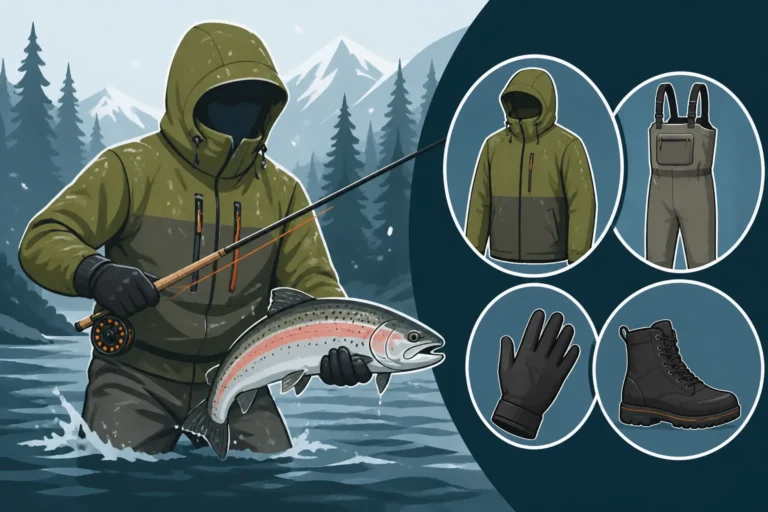
| Warm, waterproof clothing & layers | High | Offshore weather can change quickly. |
Disclaimer
This article is for general informational purposes only and does not constitute professional advice. Laws, prices and regulations vary by location and change over time. Consult a qualified professional for guidance on your specific situation.