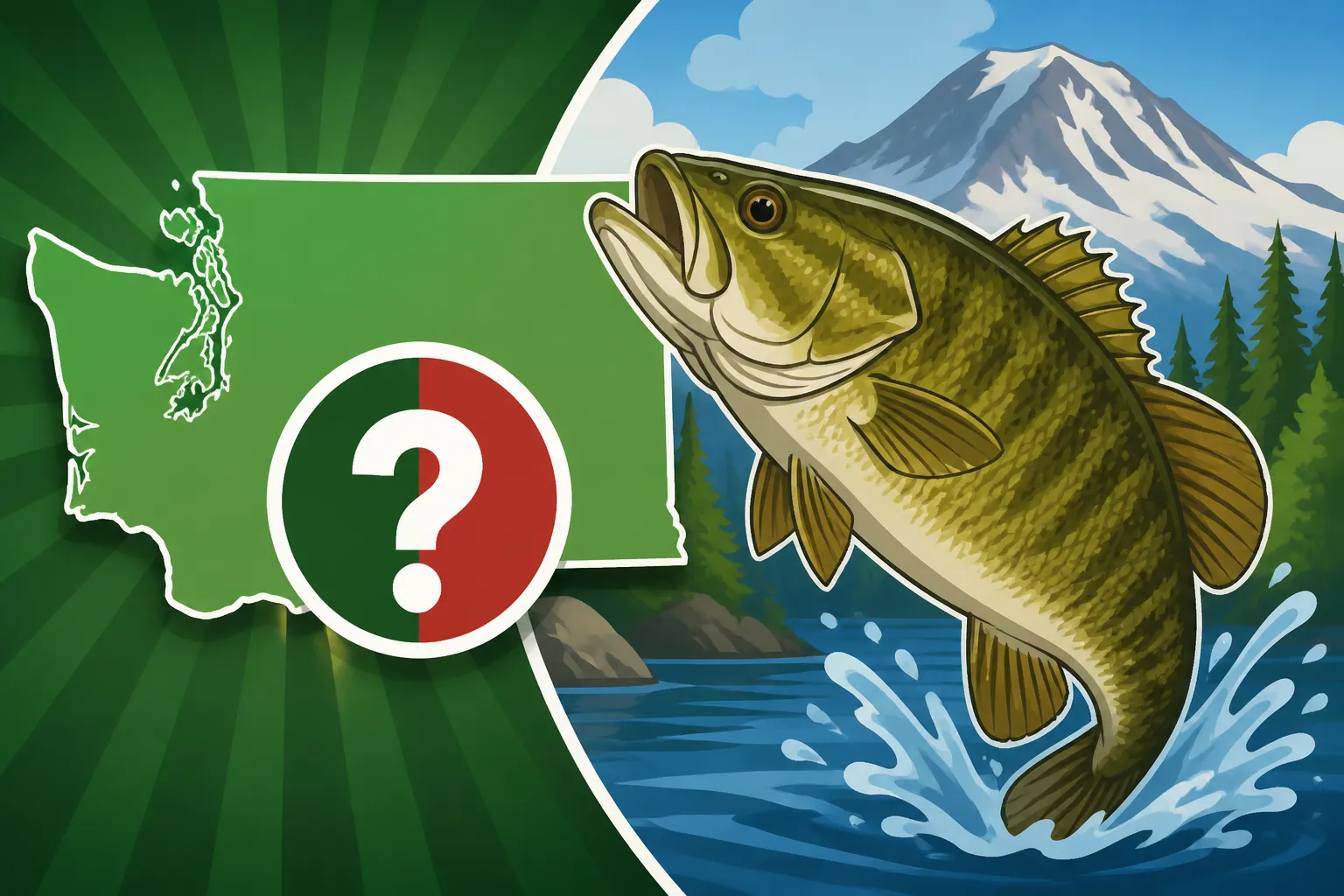
Are Smallmouth Bass Native to Washington?
One question that often comes up in Washington's fishing community, especially for those new to our waters or folks moving here from other states, is whether those feisty smallmouth bass are actually from around here. It's a valid curiosity, as they're such a popular sport fish, but their presence raises important questions about our delicate native ecosystems. This guide is going to dive deep into that question, explaining the origins of smallmouth bass in Washington, where they thrive, and the ecological implications of their presence.
The Core Question: Are Smallmouth Bass Native to Washington?
It’s easy to assume that if a fish is abundant and popular in a region, it must be native. After all, if they’re doing so well, they must belong, right? But that's not always the case, and with smallmouth bass in Washington, the answer might surprise some anglers who have grown to love targeting them.
A Clear Answer: No, They're Not.
Let's cut right to the chase: no, smallmouth bass are absolutely not native to Washington State. Their original home waters are actually quite a distance away, primarily found in the central and eastern parts of North America, extending through the Mississippi River basin, the Great Lakes, and parts of the Atlantic drainage. Think of states like Pennsylvania, Ohio, and down into Missouri – that's their ancestral stomping ground. They evolved in those river systems and have been a part of those ecosystems for millennia.
When a species is introduced to a new environment, especially one far outside its natural range, it can have significant and sometimes irreversible impacts on the local flora and fauna. In Washington, where we hold our native salmon and steelhead populations in such high regard, understanding these distinctions is crucial. It’s not about demonizing a species, but about recognizing the delicate balance of an ecosystem and how human actions can alter it, sometimes with unforeseen consequences.
How Smallmouth Bass Arrived in Washington
So, if they aren't native, how did these tenacious fish end up in our rivers and lakes, becoming a prized sport fish for so many? It’s a classic tale of intentional introduction, driven by human desires rather than natural migration. Beginning in the late 19th and early 20th centuries, there was a widespread movement across North America to introduce popular game fish into new waters. The idea was to enhance angling opportunities, provide new food sources, and in some cases, to "improve" fisheries that were perceived as underutilized or lacking in certain types of sport fish.
Smallmouth bass, with their aggressive fight and adaptability to a variety of freshwater conditions, were prime candidates for these stocking programs. They were seen as a valuable addition to Washington's recreational fishing landscape. The actual mechanisms of introduction varied, from direct stocking by fish and wildlife agencies to private citizens taking matters into their own hands and releasing fish into local waterways. Over time, these initial stockings, often in larger river systems and interconnected lakes, allowed smallmouth bass to spread and establish self-sustaining populations in many parts of the state. Fishing the Columbia River in Washington: A Complete Overview is one such example where they've really taken hold.
Where Smallmouth Bass Thrive in Washington (and Why)
Despite not being native, smallmouth bass have certainly found a comfortable home in many of Washington’s freshwater systems. Their adaptability and preference for certain conditions have allowed them to flourish, sometimes to the detriment of native species.
Preferred Habitats and Key Rivers/Lakes
Smallmouth bass are incredibly resilient and can adapt to a range of freshwater environments, but they absolutely thrive in specific conditions. Generally, they prefer warmer, clearer water with rocky bottoms, gravel, and plenty of submerged structure like fallen timber or aquatic vegetation. These features provide ideal ambush points for their prey and offer protection from predators. Unlike their largemouth cousins, who prefer slower, weedier waters, smallmouth bass are often found in areas with moderate current.
In Washington, this means you'll find them in abundance in several key locations. The Columbia River and its tributaries, particularly the warmer, reservoir-fed sections, are prime smallmouth habitat. The large impoundments created by dams have provided vast areas of suitable rocky bottom and warmer water, allowing populations to explode. Similarly, the Snake River in southeastern Washington is another smallmouth hotspot. Farther inland, large reservoirs like Banks Lake and Potholes Reservoir offer expansive warmwater environments perfectly suited for smallmouth bass, alongside other introduced species like walleye. Even some smaller lakes and rivers across the state, particularly those east of the Cascade Mountains, hold healthy populations where the water warms up sufficiently in the summer months.
| Water Body | Key Characteristics for Smallmouth Bass | Notes |
|---|---|---|
| Columbia River | Large, rocky structure, moderate current, warmer sections, reservoir pools. | Abundant, especially from the Tri-Cities eastward. |
| Snake River | Similar to Columbia, rocky banks, current, impoundments. | Excellent fishing, particularly in the lower river sections. |
| Banks Lake | Large reservoir, rocky shores, clear water, good structure. | Eastern Washington gem for numbers and size. |
| Potholes Reservoir | Complex structure, "dunes" of submerged islands, warmer water. | Unique habitat, great for both smallmouth and largemouth. |
| Moses Lake | Shallow, warm, plenty of vegetation and rock. | Can be very productive for smallmouth, especially in summer. |
The Ecosystem Impact of an Introduced Predator
While smallmouth bass provide fantastic sport fishing opportunities, their success in Washington isn't without its ecological costs. As an introduced predator, they enter ecosystems where native species haven't evolved to cope with their presence. This can lead to significant disruptions, a point often debated among anglers and conservationists alike.
One of the primary concerns is their impact on juvenile salmon and steelhead. Smallmouth bass are opportunistic predators, and in rivers where salmon and steelhead smolts are migrating to the ocean, or where fry are rearing, they can become a significant predator. This adds another layer of challenge for already struggling native fish populations that are facing habitat loss, dam impacts, and other pressures. They also compete directly with native trout species, like rainbow and cutthroat trout, for food resources and prime holding water, especially in river sections that might otherwise be ideal trout habitat.
The Washington Department of Fish and Wildlife (WDFW) often manages smallmouth bass with an eye toward mitigating these impacts. This can manifest in regulations that encourage harvest, such as generous daily bag limits or the absence of size restrictions in certain waters, particularly those with strong native salmonid runs. The goal isn't necessarily to eradicate them – an almost impossible task once they are established – but to control their numbers and reduce their predatory and competitive pressure on native fish. It’s a tricky balance, satisfying the desires of warmwater anglers while protecting coldwater native species. Understanding these dynamics helps anglers appreciate the complexities of Washington Fishing Regulations Every Angler Should Know.
Fishing for Smallmouth Bass in Washington
Despite their non-native status, smallmouth bass are undeniably a fantastic sport fish, offering thrilling battles on light tackle. Anglers travel from all over to experience the hard-fighting bronzebacks that populate our rivers and lakes. If you're looking to target them, there are some tried-and-true methods that consistently produce results.
Popular Techniques and Lures
Smallmouth bass are aggressive and territorial, making them an exciting target. When you're out on the water, you'll want to have a diverse tackle box ready to go. One of the most effective ways to catch them is with crankbaits. These hard-bodied lures mimic baitfish and, when retrieved, dive to different depths, banging off rocks and structure to elicit reaction strikes. Lipless crankbaits are also fantastic, especially when you need to cover a lot of water.
Jigs are another staple for smallmouth anglers. From football jigs to spider jigs, tipped with soft plastic trailers, these lures are incredibly versatile. You can hop them along the bottom, swim them through the water column, or pitch them into heavy cover. Soft plastics are perhaps the most popular category, including tubes, grubs, creature baits, and senko-style worms. These can be rigged in countless ways, like Texas rigs for weedless presentations, Carolina rigs for covering deeper water, or on a simple jig head. The key is to match the hatch and experiment with colors and sizes.
And who can forget the thrill of a topwater bite? Poppers, walk-the-dog lures, and buzzbaits fished across the surface, especially during low-light conditions, can result in explosive strikes that will get your heart pumping. When fishing for smallmouth, don't be afraid to experiment with retrieve speeds and pauses. A sudden jerk or a prolonged stop can often be the trigger that convinces a hesitant bass to strike. You can find a huge variety of these lures and other essential gear on platforms like Amazon, making it easy to stock up for your next trip without visiting multiple tackle shops.
Best Times of Year to Target Smallmouth
Knowing when to hit the water can significantly increase your success when targeting smallmouth bass. Like most freshwater species, their activity levels are heavily influenced by water temperature and their spawning cycle.
- Spring (Pre-spawn): This is arguably one of the best times to fish for smallmouth. As water temperatures climb into the 50s and low 60s Fahrenheit, bass move into shallower areas to stage for spawning. They're hungry and aggressive, trying to pack on weight before the rigors of reproduction. Look for them in bays, points, and transition areas where they can easily move between deeper and shallower water. Early spring can be great for jerkbaits and jigs.
- Summer (Post-spawn/Active Feeding): Once the spawn is over and water temperatures reach the mid-60s to low 70s, smallmouth become highly active. They'll spread out and can be found near deeper structure, current breaks, and submerged islands during the heat of the day. Early mornings and late evenings can be fantastic for topwater action, while deeper presentations with crankbaits, jigs, and drop-shot rigs will shine during brighter conditions. Long, sunny days often mean good fishing.
- Fall (Fattening Up): As water temperatures begin to drop in the autumn, smallmouth go into a "feeding frenzy" to build up reserves for winter. They'll often school up and aggressively chase baitfish. This can be a prime time for throwing crankbaits, spinnerbaits, and soft plastics in shallower to mid-depth ranges, especially near channel swings or points. The fishing can be phenomenal until the water gets too cold, pushing them into their wintering holes.
Regardless of the season, pay attention to local conditions, water clarity, and temperature. These factors will guide your lure choices and presentation styles. Looking for the right bass fishing guidebooks or tackle storage solutions to stay organized year-round? Check out Amazon for a wide selection to prepare for the season.
Understanding Washington's Management of Smallmouth Bass
Managing fisheries, especially those with both native and introduced species, is a complex dance. In Washington, the WDFW has a clear mission to protect native species while also providing recreational opportunities. This means smallmouth bass, as a non-native species, are often managed differently than our iconic salmon and steelhead.
Regulations and Why They Differ
The regulatory framework for smallmouth bass in Washington often stands in stark contrast to that for native salmonids. While species like wild steelhead or certain runs of Chinook salmon might be subject to strict catch-and-release rules, specific slot limits, or outright closures, smallmouth bass regulations are generally much more liberal. It's not uncommon to find generous daily bag limits, or even no possession limits and no size restrictions, in many waters where smallmouth bass are abundant.
Why the difference? This approach is a deliberate management strategy by the WDFW. By encouraging anglers to harvest smallmouth bass, particularly in areas where their populations could negatively impact native fish, the department aims to help control their numbers. For example, on certain stretches of the Columbia River where juvenile salmon are migrating, anglers might be encouraged to keep all the smallmouth bass they catch. These regulations are designed to reduce the predatory pressure on native species and to help maintain ecological balance, even if that balance has already been altered by the presence of an introduced species. It's vital for anglers to understand that these rules are in place for a reason and to always consult the current Washington Fishing Regulations Every Angler Should Know before heading out.
Conservation Efforts for Native Species
The management of smallmouth bass is intrinsically linked to broader conservation efforts for Washington's native fish, especially anadromous species like salmon and steelhead that face monumental challenges. Every effort to manage non-native predators like smallmouth bass is a piece of a much larger puzzle aimed at giving native fish a fighting chance. These efforts include habitat restoration, dam modifications, hatchery programs for supplementing struggling native runs, and strict regulations on native fish harvest.
Anglers targeting smallmouth bass can play a direct role in these conservation efforts by adhering to the specific regulations for the waters they are fishing. If a river section has a liberal smallmouth limit and a concurrent native salmonid closure, it means the WDFW is trying to protect those native fish from additional pressure, including predation. By keeping smallmouth bass in those areas, anglers are directly assisting in the management strategy. It’s about being a responsible steward of our natural resources, recognizing that our actions as anglers have an impact beyond just our immediate catch. For those passionate about conservation, a quick search on Amazon reveals many excellent resources on aquatic invasive species and native fish protection efforts, offering deeper insights into these critical ecological balances. It's a way for all of us to contribute, whether we're fishing or simply learning more about the ecosystems we cherish.
Disclaimer
This article is for general informational purposes only and does not constitute professional advice. Laws, prices and regulations vary by location and change over time. Consult a qualified professional for guidance on your specific situation.