Kokanee vs Sockeye: What’s the Difference
It's incredibly common for anglers in Washington to find themselves scratching their heads when trying to differentiate between Kokanee and Sockeye salmon. These two species, while distinctly different in their adult life cycles, share such a close genetic heritage that their similarities can make identification a real challenge, especially for the uninitiated. This comprehensive guide is designed to demystify these two fascinating fish, diving deep into their biology, habitats, and the subtle yet crucial distinctions that will help you identify them confidently on your next fishing adventure.
The Genetic Link: A Shared Heritage
Before we get into their differences, it’s vital to understand just how closely related Kokanee and Sockeye salmon actually are. They are, in fact, the same species, Oncorhynchus nerka, with the primary distinction being their migratory behavior. Think of it like a family — they share the same lineage, but some members chose to stay home while others went on a grand adventure.
Ancestry and Evolution
Both Kokanee and Sockeye salmon originated from the same ancestral stock. Over thousands of years, as glaciers receded and landscapes changed, some populations of Sockeye became landlocked in freshwater lakes. These isolated populations, unable to return to the ocean, adapted to complete their entire life cycle within the lake environment. This adaptation led to genetic changes over generations, resulting in the distinct "landlocked" form we now call Kokanee. Essentially, a Kokanee is a Sockeye that never went to the sea. This shared ancestry explains why they often exhibit similar physical characteristics, particularly when they are young or not in their full spawning coloration. It’s a beautiful example of evolutionary adaptation right here in our Washington waters.
Why the Confusion Exists
The main reason for confusion often stems from two factors: visual similarity and regional variations. When both fish are young, or when Sockeye are returning from the ocean before their full spawning colors develop, they can look remarkably alike. Both can have silvery sides and a somewhat streamlined body shape. Furthermore, many anglers associate all "red salmon" with Sockeye, not realizing that Kokanee also turn a brilliant red during their spawning phase. Imagine catching a vibrant red fish in a landlocked lake like Lake Chelan, and thinking you've caught a Sockeye, only to realize it's its freshwater cousin. Understanding this shared origin and the visual overlap is the first step in clarifying the distinction.
Key Differences in Habitat and Behavior
While their genetics might be intertwined, the most significant distinctions between Kokanee and Sockeye salmon lie in their life cycles, the environments they inhabit, and their day-to-day behaviors. These differences directly impact where and how you might encounter them in Washington.
Anadromous vs. Landlocked Life Cycles
The defining characteristic that separates Sockeye from Kokanee is their migratory pattern. Sockeye salmon are anadromous, which means they hatch in freshwater, migrate to the saltwater ocean to mature and grow, and then return to their natal freshwater streams to spawn and complete their life cycle. This incredible journey exposes them to vast ocean feeding grounds, allowing them to grow considerably larger than their landlocked relatives. Chinook Salmon: Washington's King of Fish and Coho Salmon Fishing in Washington are also anadromous species, making similar incredible journeys.
Kokanee, on the other hand, are strictly landlocked. They spend their entire lives within a freshwater lake system, never venturing into the ocean. They hatch in the feeder streams or shallow lake gravels, live and mature in the lake, and then return to those same freshwater areas to spawn. This fundamental difference in their life journey dictates everything from their size to their diet and the fishing methods used to target them. It's truly a tale of two lives, even though they share a common ancestor. For more on these amazing fish, check out Kokanee: Washington's Landlocked Sockeye.
Spawning Habits and Locations
Both Kokanee and Sockeye are semelparous, meaning they spawn once and then die shortly after. However, their spawning locations and the timing can differ. Sockeye salmon, after their epic ocean migration, typically return to the specific river systems and lakes where they were born. A prime example in Washington is the incredible Sockeye run in Lake Wenatchee and the Baker Lake system. When Sockeye Salmon Run at Washington's Baker Lake highlights the spectacle of these fish returning. During this time, their bodies transform into a brilliant crimson red, and their heads turn green, making them easily identifiable.
Kokanee also undertake a spawning migration, but it's much shorter. They move from the deep, open waters of their resident lake into tributary streams or shallow shoreline areas where there's suitable gravel for egg laying. Their spawning coloration is similar to Sockeye – red bodies with green heads – but often less intensely vibrant due to their freshwater-only diet and smaller size. This internal migration within a lake system, often in late summer or fall, is a prime time for anglers to target them before they complete their life cycle. Knowing the specific timing, like When the Baker Lake Sockeye Run Is at Its Best, can be key for either species.
Dietary Preferences
The diet of Sockeye and Kokanee, while similar in their juvenile stages, diverges significantly once the Sockeye head to the ocean. In freshwater, both young Sockeye and adult Kokanee primarily feed on zooplankton – tiny aquatic organisms. Their numerous, fine gill rakers are perfectly adapted for filtering these small food sources from the water.
Once Sockeye migrate to the vastness of the Pacific Ocean, their diet expands to include small crustaceans, larval fish, and other pelagic invertebrates, which contributes to their much larger size and higher fat content. Kokanee, constrained by the available food sources in freshwater lakes, continue to feed predominantly on zooplankton throughout their lives. This continuous zooplankton diet in the freshwater environment is a key reason why How Big Washington Kokanee Get is generally much smaller than their ocean-going cousins. Anglers need to consider these dietary differences when choosing baits and lures, matching the hatch, so to speak, to what these fish naturally consume. You can find specialized Kokanee gear, like ultra-light trolling lures designed to mimic zooplankton, on Amazon.
Physical Distinctions: How to Tell Them Apart
When you're out on the water, seeing a fish in hand is often the best way to determine its identity. While there can be visual overlaps, especially before spawning, there are some reliable physical characteristics that can help you differentiate between Kokanee and Sockeye salmon.
Size and Shape
This is perhaps the most obvious difference. Sockeye salmon, having spent years feeding in the nutrient-rich ocean, grow significantly larger than Kokanee. A typical adult Sockeye returning to spawn might range from 20 to 30 inches in length and weigh anywhere from 6 to 15 pounds. Some even exceed that! Their bodies are generally more robust and powerful, built for the rigors of ocean life and upstream migration. For a glimpse into the potential, check out How Big Baker Lake Sockeye Get.
Kokanee, because they live their entire lives in the comparatively less nutrient-rich freshwater lakes, are considerably smaller. Most adult Kokanee will be between 8 to 15 inches long, with larger specimens being less common, though some lakes produce fish up to 20 inches. Their bodies tend to be more slender and delicate compared to the oceanic Sockeye. If you catch a red-fleshed salmon-like fish over 18 inches in a Washington lake, there's a good chance it's a Sockeye that managed to find a way to grow larger, or it might be another species entirely; if it's smaller, it's almost certainly a Kokanee.
Coloration and Markings
Both species share a similar stunning transformation during spawning season, turning brilliant shades of red on their bodies with green heads. However, there are often subtle differences in the intensity and timing of this coloration.
- Non-Spawning (Ocean/Lake Silvery Phase): When Sockeye are fresh from the ocean, and Kokanee are in their lake-dwelling phase, both will have a bright, silvery body with a dark blue or bluish-green back. They usually lack distinct spots on their backs or tails, which helps differentiate them from Chinook or Coho. The best way to identify them in this phase might be by their slender body shape and large eyes relative to their head size.
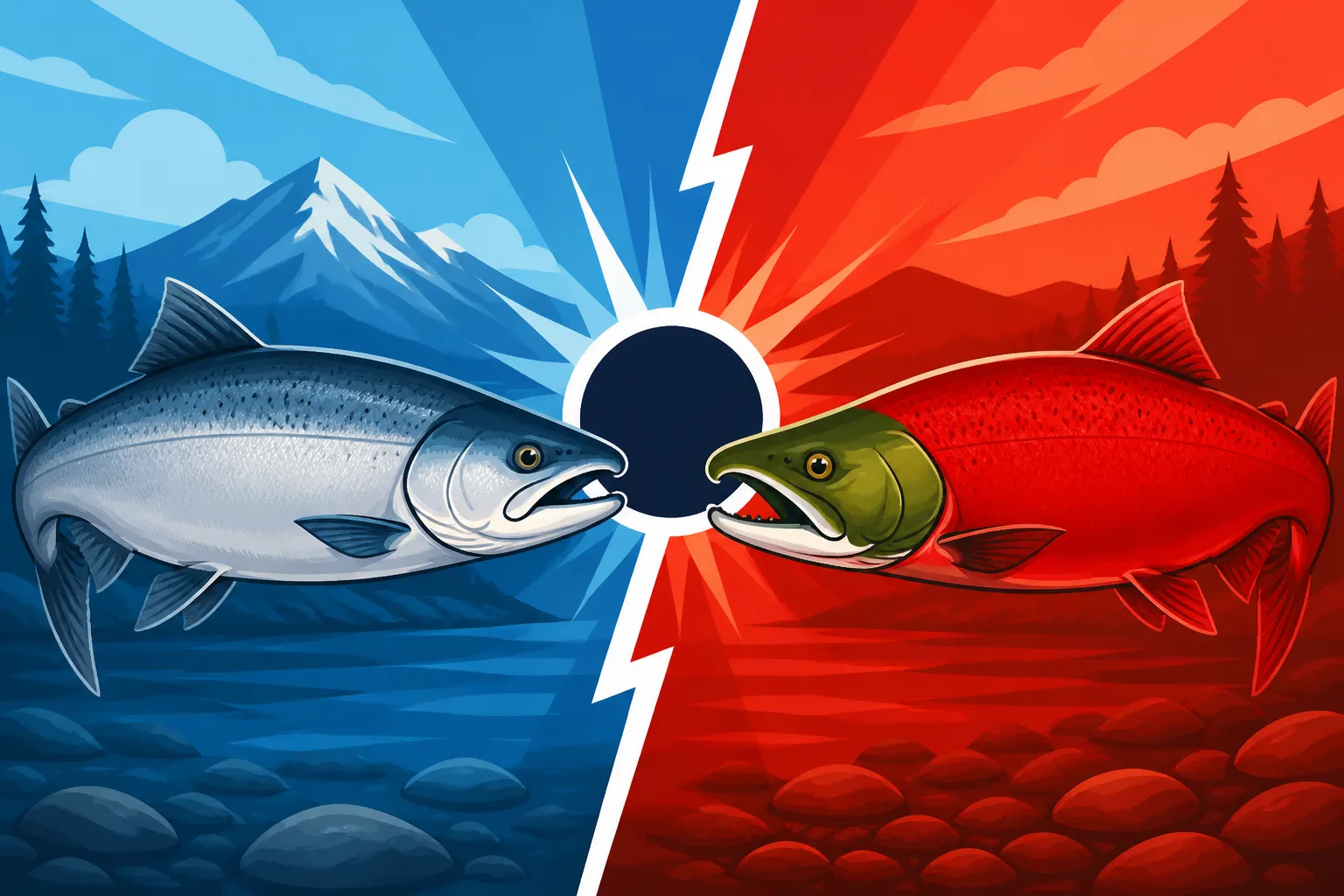
- Spawning Phase: This is where the iconic red and green comes in. Sockeye typically exhibit a more intense, vibrant crimson red on their bodies and a darker, almost emerald green head, with males often developing a pronounced humped back and hooked jaw (kype). Kokanee also turn red and green, but the red might be a duller, more brownish-red, and the green on the head less pronounced. The transformation is still striking, but generally less dramatic than that of an ocean-run Sockeye. Always double-check Sockeye Salmon Identification at Washington's Baker Lake or a reliable field guide found on Amazon to be sure.
Mouth and Gill Raker Differences
For a more technical, and often definitive, identification, examining the mouth and gill rakers can be very helpful. These features are less prone to variation due to life stage or spawning condition.
- Teeth and Jaws: Sockeye salmon, especially males, develop more pronounced kypes (hooked jaws) during spawning, and their teeth can become sharper and more evident, though they aren't as large or numerous as a Chinook's. Kokanee also develop kypes, but typically smaller ones. Neither species has the significant teeth you'd find on a mature Chum Salmon Identification and Where They Run in Washington.
- Gill Rakers: This is one of the most reliable features. Gill rakers are bony projections on the gill arches that help fish filter food from the water. Both Sockeye and Kokanee have numerous, long, and slender gill rakers, which is an adaptation for their zooplankton diet. However, there can be subtle differences in their count or spacing, although this often requires a detailed examination. If you're ever truly uncertain, consulting a fish identification chart or an experienced angler is your best bet, especially if specific regulations are at stake.
| Feature | Kokanee Salmon (Landlocked Sockeye) | Sockeye Salmon (Anadromous Sockeye) |
|---|---|---|
| Life Cycle | Entirely freshwater (lakes, tributaries) | Freshwater (hatch), saltwater (grow), freshwater (spawn) |
| Typical Size | 8-15 inches, up to 2 lbs | 20-30 inches, 6-15 lbs |
| Primary Habitat | Deep, cold freshwater lakes (e.g., Lake Chelan, Lake Roosevelt) | Pacific Ocean (adults); specific rivers/lakes (e.g., Baker Lake, Lake Wenatchee) for spawning |
| Spawning Color | Dull red body, greenish head, less pronounced kype | Vibrant crimson red body, dark green head, prominent kype |
| Diet | Primarily zooplankton | Zooplankton (juvenile); small crustaceans, invertebrates (ocean) |
| Regulations | Vary by lake; often liberal bag limits | Highly regulated by specific rivers/runs; often very restrictive |
| Catch Card Req. | Generally not required for Kokanee | Always required for Sockeye in Washington |
Fishing for Kokanee vs. Sockeye in Washington
Understanding the differences between Kokanee and Sockeye isn't just for academic interest; it directly impacts how, when, and where you fish, as well as the regulations you need to follow. Mistaking one for the other can lead to serious compliance issues, so knowing your target is paramount. For general rules, always consult Washington Fishing Regulations Every Angler Should Know.
Targeting Kokanee: Gear and Techniques
Kokanee are a popular target for many anglers in Washington's deeper, colder lakes. Since they are smaller and primarily zooplankton eaters, light tackle and specific presentation methods are key.
- Gear: An ultralight or light-action rod with sensitive tip is ideal. You’ll want to spool up with light monofilament or fluorocarbon line, typically 4-8 pound test, to ensure a subtle presentation. Many anglers use a small downrigger or weighted dodgers to get their lures down to the depths where Kokanee feed, often 30 to 100 feet or more. You can find excellent Kokanee rod and reel combos and various dodgers on Amazon.
- Techniques: Trolling is the most common and effective method for Kokanee. Small, colorful dodgers or flashers are used ahead of tiny spoons, wedding rings, or hootchies tipped with corn. The corn adds scent and bulk, mimicking their natural food. The action of the dodger gives the lure a tempting wiggle. Trolling Wedding Rings for Kokanee is a classic technique. Jigging can also be effective, especially when you mark schools of Kokanee on your fish finder. Small jigs, often tipped with corn, are dropped to the fish's depth and worked with a subtle twitch. For deeper fish, Downrigging for Deep Kokanee in Summer is essential.
- Regulations: Kokanee regulations are typically more liberal than Sockeye, with higher daily bag limits in many lakes like Lake Chelan, Lake Roosevelt, and Lake Wenatchee (outside of Sockeye seasons). However, it's crucial to check the specific regulations for the lake you plan to fish, as rules can vary widely. While a The Washington Catch Record Card and What It Requires is usually not needed for Kokanee, it's always wise to confirm.
Targeting Sockeye: Special Regulations and Methods
Fishing for Sockeye salmon in Washington is a highly anticipated and often brief affair, dictated by strict management to protect these valuable runs.
- Gear: Given their larger size and powerful fight, you’ll need heavier gear than for Kokanee. A medium-action rod, suitable for handling 10-20 pound test line, is a good starting point. Depending on the method, you might use a level-wind reel for trolling or a spinning reel for casting.
- Techniques: Sockeye are known for being finicky biters, especially as they approach their spawning grounds. Trolling with small, red or orange hootchies or flies behind dodgers or flashers is a very popular and effective method in larger lake systems like Baker Lake. Plunking with sockeye-specific rigs, using small colored beads or coon shrimp, can also be productive in rivers. During specific, limited openings, even drift fishing can be an option. Remember, Sockeye don't actively feed once they enter freshwater to spawn, so you're trying to elicit a reactionary strike. Test fisheries play a crucial role in determining these openings, as explained in Test Fishery Counts and How They Drive Salmon Openings.
- Regulations: This is where Sockeye fishing diverges most sharply from Kokanee. Sockeye runs are closely monitored, and seasons are often very short, sometimes only a few days or weeks, and frequently limited to specific rivers or lakes, such as the Baker Lake Sockeye fishery. Daily bag limits are usually much lower, often one to two fish per day, and a valid Washington fishing license and When a Catch Record Card Is Required in Washington are always mandatory. It’s absolutely critical to check the current Washington Sport Fishing Seasons and Emergency Closures before heading out, as these rules can change rapidly. Don't risk a penalty by being uninformed! For an overview, check Understanding Washington's Daily Bag Limits by Species.
Catch Limits and Conservation
Both Kokanee and Sockeye salmon are incredibly important to Washington's aquatic ecosystems and fishing culture. Responsible angling practices are vital for their conservation. Always know your target, understand the specific regulations for the body of water you're fishing, and be prepared to release any fish that do not meet legal requirements. When in doubt about identification, especially if a catch card is involved, it's always safer to release the fish. The future of Washington's salmon and Kokanee populations depends on all of us being good stewards of our natural resources.
Disclaimer
This article is for general informational purposes only and does not constitute professional advice. Laws, prices and regulations vary by location and change over time. Consult a qualified professional for guidance on your specific situation.