Barbless Hook Requirements on Washington Rivers
It's easy to get tangled up in Washington's fishing regulations, and few rules cause more head-scratching than the barbless hook requirement on many of our beautiful rivers. Anglers often feel confused about when and where these rules apply, leading to frustration and sometimes even accidental violations. This guide is here to clear the waters, explaining exactly what barbless hooks are, why they're so important for Washington's fisheries, and how to make sure you're always on the right side of the law, no matter which stunning Washington waterway you’re casting into.
Understanding the "Why" Behind Barbless Hooks
Many anglers initially find the idea of barbless hooks a bit daunting, worrying about losing fish or the extra effort of modifying gear. However, these regulations aren't arbitrary; they're deeply rooted in critical conservation efforts to protect our vulnerable fish populations, especially wild salmon and steelhead. Washington, with its incredible salmon and steelhead runs, is at the forefront of these conservation needs.
The Conservation Philosophy Behind Barbless Requirements
The primary reason for mandating barbless hooks, particularly in rivers and specific marine areas, boils down to minimizing harm to fish that are caught and then released. When a barbed hook penetrates a fish's mouth, the barb digs in, making removal difficult and often causing significant tissue damage. This damage can lead to infection, impede feeding, or even be fatal, especially for smaller or more delicate fish. With barbless hooks, the hook slides out much more easily, cleanly, and quickly, significantly increasing the chances of survival for released fish. This is absolutely vital in "catch-and-release" fisheries, or when fishing for species that are legally required to be released, such as wild steelhead.
Think about it from the fish's perspective: a quick, clean release means less stress, less injury, and a better chance to recover and continue its journey, whether it's migrating upstream to spawn or simply growing larger in its native habitat. Given the immense pressures on Washington's fish stocks, every bit of help we can give them truly makes a difference. These rules directly support the long-term health and sustainability of our treasured fisheries, ensuring future generations can also enjoy the thrill of Washington fishing.
What "Barbless" Really Means for Your Hooks
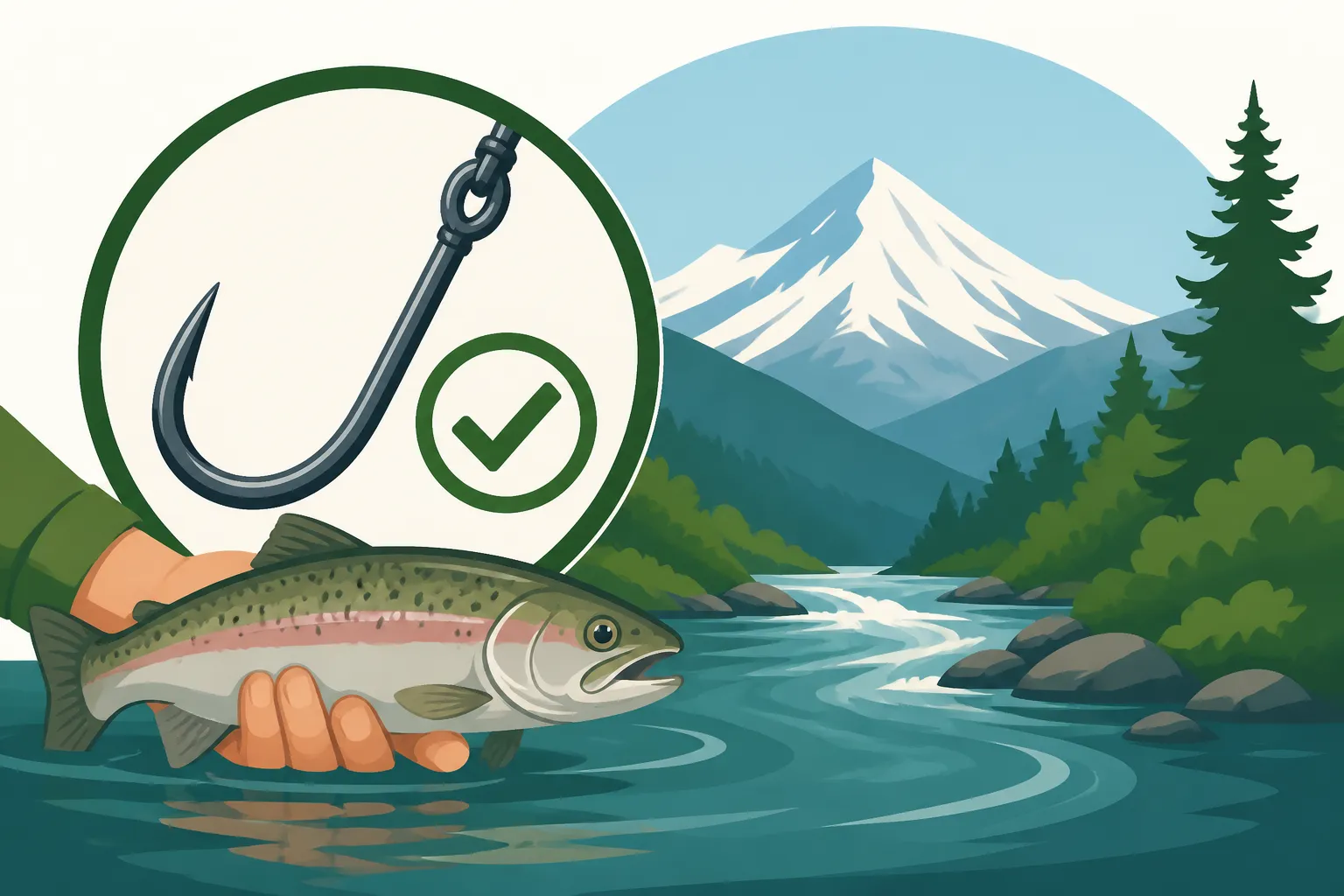
So, what exactly constitutes a "barbless" hook? It's simpler than you might think. A barbless hook is essentially a hook where the small, pointed projection (the barb) that extends backward from the point, designed to keep the hook from falling out, has been removed or flattened. You can run your finger along the shank of the hook, past the point, and it should feel completely smooth, with no resistance from a barb.
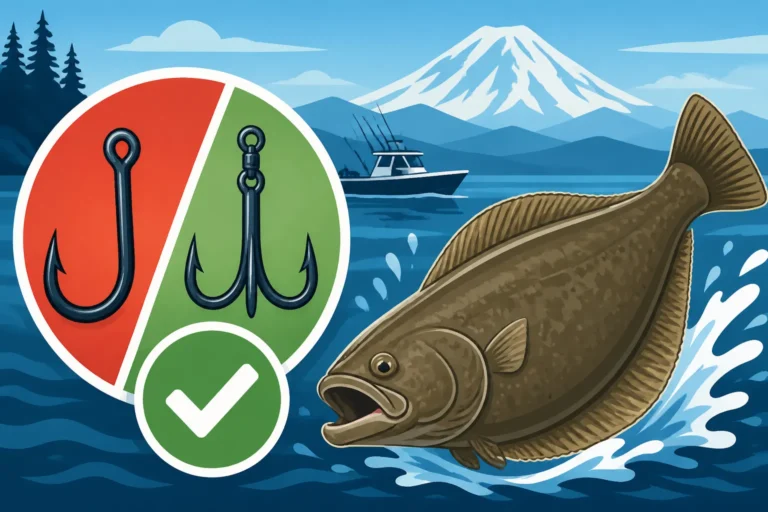
This definition applies to all types of hooks, whether they are single hooks, treble hooks, or even jig hooks. If a rule specifies "barbless," then every point on every hook attached to your lure or bait must be free of a barb. It’s not enough for just one point on a treble hook to be barbless; all three must be. This is a common oversight, and fisheries officers are trained to check hooks thoroughly. It's crucial to understand this precise definition to avoid accidentally violating regulations, as the Washington Department of Fish and Wildlife (WDFW) has a zero-tolerance policy for barbed hooks in designated barbless areas.
Decoding Barbless Hook Regulations by Waterbody
One of the biggest sources of confusion for anglers is that barbless hook requirements aren't universal across all Washington waters. What's mandatory on one river might be optional or even irrelevant on another. This section will help you understand the nuances, breaking down how these rules apply in different fishing environments.
Rivers, Lakes, and Marine Areas: Where Barbless Rules Apply Most
Generally speaking, barbless hook regulations are most prevalent and strictly enforced on rivers and streams, especially those known for wild salmon and steelhead runs, or where specific species are managed under catch-and-release rules. The rationale here is, again, to protect these vulnerable migrating fish that are often handled multiple times by anglers. Rivers like the Skykomish, Skagit, and Hoh often have specific barbless hook mandates to protect their precious wild steelhead. You can learn more about specific river rules in a guide like "Wild Steelhead Release Rules on Washington's Olympic Peninsula Rivers".
For lakes and marine areas, the rules tend to be more varied. Many lakes, especially those stocked with hatchery trout, do not require barbless hooks. This is because these fish are often destined for harvest, and the conservation imperative for catch-and-release survival isn't as high. Similarly, much of Puget Sound and coastal marine areas often allow barbed hooks, particularly for species like halibut, lingcod, or bottomfish, where release rates are lower or the target species is more robust. However, there are exceptions; some specific marine areas, or fisheries targeting certain species within marine areas, may have barbless requirements, so it's always critical to check the specific regulations for the area you plan to fish. This nuanced approach highlights why it's so important to consult the official WDFW regulations pamphlet before every trip.
Key Washington Rivers with Strict Barbless Hook Requirements
Washington is home to countless rivers, each with its own character and, often, its own set of rules. However, several rivers are particularly renowned for their strict barbless hook regulations, often because they host significant runs of wild salmon and steelhead. These include:
- Columbia River and its Tributaries: Many sections and tributaries of the mighty Columbia River have barbless hook requirements, particularly during salmon and steelhead seasons, to protect non-target species and wild fish that might be intercepted. The Washington's Columbia River Salmon and Steelhead Endorsement, Explained is a critical document for anglers fishing this vast system.
- Olympic Peninsula Rivers: Iconic rivers like the Hoh, Sol Duc, Quillayute, and Bogachiel are frequently subject to barbless hook rules, especially during their famous winter steelhead runs. These rivers are often managed as wild steelhead gene banks, making fish survival paramount.
- Puget Sound Tributaries: Rivers feeding into Puget Sound, such as the Skagit, Skykomish, Stillaguamish, and Green River, also frequently have barbless mandates, particularly for salmon and steelhead. Understanding specific rules for these rivers is key, especially when considering Puget Sound Salmon Closures: What Washington Anglers Need to Know.
- Yakima River: While known more for trout, certain sections of the Yakima River, particularly those managed for wild trout, may also have barbless hook requirements for fly fishing or certain lure presentations to protect the fishery.
It's vital to remember that these regulations can change seasonally or even mid-season due to emergency rules. Always check the very latest WDFW pamphlet and emergency rule updates for the specific river and time of year you intend to fish.
Table: General Barbless Hook Requirements by Water Type
To help visualize these distinctions, here's a general guide. However, always verify with the current WDFW regulations for your specific fishing location and target species.
| Water Body Type | Typical Barbless Hook Requirement | Common Rationale | Exceptions / Considerations |
|---|---|---|---|
| Wild Steelhead Rivers | Mandatory | Maximize survival of wild, released fish | May be mandatory even for hatchery-bound fish during certain periods. |
| Salmon Rivers (Mixed Runs) | Mandatory | Protect wild salmon and non-target species | Sometimes specific gear types (e.g., bait) might have more relaxed rules, but barbless is still common. |
| Stocked Trout Lakes | Optional/Not Required | High harvest intent, less emphasis on C&R survival | Some trophy trout lakes might have C&R rules that include barbless. |
| General Marine Areas | Optional/Not Required | Less C&R, robust target species | Specific marine areas or fisheries (e.g., some lingcod/rockfish zones) may have barbless rules. |
| Columbia River Mainstem | Often Mandatory | Complex runs, protection of wild/ESA listed stocks | Varies greatly by zone, season, and target species. Check WDFW carefully. |
| Tributaries to Marine Areas | Often Mandatory | Migratory salmon/steelhead transit | Check specific river rules for the time of year. |
Pinpointing When Barbless Hooks Become Mandatory
Knowing where to use barbless hooks is only half the battle. The "when" and "for what" are equally important, as these rules often kick in for specific species, during certain seasons, or even depend on the type of gear you're using. Ignoring these details can quickly turn a fun day on the water into an unexpected conversation with a WDFW enforcement officer.
Protecting Wild Fish Populations: The Core of the Rules
The strictest barbless hook requirements almost always revolve around protecting wild fish populations, particularly those listed under the Endangered Species Act (ESA) or those deemed vulnerable. In Washington, this most commonly means wild Chinook, Coho, and especially wild steelhead. These fish are critical for maintaining genetic diversity and the long-term health of their species. Even if a river has a hatchery program, the WDFW often implements barbless rules during periods when wild fish are present and might be inadvertently hooked.
For example, on a river like the Sol Duc on the Olympic Peninsula, during the winter steelhead season, you might be targeting hatchery steelhead (which typically have a clipped adipose fin, indicating they can be retained if legal). However, wild steelhead are also present, and they must be released unharmed. To maximize their survival, barbless hooks become a non-negotiable requirement for all anglers in that fishery. This approach is a cornerstone of responsible fisheries management in a state that prides itself on its natural resources.
Species-Specific and Seasonal Barbless Mandates
Beyond just "wild fish," barbless rules are frequently tied to specific species and particular times of the year.
- Steelhead Seasons: Nearly every Washington river with a significant steelhead fishery will have barbless hook requirements during open steelhead seasons, whether it's winter or summer steelhead. This is due to the high value placed on steelhead and the often catch-and-release nature of many steelhead fisheries. Guides on the Kalama River, for instance, are meticulous about this during spring Chinook season if steelhead are also in the river.
- Salmon Seasons: For salmon, barbless requirements often align with periods when specific runs (like wild Chinook or Coho) are moving through, even if hatchery fish of the same species are also present and legal to keep. The regulations might specify "all salmon" or "Chinook salmon only" for barbless rules, so reading the fine print is crucial. For example, Understanding Washington's Daily Bag Limits by Species will often go hand-in-hand with hook regulations for those species.
- Emergency Rules: One of the most challenging aspects of Washington fishing is the dynamic nature of regulations. Emergency Rule Changes: Why Washington's Rules Shift Mid-Season are common and can suddenly impose or lift barbless hook requirements. These changes are often driven by real-time fish counts (like test fisheries) or environmental conditions (e.g., low water, high water temperatures). It’s not uncommon for a river to be barbed in October and suddenly switch to barbless in November due to an incoming wild fish run. Always check the WDFW emergency rules page before heading out.
Gear-Specific Barbless Rules
It's not just what you're fishing for or where; sometimes, how you're fishing dictates the hook requirement. While "barbless for all gear" is common in many areas, there are instances where specific gear types might have their own rules.
- Artificial Lures and Flies: These are almost always subject to barbless rules in designated areas. If you're drifting a Spin-N-Glo, casting a spoon, or swinging a fly for steelhead, every point needs to be barbless.
- Bait: This is where it can get tricky. Sometimes, in certain fisheries, bait fishing might allow for barbed hooks while artificial lures require barbless, or vice versa. However, in most salmon and steelhead rivers with barbless regulations, the rule applies regardless of whether you're using bait (like roe or shrimp) or artificials. The intent is still to protect the fish if it's released. Always consult the regulation pamphlet for exact details regarding bait use and hook type.
- Treble Hooks: This is a major point of confusion. A common misconception is that if you're using a single hook, it's fine, but if you switch to a treble hook, the barbless rule somehow doesn't apply as strictly. This is incorrect. If barbless hooks are required, all points on all hooks must be barbless. That means if your plug has a treble hook, all three points must be de-barbed. Many experienced anglers simply remove treble hooks and replace them with single barbless hooks, as they are often easier to remove from fish and can still hold a fish effectively.
Getting Your Hooks Ready: Converting and Buying Barbless
So, you've checked the regulations, and it's clear you need barbless hooks. Now what? Don't worry, you don't need to throw out all your existing tackle. There are easy ways to convert your current hooks or purchase ready-made barbless options.
DIY Barbless Hooks: Crimping Your Way to Compliance
The simplest and most cost-effective way to get barbless hooks is to modify your existing barbed hooks. This is a quick and straightforward process that every angler should know.
- Gather Your Tools: You'll need a good pair of pliers. Needle-nose pliers or specifically designed fishing pliers work best. Make sure they have a sturdy gripping surface. Many anglers keep a pair of these handy pliers in their tackle box, easily found on platforms like Amazon or at local tackle shops.
- Locate the Barb: Hold the hook firmly between your fingers, or use a vise if you have one. Identify the barb, which is the small protrusion behind the point.
- Crimp It Down: Position the jaws of your pliers firmly over the barb, pressing it against the shank of the hook. Squeeze hard and consistently until the barb is flattened completely flat against the shank. You want it to be smooth, with no discernible bump or edge.
- Test It: Run your finger lightly from the point down the bend of the hook. It should feel completely smooth. If you feel any resistance, or if the barb still catches your skin, crimp it down harder. You can also try hooking a piece of cloth; a barbless hook should slide out easily.
It’s important to do this thoroughly. A partially crimped barb is still a barb in the eyes of WDFW enforcement. This DIY method is not only practical but also teaches you a valuable skill for on-the-water adjustments if you realize you've forgotten to de-barb a particular lure.
Buying Ready-Made Barbless Hooks
While converting your hooks is easy, some anglers prefer the convenience and peace of mind of buying hooks that are manufactured barbless from the start. Many reputable hook manufacturers offer a range of barbless options for various fishing styles.
- Hook Brands: Companies like Gamakatsu, Owner, Mustad, and Eagle Claw all produce quality barbless hooks. You can find single barbless hooks, often labeled as "tournament legal" or "conservation hooks," in a wide array of sizes and styles suitable for everything from trout fishing to salmon and steelhead.
- Lures and Jigs: Many popular lures and jigs, especially those designed for catch-and-release fisheries, now come pre-rigged with barbless hooks. When purchasing new gear, specifically look for "barbless" in the product description. If it's not explicitly stated, assume it has a barb and be prepared to crimp it yourself.
- Where to Buy: Local tackle shops are excellent resources, as their staff can guide you to the right barbless hooks for your target species and local rivers. Online retailers like Amazon, Bass Pro Shops, or Cabela's also have extensive selections of barbless hooks and lures. Just make sure to read descriptions carefully to confirm they are indeed barbless. Stocking up on a variety of sizes is always a good idea.
Checking Your Tackle Box Before Every Trip
This cannot be stressed enough: check your hooks before every single fishing trip. It’s easy to forget to de-barb a new lure, or mistakenly grab a barbed hook from a different tackle box compartment. Even seasoned anglers make this mistake.
Develop a routine:
- Before leaving home: Lay out all the lures, flies, and bait rigs you plan to use. Systematically inspect each hook point.
- On the water: Keep a pair of pliers handy. If you switch lures or find a new hot pattern, immediately check its hooks. If you accidentally pick up a barbed one, take a moment to crimp it before making that first cast.
- Designate a "Barbless Only" box: Some anglers find it helpful to have a specific tackle box or tray clearly marked "Barbless Hooks ONLY" to store all their compliant gear, reducing the chance of grabbing the wrong hook. This is especially useful for those who fish both barbed and barbless waters.
Being proactive and meticulous in your hook checks will save you a lot of potential headaches and ensure you're always fishing legally and ethically in Washington.
The Consequences of Non-Compliance and Broader Impacts
Ignoring barbless hook requirements is more than just a minor infraction; it carries significant legal penalties and, more importantly, can have serious negative consequences for Washington's precious fisheries. Understanding these repercussions is key to promoting responsible angling.
What Happens If You're Caught With Barbed Hooks
Being caught using barbed hooks in a designated barbless-only area by a WDFW enforcement officer can lead to a range of penalties, none of which are pleasant.
- Fines: You will almost certainly receive a substantial monetary fine. The exact amount can vary depending on the specific violation, the location, and whether it's a first offense, but fines can easily run into hundreds of dollars. These aren't small parking tickets; they're serious deterrents.
- Gear Confiscation: In many cases, the enforcement officer has the authority to confiscate the illegal gear. This means losing your favorite lure, rod, or even your entire tackle box if multiple violations are found. This can be particularly painful if you've invested in high-end equipment.
- License Suspension/Revocation: For repeat offenders, or in cases of severe or intentional violation, you could face suspension or even permanent revocation of your fishing license. This is a nightmare scenario for any passionate angler and means you won't be able to fish legally in Washington for a specified period or ever again. You can read more about Fines and Penalties for Common Fishing Violations.
- Criminal Charges: While less common for a simple barbless hook infraction, in cases where other, more severe violations are combined (e.g., keeping an illegal wild fish along with using barbed hooks), criminal charges are a possibility.
- Public Perception: Beyond legal penalties, there's the less tangible but equally important consequence of damage to the angling community's reputation. Enforcement officers are often visible to other anglers, and seeing someone cited for illegal gear can reflect poorly on all anglers, potentially leading to more restrictive regulations for everyone.
It's a stark reminder that these rules are taken very seriously, and for good reason.
The Broader Impact on Fisheries and Conservation
Beyond the individual penalties, the collective impact of anglers failing to adhere to barbless hook requirements can be devastating for fisheries.
- Increased Mortality of Released Fish: Every fish that is caught with a barbed hook and then released has a lower chance of survival compared to one caught on a barbless hook. When hundreds or thousands of anglers fish a river, even a small percentage increase in mortality for each released fish adds up to a significant number of lost wild salmon and steelhead. This directly undermines conservation efforts and can set back fragile populations by years.
- Jeopardizing Seasons: If the WDFW determines that incidental mortality rates are too high due to non-compliance, it can lead to earlier closures of seasons, stricter limits, or even complete closures of certain fisheries. This means fewer opportunities for everyone to fish. Anglers who break the rules ultimately hurt the very resource they claim to enjoy, and everyone else who follows the rules.
- Erosion of Trust: Non-compliance erodes the trust between anglers, fisheries managers, and conservation groups. When rules are consistently violated, it makes it harder to advocate for open seasons and flexible management approaches, as the data on fish survival becomes skewed. This can lead to a more rigid regulatory environment that ultimately limits angler access.
- Support for Hatchery Programs: In Washington, many fisheries rely on hatchery programs to supplement wild runs and provide harvest opportunities. While sometimes controversial, these programs are essential for many areas. However, barbless requirements are often critical even in hatchery fisheries, as wild fish are almost always present and need protection. Consistent non-compliance can jeopardize the delicate balance between hatchery and wild fish management. Ensuring compliance helps maintain a healthy coexistence.
Ultimately, using barbless hooks when required isn't just about avoiding a fine; it's about being a responsible steward of Washington's incredible fishing resources and actively participating in their conservation for future generations.
Disclaimer
Please note that fishing regulations, including those pertaining to barbless hooks, are subject to change at any time. This guide is intended for informational purposes only and should not be considered a substitute for consulting the most current official Washington Department of Fish and Wildlife (WDFW) regulations. Always verify the latest rules and emergency closures directly from the WDFW website or official pamphlet before engaging in any fishing activity.