Do You Record Steelhead on a Catch Record Card?
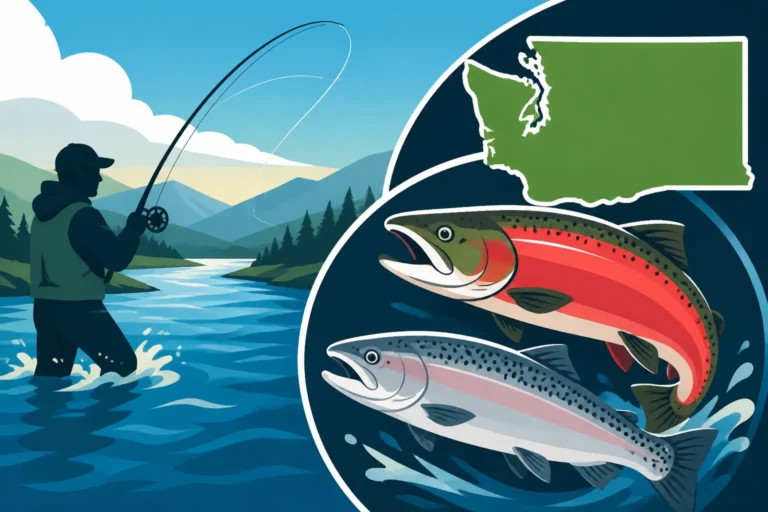
You’ve just hooked into a beautiful steelhead on one of Washington’s legendary rivers – maybe the Cowlitz or the Olympic Peninsula's Sol Duc. Your heart is pounding, the fight is exhilarating, and as you land it, a crucial question pops into your head: do I need to mark this fish on my Catch Record Card? It’s a common point of confusion for many anglers, and frankly, the Washington Department of Fish and Wildlife (WDFW) regulations can feel like navigating a complex maze. This guide is here to untangle that confusion, walking you through exactly when and how steelhead factor into your Washington Catch Record Card, so you can focus on the thrill of the catch with peace of mind.
Understanding Washington's Catch Record Card System
First off, let's talk about what a Catch Record Card (CRC) actually is and why it's such a big deal in Washington fishing. Many anglers initially see it as just another piece of paper or a digital form, but it's far more than that. This card is a vital tool the WDFW uses to manage our fisheries and ensure the sustainability of salmon, steelhead, and other important species for future generations. Without accurate data from anglers like you, setting bag limits, season dates, and understanding population trends would be nearly impossible.
When you buy your annual Washington fishing license, you often receive a physical Catch Record Card, or you can use the electronic version through the MyWDFW App. This card is designed to track your harvest of specific species, primarily salmon and steelhead, but also some highly migratory species like halibut, and even Dungeness crab. The information you provide helps WDFW scientists monitor how many fish are being caught, from which areas, and when. This data is critical for making informed decisions about conservation and recreational opportunities. For instance, if WDFW sees a higher than anticipated catch rate in a specific river, they might implement an Emergency Rule Change to protect the run.
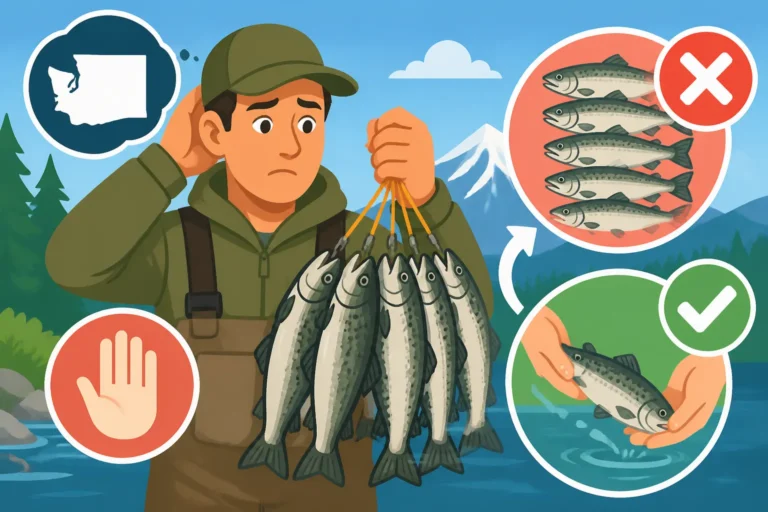
The biggest distinction to understand upfront is that the Catch Record Card is generally for kept fish. If you're practicing catch-and-release, which is often the case for wild steelhead or during specific conservation-focused seasons, you typically do not record those fish on your card. However, there are exceptions and nuances, especially when dealing with threatened or endangered species, so it’s always essential to check the current regulations. Think of the CRC as your official ledger for the fish you take home, contributing directly to the scientific understanding of our cherished aquatic resources. It's a small act that has a huge impact on the long-term health of our fisheries. You can learn more about The Washington Catch Record Card and What It Requires in our detailed guide.
The Specifics: When Steelhead Require Reporting
Now, to the heart of the matter: when do you actually need to record a steelhead on your Washington Catch Record Card? The short answer is, generally, yes, if you keep it. However, there are crucial details and distinctions you need to understand to comply with WDFW regulations.
The primary requirement for recording steelhead is when you harvest one, meaning you keep it. Unlike salmon, where every kept fish must be recorded, steelhead reporting on the CRC specifically applies to those rivers and marine areas where a Catch Record Card is mandated for steelhead harvest. It’s not universally required for all steelhead caught throughout the state, but it is for the vast majority of popular steelhead fisheries. You'll always need to refer to the current Washington Fishing Regulations Every Angler Should Know or the WDFW pamphlet to confirm the specific requirements for the body of water you're fishing.
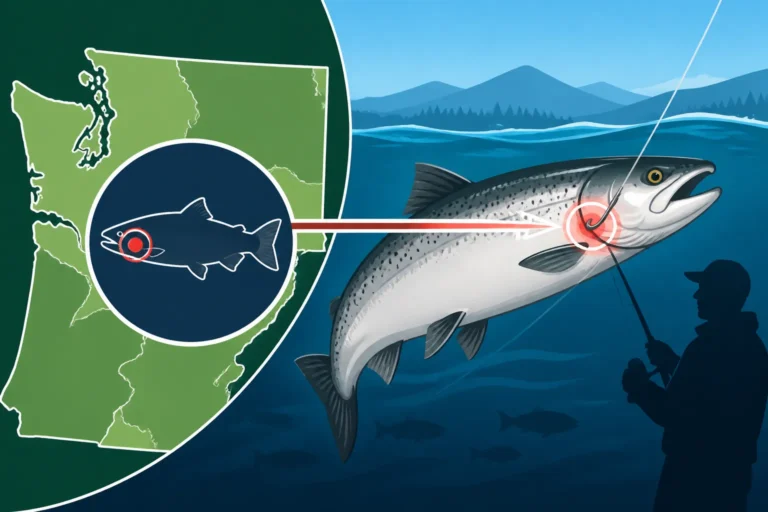
One of the most critical distinctions in steelhead fishing is between wild and hatchery-origin fish. Hatchery steelhead are identified by a missing adipose fin, a small fleshy fin located between the dorsal fin and the tail. This "adipose clip" is done at the hatchery before release. Wild steelhead, on the other hand, retain their adipose fin. The vast majority of kept steelhead in Washington must be hatchery-origin fish with a clipped adipose fin. In many rivers, it is illegal to keep a wild steelhead, and Wild Steelhead Release Rules on Washington's Olympic Peninsula Rivers are very strict. If you legally keep a hatchery steelhead, it must be immediately recorded on your Catch Record Card. This "immediate" recording means as soon as the fish is retained and safely secured, you should mark your card. Don't wait until you're back at the boat launch or home.
What about catch-and-release? If you catch a steelhead and release it, whether it's a wild fish that you're legally obligated to release or a hatchery fish you simply choose to let go, you generally do not record it on your Catch Record Card. The card is specifically for harvest. However, it's vital to be absolutely certain about the regulations for the specific area you're fishing. Some highly sensitive fisheries or specific research programs might have unique reporting requirements for released fish, though this is rare for the general angler. Always double-check the local rules. If you find yourself in a situation where you accidentally catch a wild steelhead in an area where they must be released, understanding Catch-and-Release Rules During Wild Steelhead Closures is paramount to avoid violations.
The bottom line is this: if you hook a steelhead, confirm it's a legal, hatchery-clipped fish, and decide to keep it, you must record it immediately on your Catch Record Card. Failure to do so is a violation and can lead to significant Fines and Penalties for Common Fishing Violations.
Filling Out Your Catch Record Card for Steelhead
Okay, so you’ve landed a legal, clipped steelhead and made the decision to keep it. Now comes the important step of properly filling out your Catch Record Card. This isn't just a formality; accurate and immediate recording is essential for both legal compliance and providing valuable data to WDFW.
First, locate the "Steelhead" section on your Catch Record Card. It’s usually separate from the salmon section, so make sure you’re in the right place. Each card typically has designated spaces for specific species.
Here's a breakdown of the information you'll need to enter and how to do it correctly:
- Date of Catch: This is straightforward. Mark the month, day, and year that you caught and retained the steelhead. Remember, this needs to be done immediately after you've kept the fish. A good practice is to have a pen or pencil readily accessible, perhaps in a waterproof case you might find on Amazon, right alongside your license.
- Catch Area: This is crucial. You'll need to identify the specific WDFW Catch Area or river code where you caught the fish. For rivers, this might be a code like "COWL" for the Cowlitz River, or a specific river section. For marine areas, it will be a Marine Area number (e.g., "9" for Puget Sound). Refer to your current WDFW Fishing Regulations pamphlet; it has maps and lists of these codes. Getting this wrong can invalidate your report or make the data useless for WDFW.
- Fin Clip: This is perhaps the most critical entry for steelhead. You must indicate whether the fish had an "Adipose Present" (wild fish) or "Adipose Clipped" (hatchery fish). As mentioned, in most cases, you can only keep hatchery-clipped steelhead. Double-check your fish for that small, fleshy fin. If it's there, it's wild; if it's gone, it's hatchery. Mark the corresponding box or circle on your card.
- Kept/Released: While the card is primarily for kept fish, some cards might have a section for marking released fish for certain species. For steelhead, you generally only mark an entry if the fish was kept. Make sure you're marking the "K" for kept if that's the system your card uses.
Example Scenario: Imagine you're fishing the lower Columbia River near Woodland on November 15th, and you keep a hatchery-clipped winter steelhead. You would find the steelhead section, write "11/15/202X," find the code for the specific Columbia River section (e.g., "COLR Lower"), and then mark "Adipose Clipped." That's it! Simple, but precise.
It’s always a smart idea to carry a copy of your Washington Fishing License Guide for Nonresidents or resident license, along with your Catch Record Card, and the current regulation pamphlet with you when you're fishing. Whether you're carrying a physical license or relying on the MyWDFW App, having the reference materials handy can save you a lot of grief. When it comes to How to Fill Out a Washington Catch Record Card comprehensively, accuracy and timeliness are your best friends.
Why Accurate Steelhead Reporting Matters (and What Happens If You Don't)
You might think, "It's just one fish, does it really matter if I skip writing it down?" The answer, unequivocally, is yes, it absolutely matters. Accurate steelhead reporting on your Catch Record Card is far more than a bureaucratic hoop to jump through; it's a fundamental pillar of sustainable fisheries management in Washington. Without this data, the WDFW operates in the dark, and that has serious implications for the future of our fishing opportunities and the health of the steelhead runs themselves.
Every single kept steelhead you report, along with thousands of other reports from anglers across the state, contributes to a massive dataset that WDFW biologists use to assess the health and abundance of steelhead populations. They look at where fish are being caught, the total harvest numbers, and the proportion of hatchery versus wild fish. This information directly influences decisions about future fishing seasons, bag limits, and conservation efforts. For instance, if reporting shows declining hatchery returns in a specific river, WDFW might adjust the Daily Steelhead Limit in Washington or even implement closures to protect the run. Conversely, if returns are strong, they might be able to offer more generous fishing opportunities. Your data helps ensure that management decisions are grounded in real-world observations, not just guesswork.
What happens if you don't accurately report a kept steelhead? Beyond the ethical implications of not contributing to conservation, there are significant legal consequences. Fishing without a properly marked Catch Record Card, or failing to record a legally retained fish immediately, is a violation of Washington state fishing regulations. Enforcement officers from WDFW routinely check anglers on rivers and at boat launches. If you're found with a kept steelhead that isn't immediately and correctly recorded on your card, you could face penalties.
These penalties can range from substantial fines to the forfeiture of your catch and even the suspension of your fishing privileges. Imagine losing your ability to fish in Washington for a period, all because you neglected a simple step that takes less than a minute. It’s not worth the risk, especially when the act of reporting is so crucial for the sport we all love. For more details on this, you can look into what happens When a Catch Record Card Is Required in Washington and the associated penalties.
Moreover, the responsibility of accurate reporting extends beyond just marking your card. At the end of the fishing season (typically January 31st of the following year), all Catch Record Cards must be returned to WDFW, even if you didn't catch any fish. This ensures that the agency gets a complete picture of angling effort and harvest. Many anglers simply mail their physical cards back, but WDFW also offers the convenience of reporting online or through the Fish Washington App. Even if you're feeling frustrated with a slow season, sending back that card is your final contribution to the health of the fishery. It's a small but powerful act that supports the future of steelhead fishing in Washington.
Common Mistakes and How to Avoid Them
Even with the best intentions, anglers can sometimes make mistakes when it comes to recording steelhead on their Catch Record Card. These errors, whether accidental or due to misunderstanding, can lead to compliance issues or skew valuable data. Let’s dive into some of the most common pitfalls and, more importantly, how you can easily avoid them.
One of the most frequent mistakes is failing to record the catch immediately. You’re excited, maybe the weather is bad, or you're just eager to get back to fishing. But that moment you decide to retain a legal steelhead is the moment you must mark your card. Delaying this can lead to forgetting, misremembering details, or being caught by an enforcement officer before you’ve completed the entry. Imagine battling a large steelhead, finally landing it, and then struggling to find your pen and card in the rain. This is where having a waterproof pen and a dedicated, easily accessible spot for your card (perhaps in a small, waterproof pouch you picked up on Amazon) can be a game-changer. Don't put it off until later; "later" is too late.
Another common error involves incorrectly identifying wild versus hatchery steelhead. The adipose fin clip is the defining characteristic for legal retention in most Washington fisheries. An unclipped adipose fin means it’s a wild fish, and in many areas, keeping it is illegal. Anglers sometimes mistake a partially damaged fin for an intentional clip, or simply don't check carefully enough. Always take a moment to positively identify your fish. If there's any doubt, release it gently. Misidentifying a wild fish and recording it as a kept hatchery fish not only puts you at risk of a violation but also skews WDFW’s critical population data for Wild Steelhead vs Hatchery Steelhead in Washington.
Incorrectly writing the Catch Area or river code is another pitfall. WDFW fishing regulations are highly localized, with different rules applying to different sections of rivers or specific marine areas. Simply writing "Columbia River" might not be specific enough if that river has multiple distinct management zones. Always consult your current WDFW pamphlet to ensure you're using the precise code for where you actually caught the fish. These pamphlets are usually available when you purchase your license or online, and understanding them is key to successful and compliant fishing.
Finally, a significant oversight is not returning your Catch Record Card at the end of the season, even if you didn't catch anything. Many anglers think if they have no entries, there's no need to return it. This isn't true! WDFW needs to account for every card issued. The return of "zero catch" cards is just as important as cards with harvested fish, as it provides data on angling effort. It helps them understand how many people were fishing and didn't catch, which informs the overall picture of fish abundance and angler success rates. Make a note on your calendar for the January 31st deadline each year to mail back your physical card or report online.
By being diligent, careful, and having your tools ready, you can easily avoid these common mistakes and contribute positively to Washington's valuable steelhead fisheries.
Disclaimer
Please remember that fishing regulations, including those pertaining to Catch Record Cards and specific species like steelhead, are subject to change. While this guide provides comprehensive information, it is always your responsibility as an angler to consult the most current Washington Department of Fish and Wildlife (WDFW) fishing regulations pamphlet or visit their official website before heading out on the water. This guide is for informational purposes only and should not be considered a substitute for official WDFW regulations.