Best Lures for Washington Smallmouth Bass
Oh, the quest for the perfect smallmouth bass lure in Washington! It’s a challenge many of us face when staring at a wall of tackle, trying to figure out what those bronze beauties are actually going to strike today. Our state offers such a huge variety of smallmouth habitats, from vast rivers like the Columbia to a myriad of smaller lakes, and what works in one spot might be completely ignored in another. This guide is all about cutting through the noise and helping you pinpoint the best lures to entice Washington's feisty smallmouth bass, no matter where you cast your line.
Understanding Washington Smallmouth Bass Behavior
Before we even talk about specific lures, it’s vital to understand the smallmouth bass themselves. These aren't just fish; they're predators with distinct seasonal behaviors and preferences that change based on water conditions and the specific type of environment they call home. Thinking like a smallmouth is the first step to outsmarting them, and it will guide your lure choices significantly.
Seasonal Movements and Feeding Patterns
Smallmouth bass are incredibly dynamic throughout the year, and their location and willingness to strike a lure shift dramatically with the seasons. In the spring, as water temperatures begin to rise, these fish move into shallower areas for their pre-spawn ritual. They become aggressive, feeding heavily to build energy for spawning, making them very susceptible to fast-moving baits and reaction strikes. Think about the bustling activity in a river’s back eddy or a lake's shallow flats.
As summer hits, especially in Washington’s often clear waters, smallmouth tend to retreat to deeper, cooler zones during the day. They'll hug structure like rock piles, ledges, and drop-offs, often becoming more active in low-light conditions such as early mornings, evenings, or even overnight. This is when a more subtle, finesse approach can really shine. Come fall, with water temperatures dropping again, smallmouth kick into another feeding frenzy, often moving back to shallower to mid-depth areas to gorge themselves before the long, cold winter, where they become lethargic and huddle in the deepest available cover.
Water Conditions and Habitat
Washington’s smallmouth bass thrive in a variety of environments, each presenting its own challenges and opportunities. On major river systems like the Columbia and Snake, smallmouth are often found in areas with current breaks, rocky banks, eddies, and submerged rock piles. The moving water dictates that lures with good vibration and stability are often key, or those that can be presented precisely in slower pockets. You might be interested in a more general overview of Fishing the Columbia River in Washington: A Complete Overview.
In contrast, the vast array of Eastern Washington lakes, such as Banks Lake, Potholes Reservoir, and Lake Roosevelt, offer different scenarios. These lakes often feature clearer water, extensive underwater structure, and significant depth. Here, smallmouth might relate more to deep points, submerged timber, or weed lines. Matching your lure to the water clarity (natural colors for clear, brighter for stained) and depth becomes paramount. Understanding the nuances of these specific locations can be further explored in guides like Eastern Washington's Best Fishing Lakes, Banks Lake in Washington for Walleye and Smallmouth Bass, Potholes Reservoir in Washington for Walleye and Crappie, and Lake Roosevelt in Washington for Kokanee and Walleye.
Top Lure Categories for Washington Smallmouth Bass
When it comes to smallmouth bass, diversity in your tackle box is your best friend. No single lure works all the time, everywhere. Instead, having a solid selection across a few key categories will ensure you're prepared for whatever mood those Washington bronzebacks are in.
Crankbaits and Jerkbaits
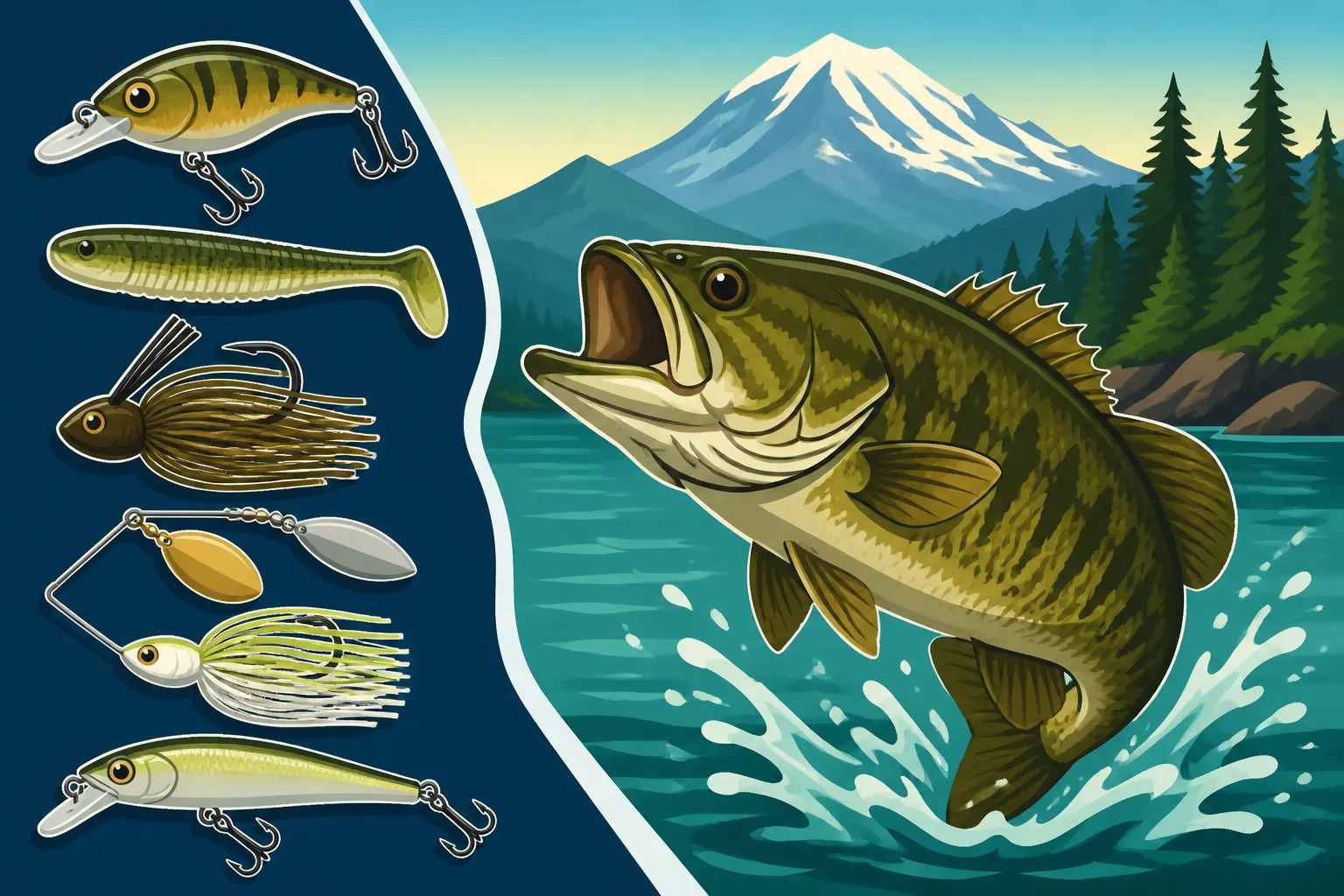
Crankbaits are fantastic for covering water and triggering aggressive reaction strikes, especially when smallmouth are actively feeding. They come in various diving depths—shallow, medium, and deep—each designed to reach a specific part of the water column. Lipless crankbaits, with their distinct rattling sound and erratic fall, are excellent for searching expansive flats or working over submerged vegetation. The key is to match the diving depth to where the fish are holding and experiment with retrieve speeds, often incorporating pauses or erratic movements to mimic a fleeing baitfish. If you're looking to stock up on a good variety, you'll find a massive selection of these on Amazon.
Jerkbaits, on the other hand, offer a more controlled, stop-and-go presentation. Most jerkbaits are suspending, meaning they hover at a specific depth when you pause your retrieve, allowing a finicky smallmouth an extended look. The "twitch, twitch, pause" retrieve is classic, making the lure dart and then hang tantalizingly in the water column, often drawing strikes during the pause. These are particularly effective in clear water or when fish are less aggressive, mimicking a struggling or injured baitfish. They can be invaluable in targeting Smallmouth Bass on Washington's Columbia and Snake Rivers during certain times of the year.
Soft Plastics Tubes, Grubs, Senkos, Swimbaits
Soft plastics are perhaps the most versatile lure family for smallmouth, allowing for endless customization and finesse presentations. Tubes, with their hollow bodies and tentacled skirts, are absolute smallmouth magnets. Rigged on a jig head, they can be dragged, hopped, or even skipped under docks and overhanging branches, perfectly mimicking a crayfish or a small baitfish. Their subtle action and lifelike feel are hard for a smallmouth to resist, especially in rocky river sections.
Grubs, whether single-tail or double-tail, are another staple. Rigged on a lightweight jig head, they're incredibly effective for swimming through the water column, bouncing along the bottom, or even jigging vertically. Their vibrating tails provide just enough action to draw attention without being overly aggressive, making them great for a variety of conditions, from clear lakes to stained river water. Senkos, or stick worms, are a finesse angler's dream. Their subtle, undulating fall on a weightless Texas rig or wacky rig is incredibly natural, often eliciting strikes from even the most pressured smallmouth. They excel in calmer waters and when fish are suspended or finicky. Lastly, soft plastic swimbaits, with their realistic profiles and paddle tails, are fantastic for imitating baitfish. Rigged on a jig head, they can be swum steadily or retrieved with a subtle twitch, working well for both active and moderately aggressive fish. From simple jig heads to elaborate swimbaits, you can explore endless options on Amazon to fine-tune your approach.
Jigs and Spinnerbaits
Jigs are a foundational lure for smallmouth bass, particularly when targeting them around structure. Football jigs, with their wide heads, are perfect for crawling over rocky bottoms without snagging, mimicking a crayfish scuttling along. Skirted jigs, often tipped with a soft plastic trailer, provide a bulkier profile and a pulsating action that can be irresistible to smallmouth nestled in cover. Hair jigs, especially smaller ones, are deadly in cold, clear water for their subtle, lifelike movement. The key to jig fishing is feeling the bottom, detecting subtle bites, and understanding that often, a smallmouth will simply "load up" on the jig rather than deliver a sharp strike.
Spinnerbaits are all about flash and vibration, making them phenomenal search baits in stained water or during overcast conditions. Their spinning blades (Colorado for maximum thump, Willow Leaf for flash and speed, or a combination) send out strong signals that smallmouth can detect from a distance. They are also incredibly weedless, allowing you to blast them through submerged vegetation, brush, and timber where other lures might snag. A steady retrieve often works best, but experimenting with speed changes, deflecting off cover, or even allowing them to helicopter on the fall can trigger explosive strikes. These are a great option when you're targeting smallmouth in the productive waters of How to Catch Smallmouth Bass in Eastern Washington.
Topwater Lures
There's truly nothing quite like a smallmouth blowing up on a topwater lure. These lures sit on the surface, creating commotion that draws fish up from below. Poppers create splashes and gurgles, mimicking a struggling insect or baitfish, while "walk-the-dog" baits, like a Zara Spook, glide side-to-side with a rhythmic retrieve, imitating a wounded baitfish. Whopper Ploppers, with their unique rotating tail, churn water like a prop bait, creating a distinctive plopping sound.
Topwater lures are most effective in low-light conditions—dawn, dusk, or on cloudy days—and when the water is relatively calm. They're also fantastic when smallmouth are actively feeding on the surface or ambushing prey from cover. While not always the most productive method, the sheer excitement of a topwater strike makes them a must-have in any smallmouth angler's arsenal, especially in the calm coves of Washington's many lakes.
Matching Lures to Specific Washington Waters
Washington's diverse geography means that what works in one smallmouth fishery might not be the go-to in another. Tailoring your lure selection to the specific body of water you're fishing is a crucial step in consistently catching these hard-fighting fish. It's not just about what the fish are eating, but also how they interact with their environment.
Columbia and Snake River Smallmouth
Fishing for smallmouth in the powerful currents of the Columbia and Snake rivers presents unique challenges. Here, fish often hold in eddies, behind current breaks, or along rocky banks where they can ambush prey without fighting the main flow. Lures that can either cut through the current or be presented precisely in slower water are key.
Medium to deep-diving crankbaits are excellent for covering water along current seams and probing rocky drop-offs. Their tight wobble and ability to dive quickly help them get into the strike zone efficiently. For targeting fish directly in rocky structure, football jigs tipped with plastic craws are incredibly effective. Their design allows them to roll over rocks with fewer snags, and they mimic the abundant crayfish that smallmouth love to eat in these rivers. Spinnerbaits are also fantastic, especially in areas with moderate current or slightly stained water, as their vibration and flash cut through the conditions effectively. When exploring these waters, remember that these are some of the prime locations to find Smallmouth Bass on Washington's Columbia and Snake Rivers. You can also learn more about How Big Columbia River Smallmouth Bass Get in these productive fisheries.
Eastern Washington Lakes Banks Lake, Potholes Reservoir, Lake Roosevelt
Eastern Washington boasts numerous lakes that offer incredible smallmouth fishing, often characterized by clear water and extensive underwater structure. In these environments, finesse tactics often outshine power fishing, although covering water can still be important.
Drop shot rigs, often featuring small soft plastics like worms or minnows, are deadly for suspended fish or those relating to deep structure. This technique allows for a subtle presentation right in a fish's face, making it irresistible to finicky eaters. Weightless Senkos or wacky-rigged stick worms are also fantastic, particularly when cast to visible structure like docks, submerged trees, or rock piles. Their slow, natural fall is a proven smallmouth trigger. For covering deeper flats or targeting fish along ledges, deep diving crankbaits can be very effective, especially those with natural baitfish patterns. Remember that some of these lakes are also popular for other species; if you're curious about different techniques, consider learning How to Fish for Walleye on the Columbia for another perspective on river fishing.
Lesser-Known Rivers and Streams
Beyond the major thoroughfares, Washington has countless smaller rivers and streams that hold surprisingly robust populations of smallmouth bass. These waters often require a more nimble approach, focusing on smaller baits and precise presentations in tight quarters. The fish here might not be as large as their Columbia River cousins, but they make up for it in feisty aggression.
Small crankbaits, especially those with a subtle wobble and shallow diving depth, are perfect for navigating these smaller, often shallower, waterways. They can be cast to eddies, riffles, and undercut banks. Inline spinners, like a classic Panther Martin or Mepps, are also incredibly effective. Their constant flash and vibration appeal to the smallmouth's predatory instincts, and they're easy to cast and retrieve in varied current. Small grubs on light jig heads (1/16 to 1/8 ounce) are another excellent choice for a finesse presentation in clear, smaller streams, mimicking smaller baitfish or aquatic insects. It’s worth noting that Are Smallmouth Bass Native to Washington? is a question many anglers ponder, given their prevalence in such diverse waters.
Essential Lure Selection Tips for Success
Beyond knowing the categories of lures, there are some fundamental principles that will elevate your smallmouth bass fishing game in Washington. These tips apply across all water types and seasons, acting as a general guideline to help you make informed decisions when you're on the water.
Color and Size Considerations
Lure color is often debated, but it undeniably plays a significant role, especially in Washington's varied water clarities. In clear water, which is common in many of our lakes and rivers, natural colors like greens, browns, clear with glitter, and subtle baitfish patterns tend to perform best. These mimic the local forage without looking unnatural. Think about what crayfish and minnows actually look like in your specific fishing spot. Conversely, in stained or murky water, brighter colors like chartreuse, orange, or even black and blue can be highly effective. These colors offer better contrast and visibility, helping fish locate your lure.
Size matters, too. Generally, "matching the hatch" is a good rule of thumb—use a lure size that approximates the size of the smallmouth's typical prey. If they're feeding on smaller minnows, a smaller swimbait or grub is appropriate. If crayfish are abundant and larger, a bulkier jig or tube might be the ticket. Also, consider the fish's activity level: aggressive fish might chase a larger offering, while lethargic fish might prefer a smaller, more subtle presentation.
Retrieve Techniques and Presentation
Having the right lure is only half the battle; knowing how to work it effectively is the other. Smallmouth bass are incredibly sensitive to presentation. Don't be afraid to experiment with your retrieve speed. Sometimes a fast, erratic retrieve triggers a reaction strike, while other times a slow, deliberate crawl along the bottom is what they want. Incorporate pauses, twitches, and varying depths into your retrieve. A jerkbait's effectiveness often hinges on the duration of its pause, for instance.
Think about how a real baitfish or crayfish would behave in the water. An injured baitfish doesn't swim in a straight line; it darts, pauses, and struggles. Mimicking this natural behavior with your lure can be incredibly effective. Pay attention to how the lure feels in the water and how it reacts to your rod movements. Reading Water for Bank-Fishing Salmon offers some general principles that can also apply to understanding current and structure for smallmouth. Always start by trying a few different retrieves until you find one that consistently draws strikes.
Building a Versatile Smallmouth Tackle Box
Given the diverse environments and seasonal shifts across Washington, a versatile tackle box is absolutely crucial for smallmouth success. You don't need every lure ever made, but having a solid representation of crankbaits (shallow, medium, deep), soft plastics (tubes, grubs, stick worms, swimbaits), jigs (football, skirted), spinnerbaits, and a few topwater options will cover most situations.
Beyond the specific lure types, consider having a range of colors and sizes within each category. For example, have a few natural colored tubes and a few brighter ones. Carry various jig head weights to adapt to different depths and currents. Having a well-stocked tackle box is crucial, and sites like Amazon make it easy to acquire a wide variety of these essential smallmouth bass lures without having to drive all over creation. Remember, Washington's Washington Fishing Seasons: A Month-by-Month Guide can also help you anticipate what might be biting and what lures to pack.
| Lure Type | Ideal Conditions | Key Retrieve / Presentation | Notes for Washington Smallmouth |
|---|---|---|---|
| Crankbaits | Active fish, covering water | Steady, erratic, deflecting off cover | Divers for river seams, lipless for lake flats. Match depth to fish. |
| Jerkbaits | Clear water, finicky fish | Twitch-twitch-pause, suspending | Excellent for suspended fish or cold water. Longer pauses are often key. |
| Soft Plastic Tubes | Rocky structure, crayfish mimicry | Dragging, hopping, skipping | Jig head weight varies with current/depth. Great for Columbia River. |
| Soft Plastic Grubs | Versatile, searching, finesse | Steady swim, slow roll on bottom | Simple yet effective. Use lighter jig heads in clear lake water. |
| Senkos / Stick Worms | Finesse, pressured fish, calm water | Weightless fall, wacky rig, Texas rig | Incredible subtle action, works wonders in clear Eastern WA lakes. |
| Swimbaits | Imitating baitfish, moderate cover | Steady swim, subtle twitch | Paddle-tail versions are very effective for active fish. |
| Jigs (Skirted/Football) | Heavy cover, bottom contact, crayfish | Hop, drag, shake on bottom | Essential for rocky riverbeds and deep lake structure. |
| Spinnerbaits | Stained water, wind, heavy cover | Steady retrieve, slow roll, deflecting | Great for covering water and vibration in varied conditions. |
| Topwater Lures | Low light, calm water, aggressive fish | Pop, walk-the-dog, chug | Explosive strikes, often best during dawn/dusk on calmer lake surfaces. |
Disclaimer
This article is for general informational purposes only and does not constitute professional advice. Laws, prices and regulations vary by location and change over time. Consult a qualified professional for guidance on your specific situation.