Razor Clam Digging Season on the Washington Coast
There's nothing quite like the thrill of a crisp evening on the Washington coast, the salty air filling your lungs, and the anticipation of digging into the sand for those elusive razor clams. But let's be honest, trying to nail down when and where you can actually dig them can feel like a constant battle against ever-changing rules and confusing announcements. This guide is here to cut through the confusion and help you understand the Washington razor clam digging season, so you're always prepared for the next opening!
Decoding Washington's Razor Clam Digging Seasons
The biggest frustration for many clam diggers, both seasoned veterans and eager newcomers, is the seemingly unpredictable nature of the seasons. One year, a beach might be wide open for weeks, and the next, it's closed faster than you can say "domoic acid." It’s enough to make you throw your clam gun in frustration! But there's a method to the madness, driven by science, public safety, and resource management, all overseen by the Washington Department of Fish and Wildlife (WDFW).
First and foremost, razor clam seasons are not set months in advance with stone tablets. They are announced on a dig-by-dig basis, often with only a week or two of notice. This isn't WDFW trying to be difficult; it's a direct response to two critical factors: marine toxin levels and clam abundance.
Marine toxins, primarily domoic acid, are naturally occurring biotoxins produced by certain types of algae. When clams filter feed, they can accumulate these toxins, which can be harmful or even deadly to humans if consumed in high concentrations. WDFW biologists regularly test clams from all the major coastal beaches. If toxin levels are too high, the dig is simply postponed or canceled. This is why you'll often see conditional openings, like "proposed openings pending marine toxin results." It’s frustrating when a highly anticipated dig gets canceled, but it’s absolutely essential for your safety. Always remember, it’s better to miss a dig than risk your health.
The second factor is clam abundance. WDFW conducts annual surveys to assess the razor clam populations on each beach. They determine how many clams are available and then set harvest quotas to ensure the long-term sustainability of the resource. If a specific beach has a lower population one year, you might see fewer digging days or stricter limits. It's a delicate balancing act to provide recreational opportunities while also protecting the future of these incredible shellfish.
While the exact dates are fluid, you can generally expect razor clam digging opportunities during specific times of the year, usually during evening low tides. The primary season typically runs from fall (October/November) through winter (December/January) and into spring (February/March/April). The fall and winter digs often offer some fantastic low tides and fewer crowds, though you'll need to be prepared for potentially chilly and wet weather. Spring digs, especially leading up to the warmer months, can be incredibly popular as the weather improves, but these are often the times when marine toxin concerns can become more prevalent, leading to more cancellations. Understanding these underlying mechanisms will help you anticipate when seasons might occur and why they sometimes change on a dime. For a deeper dive into the dynamic nature of these rules, check out our guide on Emergency Rule Changes: Why Washington's Rules Shift Mid-Season.
Essential Tools for a Successful Razor Clam Dig
There’s nothing worse than getting to the beach, feeling that surge of excitement, only to realize you’ve forgotten a crucial piece of gear. Or, worse, you have the wrong tools entirely! Razor clam digging isn't like casual beachcombing; it requires a specific set of equipment to be efficient and comfortable. Trust me, trying to dig a limit of clams with a garden trowel is a recipe for sore muscles and an empty bucket.
The two primary tools for getting clams out of the sand are a clam gun or a clam shovel. Both have their devotees, and both work effectively when used correctly.
Clam Guns vs. Clam Shovels
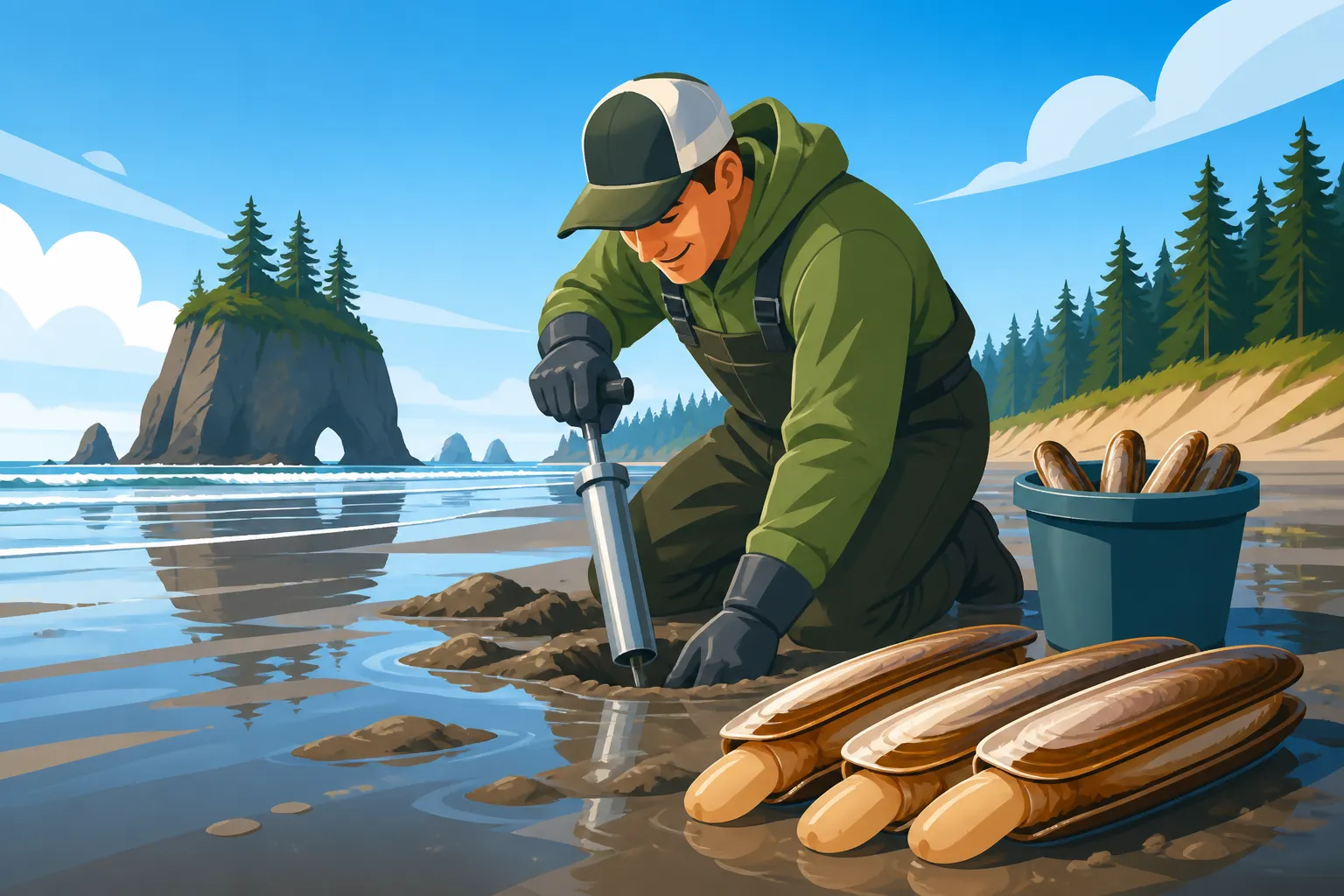
- Clam Gun: This is essentially a hollow cylinder, usually made of PVC or stainless steel, with a handle on top. To use it, you place the open end over the clam's show (the dimple or "neck" indicating a clam below), twist it down into the sand, cover the small air hole on the handle with your thumb to create suction, and then pull it up. The clam and a plug of sand come right out. Clam guns are generally less physically demanding than shovels, especially if you have a good technique. They're excellent for deeper clams or for those with back issues. You can find quality clam guns on platforms like Amazon or at local sporting goods stores like Coastal Farm & Ranch or Outdoor Emporium.
- Clam Shovel: A specialized clam shovel is distinct from a garden spade. It usually has a narrow, long, and slightly curved blade designed to follow the clam straight down. When you see a clam show, you quickly insert the shovel about 4-6 inches away on the ocean side (this is crucial to avoid damaging the clam), and dig down, scooping sand away to one side. You need to be fast and coordinated, as razor clams can dig surprisingly quickly to escape. Shovels are fantastic for getting into a rhythm and can be quicker for experienced diggers who prefer a more active approach.
Choosing between a gun and a shovel often comes down to personal preference, physical ability, and the specific beach conditions. On softer, looser sand, a gun might be easier. On harder, more compacted sand, a shovel can sometimes be more effective. If you’re not sure, many seasoned diggers bring both!
Other Must-Have Gear
Beyond your digging tool, a few other items are non-negotiable for a successful and comfortable trip:
- Waders: The Pacific Ocean is cold, even on a sunny day. And you'll be standing in the surf and wet sand. Neoprene waders are your best friend. They keep you dry and warm, allowing you to focus on the dig rather than shivering. Ensure they fit well and don't restrict your movement. Brands like Frogg Toggs or Hodgman are popular choices and readily available on Amazon.
- Headlamp: Most prime digging opportunities occur during evening low tides, meaning it will be dark. A reliable headlamp with fresh batteries (and maybe spares!) is absolutely essential. You need to see the clam shows, navigate the beach, and safely clean your clams.
- Bucket or Mesh Bag: You need something to carry your bounty. A five-gallon bucket is standard, but a mesh clam bag can also work, allowing sand and water to drain out easily. Remember, you can only keep your first 15 clams regardless of condition, so don't dig more than you can carry legally!
- Gloves: Protect your hands from the cold water, rough shells, and the occasional sharp edge. Waterproof gloves are ideal.
- License: Don't forget your Washington fishing license! While a Catch Record Card isn't needed for razor clams, a valid shellfish or combination fishing license is mandatory for anyone 15 years or older. You can learn more about Washington Fishing Regulations Every Angler Should Know to stay compliant.
- Warm Layers and Rain Gear: Even if the forecast looks good, coastal weather can change in an instant. Dress in layers, preferably wool or synthetics, and bring a waterproof jacket and pants to wear over your waders, just in case.
Here's a quick checklist to make sure you're ready:
| Item | Purpose | Notes |
|---|---|---|
| Clam Gun or Shovel | Primary digging tool | Choose based on preference/beach conditions |
| Waders (Neoprene) | Stay dry and warm in cold water | Essential for comfort and safety |
| Headlamp & Batteries | Illuminate clam shows and navigate in the dark | Hands-free lighting is crucial |
| Bucket/Mesh Bag | Carry your legal limit (first 15 clams) | No digging beyond this limit, even for broken clams |
| Waterproof Gloves | Protect hands from cold and sharp shells | Keep hands warm and safe |
| Valid Fishing License | Legally required for shellfish harvesting | Ages 15 and older must have one |
| Warm Layers | Stay comfortable under waders | Wool or synthetic materials recommended |
| Rain Jacket & Pants | Protection from unexpected coastal downpours | Wear over waders for extra warmth and dryness |
| Small Trowel/Knife | Optional: Helps locate clams or clean on beach | Some diggers find these useful |
| Snacks & Water | Keep energized during your dig | Digging is physical work! |
For more detailed advice on gear, you might find our article on Tools You Need for Razor Clam Digging helpful.
Washington's Prime Razor Clam Digging Beaches
Knowing when to dig is only half the battle; you also need to know where to go! The Washington coast boasts several fantastic razor clam beaches, each with its own character and loyal following. While the clams are the main attraction, the experience of each beach can vary. WDFW typically opens four major ocean beaches for razor clam digging: Long Beach, Twin Harbors, Copalis, and Mocrocks.
Long Beach
Stretching over 28 miles from the mouth of the Columbia River north to Leadbetter Point, Long Beach is, as its name suggests, incredibly vast. This is a fantastic beach for those who love to wander and find their own patch of sand away from the crowds. Its sheer size means that even on busy days, you can often find a less-pressured spot if you're willing to walk a bit. The town of Long Beach offers plenty of amenities, making it a popular destination for weekend trips. The sand here can be quite soft, making it an excellent spot for clam gun users. Its southern exposure sometimes means slightly warmer temperatures, but don't count on it!
Twin Harbors
Located just south of Westport, Twin Harbors State Park and the surrounding beach areas offer consistent clamming opportunities. This beach is easily accessible from cities like Aberdeen and Olympia and is a favorite for many local diggers. The sand here is generally firm and excellent for both shovel and clam gun techniques. Because of its popularity and accessibility, Twin Harbors can get quite busy during prime openings, so arriving early for evening digs is always a good idea. This area is also popular for ocean fishing charters, so it’s a hub of coastal activity.
Copalis Beach
Copalis Beach, including the area around Copalis Rock and extending north, is another consistent producer of razor clams. It's known for its robust clam populations and is often among the first to open when conditions are favorable. Access points are available from various roads off Highway 109. Diggers here often find good success relatively close to the access points, though a short walk can always yield better results.
Mocrocks Beach
Just north of Copalis, Mocrocks Beach (which includes the areas around Iron Springs and Roosevelt Beach) is often managed in conjunction with Copalis. These two beaches might open simultaneously or on alternating days, depending on WDFW’s assessment of clam stocks and toxin levels. Mocrocks tends to have a slightly coarser sand than some other beaches, which can make for excellent digging conditions, particularly for those using shovels. It’s a bit more spread out, offering a good chance to find less crowded sections.
Each beach has its own rhythm and challenges. On any given digging day, WDFW might choose to open all four beaches, or just one or two, depending on clam abundance, marine toxin levels, and even tidal conditions. It's never a guarantee that your favorite beach will be open, which brings us to the next crucial point. You can read more about these specific locations and what makes them special in our guide, Razor Clams on Washington's Ocean Beaches.
Staying Informed: How to Never Miss a Dig Announcement
This is arguably the most critical piece of information for any aspiring razor clam digger: how to actually find out when and where you can dig! Because seasons are so dynamic, relying on old schedules or word-of-mouth is a surefire way to miss out. WDFW is your official source, and they do an excellent job of disseminating information, but you need to know where to look.
The WDFW Website: Your Primary Source
The Washington Department of Fish and Wildlife (WDFW) website is the absolute authority for all razor clam digging seasons. Specifically, their "Razor Clam Seasons" page is updated frequently, sometimes multiple times a day as new information (like marine toxin test results) comes in. You should bookmark this page and check it regularly, especially during the fall-to-spring clamming window.
On this page, you'll find:
- Proposed Openings: These are tentative dates and beaches that WDFW hopes to open. Crucially, they are almost always "pending marine toxin results," meaning they are not guaranteed until the final announcement.
- Confirmed Openings: Once marine toxin tests come back clean and other conditions are met, WDFW will issue a formal announcement confirming the dig. This is your green light!
- Closures/Cancellations: If toxin levels are too high or other issues arise, WDFW will post cancellation notices here. It's tough, but it's for safety.
WDFW Email Alerts
If you don't want to constantly refresh a webpage (and who does?), signing up for WDFW's email alerts is a game-changer. They offer a specific alert list for "Razor Clam & Shellfish." When a proposed or confirmed dig is announced, or if there's a cancellation, you'll get an email directly in your inbox. This is by far the easiest way to stay in the loop without actively searching. It's like having a personal assistant for clam updates!
Social Media and Local News
WDFW also uses its social media channels (like Facebook and X, formerly Twitter) to post updates. Following them there can be another quick way to catch announcements. Additionally, local news outlets in coastal towns and major cities often report on confirmed razor clam digs, especially as the season approaches. However, always double-check with the official WDFW website or email alerts for the most accurate and up-to-the-minute information. Media reports can sometimes lag or misinterpret details.
Understanding Tides
Beyond knowing when the season is open, you need to understand tides. Razor clams are best dug on a low tide, specifically the lowest tides of the evening. These tides occur predominantly in the fall, winter, and spring. You’re looking for a low tide of 0.0 feet or lower, ideally, as this exposes more of the prime clamming grounds. You can use any reliable tide chart app or website for the specific Washington coast beaches. Pay close attention to the time of the low tide and plan to be on the beach about an hour or two before the lowest point, as clams will start showing themselves as the water recedes. Our article on How to Check Razor Clam Digging Tides delves deeper into this essential skill.
By combining consistent checks of the WDFW website, subscribing to their email alerts, and understanding the role of tides and marine toxins, you'll be well on your way to successfully planning your next razor clam adventure on the Washington coast. It takes a little effort to stay informed, but the reward of a bucket full of fresh razor clams is absolutely worth it!
Disclaimer
Fishing and shellfish harvesting regulations in Washington are subject to frequent change based on biological data, environmental conditions, and management decisions by the Washington Department of Fish and Wildlife (WDFW). Always consult the official WDFW website and current regulations pamphlet before engaging in any fishing or shellfish harvesting activities. This guide is for informational purposes only and does not supersede state regulations.