Resident vs Nonresident Fishing Licenses in Washington
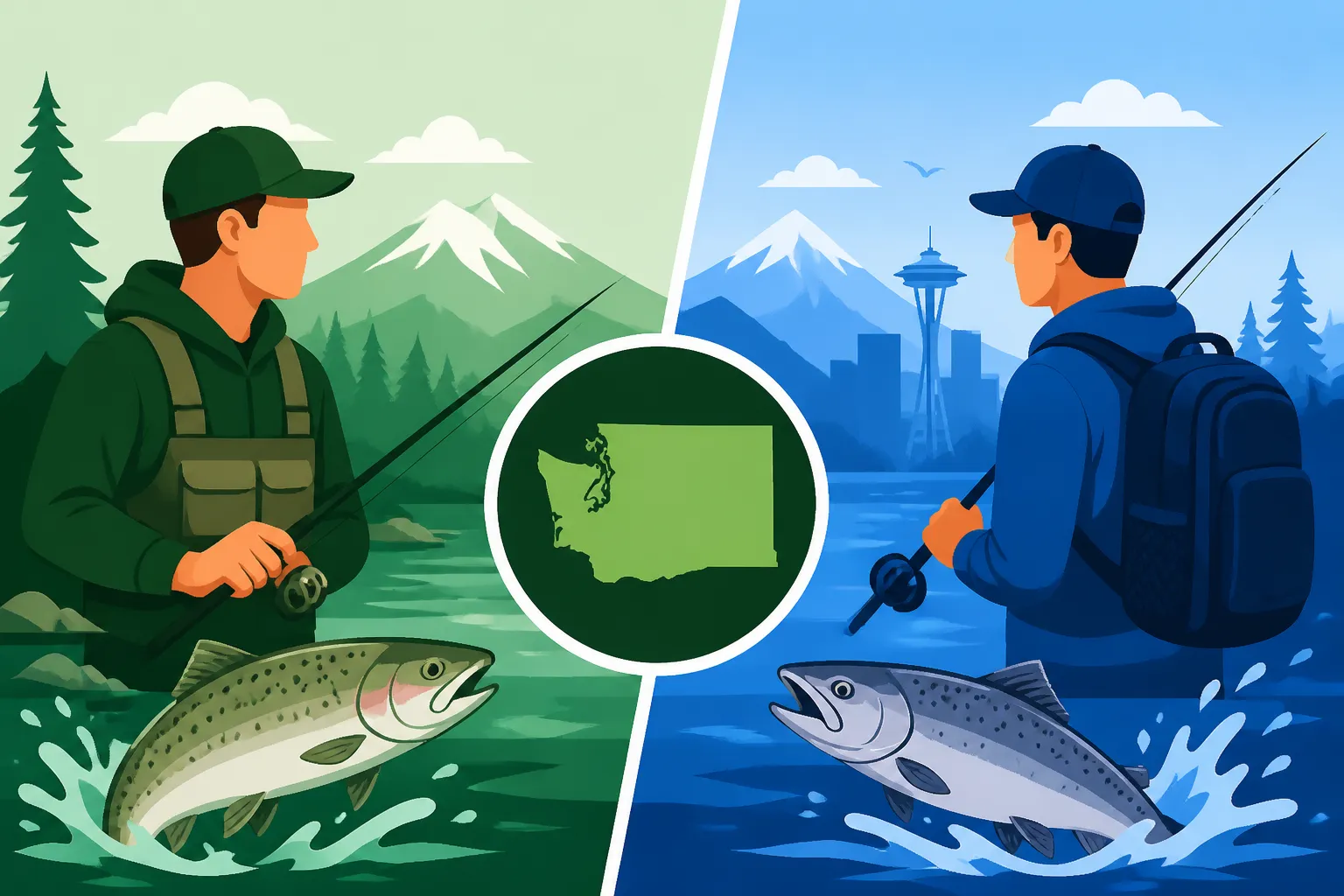
Trying to figure out Washington's fishing license system can feel like deciphering ancient scrolls, especially when you're not sure if you even count as a "resident" in the first place. This isn't just a minor detail; your residency status dictates everything from the price you pay for your license to the types of endorsements you can easily acquire. This comprehensive guide will untangle the confusion, laying out exactly what qualifies you as a resident or nonresident angler in Washington State, so you can confidently hit the water without any unwelcome surprises.
Understanding Washington Residency for Fishing Licenses
The state of Washington has specific criteria for what defines a resident angler, and it's not always as straightforward as just living here for a bit. There are some common pitfalls and misunderstandings, but grasping the official definition is your first step to getting the right license and avoiding any headaches down the line.
The Official Definition of a Washington Resident Angler
The Washington Department of Fish and Wildlife (WDFW) defines a resident primarily based on a period of continuous physical presence and an intent to establish residency. Generally, to be considered a resident for licensing purposes, you must have lived in Washington State for at least 90 consecutive days immediately prior to applying for your license. But it's more than just showing up and counting the days; there's an expectation that you intend to make Washington your permanent home, not just a temporary stop.
This "intent to reside" is often demonstrated through various legal documents and actions. For instance, having a current Washington driver's license or state identification card is a strong indicator. Registering to vote in Washington, paying state income taxes (though Washington doesn't have a personal income tax, other state taxes apply), or even enrolling your children in local schools all contribute to proving your intent. Military personnel stationed in Washington are often considered residents, even if their permanent home address is in another state, as long as they provide proper documentation of their active duty status and assignment within the state. Similarly, students attending a Washington college or university can often qualify, provided they meet other general residency requirements and show intent to reside.
Common Misconceptions About Residency Status
It's easy to fall into the trap of thinking that certain situations automatically grant you resident status, but that's often not the case. For example, simply owning property in Washington, like a vacation home or a rental, doesn't automatically make you a resident if your primary domicile is elsewhere. You might spend significant time here, enjoying the stunning Puget Sound or the serene lakes, but if you return to your main home in Oregon or California regularly, and your legal documents reflect that, you're likely still a nonresident.
Another common misconception revolves around frequent visits or having a local P.O. box. While these might make you feel like a local, they don't replace the requirement of physical presence for 90 consecutive days with the intent to reside permanently. I've heard stories from folks who bought a fishing license with a P.O. box address, only to face scrutiny from a WDFW enforcement officer on the water. It's a hassle you definitely want to avoid, as misrepresenting your residency can lead to fines and even license suspension. Always remember, the spirit of the law is about where your home truly is.
The Ins and Outs of Washington Nonresident Licenses
If you don't meet the stringent requirements for resident status, don't fret! Washington still welcomes anglers from all over with a clear system for nonresident licenses. It’s all about finding the right fit for your visit, whether it's a quick weekend getaway or an extended fishing vacation.
Who Needs a Nonresident License
Simply put, if you don't fit the WDFW's definition of a Washington resident, you'll need to purchase a nonresident fishing license. This applies to tourists visiting for a short fishing trip, vacationers enjoying the Olympic Peninsula, and even those who might split their time between Washington and another state without establishing primary residency here. It's crucial for everyone over the age of 15 to have the correct license. While there are some general exemptions for very young children, if you're an adult visiting from out of state, a nonresident license is absolutely mandatory. For more specifics on youth requirements, check out our guide on Do Kids Need a Fishing License in Washington?.
Whether you're planning a week-long salmon adventure in the Columbia River or just an afternoon trying to catch some trout in a local lake, you need to be properly licensed. The state needs to manage its fish populations responsibly, and licensing fees contribute significantly to conservation efforts, habitat restoration, and enforcement. So, while it might feel like an extra step, it's an important part of maintaining the incredible fishing opportunities Washington offers.
Nonresident License Types and Costs
Washington offers a variety of nonresident fishing licenses designed to accommodate different lengths and types of trips. The most common options include annual licenses, 3-day licenses, and 1-day licenses. Each of these can be purchased as a freshwater, saltwater, or combination license, depending on where you plan to fish. For instance, if you're hitting the rivers and lakes for trout and steelhead, a freshwater license is what you'll need. If your sights are set on Chinook in Puget Sound or halibut off the coast, a saltwater license is essential. Many anglers find the combination license to be the most versatile, especially if their trip involves both types of waters.
The cost difference between resident and nonresident licenses is significant, and it’s one of the primary reasons understanding your status is so important. A nonresident annual combination license will be considerably more expensive than its resident counterpart. For shorter trips, the 1-day or 3-day nonresident options can be more cost-effective. For specific figures, you can refer to our detailed post on Washington Nonresident Fishing License Cost. These short-term licenses are perfect for folks flying into Seattle for a quick fishing weekend or those just passing through who want to wet a line. Always consider the duration and scope of your fishing plans to choose the most economical and appropriate license.
Why Residency Matters: Costs and Privileges
When it comes to Washington fishing licenses, your residency status isn't just a bureaucratic detail; it directly impacts your wallet and, in some cases, your access to certain fishing opportunities. The state aims to provide more affordable access to its long-term residents who contribute to the local economy and community throughout the year.
Significant Price Differences Between Resident and Nonresident Licenses
Let's be blunt: fishing in Washington as a nonresident is going to cost you more for a license. A lot more. This is standard practice in many states, designed to offer a benefit to taxpayers and permanent residents. The annual combination fishing license, for example, which covers both freshwater and saltwater species (and is often required for salmon, steelhead, and halibut), can be several times more expensive for a nonresident than for a resident. This financial disparity is a key reason why it's so important to understand the residency rules and ensure you apply for the correct type of license. Trying to skirt the system by claiming false residency will invariably lead to severe penalties, which we'll discuss later.
For those planning to spend a full season or even just several weeks fishing in Washington, the cumulative cost of short-term nonresident licenses might quickly exceed the price of an annual one, even at the higher nonresident rate. It’s always a good idea to do a quick calculation based on your planned fishing days. Our articles detailing the Washington Resident Fishing License Cost and Washington Nonresident Fishing License Cost provide up-to-date pricing to help you budget accurately for your angling adventures.
Access to Resident-Only Endorsements and Seasons
While most general fishing regulations, seasons, and bag limits apply equally to both residents and nonresidents, regardless of where they hail from, there can sometimes be subtle differences related to specific endorsements or opportunities. For instance, the crucial Washington's Columbia River Salmon and Steelhead Endorsement, Explained is required for anyone fishing for salmon or steelhead in the Columbia River and its tributaries. While nonresidents can certainly purchase this endorsement, the base license it attaches to will still be the nonresident price.
It's rare for Washington to have entirely "resident-only" fishing seasons or areas, as the WDFW generally aims for equitable access to its public resources. However, the significantly lower cost of base resident licenses and associated endorsements effectively grants residents more affordable access to these opportunities. For example, if you're a passionate angler who wants to participate in the full spectrum of Washington fisheries, from coastal halibut to high-mountain trout, the resident combination license plus various endorsements becomes a much more palatable expense than repeatedly purchasing pricier nonresident options. This financial consideration is often the biggest "privilege" associated with resident status.
Navigating the Purchase Process for Both Types
Once you've determined your residency status, the next step is actually getting your hands on that coveted piece of paper (or digital equivalent). Luckily, Washington State has made the process fairly accessible, with several convenient ways to purchase your fishing license.
Where and How to Buy Your Washington Fishing License
Purchasing a Washington fishing license is pretty straightforward these days, whether you're a resident or a nonresident. The most popular method is online directly through the Washington Department of Fish and Wildlife (WDFW) website. This is often the quickest and most convenient way, allowing you to purchase and print your license from the comfort of your home, or even download it to a mobile app. For detailed steps, check out our guide on Can You Buy a Washington Fishing License Online?.
Beyond online, you can also purchase licenses from numerous authorized license dealers across the state. These include many local sporting goods stores, bait and tackle shops, and even some grocery and convenience stores. Places like Sportco or Fisherman's Marine & Outdoor are great resources not just for licenses, but also for local fishing advice and gear. When you buy in person, you'll receive a physical copy immediately. Don't forget, Washington also has the MyWDFW app, which functions as an electronic license portal. This app allows you to display your license on your smartphone, and in some cases, even manage your Catch Record Card, making it incredibly convenient. Learn more about it in Does Washington Have a Mobile Fishing License App?. No matter where you decide to purchase, ensure you keep a copy with you whenever you're out fishing. For a comprehensive overview, our article on Where and How to Buy a Washington Fishing License provides all the details.
Required Documentation for Proof of Residency
This is where proving your resident status becomes critical. When purchasing a resident license, you'll need to provide documentation that unequivocally demonstrates you meet Washington's residency requirements. The most commonly accepted forms of identification include a valid Washington State driver's license or a Washington State ID card. These are typically sufficient as they require proof of residency to obtain in the first place.
However, if you're a new resident or perhaps haven't updated all your identification yet, other documents might be required or accepted in conjunction with a photo ID. These could include a utility bill with your Washington address, voter registration, property tax statements, or a rental agreement. For military personnel, official orders stationing you in Washington are generally required. It’s always best to have multiple forms of proof ready, especially if you're on the cusp of the 90-day residency period, to avoid any delays or complications. The WDFW wants to ensure that the discounted resident rates are going to legitimate residents, so they can be quite thorough. Our guide on ID You Need to Buy a Washington Resident License offers an in-depth look at what documents you might need. Don't leave it to chance; gather your paperwork beforehand!
Special Considerations for Specific Anglers
While the general rules cover most situations, Washington State recognizes that certain groups of people have unique circumstances. Understanding these special considerations can save you time, money, and hassle, ensuring everyone can enjoy fishing its abundant waters.
Military Personnel and Students: Unique Residency Rules
Military service members and students often find themselves in a bit of a gray area when it comes to residency, but Washington State has specific provisions for them. For active-duty military personnel stationed in Washington, even if their permanent home of record is another state, they are typically considered residents for the purpose of purchasing a fishing license. This is a fantastic benefit, acknowledging their service and temporary assignment in the state. They will generally need to present their military ID and official orders or documentation confirming their active duty status and assignment to a base within Washington. This allows them to access the more affordable resident license options.
Similarly, students attending a college or university in Washington can often qualify for resident fishing licenses. The key here is usually demonstrating intent to reside and meeting the 90-day continuous presence requirement. This might involve showing proof of enrollment, a local address, and potentially other documentation that indicates their primary residence is now Washington while they pursue their education. It's always best for both military personnel and students to double-check the latest WDFW regulations or contact the department directly to confirm their eligibility, as rules can occasionally have nuances.
Kids and Seniors: Age-Based Exemptions and Requirements
Washington State has specific rules regarding fishing licenses for younger and older anglers, which can differ based on residency. For children, the good news is that youth 14 years of age and younger generally do not need a fishing license to fish in Washington. This applies to both residents and nonresidents, making it wonderfully accessible for families with young kids to get out and enjoy the sport. However, once a child turns 15, they are required to have a fishing license. If they are a nonresident, they will need a nonresident license. We cover this in more detail in our article, Do Kids Need a Fishing License in Washington?, which is a must-read for families.
Seniors also receive special consideration, particularly Washington residents. Resident anglers aged 70 and older are eligible for a reduced-fee annual fishing license, which is a fantastic perk for experienced anglers. This makes it more affordable for them to continue enjoying the state's incredible fishing opportunities well into their golden years. For nonresidents, these senior discounts typically do not apply; they would still need to purchase a standard nonresident license at the full price for their age group. Our guide on Do Seniors Need a License to Fish in Washington? provides all the specifics for our elder angling community. These age-based rules highlight the state's efforts to encourage participation across all generations, with a special nod to its long-standing residents.
The Importance of Compliance: Avoiding Penalties
Fishing in Washington is a privilege, and with that comes the responsibility of understanding and adhering to the state's regulations, including proper licensing. Ignoring these rules, whether intentionally or not, can lead to serious consequences that could quickly sour your entire fishing experience.
What Happens If You're Caught With the Wrong License
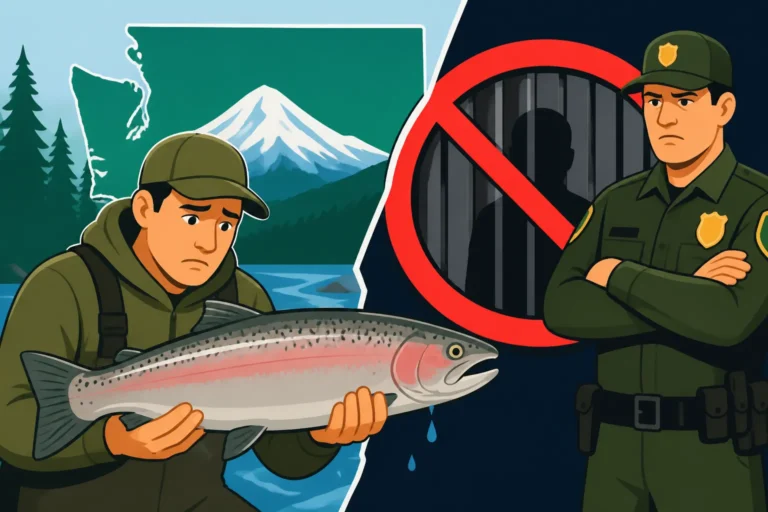
Picture this: you're out on the Skagit River, the steelhead are biting, and you're having an incredible day. Then, a WDFW enforcement officer approaches, asks for your license, and discovers you've purchased a resident license when you're clearly a nonresident. Believe me, this scenario is far more common than you might think, and it rarely ends well. Getting caught with the wrong license is essentially fishing without a valid license, which is a serious violation.
The immediate consequences can include a substantial fine, which can easily run into hundreds of dollars. Beyond the financial hit, you could also face administrative penalties, such as the suspension or revocation of your fishing privileges in Washington State for a period of time. This means you might be legally barred from fishing for months or even years. Your gear, like your rod and reel, could even be confiscated as part of the enforcement action. It's a harsh reality, but it underscores the importance of taking the time to understand the residency rules upfront. For a full breakdown of what can go wrong, take a look at our article, Fines and Penalties for Common Fishing Violations. Don't let a simple oversight turn your dream fishing trip into a costly nightmare.
How Nonresident Violations Are Handled
For nonresident anglers, the penalties for license violations can sometimes have additional layers of complexity. While the immediate fines and potential loss of privileges in Washington are similar to residents, there's the added dimension of how such violations might be treated by your home state's wildlife or natural resource agencies. Many states have agreements to share information regarding poaching or significant fishing violations. This means a serious infraction in Washington could potentially lead to consequences in your home state, such as having your fishing license suspended or revoked there as well.
Imagine planning a fishing trip back home, only to discover your license is invalid because of a previous violation in Washington. It's a frustrating situation that no angler wants to face. Furthermore, repeat offenses, whether as a resident or nonresident, can lead to even steeper fines and longer suspensions. The WDFW officers are highly trained and take their job of protecting Washington's natural resources very seriously. They are not easily fooled by claims of ignorance or attempts to mislead about residency. The best approach is always honesty and compliance. Understanding How Nonresident Violations Are Handled Differently can help you steer clear of these multi-state headaches.
Resident vs. Nonresident Annual Combination License Comparison
To help clarify the core differences, here's a quick comparison focusing on the popular Annual Combination fishing license, which typically covers both freshwater and saltwater fishing for various species, including the endorsement for salmon and steelhead. Please note: Exact costs are subject to change annually by WDFW. This table illustrates typical differences in magnitude.
| Category | Washington Resident Angler | Washington Nonresident Angler | Key Differences |
|---|---|---|---|
| Eligibility | 90+ consecutive days residency + intent to reside | Does not meet resident criteria | Time spent living in WA and declared intent of permanent residency. |
| Annual Combo Cost | Significantly lower (e.g., $55 – $85 typical range) | Significantly higher (e.g., $120 – $250 typical range) | Price is the most substantial difference, often 2-3x more for nonresidents. |
| Short-Term Options | 1-Day, 3-Day available (reduced cost for residents) | 1-Day, 3-Day available (higher cost for nonresidents) | Short-term licenses are available for both, but nonresidents pay more per day. |
| Endorsements | Can add endorsements (e.g., Two-Pole) at resident rates | Can add endorsements (e.g., Two-Pole) at nonresident rates | Endorsements are usually available to both, but the cost base is different. |
| Required ID | WA Driver's License/ID, voter registration, utility bills | Driver's License/ID from home state | Proof of WA residency is essential for resident license purchase. |
This table highlights the significant financial disparity between the two license types. While both residents and nonresidents have access to similar types of licenses and endorsements, the cost structure is designed to benefit those who call Washington home. So, before you purchase, take a moment to honestly assess your status and ensure you're making the right choice. For a full breakdown of options, be sure to read Washington's Annual, Short-Term and Combination License Options.
Disclaimer
The information provided in this guide is for general informational purposes only and is not intended as legal advice. Fishing regulations in Washington State, including those related to residency and licensing, are subject to change. Always consult the official Washington Department of Fish and Wildlife (WDFW) website or the current year's Sport Fishing Regulations pamphlet for the most up-to-date and accurate information before engaging in any fishing activities.