Where Razor Clams Live on Washington Beaches
There's nothing quite like the thrill of feeling that subtle "clam show" under your feet, knowing a delicious razor clam is just inches away, waiting to be dug. But for many aspiring clam diggers, or even seasoned anglers new to the coastal scene, figuring out where these elusive bivalves actually live on Washington's vast beaches can feel like a mystery. This guide aims to pull back the curtain, detailing the specific habitats and conditions that make certain stretches of Washington's coastline prime real estate for razor clams, and helping you pinpoint your next successful dig.
Understanding the Razor Clam's Preferred Habitat
Razor clams aren't just found anywhere there's sand and water. They are incredibly particular about their living arrangements, and understanding these preferences is key to consistently finding them. Think of them as discerning homeowners with very specific criteria for their ideal neighborhood.
The Ideal Beach Environment for Razor Clams
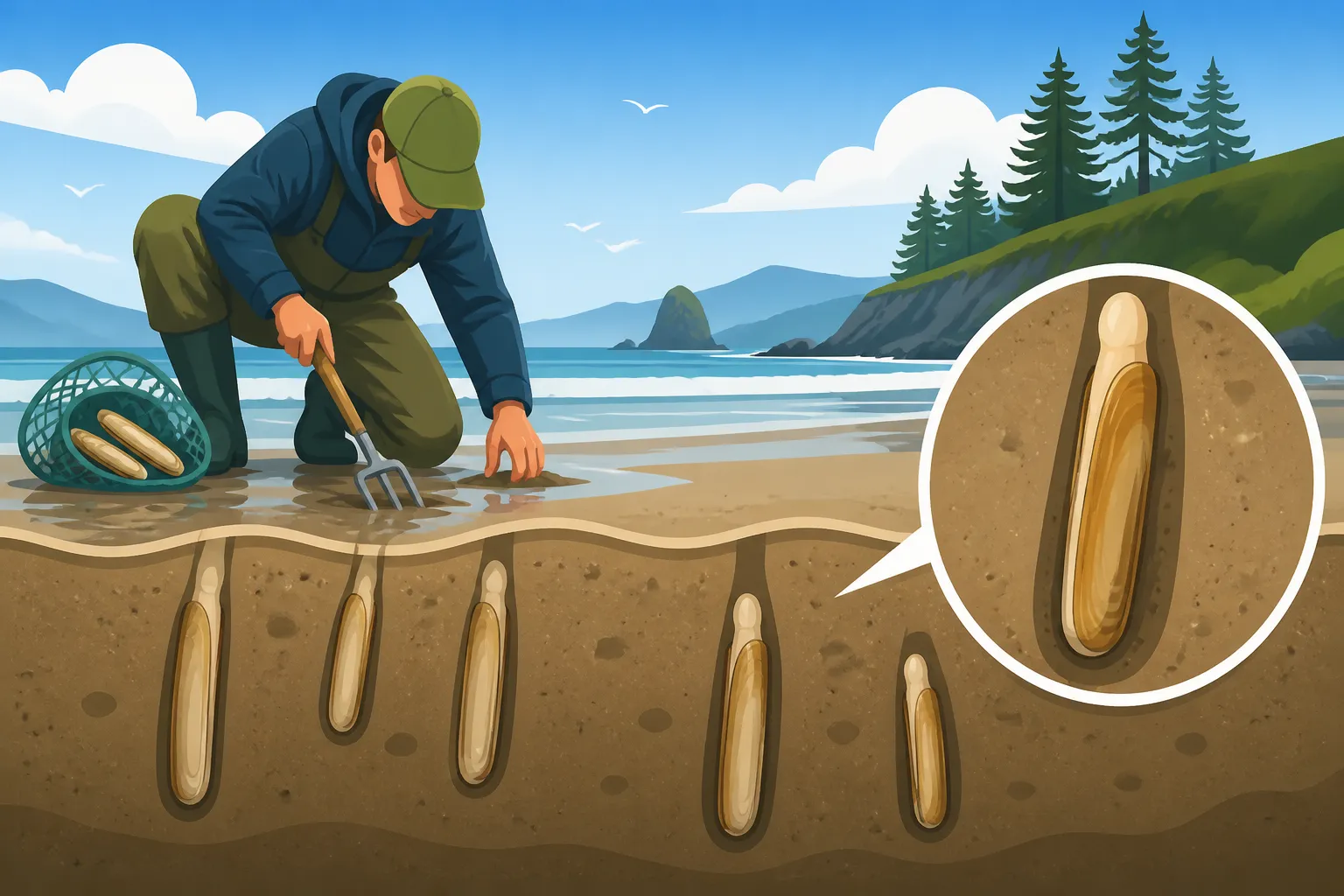
When it comes to real estate, razor clams prioritize a few things: the right kind of sand, a specific zone in the intertidal area, and access to plenty of microscopic food. They thrive in expansive, sandy beaches that are exposed to the full force of the Pacific Ocean. Unlike some shellfish that prefer rocky crevices or muddy flats, razor clams are filter feeders that burrow rapidly in clean, fine-grained sand. This specific sand composition allows them to quickly burrow deep to escape predators or the pounding surf, yet remains loose enough for them to move through efficiently. Beaches with too much gravel, rocks, or heavy silt simply won't cut it for these delicate bivalves.
The intertidal zone is their domain – that dynamic stretch of beach that is covered and uncovered by the tides. Specifically, razor clams prefer the lower to mid-intertidal zones, which means they are generally exposed during the lowest tides. This is why prime digging opportunities almost always coincide with extreme low tides, often occurring in the evenings or early mornings. The constant ebb and flow of the ocean brings in fresh nutrients and oxygen, which is vital for their survival and growth. Without these specific conditions, a clam bed simply won't establish or thrive.
Beyond the sand and tides, wave action plays a crucial, albeit often overlooked, role. Razor clams enjoy a healthy dose of surf. The energetic churn of the waves helps keep the sand oxygenated and redistributes the plankton and detritus they feed on. Beaches that are too sheltered might not have the continuous food supply or the necessary sand dynamics that razor clams prefer. It's a delicate balance: too much violent storm action can churn up beds and make them temporarily inaccessible, but a consistent, moderate surf is exactly what they crave for a healthy existence.
Why Certain Washington Beaches Are Prime Real Estate
Washington's coast, stretching from Long Beach in the south to the Olympic Peninsula's northern reaches, offers a mosaic of beach types. However, only a select few possess the unique geological and oceanographic features that make them outstanding razor clam habitats. These prime locations are typically long, wide, and gently sloping beaches directly facing the open Pacific, allowing for those ideal wave patterns and sand composition. They often extend for miles, providing vast foraging grounds and ample space for clam populations to flourish without excessive crowding in specific spots.
Think about the sheer scale of beaches like Long Beach or Copalis. These aren't just stretches of sand; they are vast, dynamic ecosystems shaped by millennia of oceanic processes. Rivers flowing into the Pacific contribute fine sediments that get sorted and deposited by currents, creating the perfect sandy substrate. Underlying geological structures can also play a role, influencing the slope and stability of the beach, which in turn affects how well clam beds can establish and persist through different seasons and weather events.
Furthermore, areas with consistent upwelling of nutrient-rich deep ocean water tend to foster more robust plankton blooms, which is essentially a clam's all-you-can-eat buffet. These unseen oceanographic currents are just as important as the visible beach characteristics. A beach might look perfect, but if the water isn't teeming with the right kind of microscopic organisms, the clams simply won't thrive. It’s this combination of geological stability, specific sand type, appropriate tidal exposure, and a rich food source that elevates a good clam beach to a truly exceptional one, supporting the abundant populations that Washington is famous for.
Key Washington Beaches for Razor Clam Digging
While there are many beaches along Washington's coast, five stand out as the undisputed champions for razor clam digging, drawing thousands of eager clam diggers during open seasons. These beaches are actively managed and monitored by the Washington Department of Fish and Wildlife (WDFW) to ensure sustainable harvests.
The Famous Five: North Beach, Twin Harbors, Copalis, Mocrocks, and Long Beach
Let's break down these prime locations:
-
Long Beach: Stretching for over 20 miles on the southwestern Washington coast, Long Beach is often the first thought when it comes to razor clamming. Its sheer length means there's usually plenty of room for everyone, even on busy digging days. The sand here is generally fine and the slope is gentle, creating extensive intertidal zones where clams burrow. It's easily accessible and offers plenty of amenities in the nearby towns, making it a popular choice for families and those looking for a longer digging excursion. Because of its size, clam concentrations can vary, but there's always potential to find a good spot if you're willing to walk a bit.
-
Twin Harbors: Just north of Grays Harbor, Twin Harbors Beach offers a different experience. It's another expansive sandy beach, but its ocean exposure can lead to more dramatic surf conditions. While this can sometimes make digging a bit more challenging, it also contributes to that ideal clam habitat. It's a favorite for many diggers due to its consistent clam production and relative ease of access from nearby Westport and Aberdeen. The clam shows here can be very pronounced after the right tidal conditions.
-
Copalis: Situated north of the mouth of Grays Harbor, Copalis Beach is renowned for producing some of the largest razor clams. It's often one of the first beaches to open during a season, making it a highly anticipated destination. The sand is typically fine and well-sorted, allowing clams to burrow efficiently. Access points are generally good, but like all popular beaches, it can get crowded, especially on prime tide days. Checking for specific access points and potential closures is always a good idea before you head out.
-
Mocrocks: Found between Copalis and the Quinault Indian Nation lands, Mocrocks Beach is often grouped with Copalis due to their proximity and similar characteristics. It's another excellent producer of razor clams, offering extensive digging grounds. Mocrocks tends to be a bit quieter than some of the more southern beaches, sometimes offering a slightly less crowded experience. However, its productivity is on par with the others, making it a reliable choice when open. Pay attention to specific access roads, as they can sometimes change or be impacted by tides.
-
Kalaloch (part of the Olympic National Park, but with specific clamming rules): While not always part of the 'Famous Five' in terms of consistent WDFW openings due to its National Park status and more restrictive management, Kalaloch occasionally offers razor clam digging opportunities, especially for those seeking a more rugged, less-crowded experience. It's a truly wild section of coast, and any digging here comes with additional regulations and considerations, often pertaining to specific tribal areas and park rules. Always double-check WDFW emergency rules and park regulations before considering a trip to Kalaloch for clamming.
Less-Known Spots and Their Unique Appeal
While the "Famous Five" draw the majority of the crowds, it's worth noting that razor clams can, and do, exist in other locations along Washington's outer coast. However, these spots are either not regularly opened for recreational harvest, are subject to more localized tribal management, or simply don't have the vast, consistently productive clam beds found at the main beaches. For instance, some stretches of beach within the Olympic National Park wilderness might hold clams, but they are typically off-limits or subject to very specific, limited permits, usually for subsistence use by tribal members.
The key takeaway here is that if a beach isn't listed in the official WDFW razor clam season announcements, it's highly unlikely to be open or legally accessible for recreational digging. The management of razor clam populations is incredibly precise, relying on annual stock assessments, conservation goals, and careful coordination with tribal co-managers. This means that while you might find a stray clam or two on a non-designated beach, it's not a place you should plan a digging trip to, both for legal reasons and because the populations simply aren't robust enough to support a sustainable harvest.
For the vast majority of recreational diggers, sticking to the well-known and officially sanctioned beaches is the safest and most productive approach. These beaches have the infrastructure, monitoring, and robust clam populations to provide a consistent and enjoyable experience. The regulations are clearer, and information about seasons and access is readily available. Always remember to check Razor Clam Digging Season on the Washington Coast for the most up-to-date information before planning your trip.
Factors Influencing Razor Clam Presence and Digging Success
Finding razor clams isn't just about showing up at the right beach; it's also about understanding the dynamic forces that govern their behavior and accessibility. The ocean is a powerful, ever-changing environment, and these factors can make or break a digging trip.
Tidal Cycles and Their Impact on Clam Availability
Tides are the absolute lynchpin of razor clam digging. These bivalves live in the intertidal zone, meaning they are only exposed, and therefore accessible, during low tides. But not just any low tide will do. For the best digging, you need the lowest possible "minus tides" – those extreme low tides that reveal vast stretches of beach typically covered by water. These tides allow you to reach the most concentrated clam beds, which are often found further down the beach towards the water's edge. Without a significant minus tide, you might find yourself digging only in the fringe areas, where clams are sparser or smaller.
The timing of these low tides also plays a huge role. Many of the most productive minus tides occur in the evening, leading to popular "night digs." While this adds an extra layer of adventure with headlamps and lanterns illuminating the beach, it's also when some of the best clam shows are visible as the clams push up through the sand. It's crucial to consult a reliable tide chart well in advance. Websites like NOAA provide excellent tide predictions, or you can check WDFW announcements, which always include optimal digging times based on the tides. Being on the beach an hour or two before the absolute lowest tide gives you the most time to locate and dig your limit before the water starts creeping back in. I always tell new diggers to check How to Check Razor Clam Digging Tides weeks before they plan to go.
Beyond just the height of the tide, the rate at which the tide drops and rises can influence clam behavior. A rapidly dropping tide can sometimes make clams less active or harder to locate initially, whereas a slow, steady drop might give them more time to "show." Conversely, a rapidly incoming tide means you need to be very mindful of your position on the beach and work quickly and safely to avoid getting cut off from shore. Always keep an eye on the water and be aware of your surroundings; the ocean can be unforgiving if you lose track of time or your location.
The Role of Ocean Conditions and Sand Movement
Razor clam beds are not static; they are constantly shaped by the powerful forces of the Pacific Ocean. Storms, particularly winter storms, can significantly impact clam populations and beach topography. Heavy surf and strong currents can scour out sand, exposing clams or, conversely, burying them deeper under new layers of sediment. This dynamic environment is part of what makes clamming so exciting and sometimes unpredictable. What was a productive spot one season might be less so the next, simply due to the shifting sands.
Changes in sand levels are a common occurrence on Washington's coast. Beaches can "build up" or "erode" based on wave energy, currents, and sediment supply from rivers. When sand levels are high, clams might be buried deeper, requiring more effort to dig them. If sand levels are low, clams might be closer to the surface, potentially making them easier to dig but also more vulnerable to predation. WDFW biologists closely monitor these conditions when conducting their pre-season clam stock assessments, as they directly influence the health and accessibility of the clam beds.
Water temperature and ocean currents also play a role in the health and distribution of the plankton that razor clams filter feed on. Events like El Niño or La Niña can alter these conditions, impacting clam growth rates and overall abundance over longer time scales. While a recreational digger doesn't need to be an oceanographer, it's helpful to understand that the success of a clam season is a complex interplay of many environmental factors, not just the number of clams in the sand. This constant natural change is why staying informed about the current season's conditions and WDFW assessments is always a smart move.
Gear and Regulations for Successful Clamming
Heading out for razor clams requires more than just knowing where they live; you need the right tools and a solid understanding of the rules to ensure a legal and enjoyable experience.
Essential Tools for Digging Razor Clams
Having the correct gear is crucial for both efficiency and comfort when razor clamming. First and foremost, you'll need a way to extract the clams from the sand. The two most popular tools are a clam gun or a clam shovel. A clam gun is a cylindrical tube, usually made of PVC or stainless steel, that you push into the sand around the clam show, create a vacuum, and pull the sand (and hopefully the clam) out. They come in various diameters, and personal preference often dictates the choice. Many experienced diggers swear by a sturdy metal clam gun for its durability and effectiveness in firm sand. You can find a good selection of clam guns on platforms like Amazon or at local sporting goods stores near the coast.
Alternatively, a clam shovel is a narrow, long-handled shovel with a slightly curved blade designed specifically for clam digging. It allows you to quickly dig a trench around the clam show. Some diggers prefer shovels because they can be faster and less strenuous in certain sand conditions, and they're often more versatile for other beach activities. Again, you can typically find these at coastal outfitters or online via retailers like Amazon. It’s often a good idea to have both if you're serious about clamming, as conditions can dictate which tool is more effective on a given day. Checking out Tools You Need for Razor Clam Digging will give you a detailed breakdown.
Beyond the digging tool, you'll need something to hold your catch. A mesh bag or a bucket is ideal. Mesh bags are preferred by many because they allow sand and water to drain out as you dig, making them lighter to carry. They also rinse easily. Warm, waterproof clothing is non-negotiable, especially for night digs or during colder months. Think waders, a good waterproof jacket, and warm gloves. A headlamp or lantern is absolutely essential for night digging, ensuring you can see the clam shows and navigate the beach safely. Don't forget sturdy, waterproof boots, as you'll be wading through shallow water and soft sand.
Navigating Washington's Razor Clam Regulations
Before you even think about putting a shovel in the sand, you absolutely need a valid Washington fishing license that includes shellfish. This is not optional. Both residents and non-residents need one, and there are various options from annual to short-term licenses. You can purchase these online through the WDFW website, at license vendors, or sometimes even at the small coastal shops near the digging beaches. Make sure you understand the specific type of license required; generally, a Puget Sound Personal Use Catch Card or a combination license will cover razor clams. Learn more about your options by reading Washington Fishing License Guide for Nonresidents or Washington's Annual, Short-Term and Combination License Options.
Equally important are the daily bag and possession limits. For razor clams, the daily limit is typically 15 clams per person, regardless of size. And here's the critical part: the first 15 clams you dig, you must keep. You cannot sort through them, tossing back smaller or broken clams in search of bigger ones. This rule is in place to minimize clam mortality. Once you have your 15, you are done digging for the day. Be sure to understand How Bag and Possession Limits Work in Washington before you go.
The season dates and specific beach openings are announced by WDFW, often just days or weeks in advance, based on marine toxin levels (like domoic acid) and clam population assessments. Always check the official WDFW website or their emergency rule changes before you head out. Going to a beach that is closed, or digging out of season, can result in significant fines and penalties. It’s also important to remember that some parts of the beaches, particularly near tribal lands, may be closed even if the general area is open. Respect all posted signs and boundaries. Carrying your license, a copy of the regulations (or having them easily accessible on your phone), and a measure of your clams is always a good practice. Knowing Washington Fishing Regulations Every Angler Should Know is foundational for any type of fishing or shellfish harvesting in the state.
Here's a quick look at the main characteristics of Washington's popular razor clam beaches:
| Beach Name | Location (General) | Typical Characteristics | Access & Popularity |
|---|---|---|---|
| Long Beach | Southwest Coast (Ilwaco/Seaview) | Very long, wide, gentle slope, fine sand | Highly accessible, very popular, family-friendly |
| Twin Harbors | South of Westport | Expansive, fine sand, often good clam shows, consistent | Good access, popular, can have significant surf |
| Copalis | North of Grays Harbor | Known for larger clams, fine sand, good productivity | Good access, very popular, can get crowded |
| Mocrocks | North of Copalis | Similar to Copalis, extensive, slightly less crowded than Copalis | Good access, popular, good alternative to Copalis |
| Kalaloch | Olympic National Park | Rugged, wild, less developed, specific park/tribal rules | Limited, special regulations apply, less frequent openings |
Disclaimer
This article is for general informational purposes only and does not constitute professional advice. Laws, prices and regulations vary by location and change over time. Consult a qualified professional for guidance on your specific situation.