Possession Limits vs Daily Limits in Washington
It's incredibly common for anglers, whether you're a seasoned veteran or just starting out in the beautiful waters of Washington, to get a little tangled up in the rules surrounding daily limits and possession limits. Honestly, it's one of the most frequent sources of confusion and accidental violations I see, and it can really dampen an otherwise perfect day on the water. No one wants to end up in hot water with the WDFW simply because they didn't fully grasp the nuances. This guide is here to untangle that knot for you, breaking down these critical regulations so you can focus on the fishing, not the fines.
Understanding the Daily Limit in Washington
The "daily limit" is probably the most straightforward regulation for most folks, but it still holds some subtleties that are easy to overlook. Think of it as your single-day allowance, strictly confined to a specific timeframe.
What "Daily Limit" Truly Means
At its core, the daily limit refers to the maximum number of a specific species of fish that a single angler can harvest within one calendar day. And when we say "calendar day," we mean from 12:00 AM (midnight) to 11:59 PM on the same day. It's not a rolling 24-hour period, which is a common misconception, but rather a fixed window that resets with the new day.
This limit applies to fish that you actually retain and take home with you. Catch-and-release fish, if the rules allow for it, do not count against your daily limit. For example, if the daily limit for hatchery steelhead is two, you can only keep two hatchery steelhead between midnight and midnight. If you catch and release twenty more, that's perfectly fine as long as the regulations permit catch-and-release for that species in that area at that time.
Species-Specific Nuances and "Retention"
One of the biggest hurdles in understanding fishing regulations is that limits are rarely uniform across the board. They vary dramatically based on the species you're targeting, the specific body of water you're fishing (think Marine Area 10 in Puget Sound versus the mighty Columbia River), and even the time of year. What's legal for rainbow trout in a mountain lake will almost certainly be different from the rules for Chinook salmon in the ocean or halibut off the coast.
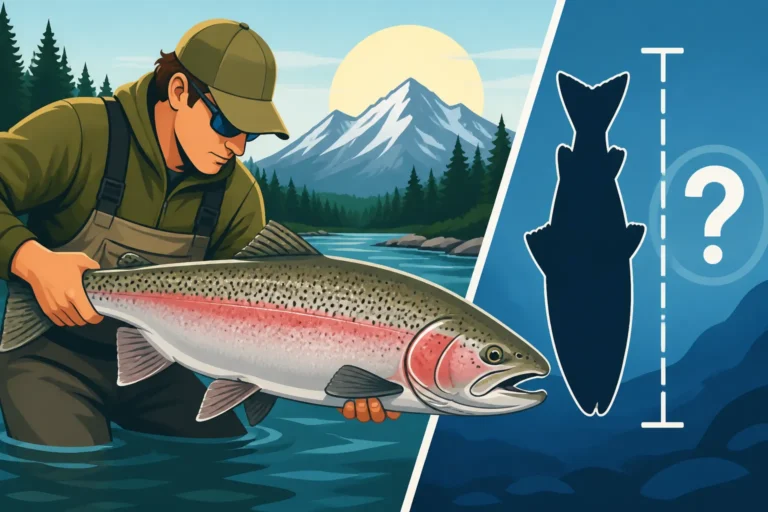
Beyond just the number, "retention" is a key concept here. Many species have additional criteria beyond just the quantity. For instance, you might encounter rules that specify "hatchery steelhead only," meaning any wild steelhead (identified by an intact adipose fin) must be immediately released unharmed, regardless of how many hatchery fish you've kept. Similarly, there are often minimum or maximum size limits, or slot limits, where only fish within a certain length range can be retained. If a fish doesn't meet all these criteria, it cannot be legally retained, even if you haven't hit your numerical daily limit. It's paramount to check these specific rules in the current Washington Sport Fishing Regulations Pamphlet before you ever wet a line.
Counting Your Catch: The Daily Clock
The calendar day aspect of the daily limit means that once you've retained your legal number of fish for a specific species, you cannot keep any more of that species until the next calendar day begins. For example, if you catch your two-salmon daily limit by 10 AM on a Saturday, you're done keeping salmon for the rest of that Saturday. You can continue to fish for other species if their seasons are open and you haven't met their respective daily limits, but your salmon harvest is complete until Sunday at midnight.
This rule holds true even if you go home, clean your fish, and then decide to head back out to the same spot or a different one later that same day. Your daily limit is fixed per person, per day. For species like salmon, steelhead, and halibut, it's particularly important to correctly record your catch immediately on your Catch Record Card. This card serves as your official ledger and helps you avoid inadvertently going over your daily limit. Understanding When a Catch Record Card Is Required in Washington is absolutely crucial for compliance and for helping the WDFW manage our precious fisheries.
Deciphering the Possession Limit
If the daily limit is about what you can keep in one day, the possession limit is about what you can have at any given time, regardless of how many days it took you to catch them. This is where most anglers encounter confusion, especially on multi-day trips or when trying to manage their freezer full of fish.
Defining "Possession Limit" – Beyond Just One Day
The possession limit is the total maximum number of a specific species of fish that any individual can have in their actual physical control at any moment. This includes fish that are on your person, in your cooler in the boat, in your vehicle, stored at your campsite, or even in your home freezer. It's a cumulative limit, meaning it adds up over time.
For many species, the possession limit is often two or three times the daily limit. For instance, if the daily limit for a certain trout species is 5, the possession limit might be 10. However, for some highly sensitive or managed species, the possession limit can be identical to the daily limit to protect those populations. This is the critical distinction: you could catch your daily limit of two salmon on Monday, and another two on Tuesday. If the possession limit is four salmon, by the end of Tuesday, you've hit your possession limit. You cannot keep any more salmon until you have reduced your possession, meaning you've consumed some, given them away, or had them commercially processed.
Home Storage, Travel, and Processed Fish
Here's where the rubber really meets the road for possession limits. Many anglers mistakenly believe that once fish are in their freezer at home, they no longer count towards their possession limit. This is generally not true for most species in Washington. Unless the fish have been fully consumed or given to another person (who then becomes subject to their own possession limit for those fish), they are still considered to be in your possession.
"Processing" fish typically refers to turning them into a state where they are no longer easily identifiable by species or count, such as canning them, smoking them into jerky, or cooking them into a meal. Simply filleting a fish, while convenient for storage, often does not remove it from your possession limit count. In Washington, for many species like salmon and steelhead, if you fillet the fish, you're usually required to retain a piece of skin with species identification intact until you reach your permanent residence or a licensed processing facility. This allows WDFW enforcement officers to verify the species, length, and whether it was a hatchery or wild fish. This is important even when you're simply Transporting Your Catch Across State Lines Legally.
Imagine this scenario: you fish Monday, keep your daily limit of 2 salmon. Tuesday, you keep another 2 salmon. If the possession limit is 4 salmon, you've now reached your maximum. If you go out Wednesday and catch another 2, you've exceeded your possession limit, even if you're under the "daily" limit for Wednesday. This means careful planning for how you manage your catch, especially on longer trips.
The "In the Field" vs. "At Home" Distinction
While you're actively engaged in fishing, any fish you've caught and retained, whether in your live well, cooler, or strung on a stringer, counts towards both your daily and possession limits. If you reach your daily limit, you must stop retaining that species. If you've been fishing over multiple days and have fish stored at your cabin or in your truck, those fish also contribute to your possession limit.
Once you return to your permanent residence, your home freezer or refrigerator becomes the primary location where your possession limit is assessed. The intent behind possession limits is crucial for conservation: it prevents individuals from continuously "banking" fish over many days or weeks beyond what is considered a sustainable harvest, thereby ensuring that everyone has a fair shot and that fish populations are not unduly impacted. Without these cumulative limits, a few individuals could potentially remove a disproportionately large number of fish from the resource.
Why These Limits Exist: Conservation and Fair Play
These limits aren't just arbitrary rules designed to make your life difficult. They are fundamental tools, carefully crafted by fisheries managers, to ensure the long-term health of Washington's incredible aquatic ecosystems and to provide equitable opportunities for all who wish to enjoy them.
Protecting Vulnerable Fish Stocks
Perhaps the most critical reason for daily and possession limits is the conservation of fish stocks, particularly those that are vulnerable or highly sought after. Washington is home to iconic species like salmon and steelhead, many of which are anadromous, meaning they spend part of their lives in the ocean and return to freshwater to spawn. These populations have specific run sizes, and strict limits are essential to ensure enough fish make it back to their spawning grounds to reproduce.
Without these harvest controls, a small number of anglers could quickly deplete a run, leaving too few fish to sustain the population for future generations. This is especially true for popular species such as Chinook Salmon: Washington's King of Fish, which often face intense fishing pressure. The limits help distribute the harvest pressure, ensuring a sustainable yield and safeguarding the genetic diversity and resilience of these vital populations.
Ensuring Equal Opportunity for All Anglers
Imagine a world without daily or possession limits on fish. Those with the most time, the best equipment, or the closest access could theoretically catch and keep an unlimited number of fish. This would quickly lead to resource depletion and create an unfair scenario where many anglers would be left without a chance to harvest.
Fishing in Washington is a public trust, and the fish belong to all citizens of the state. Limits ensure that everyone who participates in the fishery has a reasonable opportunity to catch and keep fish. They prevent monopolization of the resource by a few, fostering a sense of community and shared access to our natural wealth. This promotes a more equitable distribution of the harvest, which is vital for maintaining a healthy and engaged angling community.
Data Collection and Management
Beyond direct conservation and fairness, daily and possession limits play a crucial role in data collection for fisheries management. When anglers adhere to these limits and accurately report their catch, especially on mandatory Catch Record Cards for species like salmon, steelhead, and halibut, they provide invaluable data to the Washington Department of Fish and Wildlife (WDFW).
This harvest data, combined with test fishery counts and other scientific assessments, allows fisheries managers to understand how many fish are being caught, from which runs, and in what areas. This information is critical for setting future seasons, adjusting limits, and implementing Emergency Rule Changes: Why Washington's Rules Shift Mid-Season to respond to changing run forecasts or environmental conditions. Accurate reporting helps managers make informed decisions that keep seasons open as long as possible while still protecting the resource. It’s a symbiotic relationship: anglers follow the rules, and in return, managers strive to provide the best fishing opportunities possible. Understanding How Annual Limits and Washington's Catch Reporting Works is part of this crucial process.
Practical Scenarios: When Limits Get Tricky
It's one thing to understand the definitions in a vacuum, and quite another to apply them in real-world fishing scenarios. This is where the distinction between daily and possession limits often creates confusion for even experienced anglers.
The Multi-Day Fishing Trip Conundrum
Perhaps the most common situation where these limits clash is during a multi-day fishing trip. Let's say you're headed to Westport for a long weekend of bottom fishing. The daily limit for lingcod might be 2, with a possession limit of 4. On Friday, you land two beautiful lingcod, reaching your daily limit. You store them in your cooler back at the rental house. On Saturday, you go out again and catch another two lingcod. You've hit your daily limit for Saturday, but you've also reached your possession limit of 4.
This means if you go out fishing on Sunday, you cannot keep any more lingcod until your total possession drops below four. You would need to have consumed, cooked, or given away some of your previously caught fish. This requires some foresight and planning. For longer trips, consider how you'll manage your catch. You might even want to invest in a quality cooler or even a portable freezer that you can find on Amazon to properly store your fish, or make arrangements with a local fish processor.
Fishing Different Waters or Species
Another area of potential confusion arises when you target multiple species or fish in different areas on the same trip or over consecutive days. Remember, limits are specific to species, and often to particular geographic zones (e.g., Marine Area 9 for Puget Sound salmon versus the mainstem Columbia River). For example, the Daily Limit for Chinook in Puget Sound can vary significantly from the daily limit for smallmouth bass in the Snake River.
If you spend your morning catching your daily limit of two salmon, then switch gears in the afternoon to target trout, those trout have their own separate daily and possession limits. You are accumulating against distinct limits for each species. However, the crucial point is that your total cumulative possession of any single species, regardless of where or when you caught them (as long as it was within legal seasons), cannot exceed that species' possession limit. So, you can have a daily limit of salmon and a daily limit of trout, but your total number of salmon in your possession can't exceed the salmon possession limit, and the same for trout.
Filleting, Head-Off, and Transporting Your Catch
Once you've decided to keep a fish, how you handle it on the way home, or for longer storage, is also subject to rules designed to help enforcement. Washington regulations typically require that for certain species (most notably salmon, steelhead, and some bottomfish), if you remove the head or fillet the fish before reaching your permanent residence, you must retain a portion of the skin with species identification intact. This could mean a patch of skin on the fillet showing the lateral line, or the head attached to one fillet. This allows a WDFW officer to verify the species, length, and often whether it was a hatchery (adipose fin-clipped) or wild fish.
Crucially, even filleted fish still count toward your possession limit. Don't assume that processing a fish removes it from your possession tally. If the possession limit is 4 salmon, and you have 8 salmon fillets that are clearly identifiable as individual fish (perhaps two fillets per fish), you are still considered to be in possession of 4 salmon. Always double-check the specific regulations for the species you're targeting regarding retention of identifying features, as rules can vary. For those planning to fly home with their catch from Washington, ensure your fish are properly packaged and that your total amount does not exceed possession limits for your origin or destination state. Many anglers use heavy-duty insulated fish bags or specialized shipping coolers, some of which you can easily find on Amazon.
Staying Legal: Best Practices and Resources
Navigating Washington's fishing regulations can feel like a full-time job, but a few key practices and resources can make it much simpler and ensure you always stay on the right side of the law.
Checking Regulations Religiously
This cannot be overemphasized: Washington fishing regulations are dynamic and subject to frequent changes. This is particularly true for highly managed species like salmon and steelhead, where seasons and limits can shift mid-season based on run forecasts, actual returns, and tribal allocations. What was open last week might be closed today, or the daily limit might have been reduced. Relying on last year's pamphlet or hearsay from a friend is a recipe for an accidental violation.
Always, always check the WDFW website for the very latest updates before every single fishing trip. Pay close attention to the "Emergency Rule Changes" section, which is updated frequently. A smart move is to download the WDFW's "Fish Washington" app onto your smartphone. This app provides convenient access to current regulations, license information, and even allows you to record your catch electronically, making it an invaluable tool, especially when you're out in areas with limited cell service.
The Catch Record Card: Your Personal Tracker
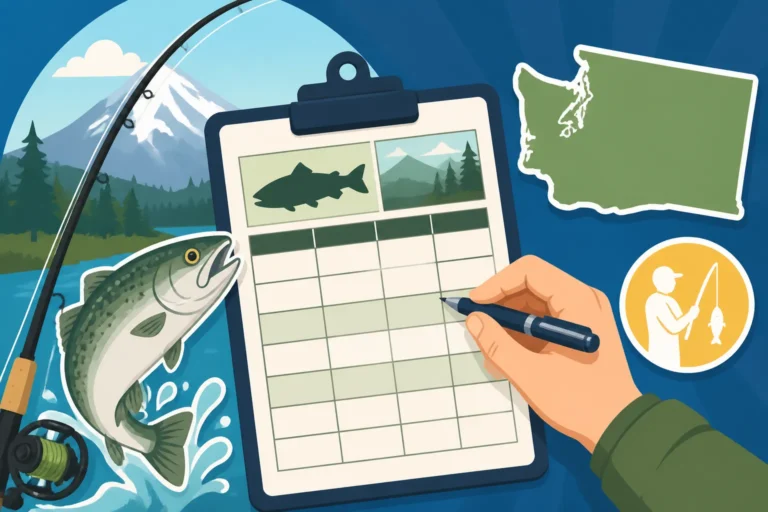
For specific species – currently salmon, steelhead, halibut, and Puget Sound Dungeness crab – a Catch Record Card (CRC) is a mandatory legal document that must be in your possession while fishing. It's not just a piece of paper; it's your personal tracking system for your harvest. You are legally required to record your catch immediately after retaining a fish, noting the date, location, species, and whether it was a hatchery or wild fish.
This card is essential for tracking your daily, seasonal, and annual limits, ensuring you don't inadvertently go over. More importantly, it provides critical data to WDFW biologists, which they use to manage fish populations and set future seasons. Failing to possess a CRC when required, or failing to fill it out immediately and correctly, can result in significant Fines and Penalties for Common Fishing Violations. Taking the time to understand the nuances of How to Fill Out a Washington Catch Record Card correctly will save you a lot of headaches down the line.
Keeping Good Records and Planning Ahead
For multi-day trips or when targeting several different species, it's a very smart practice to keep your own personal log of what you've caught. A small notebook in your tackle box, or even a note on your phone, can help you keep track of your daily and cumulative catch. This can be especially helpful if you're trying to manage your possession limit for a species over several days.
Planning ahead also means considering how you'll handle your catch. If you know you're targeting a species with a generous possession limit and you're on a multi-day trip, think about your cooler space, access to ice, or even local fish processors. If you're staying in a cabin or RV, be mindful that any fish stored there still counts towards your possession limit. Good preparation can prevent you from having to release legally caught fish or, worse, face a violation. For those needing durable, spacious coolers for extended trips, many fantastic options are available from outdoor retailers or online, including on Amazon, that can keep your prized catch fresh for days.
Consequences of Misunderstanding Limits
It might seem like a small detail, but misunderstanding or intentionally violating daily and possession limits carries real and impactful consequences. These aren't just slaps on the wrist; they are serious offenses designed to protect a valuable public resource.
Fines, Penalties, and Equipment Forfeiture
Exceeding your daily or possession limits, even accidentally, is considered a fishing violation under Washington state law. The severity of the penalty can vary widely depending on factors like the species involved (e.g., protected or endangered species often carry higher fines), the number of fish over the limit, and whether it's your first offense or a repeat violation. Fines can range from several hundred dollars for a minor infraction to thousands for more serious cases, particularly those that suggest commercial poaching.
In more egregious instances, particularly for repeat offenders or significant over-limits, law enforcement has the authority to seize any equipment used in the commission of the crime. This can include your fishing rods, reels, tackle, and even your boat or vehicle. Imagine losing thousands of dollars worth of gear, all because you miscounted or misunderstood a regulation. It's a sobering thought that underscores the importance of diligence.
License Suspension and Future Fishing Rights
Beyond monetary fines, a serious violation of fishing limits can lead to the suspension or even permanent revocation of your Washington fishing license. This means you would be legally barred from fishing in Washington state waters for a specified period, which could range from one year to a lifetime, depending on the severity and frequency of the offenses.
For many dedicated anglers, losing the privilege to fish is a far more impactful penalty than any financial cost. It means being unable to pursue a cherished hobby, participate in family traditions, or enjoy the natural beauty of Washington Fishing. Furthermore, such violations can sometimes affect your ability to obtain fishing licenses in other states, as many states share information regarding fisheries violations. The implications extend beyond just your wallet; they can impact your entire recreational life.
Impact on Conservation and Community Trust
Every single fish that is illegally harvested, especially those taken beyond established limits, contributes to a cumulative negative impact on the overall fish population. This directly affects the number of fish available to spawn, impacting the health and sustainability of future generations. When regulations are flaunted, it undermines the scientific management efforts designed to protect these precious resources for everyone.
Moreover, violations erode the trust within the angling community itself. The vast majority of anglers are law-abiding and committed to ethical and sustainable fishing practices. When a few individuals disregard the rules, it can cast a negative light on the entire community, potentially leading to stricter regulations for all. Adhering to daily and possession limits isn't just about avoiding a ticket; it's about being a responsible steward of Washington's incredible natural heritage and ensuring that these fisheries remain vibrant for years to come.
Daily vs. Possession Limits: A Quick Comparison
To help clarify the differences at a glance, here's a simple comparison table:
| Feature | Daily Limit | Possession Limit |
|---|---|---|
| Definition | Max number of a specific species retained in one calendar day (midnight-midnight). | Max total number of a specific species an individual can have at any given time. |
| Timeframe | 24-hour period, resets daily. | Cumulative, applies continuously regardless of when caught (within season). |
| Location | While actively fishing, immediately after capture. | On your person, in cooler, vehicle, camp, home freezer, or processing facility. |
| Primary Goal | Controls immediate harvest pressure on a specific day. | Prevents stockpiling and over-harvesting over multiple days/trips. |
| Typical Value | Generally lower (e.g., 1-3 fish). | Often higher (e.g., 2-6 fish, or 2x-3x daily limit), but sometimes equal. |
| Implication | You stop retaining fish of that species once met for the day. | You cannot keep more fish if your total possession exceeds this number. |
Disclaimer
Please remember that fishing regulations are subject to change. Always consult the latest official Washington Department of Fish and Wildlife (WDFW) regulations before heading out to fish. This guide provides general information and should not be considered a substitute for the official WDFW rule pamphlets and emergency rule updates.