How to Fill Out a Washington Catch Record Card
Catching a fish in Washington is an exhilarating experience, but let's be honest, the paperwork that often accompanies it—specifically, the Catch Record Card—can sometimes feel like a daunting chore. Many anglers feel confused by the various boxes and codes, or worry about making a mistake that could lead to trouble. This guide is here to demystify the Washington Catch Record Card, walking you through every step of filling it out correctly, so you can focus on the thrill of the catch without the headache of compliance.
Understanding the Purpose of Your Catch Record Card
It's easy to look at a small paper card filled with lines and boxes and think of it as nothing more than bureaucratic red tape. However, the Washington Department of Fish and Wildlife (WDFW) Catch Record Card serves a much larger, vital purpose that directly impacts the future of our fisheries.
More Than Just a Piece of Paper: Why WDFW Collects This Data
While it might feel like homework after a long day on the water, your Catch Record Card provides critical data that WDFW biologists and managers use to make informed decisions about fish populations. Every salmon, steelhead, halibut, and sturgeon you record contributes to a comprehensive picture of what's being caught, where, and by whom. This information is absolutely essential for understanding population estimates, forecasting future runs, and setting sustainable seasons and bag limits.
Think about how often you hear about emergency rule changes or season modifications; that's often directly informed by the data collected on these cards. Without accurate catch data, WDFW would be flying blind, unable to manage our precious fishing resources effectively. It's a direct way for individual anglers to contribute to conservation and ensure there are fish for future generations. While it can be a hassle in the moment, understanding its larger role often makes the task feel a bit less burdensome.
What Species Require a Catch Record Card in Washington?
Not every fish you catch in Washington requires a Catch Record Card, which can sometimes add to the confusion. It’s specifically designed for species that are closely managed due to their migratory patterns, conservation status, or high angler pressure. In Washington, you must possess and fill out a Catch Record Card for:
- Salmon: All species of salmon (Chinook, Coho, Chum, Sockeye, Pink) caught in marine and freshwater areas.
- Steelhead: Both wild and hatchery steelhead caught in freshwater areas.
- Halibut: All Pacific halibut caught in marine areas.
- Sturgeon: All sturgeon, primarily white sturgeon, caught in designated areas, often under catch-and-release rules with specific recording requirements.
For most other popular species, such as rainbow trout in lakes, bass, lingcod, or rockfish, a Catch Record Card is not required, although you still need a valid fishing license. This distinction is crucial, as forgetting to record a salmon or steelhead can lead to significant penalties. If you're ever unsure about what species need to be recorded, it's always best to check the current WDFW regulations pamphlet or consult the online rules. We've got a full breakdown in our guide on the Washington Catch Record Card and What It Requires, which can offer more detailed insights.
Getting Started: Before You Even Wet a Line
Preparation is key, not just for a successful fishing trip, but for ensuring your Catch Record Card is filled out correctly. Fumbling with a wet card or realizing you don't have the right information on hand can ruin the moment and potentially lead to errors.
Essential Information You Need to Have Ready
Before you even step out the door, take a moment to ensure you have everything you need for your Catch Record Card. It’s easy to get caught up in the excitement of a fishing trip and forget these crucial details, but having them readily accessible will save you a lot of hassle on the water.
First and foremost, you'll need your WDFW Customer ID number and your current fishing license number. These unique identifiers link your catch to your specific license, and they are usually printed prominently on your physical license or available through your online WDFW account. It's also vital to have your specific Catch Record Card number handy, as this helps track individual cards. Double-check that you have a physical card if you're not using the electronic version, and make sure it’s in good condition and hasn’t been soaked or torn.
Beyond your license details, ensure you have a reliable writing instrument. Many anglers make the mistake of using a pen that runs out or, worse, isn't waterproof. Imagine finally landing that trophy Chinook, only to find your pen won't write on the damp card! It's a smart move to have a dependable, waterproof pen, which you can easily find on Amazon, attached to your card or lanyard. This prevents fumbling and ensures your entries are legible, even in wet conditions.
Understanding the Card's Layout: Sections and Codes
The Washington Catch Record Card might look like a simple piece of paper, but it's divided into distinct sections, each requiring specific information. Understanding this layout before you start fishing will make the recording process much smoother and reduce the chances of errors.
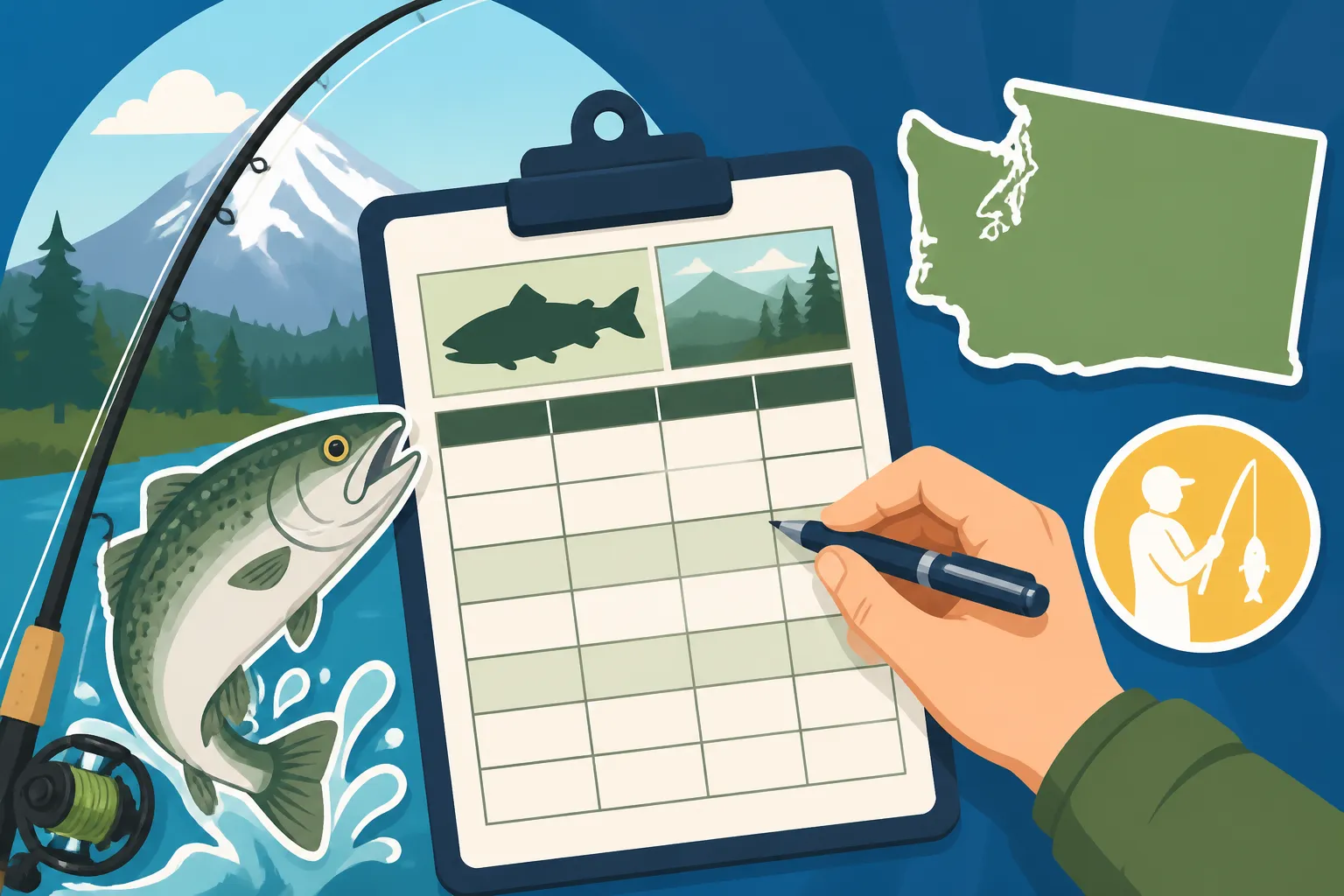
At the very top of the card, you’ll typically find spaces for your personal information, including your full name, address, and your WDFW Customer ID and fishing license numbers. It’s essential to fill these out clearly and completely as soon as you receive your card, as this links the card directly to you. Below this, the card is usually divided into species-specific sections—one for salmon, another for steelhead, and often separate lines for halibut or sturgeon, depending on the card type.
Within each species section, you'll see columns dedicated to recording individual fish. These columns typically include:
- Date: The specific day you caught the fish.
- Marine Area/River Name/Code: This is where you indicate where you caught the fish. For saltwater, you'll use the designated Marine Area number (e.g., Marine Area 9). For rivers, you might write the river name or a specific code if provided in the regulations pamphlet. Knowing your Marine Area, like understanding Marine Area 9 for Salmon Fishing, Explained, is crucial.
- Species: A column to specify the type of salmon (Chinook, Coho, etc.) or to simply mark "Steelhead."
- Mark Status: This is critical for salmon and steelhead. You'll mark whether the fish had its adipose fin clipped (indicating a hatchery fish) or if it was unclipped (a wild fish).
- Retained: A box where you will place an "X" if you kept the fish.
It’s highly recommended to carry a copy of the current WDFW Sport Fishing Regulations Pamphlet with you, or at least have access to the digital version. Our guide on Reading the Washington Sport Fishing Regulations Pamphlet can help you navigate this resource, as it often includes maps of marine areas and lists of river codes, which are vital for accurate entries. Familiarizing yourself with these codes and the overall card structure will save you precious fishing time and prevent headaches when an enforcement officer checks your catch.
Step-by-Step: Recording Your Catch Accurately
The most crucial part of using your Catch Record Card is recording your catch correctly and, just as importantly, immediately. This isn't just a suggestion; it's a legal requirement that protects you and provides the most accurate data for WDFW.
Recording the Date and Location
One of the most common mistakes anglers make is delaying the recording of their catch. Whether it's the excitement of landing a fish, the rush to get another line in the water, or simply forgetting, waiting to fill out your card can lead to errors and potential violations. The rule is clear: you must record your catch immediately upon retention. This means as soon as you decide to keep the fish and it's brought into your boat or onto the bank, you need to pull out your card and make the entry. Imagine a WDFW enforcement officer checking your catch and card; an unrecorded fish, even if just caught minutes ago, could be considered a violation.
Start by clearly writing the date in the format MM/DD/YY. This ensures there's no ambiguity about when the fish was caught. Next, you'll need to accurately record the location. For saltwater fishing, this means entering the correct Marine Area code. For example, if you're fishing near Port Townsend, you might be in Marine Area 9. If you’re fishing the Pacific Ocean off Westport, it would be a different marine area. It's vital to know precisely which area you are in, as regulations and catch limits can vary significantly between them.
For freshwater anglers, you'll typically write the river name or a specific river code if provided in the regulations. For instance, if you're targeting salmon on the Cowlitz, you'd write "Cowlitz River" in the appropriate section. Our guide on Fishing the Cowlitz River for Steelhead and Salmon in Washington can give you context for that specific location. If you move between different marine areas or river systems during your fishing day and retain fish in each, you must make a separate entry for each distinct location. Consistency and accuracy here are paramount to ensure the collected data is useful and you remain compliant.
Species and Mark Status: Clipping the Fin
Accurately identifying the species and its mark status is a critical step, especially for salmon and steelhead, where regulations often hinge on these details. Misidentifying a fish or incorrectly marking its status can lead to retaining an illegal fish, even by accident.
For salmon, you'll need to differentiate between Chinook, Coho, Chum, Sockeye, and Pink. While some are easier to distinguish, others can be tricky, especially if you're new to the area or the fish is a "jack" (an early returning male). For instance, knowing How to Identify a Washington Chinook Salmon versus How to Identify Coho Salmon in Washington's Puget Sound is key, as bag limits for these species often differ. You'll mark the appropriate species in the designated column on your card.
For steelhead and many salmon, the "Mark Status" column is where you indicate whether the fish is a hatchery fish or a wild fish. This distinction is made by checking for the presence or absence of an adipose fin – the small, fleshy fin located between the dorsal fin and the tail fin.
- Hatchery (Marked): If the adipose fin is clipped (removed), you mark an "H" or an "X" in the "Marked" box (or similar designation) on your card. This indicates a hatchery-origin fish.
- Wild (Unmarked): If the adipose fin is present (not clipped), you mark a "W" or an "X" in the "Unmarked" (or "Wild") box. This indicates a wild fish.
Many regulations strictly dictate that only hatchery (adipose-clipped) fish can be retained, especially for steelhead or certain salmon runs, to protect vulnerable wild populations. Understanding the difference between Wild Steelhead vs Hatchery Steelhead in Washington is not just for your catch card; it's fundamental to ethical and legal fishing in Washington. If you're ever in doubt about a fish's species or whether its adipose fin is clipped, it's always best practice to release the fish. It's far better to err on the side of conservation than to face potential penalties for an illegal retention.
Retaining Your Catch: The 'X' Marks the Spot
Once you've identified your fish and its mark status, the final step in the immediate recording process is marking its retention. This is where the simple act of putting an "X" in the right box becomes incredibly significant.
After you've landed a fish, positively identified it as a legal keeper (meaning it meets species, size, and mark status requirements for the specific area and season), and decided to retain it, you must immediately mark an "X" in the "Retained" column for that particular entry. This "X" signifies that the fish has been kept and counts against your daily and seasonal limits. Failing to put that "X" down immediately can, as mentioned, lead to serious issues if you encounter a WDFW enforcement officer. It's a quick action that takes literally seconds but solidifies your compliance.
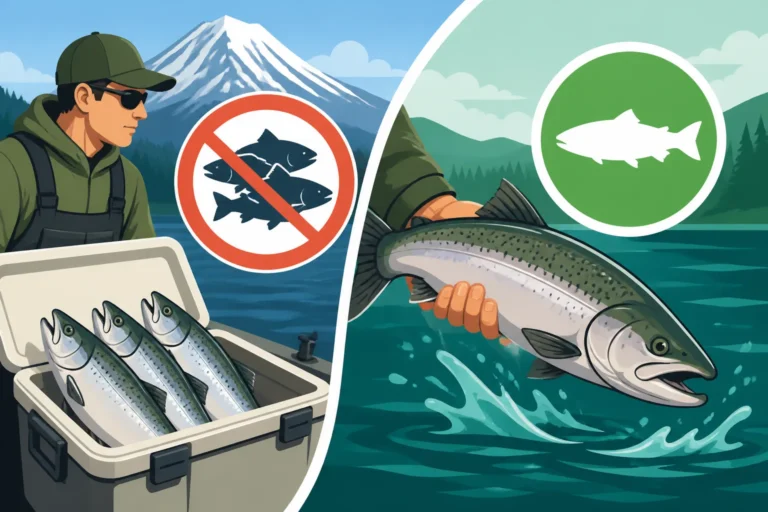
It's important to remember that if you catch a fish and then release it, whether intentionally or because it's an illegal catch (too small, wrong species, wild fish in a hatchery-only fishery, etc.), you do not mark it on your Catch Record Card. The card is only for retained fish that count towards your limits. This is a common point of confusion for new anglers, but it's vital for accurate data collection. Our article on Do You Need a License for Catch-and-Release Only further clarifies that while you might release fish, you still need a license, but not every catch goes on the card.
There are also specific scenarios, such as certain "slot limits" for species like sturgeon or some trout, where a fish might be temporarily handled to determine if it falls within a legal retention size range, and then released if it doesn't. Even in these cases, if the fish is ultimately released, it is not marked on the card. For more information on these specific regulations, you might find our explanation of Slot Limits and Why Some Fish Must Go Back helpful, as these situations often require a good understanding of the rules.
Special Considerations and Common Mistakes
Even experienced anglers can make mistakes with their Catch Record Cards. Knowing about these common pitfalls and special situations can help you avoid unnecessary stress and ensure you're always fishing within the rules.
When a Catch Record Card Is Not Required (But Your License Is!)
This is a frequent source of confusion for many anglers. It's a common misconception that any fish you catch requires a mark on some official document. As we've covered, Catch Record Cards are specifically for salmon, steelhead, halibut, and sturgeon. This means a vast array of other popular fish species in Washington do not require a CRC entry.
For example, if you're spending a relaxing day fishing for rainbow trout in one of Washington's many stocked lakes, or targeting smallmouth bass on the Columbia River, or even bottomfishing for lingcod or various rockfish species in Puget Sound, you do not need to fill out your Catch Record Card for those catches. Your regular fishing license covers these activities, and their harvest is typically managed through daily bag and possession limits published in the WDFW regulations pamphlet, not through individual recording on a card.
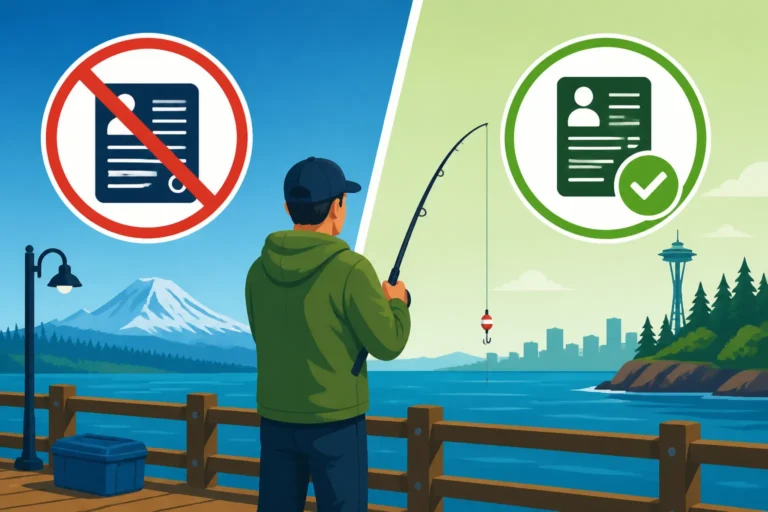
However, a crucial point to remember is that while a CRC might not be required for these species, a valid Washington fishing license almost always is! There are very few exceptions to the license requirement, such as for very young children or during designated free fishing weekends. If you're wondering, "Do Kids Need a Fishing License in Washington, we cover the age requirements there. Similarly, Do Seniors Need a License to Fish in Washington provides clarity on age-related exemptions for older anglers. Always assume a license is needed unless you've confirmed an explicit exemption. The takeaway: know what you're targeting, and double-check if it's one of the "big four" species that requires the extra paperwork.
Correcting Errors and Avoiding Penalties
Let's face it, mistakes happen. Whether it's a momentary lapse in memory, a shaky hand, or just plain confusion, it's possible to make an incorrect entry on your Catch Record Card. The good news is that WDFW understands this, and there's a proper way to correct errors without invalidating your card or incurring penalties. However, attempting to erase, white-out, or scribble over an entry can be viewed suspiciously by enforcement officers.
If you make a mistake, such as accidentally marking the wrong date or species, the correct procedure is to draw a single, neat line through the incorrect entry. Then, write the correct information clearly beside it. It's also a good idea to initial the correction. This method shows that you've made an honest error and are taking steps to rectify it, rather than trying to conceal information. Avoid using correction fluid or attempting to erase vigorously, as this can make the card look tampered with.
The consequences of incorrect or unrecorded entries can be significant. Fishing without a valid license, failing to record a retained fish, or possessing an over-limit or illegal fish (e.g., a wild steelhead in a hatchery-only fishery) can lead to fines, confiscation of your catch and gear, and even the suspension of your fishing privileges. These penalties vary depending on the severity and nature of the violation. Our detailed article on Fines and Penalties for Common Fishing Violations can give you a better understanding of what to expect if you fall afoul of the regulations. While the rules can feel strict, remember that they are in place to manage and protect Washington's valuable fishing resources for everyone. Taking the extra minute to be accurate is always worth it.
The Electronic Catch Record Card and Fish Washington App
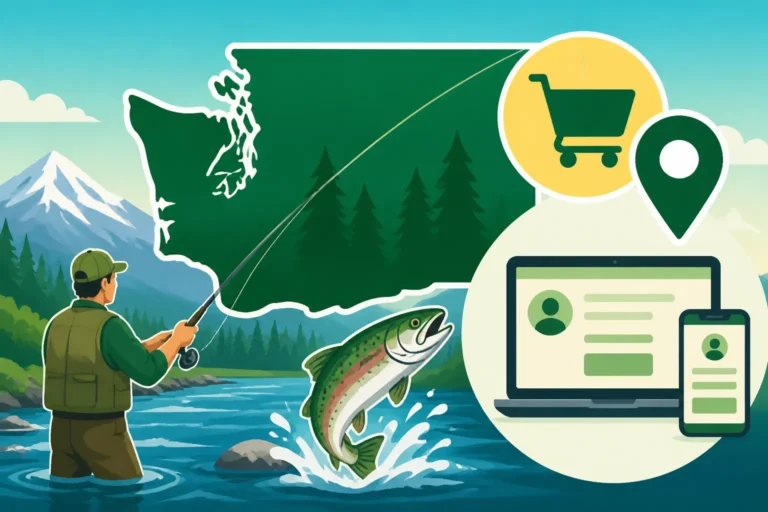
In today's digital age, the idea of carrying around a paper card might seem a bit old-fashioned. Recognizing this, WDFW has embraced technology by offering an electronic Catch Record Card option through its Fish Washington app. This can be a fantastic convenience for many anglers, especially those who prefer to keep everything on their smartphone.
The Fish Washington app allows you to purchase and display your fishing licenses, as well as record your catch data digitally in real-time. The benefits are clear: no more worrying about losing a paper card, a wet pen, or illegible handwriting. The app prompts you for the necessary information, often has built-in location services to help with marine areas, and simplifies the reporting process. This means your catch is immediately recorded in the WDFW system, often eliminating the need to mail in a physical card at the end of the season. Our guide on Electronic Catch Record Cards and the Fish Washington App provides an in-depth look at how this system works and its advantages.
However, like all technology, there are considerations. You'll need to ensure your phone has enough battery life for your entire trip, especially if you're fishing in remote areas without charging options. Signal strength can also be an issue in some locations, although the app usually allows offline recording that syncs once you're back in service. For those who prefer the digital route, make sure your phone is up to the task. A sturdy, waterproof phone case, like many reliable options available on Amazon, can be a real game-changer, protecting your device from splashes and drops while you're busy recording your catch on the Fish Washington app. Beyond catch reporting, the Fish Washington app also ties into the broader What the MyWDFW App Is Used For functionalities, offering a comprehensive digital tool for anglers.
After the Catch: Returning and Reporting Your Card
Your responsibility with the Catch Record Card doesn't end when you've landed your last fish or wrapped up your season. The final, critical step is to return your card to WDFW, regardless of whether you caught anything or not.
The Importance of Returning Your Card, Even If You Didn't Catch Anything
This might seem counterintuitive to some: why return a blank card? The answer lies in the bigger picture of fisheries management. Even a card with zero fish recorded provides invaluable data. It tells WDFW that an angler was out on the water, exerting effort in a specific area, but did not make a retention. This "effort data" is crucial for calculating catch rates and estimating total fishing pressure. If WDFW only received cards from successful anglers, their data would be skewed, leading to inaccurate assessments of fish populations and potentially overly restrictive regulations in the future.
Returning your blank or partially filled card helps paint a complete picture of angler activity and fish availability, which directly influences future season settings. It ensures that your day on the water, even if it was slow, still contributes to the science of fisheries management. There is typically a deadline for returning your Catch Record Card, usually by a specific date in January after the year of validity (e.g., cards for 2024 are due in January 2025). You can typically return cards by mail to the address provided on the card itself, or in some cases, report your catch online through the WDFW website or the Fish Washington app. Missing the deadline, even for a blank card, can sometimes result in a fine or a delay in purchasing your next year's license. So, even if the fish weren't biting, make sure you send that card back!
What Happens to Your Data: The WDFW Perspective
Once you return your Catch Record Card, it becomes part of a much larger data collection effort by the Washington Department of Fish and Wildlife. These cards are meticulously processed, and the information you provided—the dates, locations, species, and mark status of your retained fish, along with your effort data from blank entries—is entered into a comprehensive database.
This massive compilation of angler-reported data is then analyzed by WDFW biologists. They use it to:
- Assess Fish Stocks: By combining Catch Record Card data with scientific surveys, test fisheries, and creel (angler interview) surveys, WDFW can estimate the size and health of various fish populations.
- Forecast Future Runs: Understanding past catch trends helps them predict the strength of future salmon and steelhead runs, allowing for proactive planning of fishing seasons.
- Inform Management Decisions: The data directly influences decisions about season lengths, open areas, daily and annual bag limits, and whether specific fisheries need to be restricted or closed to protect vulnerable stocks.
- Track Trends: Over time, this data helps identify long-term trends in fish populations, impacts of habitat changes, or the effectiveness of conservation efforts.
In essence, your individual Catch Record Card plays a small but vital role in the grand scheme of fisheries management in Washington. It’s a direct link between your experience on the water and the scientific process that ensures the sustainability of our beloved fishing resources. It gives you a voice, through your data, in the ongoing effort to balance fishing opportunities with conservation needs.
| Section | Information Required | Common Mistakes & Solutions |
|---|---|---|
| Personal Info | Name, WDFW ID, License #, CRC # | Missing info, illegible writing. Solution: Fill out upon receipt. |
| Date | MM/DD/YY | Forgetting to record immediately. Solution: Mark before putting fish away. |
| Location | Marine Area Code or River Name/Code | Incorrect area code, vague location. Solution: Consult regulation pamphlet or app. |
| Species | Chinook, Coho, Steelhead, Halibut, Sturgeon | Misidentification. Solution: Learn species ID, release if unsure. |
| Mark Status | H (Hatchery/Clipped) or W (Wild/Unclipped) | Incorrectly identifying adipose fin. Solution: Confirm fin presence/absence carefully. |
| Retained | Mark "X" for kept fish | Forgetting to mark, marking released fish. Solution: Mark only retained fish immediately. |
| Corrections | Single line through, initial, rewrite | White-out, scribbling, erasing. Solution: Use approved correction method. |
| Return | Mail or report online by deadline | Not returning empty cards, missing deadline. Solution: Return all cards on time. |
Disclaimer
The information provided in this guide is intended for general informational purposes only and is subject to change. Washington fishing regulations, including those pertaining to Catch Record Cards, are set by the Washington Department of Fish and Wildlife (WDFW) and can change frequently, sometimes even mid-season through emergency rule changes. It is always the angler's responsibility to consult the most current official WDFW regulations pamphlet, check the WDFW website for emergency rules, or use the official Fish Washington app before heading out. Failure to comply with current regulations may result in penalties.