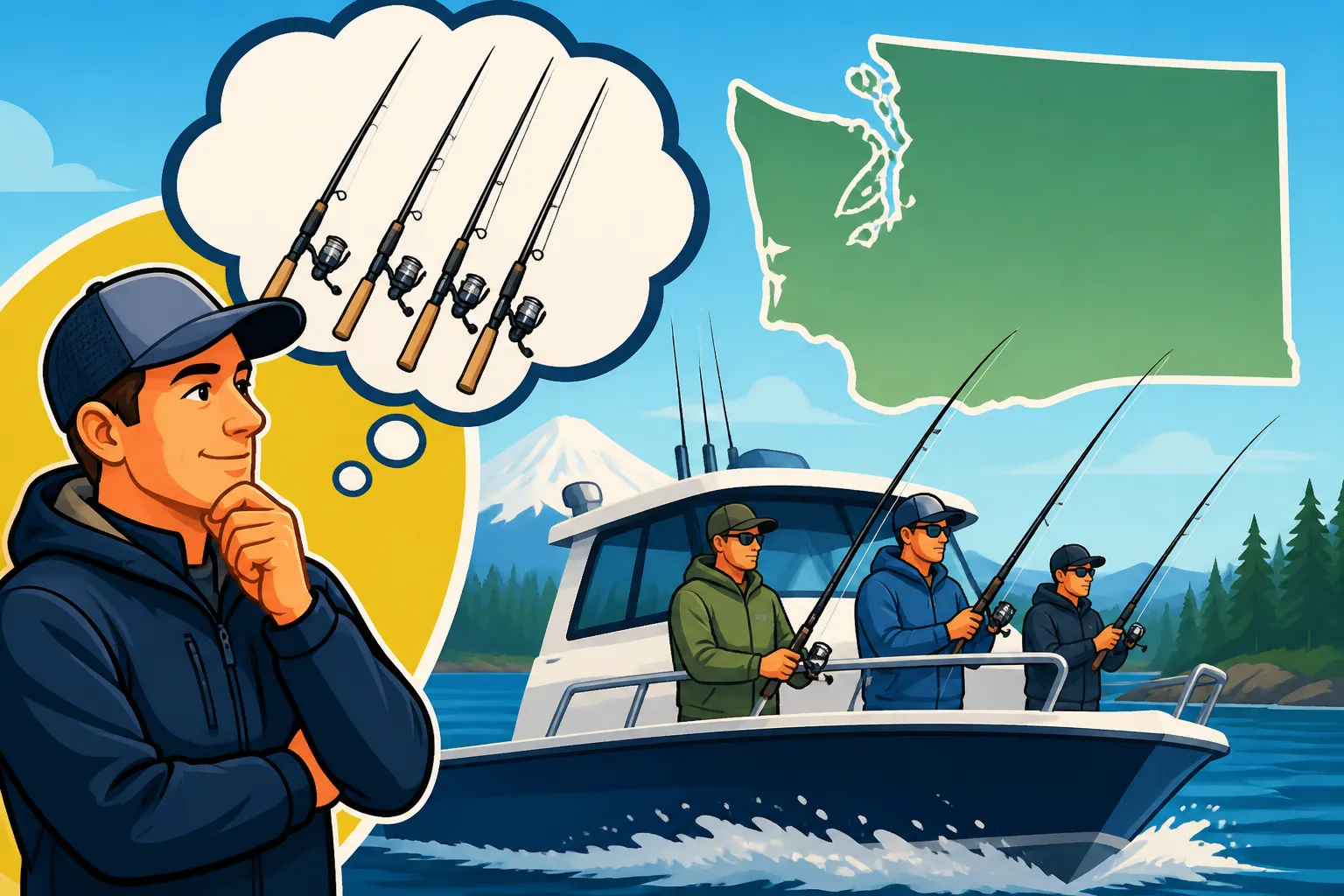
How Many Rods Each Angler Can Use on a Charter
It can be incredibly frustrating to show up for a highly anticipated fishing trip, only to realize you're not entirely clear on a crucial detail like how many rods you're actually allowed to fish with. Washington's fishing regulations can feel like a complex maze, and when you add the unique dynamics of a guided charter trip, the rules can seem even muddier. This guide is here to clarify exactly how many rods each angler can typically use on a fishing charter in Washington, breaking down both the state regulations and the practical realities you'll encounter on the water.
Understanding Washington's General Rod Regulations
Before we dive into the specifics of charter trips, it's really important to get a solid grasp on the baseline rules set by the Washington Department of Fish and Wildlife (WDFW). These are the foundation, and charter operations always adhere to these minimum standards, even if they sometimes add their own, more restrictive rules for a better fishing experience. If you’re ever in doubt about the broader regulatory landscape, a good place to start is our comprehensive guide on Washington Fishing Regulations Every Angler Should Know.
The Standard One-Rod Rule
For the vast majority of recreational anglers in Washington, the default rule is quite simple: you are allowed to fish with one rod at a time. This applies whether you're casting from the bank of a river, fishing from your own small boat on a lake, or even dropping a line from a public pier. It's the most common regulation and the one you should always assume unless you've confirmed otherwise. This rule is in place for a variety of reasons, including managing harvest, reducing gear conflicts, and ensuring a more active, engaged angling experience rather than just setting out multiple lines and passively waiting.
Think about a busy salmon run on a river like the Cowlitz or the Puyallup. If every angler was running multiple rods without proper control, the river would quickly become a tangled mess of lines, snagged fish, and frustrated fishermen. The one-rod rule helps keep things orderly, minimizing potential conflicts and allowing everyone a fair shot at the fish. It also makes it easier for game wardens to monitor compliance with bag limits and other regulations, as tracking one active line per person is far simpler than trying to keep tabs on three or four.
The Two-Pole Endorsement: When It Applies
Now, here's where things get a little more flexible for some anglers. Washington does offer a special endorsement called the "Two-Pole Endorsement." This endorsement, which you purchase in addition to your regular fishing license, allows you to fish with two lines at once. Sounds great, right? However, it's crucial to understand that this endorsement isn't valid everywhere or for every species. It's typically restricted to freshwater lakes and a few specific rivers that are managed for high-volume fisheries, often targeting species like trout or hatchery salmon and steelhead.
You won't find the two-pole endorsement valid in most saltwater areas, nor will it be allowed on many of Washington's sensitive wild steelhead rivers or in areas where snagging is a concern. The WDFW carefully designates where this endorsement can be used, usually in places where the impact on fish populations is minimal and where it enhances the fishing opportunity for popular species. For example, if you're targeting hatchery rainbow trout in a large, well-stocked lake, using two poles can significantly increase your chances of success without negatively impacting wild stocks. Our detailed article, Washington's Two-Pole Endorsement and Who Needs One, delves much deeper into the specifics of this endorsement, including where it's valid and how to acquire it. Always double-check the current regulations pamphlet, available from the WDFW website or local license vendors, to confirm the specific waters open to two-pole fishing.
Exceptions and Species-Specific Rules
While the one-rod rule and the two-pole endorsement cover most scenarios, there are always a few exceptions and species-specific rules to be aware of. For instance, certain types of shellfish harvesting, like crabbing with pots, don't fall under the "rod" rules in the same way, but they have their own limits on the number of pots or rings you can deploy. Some specialized fisheries, like those targeting certain warmwater species in specific lakes, might have unique gear rules.
It's also worth noting that some fishing techniques are inherently limited to a single rod for practical and ethical reasons. Fly fishing, for example, is almost universally a single-rod pursuit due to the active casting and presentation required. Similarly, in areas with strict Barbless Hook Requirements on Washington Rivers, the focus is on careful, ethical angling, which often implicitly discourages techniques that would involve multiple, potentially unmonitored lines. The WDFW pamphlet is truly your best friend for navigating these finer points, as it provides all the necessary details for specific areas and species.
Rod Limits on Chartered Fishing Trips: The Nuances
Now, let's get to the heart of the matter: how these rules apply when you're on a guided fishing charter. While state law sets the baseline, a charter operation often has its own set of practical guidelines that can influence how many rods you'll be actively fishing with. This is where the informational aspect really comes into play, as many anglers assume a charter means "anything goes," but that's rarely the case.
Charter Operator's Discretion vs. State Law
This is perhaps the most important distinction to understand. Every licensed Washington fishing charter operates under the same WDFW regulations that apply to independent anglers. This means if the state only allows one rod in a particular marine area or river, your charter captain must abide by that rule. If the two-pole endorsement is not valid for the species or location you're fishing, then you're limited to one rod, even if you personally hold the endorsement.
However, many charter operators, especially those running smaller boats with limited deck space or targeting particular species that require a lot of hands-on attention, may impose further restrictions beyond what the state allows. For example, if you're fishing for salmon in Puget Sound, where technically the two-pole endorsement isn't a factor (it's a freshwater endorsement), the state rule is one rod. But even if you were in a freshwater scenario where two poles are allowed by the state, your charter captain might still say "one rod per person" for safety, efficiency, and to provide the best possible service to everyone on board. They aren't doing this to be difficult; they're doing it to ensure a smooth, enjoyable, and productive trip for all their clients.
The Role of the Guide/Captain
Your fishing guide or charter captain is much more than just a boat driver; they are the expert on board, responsible for your safety, the boat's operations, and ensuring a successful trip within regulatory limits. They often manage all the gear, set up the lines, bait hooks, net fish, and deal with tangles. When you have multiple anglers, each with potentially two lines in the water, the chances of lines tangling (a phenomenon affectionately known as "the spaghetti factory") increase dramatically.
A good guide prioritizes getting fish into the boat efficiently and safely. This often means running fewer, well-managed lines rather than more lines that lead to constant tangles and lost fishing time. On a salmon charter, for instance, the captain might be running several downriggers, managing the boat's position, and watching the fish finder. If suddenly three anglers each have two rods in the water, that's six lines for the guide to keep track of, in addition to the downrigger lines, which can quickly become unmanageable when fish start biting or currents shift. The guide's decision on rod limits is usually a professional one, aimed at maximizing the quality of the experience for everyone on board, not just adhering to the letter of the law. They are there to make your trip successful, and sometimes that means streamlining the gear in the water.
Impact of Target Species and Fishing Method
The type of fish you're targeting and the method you're using will heavily influence the practical rod limits on a charter.
- Trolling for Salmon: When Trolling for Salmon in Washington's Puget Sound, boats often deploy multiple lines using downriggers or divers. While the boat may have several lines out, each individual angler typically only "fishes" one rod at a time. The guide will assign you a rod when it's your turn in the rotation or when a fish strikes. This method is highly effective for covering water and finding active fish, but it requires coordination. Having each person actively managing multiple rods while trolling is usually impractical and would lead to immediate tangles.
- Bottom Fishing for Lingcod or Rockfish: For Bottom Fishing for Lingcod and Rockfish off Washington, anglers are often jigging directly over structure. While the state might allow one rod, a charter might still encourage a single rod to prevent lines from crossing in tight quarters or strong currents, especially when targeting larger, more aggressive species like lingcod which can really put a bend in a rod.
- River Fishing for Steelhead or Salmon: When Drift Fishing for Steelhead in Washington Rivers from a drift boat, space is at a premium. Most guides will strictly enforce a one-rod-per-person rule, even in waters where a two-pole endorsement might be technically valid, simply because a drift boat doesn't have the space for multiple active lines without constant snags on trees, rocks, or other lines. The guide is actively maneuvering the boat and needs clear decks and unobstructed casting lanes.
Essentially, the more active and dynamic the fishing method, or the tighter the fishing quarters, the more likely your charter will limit you to a single rod, regardless of what your personal license endorsements might allow under different circumstances.
Practical Considerations for Anglers on a Charter
Navigating the world of fishing charters means being prepared and communicative. It's not just about showing up with your license; it's about understanding the specific operational nuances of your chosen trip.
Asking Before You Book
This is perhaps the single most important piece of advice: always confirm the rod policy with your charter captain or booking agent before you finalize your trip. Don't assume. A quick call or email can save you a lot of confusion and potential disappointment on the day of your adventure. Websites like FishingBooker often list contact information for charter operators, making it easy to reach out and ask specific questions about their policies.
When you contact them, clearly state your question: "I'm interested in booking a trip on [Date/Species]. How many rods does each angler typically use on your boat for this type of trip?" They'll be happy to clarify. Most reputable charters are very upfront about their policies and want you to have a great experience. They know their boat, their crew, and their target species better than anyone, and they'll tell you what works best for a successful trip. This also avoids any awkward conversations once you're already on the water.
Benefits of Fewer Rods
While the idea of using two rods might sound like it doubles your chances, on a charter, focusing on a single, well-managed rod often leads to a higher quality experience.
- Less Tangle, More Fishing: With fewer lines in the water per person, there's less chance of tangles, especially when multiple fish are hooked or when fighting a strong fish. This means less time spent untangling lines and more time with your bait or lure in the strike zone.
- Better Focus and Engagement: When you're managing just one rod, you can give it your full attention. You'll feel every bite, react quicker to strikes, and truly hone your angling skills. This active engagement is often what makes fishing so rewarding.
- Guide's Attention: With fewer lines to manage overall, your guide can dedicate more attention to each angler, offering tips, assisting with techniques, and ensuring everyone has a prime opportunity to hook up. They aren't constantly distracted by multiple, independent lines.
- Safety: Fewer rods on a crowded boat deck means less tripping hazards and a safer environment for everyone.
It's all about quality over quantity in this scenario. You're paying for a guided experience, and a good guide wants to ensure that experience is as smooth and productive as possible.
Preparing for Your Trip
When preparing for your charter trip, focus on what you need and what the charter provides. Most reputable Washington fishing charters supply all the necessary rods, reels, tackle, and bait. This is a huge benefit, as they'll have the right gear for the specific species and conditions you're fishing. Our article, What's Included in a Washington Puget Sound Salmon Charter, provides a great overview of what you can typically expect.
Unless explicitly told otherwise, you generally won't need to bring your own fishing rods. If you prefer to use your personal gear, definitely clear it with the captain beforehand. Remember to bring your valid Washington fishing license and any required endorsements (like the Columbia River Salmon and Steelhead Endorsement, if applicable for your trip), along with your Carrying Your Washington Fishing License: Paper, Phone or the MyWDFW App options. Beyond that, focus on personal comfort items like appropriate clothing, food, drinks, and seasickness medication if needed. The goal is to show up ready to fish, not burdened with excess gear that might not even be allowed.
Why These Rules Matter: Safety and Conservation
Understanding why these rules exist can make them less frustrating and help you appreciate the thought behind them. It's not just about making things difficult; it's about protecting the resource and ensuring everyone has a good time.
Avoiding Tangled Lines and Safety Hazards
Imagine a boat full of eager anglers, each with two rods actively fishing for salmon in a brisk current. The moment one person hooks a fish, or even worse, two people hook fish simultaneously, chaos can ensue. Lines can cross, hooks can get dangerously close to other anglers, and the risk of injury or lost fish goes up dramatically.
Fishing is meant to be enjoyable, not a wrestling match with tangled monofilament. Limiting the number of active rods, especially on a charter where space is often communal and the guide is working hard to manage the overall operation, is a fundamental safety measure. It minimizes the risk of gear damage, keeps anglers safe from flying hooks or weights, and allows the guide to focus on boating fish and assisting clients, rather than constantly untangling lines or mitigating conflicts. Even for experienced anglers, managing multiple lines on a moving boat with other people is a challenge. For beginners, it can quickly become overwhelming and detract from the entire experience.
Conservation and Fair Chase
Beyond the practical aspects of safety and efficiency, rod limits are also deeply rooted in conservation and the principle of fair chase. The WDFW carefully manages Washington's fisheries to ensure sustainable populations for future generations. Bag limits, possession limits, size restrictions, and gear restrictions like rod limits are all part of this management strategy. If anglers were allowed to run an excessive number of lines, it could lead to overharvest, increased incidental bycatch (catching species you don't intend to keep), and higher rates of "shaker" fish mortality (fish released but injured).
The concept of fair chase also plays a role. Fishing with a reasonable number of lines promotes a more engaged and ethical approach to angling. It's about the challenge, the skill, and the experience of actively pursuing fish, rather than simply maximizing the number of hooks in the water. While charter captains want you to catch fish, they also operate under strict ethical guidelines and are keen observers of the regulations. They understand the importance of respecting the resource. Violating these rules, even accidentally, can lead to Fines and Penalties for Common Fishing Violations not just for the individual angler, but potentially for the guide and charter operation as well. By adhering to the rod limits, whether set by the state or the charter captain, you're contributing to the long-term health of Washington's incredible fisheries.
Here’s a quick summary of common scenarios:
| Scenario | State Rule (General) | Two-Pole Endorsement (If Applicable) | Typical Charter Boat Practice | Key Consideration for Charter |
|---|---|---|---|---|
| Freshwater Lake (Trout, Bass) | 1 rod | Allows 2 (if endorsement purchased) | Often 1 or 2 rods | Space, target species, guide preference |
| Freshwater River (Salmon, Steelhead) | 1 rod | Allows 2 (rarely, in specific areas) | Almost always 1 rod | Safety, tangles, casting space, current |
| Saltwater (Puget Sound Salmon) | 1 rod | N/A (freshwater only) | Almost always 1 rod | Trolling lines, deck space, safety |
| Saltwater (Bottom Fishing) | 1 rod | N/A | Almost always 1 rod | Jigging space, tangles, strong currents |
| Saltwater (Halibut/Tuna) | 1 rod | N/A | Almost always 1 rod | Deep water, large fish, boat traffic |
Ultimately, whether you're fishing from your own boat or hopping aboard a professional charter, the responsible angler always familiarizes themselves with the rules. When it comes to a charter, a quick conversation beforehand ensures everyone is on the same page, leading to a much more enjoyable and successful day on the water.
Disclaimer
This article is for general informational purposes only and does not constitute professional advice. Laws, prices and regulations vary by location and change over time. Consult a qualified professional for guidance on your specific situation.