Trolling for Salmon in Washington’s Puget Sound
Trolling for salmon in Washington’s Puget Sound can feel like trying to find a needle in an incredibly vast, beautiful haystack. You’re out there, the boat is rocking gently, the lines are set, and sometimes… crickets. It’s a frustrating reality for many anglers, but it doesn't have to be. This comprehensive guide is dedicated to demystifying the art of trolling for salmon in these iconic waters, equipping you with the knowledge and strategies to turn those quiet days into memorable catches.
Why Trolling is the Go-To Method in Puget Sound
When you look out over the expansive waters of Puget Sound, it's easy to feel overwhelmed. Salmon are migratory, constantly on the move, and rarely stay in one spot for long. This is precisely why trolling has become the dominant and most effective technique for consistently finding and catching salmon here. It's not just about dragging a lure; it's about a strategic approach that maximizes your chances in a dynamic environment.
Covering Water Efficiently
Imagine trying to catch a fish that could be anywhere in a body of water stretching hundreds of miles, from the bustling shipping lanes of Seattle to the wilder reaches of the San Juan Islands. That’s the challenge of Puget Sound salmon fishing. Unlike casting from shore or anchoring in a single spot, trolling allows you to cover vast amounts of water, actively searching for those elusive salmon schools. You're not waiting for the fish to come to you; you're going to them.
This active searching is particularly crucial when dealing with anadromous species like salmon, which are constantly migrating. They follow baitfish, respond to currents, and move with the tides. By slowly moving your boat, you present your offerings across a wider swathe of territory, significantly increasing the odds of intersecting with a traveling school. Think of it as a methodical sweep, much like a hunter moving through a forest, rather than waiting in a blind. Without the ability to cover ground, you're essentially hoping a fish swims past your stationary offering, which is far less reliable in the open waters of the Sound.
Presenting Baits Naturally
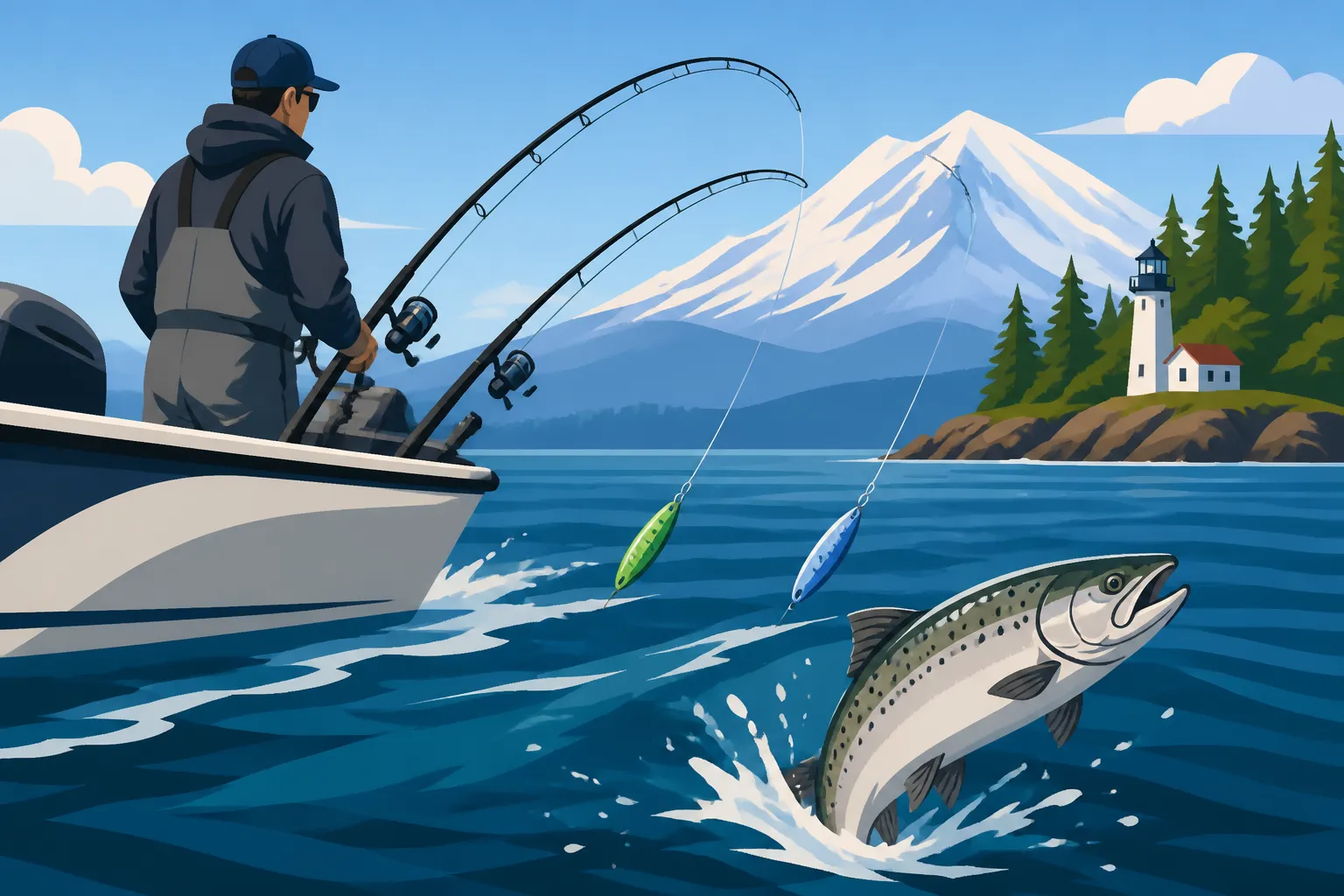
One of the greatest advantages of trolling is its ability to mimic a live, swimming baitfish, making your presentation incredibly natural and enticing to predatory salmon. A well-rigged herring or a precisely chosen spoon, pulled through the water at the right speed, appears just like an injured or disoriented fish struggling to swim. This vulnerability is a huge trigger for salmon, which are opportunistic feeders. The motion imparted by the boat's forward movement, combined with the action of flashers and dodgers, creates a lifelike illusion that stationary baits often struggle to achieve.
Beyond just the visual appeal, trolling also generates subtle vibrations and hydroacoustic signals that travel through the water, attracting salmon from a distance. The rhythmic thump of a flasher, the wobble of a plug, or the subtle tail-kick of a rigged bait creates an irresistible call to any salmon in the vicinity. This continuous, moving presentation across various depths and locations is key to appealing to the salmon's hunting instincts, prompting them to strike. It's less about a quick flash and more about a sustained, convincing impersonation of their natural prey, drawing them in for a closer look and ultimately, a bite.
Essential Gear for Trolling Puget Sound Salmon
Successfully trolling for salmon in Puget Sound isn't just about showing up with a rod and reel. It requires a specific arsenal of gear designed to handle the challenges of saltwater, deep water, and powerful fish. Investing in the right equipment can make all the difference between a frustrating day and a fantastic one.
Rods and Reels for the Job
When you’re pulling a heavy downrigger ball, a flasher, and a lure, then hooking into a hard-fighting Chinook or acrobatic Coho, your rod and reel setup needs to be up to the task. For Puget Sound salmon trolling, you're generally looking for medium-heavy to heavy action rods, typically between 8.5 to 10.5 feet in length. The longer rod provides better shock absorption for powerful runs and helps spread lines more effectively from the boat. Graphite composite rods offer a good balance of sensitivity and power, essential for feeling subtle bites and handling large fish.
Your reel is equally critical. Most experienced Puget Sound trollers prefer conventional baitcasting reels, often equipped with a line counter. A line counter reel, like those from Daiwa or Penn, is invaluable because it allows you to precisely deploy your line to a specific depth, ensuring your lure is exactly where the fish are showing on your sonar. For line, a braid mainline of 30-50 lb test is common, known for its sensitivity and strength, often with a fluorocarbon leader (20-40 lb) for stealth and abrasion resistance. Durability is paramount in the corrosive saltwater environment, so look for reels with sealed drag systems and corrosion-resistant components. Many anglers find great options and read detailed reviews for such specialized gear on platforms like Amazon before making a purchase.
Downriggers: Your Depth Control Allies
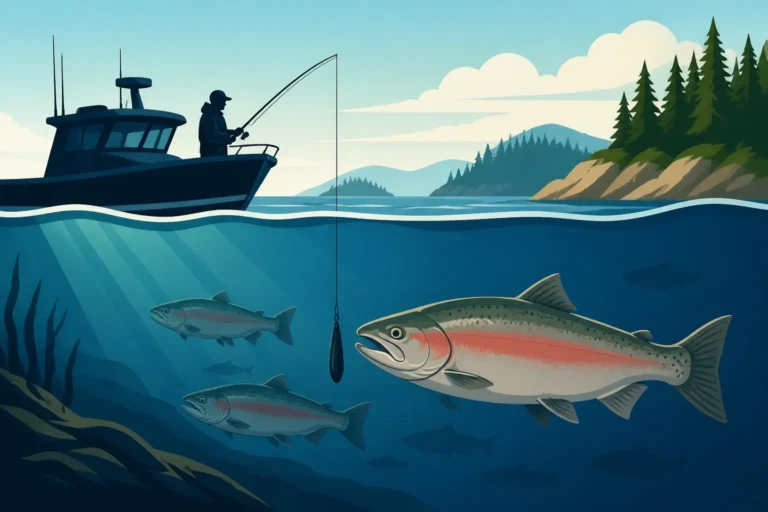
Without a doubt, downriggers are the unsung heroes of Puget Sound salmon trolling. These devices are absolutely critical for getting your lures down to the precise depths where salmon are holding and feeding. Salmon, especially Chinook, often inhabit specific temperature layers or "thermoclines," or they might be hugging structure deep below the surface. A conventional casting setup simply can't consistently reach these depths and keep your lure there while trolling.
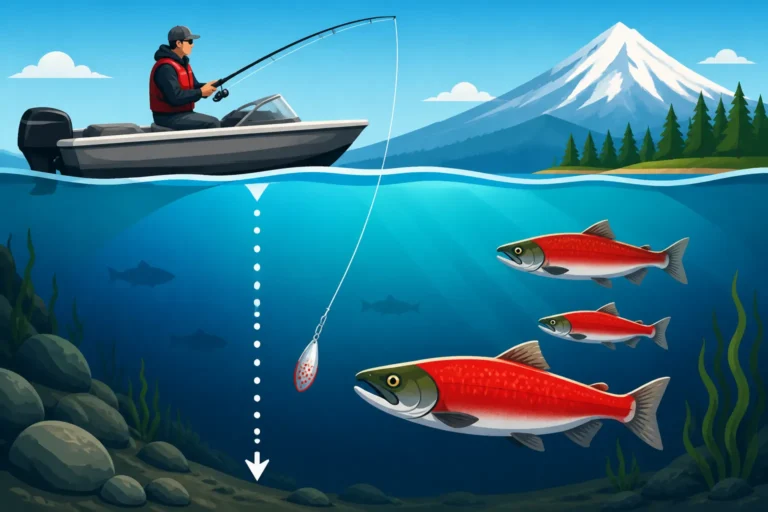
Downriggers work by using a heavy cannonball (often 8-15 lbs) attached to a cable, which is lowered to a set depth. Your fishing line is then clipped to the downrigger cable with a release clip. When a salmon strikes your lure, the tension pulls the line free from the clip, allowing you to fight the fish directly without the weight of the cannonball. This setup ensures your lure is swimming naturally at the desired depth. You’ll find both manual and electric downriggers, with popular brands like Scotty and Cannon being staples on many Washington boats. Electric models offer effortless retrieval and precise depth control, a huge benefit when frequently adjusting depths or when fishing in very deep water. For serious anglers, the investment in reliable downriggers is non-negotiable for consistent success.
Sonar and Navigation: Seeing Below the Surface
In a vast and often murky environment like Puget Sound, a good sonar unit is your eyes beneath the waves. It's not just a nice-to-have; it's an essential piece of equipment for locating bait balls, identifying thermoclines where salmon congregate, and even spotting individual fish. Modern fish finders from brands like Garmin, Lowrance, and Humminbird offer incredible detail, allowing you to discern schools of herring or anchovies, which are key indicators of salmon presence. Understanding what your sonar is telling you – identifying arcs (fish), clouds (bait), and distinct bottom features – is a skill that takes practice but dramatically improves your success rate.
Beyond finding fish, navigation is paramount for safety and efficiency. A reliable GPS chartplotter, often integrated with your sonar, allows you to mark successful trolling paths, waypoint productive areas, and navigate safely, especially in low visibility or around shipping traffic. Knowing where you are, where you’ve been, and where you’re going, combined with detailed electronic charts, helps you stay on track and avoid hazards like shallow reefs or other boats' lines. Many anglers even pre-plot trolling routes based on historical data or recent reports, using their GPS to precisely follow contours or current breaks. This combination of seeing below and navigating above the surface is what turns a random boat ride into a targeted salmon hunt.
Understanding Your Target: Puget Sound Salmon Species
Before you even think about dropping a line, it's crucial to understand the different species of salmon you'll encounter in Puget Sound. Each species has its own habits, preferred depths, and fight characteristics, and targeting them effectively means knowing these distinctions. What works for a Coho might not be as effective for a Chinook, and vice versa.
Chinook Salmon: The Kings of Puget Sound
Chinook salmon, affectionately known as Kings or Blackmouth in their resident phase, are often the most coveted prize in Puget Sound. These magnificent fish are known for their size, power, and delicious flavor. They can grow to impressive dimensions, with some mature fish exceeding 30 pounds, making for an unforgettable fight. You can learn more about these powerful fish in our dedicated guide, Chinook Salmon: Washington's King of Fish.
Chinook in Puget Sound are typically found deeper in the water column compared to other salmon species, often holding close to the bottom or along specific underwater structures like humps, ledges, and channels. They are powerful, deliberate feeders, and their strikes can range from a subtle tug to a rod-bending explosion. Anglers often target them with larger baits and lures, such as whole herring or large spoons, presented meticulously at depth using downriggers. They have distinct migratory patterns, with different runs peaking throughout the spring, summer, and fall, and their presence can vary significantly between different areas of the Sound, such as the productive waters around Marine Area 9 for example. Catching a Puget Sound Chinook is a true test of an angler's skill and patience.
Coho Salmon: Silver Bullet Speedsters
If Chinook are the heavyweights, Coho salmon are the agile, acrobatic speedsters of Puget Sound. Also known as Silvers, Coho are renowned for their aggressive strikes, blistering runs, and spectacular aerial displays. While generally smaller than Chinook, typically ranging from 5 to 15 pounds, their spirited fight makes them a favorite among many anglers. Dive deeper into what makes these fish so exciting in our Coho Salmon Fishing in Washington article.
Coho tend to feed higher in the water column than Chinook, often in the top 60 feet, and are particularly fond of baitfish like anchovies and herring. Their aggressive nature means they respond well to faster trolling speeds and flashy, erratic lures. Hoochies, small spoons, and even flies behind a flasher are all highly effective for Coho. Unlike the more methodical Chinook bite, Coho strikes are often sudden and violent, with the rod tip violently pulling down as they grab the lure. Their tendency to jump and shake their heads makes landing them a thrilling challenge, requiring quick reflexes and good boat handling. Their runs are most prevalent in late summer and fall, offering fantastic opportunities for anglers across the Sound.
Other Salmonid Species You Might Encounter
While Chinook and Coho typically dominate the Puget Sound trolling scene, you might occasionally encounter other salmonid species that add variety to your catch. Chum salmon, also known as Dog salmon, make strong runs in the fall, particularly into many of the Sound's rivers. While less commonly targeted by trollers in the open Sound due to their preference for estuaries and river mouths, they can be caught incidentally, especially closer to river systems. You can learn more about identifying these unique fish and their runs in Chum Salmon Identification and Where They Run in Washington.
Pink salmon, or Humpies, are another species that can provide incredibly fast action, though they typically only return to Puget Sound in odd-numbered years. They are smaller, aggressive, and often school in massive numbers, making for epic light-tackle trolling days when they are present. Trolling small spoons or hoochies with pink as a dominant color can be incredibly effective during these biennial runs. Additionally, sea-run cutthroat trout, a native Puget Sound resident, are frequently caught by trollers, especially in shallower areas or near river mouths. These beautiful, feisty trout are a welcome bonus and fight well on light gear, though they are often released.
Mastering the Art of Puget Sound Trolling
Trolling isn't simply about dropping a line and driving around; it's a nuanced art form that combines understanding fish behavior, reading environmental cues, and precise gear presentation. The more you hone these skills, the more successful you'll become in the diverse waters of Puget Sound.
Reading the Water and Tides
Puget Sound is a massive, complex body of water, and its character is heavily influenced by tidal currents. These currents are not just decorative; they are vital arteries that move baitfish, concentrate nutrients, and dictate where salmon will be holding. Understanding and "reading" the water means paying attention to current lines, eddies, and upwellings, which often indicate areas where baitfish are congregating and, consequently, where salmon will be actively feeding. Stronger currents can also affect your trolling speed and how your lures behave, requiring constant adjustment.
While there's no single "best tide" for all locations, moving water is generally considered more productive. An incoming tide might push bait into certain bays or against points, while an outgoing tide might pull bait out of river mouths. Experienced anglers often focus on the transitions – the hour or two leading up to and following a tide change – as these are often periods of increased feeding activity. The key is to observe and learn how different tides affect your specific fishing grounds. Our guide on Best Tides for Puget Sound Salmon Fishing in Washington provides a deeper dive into this critical topic, helping you decode the liquid landscape. Sometimes, just a slight adjustment in your trolling path to hug a current seam can be the difference between an empty cooler and a full one.
Speed, Depth, and Gear Presentation
These three elements are the core pillars of effective trolling. Get one wrong, and your chances of success plummet. Your trolling speed is paramount; it directly impacts how your lure behaves. Too fast, and a bait might spin unnaturally or a spoon might blow out; too slow, and it might lack enticing action. Generally, Coho prefer a faster troll (2.5-3.5 mph), while Chinook often respond better to slower speeds (1.5-2.5 mph), which gives them more time to investigate. However, conditions, water temperature, and baitfish activity can all influence the optimal speed, so constant experimentation is key. Watch your rod tips for the correct lure action and adjust accordingly.
Depth is equally critical. Salmon are often found in specific depth ranges dictated by water temperature, light penetration, and bait presence. Your sonar is your best friend here. Look for bait balls, distinct fish arches, or thermoclines (sudden temperature changes) and adjust your downriggers to place your lures right in that strike zone. Precision is vital; being just 10 feet too high or too low can result in a blank. Lastly, gear presentation encompasses everything from your leader length to the color of your lure. Long leaders (6-12 feet) are common behind flashers to allow the lure to swim freely, while shorter leaders might be used for plugs that need the flasher's action to enhance their wobble. Always check your gear after a tangle or a retrieve; a fouled lure won't catch anything. This meticulous attention to detail at every stage is what separates consistent producers from occasional lucky anglers.
Popular Lures and Baits
The tackle box of a Puget Sound salmon troller is a treasure trove of various lures and baits, each designed to entice specific species or excel in certain conditions. Experimentation is part of the fun, but some classics consistently produce results.
Herring: Natural bait is often king, and herring is arguably the most effective natural bait for Chinook salmon in Puget Sound. Whether trolled whole, as cut plugs, or in a rotator helmet, the natural oils and scale flash are incredibly alluring. Rigging them to produce a slow, enticing roll is an art form in itself, often achieved with specialized heads or by carefully trimming the bait. Brining your herring beforehand helps firm them up, making them more durable and enhancing their scent trail. Our guide on Trolling Herring for Puget Sound Chinook in Washington offers in-depth rigging techniques.
Hoochies (Squid Skirts): These soft plastic squid imitations are incredibly versatile and effective, especially for Coho but also for Chinook when paired with a flasher. They come in a rainbow of colors and sizes. Common rigging involves two tandem hooks inside the skirt, often with a piece of bait (like a small chunk of herring or a prawn) threaded onto the top hook for added scent. Pink, chartreuse, green, and blue are perennial favorites in Puget Sound, mimicking the prevalent baitfish.
Spoons: Metal spoons, with their wobbling, flashing action, are staples in any salmon troller's arsenal. Brands like Luhr Jensen, Silver Horde, and Tomic produce a wide array of patterns that imitate injured baitfish. The key is matching the spoon's size and color to the current conditions and available forage. Often used behind a dodger or flasher to enhance their erratic movement, spoons are deadly on both Chinook and Coho.
Plugs: Diving plugs, such as Kwikfish, Brads Killerfish, or Flatfish, offer a unique, aggressive wobble that can provoke strikes from reluctant salmon. These lures dive to specific depths on their own, though they are often still enhanced by the attraction of a flasher. Their noisy, vibrating action can be particularly effective in off-color water or when salmon are aggressive.
Dodgers and Flashers: These are not lures themselves but crucial attractors that draw salmon in and impart action to the trailing lure. Dodgers create a side-to-side kicking motion, while flashers rotate. Both are designed to mimic a school of baitfish and create a disturbance that salmon can detect from a distance. They come in various sizes, colors, and finishes (chrome, glow, UV), and choosing the right one can make a significant difference. While distinct from mooching, understanding the attraction principles of flashers is transferable, as discussed in Mooching for Salmon in Washington's Puget Sound.
Common Trolling Setups and Strategies
Having the right gear is one thing, but knowing how to deploy it effectively is where strategy comes into play. Trolling in Puget Sound often involves specific setups designed to maximize your coverage and target particular depths and species.
The Downrigger Spread
A key strategy for Puget Sound salmon fishing is creating an effective "downrigger spread." This involves deploying multiple rods, each attached to a downrigger, at varying depths and distances behind the boat. The goal is to cover as much of the water column as possible, increasing your chances of finding where the fish are holding on any given day. A typical setup might include two main downriggers, one deeper and one shallower, on opposite sides of the boat.
To further enhance your spread, many anglers utilize "stacker" clips. A stacker clip allows you to run a second fishing line off the same downrigger cable, above the main line. This means you can effectively fish four lines with just two downriggers, further expanding your vertical coverage. For example, your deepest downrigger might have a line at 120 feet and another "stacked" at 90 feet, while the shallower one has lines at 70 feet and 40 feet. It's crucial to stagger your lure types and colors as well, experimenting until you find a combination that triggers bites. The more water you can effectively present your gear in, the better your chances of intersecting with a salmon school. Remember, constant vigilance is needed to avoid tangles in a multi-rod spread, especially when turning the boat.
Lead Core and Divers for Shallower Depths
While downriggers excel at reaching deep water, sometimes salmon are holding in shallower zones, or you might be fishing an area where downriggers aren't ideal. This is where alternative methods like lead core line and diving planes come into their own. Lead core line is a specially constructed fishing line with a lead filament woven into its core, causing it to sink without additional weight. It's marked every 10 yards with different colors, allowing you to estimate how much line you need to deploy to reach a certain depth. Typically, each color segment will get your lure down about 5-7 feet at standard trolling speeds, making it excellent for covering depths from 15 to 50 feet without heavy weights on your main line.
Diving planes, like Dipsy Divers or Jet Divers, are another effective tool. These devices are attached to your main line, and their hydrodynamic design causes them to dive to a predetermined depth as you troll. They come in various sizes and settings to control dive depth and direction (some can be set to run out to the side, creating a wider spread). Both lead core and divers are particularly useful in situations where you want a simpler setup than downriggers, or when you're fishing relatively shallow flats or points where the fish might be scattered in the top 60 feet. They offer a more direct connection to the fish, as there's no release clip involved, providing a different fighting experience.
Navigating and Fishing Specific Puget Sound Areas
Puget Sound is not a monolithic fishing ground; it's a collection of diverse marine areas, each with its own unique characteristics, regulations, and productive zones. Successful trolling often involves understanding these local nuances and adapting your strategy accordingly. For example, fishing in the strong currents of Marine Area 9 (Admiralty Inlet) requires heavier downrigger balls and a vigilant eye on your speed over ground to ensure your lures are at the correct depth. The salmon here are often migrating quickly through the area, requiring a dynamic approach.
In contrast, a more protected area like Marine Area 6 (Eastern Strait of Juan de Fuca) might offer calmer waters and different structures, such as distinct humps or kelp beds, where salmon stage before entering the inner Sound. Each marine area also has its own seasonal openings and closures, often dictated by conservation goals for specific salmon runs. Our detailed guides on Marine Area 9 for Salmon Fishing, Explained and Marine Area 6 for Salmon Fishing, Explained can help you understand the specific opportunities and challenges in these popular zones. Always check the current regulations for the specific area you plan to fish, as rules can change frequently. Local knowledge, whether gained through personal experience, fishing reports, or connecting with other anglers, is invaluable for consistently finding success in these varied waters.
Troubleshooting and Advanced Tips
Even with the best gear and knowledge, Puget Sound salmon fishing can be challenging. There will be days when the bite is slow, or conditions are less than ideal. Knowing how to troubleshoot and employ advanced strategies can help turn a tough day around and elevate your overall success.
When the Bite is Slow: Adjusting Your Approach
We've all been there: trolling for hours, feeling hopeful, and then… nothing. A slow bite is arguably the most frustrating experience for an angler, but it's also an opportunity to be a detective and adapt. The first thing to consider is your speed. Salmon can be finicky, and even a half-mile-per-hour adjustment can make a difference. Try speeding up for a bit, then slowing down, observing how your lures respond and if it triggers any interest on the sonar.
Next, depth is paramount. If you're not seeing fish on your sonar, try varying your downrigger depths by 10-20 feet at a time across your spread. Salmon can shift vertically surprisingly quickly in response to bait movement, light conditions, or changes in the water column. Don't be afraid to pull up your gear and check your lures. Is a herring spinning correctly? Is a hoochie tangled? Sometimes a subtle change in color (e.g., switching from green to blue, or adding a glow lure in deeper water) can spark a bite. If all else fails, a change of location might be necessary. Move to a different depth contour, a different current break, or even a completely different marine area if the local bite seems dead. Always be aware of potential Emergency Rule Changes: Why Washington's Rules Shift Mid-Season that might suddenly impact fishing in your chosen area, as unexpected closures can certainly lead to a slow bite!
Dealing with Obstacles and Other Boaters
Puget Sound is a busy place, shared by commercial vessels, recreational boaters, and fellow anglers. Navigating this environment safely and courteously is essential. Safety first means always maintaining awareness of your surroundings. Keep a sharp lookout for other boats, especially when trolling in popular areas or near shipping lanes. Communication is key; if you need to turn sharply or adjust your course, make sure other boats know your intentions.
One of the most common frustrations for trollers is getting lines tangled with other boats or snagging on submerged obstacles like crab pots. When trolling in crowded areas, maintain a consistent course and speed, and avoid sudden turns. If you see another boat setting a course that might lead to a tangle, communicate early and clearly. For crab pots, while tempting to get close to structure, it's best to give them a wide berth. Lost gear is frustrating, and retrieving it can be dangerous. If you do get snagged on a crab pot line, safely back the boat up to release the line, or carefully use a boat hook to untangle it. Understanding proper boating etiquette and practicing patience will lead to a more enjoyable day for everyone on the water.
Fish Handling and Regulations
Catching a beautiful Puget Sound salmon is exhilarating, but the job isn't done until the fish is properly handled and all regulations are met. For fish you intend to keep, proper handling ensures the best quality on the table. Bleeding your fish immediately after landing is crucial; it helps drain the blood, leading to cleaner, better-tasting meat. A swift, humane dispatch is also part of responsible angling. Once bled, get your fish on ice quickly in a well-insulated cooler. The colder you keep it, the fresher it will taste.
For fish that need to be released, whether due to slot limits, species restrictions, or personal choice, practicing good catch-and-release techniques is vital for their survival. Minimize their time out of water, handle them gently with wet hands, and use a de-hooking tool if the hook is deep. Avoid dragging them on the deck or squeezing them too hard. Always release them into the water headfirst, allowing them to swim off under their own power. Finally, and this cannot be stressed enough, always check the current Washington Fishing Regulations Every Angler Should Know before every trip. Regulations on specific species, daily bag limits, slot limits, and even seasonal closures can change frequently, sometimes with little notice. Pay particular attention to Understanding Washington's Daily Bag Limits by Species for the area you are fishing. Consulting the WDFW website or the annual regulations pamphlet for Washington Sport Fishing Seasons and Emergency Closures will keep you legal and help conserve these precious resources for future generations.
Puget Sound Salmon Lure Comparison Table
| Lure Type | Primary Target Species | Optimal Trolling Speed (mph) | Typical Depth Range (feet) | Pros | Cons |
|---|---|---|---|---|---|
| Cut Plug Herring | Chinook | 1.5 – 2.5 | 50 – 200+ | Natural scent & flash, highly effective for Chinook. | Requires fresh bait, fragile, rigging can be time-consuming. |
| Hoochies (Squid Skirts) | Coho, Chinook | 2.0 – 3.5 | 30 – 150 | Versatile, wide range of colors, durable, good action behind flasher. | Less natural scent, may need added bait, can tangle. |
| Spoons | Coho, Chinook | 2.0 – 3.0 | 40 – 180 | Imitates injured baitfish, strong flash, many patterns available. | Action can "wash out" at wrong speeds, can attract non-target fish. |
| Diving Plugs | Chinook, Coho | 1.8 – 2.8 | 20 – 100 | Aggressive wobble, good for dark or off-color water, dives on its own. | Limited color options compared to hoochies, can be expensive. |
| Flashers/Dodgers | Attractor | 1.5 – 3.5 | All depths | Attracts fish from afar, imparts action to trailing lure. | Adds drag, can be bulky, not a lure itself. |
Disclaimer
The information provided in this guide is intended for general informational purposes only and is subject to change. Washington State fishing regulations are complex and can be modified frequently by the Washington Department of Fish and Wildlife (WDFW) due to conservation needs, stock assessments, and emergency actions. Always consult the official WDFW regulations pamphlet, emergency rule updates, and any local signage before engaging in any fishing activity. It is the angler's responsibility to know and adhere to all current regulations.