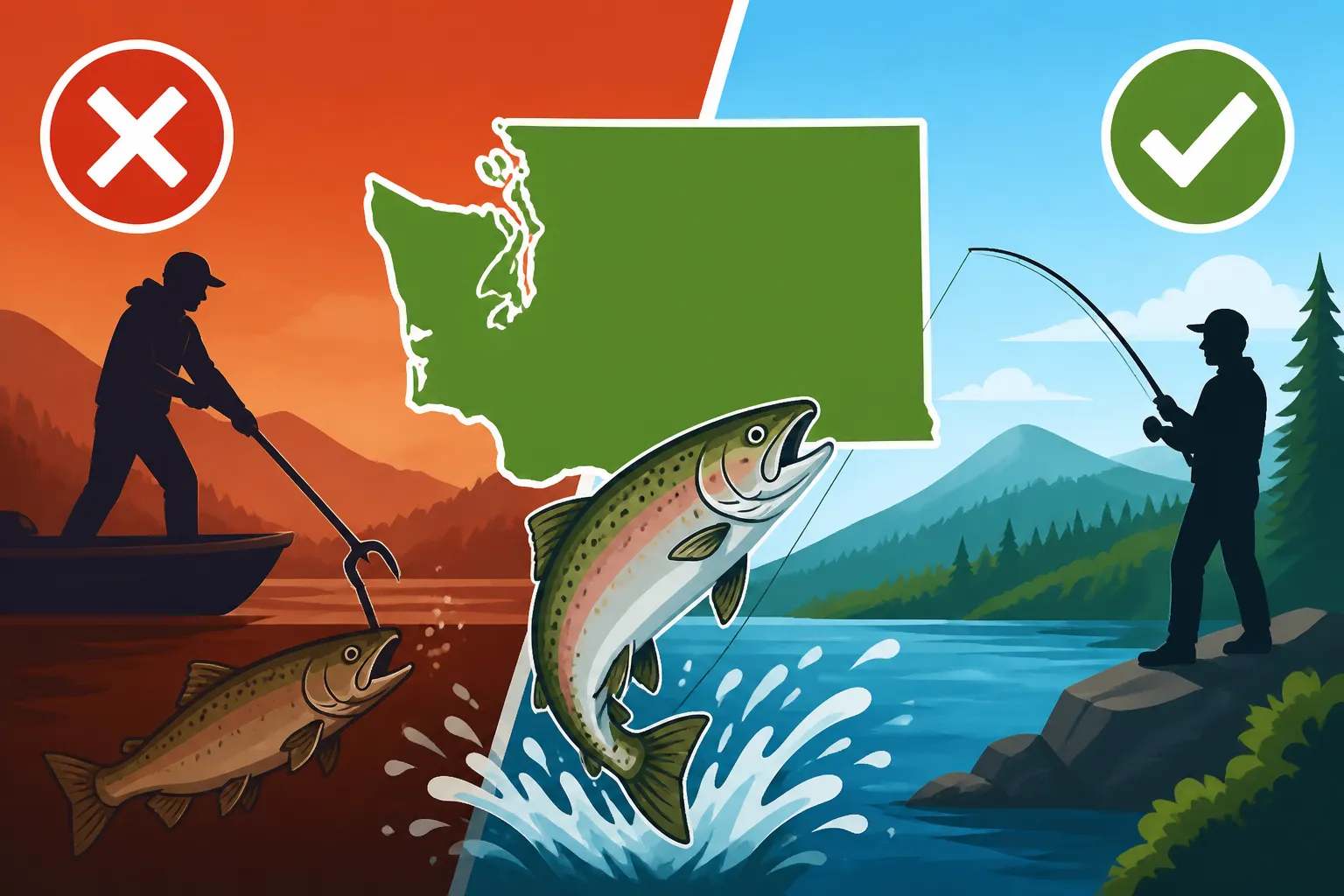
Is Snagging Legal Anywhere in Washington?
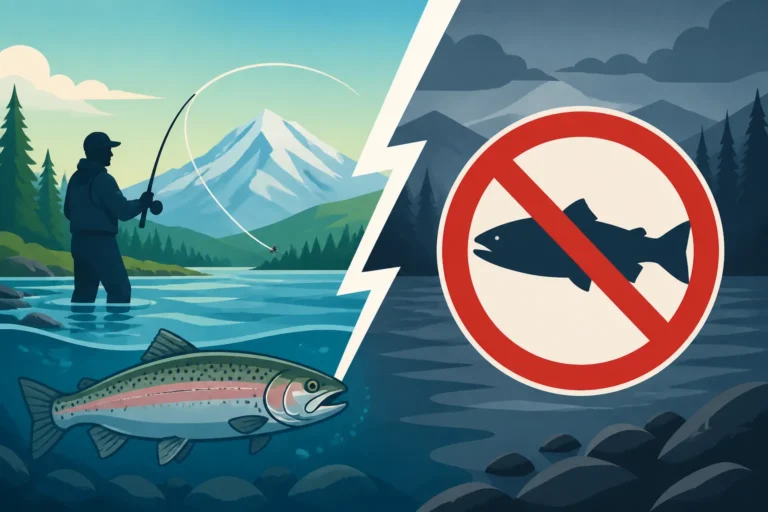
We've all been there: standing on the riverbank, seeing a pile of beautiful salmon holding in a deep hole, and thinking, "If only I could just reach one!" The temptation can be real, especially when fish aren't biting conventionally. But that thought often leads to questions about what's fair, what's ethical, and most importantly, what's legal when it comes to landing a fish in Washington state. This guide is going to cut through the confusion and explicitly explain the rules around snagging, ensuring you stay on the right side of the law while enjoying our incredible fisheries.
What Exactly is Snagging in Fishing?
The term "snagging" might conjure up images of grappling hooks or actively trying to foul-hook a fish. While those are certainly forms of it, Washington's regulations define it much more broadly. It's crucial to understand this definition, as accidentally crossing the line can lead to serious consequences.
Defining "Snagging" According to Washington Rules
When we talk about snagging in Washington, the Department of Fish and Wildlife (WDFW) isn't just concerned with whether a fish is hooked in the mouth. Their definition zeroes in on the intent and the method. Simply put, snagging is the act of catching a fish with a hook or other device attached to a line where the fish is not hooked in the mouth or jaw, and the intent was to hook the fish anywhere else on its body.
This means that if you're deliberately trying to swing a lead-head jig over a school of salmon and then jerk your rod violently to hook one anywhere on its body – be it the tail, fin, or side – that's snagging. It’s a purposeful act to foul-hook a fish that isn't actively biting your bait or lure. It's about denying the fish the chance to choose to strike your offering. Imagine seeing a pod of salmon schooled up in a river, not interested in eating, but you decide to cast a bare treble hook into the middle and try to "grapple" one out. That's a classic example. It's a method that bypasses the natural feeding instincts of the fish, turning fishing into something akin to hunting with unfair tactics.
Why Snagging is Generally Illegal and Unethical
The reasons snagging is almost universally illegal and considered highly unethical among responsible anglers are multifaceted, but they boil down to fair chase and conservation. Fishing, at its heart, is about enticing a fish to bite. It's a challenge, a connection to nature, and an act that requires skill and patience. Snagging strips away these elements.
Firstly, it's not a fair chase. A fish that's snagged hasn't made the choice to take your bait or lure; it's been forcibly captured. This goes against the very spirit of sport fishing. Secondly, snagging causes unnecessary injury and stress to fish. When a fish is hooked outside the mouth, it often suffers severe damage to its body, gills, or vital organs, significantly reducing its chances of survival if released, even if it's an undersized fish or a protected species. This is particularly problematic for sensitive populations like wild steelhead or native trout. Thirdly, it undermines sound fisheries management. Regulations are put in place to manage harvest rates and ensure sustainable populations. Snagging can lead to excessive and indiscriminate take, disrupting these carefully balanced conservation efforts. It also makes it difficult to track actual catch rates and assess the health of fish populations because fish caught by snagging are not indicative of a healthy, active fishery.
The Blanket Ban on Snagging in Washington State
It's important to be crystal clear on this: Washington state has a very strong stance against snagging. You won't find any loopholes or hidden seasons where it's permitted. The rules are designed to protect our fisheries and promote ethical angling across the board.
General Rule: It's Illegal Almost Everywhere
To put it unequivocally: snagging is illegal in Washington state waters, both freshwater and saltwater, with extremely rare and specific exceptions that are usually linked to unique, heavily regulated tribal fisheries and not applicable to general sport fishing. For the vast majority of anglers, this means you cannot deliberately attempt to foul-hook a fish, regardless of species or location.
The Washington Department of Fish and Wildlife (WDFW) outlines this clearly in its annual sport fishing regulations pamphlet. It's part of the core principles of angling here. If you're out on the mighty Columbia River chasing salmon, or casting into a small Puget Sound stream for trout, the rule holds true. There's no specific "snagging season" or area where it becomes permissible for recreational anglers. This statewide prohibition is in place to maintain the integrity of our diverse fisheries and ensure that fish populations are managed sustainably. Always check the current Washington Fishing Regulations Every Angler Should Know before heading out, as rules can occasionally change or have very specific nuances depending on the area.
The Rationale Behind a Statewide Ban
The comprehensive ban on snagging isn't arbitrary; it's a critical component of responsible resource management and public trust. Washington boasts some of the most spectacular and sensitive fisheries in the Pacific Northwest, home to iconic species like salmon and steelhead that are vital to both ecosystem health and the state's culture.
One of the primary reasons for the ban is conservation. Snagging often results in high mortality rates for released fish due to injury, even if the fish is not kept. This is especially detrimental to threatened or endangered stocks, where every individual fish's survival is crucial. For example, if you snag a wild steelhead that must be released under Catch-and-Release Rules During Wild Steelhead Closures, the likelihood of that fish surviving to spawn is significantly reduced if it's badly injured by a hook outside its mouth. The WDFW works tirelessly to manage these populations, and allowing practices that jeopardize their survival would counteract those efforts.
Furthermore, snagging skews data essential for fisheries management. When fish are caught by fair means, it provides information on their feeding behavior, distribution, and vulnerability, helping biologists understand population dynamics. Snagging bypasses these natural behaviors, making it harder to accurately assess stock health and set appropriate harvest limits. It also creates an unfair playing field among anglers, potentially leading to conflicts and tarnishing the reputation of the sport. Ethical angling practices foster respect for the resource and for fellow anglers, ensuring that future generations can also enjoy the privilege of fishing in Washington's beautiful waters.
Specific Scenarios and Misconceptions Around Foul-Hooking
It's easy to confuse deliberate snagging with accidental foul-hooking, especially when you're new to fishing or just having a tough day on the water. However, the distinction is critical, and understanding how to react to an accidental foul-hook is just as important as knowing not to deliberately snag.
Accidental Foul-Hooking: What to Do
Let's face it, sometimes it just happens. You make a perfect cast, your lure drifts through a run, and suddenly you feel a thud, only to reel in a salmon hooked cleanly in its dorsal fin or tail. This is what we call an accidental foul-hook. The key differentiator here is intent. You weren't trying to snag the fish; it just happened to get hooked awkwardly as it moved or swiped at your gear without actually biting.
If you accidentally foul-hook a fish in Washington, the rule is crystal clear and non-negotiable: you must immediately release the fish. Do not attempt to land it, fight it excessively, or bring it to shore. Treat it with the utmost care to minimize harm, remove the hook quickly if possible, and let it go back into the water without delay. Retaining an accidentally foul-hooked fish is considered the same as deliberately snagging, because at that point, you've chosen to keep a fish caught illegally. Wildlife agents often watch for anglers who spend an inordinate amount of time fighting what appears to be a foul-hooked fish, only to eventually land and retain it. This can lead to a citation. Your best bet is to release it immediately and try again.
"Flossing" for Salmon and Whether It's Legal in Washington
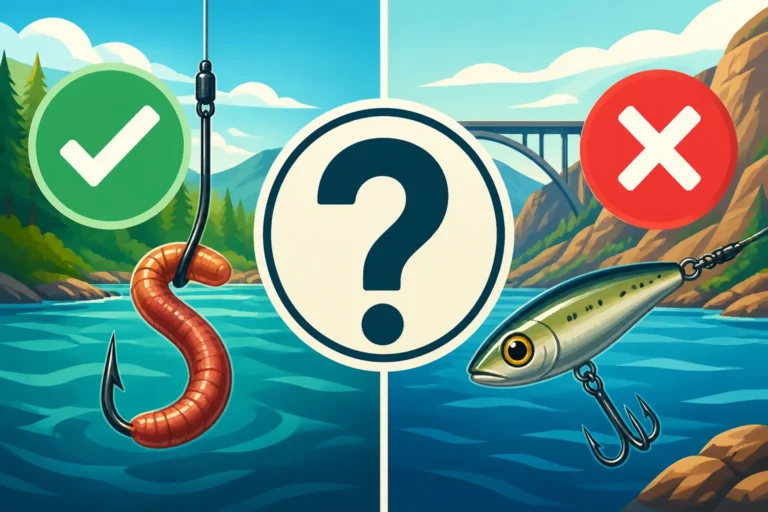
"Flossing" is a technique that often skirts the very edge of, or outright crosses into, the definition of snagging. It typically involves using a long leader and a heavy sinker to bounce bait or a bare hook along the bottom, usually in rivers where salmon are concentrated but not actively biting. The idea is for the main line and leader to drift through a salmon's mouth, and as the angler lifts their rod, the hook is intended to "floss" into the fish's mouth or jaw.
While proponents might argue that the fish is ultimately hooked in the mouth, the method used often constitutes an attempt to foul-hook or capture a fish by means other than legitimate angling. The WDFW generally views "flossing" with extreme scrutiny, and in many specific areas or under certain conditions, it is explicitly prohibited or heavily regulated to prevent snagging. If the intent behind placing the line is to sweep it through the fish's body to catch it, rather than to present a bait or lure for the fish to take, then it falls under the definition of snagging. Always remember that for a fish to be legally retained, it must be hooked in the mouth or jaw through a legitimate bite. You can find more specific details on this contentious method in our article, "Flossing for Salmon and Whether It's Legal in Washington".
Legal Hooking: Where a Salmon Must Be Hooked to Legally Keep It
To legally retain a salmon, steelhead, or any other game fish in Washington state, the fish must be hooked in the mouth or jaw. This is the golden rule, the foundational principle of ethical and legal angling here. If the hook is anywhere else – the gill plate, the belly, the tail, a fin – it is considered foul-hooked, and as discussed, must be immediately released.
This regulation ensures that anglers are engaging fish through their natural feeding or aggressive strike behaviors, rather than through accidental or deliberate external snagging. It supports the principle of fair chase and minimizes harm to fish that might otherwise be injured and released. When you're out fishing, always pay close attention to where your hook sets. If you land a fish and notice the hook isn't in its mouth or jaw, do the right thing and let it go. This simple act respects the fish and keeps you out of trouble with game wardens. For further clarification on this vital rule, refer to our detailed guide on "Where a Salmon Must Be Hooked to Legally Keep It".
Enforcement and Consequences of Snagging Violations
Understanding the rules is one thing; understanding the consequences of breaking them is another. Washington's Fish and Wildlife Police are highly trained and vigilant, and they take snagging violations very seriously. Ignorance of the law is never an excuse.
How Wardens Detect Snagging
You might wonder how a WDFW enforcement officer, often called a game warden, can tell if someone is deliberately snagging versus just having a string of bad luck with foul-hooked fish. It's not always a simple case of seeing a hook in the wrong place; it's a combination of observation, experience, and understanding angler behavior.
Wardens are trained to look for specific indicators. This includes watching an angler's casting motion and retrieve pattern. If someone is repeatedly casting over a school of fish and then performing a rapid, jerking motion with their rod, especially without bait or a traditional lure designed for mouth-hooking, that's a huge red flag. They also observe how frequently an angler is foul-hooking fish. An occasional accidental foul-hook might happen to anyone, but if an angler is consistently bringing in fish hooked in the side, back, or tail, it suggests a deliberate pattern. The type of gear being used is also a factor. Oversized treble hooks or weighted snagging hooks are obvious giveaways. Finally, wardens often observe from concealed positions, sometimes for extended periods, before making contact. They are looking for clear evidence of intent, which can be inferred from repeated actions and gear choices. They can also use binoculars or even drones in some instances to get a better view.
Fines and Penalties for Common Fishing Violations
The consequences for snagging and other serious fishing violations in Washington are not trivial. These aren't just slaps on the wrist; they are designed to be deterrents that protect our precious natural resources. A typical first-offense snagging citation can be quite costly.
The specific penalties can vary depending on the severity of the offense, the species involved (especially if it's a threatened or endangered species), and whether it's a repeat offense. However, expect significant monetary fines, often ranging from hundreds to well over a thousand dollars. In addition to fines, you might face the forfeiture of your fishing gear, including expensive rods, reels, and tackle. More severely, you could have your Washington fishing license suspended or revoked for a period, or even permanently. Imagine being banned from fishing for years because of one poor decision! This can also impact your ability to get licenses in other states through interstate compacts. In extreme cases, particularly involving commercial poaching or highly protected species, criminal charges and jail time are also possibilities. It's far better to err on the side of caution and adhere strictly to ethical fishing practices. For a broader understanding of legal repercussions, check out our guide on "Fines and Penalties for Common Fishing Violations".
Understanding Legal Hooking and Foul-Hooking
To avoid any trouble, it's essential to internalize the difference between legal and illegal ways of hooking a fish. It's not just about where the hook lands, but the actions leading up to it.
| Scenario | Angler's Intent | Hook Placement | Legality in Washington | Required Action |
|---|---|---|---|---|
| Legal Catch | Presenting bait/lure for fish to bite | Mouth or jaw | Legal | Can be retained (if within limits) |
| Accidental Foul-Hook | Presenting bait/lure, but hook lands elsewhere | Outside mouth/jaw (e.g., fin, side, tail) | Illegal to retain | Immediately release with minimal harm |
| Deliberate Snagging | Actively trying to hook fish anywhere but the mouth | Outside mouth/jaw (e.g., fin, side, tail) | Illegal | Immediately release (but citation likely) |
| "Flossing" | Sweeping line to get hook in mouth (often passive) | Typically outside mouth initially, sometimes jaw | Highly Suspect/Illegal | Release (unless very clearly a legitimate bite) |
Staying Informed and Fishing Ethically
The best way to avoid any issues with snagging or other violations is to always stay informed and commit to ethical angling. The WDFW provides a wealth of information in its annual regulations pamphlet, which you should always carry (or have readily accessible via the MyWDFW app) when fishing. Remember that "Reading the Washington Sport Fishing Regulations Pamphlet " is not just a suggestion, it's a necessity for any responsible angler. Pay close attention to rules for specific species and areas, especially around bag limits as outlined in "Understanding Washington's Daily Bag Limits by Species".
When in doubt, always assume a technique is not allowed if it doesn't clearly involve the fish actively taking your bait or lure. Our fisheries are a precious resource, and by adhering to the rules, we all play a part in preserving them for generations to come.
Disclaimer
Please note that this guide provides general information based on current Washington fishing regulations. Fishing rules and regulations can change frequently, often with in-season emergency rule changes. It is the responsibility of every angler to consult the most recent Washington Department of Fish and Wildlife (WDFW) regulations before engaging in any fishing activity. This content is for informational purposes only and should not be considered legal advice.