Catch-and-Release Rules During Wild Steelhead Closures
Few things can be as frustrating for a dedicated angler as hearing that your favorite steelhead river has been placed under a wild steelhead retention closure. You've planned your trip, tied your flies, and now you're left wondering, "Can I even fish? And if I do, what exactly am I allowed to do if I hook into one of these magnificent fish?" This guide is here to unravel the often-confusing world of catch-and-release rules during wild steelhead closures in Washington, helping you understand the regulations and practice ethical angling.
Understanding Wild Steelhead Closures in Washington
Washington's wild steelhead are a truly iconic species, drawing anglers from all over the world to our pristine rivers. However, their populations have faced significant challenges, leading to some of the most stringent fishing regulations in the state. When you hear about a wild steelhead closure, it’s not just a suggestion; it’s a critical conservation measure put in place to protect and rebuild these vulnerable runs.
Why Closures Happen: Conservation and Stock Health
The Washington Department of Fish and Wildlife (WDFW) doesn't implement wild steelhead closures on a whim. These decisions are the result of extensive scientific monitoring, stock assessments, and sometimes, emergency measures taken when return numbers are critically low. The primary goal is always conservation: to ensure that enough wild steelhead survive to spawn, thereby safeguarding future generations. This might mean an outright closure of a river to all steelhead fishing, or more commonly, a "catch-and-release only" rule for wild fish, sometimes alongside a limited retention opportunity for hatchery-origin steelhead. It's a delicate balance, trying to provide fishing opportunities while prioritizing the long-term health of the run.
These closures are often a last resort when biologists see that the number of returning wild fish is far below the escapement goals necessary to sustain the population. Factors like ocean conditions, habitat degradation, and past harvest rates all play a role in the health of these stocks. When a closure is enacted, it signals a period where the wild fish are too precious to risk even a single accidental mortality from retention. It's a tough pill to swallow for many anglers, but it’s rooted in the hope of better fishing seasons in the future.
How WDFW Communicates Closures and Rule Changes
Staying informed is paramount in Washington fishing, especially with dynamic species like steelhead. WDFW utilizes several channels to communicate these often sudden and impactful rule changes. The official WDFW website is your go-to, with dedicated pages for emergency rule changes and weekly fishing reports. Social media channels and email newsletters also provide timely updates. It's truly a full-time job for serious anglers to keep up, which can be a real headache. Missing a critical update can mean the difference between a legal fishing trip and an accidental violation, which nobody wants.
It’s not uncommon for rules to shift mid-season, sometimes even weekly, based on real-time data from test fisheries and spawning escapement counts. This responsiveness, while frustrating at times, is crucial for effective management of volatile fish populations. Always check the official WDFW regulations before you head out, and ideally, check again the night before or the morning of your trip. Ignoring these updates can lead to significant penalties, making your planned day on the water far more expensive than anticipated. For a deeper dive into how these rules can change, check out our guide on Emergency Rule Changes: Why Washington's Rules Shift Mid-Season.
Distinguishing Wild vs. Hatchery Steelhead During Closures
This is arguably one of the most critical skills any steelhead angler in Washington must master. Often, a river will be open for catch-and-release of wild steelhead and retention of hatchery steelhead. This means you need to be able to tell the difference at a glance, especially when the fish is still in the water. The key identifier for a hatchery steelhead in Washington is a missing adipose fin, also known as a "clipped fin." This small, fleshy fin located between the dorsal fin and the tail is surgically removed from hatchery-reared fish before release.
Wild steelhead, on the other hand, will always have their adipose fin intact. It’s a clear and unmistakable mark. However, sometimes a fin clip might be incomplete, or a fish might have a naturally deformed adipose fin, causing confusion. In such cases, if you're ever in doubt, treat the fish as wild and release it immediately. It's better to be safe than sorry and avoid potential fines. Learning How to Tell Wild Steelhead From Hatchery Steelhead is fundamental to responsible angling in Washington.
The Nuances of Catch-and-Release for Steelhead
Catch-and-release fishing isn't just about throwing the fish back; it's an art and a science focused on maximizing the fish's survival rate after it swims away. For a powerful, migratory species like steelhead, which often travel hundreds of miles to spawn, minimizing stress and injury is paramount. It's about respecting the resource and giving that fish the best possible chance to continue its journey.
The Goal: Maximizing Survival Rates
When you're fishing under a catch-and-release mandate, your personal success isn't measured by how many fish you bring to the bank, but by how successfully each released fish swims away to spawn. This means minimizing the time a fish spends out of water, reducing physical contact, and ensuring proper handling. Even a seemingly healthy release can have delayed mortality effects if the fish is too stressed or injured during the encounter. Studies have shown that factors like water temperature, fight time, and handling practices significantly impact post-release survival.
Every angler has a responsibility to practice proper catch-and-release techniques, especially when targeting sensitive species like wild steelhead. It's about being an ethical steward of the resource. Consider that many of these fish have traveled for months, battled predators, and overcome numerous obstacles just to reach the spawning grounds. Our brief interaction should not be the one that ends their journey prematurely.
Handling Techniques: Minimizing Stress and Injury
The moment you hook a steelhead, the clock starts ticking. The goal is to land it quickly and efficiently, without over-stressing the fish. Avoid long, drawn-out fights on light tackle if possible, as lactic acid buildup can be fatal. Once the fish is close, try to keep it in the water as much as possible. If you need to bring it closer for hook removal, use a knotless, rubberized landing net. These nets protect the fish's slime coat, fins, and scales far better than traditional nylon nets. You can find excellent options on online retailers like Amazon, designed specifically for gentle handling.
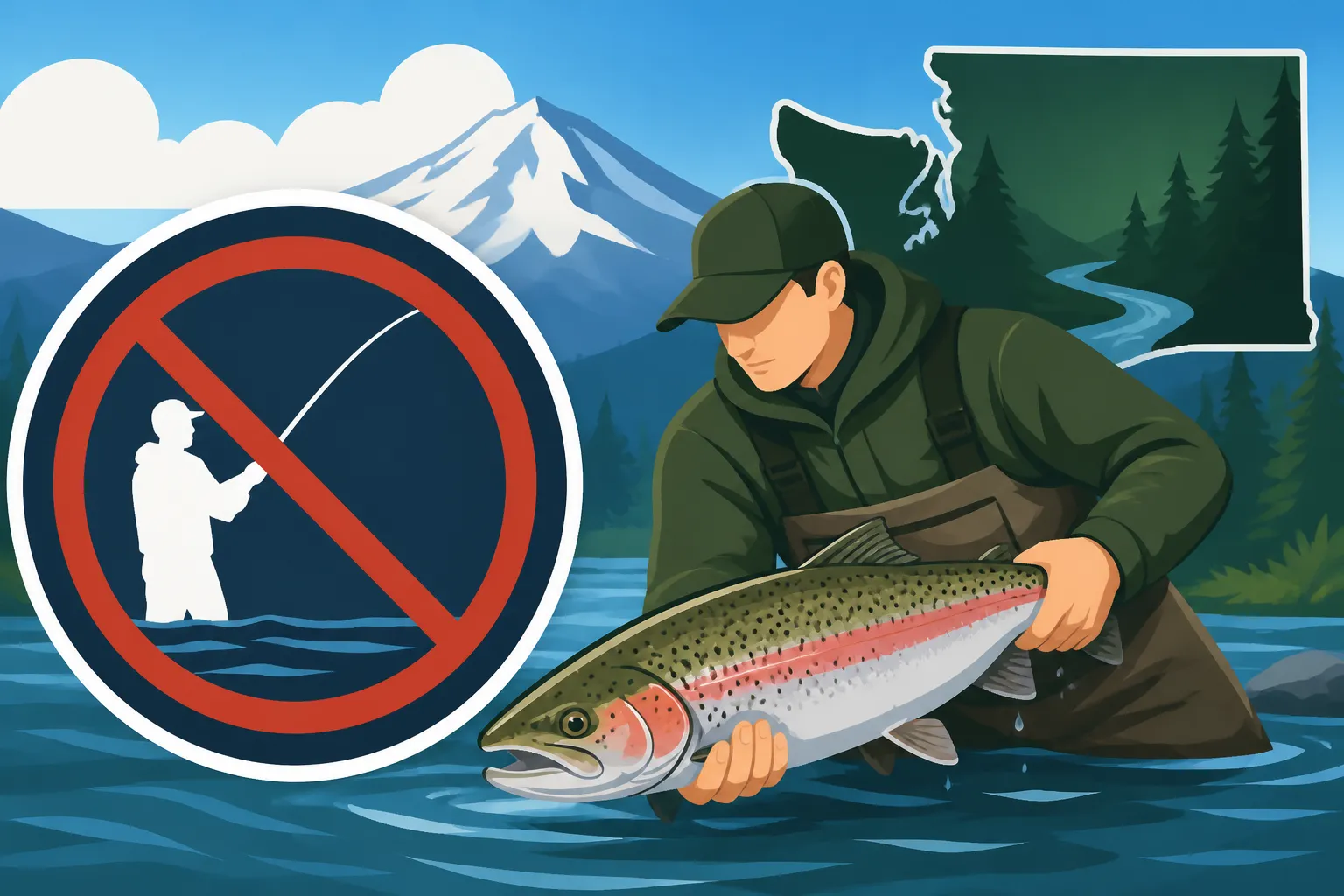
When handling the fish, wet your hands thoroughly before touching it. Never squeeze the fish, especially around its belly or gills. Support its weight horizontally, ideally with one hand under the tail and the other gently cradling its belly. If a photo is absolutely necessary, do it quickly with the fish partially submerged, and release it immediately. Avoid dragging the fish onto rocks or sand, which can strip its protective slime layer, making it vulnerable to disease. The core principle is minimal contact, maximum water time. For more specific guidelines, review Wild Steelhead Release Rules on Washington's Olympic Peninsula Rivers.
Hook Removal and Barbless Hook Requirements
One of the most critical aspects of effective catch-and-release is swift and clean hook removal. This is precisely why WDFW often mandates Barbless Hook Requirements on Washington Rivers during wild steelhead seasons or within specific river sections. Barbless hooks greatly reduce tissue damage and make removal much easier and faster, often allowing the fish to remain in the water. Pinching down the barbs on your hooks is a simple, effective step to ensure a cleaner release.
Carry a good pair of long-nosed pliers or a dedicated de-hooking tool. These tools allow you to reach deeply embedded hooks without having to manhandle the fish. If a hook is deeply set in the gills or throat and cannot be easily removed without causing further trauma, it's often best to cut the line as close to the hook as possible. The hook will eventually rust out, and the fish has a higher chance of survival than if you attempt a damaging extraction. Again, quality de-hooking tools are readily available on platforms like Amazon, and they are an essential part of any ethical angler's kit.
Essential Gear and Techniques for Responsible Release
Being prepared with the right gear and knowledge before you even step foot on the riverbank is a cornerstone of responsible catch-and-release fishing. It's not just about what you catch, but how you treat what you catch, especially when conservation is the name of the game.
Landing Nets: Soft Mesh and Rubberized Options
A good landing net is an indispensable tool for any angler practicing catch-and-release, particularly for powerful fish like steelhead. Forget those old, knotted nylon nets that used to strip fish of their protective slime coat and damage fins. Modern knotless, rubberized, or silicone-coated mesh nets are the gold standard. These nets are designed to be incredibly gentle on a fish's delicate tissues, minimizing scales rubbed off and reducing stress. They also prevent hooks from getting tangled, making hook removal much quicker.
When you're selecting a net, consider the size of the fish you're targeting. For Washington steelhead, you'll want a net with a hoop large enough to comfortably cradle a 10-20 pound fish. A long handle can also be beneficial, allowing you to net fish without having to bring them right to the bank, which can be difficult in certain river conditions. Investing in a quality rubberized net is a direct investment in the survival of the fish you encounter, ensuring they swim away strong.
Tools of the Trade: Pliers and De-hookers
Beyond a good net, a few other tools are absolutely essential for quick and clean releases. First and foremost, a reliable pair of long-nosed pliers or hemostats. These allow you to get a firm grip on the hook for removal, especially when dealing with barbless hooks that can sometimes be difficult to back out if deeply embedded. Look for stainless steel options that resist corrosion, as they'll be exposed to plenty of water.
Dedicated de-hooking tools are another excellent option, particularly for fish that might swallow a hook. These tools are designed to push the hook out without having to put your hands near the fish's mouth or gills, further minimizing stress and injury. Again, a quick search on Amazon will show you a variety of options, from simple models to more specialized designs. Remember, the faster and cleaner the hook removal, the better the fish's chances of survival.
Fishing Smart: Reducing Fight Time and Exhaustion
Responsible catch-and-release also involves how you fish. When targeting steelhead in a catch-and-release only fishery, it's prudent to use appropriate tackle that allows you to land the fish relatively quickly. While ultra-light tackle can be fun, prolonged fights exhaust the fish, increasing the likelihood of post-release mortality due to lactic acid buildup and physical stress. Opt for a rod and line setup that provides enough backbone to control and land a strong steelhead in a reasonable amount of time.
This isn't to say you need to horse fish in, but rather to find a balance where you can subdue the fish efficiently without over-stressing it. Consider factors like water temperature; fish fought in warmer water are often more susceptible to exhaustion. Also, try to keep the fish in the current as much as possible during the fight. This helps push oxygen through its gills, keeping it more vital. It’s all about making smart choices before, during, and after the hook-up to give that magnificent wild steelhead the best shot at a full recovery and successful spawning.
Navigating the Rules: What to Do When a River is Closed for Retention
The complexity of Washington's fishing regulations can sometimes feel like navigating a maze, especially with the ever-present possibility of Emergency Rule Changes: Why Washington's Rules Shift Mid-Season. When a river is under a wild steelhead retention closure, it demands careful attention to detail and a commitment to understanding the nuances.
Understanding "Catch-and-Release Only" Designations
A "catch-and-release only" designation for wild steelhead means exactly that: you are permitted to fish for them, but if you hook one, you must release it immediately and unharmed. This is a privilege, not a right, and it comes with significant responsibility. The intent is to allow angling opportunity while ensuring that every wild fish has the chance to complete its life cycle. It's a testament to the belief that recreational fishing can coexist with robust conservation efforts, but only if all anglers adhere strictly to the rules.
These rules often apply to specific species (e.g., wild steelhead), specific areas (e.g., a certain river section), or specific times of year. Sometimes, it can even apply to a specific size of fish, known as a "slot limit," though this is less common for steelhead. Always double-check the most current WDFW regulations for the exact river and species you are targeting. Ignorance of the rules is never an excuse for non-compliance.
Specific River Examples and Their Unique Regulations
Washington's rivers, particularly those on the Olympic Peninsula and in Puget Sound, are frequently subject to wild steelhead retention closures or catch-and-release only rules. For example, rivers like the Sol Duc, Hoh, and Quillayute often have complex regulations, with varying rules for wild and hatchery steelhead, and specific gear restrictions. The Skagit River, a historical stronghold for wild steelhead, has seen prolonged closures to protect its struggling populations, prompting questions like Is Catch-and-Release Only in Effect on the Skagit?. Similarly, the reasons Why Did WDFW Close Steelhead Fishing on the Sol Duc? are typically rooted in conservation concerns over declining wild runs.
These rivers exemplify the dynamic nature of steelhead management. What might be open for retention of hatchery fish on one river could be entirely closed to all steelhead fishing on another. Moreover, even on the same river, different sections might have different rules. For instance, a lower river section might allow a mix of wild catch-and-release and hatchery retention, while an upper section, closer to spawning grounds, might be entirely closed to protect staging wild fish. This is why consulting the WDFW pamphlet and emergency rules before every trip is not just recommended, but essential. Our comprehensive Washington Fishing Regulations Every Angler Should Know can help you navigate these complex guidelines.
Penalties for Violating Release Rules
The consequences of failing to adhere to catch-and-release rules during a wild steelhead closure can be severe. Fishing without a license or failing to release a wild steelhead during a mandatory release period are not minor infractions; they are serious violations of state law. Penalties can range from hefty fines, often hundreds or even thousands of dollars, to the forfeiture of fishing gear, and in some cases, even suspension of fishing privileges. Wildlife enforcement officers are vigilant, especially in areas with sensitive runs, and they take these violations very seriously.
Beyond the legal ramifications, there's also the ethical cost. Each wild steelhead illegally retained or mishandled during a critical spawning period represents a direct loss to a vulnerable population. As stewards of this incredible natural resource, it's our collective responsibility to ensure these fish are protected. Understanding Fines and Penalties for Common Fishing Violations can help underscore the importance of strict adherence to all regulations.
Common Misconceptions and Legalities
Despite the clear intentions behind wild steelhead closures and catch-and-release mandates, there are still a few persistent misconceptions that can lead to unintentional violations or less-than-ideal practices. Addressing these directly is crucial for fostering a culture of compliance and ethical angling.
The Myth of "No Harm Done": Hidden Injuries
One common misconception is that if a fish swims away, "no harm was done." Unfortunately, this isn't always true. While visible injuries are certainly detrimental, fish can suffer internal trauma or physiological stress that isn't immediately apparent. A prolonged fight, rough handling, extensive time out of water, or deep hooking can all contribute to delayed mortality. A fish might swim away strongly, only to succumb to stress, injury, or secondary infection hours or even days later.
This is why the techniques discussed earlier – quick landing, minimal handling, keeping the fish in water, and prompt, gentle hook removal – are so vital. The goal isn't just for the fish to swim away but for it to survive and thrive. Every effort we make to minimize stress and physical damage increases that fish's chances of successfully spawning and contributing to future runs.
Accidental Retention and Immediate Release Protocol
What happens if, despite your best efforts, you accidentally injure a wild steelhead to the point where you believe it won't survive, or you mistakenly put it on your stringer thinking it was a hatchery fish? The law is generally clear: if you catch a wild steelhead in a retention-closed area, it must be immediately released. There is no provision for "well, it looked like it was going to die anyway, so I kept it." This is a violation.
The best and only legal course of action if you realize you've accidentally retained a wild steelhead is to immediately release it, even if you think it's injured. Do not try to justify keeping it. If the fish is severely injured and you believe it has no chance of survival, you are still legally obligated to release it. Report the incident to WDFW if you feel it's necessary, but do not keep the fish. Our guide on What to Do If You Catch a Wild Steelhead by Accident delves into this further. This is also why having a The Washington Catch Record Card and What It Requires is important, as you must accurately record what you keep, and you cannot record a wild steelhead in a closed area.
The Role of Enforcement and Public Responsibility
Wildlife enforcement officers are present on our rivers not to ruin your day, but to ensure the sustainability of our fisheries. They are highly trained professionals dedicated to protecting Washington's natural resources. Their presence helps ensure that regulations, particularly those designed to protect vulnerable wild steelhead, are being followed. Anglers should view them as partners in conservation, not adversaries.
Furthermore, every angler has a role in public responsibility. If you witness someone openly violating regulations, especially those related to wild steelhead conservation, you have a responsibility to report it. WDFW relies on public tips to help enforce the rules and protect our fish. This isn't "snitching"; it's active stewardship of a shared resource that belongs to all of us and future generations. It’s important to remember that How Washington's WDFW Sets In-Season Emergency Rules are in place to safeguard the very fish we love to pursue.
Protecting the Future: Why These Rules Matter
Ultimately, all these regulations, the closures, the catch-and-release mandates, and the careful handling techniques, boil down to one critical goal: protecting the future of Washington's wild steelhead. These fish are more than just a challenging quarry; they are a vital part of our natural heritage and a key indicator of river health.
Ecosystem Health and Biodiversity
Wild steelhead are an anadromous species, meaning they spend part of their lives in freshwater and part in the ocean. This migratory pattern makes them an integral link between marine and freshwater ecosystems. Their successful return to spawn brings vital marine-derived nutrients into nutrient-poor freshwater systems, benefiting a host of other species, from insects and amphibians to birds and mammals. When steelhead populations decline, it has a ripple effect throughout the entire ecosystem, impacting biodiversity and overall environmental health.
By adhering to catch-and-release rules and supporting conservation efforts, anglers directly contribute to the health and resilience of these interconnected systems. It's about recognizing that our actions on the river have far-reaching consequences, and choosing to act in a way that promotes ecological balance.
The Angler's Role in Conservation
Anglers are often the first to notice changes in fish populations or river health. We spend countless hours on the water, observing conditions, and interacting with the environment. This unique position makes us powerful advocates for conservation. Beyond simply following the rules, anglers can actively participate in conservation through various means. Supporting organizations dedicated to steelhead habitat restoration, volunteering for river cleanups, or even advocating for responsible land use practices in watersheds are all ways to contribute.
Our passion for steelhead should translate into a profound commitment to their survival. The future of Washington's wild steelhead populations depends not just on biological factors, but on the actions and attitudes of every single angler. Embracing practices like proper catch-and-release is a fundamental part of that commitment, helping to ensure that these magnificent fish continue to grace our rivers for generations to come. Even considering the right Rain Gear You Need for Winter Steelheading shows dedication to being out there, year after year, and witnessing the cycle.
Advocacy and Staying Informed
Staying informed about the science, the regulations, and the challenges facing wild steelhead is an ongoing responsibility. Engage with WDFW, attend public meetings, read reports, and follow reputable conservation groups. Your voice matters. Advocating for habitat protection, science-based management, and sustainable fishing practices is crucial. When anglers unite behind conservation goals, we can effect real positive change.
Remember, the right to fish is not absolute; it is a privilege that comes with responsibilities. By understanding and adhering to wild steelhead catch-and-release rules during closures, and by actively participating in conservation, we ensure that the thrilling pursuit of these incredible fish remains a part of Washington's angling tradition for years to come.
Catch-and-Release for Wild Steelhead: Do's and Don'ts
Here's a quick summary of the key do's and don'ts when fishing under wild steelhead catch-and-release rules:
| Aspect | Do | Don't |
|---|---|---|
| Preparation | Check WDFW regulations diligently before every trip. | Assume rules haven't changed since your last trip. |
| Gear | Use barbless hooks and carry long-nosed pliers or a de-hooker. | Fish with barbed hooks or without proper hook removal tools. |
| Netting | Use a knotless, rubberized landing net to minimize slime coat damage. | Use coarse, knotted nylon nets or drag fish onto rocks/sand. |
| Handling | Keep the fish in the water as much as possible; wet hands before touching. | Lift fish by the gills, squeeze its belly, or keep it out of water for extended photos. |
| Hook Removal | Remove hooks quickly and gently. Cut the line if the hook is deeply embedded. | Rip out deeply embedded hooks causing excessive trauma. |
| Release | Revive the fish in the current until it swims away under its own power. | Toss a stressed fish back into slack water and walk away. |
| Identification | Learn to distinguish wild (adipose fin present) from hatchery (adipose fin clipped) steelhead. | Assume all steelhead are hatchery fish or guess when in doubt. |
| Compliance | Immediately release all wild steelhead in retention-closed areas. | Retain an injured wild steelhead, even if you think it won't survive. |
| Conservation | Advocate for habitat protection and report violations. | Ignore regulations or the plight of wild fish populations. |
Disclaimer
The information provided in this guide is for general informational purposes only and is not a substitute for the official regulations published by the Washington Department of Fish and Wildlife (WDFW). Fishing regulations can change frequently, often with little notice, due to emergency rule changes. Always consult the latest WDFW Fishing Regulations pamphlet and check for emergency rule changes on the WDFW website before engaging in any fishing activity. It is the angler's responsibility to know and comply with all current fishing laws and regulations.