Where a Salmon Must Be Hooked to Legally Keep It
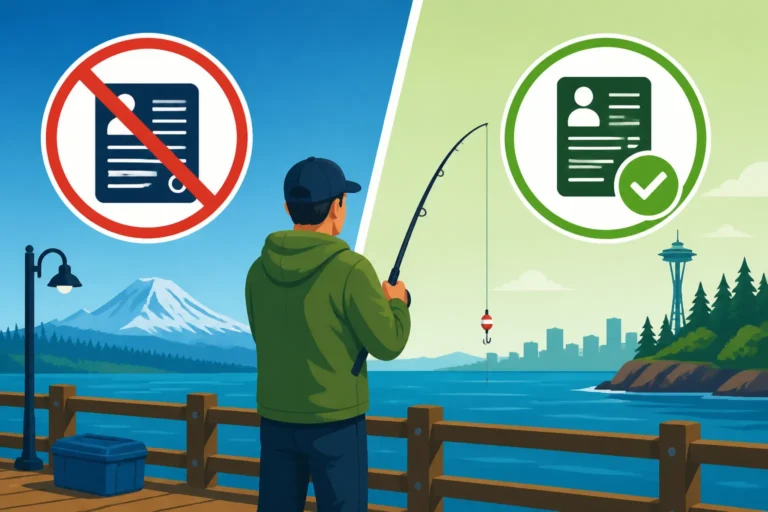
You’ve just felt that satisfying tug, the line screaming, the rod bending in a beautiful arc. Your heart pounds; it’s a salmon, no doubt! But as you bring it closer, a knot forms in your stomach. The hook isn't where it’s supposed to be. Many Washington anglers have faced this exact moment of triumph mixed with dread, wondering if their hard-won fish is actually legal to keep. This guide will meticulously break down Washington's rules on how a salmon must be hooked, why these regulations are in place, and what to do when your fish isn't perfectly mouth-hooked.
Understanding the "Legally Hooked" Rule in Washington
The moment of truth arrives when you finally get a salmon to the boat or the bank. Is it a keeper? Beyond meeting size and bag limits, one of the most critical factors is where that hook is placed. This isn't just a suggestion; it's a strict regulation designed to promote ethical fishing and protect our precious fish stocks. Ignoring it can lead to serious penalties, even if it was a genuine accident.
Defining "Inside the Mouth or Head"
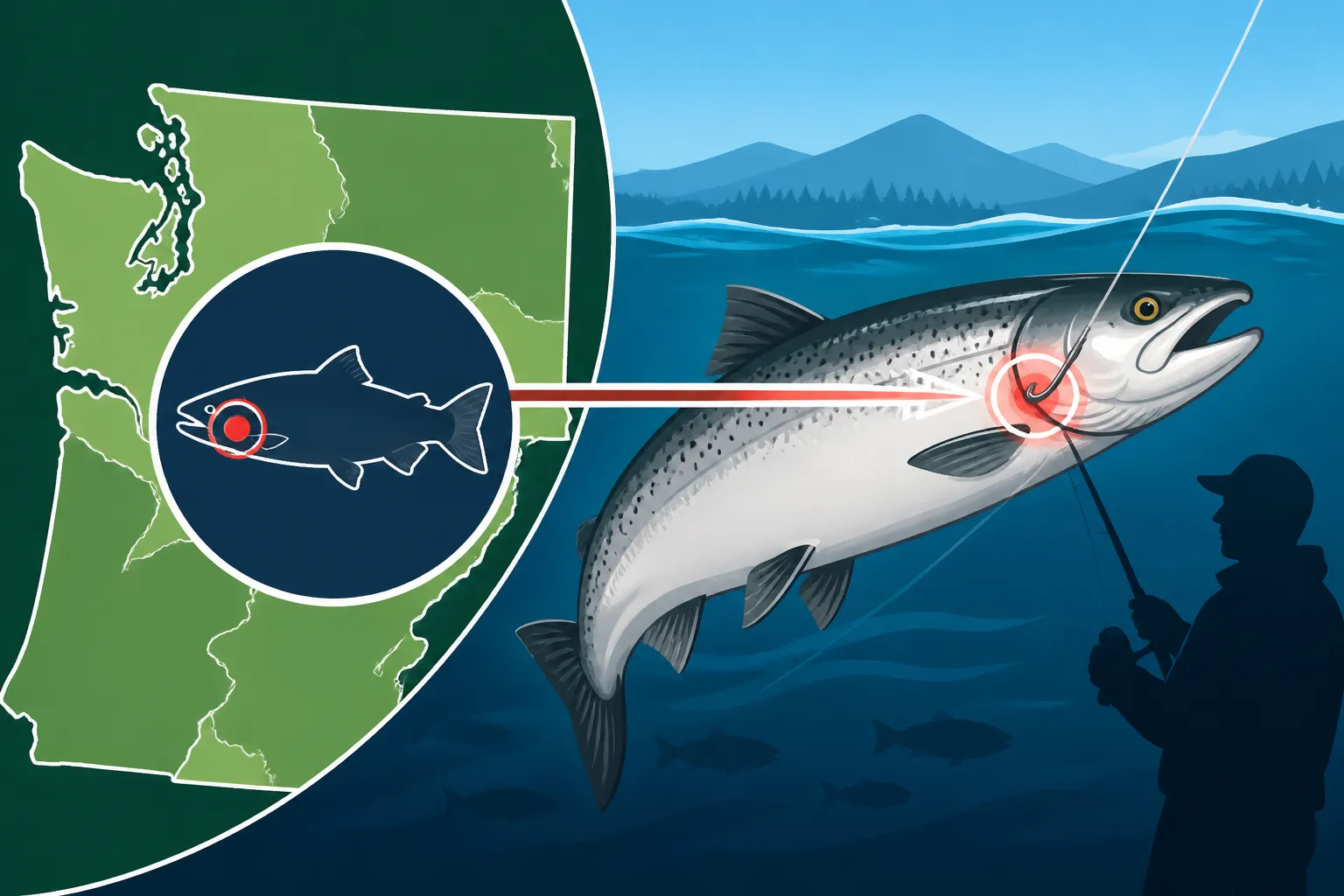
In Washington State, the rule is quite clear: a salmon must be hooked in the mouth or in the head to be legally retained. This means the hook, or any part of the hook that penetrates the fish, needs to be within the jaws, tongue, roof of the mouth, or the immediate area of the head. Think of it as "fair chase" – the fish bit your offering, intending to eat it, and got hooked in the process. This is the cornerstone of what the Washington Department of Fish and Wildlife (WDFW) considers a legal catch.
Anything outside of this specific area is generally considered foul-hooked. This includes hooks lodged in the pectoral fin, dorsal fin, tail, belly, flank, or even the outside of the gill plate. It’s a subtle but crucial distinction that every angler needs to internalize. It's not about how hard the fish fought, or how long you played it; it's purely about that hook placement. The rule aims to prevent practices where fish are intentionally or unintentionally snagged as they migrate, often when they are not actively feeding.
Why This Rule Exists: Fair Chase and Conservation
You might wonder why such a seemingly picky rule is in place. It all boils down to two core principles: fair chase and conservation. The concept of fair chase dictates that anglers should only catch fish that are actively attempting to feed or strike a lure. When a fish is hooked anywhere else, it often implies that the fish was not actively biting, but rather was inadvertently snagged as it moved through the water. This is particularly relevant during salmon spawning migrations when fish are concentrated and often not feeding, making them vulnerable to snagging.
From a conservation standpoint, foul-hooked fish, especially those hooked in vital organs or muscle tissue outside the mouth, are far more likely to suffer severe injury and mortality even if released. If a fish is hooked deep in the throat, but still technically "in the head," it might still survive. However, a fish that is snagged in the back, the eye, or the gut, even if quickly unhooked and put back, often won't make it. The regulations aim to minimize this waste, especially for sensitive populations like wild steelhead or specific salmon runs that are already struggling. By requiring a mouth or head hook, WDFW encourages fishing methods that target actively biting fish, reducing incidental mortality and protecting the long-term health of our fisheries.
The Grey Area: Gill Plates and Other Close Calls
This is where the frustration often kicks in for many anglers. What about a hook just outside the corner of the mouth, or seemingly lodged in the gill plate? These are the moments that cause anglers to pause, scratch their heads, and often make a difficult call. A good rule of thumb is: if it's not undeniably inside the mouth, it's foul-hooked.
The gill plate area, in particular, can be tricky. While the spirit of the rule suggests the hook should be inside the mouth, some interpretations might allow a hook embedded in the very edge of the operculum (gill cover) if it's clearly part of the head structure and the fish was actively striking. However, it's safer to err on the side of caution. If the hook is outside the gill arch and clearly in the body, it’s a foul hook. This isn't a game of technicalities; wardens are looking for obvious attempts to circumvent the spirit of the law, or simple negligence. If you're standing on the bank of the Cowlitz River and pull in a spring Chinook hooked in the tail, even if it fought like crazy, it needs to go back. The WDFW wants anglers to be responsible and make the right call, even if it means releasing a prize fish.
Common Scenarios of Foul-Hooking and How to Avoid Them
Foul-hooking isn't always intentional. Sometimes, it's a genuine accident, a result of fishing conditions, technique, or even sheer bad luck. Understanding how foul-hooking happens can help you adjust your methods to minimize its occurrence.
The Accidental Snag: When Your Hook Finds the Wrong Spot
Picture this: you're drifting a piece of cured roe down a seam on the Skykomish River, hoping for a steelhead. Suddenly, your line stops, not with a gentle tug, but a solid thud. You set the hook, and a powerful fish takes off, but it feels… different. When you land it, you see the hook is firmly planted in its back or belly. This is the accidental snag. It happens when fish are concentrated, often on their migration upstream, and your gear passes through a school of non-biting fish. A slight current seam, a sudden turn by the fish, or a momentary slack in your line can cause the hook to swing and catch the fish externally.
This scenario is especially common when fishing areas with high concentrations of migrating salmon, such as the lower Columbia River during peak runs. While you might be fishing with a legitimate bait or lure, the sheer density of fish can lead to unintended foul-hooking. It's frustrating to hook a fish this way, especially a large one, but the law is clear: it must be released. To minimize accidental snags, try varying your drift depth or speed, using lighter weights to allow for a more natural presentation, or choosing gear less prone to catching on a passing fish. Sometimes, simply moving to a different spot where fish are more spread out can help.
"Flossing" or "Lining": Intentional vs. Unintentional Hooking
"Flossing" or "lining" refers to a technique where an angler intentionally or unintentionally sweeps a long leader and hook through a school of fish, hoping to "line" a fish by catching its mouth or body. While it's largely considered unethical and often illegal if intentional, sometimes it happens by accident. The term "flossing" vividly describes how the line can pass over a fish's back or head, and when tension is applied, the hook slides into the fish's mouth or gill.
The WDFW explicitly addresses snagging and foul-hooking: it's illegal to retain any fish not hooked in the mouth or head. Furthermore, "flossing" techniques, where a lure or bait is manipulated to intentionally snag fish, are strictly prohibited. You can read more about Snagging and Foul-Hooking: What's Illegal in Washington in our detailed guide. The challenge for anglers is distinguishing between an accidental lining and a legitimate bite. Often, a foul-hooked fish will fight differently – more like dead weight or powerful thrashing without the characteristic head shakes of a mouth-hooked fish. Always operate with integrity; if you suspect you've lined a fish, regardless of how it's hooked, consider it foul-hooked.
The Role of Gear: Hooks, Lures, and Line Management
Your choice of gear plays a significant role in minimizing foul-hooking. This is where investing in the right equipment and understanding its application can really pay off.
- Barbless Hooks: Many Washington rivers and marine areas have specific requirements for barbless hooks. You can find detailed information on Barbless Hook Requirements on Washington Rivers. Using barbless hooks, even when not required, can greatly reduce the harm to foul-hooked fish that must be released. It makes unhooking much quicker and less traumatic for the fish. Many anglers stock up on barbless hooks from retailers like Amazon for convenience.
- Lure Selection and Size: Using lures that are appropriately sized for the target fish can help. An oversized treble hook on a small spoon might be more prone to snagging than a single, smaller hook. Similarly, when drift fishing, using just enough weight to bounce bottom, but not drag excessively, helps keep your bait in a natural presentation and less likely to snag.
- Line Management: Slack line is a foul-hooking culprit. Keeping a relatively taut line helps you feel bites more accurately and prevents your gear from drifting haphazardly into fish. When you feel a subtle bite, setting the hook promptly is key. A delayed hook set might allow the fish to turn, and your hook could catch it externally.
- Leader Length: For certain techniques, like bobber and jig or float fishing, an excessively long leader can make it harder to detect subtle bites and lead to deeper, more problematic hook sets, or allow the bait to drift unnaturally past non-biting fish.
By consciously selecting appropriate gear and refining your technique, you can significantly reduce the chances of an accidental foul hook, making for a more ethical and legal fishing experience.
What to Do When You Foul-Hook a Salmon
Despite your best efforts, it's going to happen. You'll hook a salmon in the wrong spot. The next steps are crucial, both for the fish's welfare and your legal standing. There’s no ambiguity here – if it’s not hooked in the mouth or head, it must be released.
Immediate Release: The Only Legal Option
When you identify a foul-hooked salmon, the law is unequivocal: you must immediately release it without removing it from the water if possible. This means no bringing it into the boat for a photo op, no throwing it on the bank to decide later. If you absolutely must bring it close to get the hook out, minimize its time out of the water to mere seconds. The goal is to cause as little stress and injury as possible.
This can be incredibly disheartening, especially if it's a large, beautiful fish, but it's part of being a responsible angler in Washington. The integrity of our fisheries relies on everyone adhering to these rules. Think of it as a small sacrifice for the greater good of conservation and the sustainability of future runs. Ignoring this rule can quickly turn a bad luck moment into a serious violation with significant penalties.
Best Practices for Safe Release
Releasing a foul-hooked fish correctly is almost as important as releasing it immediately. Here's how to maximize its chances of survival:
- Keep it in the Water: If you can, keep the fish fully submerged while you work to remove the hook. This minimizes stress, damage to its slime coat, and oxygen deprivation.
- Use Tools: A good pair of long-nosed pliers, forceps, or a hook remover (often found on Amazon) are indispensable. These tools allow you to quickly and efficiently remove hooks without excessive handling of the fish.
- Avoid the Gills and Eyes: Be extremely careful not to damage the gills or eyes. These are delicate and crucial for the fish's survival.
- Cut the Line if Necessary: If the hook is deeply embedded and cannot be removed without causing significant trauma, it's often better to cut the line as close to the hook as possible. A barbless hook, or even a stainless steel hook, will eventually rust out, and the fish has a higher chance of survival than if you inflict major damage trying to wrench it out.
- Support the Fish: If you do have to briefly lift the fish, support its body horizontally, especially around its belly. Never hold a large fish vertically by its tail or jaw, as this can damage its internal organs and spine.
- Revive Gently: If the fish appears sluggish after release, gently hold it upright in the current (if on a river) or move it back and forth to force water over its gills until it regains strength and swims away on its own.
Remember, releasing a foul-hooked fish is part of your commitment as an angler. These techniques help ensure that even though you couldn't keep it, the fish has the best possible chance to continue its journey and potentially spawn. For more on this, you might find our guide on Catch-and-Release Rules During Wild Steelhead Closures helpful, as many of the principles for safe release apply broadly.
Reporting and Self-Correction: When in Doubt
What if you're truly unsure if a fish is legally hooked? Maybe it's right on the edge of the mouth, or in a tricky spot you’ve never seen before. In these situations, the safest and most ethical course of action is to release the fish. It's always better to err on the side of conservation than to risk a violation.
After the fact, if you're consistently foul-hooking fish, it’s a good time for some self-reflection.
- Are you fishing in overly crowded areas?
- Is your gear too large or heavy for the conditions?
- Are you fishing where salmon are known to be non-biting and staging for spawning?
- Could your hook-setting technique be too aggressive or too passive?
Consider reaching out to experienced local anglers, fishing guides, or even WDFW officials for clarification on techniques that minimize foul-hooking in specific locations. Being proactive in understanding and correcting your methods demonstrates respect for the resource and the regulations. Remember, part of being an effective angler is also being an informed and responsible one, always aware of the Washington Fishing Regulations Every Angler Should Know.
Consequences of Keeping an Illegally Hooked Salmon
Let's be blunt: keeping a foul-hooked salmon in Washington State is a serious offense. It’s not just a slap on the wrist; it can lead to significant financial penalties, loss of fishing privileges, and a black mark on your angling record. The WDFW takes these rules very seriously as they are fundamental to managing our finite fish populations.
Fines and Penalties: What Anglers Face
The exact fines for keeping an illegally hooked salmon can vary depending on the species, the location, whether it's a first offense, and the discretion of the enforcing officer. However, you can expect a substantial penalty. Typically, these violations fall under a category that can result in fines of several hundred dollars, potentially reaching over a thousand, especially if multiple fish are involved or if the species is particularly protected (e.g., wild steelhead, endangered salmon runs).
Beyond the monetary fine, you're also likely to face civil penalties for the value of the fish itself. WDFW has established "restitution values" for various fish species, which are essentially the cost to the state for the loss of that fish. For a large salmon, this can add hundreds of dollars to your total bill. The state views keeping an illegally hooked fish as theft of a public resource. For more on this, check our guide on Fines and Penalties for Common Fishing Violations.
Impact on Future Fishing Privileges
The repercussions don't stop at fines. A violation for keeping an illegally hooked fish can also affect your ability to fish in the future. Depending on the severity and frequency of offenses, the WDFW can suspend or revoke your fishing license. This means you could be legally barred from fishing in Washington State for a period of time, which can range from months to years. Imagine sitting out prime fishing seasons because of one bad decision on the river.
Furthermore, a conviction for a fishing violation can sometimes be shared with other states through interstate compacts, meaning your ability to fish in neighboring states like Oregon or Idaho might also be impacted. This makes it challenging to even consider obtaining a Washington Fishing License Guide for Nonresidents in the future. It’s a stark reminder that responsible angling is a privilege, not an inherent right, and abusing that privilege has long-lasting consequences.
The Importance of Personal Responsibility
Ultimately, the responsibility for knowing and adhering to the fishing regulations falls squarely on the individual angler. WDFW goes to great lengths to publish and disseminate the rules through their annual pamphlets, online resources, and emergency rule changes. It's up to each of us to stay informed. A good starting point is always reviewing the Washington Sport Fishing Regulations Pamphlet before each season and even before individual trips, as rules can change quickly.
Anglers are expected to make honest, ethical decisions on the water. If you’re ever in doubt about the legality of a fish, the best decision is always to release it. It might be tough to let a beautiful salmon go, but it demonstrates respect for the resource, the rules, and your fellow anglers. This commitment to personal responsibility ensures that Washington’s incredible fishing opportunities remain vibrant for generations to come.
Here’s a quick summary table to help you distinguish between legal and illegal hooking scenarios:
| Hooking Location | Legality | Description | Action Required |
|---|---|---|---|
| Inside the Mouth | Legal | Hook embedded in jaw, tongue, roof of mouth. | Retain if within limits |
| Inside the Head | Legal | Hook embedded in immediate head area (e.g., cheek, eye socket, operculum if part of the strike). | Retain if within limits |
| Outside the Mouth/Head | Illegal | Hook embedded anywhere on the body (flank, belly, fins, tail, outside gill plate). | Immediate Release |
| Snagged by Line | Illegal | Fish caught by the line, then hook swings into the body (unintentional or intentional "flossing"). | Immediate Release |
This table serves as a handy reminder for those quick decisions on the water.
Disclaimer
The information provided in this guide is for general informational purposes only and does not constitute legal advice. Fishing regulations in Washington State can be complex and are subject to frequent changes, including emergency rule changes. Always consult the official Washington Department of Fish and Wildlife (WDFW) regulations, proclamations, and emergency rules for the most current and accurate information before engaging in any fishing activity. Non-compliance with fishing regulations can result in significant fines and penalties.