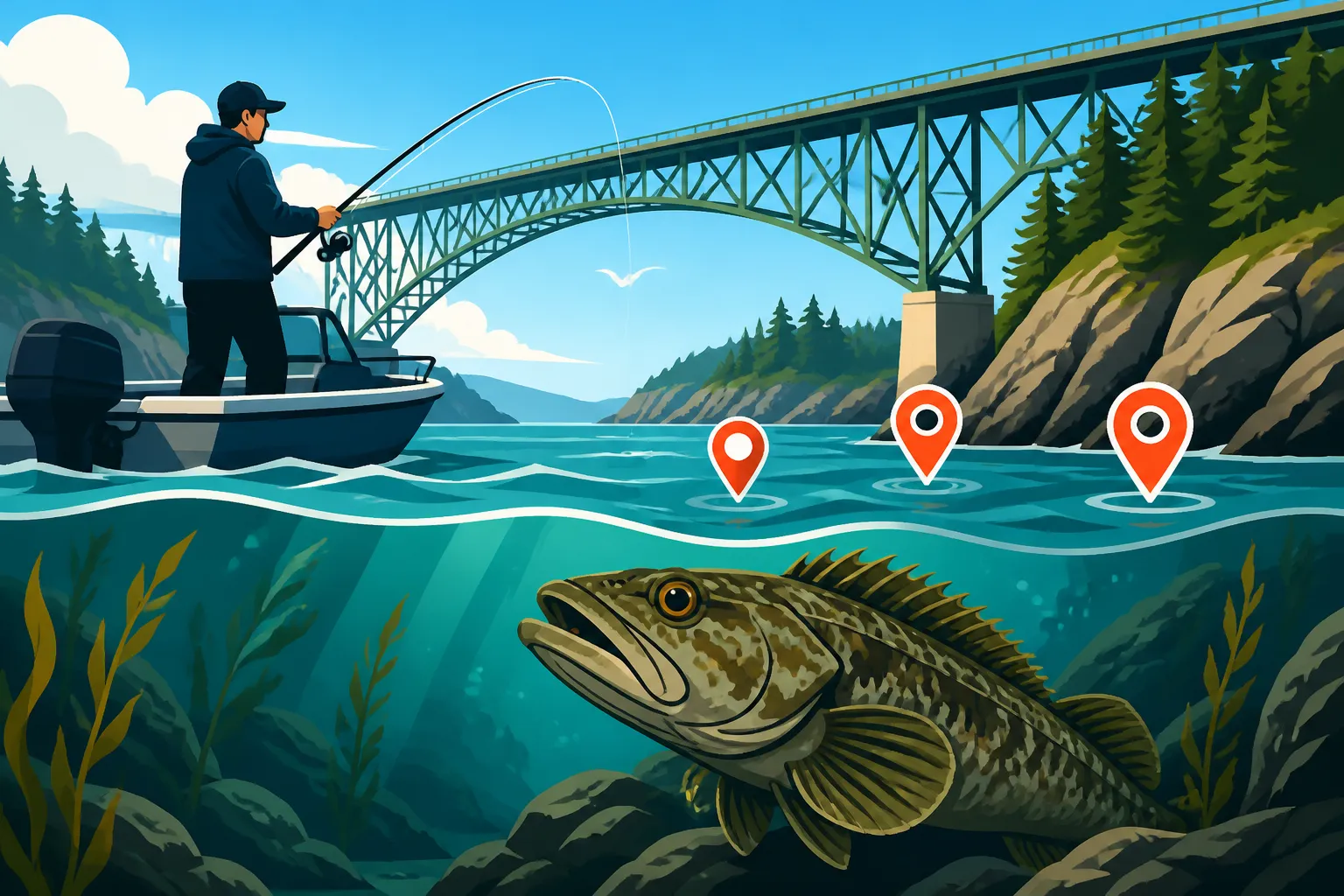
Where to Fish Deception Pass for Lingcod
Deception Pass, with its mesmerizing whirlpools and stunning natural beauty, is undeniably one of Washington's most iconic waterways. But beneath that breathtaking surface lies a challenging, often intimidating environment for anglers, particularly those hoping to tangle with the formidable lingcod. Many folks dream of landing one of these toothy bottom dwellers, only to feel utterly lost in the powerful currents and complex underwater structure. This guide is here to demystify fishing Deception Pass for lingcod, breaking down where to find them, what gear you'll need, and how to navigate this incredible, yet tricky, fishing ground safely and successfully.
Understanding Deception Pass's Unique Environment for Lingcod
Before you even think about dropping a line, it’s crucial to understand what makes Deception Pass so special, and why lingcod absolutely thrive in its churning waters. This isn't your average placid lake; it's a dynamic, powerful tidal strait connecting Puget Sound and the Strait of Juan de Fuca.
The Power of the Current and Its Influence
The defining feature of Deception Pass is its incredible current. We're talking about tidal exchanges that can create water speeds of up to 9 knots, literally transforming the landscape from a tranquil passage to a raging torrent within hours. This powerful flow, funneled through narrow channels and over dramatic underwater topography, is both a challenge and a blessing for lingcod anglers.
Lingcod are ambush predators. They aren't built for chasing prey across wide-open spaces, especially not against a relentless current. Instead, they position themselves in areas where the current creates eddies, seams, and breaks. Think of it like a buffet line: smaller fish, crabs, and squid are swept along by the current, becoming easy targets for a lingcod waiting patiently behind a submerged rock or in a swirling slack water pocket. The currents also keep the water well-oxygenated and constantly bring in fresh food sources, creating a vibrant ecosystem that supports a robust lingcod population. If you try to fish against the full force of this current, you'll be constantly fighting your gear, struggling to get to the bottom, and likely just burning energy without much success. Understanding how to use the current, rather than fight it, is the first step to success here.
Rocky Structure and Ambush Points
Lingcod are inextricably linked to rocky structure. They are master camouflagers, blending into the craggy seafloor, waiting for an unsuspecting meal to drift by. Deception Pass is a maze of exactly this kind of habitat. Below the surface, you'll find everything from massive boulders and ledges to steep drop-offs and intricate rock formations, all carved out by millennia of relentless tidal action.
These underwater features provide ideal homes and hunting grounds for lingcod. They'll wedge themselves into crevices, lie flat on ledges, or tuck behind a large rock, perfectly positioned to dart out and grab whatever passes. The sheer amount of diverse, fish-holding structure is what makes Deception Pass such a consistent producer of these coveted bottomfish. However, this also means you're almost guaranteed to get snagged frequently. It's a trade-off: excellent habitat for lingcod, but a graveyard for lost tackle. You need to be prepared for both the thrill of the bite and the frustration of losing a favorite jig to the rocky depths. This dense structure is precisely why you'll often hear about large "Lingcod: Washington's Toothy Bottomfish" being pulled from these very waters.
Pinpointing Prime Lingcod Haunts in Deception Pass
Knowing where lingcod like to live is one thing, but knowing where in Deception Pass to find them can feel like searching for a needle in a watery haystack. While the entire pass holds potential, some areas are historically more productive and offer clearer strategies for anglers.
Targeting the Edges of the Main Channel and Reefs
The main channel of Deception Pass, while dramatic, is often too fast and too deep for effective lingcod fishing, especially if you're not intimately familiar with its every nuance. The real hotspots are often found along the edges of this main thoroughfare, where the current starts to slow, or where significant underwater structure creates current breaks.
Look for areas where the depth abruptly changes, or where a reef system extends out from the shoreline into the pass. These transition zones are gold mines. On a falling tide, fish might congregate on the protected, downstream side of a rock pinnacle. On a rising tide, they'll shift to the opposite side. It's a constant chess game with the current. Consider the rocky outcroppings that define the pass, like those found along the Fidalgo Island shoreline heading into Rosario Strait, or the deeper ledges and reefs further west towards the Strait of Juan de Fuca. These specific structures are where you'll want to focus your efforts. Keep an eye on your fish finder for sudden changes in depth or for tell-tale "hooks" marking potential fish.
Shoreline Access and the Periphery of Iconic Landmarks
While many anglers target lingcod from boats, there are some limited opportunities for bank fishing or targeting fish closer to shore, particularly during slack tide windows. The iconic Deception Pass Bridge itself, with its massive concrete pilings, offers incredible structure. However, fishing directly under the bridge is incredibly dangerous due to the extreme currents and is generally not recommended or even feasible for most.
Instead, look for the rocky shorelines and points just outside the immediate, raging currents of the bridge. These areas, particularly where the water starts to deepen and where there's good current flow without being absolutely suicidal, can hold lingcod. Think about the rocky areas near Bowman Bay or Rosario Head, where kelp beds and rocky ledges provide cover. While you won't be able to cover as much ground as a boat, these spots can be fruitful for anglers willing to put in the time and study the tides diligently. Always prioritize safety when fishing from shore, especially in an area with such powerful water. For those seeking more controlled environments or general knowledge on fishing various areas, reading up on "Marine Area 6 for Salmon Fishing, Explained" will give you a better grasp of the broader region and its diverse fisheries.
Best Times to Fish for Lingcod at Deception Pass
Timing is everything at Deception Pass, and this holds especially true for lingcod.
| Factor | Description | Impact on Lingcod Fishing |
|---|---|---|
| Slack Tide | The short window (often 20-40 minutes) around the peak of high or low tide when the current is at its weakest. | Crucial. This is often the only time you can effectively fish the deeper, more turbulent sections of the Pass. It allows your gear to reach the bottom and stay there, presenting your bait or lure naturally. This is when most lingcod are caught, as they are more likely to move and feed during reduced current. |
| Beginning/End of Tide | The periods just as the current starts to pick up or slow down, directly before and after slack tide. | Can be productive. As currents ease, fish might become more active. Heavy jigs and baits are still necessary to combat the increasing or decreasing flow, but it's often more manageable than full-strength current. Good for exploring the periphery of the main current breaks. |
| Season | Washington's Puget Sound lingcod season typically opens in May and runs through mid-June for most marine areas, including Marine Area 6. Always check current regulations. | Lingcod are actively spawning in winter and are generally off-limits. The spring opening coincides with warmer water and increased feeding activity as they recover from spawning. This is the prime time to target them, especially after they've left their nests. |
| Weather | Calm, clear days are ideal for safety and comfort. Strong winds can create dangerous chop and make boat control very difficult in the currents. | While lingcod aren't as weather-sensitive as some pelagic fish, angler comfort and safety are paramount. Rough weather can make boat positioning and feeling subtle bites almost impossible. Always check the forecast for winds and swell, especially near the pass. |
Fishing during the full force of the tidal exchange, when the currents are raging, is generally unproductive and highly dangerous. Your boat will be whisked away, your gear won't reach the bottom, and you risk tangling with debris or other boats. Focus intently on those precious slack tide windows; they are your golden opportunity for successful lingcod fishing in Deception Pass. To stay abreast of all the rules, it's wise to review the "Washington Sport Fishing Seasons and Emergency Closures" regularly, as lingcod regulations can change.
Effective Techniques and Gear for Deception Pass Lingcod
Landing a lingcod in Deception Pass requires not only knowing where to fish but how to fish, along with having the right equipment. This isn't finesse fishing; it's heavy-duty work that demands robust gear and specific techniques.
Jigging and Dropping Baits: Proven Methods
The most effective techniques for Deception Pass lingcod involve getting your offering down to the bottom where these fish live and then presenting it with enough action to provoke a strike.
- Vertical Jigging with Heavy Metal Jigs: This is probably the most popular and effective method. You'll need heavy jigs, often 6 to 16 ounces, depending on the depth and residual current, even at slack tide. Lead jigs, often in vibrant colors like chartreuse, glow, or metallic silver, are dropped to the bottom. Once there, you work them with an aggressive lift-and-drop motion, trying to imitate a wounded baitfish or squid. Lingcod often hit on the fall, so pay close attention as your jig drops. Brands like Luhr Jensen (Diamond Jigs) or Crippled Herring are popular choices, but any heavy, active jig can work. Keep your line as vertical as possible to maintain contact with the bottom and feel those subtle (or not-so-subtle) strikes. This technique is also used by charter operations when they're "Bottom Fishing for Lingcod and Rockfish off Washington".
- Plastic Swimbaits on Jig Heads: Large plastic swimbaits, 6-10 inches long, rigged on heavy lead-head jigs (again, 6-16 oz) are incredibly effective. The soft plastic provides a realistic profile and enticing swimming action. Colors mimicking local baitfish like green, blue, or brown are good starting points. These are worked similarly to metal jigs, with lifts and drops, but often a slightly slower retrieve can be beneficial, letting the tail of the swimbait do its work.
- Bait Fishing with Herring or Mackerel: While jigging is active, sometimes a more natural presentation with bait can seal the deal. Whole or large chunks of dead herring, mackerel, or even squid, rigged on a large single hook or a double-hook "mooching" rig with a heavy lead sinker, can be deadly. Drop the bait to the bottom and let it sit for a few moments, or impart a slow, gentle lift to make it look alive. Lingcod aren't shy about inhaling a substantial meal. The key is to keep it near the structure.
When you feel a bite, set the hook hard. Lingcod have bony mouths and a powerful bite, so a solid hookset is essential to penetrate their jaws.
Heavy Gear Requirements: Rods, Reels, Lines, and Leader
This is not the place for your ultralight trout setup. Lingcod fishing in Deception Pass demands robust tackle built to withstand powerful currents, aggressive fish, and constant snags.
- Rods: Look for a heavy-action rod, typically 7 to 9 feet long, rated for 20-50 lb line or higher. It needs a strong backbone to muscle fish away from structure and enough tip sensitivity to feel the bite. Ugly Stik or Lamiglas make excellent, durable rods suitable for this kind of fishing.
- Reels: A sturdy conventional reel (level wind or star drag) or a powerful spinning reel capable of holding a substantial amount of heavy braided line is essential. Shimano Tekotas or Daiwa Saltigas are popular choices for conventional, while Penn Battle or Shimano Saragosa can work for spinning. The reel needs a good drag system, as lingcod can make powerful initial runs.
- Line: Braided line is king for lingcod fishing. Its zero-stretch quality allows you to feel even the most subtle bites at depth and provides maximum power for pulling fish out of snags. Use 50-80 lb braided line. The thinner diameter of braid also helps cut through the current, reducing drag.
- Leader: Always use a heavy monofilament or fluorocarbon leader, typically 60-100 lb test, at least 3-6 feet long. Lingcod have incredibly sharp teeth and can easily chafe through lighter lines. The leader also provides a bit of stretch, acting as a shock absorber. Connect your braid to your leader with a strong knot like an FG or Alberto knot, or use a high-quality barrel swivel.
- Hooks: Use large, stout hooks. For bait, a 6/0 to 9/0 Octopus or J-hook is appropriate. Ensure they are sharp and heavy-duty enough not to bend out under pressure.
Preparing with the right gear can save you a lot of frustration and increase your chances of success. It's often debated "How Many Rods You Can Fish at Once in Washington," but for active jigging, one well-managed rod is often more than enough.
What Lingcod Can't Resist: Best Baits and Lures
Lingcod are opportunistic and aggressive, but certain presentations consistently out-perform others in Deception Pass.
- Live Bait: If you can get it, live bait is arguably the most effective. Small rockfish, herring, or even flounder (where legal) hooked through the nose or back are irresistible to lingcod. Rig them with a heavy sinker to get them to the bottom and let them swim naturally. This often requires specialized gear and effort to acquire, but the results can be spectacular.
- Large Jigging Lures: As mentioned, heavy metal jigs (Diamond Jigs, Point Wilson Darts) in chrome, white, green, or glow are excellent. Also, leadhead jigs with large plastic bodies like curly-tail grubs, paddle tails, or large Berkley Gulp! baits are incredibly effective. The key is size; think 6-10 inches for the plastic baits.
- Dead Bait: Whole herring or mackerel, either fished directly on a hook with a sinker or wrapped onto a large jig, can be very enticing. The scent trail alone can bring in curious lingcod. Ensure your bait is fresh; freezer-burned bait rarely performs as well.
Remember that lingcod are often territorial and aggressive. Sometimes, simply annoying them with a jig repeatedly in their strike zone is enough to get a reaction bite, even if they're not actively feeding. Experiment with different colors and retrieve speeds to see what's working on any given day. Local reports, or a quick check on a platform like FishingBooker for guides operating in the area, can often give you hints on current hot baits.
Navigating Challenges and Staying Safe in Deception Pass
Fishing Deception Pass is not for the faint of heart. The conditions can be extreme, and safety should always be your number one priority. Ignoring the power of this water can have serious consequences.
Mastering the Tides and Slack Water for Safety
This cannot be stressed enough: Deception Pass is dangerous at full current, especially for inexperienced boaters. The currents are not just fast; they create powerful eddies, whirlpools, and standing waves that can overwhelm boats, even larger ones. Your entire fishing strategy must revolve around understanding and respecting the tides.
- Tide Charts are Non-Negotiable: You must have a detailed tide chart for Deception Pass and know how to read it. These are readily available online or at local bait shops. Pay particular attention to the "slack tide" windows – those brief periods (sometimes as short as 15-20 minutes) around the peak of high and low tide when the current is at its weakest.
- Plan Your Approach: Your goal is to enter the fishing grounds just before slack tide, fish through the slack, and then be well on your way out as the current begins to pick up significantly. Trying to fight a strong current with your boat, especially while maneuvering to fish, is exhausting, dangerous, and often fruitless.
- Anchor Safely (or Don't): Anchoring in Deception Pass requires extreme caution and heavy-duty gear. Many experienced anglers prefer to drift during slack water, or use their boat's motor to "hold station" against a light current. If you must anchor, ensure you have a robust anchor, plenty of chain, and several hundred feet of anchor line. More importantly, know how to quickly release your anchor in an emergency. Never anchor directly in the main channel during strong currents. Misjudging the currents here is a common and serious frustration for anglers.
Ignoring the tides is not just a risk to your fishing success; it's a risk to your life. Always err on the side of caution. If in doubt, watch how experienced local boats navigate the area before attempting it yourself. Before heading out, make sure you've done your due diligence on "What to Check Before Every Washington Fishing Trip".
Essential Safety Gear and Best Practices
Given the challenging nature of Deception Pass, a comprehensive approach to safety is paramount.
- Personal Flotation Devices (PFDs): Every person on board must have a properly fitting, readily accessible PFD. In Deception Pass, wearing your PFD at all times is highly recommended, especially when the currents are even moderately strong. If you go overboard, the currents can sweep you away rapidly.
- VHF Radio: A working VHF radio is essential for communication with other vessels and for contacting the Coast Guard in an emergency. Cell phone service can be unreliable in certain parts of the pass. Monitor Channel 16.
- Sound Device and Visual Distress Signals: Whistle or horn, flares or other visual distress signals are legally required and critical for emergencies.
- Anchor and Backup Anchor: Even if you plan to drift, a good anchor is your lifeline in case of engine failure. A backup anchor is also a smart idea.
- Basic First Aid Kit: Accidents happen, especially when handling sharp hooks and toothy fish.
- Engine Check and Fuel: Ensure your boat's engine is in top working order and you have more than enough fuel. Breaking down in Deception Pass is a worst-case scenario.
- Tell Someone Your Plan: Always inform a trusted person on shore about your float plan: where you're going, when you expect to return, and who is with you.
- Respect Other Boaters: Deception Pass is a busy place, with recreational boaters, commercial traffic, and fellow anglers. Be courteous, maintain safe distances, and follow navigation rules.
Even seasoned anglers have had harrowing experiences in the Pass. Don't take chances. This isn't just about adhering to "Washington Fishing Regulations Every Angler Should Know"; it's about common sense survival.
Regulatory Considerations for Lingcod
Washington State has specific seasons, size limits, and bag limits for lingcod, and these can vary by marine area. Deception Pass is primarily located within Marine Area 6.
- Season Dates: Lingcod season in Marine Area 6 typically opens in May and usually runs for a short window, often into mid-June. These dates are subject to change annually, so always check the latest WDFW regulations before you go.
- Size Limits: There's usually a minimum size limit (e.g., 26 inches) and often a maximum size limit (e.g., 36 inches), creating a "slot limit" where only fish within a certain size range can be kept. This is designed to protect both juvenile fish and large, breeding adults.
- Bag Limit: The daily bag limit for lingcod is typically one fish per angler.
- Descending Device Requirement: This is crucial. When fishing for bottomfish like lingcod, you are required to have a descending device on board and use it on any rockfish (a common bycatch) caught outside of the legal depth limit for retention, or any rockfish that you intend to release. This helps reverse barotrauma and improves the survival rate of released fish. Understanding "Descending Devices for Rockfish and How to Use One" is vital for responsible angling.
- Catch Record Card: While lingcod typically do not require a Catch Record Card, it's always good practice to understand "When a Catch Record Card Is Required in Washington" for other species you might encounter.
Always consult the current Washington Sport Fishing Regulations pamphlet or the WDFW website for the most up-to-date and accurate information. Regulations are designed to protect fish stocks and ensure sustainable fishing for future generations, and adhering to them is part of being a responsible angler.
Disclaimer
Please note that fishing regulations, seasons, and conditions can change rapidly. Always consult the latest official Washington Department of Fish and Wildlife (WDFW) regulations before planning any fishing trip. The information provided in this guide is for general informational purposes only and should not be considered legal advice or an exhaustive list of all rules and safety procedures.